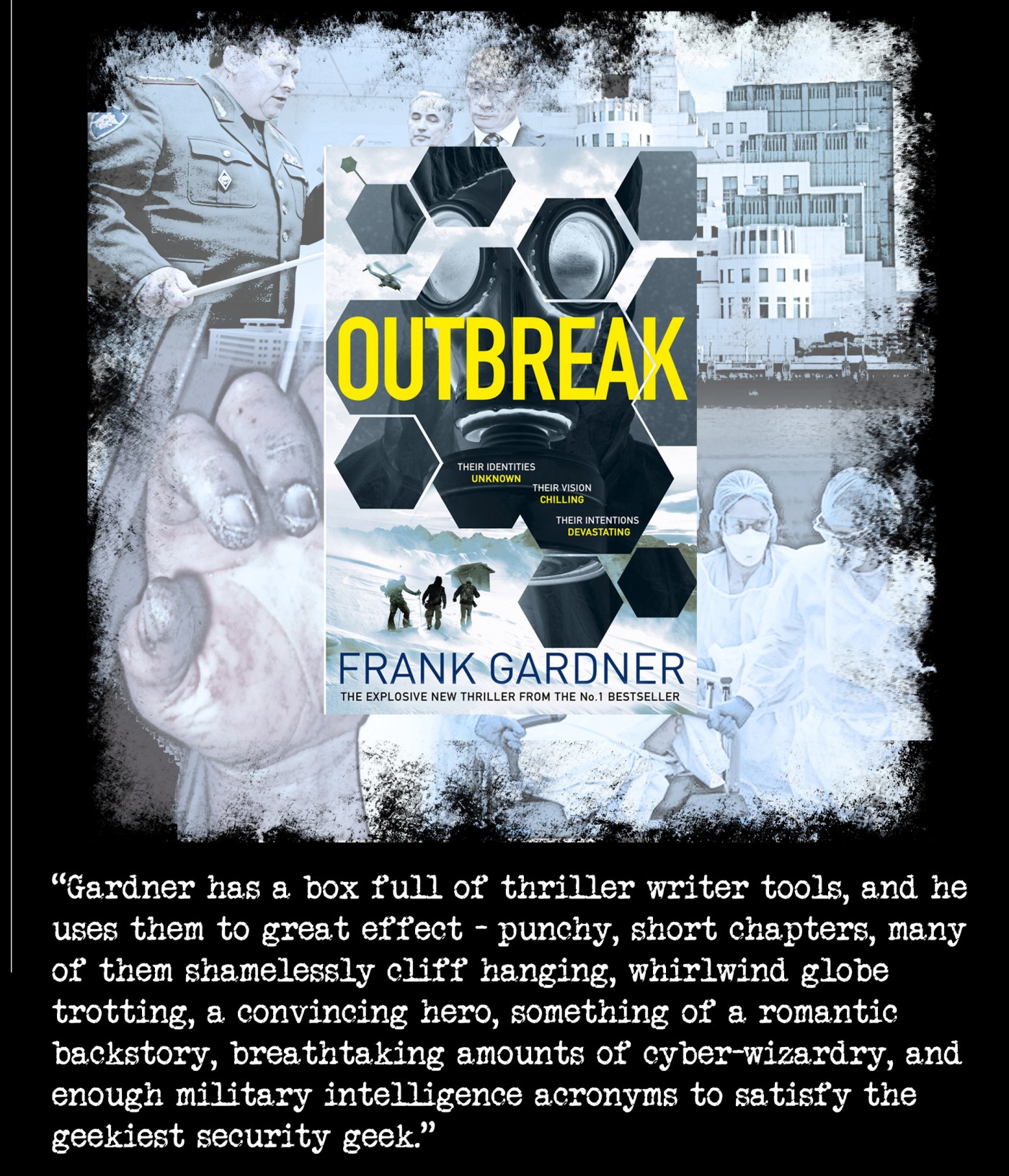

This is the third Luke Carlton thriller by the BBC Security Correspondent Frank Gardner, following Crisis (2016) and Ultimatum (2018). Carlton is a former Special Forces operative who now works for MI6, the foreign intelligence service of the United Kingdom. The novel begins in the frozen wastes of Svalbard, the Norwegian archipelago formerly known as Spitzbergen, and three environmental scientists from the UK Arctic Research Station have been caught out by a blizzard and, too far from their base camp to make it back safely, they seek refuge in a hut. What they find there makes them wish they had braved the snow and wind and tried for home. They find a gravely ill man, and one of the scientists, Dr Sheila Mackenzie gets rather too close to him:
“As Dr Mackenzie turned back to face the sick man, without warning he arched his body forward off the back of the couch with surprising speed. His whole body shook with involuntary convulsions. In that same moment, he coughed violently. His mouth wide open in a rictus gape, he emitted a spray of blood, bile and mucus into the air, his face less than two feet from hers, before collapsing, quivering on to the wooden floor.”
 That, then, is the Aliens moment. Events move with terrifying speed. Mackenzie is airlifted back to England and isolation and the wheels of government and the intelligence agencies begin to whirr. Given that there is a large Russian presence in Svalbard, ostensibly for mining operations, the fingers of guilt begin to point towards Moscow, particularly when the virus is found to be man-made.
Gardner doesn’t allow either Carlton or readers pause for either thought or breath. The action zig-zags between the MI6 building at Vauxhall Cross in London, the Arctic Circle, Vilnius, Moscow, GCHQ in Cheltenham and – less exotic but rather more deadly – a down-at-heel industrial estate near Braintree.
This is an impeccably researched novel, as you would expect from someone with Gardner’s experience in the worlds of soldiering, news gathering and international affairs. Most of the story is all-too-horribly plausible, given what we know about what is euphemistically known as ‘mischief’ from Moscow and Beijing, but then Gardner has a surprise for us. The Russians are involved, certainly, but not the Russians we might have expected. To say more would spoil the entertainment but I did find the identity of the conspirators not entirely plausible, given what we know (or think we know) about terror cells operating around the world. But hey-ho, this is not a documentary but a novel – and a bloody good one, too.
Gardner has a box full of thriller writer tools, and he uses them to great effect – punchy, short chapters, many of them shamelessly cliff hanging, whirlwind globe trotting, a convincing (if rather conventional) hero, something of a romantic backstory, breathtaking amounts of cyber-wizardry, and enough military intelligence acronyms to satisfy the geekiest security geek. You won’t be surprised to hear that Carlton eventually triumphs, but I advise caution. The last twelve words of the book might set alarm bells ringing …..
Outbreak is published by Bantam Press and is out now.
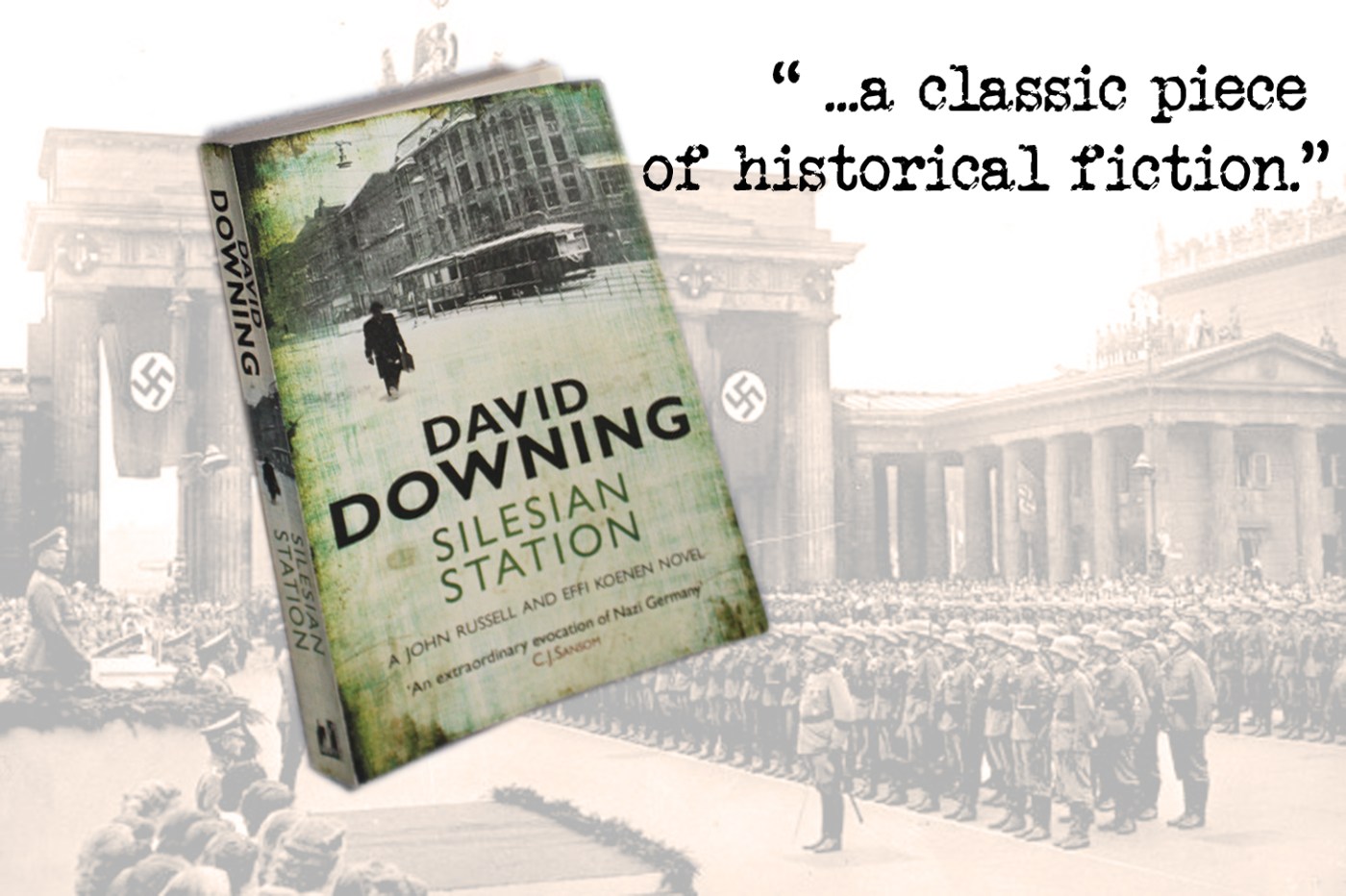

 Russell is a survivor, a man who can usually talk his way out of trouble. Multilingual, and with that all-important American passport, he keeps a wary eye on the features he wires back to his newspaper in the states, but has – more or less – managed to stay out of trouble with the various arms of the Nazi state – principally the Gestapo, the SS and their nasty little brother the Sicherheitsdienst. Russell fought in the British Army in The Great War, but in its wake became a committed Communist. Although he has now ‘left the faith’ he still maintains discreet contacts with the remaining ‘comrades’ in Berlin. With that in mind, it is unsurprising, perhaps, that he has been manoeuvred into the sticky position where both the German and Russian intelligence services believe that he is working uniquely for them, and he is being used to pass on false information from one to the other.

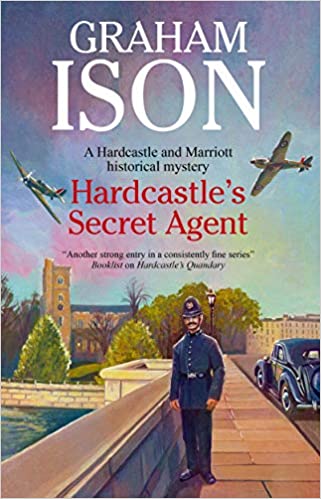 We are, as ever, in London, but it is 1940. The Phony War is over, and the Luftwaffe are targetting industrial sites they believe to be involved in making parts for military aircraft. When several important employees of one such factory are burgled – clearly by an expert – but with nothing other than trinkets stolen, Hardcastle believes he may be on the track of a German spy on the look-out for plans, blueprints or important military information. Hardcastle has to deal with The Special Branch, but finds them about as co-operative as they were with his father a couple of decades earlier. This has a certain tinge of irony, as part of the author’s distinguished police career was spent as a Special Branch Operative.









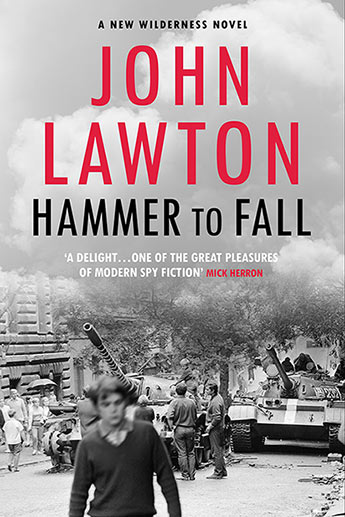 He is no James Bond figure, however. His dark arts are practised in corners, and with as little overt violence as possible. Hammer To Fall begins with a flashback scene,establishing Joe’s credentials as someone who would have felt at home in the company of Harry Lime, but we move then to the 1960s, and Joe is in a spot of bother. He is thought to have mishandled one of those classic prisoner exchanges which are the staple of spy thrillers, and he is sent by his bosses to weather the storm as a cultural attaché in Finland. His ‘mission’ is to promote British culture by traveling around the frozen north promoting visiting artists, or showing British films. His accommodation is spartan, to say the least. In his apartment:
 So far, so funny – and Lawton (right) is in full-on Evelyn Waugh mode as he sends up pretty much everything and anyone. The final act of farce in Finland is when Joe earns his keep by sending back to London, via the diplomatic bag, several plane loads of …. well, state secrets, as one of Joe’s Russian contacts explains:

 The idea of the female spy has attracted writers and dramatists over the years with its unbeatable combination of danger and sexual allure. Pete Langman comes to the party with his enjoyable new novel, Killing Beauties set in the England of 1655. Remember those old historical movies that began with a dramatic piece of text scrolling over the opening titles, giving us a lurid and enticing potted background to whatever we were about to watch? The blurb for Killing Beauties might say something like,
  he beautiful woman is Susan Hyde, whose brother Sir Edward Hyde, Earl of Clarendon is principle advisor to the King in exile. With the aid of another young woman, Diane Jennings, Susan – and other members of the secret society known as Les Filles d’Ophelie – work with The Sealed Knot, coordinating underground Royalist activity in England and preparing for a general uprising against the Protectorate. Readers may be aware that the modern version of The Sealed Knot is a popular organisation of English Civil War re-enactors, but their historical namesakes were in deadly earnest, and organised two major rebellions before Charles II was finally crowned in 1661.
 In order to succeed in her mission, Susan must use the deadliest weapon at her disposal – her sexuality. The beneficiary of her attention is none other than John Thurloe himself. Thurloe is a fascinating historical figure, and has featured in several other novels, most notably in the Thomas Challoner series by Susanna Gregory, and in the SG MacLean’s Seeker stories. I reviewed MacLean’s
  ne of the problems facing writers of historical fiction is how to handle dialogue. We know how they wrote to each other in letters, but what were conversations like? Despite one or two of his characters occasionally lapsing into more recent vernacular, Langman negotiates this particular minefield successfully. Killing Beauties is an engaging and well researched piece of costume drama acted out on a turbulent and dangerous stage. It is published by Unbound

 he dramatic events of The Rooks Die Screaming take place in the spring of 1921 in the Cornish market town of Bodmin. The bare bones of the story are that Detective Inspector Cyril Edwards of Scotland Yard has come to Bodmin to investigate murder and treachery involving a group of spies known as The Four Rooks. This book is a sequel to The Woman With The Red Hair, and to say there is a back-story is something of an understatement. The eponymous young woman is called Morag and, amongst other things, is Edwards’ sister-in-law. Elisha Edwards was one of the millions of unfortunates taken by an agent even deadlier than high explosives and machine gun bullets – Spanish Influenza.
 Morag is now Lady Frobisher. Her husband Harry, heir to The Fobisher Estate on the outskirts of Bodmin, is blind, victim of a grenade in the Flanders trenches. In the previous novel, Frobisher Hall was the scene of great torment for Morag, as she fell into the clutches of Morgan Treaves, an insane asylum keeper and his evil nurse. Treaves has disappeared after being disfigured with a broken bottle, wielded my Morag in a life or death struggle.
 That said, The Rooks Die Screaming is inspired escapist reading. It would be unfair to say that Tuckett (right) writes in an anachronistic style. This is much, much better than pastiche, even though there are elements of Conan Doyle, the Golden Age, John Buchan and even touches of Sapper and MR James. So, eventually, to the plot, but we need to know a little more about Cyril Edwards. Like many a fictional detective inspector he is his own man. In another nice cultural reference Tuckett adds a touch of Charters and Caldicott as Edwards explains to the bumptious Standish, a mysterious officer from Military Intelligence;
 tandish orders Edwards to investigate the possibility that Harry Frobisher is one of the Rooks, but one who has betrayed his country. Arriving in Bodmin his first task is to explain to the local police how a corpse found on a train is that of a notorious London contract killer. Tuckett’s Bodmin is full of stock characters, including a stolid police sergeant, an apparently tremulous clergyman and a punctilious but respected solicitor who is privy to all the secrets of the local gentry, but is oh, so discreet. To add to the fun, Frobisher Hall also has its requisite roll call of faithful retainers.


