
Search

fullybooked2017

Tag

Edinburgh

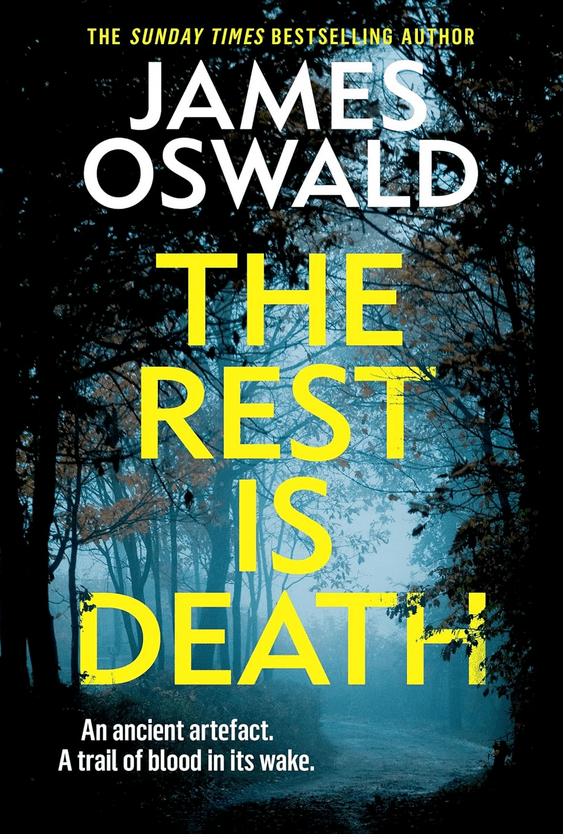
THE REST IS DEATH . . . Between the covers

In a silky smooth segue from 2024’s For Our Sins, Edinburgh copper Tony McLean has returned from temporary retirement and is asked to investigate an apparently trivial break-in at a Biotech facility. Nothing seems to have been taken, no-one was harmed, so why is a Detective Chief Inspector sent on the job when it would normally be handled by a uniformed Sergeant? The answer is simple. Drake Biotech is owned and funded by billion are Nathanial Drake, who just happens to be on WhatsApp terms with Scotland’s First Minister.

When an old school chum approaches DI Janie Harrison with a request to look, for her missing boyfriend, a Serbian carpenter, Janie does a perfunctory search, but assumes the man has gone to ply his trade elsewhere. She has logged the photos from her chum’s phone, and is horrified to find, that when she is called out to woodland where a hastily buried body has been found, the remains are that of Vaclav Mihailovic.When the autopsy is carried out on the Serbian, the pathologist is both baffled and shocked. The unfortunate man is opened up, but there is no stench of decay. It seems that the gut bacteria that continue working away after the heart stops beating are mysteriously absent. There is no bloating and no breakdown of tissue.

Halfway through the book, Oswald escalates and complicates the narrative. First, the driver of the van that took the intruders to Blake Biotech is identified, but then rapidly disappears. McLean suspects he is working for an external intelligence agency. A professional protester called Sanderson, believed to be one of the Biotech vandals is found sitting on a park bench, stone dead. Then the bodies of both Sanderson and Mihailovic are stolen from the city mortuary. Long time fans of the Tony McLean novels have become accustomed to an element of the supernatural appearing in the narrative. Here, it comes in page one, but it is another 60 pages before we realise the relevance to Nathaniel Drake and his interests.

McLean ponders the situation:

“We’ve got a break-in at the lab by animal rights activists who turn out to be a diversion for some MI5 spook doing God knows what. One of the team turns up dead in the park, looking like he’s not eaten in months and shouldn’t have had the strength to wield a spray can, let alone smash up a lab. I’d really like to know what he died from, just in case I’ve got a new disease about to spread through the city.

But someone breaks into the mortuary and steals his body before the pathologist can have a proper look. And whoever does that has the ability to break the servers of a sophisticated security services company to order.

A company that, it turns out, is a fully owned subsidiary of Drake Corporation, whose labs were broken into. And am I going round in circles?”

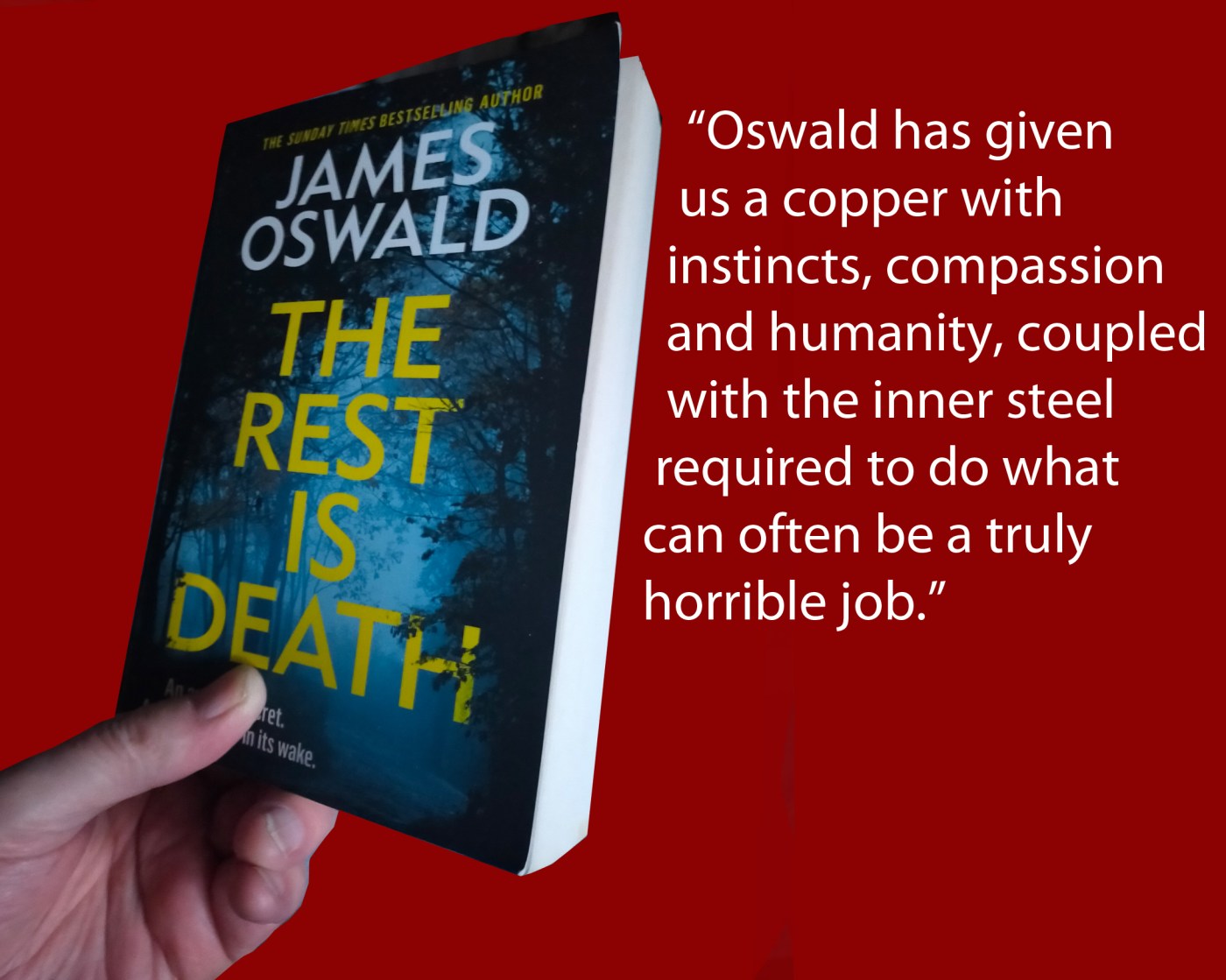
Within the CriFi genre, police procedural investigations are not natural bedfellows with the paranormal. The late Phil Rickman made it work – in spades – and James Oswald does a pretty good job. He certainly pushes the boundaries here, and gives us a finale with an archetypal mad professor locked in a life or death struggle with McLean, Harrison, and the mummified heart of a man who was court magus to Vlad Dracul in the medieval Carpathian Mountains. All this aside, Oswald has given us a copper with instincts, compassion and humanity, coupled with the inner steel required to do what can often be a truly horrible job. The Rest is Death is published by Headline, and is available now.
 

VOICES OF THE DEAD . . . Between the covers

VOTD spine009 copy

Edinburgh physician Dr Will Raven returns for the fourth in the series set in Edinburgh in the middle years of the nineteenth century. Ambrose Parry is the husband and wife writing team of Chris Brookmyre and Dr Marisa Haetzman. For new readers, a brief ‘heads-up’ about the personal dynamics between the main characters might be useful. Raven is assistant to – and disciple of – Professor James Young Simpson, pioneer anaesthetist and the only real life character in the book. Sarah Fisher was once Simpson’s housekeeper and, briefly, Raven’s lover, but he has since married, as did she, but her husband is now dead. She has a burning ambition to become a doctor.

VOTD cast

When Raven is summoned to Surgeon’s Hall by his friend Henry Littlejohn he becomes caught up in a chain of events which range from the comically macabre through to the murderous. Wrapped in a blanket and  deposited in the bottom of a cupboard, a human foot has been discovered. The head of the College, the aloof and irascible Dr Archibald Christie has been informed. Anxious to avoid any whiff of scandal, and aware that Raven has something of a reputation as an amateur investigator, Christie orders Raven to discover the origin of the foot without alerting the police. Things spiral beyond Raven’s control, however, when other body parts are located. Along with the irascible detective James McLevy, all concerned initially make a wrong assumption about the person whose limbs seem to be randomly scattered around the city. Will Raven’s past is punctuated with several episodes that might be described as unfitting for a respectable physician, and one such – by way of an all-too-human ghost from the past – sets him back on his heels.

We are soon drawn into a fascinating parallel plot involving the  ‘science’ of mesmerism. Its creator, the German physician Franz Mesmer has been dead for over thirty years, but displays of what we now call hypnotism are still able to draw crowds. The flames of interest in mesmerism are being found by the activities of two people. One, Richard Kimble is more of a stage illusionist but the other, Doctor Harland Malham, seems to have better credentials, so much so that Sarah is extremely interested in what he is doing. Her interest is heightened because, when meeting her for the first time, he suggests that she has an aptitude for mesmerism and could possibly be taken on by him as a trainee. Raven of course is deeply sceptical, but is acutely aware of Sarah’s determination to succeed in the medical profession by one way or another. Is she being duped? And who is the mysterious local businessman, Mr Somerville, to whom Sarah has become attracted?

One of the key elements in this series – and this book is no exception – is the nature of the relationship between Raven and Sarah, now Raven is married. He already has one child, a small son, and another is on the way. He is devoted to his wife Eugenie, but there is always a frisson between him and Sarah and we wonder, as readers, where this will end.

It doesn’t take a critical genius to work out that Brookmyre is providing the plotting and textual nuances while Haetzman is providing the (sometimes grisly)medical details and sense of medical authenticity. This is certainly one literary partnership that works very well, and the world of 1850s Edinburgh is portrayed in vigorous detail, contrasting the often squalid lives of the poor with the very different world of the more advantaged. The bottom line is that this is a bloody good crime novel, full of twists and turns, convincing historical ambience and main characters we believe in. It is published by Canongate Books and is available now.

THE LONG KNIVES . . . Between the covers

LOng Knives header005

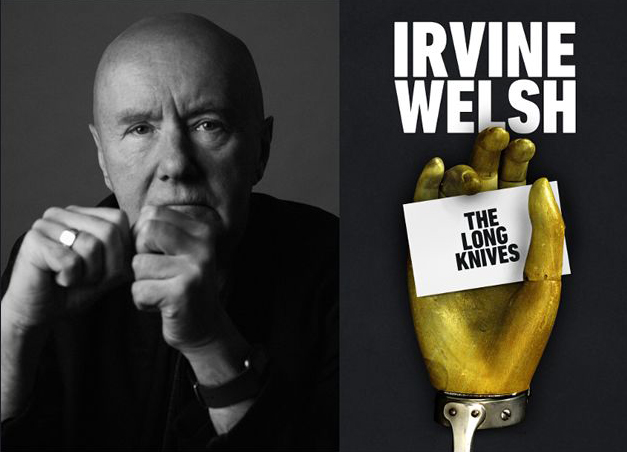
Irvine Welsh introduced us to Edinburgh detective Ray Lennox in Crime, but it has taken fourteen years for the second in the series – The Long Knives – to emerge. The title is not a metaphor, as the opening chapter describes the castration of a rather unpleasant Conservative MP in an empty warehouse in Leith.

There is no shortage of people who might have wanted Ritchie Gulliver dead. They range from political opponents, via victims of his predatory sexual habits, to activist groups he has offended. Lennox is given the case, and is immediately alerted to a recent incident in London which sounds similar. Home Office civil servant Christopher Piggott-Wilkins has been attacked in the Savoy Hotel. He managed to escape, badly wounded, and immediately transferred himself to a Harley Street hospital, after which what occurred in his suite has been cleaned up, both literally and metaphorically, by un-named but powerful agencies. Piggott-Wilkins has been left with one testicle, while Gulliver’s complete ‘package’ was discovered, draped from the Sir Walter Scott memorial, by an unsuspecting tourist.

After a lighting trip to London to speak to Mark Hollis, the larger-than-life Met copper investigating the Savoy case, Lennox returns to Edinburgh to face a sea of troubles. His fiancee Trudi not only seems to be ignoring his calls, but may have another love in her life. A former colleague, Jim McVittie, has transitioned to female, but has been found horrifically beaten up and is not expected to survive. Before the assault, Lennox meets one of the more ‘in your face’ transexuals in the local scene:

“What appears to be a brawny young man of around six foot four in a blue dress not so much enters as bulldozes in, a charged storm of bristling rage. He has a big hooked nose, and long flowing brown hair, which seems to have been given the attention of crimping tongs fashionable in the eighties. On his face a long scar bubbles thickly from under a  trowelling of foundation.”

An investigative journalist has tipped Lennox off that the two cases may be linked to a serious sexual assault at a ski resort some years earlier, and that high class prostitutes – and the men who run them – may be involved.

TLK author

Readers familiar with Welsh’s style over the years will recognise his trademarks, including the unpunctuated rapid-fire dialogue, the demi-monde of drugs, violence, sex and alcohol, and the underpinning ground-bass that tells us it’s an us-and-them world. There is even a passing reference to the most infamous of the author’s creations, Francis Begbie.

One of the more memorable characters in the drama is the brilliantly over-the-top Mark Hollis. He is more redolent of the glory days of The Sweeney than the current fashion of dancing the Macarena at Gay Pride marches. Hollis provides valuable information to Lennox, and slowly but surely the Edinburgh cop connects the pieces of the jigsaw. The picture that emerges is a chilling one. The killings are the work of a partnership. The man is linked to an act of random cruelty some years previously in Tehran, while his female partner is, indeed, seeking revenge for her abuse in a ski-lift gondola, but when her identity is revealed, Lennox is beyond shocked.

Welsh brings us horrific violence, but also the dark poetry of compassion. I can only liken Ray Lennox’s desire to avenge the murder victims whose suffering is imprinted on his soul, to Derek Raymond’s nameless Sergeant in books like I Was Dora Suarez. This is a magnificent work of fiction, not just a good crime novel. It is published by Jonathan Cape and will be out on 25th August.

A CORRUPTION OF BLOOD . . . Between the covers


ACOB header

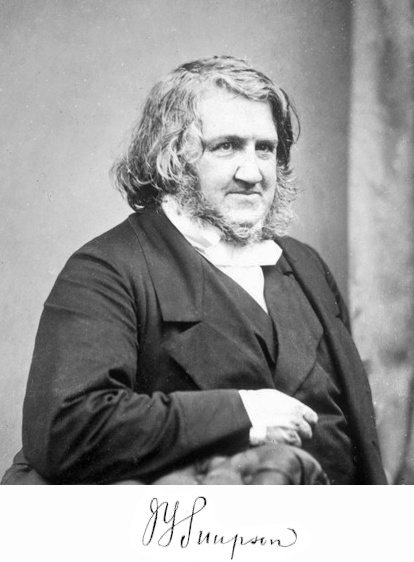
Simpson_James_Young_signature_pictureAmbrose Parry is the pseudonym used by husband and wife writing team Dr Marisa Haetzman and Chris Brookmyre. As a pseudonym goes, it is a pretty good one, especially for historical novels, as it has a rather convincing resonance to it. Writing partnerships are more common than you might think, and in some cases it remains a mystery as to who contributes what. Not so, possibly, in this case, as Dr Haetzman was a consultant anaesthetist at Wishaw General Hospital in Scotland, and the central characters in this novel are a young doctor in early Victorian Edinburgh – Will Raven – and his mentor, the real life James Young Simpson (left), a pioneer in the use of anaesthesia (chloroform in the early days) in surgical procedures.

This is the third novel in the series so, as ever, there is a back-story, part of which you can find in my review of the previous book The Art of Dying. Raven’s love interest in that book is a young woman called Sarah who was a domestic servant in the Simpson household. She had a brief flirtation with Raven, but then married another Edinburgh doctor. He died, but left Sarah a considerable fortune, which is helping her pursue her ambition to become a doctor. When this book begins, she has left Edinburgh on her version of The Grand Tour, during which she hopes to meet the first woman to be officially recognised as a professional physician, the American Dr Blackwell.

ACOB coverMeanwhile, Raven has met – and fallen in love with – Eugenie Todd, the beautiful and intelligent daughter of another Edinburgh doctor, and has also become involved in a murder mystery. Sir Ainsley Douglas, a powerful and influential man of means has been found dead, and the post mortem reveals traces of arsenic in his stomach. His wastrel son Gideon is arrested on suspicion of poisoning his father, with whom he has had a fairly unpleasant falling-out. Raven is an old acquaintance – but far from a friend – of Gideon. The two knew each other from university and Raven has a very low opinion of his former fellow student, and is very surprised when he is summoned to Gideon’s prison cell and asked if he will investigate Sir Ainsley’s death.

Sarah returns from her trip to the continent, but she is chastened by her meeting with Dr Blackwell, who suggested that she simply did not have the depth of education required to become a physician. Uneasy and uncertain at the news of Raven’s new romantic venture, she distracts herself from this unwelcome news by investigating an illegal trade which involves the selling of unwanted babies.

As Raven attempts to piece together the events of the last evening of Sir Ainsley’s life, the arsenic poisoning looks increasingly unlikely since – if it had been administered by Gideon – a former medical student would know that the poison is easily traced in the body. Raven has more personal matters on his mind, too, as he suspects that Eugenie and her father are keeping something from him about the young woman’s past.

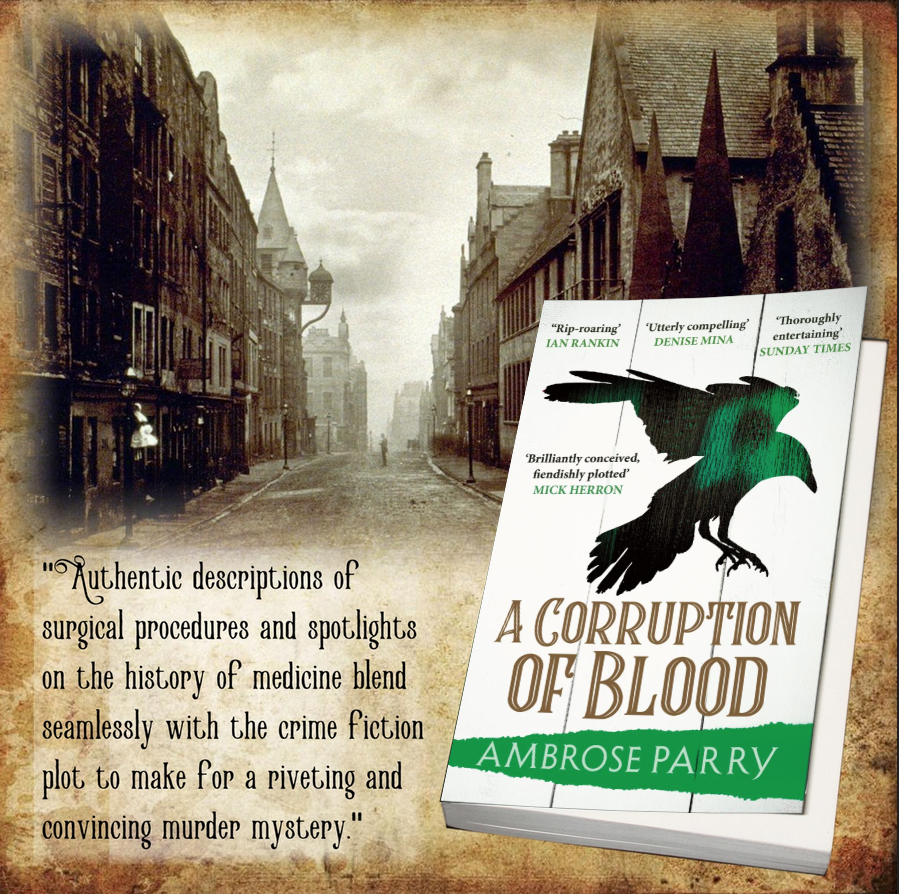
There are some grisly scenes in the novel involving both the living and the dead, but the story is suitably – and fiendishly – complex. Readers will have to wait until the very last few pages for all to be revealed and, for what it’s worth, I didn’t foresee how the plot eventually worked itself out. There are no prizes on offer for guessing which parts of the narrative are written by Dr Haetzman, but these authentic descriptions of surgical procedures and spotlights on the history of medicine blend seamlessly with the crime fiction plot to make for a riveting and convincing murder mystery. A Corruption of Blood is published by Canongate Books and is available now.

Screen Shot 2021-09-02 at 18.44.30

THE ART OF DYING … Between the covers

TAOD header

Ambrose Parry is a pseudonym for a collaboration between Chris Brookmyre and Marisa Haetzman (pictured below). They  live in Glasgow,  slightly less genteel – at least in popular image – than Edinburgh, where this novel is set. It novel weaves together two stories, both of which have have factual origins. One strand deals with an horrific serial killer and her victims, while the other story is seen through the eyes of a young doctor in the middle years of the 19th century. The novel is a follow-up to the 2018 publication, The Way of All Flesh.

71tHql951uL._SX800_

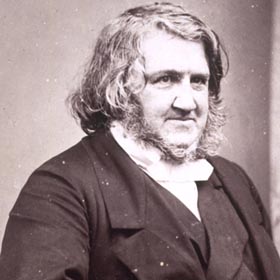
SimpsonThis is not a book for those squeamish about medical details – especially those common in the 19th century. There are tumours, painful deaths both lingering and sudden, surgical procedures that involve much guesswork and hopeful blundering about the human body – externally and internally. If you are still with me, then the story is this. It is 1849, and we first meet young Dr Will Raven when he is involved in a street brawl in Berlin, where he has been studying. He survives the encounter, and returns to Edinburgh, where he is reunited with his former mentor, Dr James Simpson. Simpson – a real-life character, pictured –  is highly regarded, but also the object of much jealousy from less gifted physicians, and is facing charges of malpractice brought about by his envious peers.

Raven had hoped to find an earlier object of his affections – a young woman called Sarah, who also worked with Dr Simpson – available for further dalliance, but in the interim, she has married another doctor, Archie Fisher. He is terminally ill, and as both Will and Sarah are aware of this, the sad fact adds a certain piquancy to the relationship.

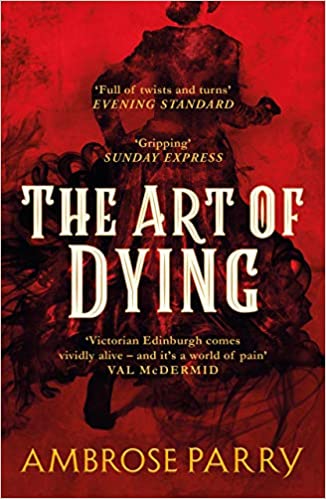
TAOD cover2Away from the relative gentility of the Simpson household, we have a young woman who moves in very different circles. She has suffered a brutal and traumatic childhood. This has either directed her on a devilish pathway, or kindles a spark which was already there but, either way, she has become a murderer. The writers employ an obvious – but effective – counterpoint here, in that Sarah Fisher desires to become a doctor, while Mary Dempster seeks to hone her skills as a killer. Contemporary society believes that a woman cannot possibly be a success in either occupation.

It takes a while for Will and Sarah to come round to thinking the unthinkable – that Mary Dempster is a clever and a successful killer. Because we, as readers, have had the advantage of reading first-person-viewpoint chapters, we know that she is a devious and malevolent individual. Yes, she has had a terrible upbringing, involving degradation and abuse, but not all orphans who suffered at the hands of Victorian institutions turned out to be serial killers.

As I said earlier, if you are the kind or reader who would shudder at the thought of reading a cut-by-cut account of an early surgical attempt to save a woman from an ectopic pregnancy, then this may not be the book for you. Bolder souls will enjoy a gripping and twisty murder mystery shot through plenty of gore and passion. The Art of Dying came out in hardback in August 2019. This paperback edition is published by Black Thorn and is out now.

THE GATHERING DARK … Between the covers

TGD

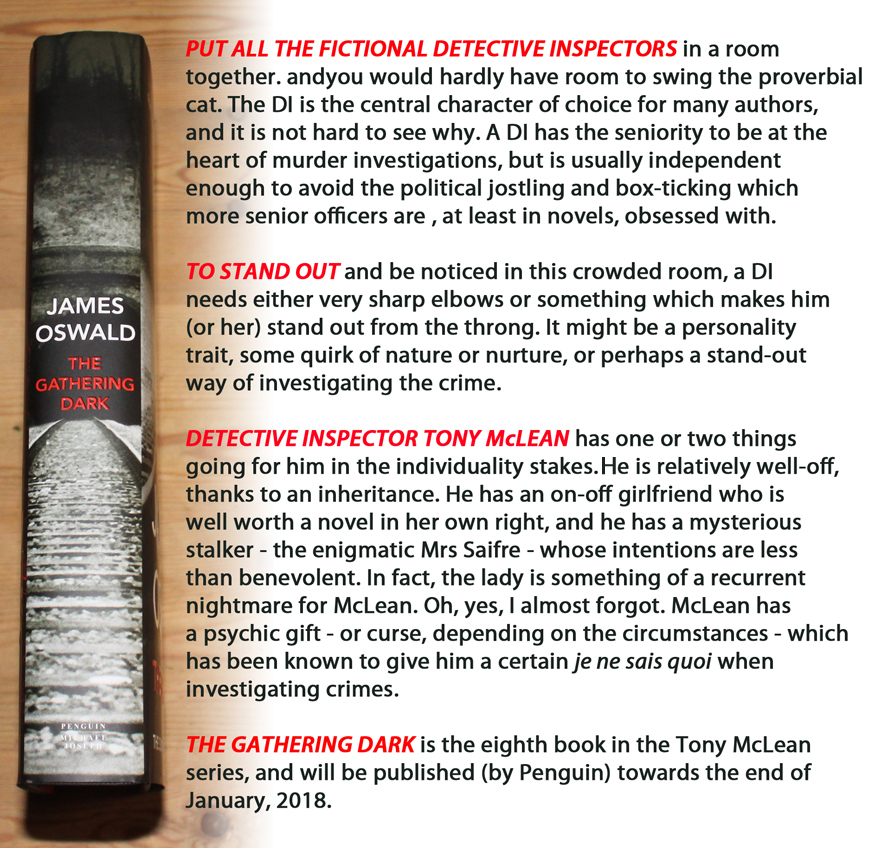
DI Tony McLean is an Edinburgh copper who is just a tad different from your standard tick-box fictional Detective Inspector. Yes, he works long hours, to the detriment of his home life, and doesn’t always see eye-to-eye with his superiors. Yes, he is occasionally given to special insights into crimes and criminals and, of course, he always gets his man (or woman). McLean, though, is something of a breed apart. His personal background is, well, unusual. After unhappy schooldays at a private school he hated, he has inherited money and property which make him a wealthy man after his parents were killed in a plane crash. He is gifted – or cursed – with a heightened sense of perception which may, or may not be, occult in nature. Despite his unwillingness to come to terms with this, he has an interesting friendship with a transvestite spirit medium called Madam Rose, who should be a comic character, but is anything but that.

billwaters_JamesO__10525-smaller-683x1024I should add, at this point, that James Oswald (left) is not your regulation writer of crime fiction novels. He has a rather demanding ‘day job’, which is running a 350 acre livestock farm in North East Fife, where he raises pedigree Highland Cattle and New Zealand Romney Sheep. His entertaining Twitter feed is, therefore, just as likely to contain details of ‘All Creatures Great and Small’ obstetrics as it is to reveal insights into the art of writing great books. But I digress. I don’t know James Oswald well enough to say whether or not he puts anything of himself into the character of Tony McLean, but the scenery and routine of McLean’s life is nothing like that of his creator.

TGDMcLean is going about his daily business when he is witness to a tragedy. A tanker carrying slurry is diverted through central Edinburgh by traffic congestion on the bypass. The driver has a heart attack, and the lorry becomes a weapon of mass destruction as it ploughs into a crowded bus stop. McLean is the first police officer on the scene, and he is immediately aware that whatever the lorry was carrying, it certainly wasn’t harmless – albeit malodorous – sewage waste. People whose bodies have not been shattered by thirty tonnes of hurtling steel are overcome and burned by a terrible toxic sludge which floods from the shattered vehicle.

The police are desperate to reassure the Edinburgh public that this is not a terrorist attack, but a tragic accident, a fateful coming together of coincidences. McLean and his team are tasked with the grim business of identifying all those who died in the crash, but also with investigating the company which owned the lorry, and what on earth the chemical cocktail was that literally burned the flesh and bones of those who came into contact with it.

As McLean starts to peel back the layers of deception and corruption which are wrapped around the truth about the disaster, he senses a sinister element in the case which exudes the stench of pure evil, far beyond that of the already grim death toll. His own personal life – most crucially involving his partner Emma, carrying their unborn child – becomes entangled with the case. McLean’s investigations turn over a heavy stone which reveals myriad guilty and repulsive things scuttling around as they are exposed to the light.

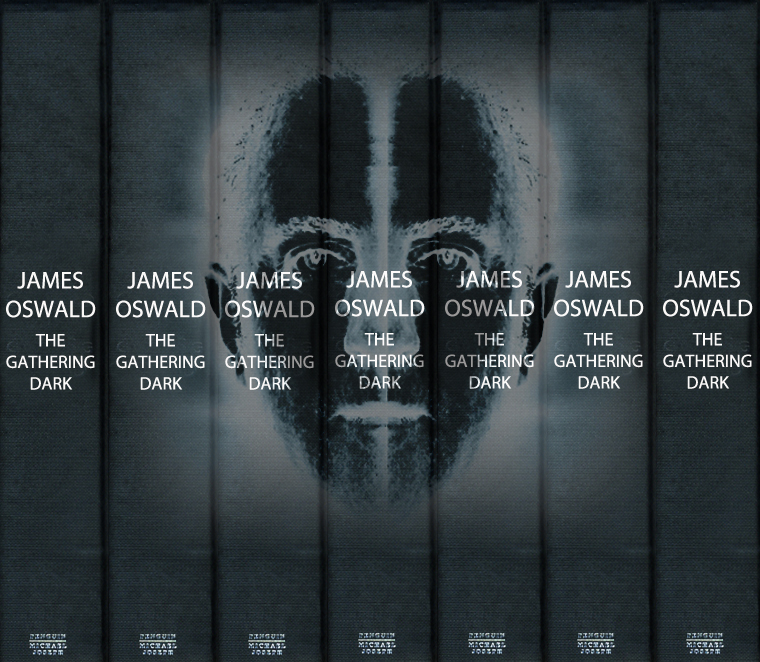
Sometimes titles of crime and thriller novels seem to have been chosen more to catch the eye of potential purchasers rather than for their relationship to the plot, but in this case those three words are chillingly apt. This disturbing story may start off as a relatively straightforward police procedural. All the familiar elements are there: the internal rivalries between officers, the bustling incident room, decent men and women trying to keep a lid on the thousand misdemeanours a big city throws up every week. But. But. A word to the wise. No, scrap that, and replace it with a much more suitable phrase – borrowed from a nightmarish MR James ghost story from 1925 – A Warning to the Curious. I have to tell you that The Gathering Dark is superbly written and gripping from the first page to the last, but it turns hellishly black and may trouble your dreams.

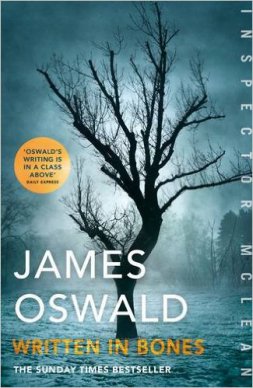
Click the link to read the Fully Booked review of an earlier DI Tony McLean novel, Written In Bones. The Gathering Dark is published by Michael Joseph/Penguin, and will be available on 25th January 2018.

TDG footer


THE GATHERING DARK … The postman delivers

TGD header

James Oswald has knocked on the door, and been admitted to the hall wherein are gathered the great and the good of Scottish crime fiction. His DI Tony McLean is now well established, and McLean’s Edinburgh is every bit as authentic as that of his older – and more curmudgeonly – colleague John Rebus. In The Gathering Dark, McLean tries to establish the truth after a catastrophic  event – possibly an accident, but who knows? – where a loaded truck ploughs into a crowd of people at a bus stop, with fatal consequences.

TDD body


TGD footer

WRITTEN IN BONES … Between the covers

WIB header

“Falling, yes I am falling, and she keeps calling me back again.” So went the lyrics of one of my favourite Beatles songs, but the unfortunate victim who features in the opening pages of this excellent police procedural from James Oswald has little to sing about. He plummets through the chill air of an Edinburgh winter early dawn. His descent is broken violently and catastrophically by the unyielding branches of a tree. Had the ten year-old boy out walking under the tree with his dog been an expert on Shakespeare’s Roman plays, he might have said, “Oh, what a fall was there, my countrymen!” Instead, he is interviewed as the only witness to one of the more bizarre crimes ever investigated by Detective Inspector Tony McLean.

bonesAs the pathologists – literally – piece together the evidence they conclude that the shattered remains in the tree is that all that is left of Bill Chalmers, a copper who was not so much bent as tangled and doubled up on himself. After surviving a jail sentence for his misdeeds, he used his connections and his wits to found a drug rehabilitation charity, which drew immense support from the community.
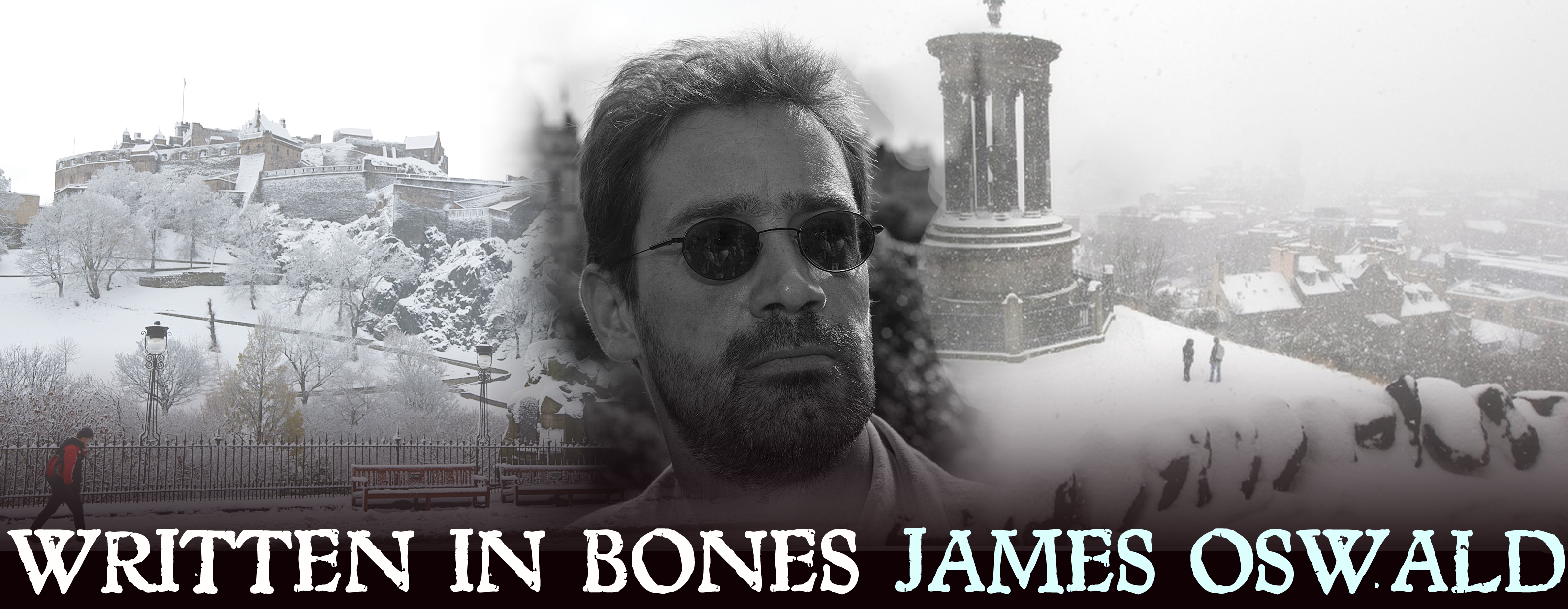
Now, his good deeds are over. His remains are laid out on a mortuary table. The lad who witnessed Chalmers’ final fall from grace is, himself, remotely connected to Edinburgh gangland gentry. His late father was Tommy Johnston, a club owner and provider of female flesh to the gentry. Johnston was shot dead years earlier, but although there was no shortage of potential suspects, his killer has remained unidentified and at large.

There are so many Detective Inspectors walking the corridors of British crime fiction that to succeed, each must have something different, something which will grab the readers’ attention. McLean is, thanks to a serendipitous bequest from a distant relative, materially far better off than his constabulary colleagues. Despite his ability to buy the flashiest of upmarket motors, he insists on driving an aged Alfa Romeo. He lives in a large house, alone except for his neighbour’s cat, and his on-off girlfriend, Emma. He is not in the first flush of youth, certainly, but he has few vices outside of a perfectly natural love of the warmth and texture of obscure single malt whiskies.

McLean’s quest for answers to explain the dramatic death of Chalmers is hampered by his ever increasing suspicion that if he were to find the truth, it would implicate several serving members of Police Scotland, and these would be men way, way above his own pay grade. As the worst snow for a decade brings chaos to the streets of Scotland’s capital, McLean finds himself the target of not only the weather, but powerful members of an international crime syndicate.

If there is a tiny weakness of the novel, it is its reliance on the backstory, as McLean eventually homes in on the culprits. We are made aware of the resourcefulness and malevolence of the person behind the mayhem – the enigmatic Mrs Saifre. The problem is that there are broad hints of how McLean has suffered at her hands in previous episodes, but we are left having to take this on trust.

This reservation aside, I can recommend Written In Bones to anyone who likes an intense police procedural, with just a dash of the supernatural, lavish helpings of atmosphere, evocative landscape descriptions and beautifully drawn characters. A few words about the author. James Oswald has a day job. That job is probably the most demanding of any occupations, as James is farmer in Fife, where he looks after pedigree Highland cattle and New Zealand Romney Sheep. Written In Bones is published by Michael Joseph and is out now.

WIB FOOTER

Blog at WordPress.com.

Up ↑