Search

fullybooked2017

Tag

Diane Calton Smith

THE PRINCIPAL DAY . . . Between the covers

Fenland is, today, an area of Cambridgeshire and Norfolk that was once a primeval swamp, where people survived on tiny islands just high enough above the brackish water to provide shelter and sustenance. Now, the name survives as a District Council, but the waters have long since been drained and tamed. Three novelists have found the flatlands suitable for detective stories. The greatest remains Dorothy L Sayers, albeit through one book only. The Nine Tailors (1934) is a fiendishly complex murder mystery set after The Great War, although the thunderous power of barely restrained rivers is never far away. Jim Kelly’s Philip Dryden books tap in to a more sinister side of the landscape, typified by endless skies, church towers and unbroken horizons. He tells us of isolated communities, ancient jealousies and the heavy hand of history. I nominate Diane Calton Smith to complete the triumvirate. Her novels, set in Wisbech from the time of King John up to the 15th century, portray a landscape that changes little, but a social structure that has evolved.

The Principal Day, her latest,finds us in the town in 1423, with a rather splendid late medieval church (little changed today) but in a world that has changed much since the earlier novels. Local farm workers are no longer serfs and villeins, but – in the case of more skilled men – free agents who can seek employment with whoever is prepared to offer the best pay.

There is a school. Situated in a tiny room above the porch of the parish church, it is presided over by Dominus Peter Wysman, a decent enough man, but not greatly respected by one or two of his older pupils. One of the pupils, Rupert of Tilneye is a reluctant scholar, and is just days away from leaving school to go and help run his family manor at nearby Marshmeade. After several humiliations by by the teacher, he resolves to pay the man back by slipping a tiny quantity of ground up yew leaves into his drink. Yew is, of course, a deadly poison when consumed in quantity, but Rupert administers just enough to produce a violent laxative effect, much to the amusement of the scholars.

Much of the story centres on Wisbech’s Guild of The Holy Trinity, of which Peter Wysman is a member The Guilds have no modern equivalent save perhaps Freemasonry. To belong to the Guild, you had to be rich and influential, and its chief, the Alderman, was someone of great influence. They regularly dined on rich roasted meats washed down with wines imported from Europe. When, on The Principal Day (a significant day of celebration and ceremony, often centered around the feast day of the guild’s patron saint or a major religious holiday, in this case the Feast of The Holy Trinity) the Guild members gather for a lavish feast. Wysman is taken unwell, rushes outside into the Market Place, where he collapses and dies.

Rupert’s cruel prank on Wysman was widely known to the scholars. When they are questioned, Rupert is arrested for murder and thrown into the dungeons of Wisbech Castle. His mother, Lady Evelyn, is convinced that he is innocent, and travels to Ely, where she enlsists the help of Sir Henry Pelerin, the Bishop’s Seneschal. He agrees to investigate the case.

In one way, Diane Calton Smith has crafted an excellent medieval police procedural. Sir Henry Pelerin is, I suppose, the long suffering Detective Inspector, while the Constable’s Sergeant-at-arms is a bent copper worthy of modern novels. We even have a version of the stalwart of many a thriller, the brusque and abrupt police pathologist. In the end, we even have that Golden Age prerequisite, the denouement in the library. In this case, however, the principal suspects are assembled at a feast to celebrate St Thomas’s Day. If you will pardon the obvious comment, it is here that all doubt is removed from Pelerin’s mind as to who poisoned Magister Wysman.

Diane Calton Smith weaves her magic once again, and entrances us with a tale shot through with dark deeds, heartache, love and perseverance but – above all – an astonishing ability to roll away the centuries and bring the past to life. The Principal Day is published by New Generation Publishing and is available now. For more on Diane’s Wisbech books follow this link.

THE LAZAR HOUSE . . . Between the covers

TLH SPINE076 copy

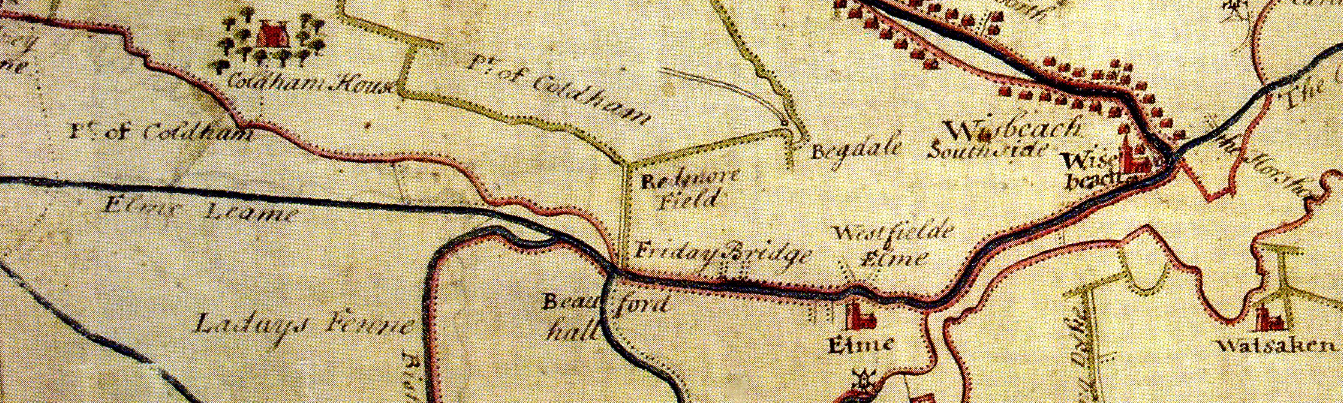
Diane Calton Smith’s medieval mysteries, set in Wisbech, don’t follow a continuous time line. The most recent, Back To The Flood, is set in 1249, while The Lazar House, published in 2022, is set in 1339. The geography of the town is much the same as in The Charter of Oswyth and Leoflede, where the author takes us back to 1190. In this book, most of the town still sits between two very different rivers. To the west, The Wysbeck is a sluggish trickle, easily forded, while to the east, the Well Stream is broader and more prone to violence.

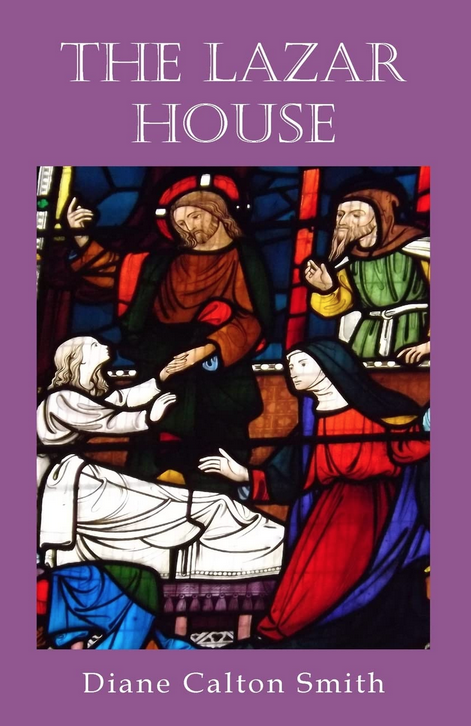
South of the town is the hamlet of Elm (now a prosperous village) and on its soil stands The Lazar House. It is a hospice for those suffering from leprosy. Basically under the governance of the Bishop of Ely it must, however, be self financing. There was a deeply held belief, in those times, in the concepts of Heaven, Hell, and their buffer zone of purgatory. People believed that if they had any spare cash or – more likely – produce, and they gave it to a charity such as The Lazar House, then prayers would be said that would minimise the time donors’ souls had to spend waiting in the celestial ‘waiting room’ of Purgatory.
map077 copy

A rather grand supporter of The Lazar House is Lady Frideswide de Banlon. Widow of a rich knight, she has bestowed on The Lazar House tuns of fine ale from her demesne’s brewery, and it is a vital part of their constant attempts to stay solvent. Remember that ale, of various strengths, was a standard drink for all, as there was little water safe enough to drink.

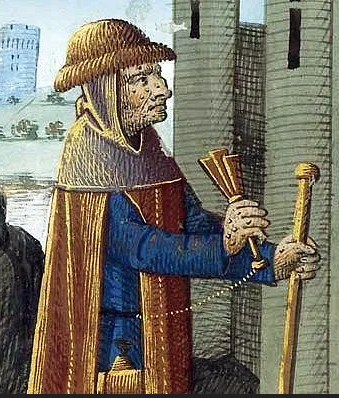
Sadly, there is a downside. Frideswide is scornful, aggressive and deeply unpleasant in her dealings with those she deems lesser mortals. There is no shortage of people she has belittled, offended or denigrated. Much of the story unfolds through the eyes of Agathe, daughter of a local Reeve. She has chosen to work as what we now call a nurse at The Lazar House. Despite her robes, she has not taken Holy Orders and, should she choose, is perfectly able to accept the offer of marriage, proposed by another lay member of the community, Godwin the Pardoner. Put bluntly, his job is rather like that of a modern politician working with lobbyists. In return for financial favours or donations in kind, he has licence to forgive minor sins and guarantee that prayers of redemption will be whispered on a monthly, weekly – or daily basis – depending on the size of the donation.
Screen Shot 2024-08-26 at 16.58.19When Lady Frideswide is found dead beside the footpath between The Lazar House and the brewery, the Bishop’s Seneschal, Sir John Bosse is sent for and he begins his investigation. His first conclusion is that  Frideswide was poisoned, by deadly hemlock being added to flask of ale, found empty and discarded on the nearby river bank. He has the method. Now he must discover means and motive. Bosse is a shrewd investigator, and he realises that Frideswide was not, by nature, a charitable woman, therefore was the valuable gift of ale a penance for a previous sin? Pondering what her crime may have been, he rules out acts of violence, as they would have been dealt with by the authorities. Robbery? Hardly, as the de Banlon family are wealthy. He has what we would call a ‘light-bulb moment’, although that metaphor is hardly appropriate for the 14th century. Frideswide, despite her unpleasant manner, was still extremely beautiful, so Bosse settles for the Seventh Commandment. But with whom did she commit adultery?

When Bosse finds out the identity of her partner ‘between the sheets’, he is surprised, to say the least, but the revelation does not immediately bring him any nearer to finding her killer. The solution to the mystery, in terms of the plot, is very elegant, and worthy of one of the great writers of The Golden Age. It comes as a shock to the community, however, and brings heartbreak to more than one person. Diane Calton Smith draws us into the world of The Lazar House to the extent that when they suffer, so do we. The last few pages are not full of Hardy-esque bitterness and raging against life’s unfairness. Rather, they point more towards the sunlit uplands and, perhaps, better times ahead.

This is as clever a whodunnit as you could wish to read, and an evocative recreation of fourteenth century England. The author brings both the landscape and its people into vivid life. Published by New Generation Publishing The Lazar House is available now.

Screen Shot 2024-08-23 at 19.23.00

BACK TO THE FLOOD . . . Between the covers

flood SPINE071 copy

It is March 1249, and England is ruled by Henry Plantagenet (Henry III) son of the unfortunate KIng John, who featured in an early tale of medieval Wisbech by this author, In The Wash (click to read the review). For Wisbech people, the King and his court are far away and unknown. Their immediate overlord is Hugh of Northwold, Bishop of Ely, for who much of Wisbech is his manorial property, meaning that residents must pay him annual rent. In November 1236, however, a disastrous tide (what we would now call a North Sea Surge), devastated the flimsier properties of the town, and when, thirteen years later, the Bishop’s Seneschal*. Roger of Abynton arrives to make an audit of rents and repairs, he finds that many of the Bishop’s buildings have not been rebuilt and remain unoccupied, thus providing no income stream.

*Seneschalan agent or steward in charge of a lord’s estate in feudal times.

When Alured, a local baker, is found dead in the reeds at the edge of The Wysbeck (then a sluggish stream, but now the tidal River Nene) most people assume that he drunkenly fell into the water after one two many ales in one of the inns he frequented. Sir Roger, after examining the body, is not so sure. Scratches on the torso suggest that the man was dragged to the river bank. Finding people with a motive to kill Alured is the easy part. He was a cheat, drunk, foul of mouth and temper and seemed to live his life with one aim only – to antagonise and goad everyone he meets.

Sir Roger is, by modern standards, a decent detective. He comes to realise that Alured was not murdered because he baked contaminated bread, or because he was an argumentative drunk who enjoyed starting fights in pubs. The book’s title is completely apposite. Everything that happens is a result of what happened – or didn’t happen – on that fateful night when the North Sea surge crashed through the banks and defences of Wisbech and changed lives for ever.

So deeply does Diane Calton Smith immerse us in 13th century England that we are not in the least surprised to learn that the New Year began on 25th March, or that there was an extensive calendar of Saints’ Days, very few of which would be celebrated by feasts, at least in the modern sense of the word. There is also a sense of how big the world was in those days. A journey from Wisbech to Leverington, two minutes in the car these days, took hours on treacherous and often impassable tracks. We are also reminded of the sanctity of Lent. Meat was seldom a regular item on the tables of most poor townspeople, but during the Holy observance, the daily ‘pottage’ would contain only root vegetables, perhaps made more palatable with ‘ransom’ – not a criminal demand for payment, but something akin to what we call Wild Garlic. Ale was ubiquitous, because there was little or no safe drinking water. It would have tasted very different to modern beer, as the use of hops in the brew would not come for another three hundred years.

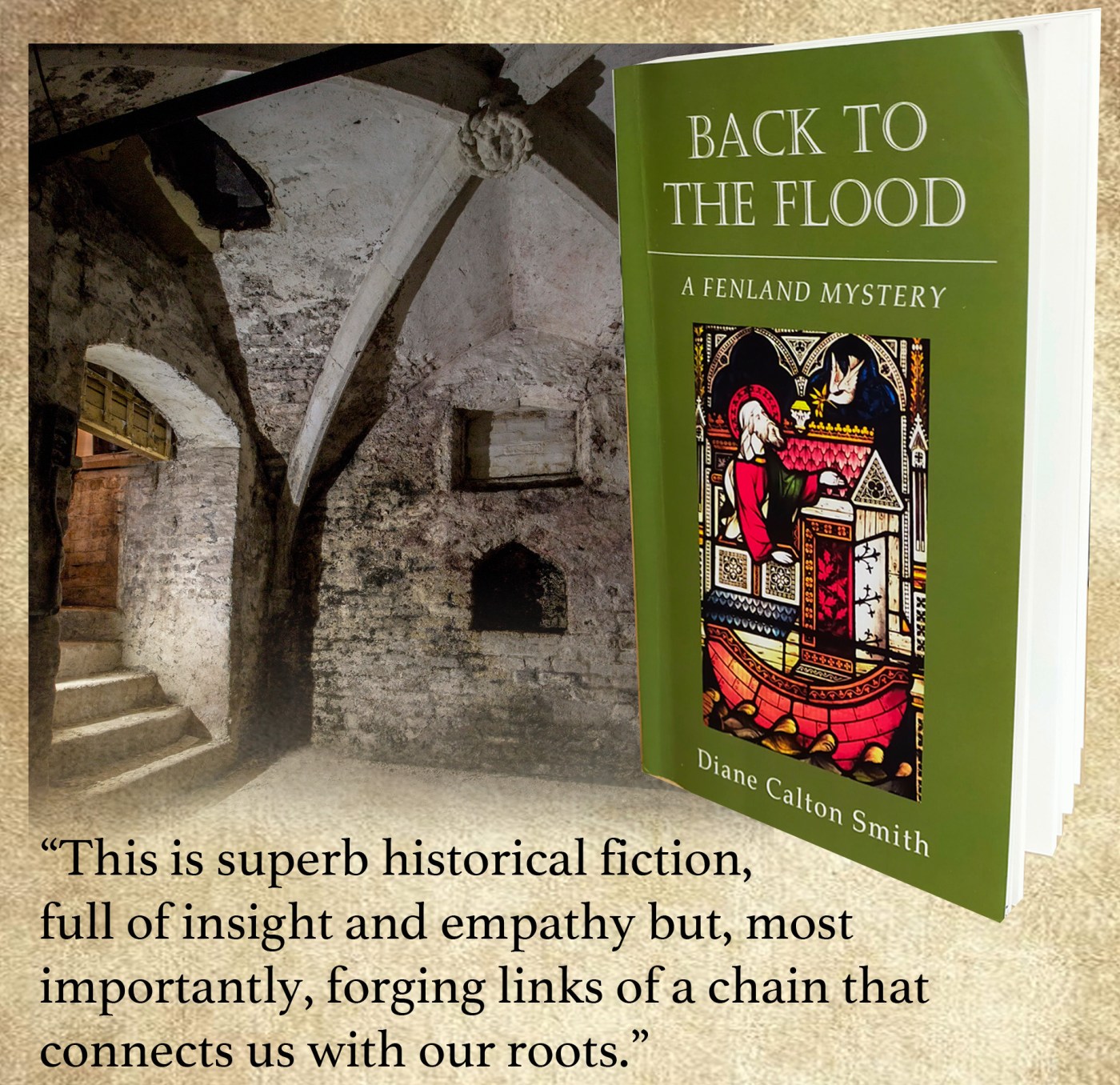
Hand in hand with the astonishing historical detail we have a very clever whodunnit. Wisbech these days is not much of a place, but at least we have our history. I am acutely aware, thanks to this superb novel (and its predecessors) that every time I walk into town, there is a palimpsest beneath my feet, a resonant reminder that these very streets were walked on by our ancestors, and that we tread in their footsteps. This is superb historical fiction, full of insight and empathy but, most importantly, forging links of a chain that connects us with our roots. Back To The Flood is published by New Generation Publishing and is available now.

THE CHARTER OF OSWY AND LEOFLEDE . . . Between the covers

CHARTER HEADER

We are in the final decade of the twelfth century, in the market town of Wisbech, a place dominated by its Norman castle, and split by two rivers: the smaller, the Wysbeck is little more than a gentle stream, and can be crossed on stepping stones; the larger, the Welle Stream is more significant, and can only be crossed at high tide by ferry.

In the 124 years since England was conquered by the Normans, the old native tongue of the Saxons has become a foreign language, in both written and spoken forms. Sir John of Tilneye, a young man who was schooled in the old language by monks when just a boy, is called upon to translate an old manuscript which appears to be at the centre of a criminal conspiracy. Ostensibly, it is dull and tedious stuff relating transfers of land and property in the days before the Normans came. Someone, however, is convinced that it contains a clue to something extremely valuable.

Wisbech is neither more nor less lawless than other towns in the area, but when a series of fires and break-ins follow one after the other, the Bishop of Ely’s seneschal Sir Nicholas Drenge is determined to discover what is going on. Each of the incidents seems connected to a fatal fire which destroyed a house in the town. Its owner, Aelfric, who perished in the blaze, was Saxon nobility, but like most of his countrymen, all he had left was his memories. His lands and riches had long been appropriated by the descendants of the 7000 men who landed at Pevensey on 28th September 1066. So why burn down his house? What was he hiding? Drenge and his men-at-arms eventually catch the man who they think is the killer, but when he is murdered while in their custody, the mystery deepens.

Insofar as this is just a detective novel, Drenge is the principle character. No genius, perhaps, but steady and unwavering as he slowly unpicks the knot of lies, legends and loose connections that surround the mystery of Aelfric’s death. Diane Calton Smith gives us some fairly innocent romancing between Sir John and Rose de Hueste, the old man’s granddaughter, but above all she describes a place that is, literally, buried beneath the feet of townsfolk of modern Wisbech. The two rivers have traded identities to an extent. The inoffensive Wysbeck is now the deep and powerful tidal River Nene, while The Welle Stream – thanks to major 17thC drainage – shrank to being a canal in the 1800s, but was eventually filled in and is now a dual carriageway. As for the castle, it still carries the name, but is now merely a dilapidated Georgian house which no-one is quite sure what to do with.

Calton Smith weaves her plot this way and that, and doesn’t surrender the answers until the final pages. This is superior story-telling, and a magical glimpse into a world long since gone; that world created echoes, however, and if you listen attentively, they can still be heard. The Charter of Oswy and Leoflede is published by New Generation and is available now. I reviewed an earlier book by this author, and this link will take you there.

Blog at WordPress.com.

Up ↑