

Think the beautiful county of Suffolk, with its stately churches and half-timbered villages. Think the timeless Stour and Deben valleys and their rivers, where the sun dapples the glinting water, much as it did when Constable immortalised the scene. Think antiques. Think crime and intrigue. Remind you of Sunday nights back in the day? It reminds me of the antics of Lovejoy and his friends, thirty years ago. However, this is rather different. We are in the present day, and the central character is Freya Lockwood, a skilled antique hunter who has fallen on hard times. Her former husband has let her keep their house until their daughter grew up, but now he wants it back and she is, to paraphrase the great Derek Raymond, rather like the crust on its uppers.
Freya’s background has elements of tragedy. As a schoolgirl, she was badly burned in the house fire that killed her parents, and she was brought up by her aunt Carole and began her working career as an assistant to antiques expert Arthur Crockleford. At some point they had a major falling out, and haven’t spoken in years. When Freya gets a ‘phone call from Carole to say that Arthur has been found dead in his shop, she ups sticks and travels down to Little Meddington where he had his shop.
The police have decided that Arthur’s demise is a simple case of an elderly man falling down the stairs, but then Freya and Carole are handed a letter addressed to them which begins:
“If you are holding this letter in your hands then it is over for me..”
Is there more to Arthur’s death than meets the eye? We know there is, because of the first few pages of the book, but Freya and Carole are in the dark after subsequently being told by a solicitor that the shop and its contents are now theirs. They begin to pick away at the mystery.
Arthur has arranged an antiques weekend to be held, in the event of his death, at Copthorne Manor a nearby minor stately home. He has invited several people connected with the antiques world to stay at the Manor, and it is as if he will be conducting the consequent opera like a maestro from beyond the grave.
We learn that the falling out between Freya and Arthur was a tragedy that occurred in Cairo many years earlier, Arthur and Freya were in Egypt ostensibly verifying and valuing certain items which were thought to have been stolen and were being traded on the antiques black market. Freya fell in love with a with a young Egyptian, Asim, whose family firm specialised in creating very cleverly faked antiquities. When a deal goes wrong, Asim is found dead, and Arthur sends Freya back to England. They have not spoken since, as Freya believes that Arthur was responsible for her lover’s death.
Now, back in Suffolk, at Copthorne Manor, some of the people involved in the Cairo incident are together again under the same roof, and in the vaults of the house are packing crates which contain some of the items which were central to Asim’s murder.
Everyone wants to get their hands on the precious items, but no-one is who they seem to be. The country house setting allows author Cara Miller to run through the full repertoire of Golden Age tropes, including thunderstorms, power cuts and corpses, and she has great fun as Freya and Carole eventually expose the villains.

Cara Miller (above) is the daughter of the late Judith Miller of Antiques Roadshow fame, so she certainly knows her stuff. The novel is a splendid mix of murder, mayhem and outrageous characters, and will delight those who love a good old fashioned mystery, with more than a hint of the Golden Age. It is published by Macmillan, and is available now.






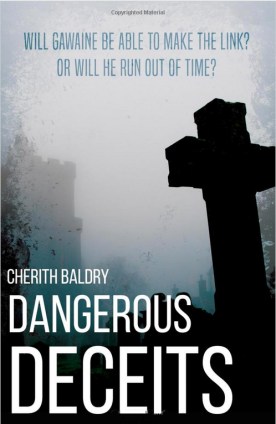 You might guess that a crime novel featuring an amateur detective called Gawaine St Clair is not going to take you down many mean streets; furthermore, were one to Frenchify its chromatic tint, then it would probably be nearer beige than noir. This being said, if you are a Golden Age fan, like dry humour, enjoy a clue-laden whodunnit and are never happier than when luxuriating in the follies and foibles of the English middle classes, then Cherith Baldry’s Dangerous Deceits will be a joy.
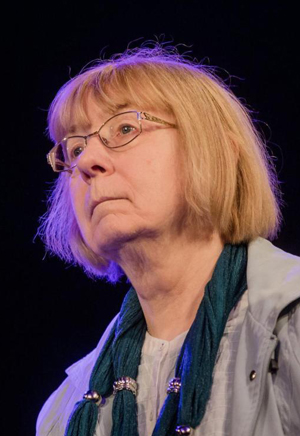 Gawaine may be too arch and precious for some tastes but he fits perfectly into the Home Counties landscape with its manicured village greens and faux Tudor dwellings. I thoroughly enjoyed Dangerous Deceits and Father Tom’s killer is unmasked not amid the dusty shelves of a country house library, but in the altogether more fractious atmosphere of an extraordinary (in the procedural sense) meeting of the Ellingwood PCC. The solution, as in many a whodunnit, rests with everyone – including Gawaine, the local coppers and, in this particular case, me – making a seemingly obvious assumption early in the piece.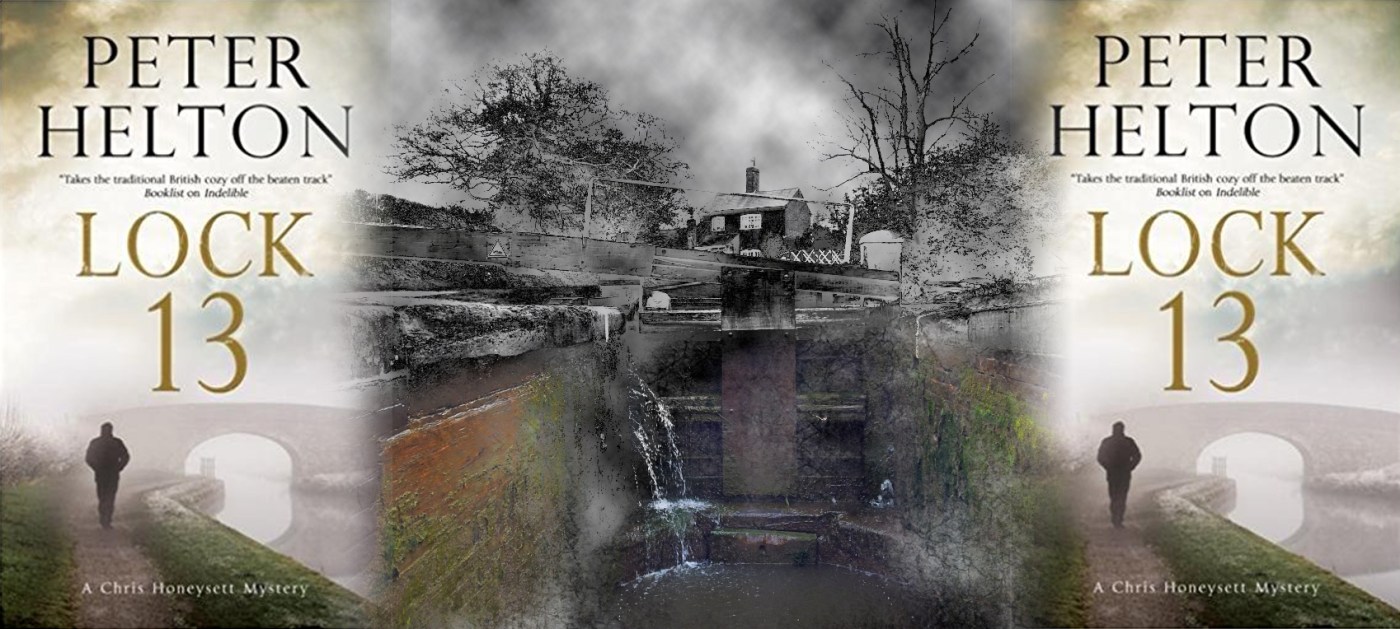
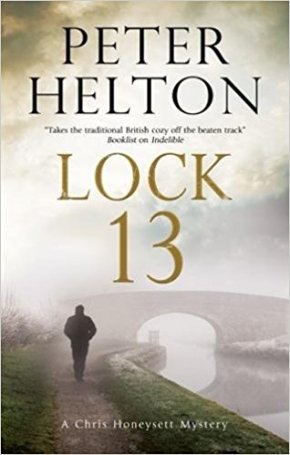 Lock 13 features Chris Honeysett, a private detective whose cases I had never read before, despite this being the sixth in what is clearly a popular series. The previous episodes are Headcase (2005), Slim Chance (2006) Rainstone Fall (2008) An Inch of Time (2012) Worthless Remains (2013) and Indelible (2014). Honeysett, like his creator Peter Helton (more on Helton’s website
  Sometimes a novel is so delightfully written that a reader can reach the last page with a smile and sense of contentment, despite the fact that nothing very dramatic or shocking, at least by the standards of some modern thrillers, has happened during the 200 pages or so which have made up the narrative. Lock 13 is one such book. Peter Helton (right) tells the story through the eyes of Chris Honeysett, and the style is fluent, conversational, occasionally erudite, often witty – but always very, very, readable. Established fans of the Honeysett series can feel duly smug that the amiable painter-sleuth has found another convert, and they can rest assured that I shall be working my way through the file of Honeysett’s previous cases. Lock 13 is published by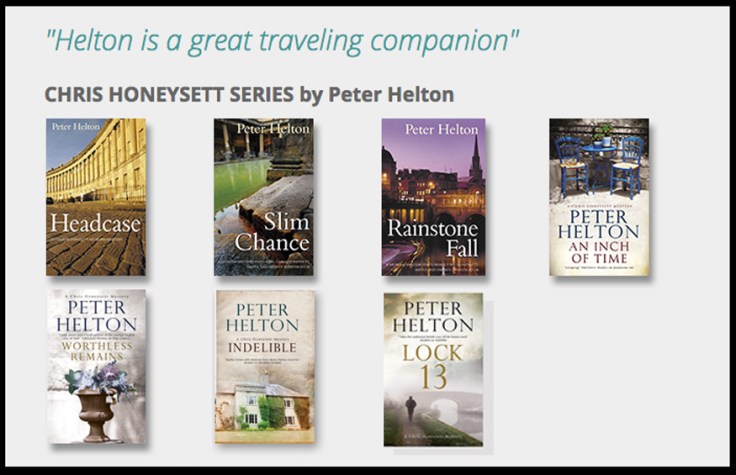


 I do love Operas, though – at least those written up to the death of Giacomo Antonio Domenico Michele Secondo Maria Puccini (who would be just as wonderful even if he didn’t have six christian names.) I would add the personal caveat that for me it is sometimes better heard than seen, as stage productions can sometimes demand too much suspension of disbelief. Our chosen book, then, is Spur Of The Moment by David Linzee, and it is set around the St Louis Opera company as they prepare a performance of Bizet’s wonderful, preposterous, exhilarating four-act classic, Carmen.
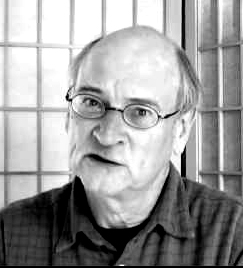 David Linzee has himself been a ‘supernumary’ – basically the opera equivalent of a spear carrier – and he enjoys several digs at the way an opera company in a mid-sized city is run. I particularly enjoyed his jibes at the ubiquitous need for sponsorship. Linzee (right) explains that the SLO has to make sure that literally every brick in the building has corporate support. Thus we have the Peter J Calvocoressi Administration Building, the Charles Macnamara III Auditorium and – best of all – the Endeavour Rent-a-Car Endowed Artist. In this case it’s Amy Song, the woman playing Carmen.

 Some historical crime fiction takes us back to times way, way before our own memories could have any validity. Then there are stories set in periods that many of us could reasonably have experienced at first hand. With the former, it is simply the author’s research versus the depth – or lack of – our own historical knowledge. The latter is a much more tricky enterprise, as someone who sets their book in the 1960s, for example, can be exposed to a more searching light – that of readers who actually lived through the years in question.


 fullybooked2017