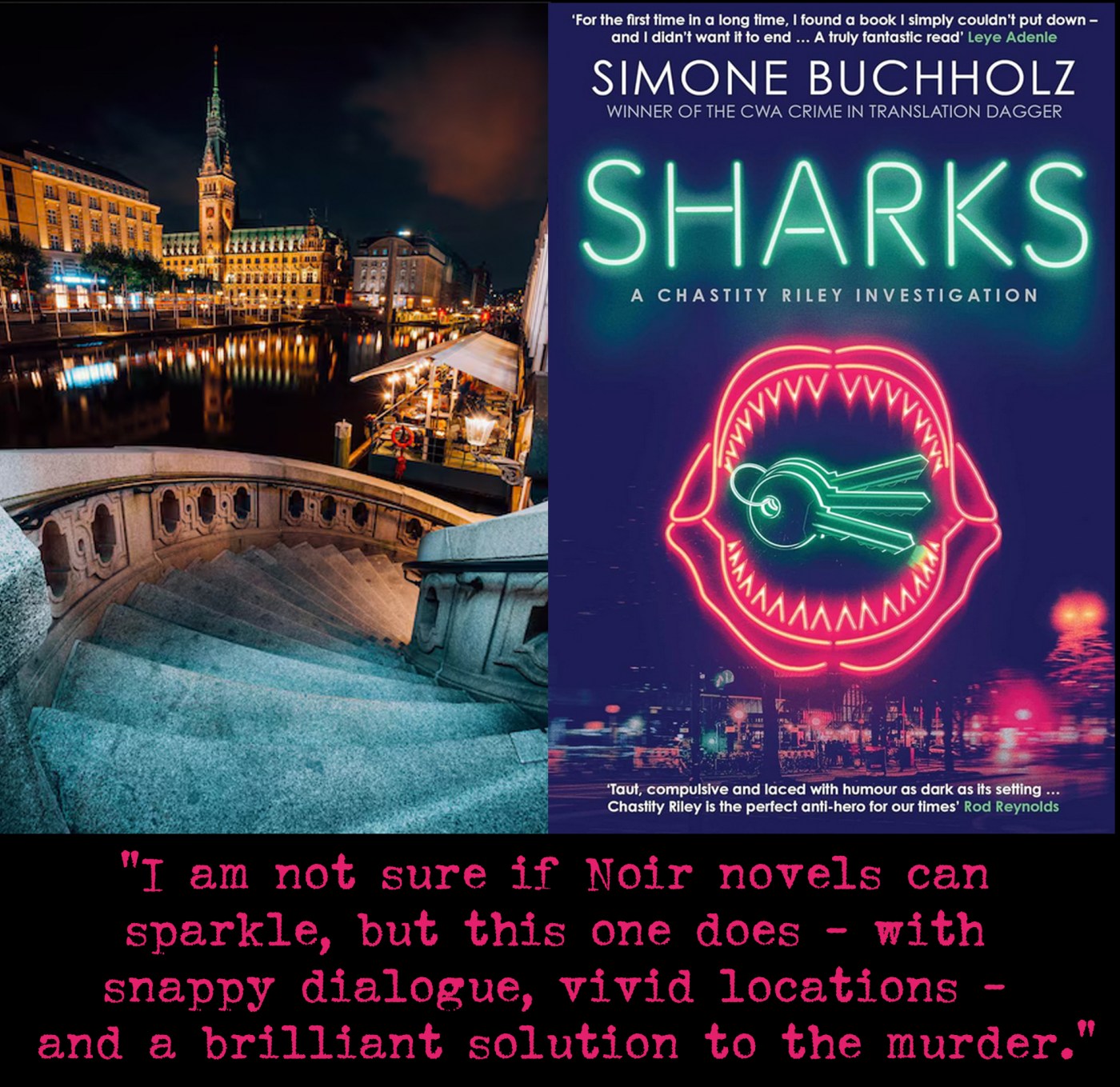

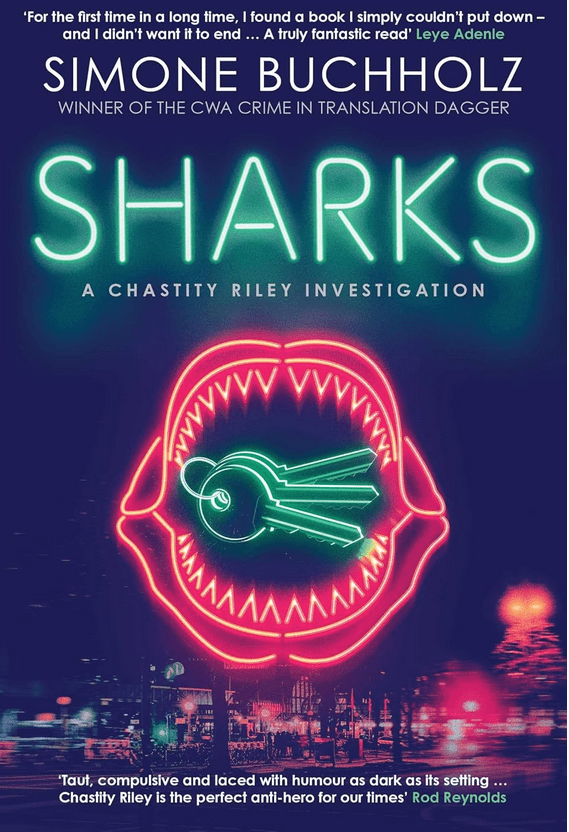
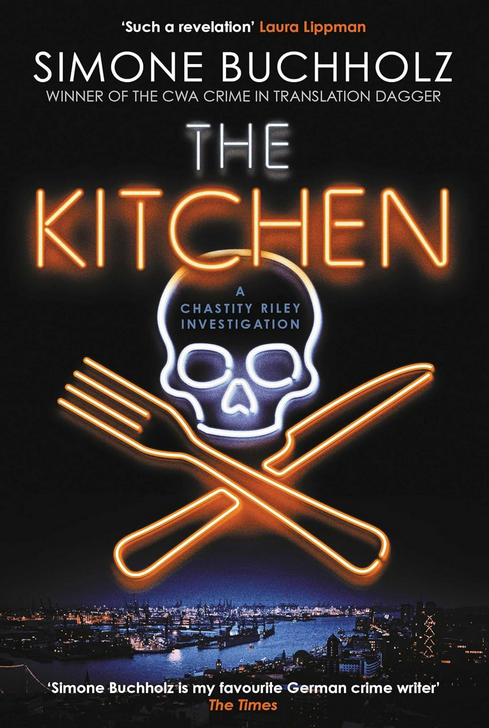
In April 2024 I reviewed The Kitchen (same author, same central character) and I was impressed. If you click the title, you can read why. Now, Hamburg prosecutor Chastity Riley returns, and we are wading through gore from page one, as Fraulein Riley views the bodies of an elderly American couple – Walt and Lorraine Tucker – in their run-down villa in the suburb of Wilhemsburg. The book blurb describes the district as troubled, while an AI response on Google says it is “no longer considered “rough” in the sense of being dangerous, but rather in the sense of being an “up-and-coming” edgy, urban, and authentic district”. I think I trust Simone Buchholz rather than corporate PR-speak.
“All I see is a muddle of ghetto and nature. I see run down tower blocks, gloomy pubs, grey streets, and growing right next to them are birch birch trees and willows and rose bushes. Sometimes there’s a little canal or a meadow.There are even old farms a bit further from the S-Bahn tracks. I get the idea things could be really nice here. But it doesn’t work.The problem is this part of town has problems and its emotional core is dreariness.There’s no new dawn in the air.There’s a rot, a lack of prospects. Abandon hope all ye who enter here. Flee while you have the chance. And the only people who come here are those who can’t afford anything else, or not anymore. People don’t look like they’re here of their own free will.”
Near the Tuckers’ house is the Rote Flora, something of a Hamburg institution. A former theatre, it has been occupied since 1989 by alternative-lifestyle squatters, and some of them tell Chastity that Tucker hated them with a vengeance, and never lost an opportunity to be offensive towards them.Genuine Noir is about despair. It is about people living on the edge. Here, Chastity’s old chum, Haller, describes a woman he has met while (unofficially) investigating the Tucker murders.
“She told me that since her husband died, she’s been going for walks. For seven years, she’s been walking 16, 18, 20 hours a day. She only goes home to sleep. But she says she doesn’t sleep all that much anymore. Sometimes she doesn’t sleep at all. She thinks she’ll die sooner if she stops going for walks and starts sleeping. When she said that, I thought, she’s sly. She’s running away from death.”
It is through this little old lady that the break comes. On one of her endless walks she spotted two men leaving the Tucker house and driving away in an old Ford Taunus, a gold one. Presented with, first, a photofit, and then a subsequent ID parade, she picks out two ‘guns for hire’ called Caltzo and Rubsch. But who has done the hiring?
Commenting on the style of a translated novel is something of a leap of faith, but we have to trust Rachel Ward. Buchholz punches the narrative forward with short sentences, often containing fewer than a dozen words. Even when Chastity is thinking about her past, pondering ‘what ifs’ or speculating on the future, there is still a powerful sense of immediacy, and the forward movement barely falters. A word of advice. Unless you are German speaker, or know Hamburg, you will need your ‘phone at hand, and Google primed to go. Buchholz peppers the narrative with Hamburg cultural references. For example, Chastity meets her former colleague, the recently retired Haller, in a bar called The Haifisch. Apparently, ‘Haifisch’ was a hit for the German band Rammstein, but it also translates as ‘shark’.
Buchholz keeps the mood relentlessly downbeat. Riley’s BFF Carla has to have a termination. They go together to the clinic and, waiting outside while Carla recovers, Riley observes the day:
“The sky has spread over the city like a blanket, or maybe like a lid. In Hamburg, you can never be certain what the day is going to make of it. Sometimes a low-hanging sky like that seems almost comforting, loving, lulling. And sometimes it just eats everything up. The only thing you can be sure of is that it’s not lightening up again today.”
I am not sure if Noir novels can sparkle, but this one does – with snappy dialogue, vivid locations – and a brilliant solution to the murder. Sharks is published by Orenda Books and is out now.





 fullybooked2017