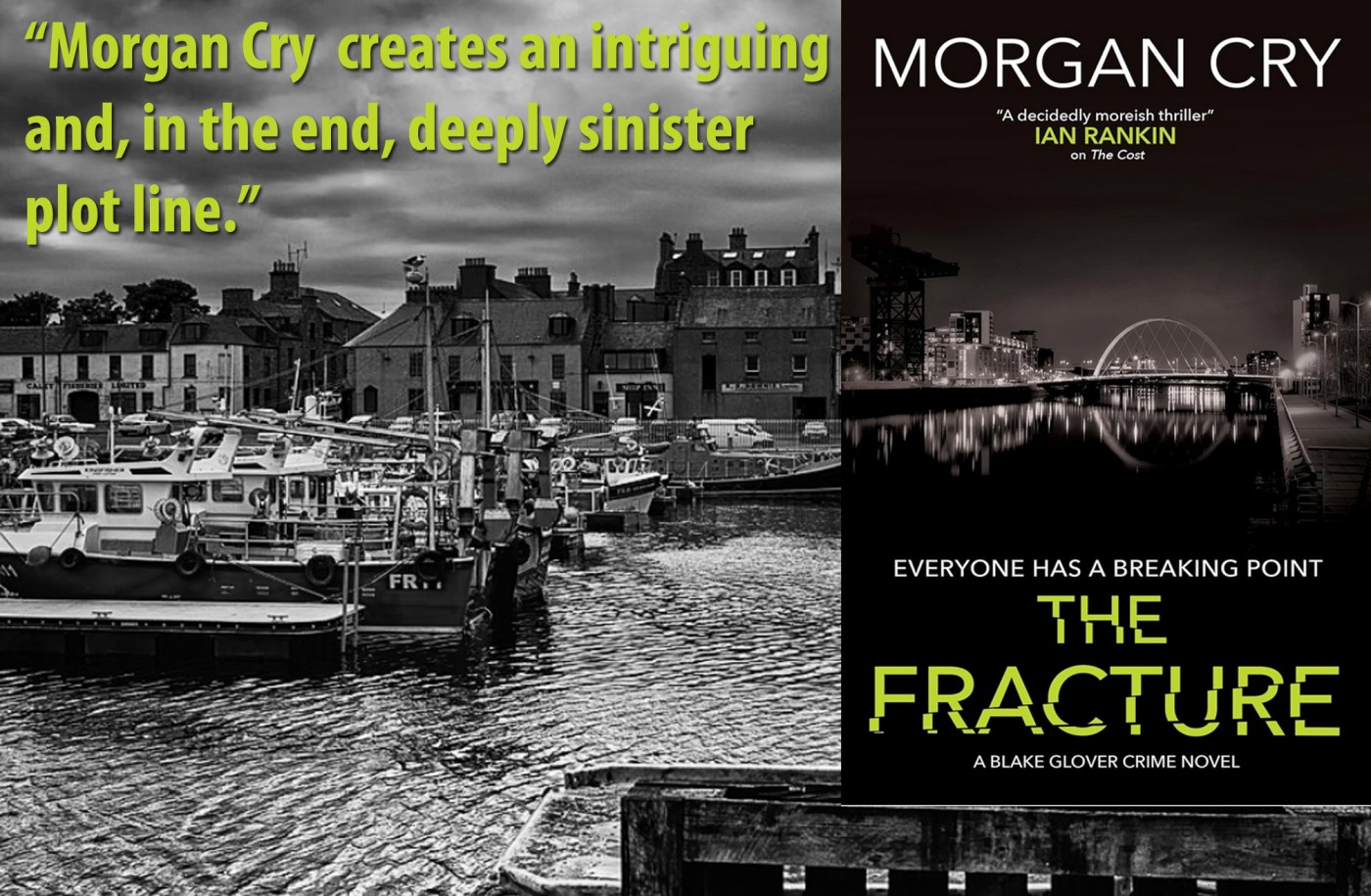

Blake Glover – BG to his friends – is a fifty-something taxi driver in his home town,the bleak fishing port of Fraserborough on Scotland’s north east coast. In a former life he was a police officer on the mean streets of Glasgow. His career ended after a messy attempt – involving planted evidence – to bring drug boss Mitch Campbell to justice. Now, Campbell has been arrested and tried, legitimately, and is awaiting sentence in Glasgow’s notorious Barlinnie prison. Glover is about to find out that Campbell has long reach, despite his incarceration.
The book begins, however, with a dramatic and, apparently, unconnected scene. Out on the desolate Fraserborough shoreline, a homeless alcoholic guzzles his last few mouthfuls of ‘Buckie’ (Buckfast tonic wine) but sees something perturbing out there in the darkness. A man has has walked out onto the beach, taken off his clothes, shoes and socks, and walked out into the white horses of the tide. The drunk staggers towards the beach calling out, but he is too late; the man has disappeared. The strange event has a temporarily sobering effect on the drunk, and he returns to the town and reports what he has seen.
Meanwhile, attending the funeral of an elderly lady he knew from childhood, Glover notices something disturbing. In the teeth of a furious and drenching storm, one of the pallbearers loses control of his rope lowering the coffin into the grave. That corner of the coffin thuds into the earth – and splits. The gravediggers in the mini JCB furiously pile the earth on top of the coffin before Glover can investigate, but he drives away from the churchyard trying to make sense of what he saw. He learns that in the darker corners of the funeral business it is not unheard of for relatives to order and pay for a top of the range oak coffin, only for the corpse to be switched to a more fragile plywood version at the last minute.
The man on the beach left his wallet with his clothes and has been identified as Ray Cocklestone, a former local farmer. He is classed, at least for now, a missing person, but few locals think it will be long before he is declared a suicide. Glover is interviewed by the police, as he may have been one of the last people to have talked to Cocklestone, having taken him in his taxi from his home to a local pub.
Morgan Cry (pen name of Gordon Brown, but no, not that one) creates an intriguing and, in the end, deeply sinister plot line which links the mystery of the splitting coffin and the disappearance of Ray Cocklestone with the truly dreadful things that take place courtesy of The Dark Web and the anonymity it gives its users. The Mitch Campbell storyline develops separately, and is one which comes to threaten not only Glover’s relatively modest current career, but his freedom and, perhaps, his life itself.
There are two central characters in the novel. One is the flawed, but likeable Glover. His lifestyle is certainly destructive, at least from a dietary point of view. He exists on industrial quantities of service station pasties and Mars bars, washed down with copious draughts of that peculiar Scottish delicacy, Iran-Bru. His taxi driver life is a miasma of unwashed passengers and the sickly scent of yet another air-freshener dangling from the rear view mirror. The other imposing presence in the book is Fraseborough itself. The town is frequently battered by the storms swirling in from the North Sea. The reluctant hedgerows and trees dolefully wear their permanent Christmas decorations of discarded plastic bags and wrappers from last night’s fish supper. The pubs, the houses, the leisure centres and the rain washed supermarket car parks are all bleak enough, but the people of the town are lovingly painted for the most part, with their impenetrable Aberdeenshire accents and their abiding love of gossip. The Fracture will be published by Severn House on 4th November.
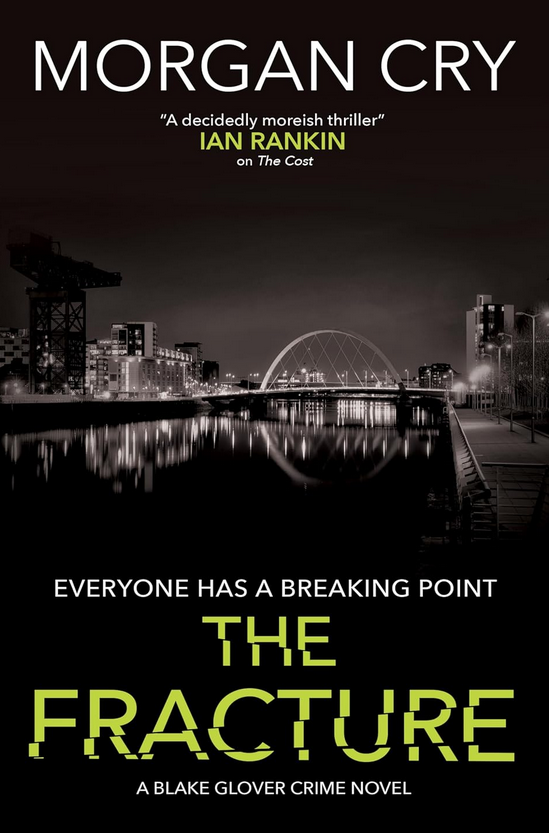
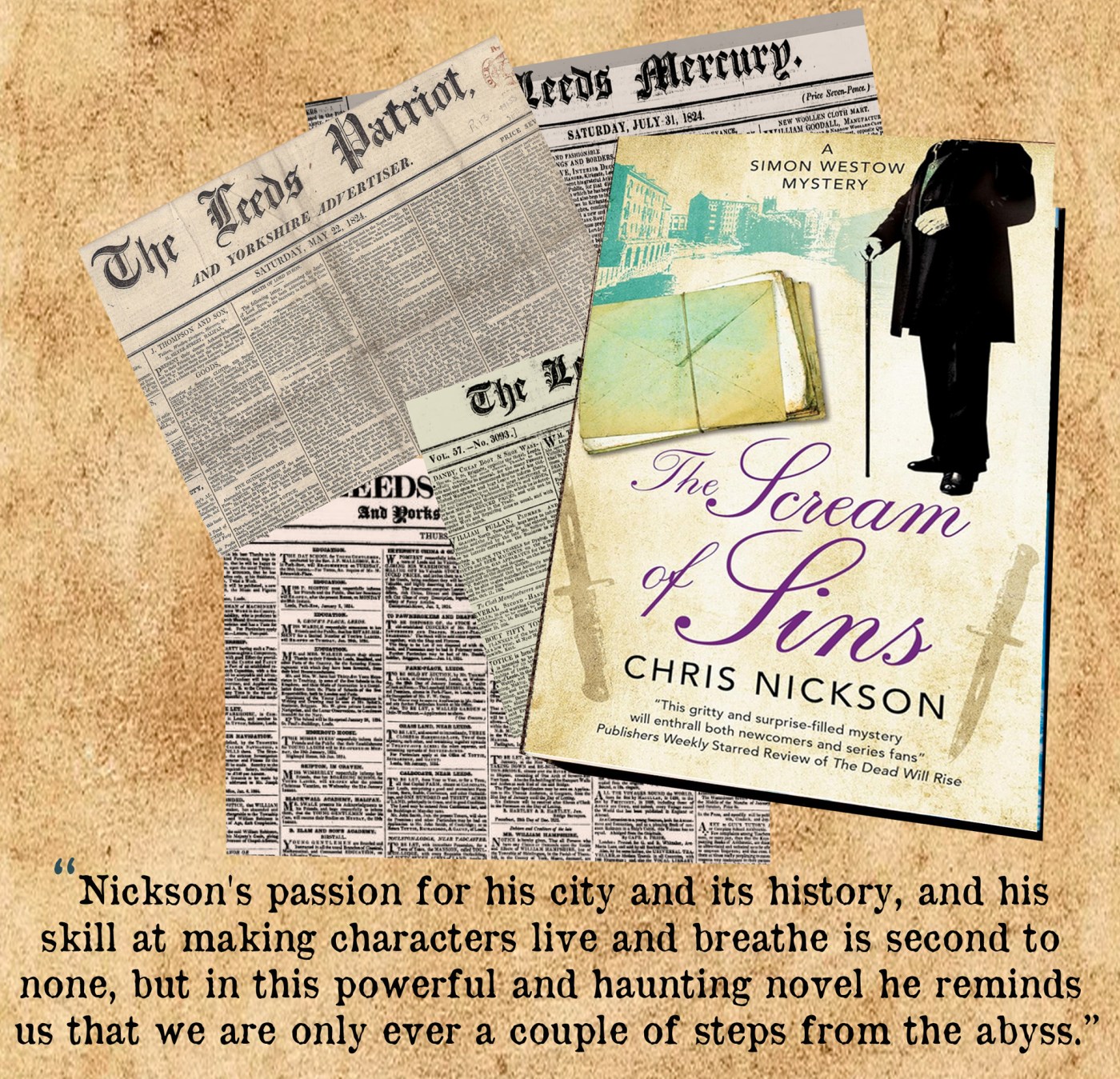

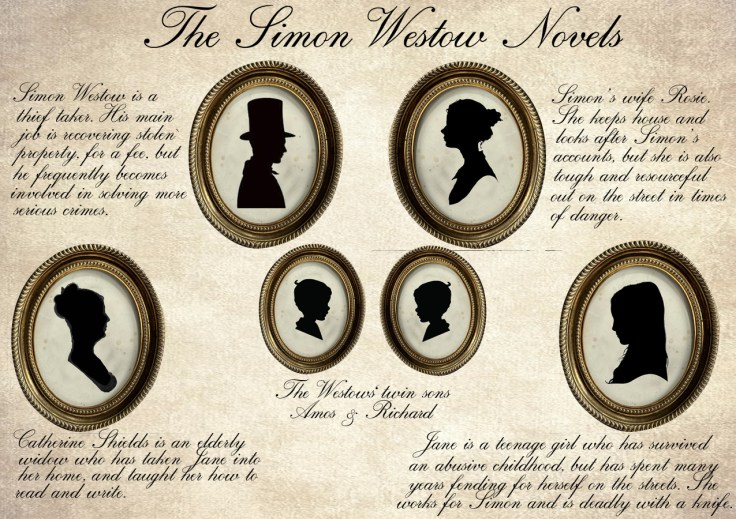
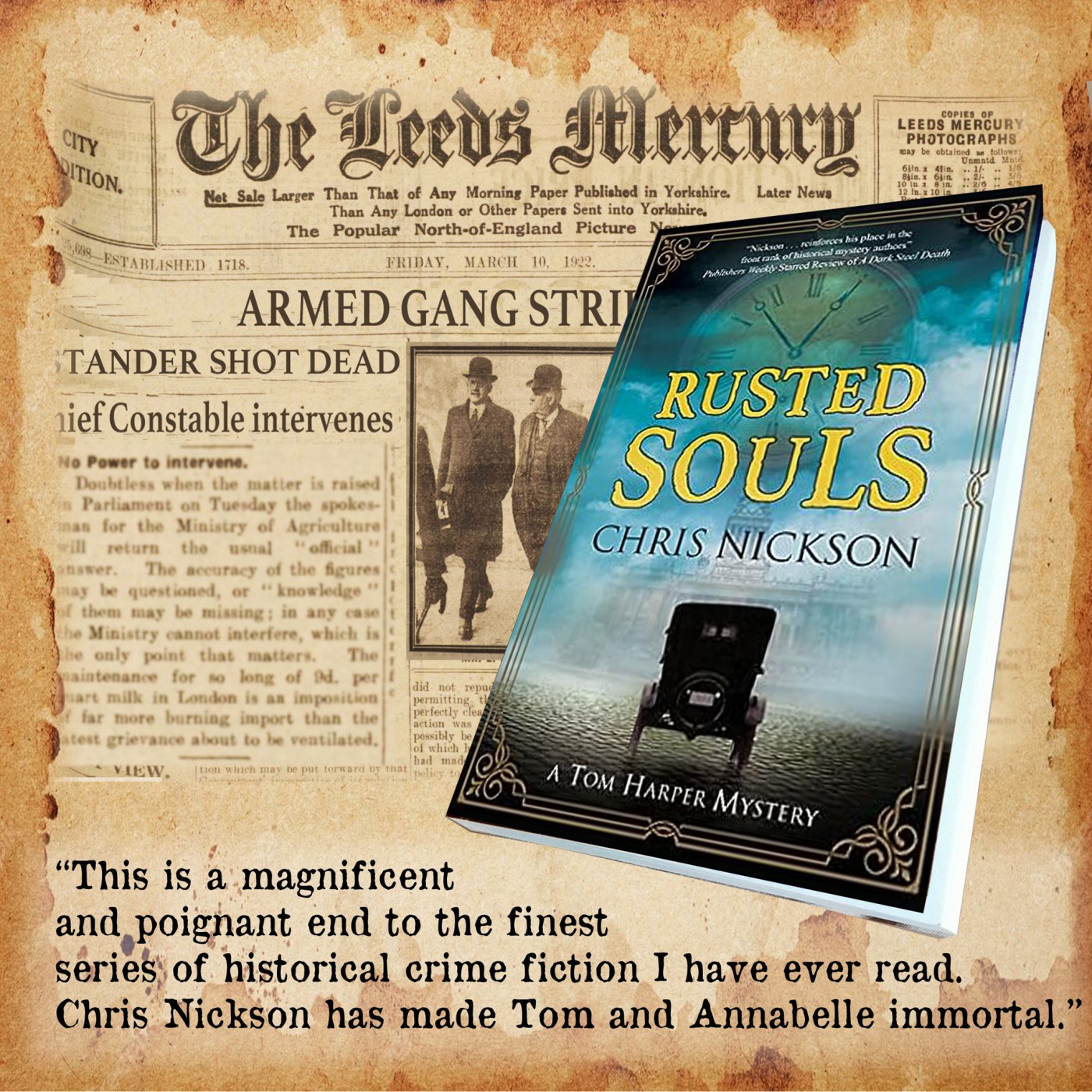
 Leeds, March 1920. Tom Harper is Chief Constable of the City force and, with just six weeks until his retirement, he is dearly hoping for a quiet ride home for the final furlong of what has been a long and distinguished career. His hopes are dashed, however, when he is summoned to the office of Alderman Ernest Thompson, the combative, blustering – but very powerful – leader of the City Council. Thompson has one last task for Harper, and it is a very delicate one. The politician has fallen a trap that is all too familiar to many elderly men of influence down the years. He has, shall we say, been indiscreet with a beautiful but much younger woman, Charlotte Radcliffe. Letters that he foolishly wrote to her have “gone missing” and now he has an anonymous note demanding money – or else his reputation will be ruined. He wants Harper to solve the case, but keep everything completely off the record. Grim-faced, Harper has little choice but to agree. It is due to Thompson’s support and encouragement that he is ending his career as Chief Constable, with a comfortable pension and an untarnished reputation. He chooses a small group of trusted colleagues, swears them to secrecy, and sets about the investigation.


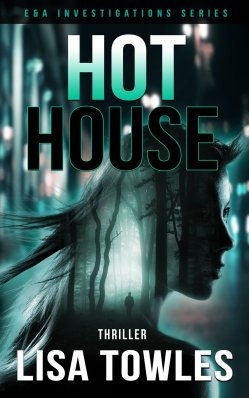 That is just a quick sample of the whip-crack dialogue in the book, which fizzles and sparks like electricity across terminals. Very soon Mari and Derek realise that the blackmailed judge is also connected to the unsolved murder of a French duel-passport student, Sophie Michaud, and the fate of two women journalists who investigated the case, one of whom is dead and the other missing.
 In the end, the blackmailer of the judge is located, and the killer of Sophie/Sasha is brought to justice, but with literally the last sentence, Lisa Towles poses another puzzle which will presumably be addressed in the next book. Hot House is everything a California PI novel should be. It has pace, great dialogue, totally credible characters and a pass-the-parcel mystery where Lisa Towles (right) has great fun describing how Ellwyn and Abernathy peel back the layers to get to the truth. Sure, the pair might not yet stand shoulder to shoulder with Marlowe, Spade and Archer, or even more modern characters like Bosch and Cole, but they have arrived, and something tells me they are here to stay.


 Today’s delivery of two contrasting packets looked intriguing. One was large and weighty, while the other was much slimmer. When I opened the envelopes and looked at the books the differences couldn’t have been greater. One book, Blackmail, is actually written by a retired Judge, and the Nottingham Post tells us:
 If you check the graphic at the top of this feature, it shouldn’t be too difficult to spot which is the retired judge, and which is Frank Westworth, a novelist whose twin passions are powerful motorbikes and playing blues guitar. Frank wrote us an excellent feature a while back called Killing Me Softly – A Guide To Murder, and you can click the link to read it.


 fullybooked2017