Search

fullybooked2017

Tag

Aector McAvoy

AFTER THE WEEPING . . . Between the covers

David Mark novels are never for the squeamish, and this one begins as it means to go on, with a visit to hell, in the form of a flashback. We are in one of the notorious Romanian orphanages which came to light when the country opened up – after a fashion – following the fall of the Ceaucescu regime in 1989. An as-yet-unnamed foreign visitor is being shown what is known as The Dying Room, where dozens of terminally ill children are lying untended in their own filth, some in cages, others in cots.

We soon learn that the visitor was Rab Hawksmoor, the owner of a Hull haulage firm, and someone who went on to become a controversial celebrity for his attempts to smuggle some of these children out of the country, and his frequent brushes with the Romanian authorities and crime gangs.

Present day, and we rejoin the unique repertory company that has featured in thirteen previous Aector McAvoy novels. Central is Aector himself, a towering bear of a man, originally from the Scottish Highlands. He is capable of terrifying violence when provoked but is, by nature, meek, socially unsure, a devoted husband to Roisin, and a proud father of two children, Lilah and Finn. He is now a Detective Inspector, in charge of a Cold Case Unit. His closest professional colleague is Detective Superintendent Trish Pharaoh. Not only does she never ‘play by the book’, there is not a police manual from which she has not ripped the pages and then thrown on a bonfire in contempt.

Rab Hawkswood is now a shadow of his former self:

“Shrunken now. Diminished. Grey hair and straggly beard, scrawny chicken skin and a lank ponytail hanging whitely from his otherwise bald head.”

Aside from his own exploits, Hawkswood has known personal tragedy. A decade earlier, his son Davey – a bare-knuckle fighter – was found beaten to death near a local cemetery. His murder was never solved, but the case has now been resurrected, and McAvoy has the dubious privilege of leading the investigation, despite the protests of Davey’s mother.

Leaving aside the fact that Hawksmoor’s Romanian crusade seems to have unleashed the closest human thing to a monster from hell, to add to McAvoy’s problems, Trish Pharaoh appears to be playing, not for the first time, a destructive and secret game of her own devising that is leaving a trail of bloodied bodies in its wake. That, and the fact that Roisin’s father, the dangerously ‘Papa’ Teague and his Traveler kin now appear to have skin in the game. The conclusion is predictably violent and, not for the first time, David Mark takes us on a journey through the darker landscape of human excesses and venality, and with the walking paradox that is McAvoy at his most vulnerable – and dangerous.

After the Weeping will be published by Severn House on 2nd December. Click the author image (left) to read my reviews of earlier Aector McAvoy books.

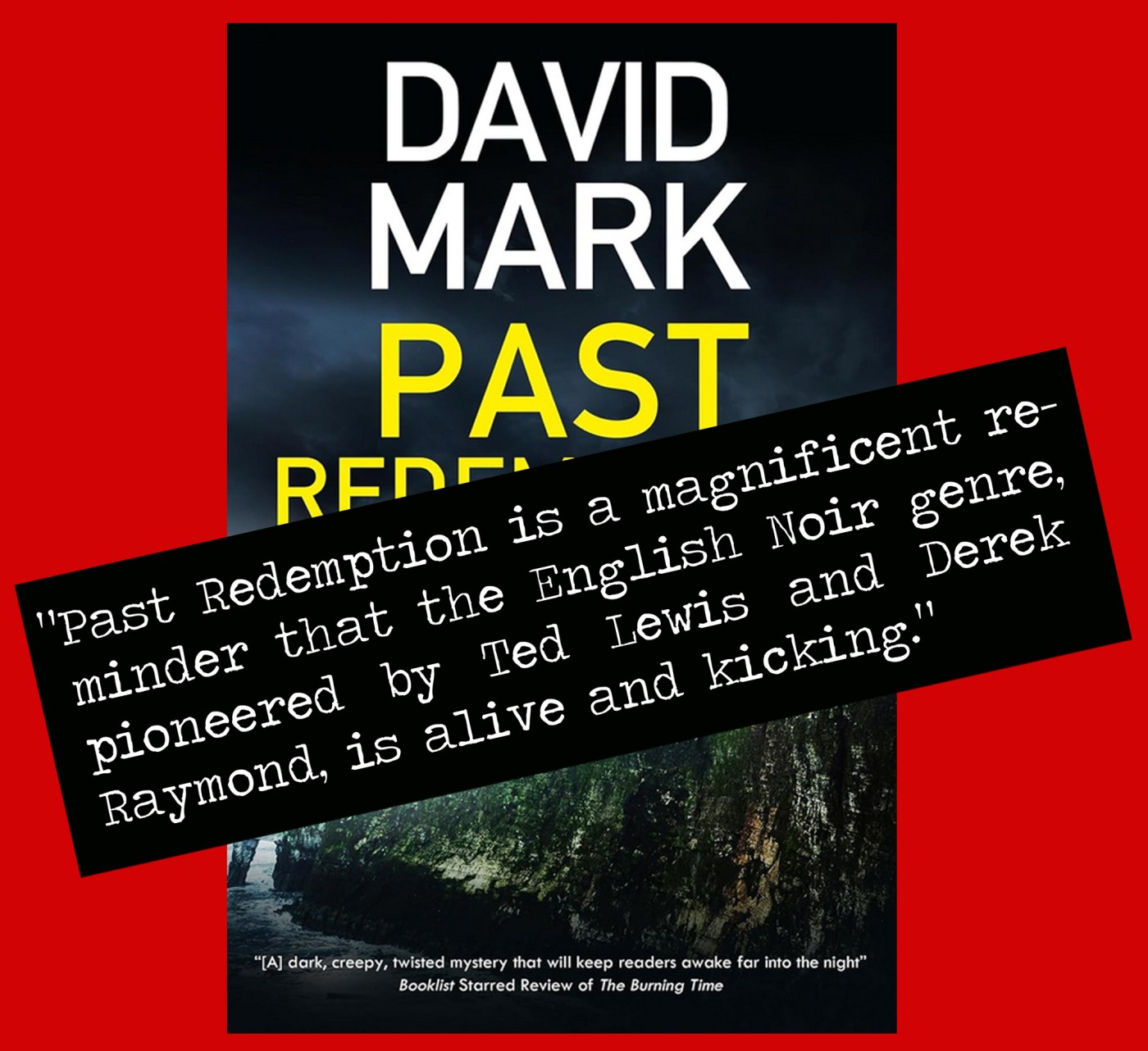
PAST REDEMPTION . . . Between the covers

PR feature

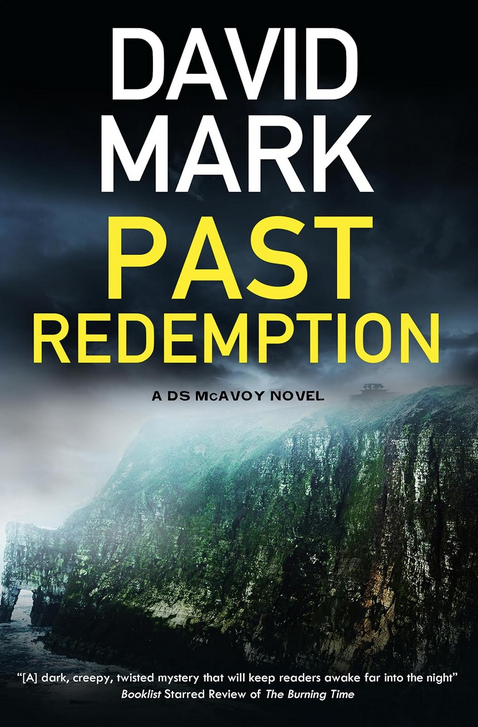
The new Aector McAvoy novel by David Mark begins with a bloodbath. A man is being literally ripped to pieces with the savagery torturers used to flay saints in medieval times. Just as it seems the victim is done for, someone comes to his rescue, in the shape of a small but fierce woman. We soon learn that the tortured man is Decland Parfitt who would, after he made an almost miraculous recovery, be jailed for child sexual abuse. His rescuer? Aector McAvoy’s long time boss, the formidable Chief Detective Superintendent Trish Pharaoh.

The story actually begins with a man driving in the pouring rain along a remote minor road in East Yorkshire. The driver, a man named Joe, is getting an ear-bashing from his ex-wife – who is on speaker phone – over the way he has let their daughter down. Distracted by her tirade and with the windscreen misting up, he feels a large bang, and knows he has hit something. When he gets out of the car he sees what appears to be a large black bag lying in the road. Rapidly calculating that there will be no cameras nearby, he gets back in the car and drives off. The bag is later found to contain a body – that of John Dennic, jailed for a savage assault on a police officer, and an acquaintance of Parfitt in prison. Dennic had been on day release when he went missing.

Parfitt was an arch-deceiver. He brought fun and laughter to countless youngsters across the region as a children’s entertainer. Dressed rather like Lofty in It Ain’t Half Hot Mum, he was everyone’s favourite uncle, with his jokes, his performing animals and his sunny disposition. He was a single man, but that rang no alarm bells with the local authorities when he applied to be a foster parent to two damaged sisters. Incredibly, his request was granted. One of the girls, Gaynor, suffered such abuse at his hands, that she later committed suicide. Younger sister Ruby, however, adored her foster dad and swore on oath that Gaynor was in a state of drug induced delusion.

Trish Pharaoh has two major problems to deal with and, by definition, they become McAvoy’s too. It seems that the prison authorities are determined to release Parfitt from prison, and Pharaoh needs to stop this. Second, she needs to disturb Ruby’s deep conviction that her foster father is a decent man who was wrongly convicted. Pharaoh is also convinced that Parfitt was also responsible for the abduction and murder of at least two girls, whose bodies have never been found.

The cast of villains in many of David Mark’s novels resemble the creations of the great Dutch painter Hieronymus Bosch. Bosch was obsessed with the darker side of humanity, and if you take a magnifying glass to his paintings, you can see tormented individuals, scurrying this way and that in the hellish landscape in which the painter has placed them. Bosch painted a figurative mouth of Hell, a gaping maw into which humans are sucked. Mark’s villains, such as Parfitt and Dennic are consumed by a metaphorical hell created from their own misdeeds. This is dark stuff, and not for the cosy crime community. Past Redemption is, however a fierce and gripping tale of evil deeds committed against the grey and dreary background of a city once vibrant with the noise and smells of its fishing industry, but now reduced to a backwater trying to celebrate what it once was.

The novel plays out with dramatic revelations of people who have pretended to be one thing, but were something else entirely. It is no coincidence that the man who nearly killed Parfitt, and may have killed Dennic has the nickname Virgil. David Mark himself plays Dante’s Virgil, as he leads us through Purgatory and Hell, contrasting his monstrous villains with McAvoy who, although, a physical giant, is gentle, endearingly clumsy, but fiercely brave. Past Redemption is a magnificent reminder that the English Noir genre, pioneered by Ted Lewis and Derek Raymond, is alive and kicking. The novel is published by Severn House and will be available on 3rd December.

Screen Shot 2024-11-10 at 20.06.33

THE BURNING TIME . . . Between the covers

TBT header

After David Mark starts his latest novel with a nod to the celebrated first three words of Herman Melville’s masterpiece, the first chapter of The Burning Time made me wonder if I had slipped off the page and fallen into a visceral nightmare straight out of the Derek Raymond playbook displayed in I Was Dora Suarez – there was blood, pain, death, distortion, madness, fire – and human disintegration.

Chapter two reminds readers that we are accompanying Inspector Aector McAvoy on his latest murder investigation. Bear-like McAvoy – based in Hull –  and his beguiling gypsy wife Roisin, have been invited to an all-expenses-paid stay at a luxury hotel in Northumbria  to celebrate the seventieth birthday of McAvoy’s mother. Mater and filius have become somewhat estranged over the years, mainly due to mum dispensing with Aector’s dad when her son was young, and opting for a newer, richer husband – who insisted on Aector being sent away to boarding school, causing mental scars which have not healed over the years. Aector, via this arrangement, has a step brother called Felix, older than he, and a person who subjected his younger step sibling to all kinds of mental and physical bullying back in the day. It is Felix who has organised the family gathering.

Part of the carnage in chapter one involves  Ishmael Piper – a middle-aged hippy living with a twin curse, the first part being that he was the son of the late and legendary rock guitarist Moose Piper, and the second being that he is suffering from Huntington’s Chorea, the degenerative disease whose most famous victim was the American musician Woody Guthrie. Ishmael inherited much of his father’s wealth, guitars and memorabilia, but his life has become a protracted car crash. His life comes to an end when his remote cottage on the Northumberland moors is gutted by fire. He is found dead outside, his daughter Delilah clutching his hand, while one of his female companions, asleep in an upstairs room, is the second fatality. Delilah has been badly burned. Later, McAvoy sees her:

He wants to look away; to jerk back – to not have to see what the flame has done on half of her face. He thinks of wormholes at low tide. He can’t help himself: his imagination floods with memories; so many twisted worm-casts in the soft grainy sand.’

McAvoy is an intriguing creation. He is physically massive, but suffers from debilitating shyness and a chronic lack of social confidence. He is, however, formidably intelligent and a very, very good policeman. Crime fiction buffs will know that there is a certain trope in police novels, where the newly promoted detective becomes frustrated with paper work, and longs to be out on the street catching villains. McAvoy is more nuanced:

‘It always surprises his colleagues to realise that, in a perfect world, McAvoy would never leave the safety of his little office cubicle at Clough Road Police Station.’

The Puccini aria from Tosca, Recondita Armonia, can be translated as ‘strange harmony’, and no harmony is stranger than that between McAvoy and his wife Roisin. They share a fierce intelligence, but David Mark portrays her as slender, captivatingly beautiful and blessed – or cursed – with an intuition and silver tongue inherited from her Irish gypsy ancestors, and a dramatic contrast to her physically imposing but socially gauche husband.

McAvoy realises that he has been invited to the family gathering, not out of any desire for reconciliation, but because Felix wants him to find out the truth behind Ishmael’s death, a task at which the local police have failed. McAvoy, of course – after bouts of epic violence involving various bit-players in the drama – does find the killer, but in doing so illustrates that the birthday party was nothing other than a bitter charade. The Burning Time – a powerful and sometimes disturbing read –  is published by Severn House and is available now. For more reviews of David Mark novels, click the image below.

Screen Shot 2023-12-09 at 19.36.32

FLESH AND BLOOD . . . Between the covers

FABheader

This is book number eleven in the series, so a quick heads-up for new readers.
Time: the present
Place: Humberside
Main characters: Detective Inspector (recently promoted from DS) Aector McAvoy. He is a Scot, huge and bear-like, a gentle soul but a formidable copper. His wife Roisin; she is of Irish Gypsy stock, romantic but fiercely protective of Aector and their children – Fin and Lilah. Detective Superintendent Patricia ‘Trish’ Pharoah, thirty years in the force, and as tough as nails. Trish and Aector worship each other, but it is a purely platonic relationship. McAvoy is on holiday with his family in the Lake District, living in a traditional Romany Vardo.

In this book:
Reuben Hollow, a serial killer, serving several life sentences for murdering people he judged as having escaped justice. He was captured by McAvoy. Detective Chief Superintendent George Earl. Promoted because Trish Pharoah turned down the job. Earl is the very model of a modern media friendly senior police officer:

Trish is not immune to the pleasures of the flesh, and she is in bed with an Icelandic copper she met on a course. Their post coital bliss is disturbed by Trish’s car alarm going off, and Thor Ingolfsson runs downstairs to investigate. He is attacked with an adze and left for dead. Thor happens to be a dead ringer for Aector, and when the local police arrive to find the man face down in the road, they put two and two together, and make seventeen. Aector is very much alive and well, however and, despite being told to stay well away by Earl, he is determined to find out what is going on. David Mark’s description of Earl will ring horribly true to anyone who has experienced senior management in corporate services in recent years:

“George Earl is a tall, slim, straight-backed careerist who exudes the gentle earnestness and Anglican-priest sincerity of a Tony Blair. He has a habit of clasping his hands together when he talks, and makes a great show of telling his staff that his door is always open, and there’s no such thing as a stupid question.”

David Mark spent years as a crime reporter for a regional newspaper, and so he is well aware of the depths of villainy which are regularly plumbed by apparently ordinary and innocuous men and women. He also knows that – despite graduate entry – some of the people who are accepted as police officers are not “the brightest and best of the sons of the morning.” (Activists – please feel free to substitute the gender of your choice)

“The three uniformed constables milling around at the rear….he’s noticed that none of them seem to be able to breathe through their nose. All in their twenties and look as though they would be more comfortable working in a phone shop or flogging gloriously chavtastic trainers in a sports shop.”

What follows is pure mayhem. A former police colleague of Trish Pharoah meets an elaborate death by wood-carving chisels, McAvoy narrowly escapes death by hanging, in an execution house probably last used by Albert Pierrepoint, the chaos of Trish Pharoah’s previous life is laid bare to the world, and our man emerges – not unscathed – but able to fight another day.

Flesh and Blood veers violently between the darkest noir imaginable and a simple – but affecting – poetry. It is published by Severn House and will be available on 6th June. The final sentence sums up this brilliant series:

“And inside McAvoy’s head, another voice joins the chorus of the dead.”

https://fullybooked2017.com/tag/david-mark/

BLIND JUSTICE . . . Between the covers

BJ header

In the thirteenth episode of what is a genuinely impressive series, David Mark’s Hull copper Aector McAvoy returns, along with the established cast – his wife Roisin and their two children, and his boss, Detective Superintendent Trish Pharoah. McAvoy is, as the name suggests, a Scottish exile, and he is built like the proverbial brick you-know-what. Despite his forbidding appearance, McAvoy is a peaceable and studious man, shy with other people, but perceptive and with an attention to detail that matches his formidable appearance.

Screen Shot 2022-03-15 at 19.07.34The book begins with a flashback to an attempt by young men to carry out what seems to be a robbery in an isolated rural property. It ends in horrific violence, matched only by the destructive storm that rages over the heads of the ill-advised and ill-prepared group. Cut to the present day, and another storm has lashed Humberside, bringing down power lines, flooding homes, and uprooting trees. One such tree, an ancient ash, reveals something truly awful – a human body, mostly decayed, entwined within its roots in a macabre embrace.

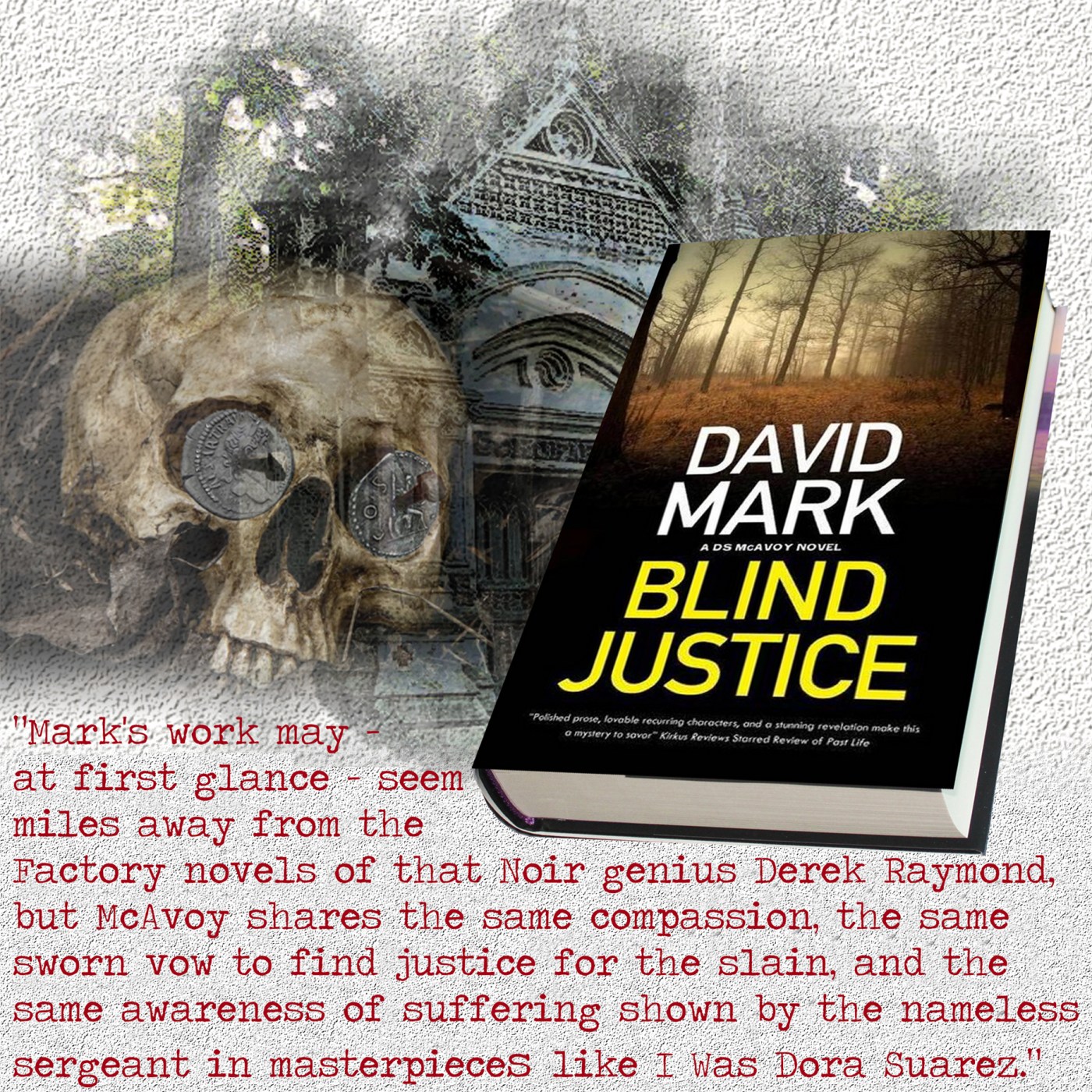
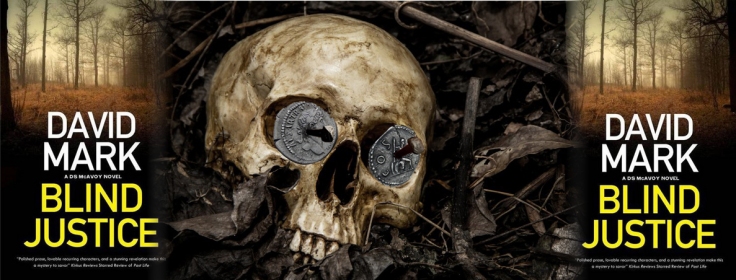
McAvoy is called to the scene, and it doesn’t take too much evidence – in this case a pair of fashionable trainers – for McAvoy to deduce that this body has been put into the ground in living memory. What is astonishing, however, is that two Roman coins have been nailed into the victim’s eyes. The gentle policeman can only hope and pray that this act was not done while the victim was still alive. To make matters more disturbing, the fragile bones of two babies are also found.

The body is soon identified as that of a university student who went missing in the 1990s, but what on earth was he doing in this remote spot, and who had cause to kill and maim him in such a fashion? The owners of the adjacent property are interviewed, but add nothing to the investigation. Pharoah and McAvoy discover that the case may be linked to the trade in ancient artifacts discovered by illegal metal detectorists – nighthawks – and there is disturbing evidence that a notorious Manchester gangster – convicted of horrific torture just a few years earlier – may be involved on the fringes of the case.

Screen Shot 2022-03-20 at 19.29.57David Mark (right) writes with a sometimes frightening intensity as dark events swirl around Aector McAvoy. The big man, gentle and hesitant though he may seem, is, however, like a rock. He is one of the most original creations in a very crowded field of fictional British coppers, and his capacity to bear pain for others – particularly in this episode his son Fin and Trish Pharoah – is movingly described. Mark’s work may – at first glance – seem miles away from the Factory novels of that Noir genius Derek Raymond, but McAvoy shares the same compassion, the same sworn vow to find justice for the slain, and the same awareness of suffering shown by the nameless sergeant in masterpieces like I Was Dora Suarez.

The terrifying climax to Blind Justice is also straight out of the Derek Raymond playbook and is not for the squeamish, but vivid and visceral. Where David Mark does differ from his illustrious predecessor is that he allows McAvoy the redemption and respite denied to Raymond’s sergeant with his dead child and mad wife, and it comes in the shape of his intriguing part-gypsy wife and their children.

If I read a better book all year, be sure that I will let you know. Blind Justice is published by Severn House and will be out on 31st March.

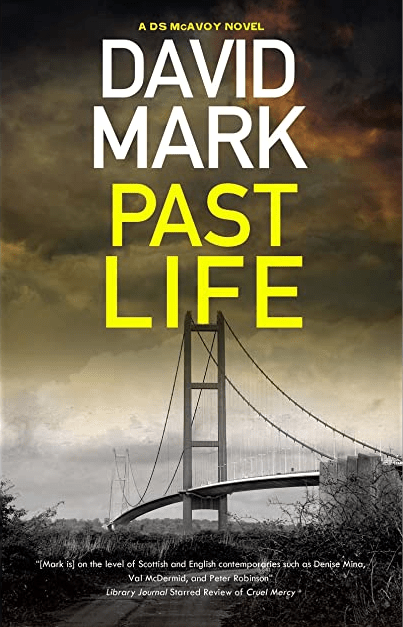
PAST LIFE . . . Between the covers

PAST LIFE HEADERE

I won’t repeat my spiel about coming late to an established series (which I seem to do all too often), so here’s a brief account of where we are in Past Life. Aector McAvoy is a Detective Sergeant working in Hull, on the north bank of the Humber Estuary. He is married to Roisin, who is of Irish Traveller heritage, and they have two children, Fin and Lilah. His boss is Detective Superintendent Trish Pharoah. McAvoy is a bear of a man, born to a Scottish crofter family. He is capable of great violence, but is fundamentally a gentle soul but perhaps too conciliatory and thoughtful for his own good. Author David Mark tells us:

“He is not a man at ease with the world or his place in it. He feels permanently displace; dislocated – endlessly cast as an outsider. He’s still the lumbering red-haired Scotsman who left the family croft at ten years old and has been looking for home ever since.”

Screen Shot 2021-10-10 at 20.06.34The story begins with a murder, graphically described and, at this point in the review, it is probably pertinent to warn squeamish readers to return to the world of painless and tidy murders in Cotswold manor houses and drawing rooms, because death in this book is ugly, ragged, slow and visceral. The victim is a middle-aged woman who makes a living out of reading Tarot cards, tea leaves, crystal balls and other trinkets of the clairvoyance trade. She lives in an isolated cottage on the bleak shore of the Humber and, one evening, with a cold wind scouring in off the river, she tells one fortune too many.

When McAvoy and Pharoah arrive at the scene they find the ravaged remains of Dymphna Lowell, and understand why one or two of the police officers first to respond to the 999 call have parted company with their last meal. Trish Pharoah has seen worse, but then she has been a regular onlooker at grisly tableaux that demonstrate the depths that humans can sometimes plumb. She is the wrong side of middle age, but not going gently into that good night. She has four daughters and nursed her husband – although he was an absolute bastard – day and night as he took a long time to die from an aneurism.

As McAvoy and Pharoah hunt the killer, the back-story is crucial and it needs to be explained. Roisin’s family have been engaged in a decades-long blood feud with another clan, and there has been copious amounts of blood shed along the way. Part of this history involved Roisin saving McAvoy from an infamous killer nicknamed ‘Cromwell’. Cromwell was then gruesomely punished by Roisin’s father, she and McAvoy fell in love and married, but the savage murder of Roisin’s aunt – another fortune teller – cloaks the narrative like a shroud. Roisin is a woman not at ease with the world or herself:

Screen Shot 2021-10-12 at 10.29.37“She has found herself some mornings with little horseshoe grooves dug into the soft flesh of her palms. Sometimes her wrists and elbows ache until lunchtime. She sleeps like a toppled pugilist: a Pompeian tragedy. She sees such terrible things in the few snatched moments of unconsciousness.”

When the satanic Cromwell strikes hard at McAvoy’s family, the big man goes off the radar and hunts down the killer. David Mark (right) gives us what we think is the climax as McAvoy and Cromwell go head to head in a terrifying and violent  battle in a disused WW1 sea fort, but just as we relax and think “job well done”, there is a plot twist that few will see coming, and we learn that there is a final trauma to be endured by the McAvoy family.

This is a dark, brooding novel, with more than a touch of Derek Raymond-esque nihilism and despair but, like his late, great Noir predecessor, David Mark also gives us searing honesty and compassion. Past Life is published by Severn House and is available now in hardback, and as a KIndle in November.

Blog at WordPress.com.

Up ↑