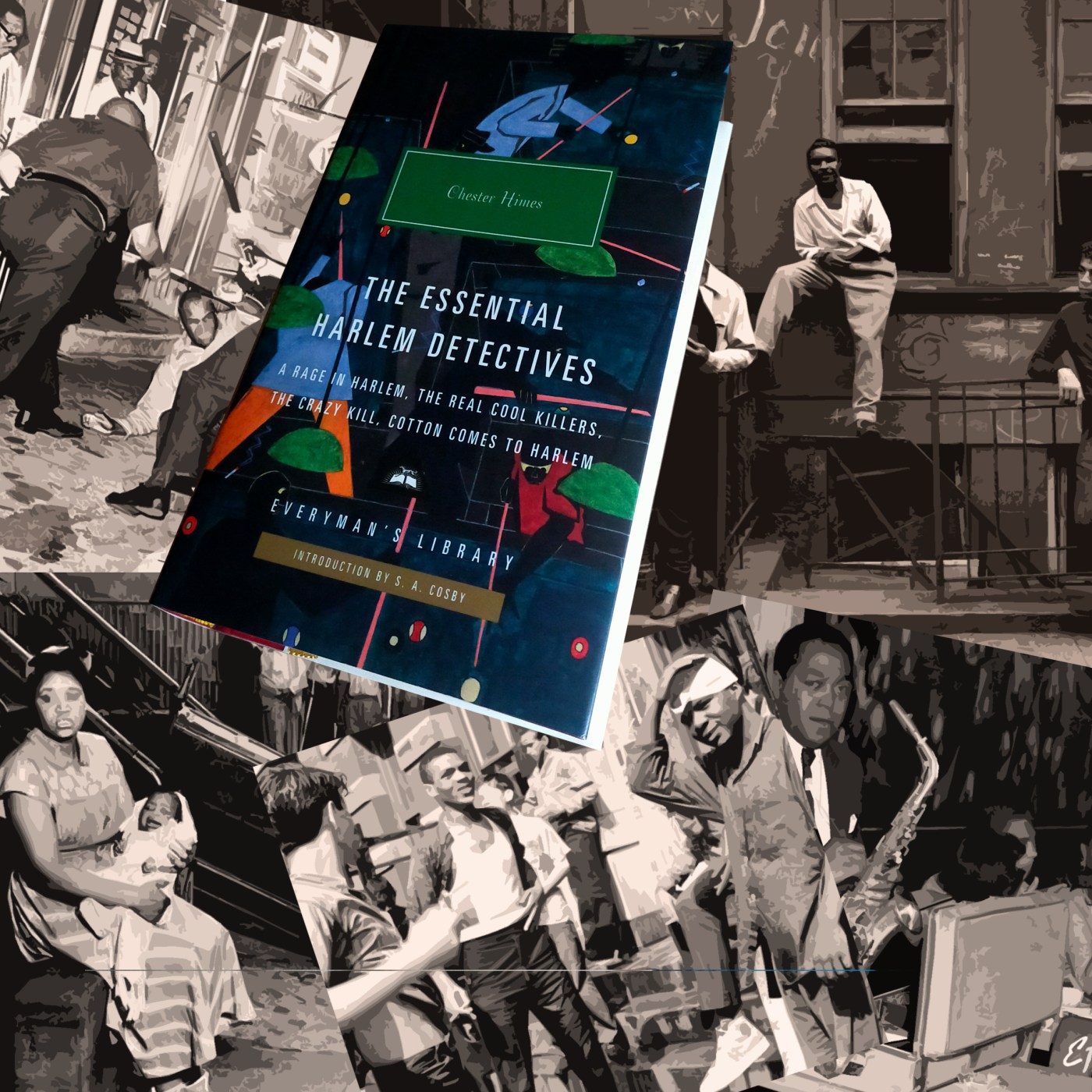


To say that Chester Himes lived the life he wrote about is not strictly true, but his life was full of incident. His childhood was fraught with unhappy events, including being indirectly responsible for his brother’s blindness, and as a young man he did serious jail time for armed robbery. Fired from his job as a Hollywood screenwriter because Jack L Warner didn’t like black people, he eventually quit America for good, disgusted at the racism he faced every single day. He wrote:
I would sit in my room and become hysterical about the wild incredible story I was writing. And I thought I was writing realism. It never occurred to me that I was writing absurdity. Realism and absurdity are so similar in the lives of American blacks one cannot tell the difference.
Himes moved to France in the 1950s, and lived among the Bohemian set in Paris. He eventually moved to the south of France, and then to Spain, where he died in 1984.
There were to be eight completed novels featuring Harlem detectives Grave Digger Jones and Coffin Ed Johnson, and one – Plan B – remained unfinished at Himes’s death. This compendium, from Everyman’s Library, includes A Rage In Harlem (1957), The Real Cool Killers (1959), The Crazy Kill (1959) and Cotton Comes to Harlem (1965). The book is beautifully bound and presented, and even has a book-mark ribbon. This is a definite keeper, to be dipped into during the long-haul nights from January through to springtime. For good measure, there’s an introduction by SA Cosby and – this I really did like – a triple chronology of Himes’s life set against other literary events of the time and what was going on in America and the wider world, socially and politically.

The style of the novels is bleakly comic and, at times, very violent. As their nicknames suggest, the Jones and Johnson live with death as a daily companion and they themselves have no compunction about matching force with force when it comes to serious criminality, although they are generally relaxed in the company of petty criminals such as card sharps, whores and lottery spivs. Despite the sharp banter between the pair, Harlem is a pretty grim place most of the time:
This was the neighborhood of the cheap addicts, whisky-heads, stumblebums, the flotsam of Harlem; the end of the line for the whores, the hard squeeze for the poor honest laborers and a breeding ground for crime. Blank-eyed whores stood on the street corners swapping obscenities with twitching junkies. Muggers and thieves slouched in dark doorways waiting for someone to rob; but there wasn’t anyone but each other. Children ran down the street, the dirty street littered with rotting vegetables, uncollected garbage, battered garbage cans, broken glass, dog offal — always running, ducking and dodging. God help them if they got caught.
There was a new Penguin edition of A Rage In Harlem a couple of years ago, and you can read my review of it by clicking this link. The Essential Harlem Detectives is available now.


 Chester Himes was born into a middle-class family in Jefferson City, Missouri, in 1909. His parents both worked in education. When Himes was 12, his brother was blinded in an accident, and was denied treatment by the Jim Crow Laws (extensive segregation in all public services) and this shaped the way Himes viewed American society at the time. The family moved to Ohio, and after his parents divorced, Himes fell among thieves and in 1928 took part in an armed robbery, for which he was sentenced to 25 years hard labour. In prison, he began to write feature stories and articles for magazines. In 1936 he was released into the custody of his mother and, while working dead-end jobs, he continued to write. He moved to Los Angeles in the 1940s to write for movies but again, he felt the heavy hand of racial discrimination. He finally gave upon America, and moved to Paris in the 1950s. He never returned to America and died in Spain in 1984.
 Rage In Harlem is a very angry book, and the psychological scars borne by Himes are unhealed and very near the surface. There is a solid core of what appears to be slapstick comedy, but it is brutal, surreal and venomous. The mother of all car chase takes place when Jackson – an undertaker’s chauffeur – steals a hearse to shift what he thinks is a trunk full of gold ore (another scam). He is unaware that it also contains the dead body of his brother who, by the way, makes a living by dressing as a nun and soliciting alms while reciting bogus quotations from The Book of Revelations: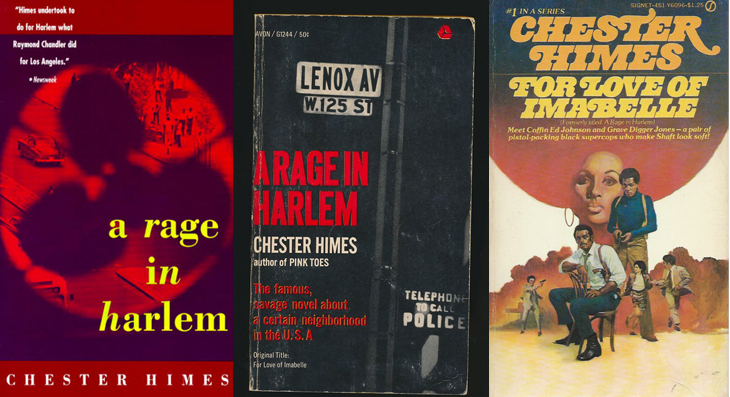
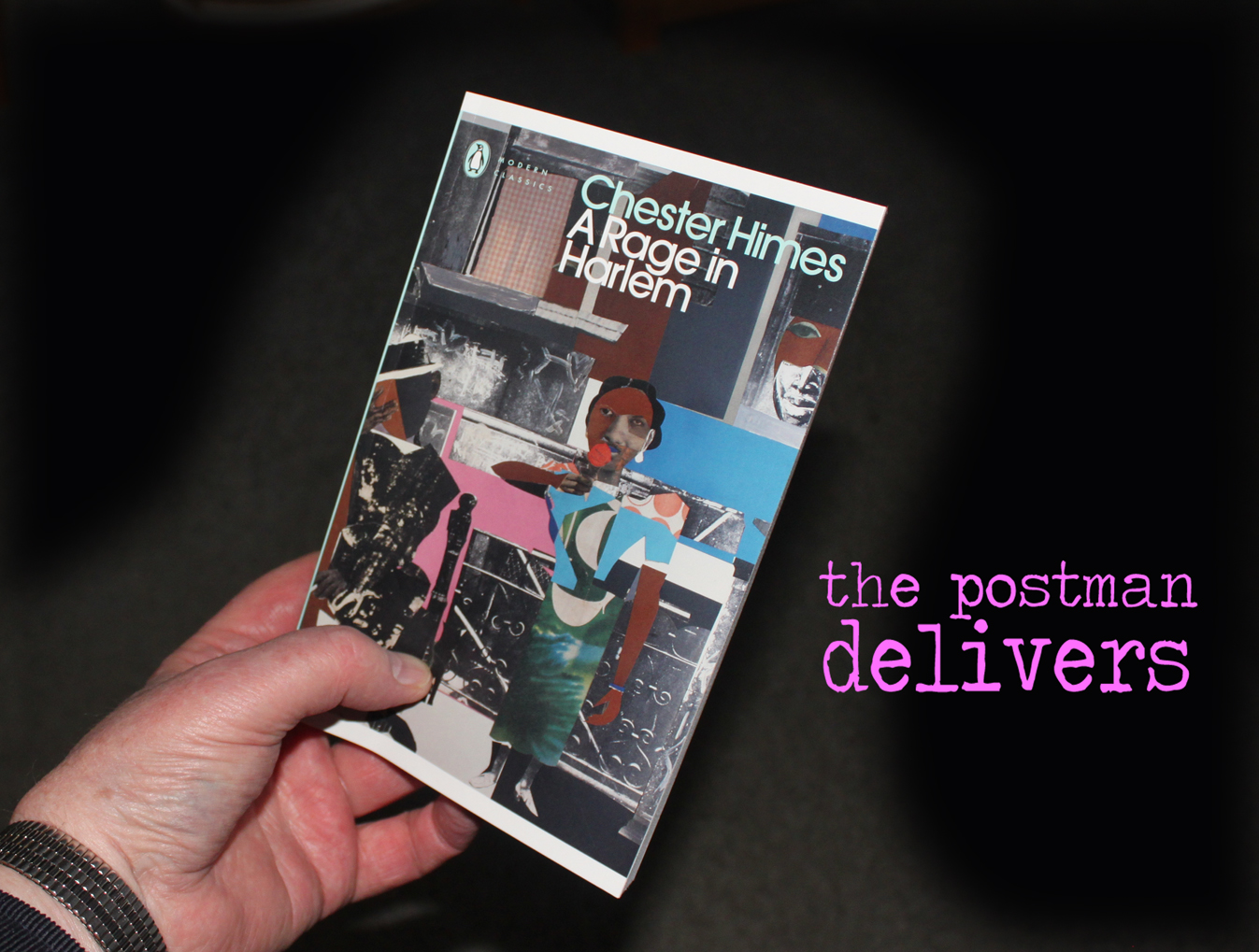

 Yes, my reviews always carry the banner ‘between the covers‘ and, at the end of the day, it’s the written content which counts. Carefully worked covers are part of the package for me, though. Of course we have to live with – and work with – digital editions, and they have their moments. They’re cheaper and in some ways more convenient, but a physical book, decently printed and bound is for many of us the nonpareil. The cover designs for – to name just a few – books by Christopher Fowler, John Connolly, Jim Kelly and Stacey Halls always add to the experience, and now Penguin have done something rather marvellous and secured images by Romare Bearden to grace their new editions of the superb Coffin Ed Johnson and Gravedigger Jones novels by Chester Himes.


 fullybooked2017