
Search

fullybooked2017

Tag

1943

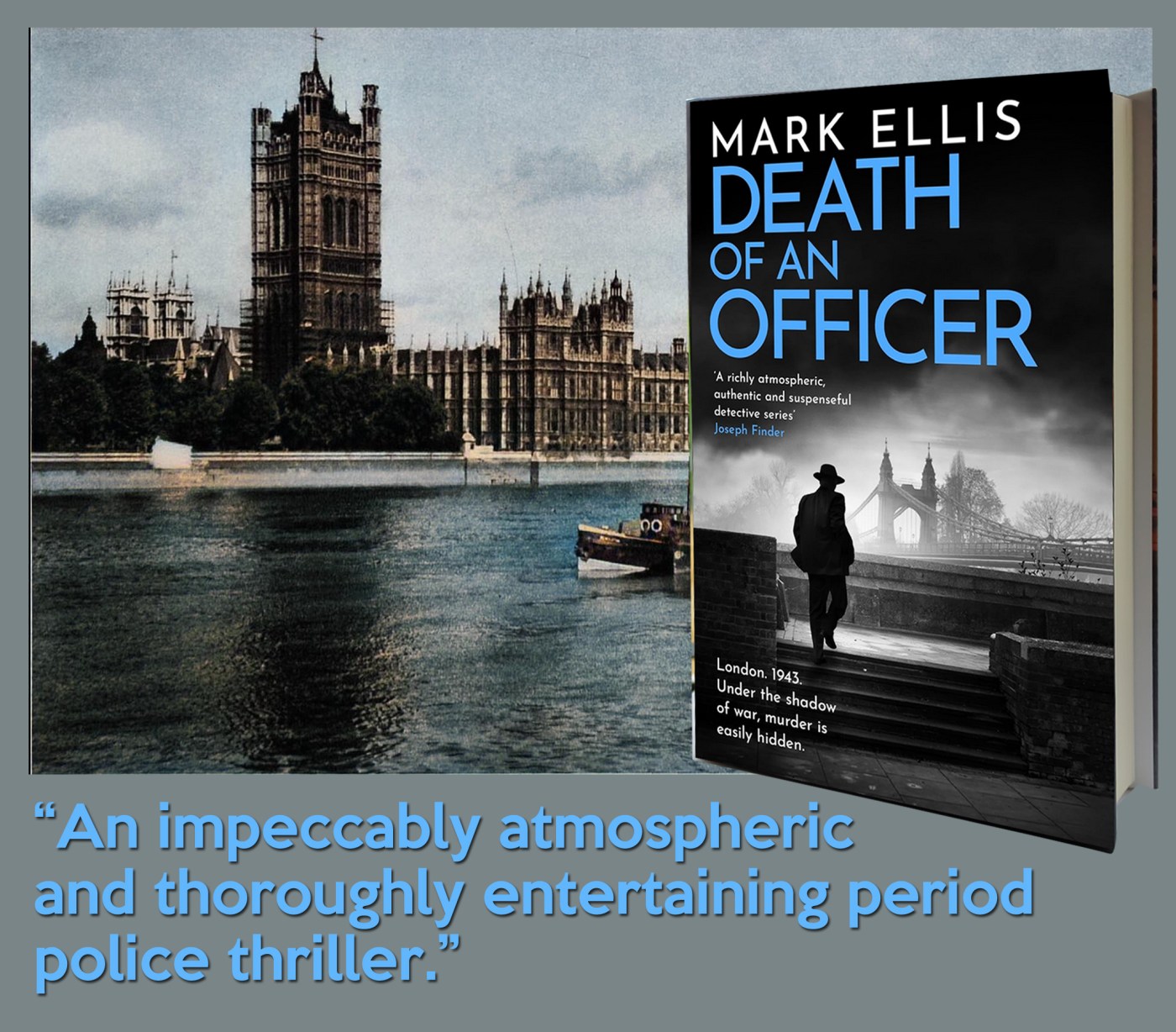
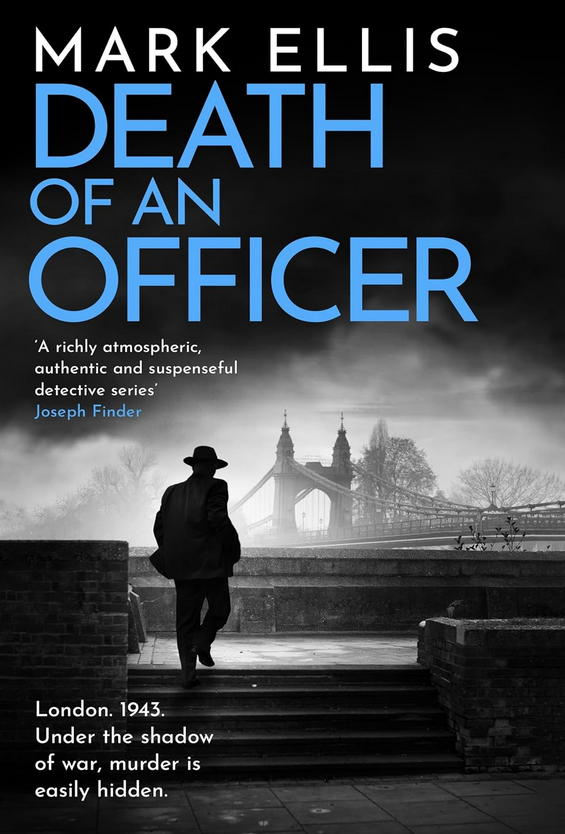
DEATH OF AN OFFICER . . . Between the covers

Detective Chief Inspector Frank (christened Francisco) Merlin is a thoroughly likeable and convincing central character in this murder mystery, set in 1943 London. As in all good police novels, there is more than one murder. The first we are privy to is that of a seemingly inoffensive consultant surgeon, Mr Dev Sinha, found dead in his bedroom, apparently bludgeoned with a hefty statue of Ganesha, the Hindu elephant god. Sinha’s wife has been diagnosed with a serious mental illness, and has been packed off to an institution near Coventry ( no jokes please) but when she is interviewed she is more lucid than those around her have been led to believe.

Added to Merlin’s list of corpses is that of south London scrap dealer called  Reg Mayhew, apparently victim of the delayed detonation of a German bomb. Unfortunately for the investigators, the word ‘corpse’, suggesting an intact body, is misleading. Mayhew’s proximity to the blast has given the lie to the old adage about someone’s inability to be in two places at once.

Clumsily concealed beneath bomb site rubble in the East End is the well-dressed (evening attire and dress shirt) remains of Andrew Corrigan, a Major in the US army. It seems he was a ‘friend’ of a rich and influential MP, Malcolm Trenton. 

Merlin’s investigations take him towards the contentious issue of Indian independence, and it seems that the murdered consultant was a member of a committee comprising prominent British Indians who support Subhas Chandra Bose, a firebrand nationalist who is seeking support from Nazi Germany and Japan, in the belief that they would win the war, and then look favourably on an independent India.

Like all good historical novelists, Mark Ellis has done his homework to make sure we feel we are in the London of spring 1943. We are aware of the recent Bethnal Green Tube disaster, that Mr Attlee is a key member of Churchill’s coalition government, and that a Dulwich College alumni has just had his latest novel, The Lady in the Lake, published. We also know that the Americans are in town. As Caruso sang in 1917, the boys are definitely ‘Over There!‘Among the 1943 intake is Bernie Goldberg, a grizzled American cop, now attached to Eisenhower’s London staff.

I am old, but not so ancient that I can remember WW2 London. Many fine writers, including Evelyn Waugh in his Sword of Honour trilogy, and John Lawton with his Fred Troy novels, have set the scene and established the atmosphere of those times, and Mark Ellis treads in very worthy footsteps. There is the dismal food, the ever present danger of air raids, the sheer density of the evening darkness and the constant reminder of sons, brothers and husbands risking their lives hundreds of miles away. Ellis also reminds us that for most decent people, the war was a time to pull together, tighten the belt, shrug the shoulders and get on with things. Others, the petty and not so petty criminals, saw the chance to exploit the situation, and get rich quickly.

Central to the plot is ‘the love that dare not speak its name‘ in the shape of an exclusive club organised by Maltese gangsters. Mark Ellis reminds us that there were no rainbow pedestrian crossings or Pride flags flying over public buildings in 1943, and that there was an ever-present danger that men in public life were susceptible to blackmail on account of their sexual preferences. With a mixture of good detective work and a bit of Lady Luck, Merlin and his team solve the murders. The book’s title is ambiguous, in that Major Andrew Corrigan certainly fits the bill, but there is one other officer casualty – I will leave you to find out for yourself his identity by reading this impeccably atmospheric and thoroughly entertaining period police thriller. It will be published by Headline Accent on 29th May.
THERE’S NO HOME . . . Between the covers

Tnh SPINE042

Sicily, 1943. A company of British soldiers, serving with the Eighth Army, has arrived in Catania, an ancient port that sits at the foot of Mt Etna. A full size army company would have numbered around 150 men, but this unit is much reduced in size. Although they have experienced battle in North Africa, by the time they get to Sicily, the war has moved on, as the Germans are engaged in a fighting retreat towards the Straits of Messina, where they will hope to cross – with as many men and as much materiel as possible – to the mainland. The Italian army is no longer a viable force,and it would officially surrender in September.

Screen Shot 2024-04-10 at 19.40.23

In Alexander Baron’s book – part of a trilogy based on his own war service – the British soldiers are not engaged directly with the enemy. Instead, they arrive in Catania and are assigned billets in the Via Martiri. For both themselves and the residents, it is something of a shock:

“They studied each other with a hostile curiosity. Each group looked the same to the other: filthy, exhausted, more animal than human, the soldiers swaying over their rifles, the civilians at bay before their houses. Each was looking at ‘the enemy’. There across the road (on which ever side one stood)were the people responsible for these last three weeks of suffering. The roadway was wide-miles wide, it seemed at this moment-sunlit and empty. A baby squalled and the children began to creep out from amongst their elders. The people looked at their children with a dullness that was worse than a visible agony. The distress that came into the soldiers eyes was the first human feeling they had betrayed since their arrival. The children all had the same appearance; heads that seemed monstrous on their shrunken bodies; big, appealing eyes; twisted, scabby little legs; and flesh whose colour, beneath the dirt, was a deathly toadstool whiteness.”

As in most of the rest of Catania, there are (with a couple of exceptions) no men in the Via Martiri. All are gone for soldiers. Many are now dead, and the rest are prisoners of the Allies. This creates an unusual problem for the officer in command of the company, Captain Rumbold. He is puzzled when, after a few days, many of his men are unofficially ‘adopted by various women in the street. Publicly, he says nothing, but he views his clerk as something of a confessor: To Piggott, however, who was his confidant as well as his clerk, he was indignantly eloquent.

“Would you have believed it? Chaps out of decent homes! You’d have thought wild horses wouldn’t have dragged them into the kind of pigsties that these people live in. Dark, dirty, smelly, bloody holes – that’s all they are – holes in the wall-full of flies and bugs and fleas. People in rags, scratching themselves day and night, look as if they’ve never had a bath in their lives! I can’t imagine what’s got into the chaps.”

One such soldier is Sergeant Joe Craddock. He has a wife and young child at home but, as the book’s title ominously suggests, ‘home’ has become a foreign concept for many men. They are where they are, with little or no expectation of being reconciled with their families. All they can do is adapt to what the ‘here and now’ offers. In Craddock’s case this takes the shape of a beautiful woman called Graziella. Her husband has gone away to fight, and she has no idea if he is living or dead. After a brief tussle with her conscience, she enthusiastically embraces – in every sense of the word – what Craddock has to offer.

Many of the company have been ‘adopted’ by women in the street. It is a symbiotic process; the men have their washing done, get a break from the abrasive all male life in the billet; not all of the men are claiming conjugal rights, but they can provide basic army rations, and their pay can buy luxuries from the shops and market stalls gradually re-opening after the fighting which caused the  departure of the Germans. Inevitably the orders eventually come for the company to move out, and for Graziella and Craddock this is traumatic. She begs him to stay, but the thought of desertion appalls him.

As William Tecumseh Sherman once said, “War is all hell, boys”, but despite the privations and the real chance of serious injury or death, for many men, the army provides a structure, imposes boundaries, and obviates the need to make decisions or wrestle with moral problems. As the weeks of casual life end and the company prepares to move on, the army reasserts itself:

“Pride returned at the sight of the company forming up, the shuffling ranks closing into a neat, solid block of khaki that filled the whole length of the street; the straight lines of helmets swathed in dun sacking, the straight lines of rifles, the straight lines of packs, the straight lines of red faces. It was a single organism into which all individualities and all worries vanished, self sufficient and aloof from the untidy throng of civilians who surged around it as a tall ship is from the sea through which it cleaves.”

Baron’s writing is immensely powerful, and his understanding of fighting men is deep and thorough. In another time and place, he might have been a poet. As the company boards the train taking them who knows where, it is the end of something for the people of the Via Martiri.

“The train gathered speed and passed round the bend. Now there was only the blank end of the rear truck. Now it was gone. The sun’s glare, pitiless, blanched the blue sky, glittered on the deep blue sea, reflected, dazzling, from the walls of the tumbled white houses and drew an oven heat from the bleached pavements. The last tremor died from the rails. Now there was no sound in the blinding white sunlight; no sound but the weeping of women.”

First published in 1950, There’s No Home is republished by The Imperial War Museums, and is available now. For other titles in this superb series, click the link below.

Screen Shot 2024-04-17 at 20.32.14

THE SAVAGE STORM . . . Between the covers

TSS spine033

Soldiers in WW1 sang songs about their war, set to popular melodies and hymn tunes. There is an excellent collection of these in The Long Trail, by John Brophy and Eric Partridge, and parodies like When This Lousy War Is Over are one of the staples of the musical Oh What A Lovely War. There is little evidence that such parodies existed in WW2, but there is one significant exception. In the song D Day Dodgers (sung to the tune of Lili Marlene), soldiers of the 8th Army sing about their time in Italy:

We landed at Salerno, a holiday with pay,
Jerry brought the band out to cheer us on our way
Showed us the sights and gave us tea,
We all sang songs, the beer was free.
To welcome the D-Day Dodgers, way out in Italy

Palermo and Cassino were taken in our stride,
We didn’t go to fight there, we just went for the ride.
Anzio and Sangro were just names,
we only went to look for dames,
For we are the D-Day Dodgers, in sunny Italy.

Screen Shot 2023-10-08 at 19.11.11The song, which has many more verses, was written as a sarcastic response to a statement made – allegedly by the MP Nancy Astor – criticising the 8th Army for not being part of the D Day landings in June 1944.  Historian and broadcaster James Holland (left) has written an account of the Italian Campaign from the invasion of the mainland in September 1943 until the year’s end and, having read it, I can only think that the bitterness of the 8th Army men was more than justified.
The 8th Army and their American allies had defeated the Germans and the Italians in North Africa, and had subsequently forced the Axis defenders out of Sicily in 1943. Mainland Italy is separated from Sicily by The Strait of Messina, just short of two miles wide at its narrowest point, but those two miles posed a severe challenge to the allies.

In his book, Holland stresses a key issue often overlooked in stories of the invasion – the position of the Italian armed forces. Mussolini had been deposed and arrested, the Italian government was in turmoil yet, ostensibly, with a million men under arms, they were still German allies. Would they stay in place to fight the Allies on their beaches, or would Hitler, perpetually feeling let down by the Italians, forcibly disarm them? In fact, the ‘government’ – a vague coalition of Italian royalty, noblemen and opponents of Mussolini emerging from their bunkers had already faced the unpalatable fact that unconditional surrender was the only option open to them., but the key issue was the exact timing of the announcement, and its effect on the Germans. In the event, the Italian navy fled to Malta, there were pockets of heroic resistance to German forces – notably in and around Rome but, sadly the Italian forces behaved in a manner which confirmed popular opinion about the martial qualities of Italians.

There were three major obstacles facing the Allies:
(1) The terrain of Italy was a military defender’s dream with its spine of mountains, and consequent rivers, gorges and hilltop villages – each one turned into a fortress.
(2) In charge of the German Army was Albert Kesselring, one of the most competent and resolute commanders of the Wehrmacht.
(3) The fact that both Churchill and Eisenhower both had, in the backs of their minds, the fact that an invasion of France, planned for the following year, would be the key to defeating Hitler, thus becoming cautious about throwing men and equipment at the Italian campaign.

The first four months of this campaign set a pattern which was to repeated endlessly over the following sixteen months. A German army in retreat, but with total command of the defensive landscape – blowing bridges, mining roads, pouring hell down on the Allied troops from mountain strongholds – and a determination to make British and American soldiers pay a heavy price for every yard of territory gained.

Questions remain. Italy was never going to be ‘the soft under-belly’ of Hitler’s Europe. For me, it has the whiff of The Dardanelles campaign in 1915 – an alternative front, an attempt to attack a perceived weakness, ostensibly a quick victory against a vulnerable opponent. The facts are stark. Hitler’s southern front (via Austria) was never seriously threatened any more than Constantinople and the Black Sea ports were in 1915. Although outside the scope of this book, it is worth noting that the Germans did not finally surrender in Italy until just hours before Hitler committed suicide in his Berlin bunker in April 1945. Holland’s story ends on 31st December 1943, but more – much more – slaughter was still to be endured.

In this book – which makes frequent use of the accounts of men who were there = James Holland exhibits  meticulous research and attention to historical detail, but what sets The Savage Storm well above similar accounts of the campaign is that he recounts his story with the narrative verve of a novelist. He tells a grim tale with sensitivity and compassion, and the story is undiminished by our knowledge that the worst was yet to come. The book is published by Bantam and is available now. The last word should be left in the hands of whoever wrote D Day Dodgers. The final verse sums up the campaign to perfection:

Look around the mountains, in the mud and rain;
You’ll see some scattered crosses, and some that have no name.
Heartbreak and toil and suffering gone,
The boys beneath them slumber on.
These are your D Day Dodgers, who’ll stay out in Italy.

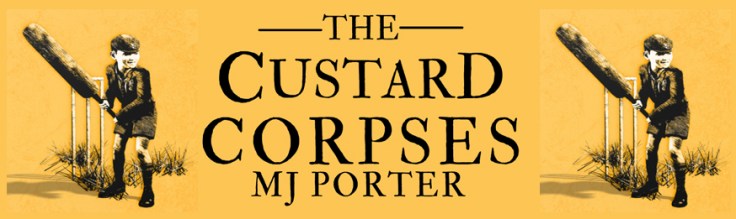
THE CUSTARD CORPSES . . . Between the covers

TCC header
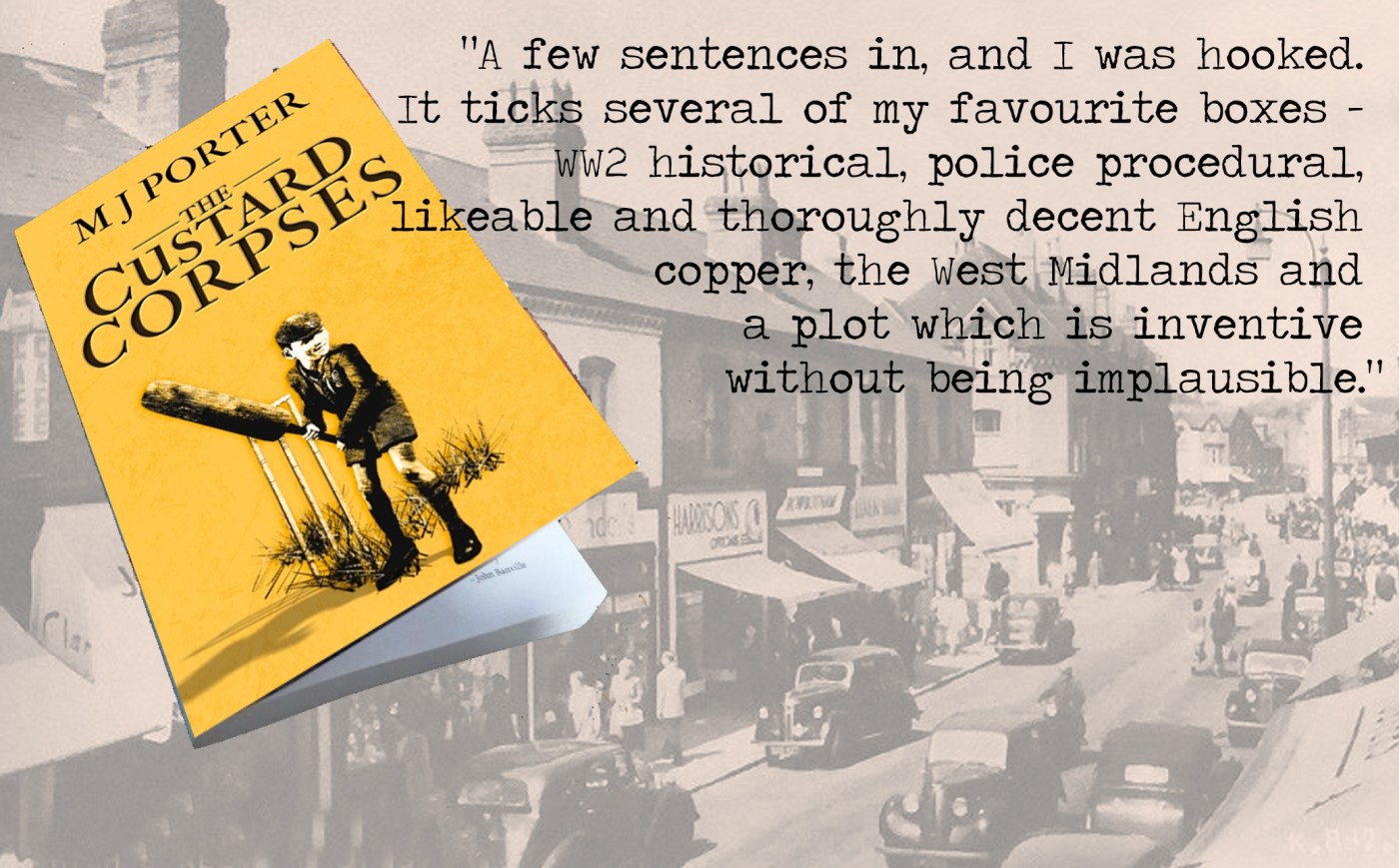
Sometimes a book comes along with very little by way of advanced publicity or hype, and it hits the sweet spot right away. One such is The Custard Corpses by MJ Porter. Strangely-named it might be but the reason for the title becomes more obvious - and appropriate - the more one reads. A few sentences in, and I was hooked. It ticks several of my favourite boxes - WW2 historical, police procedural, likeable and thoroughly decent English copper, the West Midlands and a plot which is inventive without being implausible.

We are in the Birmingham district of Erdington. It is 1943 and Great War veteran Sam Mason is a uniformed Chief Inspector at the local nick. He is not yet on the downward slope heading for retirement, but he is like Tennyson's Ulysses:

“Tho’ much is taken, much abides; and tho’
We are not now that strength which in old days
Moved earth and heaven, that which we are, we are;
One equal temper of heroic hearts,
Made weak by time and fate, but strong in will
To strive, to seek, to find, and not to yield.”

Screen Shot 2021-04-05 at 19.39.14Mason is a man given to reflection, and a case from his early career still troubles him. On 30th September 1923, a boy’s body was found near the local church hall. Robert McFarlane had been missing for three days, his widowed mother frantic with anxiety. Mason remembers the corpse vividly. It was almost as if the lad was just sleeping. The cause of death? Totally improbably the boy drowned. But where? And why was his body so artfully posed, waiting to be found?
Mason and his then boss, Chief Inspector Fullerton, had never solved the crime, and Mrs McFarlane died without knowing the whys and wherefores of her son’s death. When  Mason learns that there had been a similar case, a couple of years later, he is close to despair that it hadn’t come to light earlier. He realises that the fault was theirs. They hadn’t circulated the strange details of Robert’s death as widely as they should.

Attempting to make amends, albeit two decades too late, he has a circular drawn up, and sent to the police forces across England, Scotland and Wales. To his dismay, a succession of unsolved killings come to light; the dead youngsters are of different ages, but there is one bizarre common factor – the bodies have been posed as if in some kind of sporting action. Mason is given permission to devote his energies to this macabre series of killings, and with the resourceful Constable O’Rourke, he sets up an incident room, and begins to receive case notes and crime scene photographs from places as far apart as Inverness, Weston, Conway and Berwick.

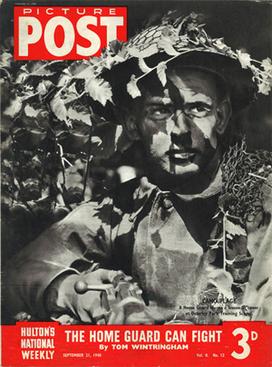
Picture_Post_21-Sep-40One evening, after he has taken images and documents home with him, his wife Annie makes a startling discovery. Like nearly two million other readers across the country, she is a great fan of the magazine Picture Post, and while thumbing through a recent copy she notices that the sporting youngster drawn in an advertisement for a well-known brand of custard is posed in a way that has a chilling resemblance to the way one of the victims that Sam is investigating.

At this point, the investigation sprouts wings and takes flight and, in a journey that takes them across England, Mason and O’Rourke eventually uncover a tale of horror and obsession that chills their blood. MJ Porter has written a  series of historical and fantasy novels, mostly set in what we call The Dark Ages – Vikings, Goths and those sorts of chaps. That doesn’t tend to be ‘my thing’ but, my goodness, Porter is a good writer. The Custard Corpses goes straight onto my early shortlist for Book of The Year, and I do hope that he can tear himself away from his tales of ravens, rape, swords and general pillage to bring us another novel featuring Sam Mason. The Custard Corpses is out now.

EIGHT HOURS FROM ENGLAND . . . Between the covers

wartime header

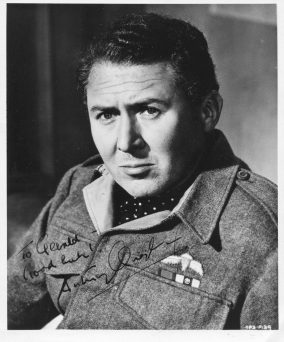
Anthony-Quayle-848x1024-848x1024To many of us who grew up in the 1950s Anthony Quayle was to become one of a celebrated group of theatrical knights, along with Olivier, Gielgud, Richardson and Redgrave. Until recently I had no idea that he was also wrote two novels based on his experiences in WW2. The first of these, Eight Hours From England was first published in 1945 and is the fourth and final reprint in the impressive series from the Imperial War Museum.
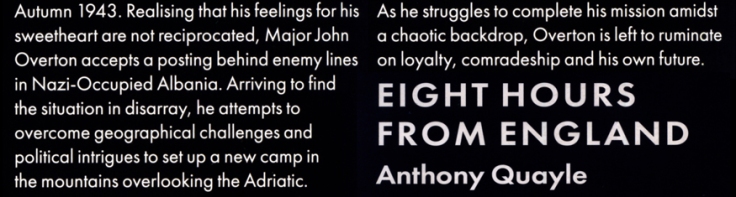
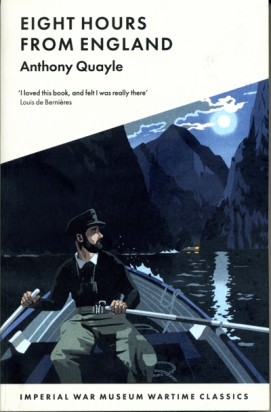
Major John Overton, stoically unlucky in love, combines a rather self-sacrificial gesture with a genuine desire to be at ‘the sharp end’ of the war. He chases up casual acquaintances working in the chaotic bureaucracy of London military administration and, rather randomly, finds himself sent out to Albania in the final days of December 1943. The chaotic country – ruled until 1939 by the improbably-named King Zog – had then been annexed by Mussolini’s Italy but after Italy’s surrender to the Allies in the autumn of 1943, German forces had moved in and had a tenuous grip of the country.

The brief of Britain’s SOE – the Special Operations Executive – was to fan the flames of behind-the-lines resistance in occupied countries. Admirer’s of Waugh’s Sword of Honour trilogy will recall that in Unconditional Surrender Guy Crouchback is sent to co-ordinate similar activities in nearby Yugoslavia but, like Crouchback, Overton finds that the situation on the ground is far from straightforward. On the one hand are the Communist partisans, but on the other are the Balli Kombëtar, a fiercely nationalist group who hate the Communists just as much as they hate the Nazis.

Divider

New Year’s day 1944 brings little physical comfort to Overton, but he is determined to make a difference and, above all, wants to take the war to the Germans. In the following weeks and months he meets unexpected obstacles, chief among them being the Albanians themselves. Their character baffles him. He remarks, ruefully.

“The misfortunes of others were the only jokes at which Albanians laughed, the height of comedy being when another man was killed.”

His courage, tenacity and sheer physical resilience are immense, but are sorely tried. Overton’s private thoughts are never far from England:

“I stayed a while longer looking out over the grey Adriatic where in the distance, the island of Corfu was dimly visible between the rain squalls. It was an afternoon on which to recall the hissing of logs in the hearth of an English home and the sound of the muffin-man’s bell in the street outside.”

EHFE coverOf the three classic reprints which feature overseas action Eight Hours From England is the bleakest by far. The books by Alexander Baron and David Piper bear solemn witness to the deaths of brave men, sometimes heroic but often simply tragic: the irony is that Overton and his men do not, as far as I can recall, actually fire a shot in anger. No Germans are killed as a result of their efforts; the Allied cause is not advanced by the tiniest fraction; their heartbreaking struggle is not against the swastika and all it stands for, but against a brutally inhospitable terrain, bitter weather and, above all, the distrust, treachery and embedded criminality of many of the Albanians they encounter.
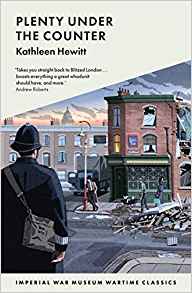
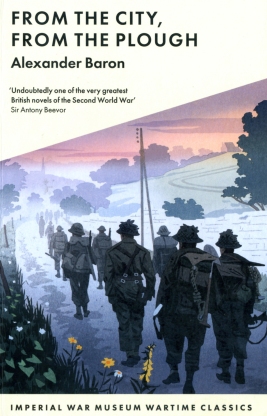
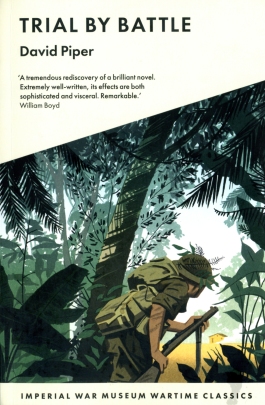
Overton survives, after a fashion, but is close to physical and spiritual breakdown. The heartache which prompted his original gesture is not eased, and the method of his dismissal by the young woman provides a cruel final metaphor:

“I put my hand into my pocket and pulled out what I thought was my handkerchief. But it was not: it was Ann’s letter. The blue writing paper had gone pulpy; the writing had smeared and wriggled across the page. Not a word was now legible.”

Quite early in the book, when Overton reaches Albania to replace the badly wounded former senior officer, the sick man makes a prophetic statement as he is stretchered aboard the boat to take him to safety:

“For a moment Keith did not speak and I thought he had not heard me, then the lips moved and he said slowly, and very clearly:
‘I wish you joy of the damned place.’”

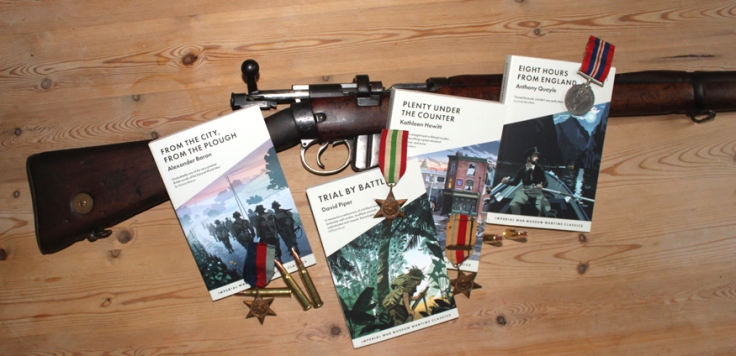
Click on the covers below to read my reviews of the other three IWM classic reprints.

PUTC cover

City Plough cover

Trial cover

Blog at WordPress.com.

Up ↑