Search

fullybooked2017

Tag

1930s

AS I LAY DYING . . . Classics revisited

Firstly, I am not going to argue that this book by William Faulkner is a crime novel in the way that Intruder in the Dust, Sanctuary and several others are deeply rooted in crime and the justice system. The only illegal act in the book is when one of the characters, driven crazy by his own demons and recent events, commits arson.

We are in rural Mississippi, in the 1920s. The Bundren family are hard scrabble farmers who eke out a living growing cotton and selling lumber. Anse and Addie Bundren have five children. In order of age they are Cash, Darl, Jewel, Dewey Dell (the only girl) and Vardaman.
It is high summer, and Adddie Bundren is dying. The title of the novel, incidentally, comes from a translation of Homer’s Odyssey.
As I lay dying, the woman with the dog’s eyes would not close my eyes as I descended into Hades.”

We must assume
that Addie has cancer, as she is worn down to skin and bones. Two things here; any medical help is via Dr Peabody who is many miles away (and expensive); secondly, although Anse makes optimistic remarks about seeing his wife up and well again, it is obvious that the family (with the exception of Vardaman) know the truth. In a macabre touch, Cash – a skilled carpenter – is actually making his mother’s coffin outside in the yard just beyond her window. Addie breathes her last, and Anse reveals that he has made a promise to his wife that she will be buried near her own folks in Jefferson, many days away for a cart and mule team. It is from this point that the source of Faulkner’s title becomes apposite.

Stories told by multiple narrators were nothing new, even in the 1930s, but in my reading experience Faulkner is unique in that here, he uses fifteen different pairs of eyes – each given at least one chapter – to describe Addie Bundren’s last journey. We hear from the seven Bundrens including, perhaps from the afterlife, Addie herself. The eight other voices are neighbours and people who observe the fraught progress of Addie’s coffin to Jefferson.

The Bundren’s odyssey is a startling mixture of horror and the blackest of black comedy. Several vivid chapters describe their attempt to get across a river swollen by torrential rain. it is catastrophic, The mules are swept away and killed, Cash has his leg broken but – with great difficulty – Addie’s coffin is saved. The ghoulish comedy centres on the fact that the summer heat is having an unpleasant but inevitable effect on the unembalmed body of Addie Bundren. The people in settlements and homesteads where the cortege rests for the night are, understandably less than impressed, and each evening, as the sun sets, vultures descend from the heavens and perch near the coffin, sensing a meal.

The essence of the book is the skill with which Faulkner uses the journey (perhaps, on one level, an allegory) to describe the Bundren family. Darl has the most to say, and his thoughts reveal a deeply intelligent and perceptive individual, but one whose sensitivity could bring danger – which it does. Cash is stoical, courageous and unselfish, while young Vardaman’s bewilderment at the turn of events leads him to have strange flights of fancy. Seventeen year-old Dewey Dell is conscious of her own sexuality, and has a big secret – she is two months pregnant. Anse is a simple farmer and somewhat overwhelmed by his children. His determination to grant Addie her last wish in death is, perhaps, a result of being unable to bring her much in life.

Which leaves us with Jewel. He is very different from his siblings, possibly because he has a different father. This isn’t revealed until mid way through the novel, but it is significant. His father is Whitfield, a local hellfire preacher. To his half siblings Jewel seems permanently angry, and vexatious. Faulkner only gives Jewel one chapter, which rather confirms that he is not much given to introspection. Two actions show Jewel’s nobility of spirit. Having secretly worked at night for another farmer, he has saved enough money to buy a horse, which sets him apart from the others. When the mules are killed at the river, he allows his precious horse to be traded for a replacement team. In the same incident, when Cash and his precious tools are thrown into the river, with Cash lying badly injured and senseless on the bank, Jewel repeatedly dives into the turbulent water and, one by one, the tools are recovered.

The battered funeral party, minus Darl, whose obsessions have turned into apparent insanity, eventually bury what is left of Addie ‘alongside her own folks’, and it is left to Anse to provide two final moments of mordant humour. Books like Sanctuary and its sequel Requiem for a Nun certainly serve up plentiful reminders of the ‘evil that men do’, but As I Lay Dying is rather different. There is abundant misfortune and weakness, certainly, but apart from the lecherous pharmacist near the end who tries to take advantage of Dewey Dell, there’s little malice, many examples of human kindness, but – above all – an astonishing mixture of poetry, pathos, black humour and narrative skill. As I Lay Dying was first published by Random House in 1931.

THE ROOM WITH EIGHT WINDOWS . . . Between the covers

8windows header

December 1930. Henry Johnstone, a former Detective Chief Inspector with the Metropolitan Police, has been forced to resign due to a debilitating injury. Now, he ekes out a solitary existence in a crumbling Brighton house, empty except for a large library assembled by the former owner, the late Sir Eamon Barry. Johnstone’s task – one given to him by a friend, concerned about his mental state – is to catalogue the thousands of books in the library. He is convinced he is being stalked, perhaps by someone linked to an old case. Then, he disappears. We know how – if not why – but his friends, among them his sister Cynthia and his former Sergeant Mickey Hitchens, are left with few clues, but one – left behind by Johnstone – suggests there is a link to a mysterious death and disappearance five years earlier.

When Johnstone is eventually found, he has been beaten within an inch of his life by a criminal gang, and is in no fit state to help the investigation into what seems to be a brutal and very well organised smuggling cartel. England’s south coast has been the backdrop for smuggling for centuries. I am reminded of the romantic lines of Kipling:

“If you wake at midnight, and hear a horse’s feet,
Don’t go drawing back the blind, or looking in the street,
Them that ask no questions isn’t told a lie. Watch the wall my darling while the Gentlemen go by.
Five and twenty ponies,
Trotting through the dark –
Brandy for the Parson, ‘Baccy for the Clerk.
Laces for a lady; letters for a spy,
And watch the wall my darling while the Gentlemen go by!”

These days, sadly, the smugglers don’t tend to deal in the traditional commodities of brandy and tobacco, but in the more profitable contraband of human lives. I would like to think that back in the day, the profiteers were not aided and abetted by the historical equivalent of the RNLI and the Border Force, but that is a debate for another day As Henry Johnstone slowly recovers his strength, Hitchens – and his slightly odd (but learning something new every day) Sergeant Tibbs – eventually get to the root of the mystery, but not before more lives are lost.

As is only right and proper in novels set in the 1930s, Jane A Adams makes us aware that most of her protagonists have a shared history – that of The Great War. Those over the age of 35 will have either fought in that conflict or lost husbands and sons: Younger people will have fathers they will never see again, with only a marble gravestone somewhere in France as a far-away reminder of what they have lost.

The period details in The Room With Eight Windows are impressive and convincing, as are the quirks and foibles of the main characters. This excellent and atmospheric thriller will be published by Severn House on 4th July.

TWO MEN IN BERLIN . . . Bernie Gunther and John Russell (part one)

Berlin Header

Bernie Gunther is the anti-hero of fourteen novels by the late Philip Kerr. Berlin cop, turned private investigator, sometime employee of Goebbels and Heydrich, and finally an international pariah, Gunther’s exploits span post Great War Germany to international intrigue in the 1950s. John Russell is an Anglo American journalist who begins the series of seven books by David Downing based in Germany. The books are all named after railway stations and span the years 1938 – 1948.

BERNIE GUNTHER

Screen Shot 2023-06-02 at 20.14.08Philip Kerr’s Berlin Noir series was published between 1989 and 1991, and introduced the world to Bernie Gunther. Strangely, it wasn’t until 2006 that the books March Violets, The Pale Criminal and A German Requiem were followed up with The One from the Other, and until his death the Edinburgh-born author brought us regular episodes from the life of his tough, resourceful and compassionate hero. The final novel in the series, Metropolis, was published in 2019 after Kerr’s death and, ironically, is set in the earliest part of Gunther’s career.
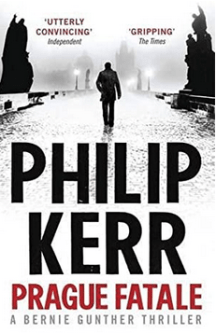
To begin with, Gunther has survived two world wars and seen death in all its forms. However, what makes the series fascinating is the challenge he faces, which is to keep his moral compass steady. Uniquely amongst fictional detectives, Bernie has to operate during the dark and savage days of the Third Reich.

Having returned from the trenches of The Great War, Gunther becomes a member of Kripo (Kriminalpolizei), the investigative branch of the Berlin police. During the turbulent years of the 1930s, he tries to steer an even and honest course between the rival political thuggery of the Nazis and the Communists, and when Hitler seizes power he eventually finds himself forced to join the SD (Sicherheistdienst), the intelligence division of the SS. Sent to Ukraine as part of an extermination group but having no stomach for this, he is shunted into the Wehrmacht on the Eastern Front, and is captured by the Russians. After the War, his ambiguous record makes him a person of interest to the Americans, the Russians and the leadership of the GDR, and he leads a dangerous existence among Nazi refugees in Cuba and South America.

Like John Lawton and George Macdonald Frazer, with their respective Freddie Troy and Flashman series, Kerr places fictional characters within real events and alongside celebrated or notorious historical figures. And, he manages to do so in a fascinating and totally plausible way. Assuming that Gunther was born in the mid-to-late 1890s, he can still be at work in the mid 1950s, albeit a heavier, slower and more breathless version of his former selfa latter day Ulysses.

“Made weak by time and fate, but strong in will to strive, to seek, to find and not to yield,” writes Kerr of his hero.

Screen Shot 2023-06-02 at 20.15.51The author’s style, particularly his use of dialogue, set him apart from most contemporary writers. His books were genuine literature, although I suspect written without literary pretension. In Prague Fatale,  he described Gunther meeting an American war correspondent in a Berlin blackout:

“His Old Spice and Virginia tobacco came ahead of him like a motorcycle outrider with a pennant on his mudguard. Solid footsteps bespoke sturdy wing-tip shoes that could have ferried him across the Delaware….his sweet and minty breath smelled of real toothpaste and testified to his having access to a dentist with teeth in his head who was still a decade off retirement.”

In his toughness, moral strength and cynical view of the world, Gunther is very much the heir of Philip Marlowe. His descriptions, sarcasm and one-line put-downs can be very funny. This is a line from A Quiet Flame, which came out in 2008:

“The isosceles of muscles between her chin and her collar-bone had stiffened, like something metallic. If I’d had a little wand I could have used it to tap out the part for triangle in the Bridal Chorus from Lohengrin.”
For more on Bernie Gunther, click the link below

https://fullybooked2017.com/tag/bernie-gunther/

JOHN RUSSELL

Russell is an English journalist with an American mother. Until 1927 he was a member of the Communist Party but, like many others, he fell out of love with the kind of socialism being espoused by Stalin and his acolytes. After serving with the British army in The Great War, he moved to Berlin, married Ilse, and they had a son – Paul. The marriage didn’t last.

Screen Shot 2023-06-02 at 20.17.47In terms of the actual time setting, Wedding Station (2021) gives us the earliest glimpse of John Russell.It is just months after Hitler’s rise to power, and Russell watches the Reichstag burn. Four weeks after Hitler’s accession, brownshirt mobs stalk the streets and the press prints what the Party tells it to.

In the first book (in publication terms) in the series, Zoo Station (2007) we are are introduced to Russell. It is 1939, Berlin, and Russell is an accredited American journalist, safe (for now) from the excesses of Hitler’s government. He has a glamorous girlfriend in Effie Koenen, who is a rising star in German cinema, but he still has a relatively civilised relationship with Ilse – and her new husband – and has regular access to Paul.

His communist background, American passport and fluency in both Russian and German make John Russell a unique target for the intelligence services of all the major powers and, almost like a serial bigamist he becomes wedded to the Sicherheitsdienst, the NKVD, the Abwehr, and the OSS. He plays each one off against the other, more or less successfully and, along with Effie and son Paul, survives the war, but finds ‘the peace’ post 1945 just as traumatic. In Masaryk Station (2013) set in 1948, Russell is told by a Soviet stooge that there is still a war, but that it is different:

“That war is over. It’s time you realised that another struggle – one every bit as crucial – is now underway.”

Screen Shot 2023-06-02 at 20.18.57One of the main anxieties in Russell’s complex life is his son Paul. As the boy reaches his teens he becomes – like millions of other German lads – a member of the Hitlerjugend, and this threatens to drive a wedge between father and so. In Stettin Station (2009) we are in November/December 1941, and a famed German air ace of WW1, Ernst Udet is dead. In fact, he shot himself, disillusioned with Luftwaffe chief Goering, and the general conduct of the war, but for the purposes of national solidarity the official story is that he died in a plane crash. As his elaborate funeral cortege passes their viewing point, Paul chides his father for not making the Seig Heil salute with enough reverence. Russell dreads the day when Paul is conscripted to the army and sent to fight on the Eastern Front.

John Russell’s contact with senior Nazi officials is limited, but he does occasionally come face to face with Wilhelm Canaris, the head of the Abwehr, the intelligence service of the German army. One of Russell’s many uneasy allegiances is to the Abwehr which, in fiction if not in fact, has been seen as the acceptable face of the Third Reich. This is perhaps born out by the fact that Canaris was executed for treason on 9th April 1945, in the dying days of Hitler’s regime.

Russell’s connection with Joseph Goebbels is more distant, and it is through Effi Koenen. She is probably the most ‘box office’ star of German cinema, and Goebbels – as propaganda minister – has absolute control over what films can be made, and what message they send out. As such, Effi is much sought after. Again in Stettin Station David Downing presents us with the bitter irony that Effi – pale, dark haired and sexually vibrant – is required to play a Jewish woman in a film with a vehemently anti-Jewish screenplay. For full reviews of Silesian Station and Wedding Station click the link below.

https://fullybooked2017.com/tag/david-downing/

IN PART TWO OF THIS FEATURE
I will examine the differences – and similarities between Bernie Gunther and John Russell.

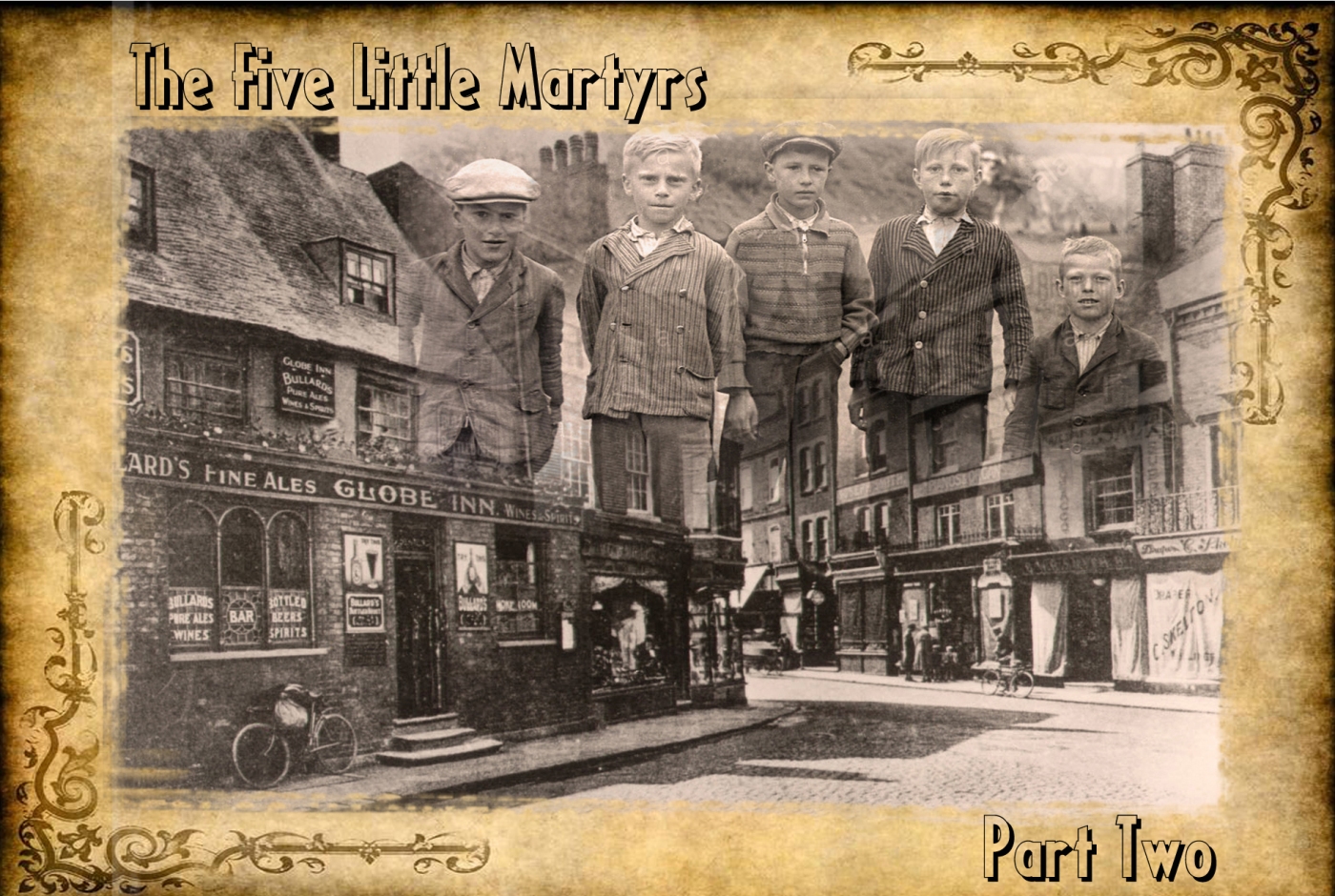
THE FIVE LITTLE MARTYRS . . . Part two

TFLM header

The story so far. “SCHOOLBOY GANGSTERS ROUNDED UP!”  screamed the local papers. According to Dr Meacock, who chaired the Special Children’s Court, the boys,

“constituted a centre of vice in the town,and they must be dealt with drastically.”

John Bull

Those of you who follow my posts will remember that Dr Meacock was at the very heart of the controversy surrounding the life and death of Dr Horace Dimock, twenty years earlier, an unfortunate situation which resulted in the infamous riots. So, who were these five desperadoes, and what were the Industrial Schools to which they were to be packed off, until they reached the age of 16?

Firstly the names of the boys. I received this information from the County Record Office. I imagine they are all now deceased, but at the time their names would not have been available in the press, for legal reasons. They were:

Horace Stephen Freear, age 7
Frederick Hunt, age 8
Stanley Johnson, age 9
Harry Rivett, age 10
Harry Worth, age 10

Their sentence? To spend the years in an Industrial School, until they reached the age of 16. For Worth and Rivett – a 6 year sentence; for Johnson, 7 years; Hunt would serve 8 years, and Freear a staggering 9 years.

The words ‘Industrial School’ have a vaguely worthy ring to them. There’s a suggestion that they were places where youngsters could learn a trade, benefit from a healthy lifestyle, and be taught the errors of whatever ways had led them to become inmates. Older readers will remember the words ‘Reform School’ and ‘Borstal’. These days we skip around the  truth with phrases like ‘Young Offenders Institution’, but the fact remains that Industrial schools were usually grim places which probably served as training grounds for future lawbreakers. The industrial schools were invariably grim and forbidding places but it doesn’t seem that one existed in Cambridgeshire, with the nearest one being in Suffolk.

IS

To their eternal credit, there were those in Wisbech who thought the sentence handed down to these boys was excessive. To use modern parlance, they may well have been “thieving little scrotes”, but even so, this was a draconian sentence, even by the standards of 1933. Spearheaded by a Baptist minister, the Reverend R N Armitage (pictured below), a fund was started to appeal the boys’ sentence.

Armitage

Then, the big guns turned on Dr Meacock and the other people alongside him who actually were magistrates. It seems that Meacock had no business being in that court, and with the benefit of hindsight, it seems that the infamous Old Pals’ Act was alive and well in Wisbech. The popular national periodical, John Bull, said its piece. After repeating the findings of the magistrates, the journal then let rip.

Montage3

Martyrs clippingThe case of the Five Little Martyrs is not simply one of a wrong being righted. It has a curiously modern feel to it, with its far-reaching echoes of relatively minor misdeeds being met by extravagant punishment. The boys were clearly beyond parental control. and their group had a velocity and dynamic all of its own. Yes, the hauls from their thieving – ten bob, some pig serum, cycle lamps and a packet of Aspros (remember them?) seem comical.

However, you only need to follow local Facebook groups nowadays to read accounts of similar misdemeanours, on the same streets as the Infamous Five frequented, to read violently worded responses from people who feel that ‘feral youths‘   (a term not yet invented in 1933) are making their lives a misery. The people who ran Wisbech in 1933 – in particular Dr Meacock – don’t emerge from this saga with any honour. Sadly, some things never change.

I write as someone who lives in Wisbech, and I can tell you that in 2020, eighty seven years on from the events I describe in this feature, modern day versions of Dr Meacock are alive and well, still with theirhands on the tiller.

So, what became of The Five Little Martyrs? The records tell us that a Horace Stephen Freear died in 1978, and that a Frederick Hunt died in 1971. Of the others, no-one knows what they did with their lives after they, briefly, became national figures.

THE FIVE LITTLE MARTYRS . . . Part one

TFLM header

It is the Autumn of 1933. The summer had seen the cinema release of The Private Lives of Henry VIII featuring Charles Laughton, and an out-of-favour politician called Winston Churchill had made a speech warning of the dangers of German re-armament. In Wisbech – an unremarkable town in Cambridgeshire’s Fen country – a criminal case was the headline in the Wisbech Standard. The repercussions of this vaguely comical affair would later bring Wisbech into national focus.

Headline cropped

Let the report in the Wisbech Standard tell the tale of these ruthless gangsters and their reign of terror which had the honest Fenland folk cowering in their beds and in fear of their lives.

“For five hours Dr H. C. Meacock (in the chair) and other magistrates sat, on Tuesday, at a special Wisbech Children’s Court listening to the evidence in an amazing series of thefts extending over two months, committed by a gang of young Wisbech schoolboys, five of whom were eventually ordered to be sent to an industrial school.”

Those who read – in an earlier Fully Booked True Crime feature – the sad tale of Horace Dimock, and the tragic events in Wisbech some twenty years earlier, may recall the name of Dr Meacock. It could be said that he had ‘previous’. Wasn’t he the man who, twenty years earlier, was most prominent in the sad case of Dr Dimock and The Wisbech Riots? He was, the very same. One of his fellow magistrates was a certain Mr Savory, seen here on the right of the good doctor.

Meacock Savory

So, what was the nature of the criminal career of these five lads? Were they emulating the deeds of Clyde Barrow and Bonnie Parker who were in the middle of their legendary crime spree a few thousand miles across the Atlantic? The crimes of The Wisbech Five were rather more mundane:

The defendants were first charged with stealing a purse containing a ten shilling note and 2s 6d in silver from the dwelling house of Annie Ward, at Wisbech, on September 5th.

Annie Ward, of Little Church Street, Wisbech, stated that she left her house at 11.55 am to go to a nearby baker’s establishment. When she returned five minutes later she found her purse missing from the mantelpiece.

Inspector Bush gave evidence of the enquiries he pursued after being informed of the loss, and read statements which he said were made by the defendants when he interviewed them.

The next charge was one of stealing a box of ante-serum for pigs and 5s worth of groceries, the property of Bert Clifton at Wisbech on September 1st.

Bert Clifton, a farmer, of Gedney, said that about 8 o’clock he left his motor car against the Canal railings near the Empire Theatre. In the car were some drums of ante-serum, which he valued at 22s 8d, and 5s worth of groceries. He was away from his car between 8pm and 10.45pm, and on leaving the Theatre he went direct to the car and did not miss the goods until he reached home.

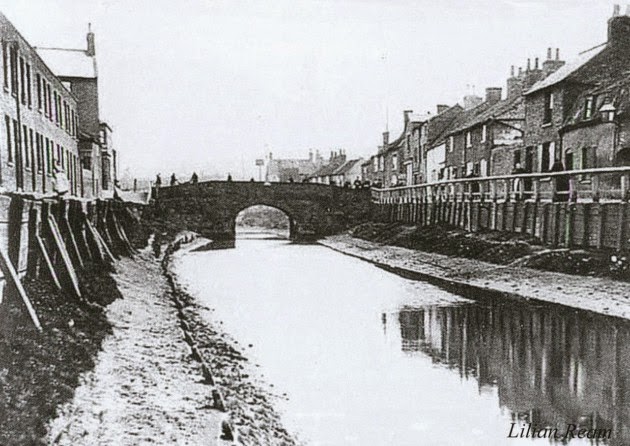
Inspector Bush stated that on September 11th and on subsequent dates he interviewed defendants, one of whom he said took the groceries out of the car and handed them to another of the defendants, who threw them into the canal. Witness added that one of defendants’ parents had rendered every assistance in trying to retrieve the goods from the canal (pictured below)

Canal

All the defendants pleaded guilty except one, whose father said that he was in the house at the time of the alleged crime.

The same boys were then charged with stealing a rib of beef and a carton of cream belonging to Susannah Winters, at Wisbech on the same date.

Susannah Winters said that she left her cycle in Clare’s Passage at about 6-40pm. On the handlebars was a basket containing a joint of meat worth 2s 3d, and a carton of cream, which had disappeared when she returned to her cycle at 6.55. Inspector Bush spoke of interviewing defendants, one of whom said that one of the others took the meat home and had it cooked. This was denied by the parent. Mr A R Bennett, headmaster of the Queen’s School and Mr A V Thompson, headmaster of St Peter’s School were present when witness interviewed defendants.

Five of the boys were then charged with stealing cycle lamps at Wisbech on September 8th and 9th, the property of William Callaby, James John Harrop, Kate Rose, and another. Inspector Bush gave evidence in each case.

A charge of stealing two purses and 9d in money, the property of Ivy Irene Hurst, and another, at Wisbech on September 9th was brought against four of the boys. Ivy Irene Hurst said that she went to the Swimming Bath on the date in question, with a friend. After she had left the water, and dressed, she took her shopping bag, which contained her own handbag, inside which was her friends purse, and placed it in her friend’s cubicle. A few minutes later they both went back to the cubicle and found that the purses had been taken from the bag. Witness valued the handbag at 7s 6d. Jean Parlett corroborated the previous witness’s evidence. Inspector Bush said he interviewed defendants, who admitted being there.

Another summons was for stealing half a pound of butter, a box of Aspro tablets and two cycle spanners, at Wisbech on September 9th. Dolly Mary Willimott Barber stated that she left her cycle outside 6, The Crescent at about 6-15pm. On returning at 6-40pm, she found the articles were missing. In his evidence, Inspector Bush said he saw the defendants on September 10th, and one said that they had all shared “the white sweets, which did not taste nice.”

Five of the boys were also charged with stealing a leather handbag containing 2s 7d in money, certain photographs, and one NP match-box, the property of Ivy may Hurst, at Wisbech, on September 1st. Ivy Hurst, of Broad Drove, South Brink, Wisbech, said that at about 9-15am she left her perambulator, in which was her handbag containing the articles, outside Dr Gunson’s House. She visited Dr Gunson’s surgery at 10-10, and when she came out at 11 o’clock the handbag was not there.

Inspector Bush said that when he interviewed defendants one of them said that a boy took the bag out of the perambulator and hid it under some stones near St Peter’s School. All the boys admitted they were there when the theft was committed.

Two of the boys were finally charged with stealing 2s in silver and 4d in copper, the monies of Barbara Joyce Bush, at Wisbech, on September 9th. Barbara Joyce Bush, of the Police Station, Harecroft Road, Wisbech, stated that she left her cycle outside Peark’s shop. On the handlebars was a basket, in which was a small bag containing the money. She was only in the shop about three minutes, but when she came out her bag was missing. Inspector Bush spoke of the previous witness reporting her loss to him, and the subsequent enquiries he made. One of the defendants admitted taking the money and sharing it one of the other boys. They bought some sweets with some of the money.

This hearing took place at Sessions House, a familiar Wisbech landmark.

Sessions House

IN PART TWO
(live on Friday 26th June)

The summing up and sentencing …
The horrors of the Industrial Schools…
The town – and the nation – responds …
The five boys named for the first time ….
The ‘judge’ who had no business being in the court

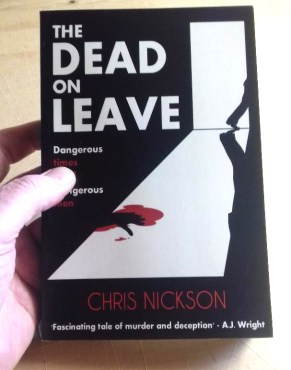
THE DEAD ON LEAVE . . . Between the covers

TDOL header

Leeds, Yorkshire. 1936.
The once thunderous clatter of its mills and factories is now a hesitant stutter. Although the Great Depression is over, like the plague passing over biblical Egypt it has left many victims. Work is scarce, and men live in fear of being unable to put bread on the table for their wives and children. There is state relief, but it is a grudging pittance. When a widely disliked Means Test Inspector – a man paid to snoop around people’s houses rooting out efforts to cheat the system – is found garotted, there are few to mourn him. But murder is murder, and police detective Urban Raven must find the killer.

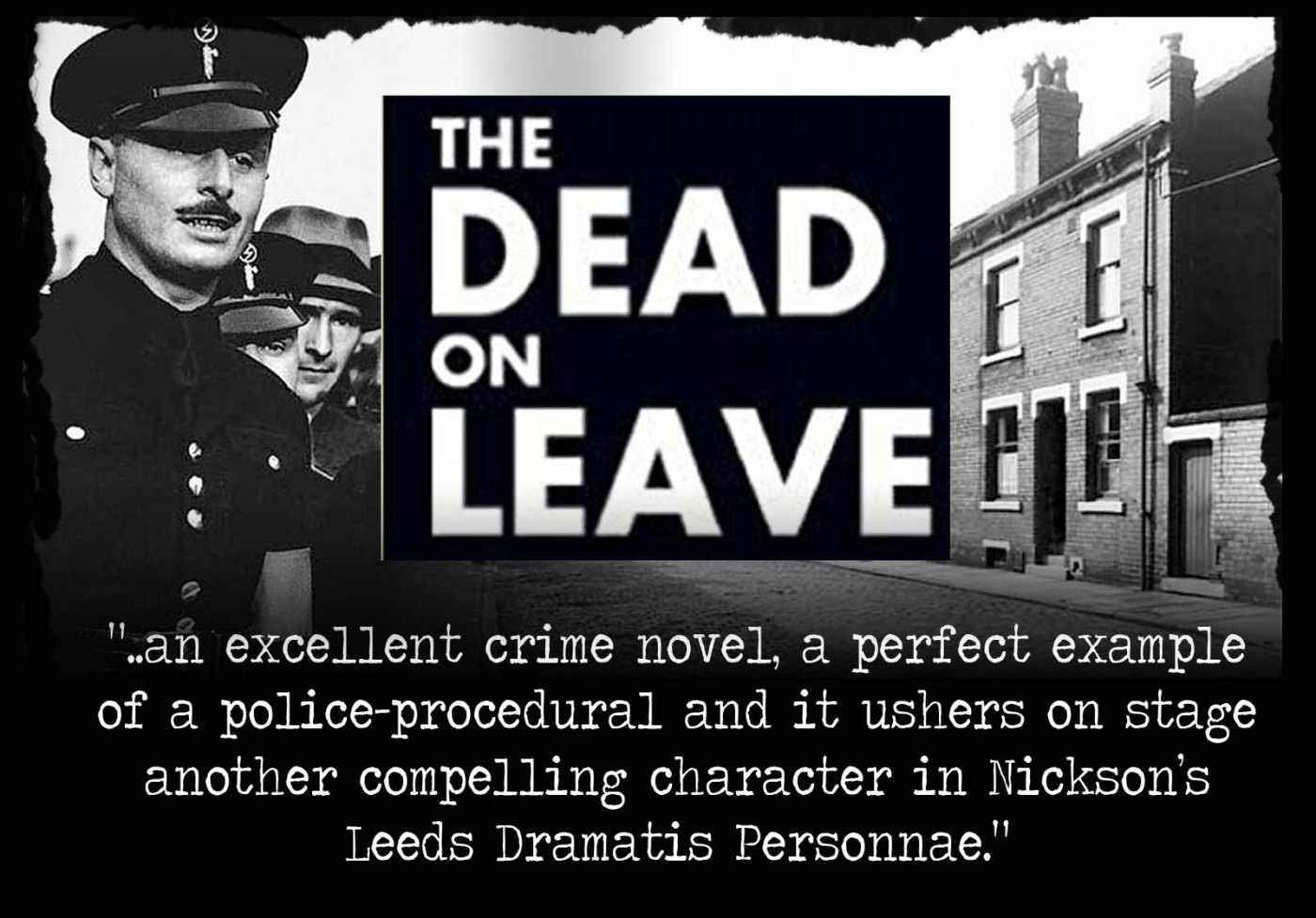
TDOLIt appears the dead man is a would-be follower of Sir Oswald Mosley, charismatic leader of the British Union of Fascists and, after an appearance in Leeds by Mosley and his Blackshirts turns into a riot, it is tempting for the police to think that the murder is politically inspired. As Raven tries to make sense of the killing, he has his own demons to face. Like many other Yorkshiremen, Raven is a Great War veteran, even though his war was brief and horrific. Only able to see active service in the dog-days of the conflict, he was unlucky enough to be close to a fuel dump which was hit by a stray shell. There’s a line from a song about that war, which goes,

“Never knew there was worse things than dying..”

Those words might be an extreme take on the scars of war, but Urban Raven’s face is a shiny and distorted mass of scar tissue, and he has become adept at ignoring the fascinated horror on people’s faces when they see him for the first time. His disfigurement might do him no favours with ordinary people, but has learned that it gives him an extra edge when dealing with criminals.

Against a fascinating background of the attempts by British fascists to emulate their German and Italian counterparts, and the ongoing saga of a member of the royal family who wants to marry an American divorcee (plus ça change?) Raven’s problems become deeper and wider as he falls foul of the secretive Special Branch, begins to suspect his wife’s fidelity and then – as if his problems weren’t serious enough – finds himself mired in a a political and criminal conspiracy.

As in every other Chris Nickson novel I have read, the city of Leeds is the central character. Whether it’s Richard Nottingham, Tom Harper, Lottie Armstrong or, now, Urban Raven treading its grand thoroughfares and mean ginnels, Leeds remains gritty, grimy, home to all manner of beauty and bestiality, but always vibrant. There is a wonderful feeling of continuity running through the books; it’s as if each police officer is carrying the baton handed on by a predecessor; Nottingham to Harper, Harper to Raven, Raven to Armstrong. The characters inhabit the same city, though; The Headrow is ever present, as are Briggate and Kirkgate, their suffixes names testifying to their antiquity.

NicksonThe Dead On Leave is very bleak in places. Hope is in short supply among the working people in Leeds, and men have no qualms about building a wooden platform for Moseley to rant from, because a job is a job; consciences are a luxury way beyond the reach of folk whose families have empty bellies. Nickson (right)  is a writer, with social justice at the front of his mind and he wears his heart on his sleeve. I doubt that he and I agree on much in today’s political world, but I can think of no modern British author who writes with such passion and fluency about historical social issues.

Make no mistake, though. The Dead On Leave is not a sermon, and it does not wag a finger in admonition. It is an excellent crime novel, a perfect example of a police-procedural and it ushers on stage another compelling character in Nickson’s Leeds Dramatis Personnae. The book is published by Endeavour Quill and is available now in Kindle and as a paperback.

Endeavour

Blog at WordPress.com.

Up ↑