

MJ Trow introduced us to the principle characters in this novel in the autumn of 2022 in Four Thousand Days (click to read the review) That was set in 1900, and had real-life archaeologist Margaret Murray solving a series of murders, helped by a young London copper, Constable Andrew Crawford. Now, it is May 1905, Andrew Crawford is now a Sergeant, has married into a rich family, and Margaret Murray is still lecturing at University College.
When a spiritualist medium is found dead at her dinner table, slumped face down in a bowl of mulligatawny soup, the police can find nothing to suggest criminality. It is only later, when a black feather appears, having been lodged in the woman’s throat, that Andrew Crawford suspects foul play. His boss, however is having none of it.
Two more mediums go to join the actual dead whose presence they ingeniously try to recreate for their clients, and the hunt is on for a serial killer. Crawford enlists the help of Margaret Murray, and under a pseudonym, she joins the spiritualist group to which the first murder victim has belonged. After an intervention by former Detective Inspector Edmund Reid who, amazingly, manages to convince people attending a seance that he is one of Europe’s most renowned spiritualists, we have a breathtaking finale in Margaret Murray’s dusty little office in University College.
Without giving too much away, I will tease you a little, and say that the killer is trying to find something, but isn’t sure who has it. There is a pleasing circularity here, by way of Jack the Ripper. Edmund Reid was one of the senior coppers who tried to bring the Whitechapel killer to justice, and MJ Trow has written one of the better studies of that case. One of the (many) theories about the motivation of JTR was that he was seeking revenge on the woman who gave him – or someone close to him – a fatal dose of syphilis, and he was simply working his way down a list.
Trow was for many, many years a senior history teacher at a school on the Isle of Wight, and he appeared as his thinly disguised ‘self’ in the long running series of books featuring Peter ‘Mad Max’ Maxwell. I can’t think of another writer whose encyclopaedic knowledge of the past has been the steel backbone of his books. Don’t, however, make the mistake of thinking there is an overload of fact to the detriment of entertainment. Trow is a brilliantly gifted storyteller and, as far as I am concerned, Victorian and Edwardian London belong to him. Breaking The Circle is published by Severn House, and is out now. For our mutual entertainment, I have including a graphic which shows some of the real life individuals who appear in the story.

For more on MJ Trow and his books, click on the author image below.

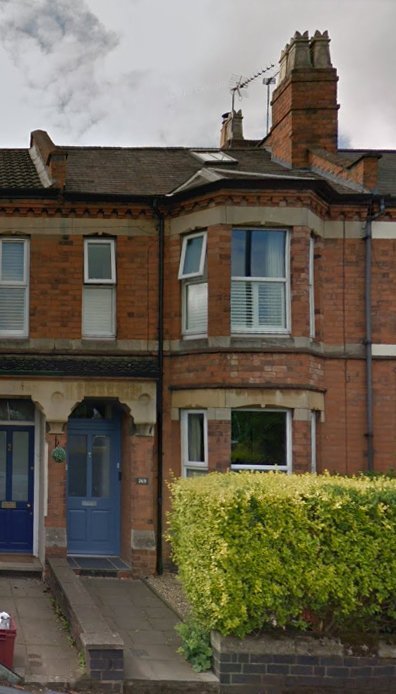



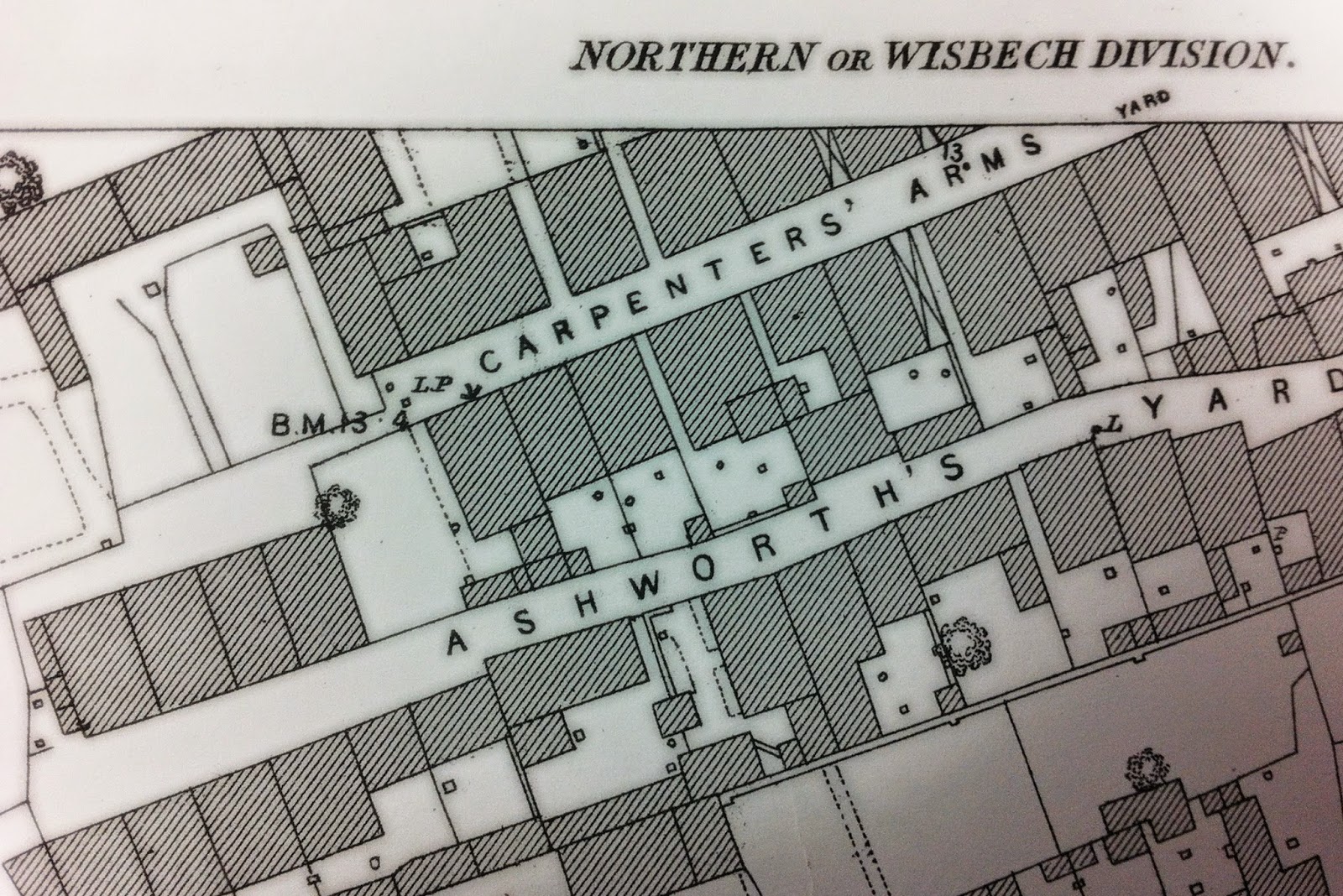
 The photo on the right is of an existing Wisbech alley which, due to its central position has survived more or less intact, and gives us an idea of what the Yard might have looked like. Carpenter’s Arms Yard was earmarked for slum clearance in the late 1920s along with its near neighbour Ashworth’s Yard, and both were gone before the outbreak of World War II. What is now St Peter’s Road was probably more prosperous than either of the Yards, and its terraced houses were spared the redevelopments of the 1930s. It is tempting to look back and wish that more of old Wisbech had been preserved, but we would do well to remember that conditions in these old houses would be awful, even by standards of the time. Damp, insanitary and built on the cheap, these grim places contributed to the general poor health and high death rate of the time. The cemetery at the bottom of the slight slope of Carpenter’s Arms Yard was actually instituted as an overflow burial ground when a cholera epidemic struck the town earlier in the 19th century.


 fullybooked2017