

Thomas True is the son of the Rector of Highgate. Now a sought after London suburb, in the early 18th century, at the time in which this novel is set, it was a country village. The young man has, for some years, been aware of his homosexuality and, unfortunately, so has his fire and brimstone father, who has done his best to beat out of his son what he sees as ‘the Devil’. Thomas has saved up his allowance and is determined to escape the misery.
Unknown to his parents, Thomas has been writing to his cousin Amelia in London, with a view to living with her and her parents. Within minutes of jumping down from the mail coach into the mire of a London street, he has been drawn into a world that is both breathlessly exciting and profoundly dangerous. The world of the molly houses in London was already well established, and would continue as a forbidden attraction well beyond the scandal of the Cleveland Street raid in 1889 in which Queen Victoria’s grandson, Prince Albert Victor was implicated, although there has never been any conclusive evidence that he was a customer of this male brothel. A molly? There is a lengthy explanation here.
Thomas meets a young man called Jack Huffins who is quick to recognise the lad as a kindred spirit, and he introduces him to Mother Clap’s which is, I suppose, the eighteenth century equivalent of a gay nightclub. We also meet a significant figure in the story, a burly stonemason called Gabriel Griffin. Working on the recently completed St Paul’s cathedral is his day job, but by night he is the bouncer at Mother Clap”s. He is also a man in perpetual mourning, haunted by his wife and child who died together three years earlier.
Hovering in the background to the revelry at Mother Clap’s is The Society for the Reformation of Manners. They actually existed, as did Mother Clap’s. The Society was, collectively, a kind of Mary Whitehouse (remember her?) of the day, and they existed to root out what they saw as moral decay, particularly of a sexual nature. They were far more sinister than the Warwickshire-born Christian campaigner however, as back then, men convicted of sodomy, buggery and ‘unnatural behaviour’ could be – and often were – hanged. The Society has inserted ‘ a rat’ into Mother Clap’s community. Quite simply, he is paid by his masters to identify participants, and give their names to two particularly repugnant officers of The Society, Justice Grimp and Justice Myre (Grimpen Mire, anyone?) The main plot centres on the search for the identity of ‘the rat’.
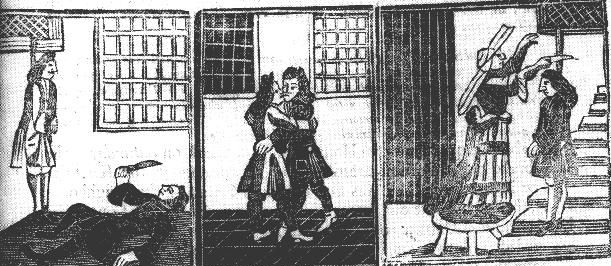
At times, the picture that AJ West (his website is here) paints of London is as foetid, grotesque and full of nightmarish creatures as that seen when zooming in to a detail in one of Hieronymus Bosch’s apocalyptic paintings. West’s London is largely based on history, but there are moments, such as when Thomas and Gabriel are captured by a tribe of street urchins in their dazzlingly strange lair, that the reader slips off the real world and drifts somewhere else altogether.
What the author does well is to show up the anguish and insecurity of the men who feel compelled to posture and pose as mollies, in an attempt to nullify the boredom of their respectable family lives. The bond of love that develops between Thomas and Gabriel is genuine, and certainly more powerful than the silly nicknames and grotesque flouncing at Mother Clap’s. The book ends with heartbreak. Or does it? Given that Gabriel is susceptible to ghosts, he is perhaps not a reliable narrator, and AJ West’s last few paragraphs suggest that the Society has, like the President of the Immortals at the end of Tess of the d’Urbervilles, ended its sport with Thomas and Gabriel. This paperback edition is out today, 3rd July, from Orenda Books.



 As ever, murder is the word, and a series of deaths in and around the town of Omskirk are linked to an archaic form of business plan for raising money, known as a Tontine. The investment plan was named after Neapolitan banker Lorenzo de Tonti and, to put it simply, was a pot of money where a number of people contributed an equal sum. The money would either be invested, with interest paid to the members, or used to fund capital projects. As time went on, and investors died, the fund became the property of the remaining members, until the last man (or woman) standing hit the jackpot.
 One by one the Tontine signatories come to sticky ends: one is, apparently, hit by the sail of a windmill; another is found dead on Crosby beach, apparently drowned, but Luke Fidelis conducts a post mortem and finds that the dead man’s body has been dumped on the seashore. Things become even more complex when a reformed ‘lady of the night’, now a maid, is accused of pushing the poor woman into the path of the windmill sail. Cragg is convinced she is innocent, but faces an uphill struggle against a corrupt judge.

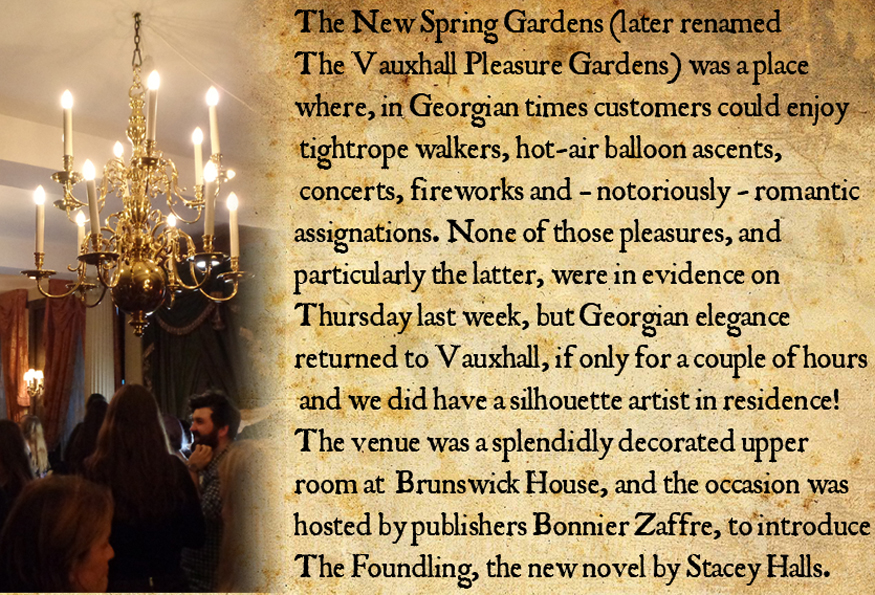
 fter her success with
  Zosha Nash (left), formerly Head of Development at The Foundling Museum explained, the care and love bestowed on the children was remarkable, even by modern standards. Their life expectancy exceeded that of many children at the time, and all were taught to read and write. The hospital was also famously associated with Handel, and it was in the chapel that Messiah was performed for the first time in England
 ix years after leaving her, Bess Bright returns to claim her daughter, to be greeting with the shattering news that Clara is no longer there. She has been claimed – just a day after Bess left her – by a woman correctly identifying the child’s token, a piece of scrimshaw, half a heart engraved with letters. The authorities are baffled, but convinced that a major fraud has been perpetrated. Bess’s shock turns to a passionate determination to find Clara.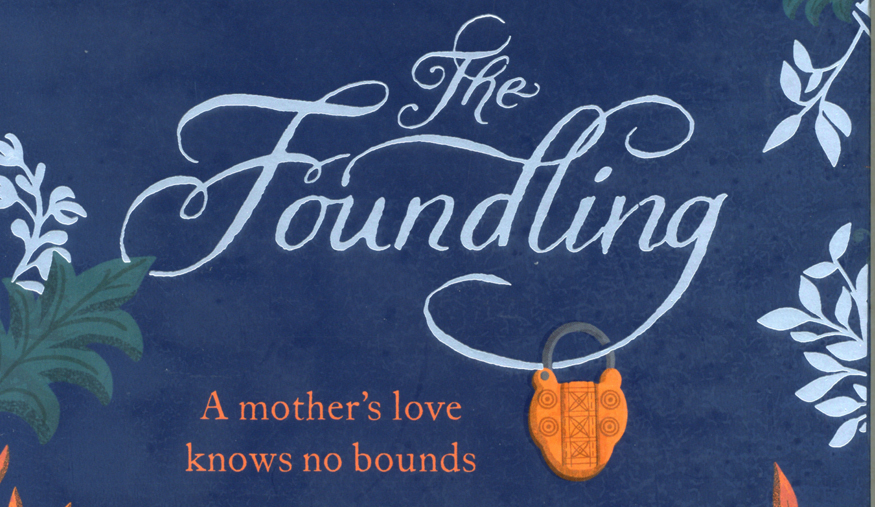


 fullybooked2017