Search

fullybooked2017

BASED ON THE BOOK BY . . . Pop. 1280

pop1280 header

Jim Thompson loved the theme of a corrupt small town lawman, as in The Killer Inside Me, but what makes Pop. 1280 different is that Nick Corey, Sheriff of Pottsville, basks in his reputation as a bumbling buffoon, whereas Lou Ford’s outward persona was that of someone who was fairly shrewd, but otherwise unremarkable. Both novels employ the first-person narrative. The Killer Inside Me was published in 1952 (click this link for a feature on the novel and its film adaptations) but Pop. 1280 came out in 1962.  To date, it has only been filmed once, as Coup de Torchon (Clean Slate) in 1981. The French film was directed by Bertrand Tavernier and starred Philippe Noiret as the central character.

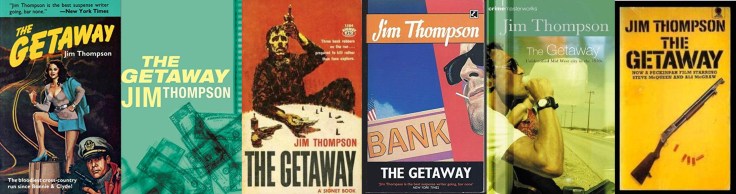
To judge from the lurid cover illustrations of the novel you would be forgiven for supposing that it was set in the 1950s, but it actually takes place around the time of World War One, probably before America entered the war, as we hear Corey ask a man reading a newspaper
“What do you think about them Bullshevicks? Do you reckon they’ll ever overthrow the Czar?”
Coup de Torchon, strangely, is set in French Colonial Africa just before the outbreak of World War Two. This trailer gives some indication of the ambience:

The novel is an astonishing blend of slapstick comedy, bizarre sex (Cory’s wife is in a relationship with her retarded brother) and disturbing violence. On of the comedy scenes makes it almost untouched into the film. Cory is bothered by an insanitary privy that sits just outside the courthouse where he lives. Unable to convince the town worthies to have it removed, he takes advice from a neighboring Sheriff, a couple of train stops down the line. Remember this the deep South, probably Texas, and automobiles are rare (although Thompson does give some of the characters telephones):
“I sneaked out to the privy late that night, and I loosened a nail here and there, and I shifted the floor boards around a bit.”
Next day, one of the town’s leading citizens heads to the privy, his breakfast having provoked an urgent response:
“He went rushing in that morning, the morning after I’d done my tampering – a big fat fella in a high white collar and a spanking new broadcloth suit. The floor boards went out from under him, and down into the pit. And he went down with them.  Smack down into thirty years’ accumulation of night soil.”

Readers of my generation idolised Joseph Heller’s magisterial one-off, Catch 22, and I vividly remember a dramatic mood shift towards the end of the book. The clowning and absurdities are paused for a spell, and a cold wind – both literal and metaphorical – blows through the streets of the Italian town where Yossarian and his buddies seek their entertainment. The genial but seemingly harmless Captain ‘Aarfy’ Aadvark has just murdered an Italian prostitute, and thinks no more of it than if he had crushed a bug under his boot. I remember being shocked back then and, similarly, Jim Thompson, via Nick Corey, lets rip about the realities of hard scrabble small town America:

“There were the helpless little girls, crying when the own daddies crawled into bed with ’em. There were the men beating their wives, the women screaming for mercy. There were the kids wettin’ in the beds from fear and nervousness and their mothers dosing them with red pepper for punishment. There were the haggard faces, drained white from hookworm and blotched with scurvy. There was the near starvation, the never-bein’-full, the debts-that-always-outrun-the-credit. There was that how-we-gonna-eat, how-we-gonna sleep, how-we-gonna-cover-our-poor-bare-asses thinking.”

Nick Corey sets about framing first one person and then another for various crimes, executes four more with his own hand, mainly to keep his job, and his triple relationships with various women, namely his wife Myra, Rose Hauck and the rather aristocratic Amy Mason. He delivers a running commentary on all these manoeuvers, always in the same Good Ol’ Boy “Aaw shucks, God dang it honey!” homely vernacular, which only makes starker the contrast between the man he wants to appear to be and the man he actually is. Thompson also has a sly chuckle at the expense of the heritage of the American South by naming tow of Pottsville’s dignitaries Robert Lee Jefferson and Stonewall jackson Smith.

My French is nowhere near good enough to know how closely the film script kept to Thompson’s original, or even if there is a similar trope in French culture to that of the tumbleweed town in the American South, but Coup de Torchon retains the main characters and plot direction. The equivalent characters and actors are:

Nick Corey        Lucien Cordier           Phillipe Noiret
Myra Corey       Huguette                    Stéphane Audran
Lennie               Nono                         Eddy Mitchell
Rose Hauck      Rose Marcaillou          Isabelle Huppert
Amy Mason      Anne                           Irène Skoblene
Ken Lacey         Marcel Chavasson      Guy Marchand

There are some books that cannot be filmed. It’s as simple as that. Mike Nichols made a brave stab at Catch 22 (1970) and, despite hiring a stellar cast, never quite recaptured the moral anarchy of the novel. Quite wisely, producers and directors have never attempted adaptations of any Derek Raymond novels. How would you even start to put I Was Dora Suarez on screen? It has to be said that Corp de Torchon was a brave attempt to capture the essence of Thompson’s caustic and abrasive novel, but since what happens in Pottsville is nothing short of a dive into the middle of a townscape imagined by Hieronymus Bosch, Bertrand Tavernier and his crew have to given full marks for trying.

THE LONGEST GOODBYE . . . Between the covers

TLGspine

This tough and unflinching Tyneside police thriller is the latest outing for Mari Hannah’s DCI Kate Daniels. The Longest Goodbye is the ninth in a series which began in 2012 with The Murder Wall. We are in late December 2022, and in Newcastle, like other cities across Britain, revellers are raising two fingers to the recently discovered Omicron variant of the Coronavirus, and are out in the clubs and pubs wearing – because it is Newcastle, after all – as little as possible, despite the freezing weather. Two lads in particular – homeward bound from overseas, and just off the plane –  are determined to have  a few beers before being reunited with mum and dad.

However, neither the two bonny lads nor mum and dad quite fit the ‘home for Christmas’ template. Lee and Jackson Bradshaw are only in their twenties, but have already done serious time for violence, and are returning from a European bolthole where they have been hiding from British police. Mum and Dad? Don Bradshaw is a career criminal, but pales into insignificance beside his wife Christine, who is the ruthless boss of the region’s biggest crime syndicate.

When the two prodigal sons are gunned down on the doorstep of their parents’ (recently rented) home just as they are about to sing ‘Silent Night‘, la merde frappe le ventilateur (pardon my French) The police are called and Don Bradshaw, brandishing the handgun dropped by one of his sons, is shot dead by a police marksman. No-one on the staff of Northumbria police will mourn three dead Bradshaws, but for Kate Daniels, the incident opens up a particularly unpleasant can of worms. Three years earlier, her best friend and police colleague Georgina Ioannou was found dead in a patch of woodland. Shot in the back. Executed. And it was the Bradshaw boys who were prime suspects.

Kate is forced to think the unthinkable: that Georgina’s twins, Oscar and Charlotte, now both police officers, were involved; even worse is the thought that Georgina’s husband Nico, although ostensibly a peaceful restaurateur, has avenged his wife’s murder. Revisiting old cases is never easy, and this one is made even worse by the fact that the Senior Investigating Officer at the time, was lazy, incompetent, and all-too-willing to cut corners.

Mari Hannah does not spare our sensibilities. She takes us through the painful process of self-examination one uncomfortable step at a time. It isn’t just Kate Daniels who must own up to past mistakes and errors of judgment, it is the whole Major Incident Team. Meanwhile, although the appalling Christine Bradshaw is safely behind bars facing a murder charge (the Firearms Officer she brained with a baseball bat has since died) like a badly treated tumour, malignant cells remain, and these men, enabled by her corrupt lawyer, are hard at work on the streets and in the pubs, clubs and private homes of Newcastle, determined to prevent the police from discovering the truth.

The Longest Goodbye, with its gentle nod to the Raymond Chandler thriller of almost the same name, grips from the first page, and we are fed the reddest of red herrings, one after the other, until Mari Hannah reveals a murderer who I certainly had not suspected. While few mourn the two dead criminals, when their killer is finally unmasked it is heartbreaking on so many levels. This is superior stuff from one of our finest writers. The Longest Goodbye is published by Orion and was published on 18th January.

THE RUNNING WOLF . . . Between the covers

trw spine005 copy

In Helen Steadman’s Solstice (click to read the review) she showed us the astonishing capacity for malice that lurked in the hearts of some Puritan Christians. In The Running Wolf, set slightly later in time, sectarian divisions are more in the background as she draws us into a Britain in the late years of the 17th century and the first decades of the 18th century.  In 1688, when the Catholic King James II was replaced by the hastily imported Protestant William of Orange, the sectarian divide was not healed, but merely temporarily bridged.

Central to the story is an unusual migration – that of sword makers, based in the German town of Solingen who, in 1688, moved, lock stock and barrel, to the tiny settlement of Shotley Bridge in County Durham. The reason for their move was basically economic. Solingen was almost literally bursting at the seams with sword makers, and work was becoming increasingly hard to come by. The departing craftsmen and their families, however, faced the wrath of the exclusive town guilds – to whom they had sworn an  oath never to reveal the crucial secret techniques which made a Solingen sword one of the best in the world.

Hermann Molle (who actually existed) makes the journey, with his family,  to Shotley Bridge, and slowly builds his business again. As Lutherans they are, to an extent, on the right side of the ‘Protestant Angels’, but the supporters – the Jacobites –  of the exiled King James are growing in strength and, particularly across the English Channel, their numbers begin to pose a significant threat. Check this historical timeline:
TRW TIMELINE

We watch as Hermann, his family – and the other German exiles – gradually rebuild their lives in Shotley Bridge, integrating as necessary, but preserving their own culture and customs. Their swords are, initially much sought after, but as the century draws to a close the craftsmen begin to feel the winds of change. While some men of wealth are still prepared to pay for a well made sword, the blades are beginning to be valued more for ornamental use than as lethal weapons, and the smiths of the future will have to turn their hands to fashioning gun barrels rather than cutting edges.

The men of Shotley Bridge have another problem – what we would nowadays call cash flow. Customers are not paying their bills, but the dealers who provide the raw material insist on being paid in full and on time. Hermann takes a risk, returns to Solingen and attempts to smuggle a consignment of German blades back into England. He is caught, and thrown into Morpeth gaol, with every expectation that he will be hanged for his pains.

Helen Steadman tells a gripping story, using the twin timelines of the Germans establishing their craft alongside the River Derwent and, using a corrupt gaoler as narrator, Hermann’s time of misery as he languishes in the squalor of his prison cell. There is fascinating detail about the craft of sword making, set against the rumbling of military and political events far away, but equally mesmerising is the way Helen Steadman captures the minutiae of the daily lives of Hermann and his family. This is historical fiction of the first order. The Running Wolf is published by Impress Books and is available now.

THE ESSENTIAL HARLEM DETECTIVES . . . Between the covers

Himes Header

TEHD spine011

To say that Chester Himes lived the life he wrote about is not strictly true, but his life was full of incident. His childhood was fraught with unhappy events, including being indirectly responsible for his brother’s blindness, and as a young man he did serious jail time for armed robbery. Fired from his job as a Hollywood screenwriter because Jack L Warner didn’t like black people, he eventually quit America for good, disgusted at the racism he faced every single day. He wrote:

I would sit in my room and become hysterical about the wild incredible story I was writing. And I thought I was writing realism. It never occurred to me that I was writing absurdity. Realism and absurdity are so similar in the lives of American blacks one cannot tell the difference.

Himes moved to France in  the 1950s, and lived among the Bohemian set in Paris. He eventually moved to the south of France, and then to Spain, where he died in 1984.

There were to be eight completed novels featuring Harlem detectives Grave Digger Jones and Coffin Ed Johnson, and one – Plan B – remained unfinished at Himes’s death. This compendium, from  Everyman’s Library, includes A Rage In Harlem (1957), The Real Cool Killers (1959), The Crazy Kill (1959) and Cotton Comes to Harlem (1965). The book is beautifully bound and presented, and even has a book-mark ribbon. This is a definite keeper, to be dipped into during the long-haul nights from January through to springtime. For good measure, there’s an introduction by SA Cosby and – this I really did like – a triple chronology of Himes’s life set against other literary events of the time and what was going on in America and the wider world, socially and politically.

book inside

The style of the novels is bleakly comic and, at times, very violent. As their nicknames suggest, the Jones and Johnson live with death as a daily companion and they themselves have no compunction about matching force with force when it comes to serious criminality, although they are generally relaxed in the company of petty criminals such as card sharps, whores and lottery spivs. Despite the sharp banter between the pair, Harlem is a pretty grim place most of the time:

This was the neighborhood of the cheap addicts, whisky-heads, stumblebums, the flotsam of Harlem; the end of the line for the whores, the hard squeeze for the poor honest laborers and a breeding ground for crime. Blank-eyed whores stood on the street corners swapping obscenities with twitching junkies. Muggers and thieves slouched in dark doorways waiting for someone to rob; but there wasn’t anyone but each other. Children ran down the street, the dirty street littered with rotting vegetables, uncollected garbage, battered garbage cans, broken glass, dog offal — always running, ducking and dodging. God help them if they got caught.

There was a new Penguin edition of A Rage In Harlem a couple of years ago, and you can read my review of it by clicking this linkThe Essential Harlem Detectives is available now.

LOST AND NEVER FOUND . . . Between the covers

LANF header

Screen Shot 2023-12-14 at 17.40.34If the tags “Oxford”, “Murder” and “Detective” have you salivating about the prospect of real ale in ancient pubs, choirs rehearsing madrigals in college chapels, and the sleuth nursing a glass of single malt while he listens to Mozart on his stereo system, then you should look away now. Simon Mason (left) brings us an Oxford that is very real, and very now. The homeless shiver on their cardboard sleeping mats in deserted graveyards, and the most startling contrast is the sight of Range Rovers and high-end Volvos cruising into car washes manned by numerous illegal immigrants from God-knows-where, all controlled by criminals, probably embedded within the Albanian mafia.

Against this background, meet Detective Inspector Ryan Wilkins, and his partner DI Ray Wilkins (no relation to Ryan or the late footballer). Ray is from a wealthy Nigerian family, happily married, photogenic and a rising star in the police hierarchy, while Ryan is – to put it bluntly – what some people might call a Chav. His idea of workwear is silver shell-suit bottoms, baseball cap and knock-off Nike hoodie. He is working hard to revive his career after being suspended. His former girlfriend died of a drug overdose, while his son – Ryan junior, – is largely looked after by Wilkins’s sister.

I missed the first novel in the series, but enjoyed the second, The Broken Afternoon, which I reviewed in December last year. Now the unlikely partners are faced with a new mystery. A formerly wealthy heiress, who has frittered away most of her privilege on drugs and a hedonistic lifestyle, has gone missing. Her Rolls Royce is found abandoned after colliding with the gates of the station car park. The tabloids, who have a huge library of back copy on Zoey Fanshawe, sniff a sensation, and they are not wrong. When Ryan finds her body, brutally strangled in an empty Oxford property owned by her former husband, the world and his wife are leaning on him to find the killer.

The concept underpinning this series is the contrast between Ray and Ryan, and that Ryan – the anarchic slob – is the one with the real detective’s brain. He is also unlucky in love. His current girlfriend, ostensibly a flourishing florist, has a dark past. We meet an officer who seems to be everyone’s favourite copper, the charismatic Assistant Chief Constable, Chester Lynch. There isn’t a contemporary box she doesn’t tick. Female?√ Black?√ Media friendly?√ Wears leather and designer shades?√ So far, her career trajectory has not been impeded by awkward bastards like Ryan Wilkins, who has a habit of asking difficult questions. This is all about to change.

While Ray seems mesmerised by Lynch (who has just offered him a serious promotion) Ryan is immune to the hype, and suspects she is a player in the murky back-story of the late Zoe Fanshawe. The plot of Lost and Never Found is beautifully crafted, and the description of the underbelly of Oxford life – the homeless camping in the graveyards of its ancient churches, and the women plying their trade in the derelict garages of its bleak outer suburbs – is a salutary contrast to the “Dreaming Spires” trope. Another part of the spell that Simon Mason casts is the difference between what Ray and Ryan face when they go home at night. Ray is met by his eminently sensible and forbearing wife Diane, while Ryan faces only the wrath of his sister, and the fact that Ryan junior has fallen asleep yet again without a bed-time story from his dad. This book will be published by Riverrun on 18th January.

THE TEACHER . . . Between the covers

Teacher header

This is a welcome return for Tim Sullivan’s distinctive copper, Detective Sergeant George Cross. Based in Bristol, the series is centred upon this unusual police officer – unusual in that he has a mental condition variously described as Autism, or Aspergers Syndrome. Common symptoms of the condition include lavish attention to detail, the inability to understand figurative speech and an intense reliance on pattern and repetition in personal life. I loved the previous book, The Monk, and you can read what I thought by clicking the link.

Now, in a village not far from Bristol an elderly man has been found dead at the foot of the stairs in his cottage. Alistair Moreton was not well-loved in Crockerne . The former headmaster of a private school was abrupt and aloof – except at parish council meetings when he objected to anything and everything on the agenda, mainly because he could, and because he took pleasure at being a contrarian.

A few years previously, he had been wrongfully implicated in the disappearance of a local schoolgirl, and much damage was done before she presented herself at a London police station, admitting she had just run away from home. Moreton had managed to alienate almost everyone in Crockerne, particularly the London couple – the Cockerells – who had a weekend cottage next to his, and with whom he had engaged in several lengthy – and expensive – legal battles.

Moreton’s son Sandy is an MP whose right-wing views have resulted in his being ‘recalled’ by his constituents, and so he faces a by-election. When George Cross’s temporary boss, DI Bobby Warner makes a premature arrest, and organises a press conference alongside Sandy Moreton, Cross quietly continues his own investigations, troubled by the fact that Alistair Moreton’s ‘set-in-stone’ daily routine had changed significantly over the two weeks prior to his death.

Cross discovers that Moreton’s tenure as headmaster of All Saints was characterised by brutality and a cruel disregard, and that there are many grown men whose childhoods were disfigured by beatings at the school – and the almost universal disbelief of their parents when they were told what was going on. A Facebook group of All Saints ‘survivors’ has been set up, and Cross comes to think that Moreton’s killer may be one of the members.

Along the way we have an intriguing glimpse into Cross’s family life. His father came out as gay later in life, but his partner has died, while Cross’s mother has remarried. A local priest is perhaps the closest thing Cross has to a friend and the cleric – Stephen – acts as an unofficial master of ceremonies in this unusual ménage.

The Crown Prosecution Service have been persuaded to put Barnaby Cotterell on trial for murder, but the case falls apart. Meanwhile disturbing information has come to light about the professional behaviour (or otherwise) of DI Bobby Warner.

Tim Sullivan leads us a merry dance and we whirl through a plethora of potential killers until, with just a few pages to go, we finally learn just who – from a classroom full of suspects – did away with the vicious and sadistic former schoolmaster. George Cross is a remarkable character – resolute, hugely intelligent, baffling to many of his colleagues, but blessed with insights that make him unique among modern fictional coppers. The Teacher is published by Head of Zeus and will be available on 18th January.

HUNTS . . . Between the covers

HUNTS HEADER

The first thing to say is that the title won’t make much sense if you just randomly saw it on a shelf, but pick it up and you will see it is the first part of a trilogy, the two following novels being Skins and Kills. We meet Arran Cunningham, a young Scot. He is a Metropolitan Police officer working in Hackney, East London. Not being a Londoner, I have no idea what Hackney is like these days. I suspect it may have become more gentrified than it was in the spring of 1988. What Cunningham sees when he is walking his beat is something of a warzone. There is a large black population, mostly of Jamaican origin, and the lid is only just holding its own on a pot of simmering racial tensions, turf wars between drug gangs and a general air of despair and degeneration.

The pivotal event in the novel is a mugging (for expensive trainers) that turns into rape. The victim is a black teenager called Nadia Carrick. The attackers are a trio of young white men, led by a boy nicknamed Spider. They are unemployed, drug addicted, and live in a squat. Nadia tries to conceal the attack from her father, Stanton, but eventually he learns the true extent of her nightmare, and he seeks retribution. Stanton Carrick is an accountant, but a rather special one. His sole employer is Eldine Campbell, ostensibly a club and café owner, but actually the main drugs boss in the borough, and someone who needs his obscene profits legitimised.

Carrick is also a great friend of Arran Cunningham, who learns what has happened to Nadia. Purely by luck he saw Spider and his two chums on the night of the incident, but was unaware at the time of what had happened. Rather than use his own men to avenge Nadia’s rape, Eldine Campbell has a rather interesting solution. He has what could be called a “special relationship’ with a group of police officers, led by Detective Chief Inspector Vince Girvan, and he assigns them the task of dealing with with the perpetrators.

Meanwhile, Girvan has taken a special interest in Arran Cunningham, and assigns him to plain clothes duties, the first of which is to be a part of the crew eliminating Spider and his cronies. In at the deep end, he is not involved with their abduction, but is brought in as the trio are executed in a particularly grisly – but some might say appropriate – fashion. There is problem, though, and it is a big one. He recognises Spider’s two accomplices, but the third man is just someone random, and totally innocent of anything involving Nadia.

The three bodies are disposed of in the traditional fashion via a scrapyard crushing machine, but Cunningham is in a corner. His dilemma is intensified when his immediate boss, DI Kat Skeldon, aware that there is a police force within a police force operating, enrols him to be ‘on the side of the angels.’ As if things couldn’t become more complex, Cunningham learns that Stanton Carrick is dying of cancer.

JLDDurnie’s plot trajectory which, thus far, had seemed on a fairly steady arc, spins violently away from its course when he reveals a totally unexpected relationship between two of the principle players in this drama, and this forces Cunningham into drastic action.

The author (left) was a long-serving officer in the Met, and so we can take it as read that his descriptions of their day-to-day procedures are authentic. In Arran Cunningham, he has created a perfectly credible anti-hero. I am not entirely sure that he is someone I would trust with my life, but I eagerly await the next instalment of his career. Hunts is published by Caprington Press and will be available on 8th January.

TED LEWIS . . . A Lincolnshire perspective

TL header

lincolnshire-bomber-station1Alfred Edward Lewis was born in Stretford, Manchester on 15th January 1940, but in 1946 the family moved to Barton upon Humber. Five years later, Lewis passed his 11+ and began attending the town’s grammar school. There, he was fortunate enough to come under the influence of an English teacher called Henry Treece. Treece was born in Staffordshire, but had moved to Lincolnshire in 1939, and although he ‘did his bit’ as an RAF intelligence officer, he was able to make his name during the war years as a poet.

Ted Lewis excelled at both Art and English, and when it came to leaving school, he was desperate to go to Art School in Hull (now the Hull School of Art and Design). His parents thought this idea frivolous and a waste of time, and were determined that he should get ‘a proper job’ locally. Henry Treece interceded on Lewis’s behalf and was able to persuade his parents to let the young man cross the murky waters of the Humber to study.

HWBAfter leaving the college, it seemed that Lewis was going to make his way as an artist and illustrator, and a book written by Alan Delgado, variously called The Hot Water Bottle Mystery or The Very Hot Water Bottle, can be had these days for not very much money, and the description on seller sites usually adds  “Illustrated by Edward Lewis”. That was the first serious money Ted ever made. He moved to London in the early 1960s to further his prospects.

Screen Shot 2023-12-27 at 17.08.18His first published novel was All the Way Home and All the Night Through (1965) and it is a semi-autobiographical account of the lives and loves of art students in Hull. I remember borrowing it from the local library not long after it came out and, looking back, it was a far cry from the novels that would make Lewis’s fame and fortune.

Five years later, Lewis was getting regular script work in television, but now his second novel was published. Its original title was Jack’s Return Home. I believe  that to be a reference to a mock Victorian melodrama of the same name, that featured in a Tony Hancock episode called The East Cheam Drama Festival. In Lewis’s book, the main character is Jack Carter, a London gangster returning to his home town to investigate the death of his brother. Re-badged as Get Carter, it was made into oneScreen Shot 2023-12-27 at 18.29.35 of the finest British films ever made. It was released in March 1970, and Lewis is credited, along with director Mike Hodges, with the screenplay. Incidentally, a hardback first edition of JRH can be yours – a snip at just £3,250 (admittedly with a hand-written note by the author)

Although the film is clearly set in Newcastle, the action in the book takes place in the far less glamorous setting of a ‘steel city’ much closer to where Lewis grew up – Scunthorpe, obviously. Sadly, the town was already regarded as a metaphor for somewhere awful, and the butt of many jokes, so setting Lewis’s story there would probably have been box office suicide.

Lewis wrote more novels, none achieving quite the success of Get Carter, although he returned to the character in his penultimate novel Jack Carter and the Mafia Pigeon (1977). By this time, however, Lewis was in a self induced spiral of decline, mainly due to alcohol abuse. His final novel, which many critics Screen Shot 2023-12-27 at 18.33.12believe to be his finest was GBH, published in 1980. Here, he unequivocally returns to Lincolnshire, and a bleak and down-beat out-of-season seaside town which is obviously Mablethorpe. The central character is George Fowler, a mobster who has made a living out of distributing porn movies, but has crossed the wrong people, and needs somewhere to hide up for a while. Rather like his creator, Fowler is in the darkest of dark places, and the novel ends in brutal and surreal fashion on a deserted Lincolnshire beach, with the wind howling in from the north sea as Fowler meets his maker in the remains of an RAF bombing target.

GET

With his marriage  over and career in ruins, Lewis returned home to Barton, to live with his mother, but his health had gone, and the Grimsby Evening Telegraph ran this melancholy story on 30th March 1982. There is something deeply sad about a man who had the world at his feet, immensely gifted as a writer and artist, and a man whose literary legacy would prove to be immense, being taken by ambulance from a modest semi in Ferriby Road to a ward in Scunthorpe hospital, where he would die a few days later.

So what was the legacy of Ted Lewis? Some critics have dubbed him ‘England’s Albert Camus’. I don’t buy into that, for any number of reasons, one of which is that I have never knowingly been captivated by any book written by the French existentialist, while GBH, to name but one of Lewis’s books, gripped me by the throat and never let go until I had reached the final page. Another description of Lewis is that he was the ‘Godfather of English Noir.’ There isn’t time here to go into what is and isn’t ‘Noir’ in books and films, but let’s settle for a few descriptions, in no particular order: bleakly pessimistic; realistic; violent; deeply flawed characters; full of dark humour.

The more sharp-eyed of you will see that the cover of GBH bears the legend ‘with an afterword by Derek Raymond.’ Raymond (aka Robin Cook) was also self destructive, but he managed to survive until 1994, and left a catalogue of brutal, compassionate and disturbing crime novels, perhaps the best of which is I Was Dora Suarez. There is no evidence that Raymond was influenced by Lewis, but he clearly recognised a kindred spirit. But this article is about Lincolnshire. Lewis’s life – and his greatest novels – are book-ended by the county. He described the grimy and frequently corrupt world of a town dominated by a thriving steel industry (Scunthorpe) in Jacks’ Return Home and – when his personal life was in total disarray – he made his last words play out in GBH, resonating over the often bleak seashores around Mablethorpe, a place he must have visited with his parents when he was young. For George Fowler, however, there was not to be the long walk from the railway station to the beach; no arcades with penny slot machines, not a sniff of the intoxicating sweetness of candy floss, no jingling of bells from the donkey rides, and not a hint of the itchy reassurance of Mablethorpe sand between his toes. All that remained was an almost surreal death, which Lewis described brilliantly, while making sure we readers were never certain about what was real and what was not.

The good folk of Barton upon Humber have, perhaps rather belatedly, chosen to honour their two most famous literary sons. There is a Ted Lewis Centre, and his mentor from back in the day is acknowledged with a blue plaque. For a more detailed account of Ted Lewis’s life, I can recommend Getting Carter by Nick Triplow.

TL footer

THE CHARTER OF OSWY AND LEOFLEDE . . . Between the covers

CHARTER HEADER

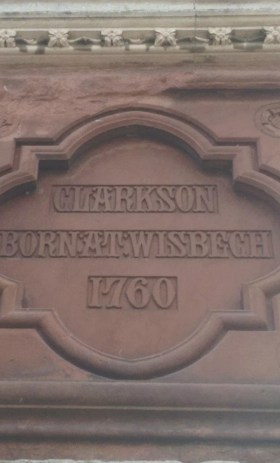
We are in the final decade of the twelfth century, in the market town of Wisbech, a place dominated by its Norman castle, and split by two rivers: the smaller, the Wysbeck is little more than a gentle stream, and can be crossed on stepping stones; the larger, the Welle Stream is more significant, and can only be crossed at high tide by ferry.

In the 124 years since England was conquered by the Normans, the old native tongue of the Saxons has become a foreign language, in both written and spoken forms. Sir John of Tilneye, a young man who was schooled in the old language by monks when just a boy, is called upon to translate an old manuscript which appears to be at the centre of a criminal conspiracy. Ostensibly, it is dull and tedious stuff relating transfers of land and property in the days before the Normans came. Someone, however, is convinced that it contains a clue to something extremely valuable.

Wisbech is neither more nor less lawless than other towns in the area, but when a series of fires and break-ins follow one after the other, the Bishop of Ely’s seneschal Sir Nicholas Drenge is determined to discover what is going on. Each of the incidents seems connected to a fatal fire which destroyed a house in the town. Its owner, Aelfric, who perished in the blaze, was Saxon nobility, but like most of his countrymen, all he had left was his memories. His lands and riches had long been appropriated by the descendants of the 7000 men who landed at Pevensey on 28th September 1066. So why burn down his house? What was he hiding? Drenge and his men-at-arms eventually catch the man who they think is the killer, but when he is murdered while in their custody, the mystery deepens.

Insofar as this is just a detective novel, Drenge is the principle character. No genius, perhaps, but steady and unwavering as he slowly unpicks the knot of lies, legends and loose connections that surround the mystery of Aelfric’s death. Diane Calton Smith gives us some fairly innocent romancing between Sir John and Rose de Hueste, the old man’s granddaughter, but above all she describes a place that is, literally, buried beneath the feet of townsfolk of modern Wisbech. The two rivers have traded identities to an extent. The inoffensive Wysbeck is now the deep and powerful tidal River Nene, while The Welle Stream – thanks to major 17thC drainage – shrank to being a canal in the 1800s, but was eventually filled in and is now a dual carriageway. As for the castle, it still carries the name, but is now merely a dilapidated Georgian house which no-one is quite sure what to do with.

Calton Smith weaves her plot this way and that, and doesn’t surrender the answers until the final pages. This is superior story-telling, and a magical glimpse into a world long since gone; that world created echoes, however, and if you listen attentively, they can still be heard. The Charter of Oswy and Leoflede is published by New Generation and is available now. I reviewed an earlier book by this author, and this link will take you there.

Blog at WordPress.com.

Up ↑