 There are few grander places in Dublin’s fair city than Leinster House, even though its style and grandeur might hark back to the days when the Irish aristocracy – with its links to England – were a power in the land. Whether the current inhabitants of the ducal mansion do its stately rooms and grand corridors proud is not for me to judge, for it houses Oireachtas Éireann, the parliament of the Irish Republic. There must have been a whole lexicon of killing words uttered between political opponents over the decades, but few – if any – actual murders have despoiled the Georgian grandeur. Jo Spain puts this right within the first few pages of Beneath The Surface.
Ryan Finnegan, a parliamentary aide to an ambitious government minister, is found shot dead, lying at the feet of a loftily oblivious stone angel in one of the labyrinthine corridors beneath Leinster House. Enter Detective Inspector Tom Reynolds of An Garda Síochána, the Irish police force. Jo Spain introduced us to Reynolds and his team in her 2015 hit debut With Our Blessing. There, Reynolds was wading through a morass of guilty secrets engendered by the Roman Catholic church and the Magdalene Laundries scandal, but now he is in a place where straight talking is equally hard to find – the upper echelons of government.
Beneath Finnegan’s body is a computer printout. It isn’t just any old piece of A4, however. It’s an image of Finnegan’s boss, cabinet minister Aidan Blake, in what used to be euphemised as “a compromising position”. When the police tech boys search the right hard drives, they find more photos from the same album. If the images were being tagged on social media, the content might include #gaysex #rentboys #cocaine #thailand.
Reynolds has more suspects than he can deal with, and even when he applies the time-honoured question Cui Bono? there is something of a queue. How about the icily calm Danish businessman Carl Madsen whose gas exploration firm stands to gain from preferential treatment in the new resources bill? Can we trust Darragh McNally, the Chairman of the governing Reform Party, and a man whose singular devotion to his party – and his mother – sets alarm bells ringing? And is the Taoiseach himself above suspicion?
As in all the best CriFi novels, there is a dramatic finale with half a dozen possible outcomes. Jo Spain walks us through this, and cleverly switches narrator just at the crucial moment. I was hooked by this excellent novel within the first few pages. Yes, it’s a police procedural, but it succeeds so many other levels. Jo Spain has a very deft hand when dealing with personal relationships, and she lets us be a fly on the wall in many encounters, most memorably those between Tom Reynolds and his long-suffering wife, Louise.
The widowed Kathryn Finnegan and her baby daughter Beth are beautifully described, and my reputation as a man with a heart of stone was severely tested when I came to the scene where they visit Ryan’s grave. Reynold’s boss, Detective Chief Superintendent Sean McGuiness has a gracious wife, June, well used to hosting dinner parties, and playing The Good Wife with her husband’s associates, but her sad slide into the living hell of dementia is described with great subtlety and compassion, but not without dramatic effect.
Beneath The Surface has pushed its way into my Top Five novels of 2016, and I will be scanning the horizon for the first sight of the next Tom Reynolds story.
Beneath The Surface is published by Quercus, and you can check out buying choices here.
 There have been several examples of literature being written by imprisoned authors. Described as the first modern novel, Don Quixote, was conceived while Miguel de Cervantes was in jail for debt, although it was finished and published after the author was freed. Oscar Wilde’s De Profundis was a poignant letter to his fickle lover, Lord Alfred Douglas, and was composed while the author was serving his sentence for indecency. The powerful Ballad of Reading Gaol was, however, written after Wilde’s release.
 Roy Harper would not claim literary kinship with Cervantes, Wilde and Genet, yet he shares the unique kinship of living a life behind bars. He also writes, and after an exercise in smuggling manuscripts out of prison that merits a novel all by itself, his first book – Shank (Tool’s Law 1) – was published in May 2016. Let Henry Roi, of Crimewave Press, take up the story.
 Roy Harper (right) never murdered anyone, and the worst that ever befell those he encountered while on the run was to be shocked, and then accosted and harassed by reporters looking to sell the news as entertainment. Raised in Tempe, Arizona, Roy enjoyed exploring the desert and playing at gun fighting, and was fascinated by outlaw cowboys, the most infamous being Public Enemy No.1, John Dillinger.


 Here on the coast of The Wash we can, if we wish, still measure the seasons by produce. I say “if we wish”, because supermarkets have no seasons – everything is available all the year round. But in the old fashioned world of buying food when it is fresh and local, the year has its own rhythm. Early summer gives us asparagus, followed by strawberries. In autumn and winter Brancaster mussels and native oysters are delicious, but for me, the true treasure of the summer months is samphire. This plant of the coastal marshes, Crithmum maritimum, allegedly gets its name from a corruption of the French “St Pierre”, but whatever its etymology, it is utterly delicious. Lightly boiled or steamed, it is best eaten with the fingers. Running the stems through your teeth to strip off the flesh is a completely sybaritic sensation. Local folk love it with vinegar, but with butter and coarsely ground pepper it is little short of heavenly.
 Shaw and George Valentine series with At Death’s Window. In addition to solving a series of burglaries at properties along the Norfolk coast owned by wealthy out-of-towners, Shaw and Valentine become involved in a turf war between product dealers. These are not your common-or-garden drug barons, or even owners of ice cream vans, but dealers in samphire! As I have illustrated, with a 300% mark-up available for an item that can be had for nothing, why bother with something as illegal and potentially lethal as narcotics? The problem in At Death’s Window comes when local folk are muscled off their home territory by criminal gangs using illegal immigrants as pickers. Think cockles and the Morecambe Bay tragedy, and you can see how it all might go pear-shaped.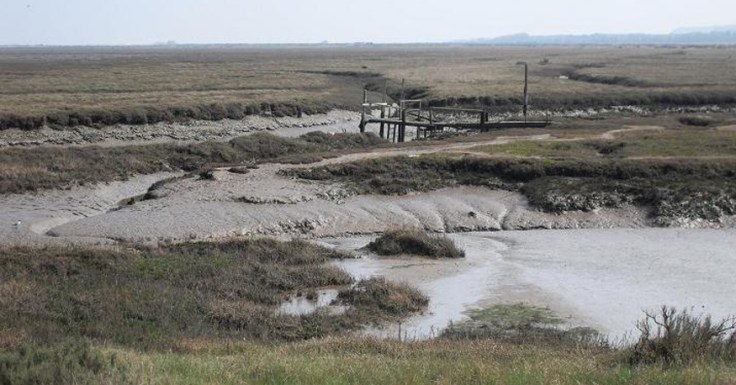

 finds employment as an officer in the Feldjaegerkorps. His creator, Luke McCallin, (right) introduced us to Hauptmann Reinhardt in

 When I reached the grand old age of 60, I treated myself to an expensive – and very beautiful guitar. It almost played itself. The simplest chord sounded epic. This song is far from epic, but is a journey back to the years when being in love kept you awake at night, and sometimes got you up in the morning in the hope of a letter. Yes, that’s how long ago it was.
 Sir John Betjeman is so unfashionable these days that it is an utter delight to be an admirer. His directness and accessibility have been mocked, but only by those whose lack of talent and perception can only be measured in geological numbers. Here, he pokes his head round a curtain, and sees an ageing debutante, lamenting the passing years and her own decline


 fullybooked2017