DEREK RAYMOND, aka Robert Cook was a writer who took the humble police procedural out for a quiet drink, spiked the glass of shandy, and then led the hapless victim through a dark night of debasement and unimaginable horror. This journey into hell only ends when there is no sample of man’s beastliness left untasted, and no part of the soul unraked by the sharpest of literary claws.
Cook was born in 1931 to a wealthy family, and went on to be perhaps the most unlikely alumni of England’s most celebrated school – Eton College. A typical Old Etonian Cook was most certainly not. A series of jobs, girlfriends and wives left him unfulfilled until in his fifties, he found the literary spark which set off a fire which was to burn white hot until his death in 1994.
His casual familiarity with the criminal underworld of London during the heyday of the Kray twins left him under no illusion about the black heart of the real criminal, and the ambivalent attitude of many of the police officers whose job it was to hunt down the law-breakers.
The core of his work is the series of books which have come to be known as The Factory Novels. ‘The Factory’ is a fictional London police station in the real-life Soho thoroughfare of Poland Street. The protagonist is an unnamed copper who, when not stewing in his own self-loathing, is regarded with suspicion by his superiors. He is tolerated for the hard edge of his hatred for criminals, but will never be found with his colleagues in the pub on a Friday night after work. He works for department A14 which is very much the Cinderella of the Metropolitan Police – The Department of Unexplained Deaths.
“To work in A14 is to see everything that no one ever sees: the violence, misery and despair, the immeasurable distance in the mind of a human being that knows nothing but suffering between its dreams and its death.”(IWDS, p 176)
We are left to imagine what he looks like. He never uses violence as a matter of habit, but his inner rage fuels a temper which can destroy those who are unwise enough to provoke him. Why is he so bitter, so angry, so disgusted? Of himself, he says:
“I’m a solitary man. Sometimes, mind, there’s happiness in solitude, still, it helps to talk to other people sometimes and dig back together to a time when people felt that the past mattered and something good might happen in the future. But when I open the next door I’m sent to and find the dead inside, overturned bottles and tables, bloody, dishonoured, defamed people lying there, I sometimes accept that dreaming and hoping the way I do is absurd.” (DMU, p 94)
Throughout the narrative we are reminded of the defining series of way-points in his life. A wife whose mental stability has been rocked, perhaps by his own obsessional desire to do his job properly. A young daughter whose short life ended in tragedy. Now, the wife is as lost to him as the daughter, the woman to some kind of institutional care, the child to a cheap coffin in a London cemetery.
THE FACTORY
The road constantly traveled by The Unnamed Sergeant is the road of compassion. It is not the kind of compassion that involves a friendly arm around the shoulder, or a comforting word. Rather it is a deep bonding with the dead, and a sanctifying of the victim, be it a battered corpse or even a parcel of body parts. Then, it is the blind fury of a man who will bring down the murderer using official methods first, but if they fail, then by any means available.
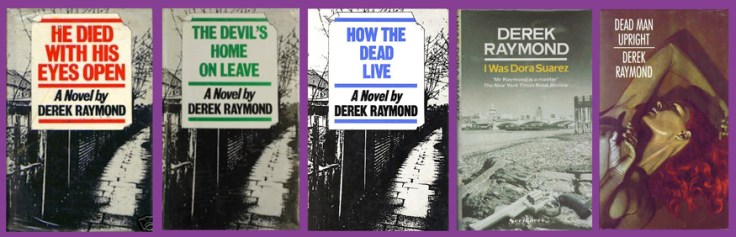
In He Died With His Eyes Open (1984) the principle victim is Staniland, a weak fellow with a poetic streak. He records a series of audio tapes as his life descends into turmoil, and after his death, the tapes provide a chilling backdrop to the sergeant’s search for the killers. The Sergeant’s visceral connection with the dead man is expressed thus:
“For me, Staniland wasn’t just another body in the morgue. Through his writing and his cassettes he was still alive as far as I was concerned. I had started to think, dream, almost be Staniland by proxy ….”
Some of Staniland’s tortured musings, in particular those which recount his time in rural France, are strongly autobiographical, as they echo Raymond’s own time working in an isolated village near Montpelier. Despite his weary air of omniscience, the sergeant’s judgments are not infallible, and by the end of the book his very human weakness is almost his undoing.
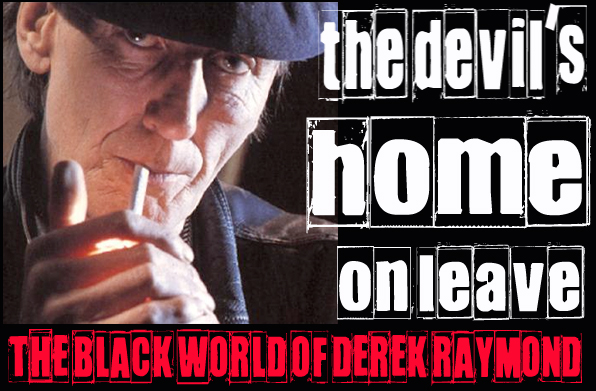
1985 saw the publication of The Devil’s Home On Leave which was about as close as Raymond came to a standard police thriller. As the Sergeant investigates a case which begins with body parts found in a riverside warehouse, his probings earn him a shot across his bows from his superiors. The sides of noses are tapped, and meaningful glances shot in his direction, but the knowledge that the case has its roots in corruption in very high places only serves as a spur.
Raymond’s anguished love affair with the sheer mundanity of the evil he imagined lurking in drab London streets didn’t prevent him from taking the chance to send The Sergeant elsewhere. In How The Dead Live (1986) our man goes rural, as he visits the village of Thornhill to investigate the missing wife of a doctor. Raymond’s imagination is as blackly perceptive as ever, but he can’t resist his own take on the well-worn crime fiction trope of the mysterious and gloomy country house, with its hidden secrets. One note of interest. A 2007 American edition of the novel by Serpent’s Tail included an introduction by Will Self, who had borrowed the title for a book of his own, published in 2000.
I Was Dora Suarez will, for reasons which will become clear, be dealt with separately. The final Factory Novel, Dead Man Upright, was to be published in 1993, shortly before Raymond’s death from cancer. A former colleague of The Sergeant has been kicked off the force for his fondness of the bottle, but he convinces his erstwhile chum that the man on the top floor above his flat is responsible for the deaths of a succession of women. This is not so much a hunt for a killer, as it is fairly clear from early on that Jidney, the man upstairs, is as guilty as sin, but rather an examination of the darkest recesses of a murderer’s mind. Jidney describes the last moments of one of his victims, Daphne Hayhoe.
“ Our last moments were sad. It was death in slow motion, explained step by step; it was the first time I had explored this avenue so thoroughly, and the extraordinary restraint I had to exercise increased my pleasure enormously. I got her to undress, and lie down on the floor, naked, whereupon I tied her up. Then a remarkable thing happened. As she was not in her first youth, her singing voice was not very good, being cracked and hoarse with fear, too, naturally, but as I came over to her with strangling wire and a great hard-on, she closed her eyes with wrinkled lids, and sang out firmly:
‘Christians with a gladsome mind,
Praise The Lord for He is kind,
And His mercies shall endure,
Ever faithful, ever sure.’”
APOTHEOSIS
I Was Dora Suarez
This is Derek Raymond’s masterpiece. In the decades since its publication in 1990, it has shocked, horrified, inspired and gripped readers with a grim fascination. Were it a new novel accepted by a modern publisher, it is mildly entertaining to imagine the torments that would be suffered by the publicity team handed the poison chalice of selling it to daytime TV book clubs and the bulk buyers for ASDA and TESCO book racks.
The plot and characters are initially straightforward. Dora Suarez is a prostitute. She is outwardly beautiful, but gravely ill with the diseases which are an occupational hazard of her calling. She has been befriended by a gentle old woman, Betty Carstairs, who takes a maternal and non judgmental interest in the younger woman. Both meet their death at the hands of Tony Spavento, a killer whose depravity and violence towards himself and his victims is unspeakable and indescribable. Except that Derek Raymond does both. The Sergeant hunts down Spavento, and on the way destroys some of the men who have brutalised Dora.
Dickens, and other nineteenth century masters, loved to give characters names which had an immediate resonance. Uriah Heap, Ebenezer Scrooge, Obadiah Slope and Damon Wildeve are never going to be anything other than villains, and Raymond follows the same path with Tony Spavento. Even speaking the syllables has a bitter sibilance. But poor Betty Carstairs. A name from the 1930s and 40s. The Home Service on the wireless. Golden days of youth, and the shabby gentility of old age, contrasting so beautifully with the exotic Hispanic vowels as we say, “Dora Suarez ….. Dora Suarez.”
When The Sergeant finds the dead women, he is bitter about Betty Carstairs, and imagines the fate of her corpse.
“…and that was the squalid and miserable end of Betty Carstairs. She was to pass later, after the autopsy, through the diesel flames of a London cemetery in a recuperable coffin, a graven angel passing through a moment of fire, at a price arranged on the cheap by her great-nephew Valerian who knew a few people, and who, having been the flat with a mate of his …..took such pickings from it as he could down to Chelsea in two of her suitcases and got pissed on the proceeds.”
But his weary cynicism over Betty’s demise is nothing compared to the white hot flame of his determination to avenge Dora’s death.
“It was then, and only then, that I understood what it really meant, the feeling of people’s rightful fury and despair, and it came with my desire to bend over Suarez and whisper, ‘It’s all right, darling, don’t worry, everything will be alright, I’m here now, it’ll be alright now’ – and the feeling was so strong in me that I knelt and kissed her short black hair which still smelled of the apple-flavoured shampoo she had washed it with last night, only now the hair was rank, matted with blood, stiff and cold.”
The Sergeant’s mission to destroy Tony Spavento plays out to its corruscating and brutal climax, but not before Raymond has taken us to the very depths of human vileness. We can recover. It is, after all, only a book. We must imagine that The Sergeant, however, could never be the same again. Neither, it seems, was Raymond. He said that writing the book changed his life:
“Writing Suarez broke me; I see that now. I don’t mean that it broke me physically or mentally, although it came near to doing both. But it changed me; it separated out for ever what was living and what was dead……I asked for it, though. If you go down into the darkness, you must expect it to leave traces on you coming up – if you do come up. It’s like working in a mine; you hope that hands you can’t see know what they’re doing and will pull you through. I know I wondered half way through Suarez if I would get through – I mean, if my reason would get through. For the trouble with an experience like Suarez is that you become what you’re writing, passing like Alice through the language into the situation.”
The Factory novels, and Derek Raymond’s other works, are available on his Amazon page.

 Hawley Harvey Crippen was never a doctor, in the accepted sense. He was at best, a purveyor of quack medicines and homepathic cures to the gullible. He may even have been a backstreet abortionist, but that has never been proved. He was born in Michigan in 1862, but emigrated to England in 1897 with his second wife Cora. Cora was a second rate music hall entertainer and Crippen, tired of her charms, took up with a young typist named Ethel Le Neve.
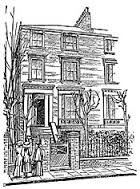 Crippen eventually raised the alarm, as she suspected foul play. The house was searched, and nothing was found. Crippen and Le Neve, however, were spooked, and fled to the continent, where they bought a passage on a steamer bound for Canada.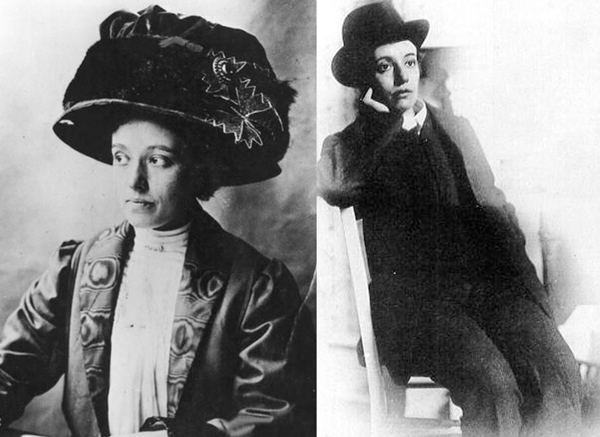


 Nilsen (left) preyed on young men who were often lost and alone in London. He murdered them, so he claims, so that they would not leave him. To ensure their continuing post-mortem presence, he would wrap their bodies in polythene and conceal them beneath the floorboards, regularly spraying with with deodorant as the corpses putrified. When he tired of this game, he would dismember what was left of his young victims, and then try to dispose of the body parts via the toilet. Sometimes, when this was too difficult, the limbs were boiled to remove the flesh, thus making disposal more straightforward. When he had access to a garden space, at Melrose Avenue, many of the victims were eventually consumed by that most normal of activities – the garden bonfire.









 fullybooked2017