Search

fullybooked2017

Category

True Crime

THE SPALDING POISONER . . . Edward Bell (3)

TSP HEADER

SO FAR: Spring, 1899. Spalding farm labourer Edward Bell, seeking a relationship with a more sexually attractive woman, has poisoned his wife, Mary Eliza. While playing the part of the grieving husband at her graveside, he has already sent a telegram to the object of his affections, Mary Hodson.

On Sunday 30th April 1899, Edward Bell proposes marriage to Mary Hodson, and she accepts. Less than a week later, Mary Fox – Mary Eliza Bell’s mother receives an anonymous letter. It reads:
|Letter

In a case full of improbabilities, this is the strangest occurrence of all. Why would Bell, believing that he had fooled everyone, then send a letter to his mother-in-law. virtually confessing to the murder of his wife? Whoever actually wrote the letter, there were immediate repercussions. Mrs Fox wasted no time in bringing the letter to the attention of the Spalding police, and Bell was arrested on suspicion of murder.

One might have hoped that Mary Eliza Bell’s sufferings had ended with her burial in the quiet churchyard of All Saints Orby, but she was to have one final indignity inflicted on her. On the order of the Boston Coroner, her body was exhumed,and she was eviscerated, her internal organs sent in glass jars to a senior pathologist in London, and he found ample traces of the poisons that caused her death.

Edward Bell’s luck had run out, after an improbable series of deceptions of family members, the medical profession, and the police. On Tuesday May 9th, 1899, he was arrested on suspicion of having murdered his wife. After a series of magistrate hearings and coroner’s inquests, he was sent for trial at the summer Assizes in Lincoln.

As Bell made a sequence of public appearances at hearings and inquests, one might have thought that public anger would be directed his way, but the crowds that use such court hearings as entertainment were more exercised about his love interest, Mary Skeels Hodson (below)

Hodson

Edward Bell was hanged in LIncoln Gaol on Tuesday 25th July 1899. A newspaper reported the solemn occasion:

“The prison bell began to toll at about a quarter to nine, but some time before that Bell had been removed from the condemned call to the pinioning room. It was here that he was engaged in prayer with the Chaplain when the High Sheriff’s representative entered. The process of pinioning was then immediately began, Bell submitting himself with perfect quietness. While this fearful ordeal was in progress Bell turned to Dr. Mitchinson and, in voice that betrayed little agitation, thanked him for his kindness and attention, and then turning to the officials thanked them for their kindness. When all these preliminaries had been duly observed, the procession moved towards the scaffold. Bell walked with a firm step, and as soon as he stood on the fatal drop Billington speedily strapped his legs and adjusted the noose. The white cap was then drawn over the prisoner’s face, shutting out the light of earth from his eyes for ever.”

I  research and write about many historical true crimes. Almost all are committed by men, and with most of those, the victims are women. This story is from 1899, a time where women couldn’t vote, and had few legal rights regarding money and property. What chills my blood with this story is the stark reminder of the dire state of what we would now call sexual politics back in the day. Mary Eliza Bell – the victim in this case had, since she married Edward Bell in 1893, been constantly pregnant for as long as it was medically possible. From their marriage until her death in 1899, she had given birth to six children. Two survived. It doesn’t take a huge leap of imagination to conclude that Edward Bell, faced with his wife’s understandable weariness with sex, would look elsewhere. He was still relatively young, virile, and presentable. Who better to satisfy his needs than a young woman, unburdened and undamaged by childbirth, in an adjacent cottage?

Edward Bell paid the ultimate price for his misplaced sexual energy, and we can only tip our hats to the wisdom of the judge and jury at his trial. He killed a decent and caring woman in, perhaps, the most brutal and excruciating way possible. For me, Edward Bell can rot in hell, but spare a thought for the countless women who, before the days of safe and effective birth control, bore the pain of being the legal victims of what used to be called ‘conjugal rights’.
THE SPALDING POISONER . . . Edward Bell (2)

TSP HEADER

Timeline new

Spring 1899. Edward Bell, farm labourer of Weston Marsh, Spalding,  is dissatisfied with his wife Mary Eliza, who has borne him six children in six years, and is determined to get her out of the way so that he can pursue a passion for a younger woman. Mary Hodson. He has bought poison from a chemist in Spalding. He has also bought a soda siphon. Over the weekend of 23rd/24th April he begins to administer the poison to his wife, mixed with the soda, saying that it is a tonic which will calm stomach problems from which she regularly suffers.

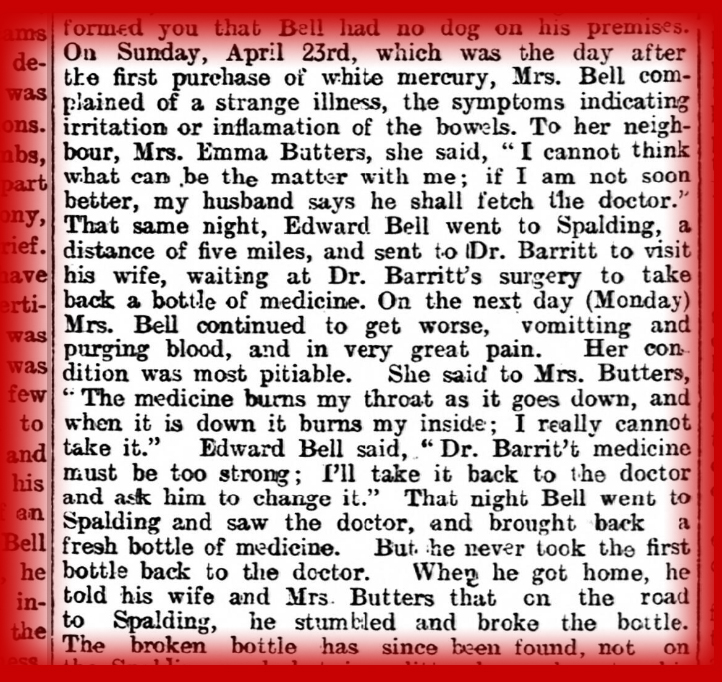
On Monday 24th April, Mary Eliza Bell begins to suffer agonising symptoms. Her mother is summoned from Orby to be at her side, and Edward Bell fetches the doctor, who diagnoses inflammation of the bowels. Over the next two days, Bell attempts to buy more poison and completely pulls the wool over the eyes of both the doctor and the chemist. What happened next is best described in the words of various astonishing reports in newspaper later in the case when Bell’s crime had been unmasked. These are  from the Sheffield and Rotherham Independent:

Extract 1

Extract2

Bell’s behaviour might appal the reader over a century after his dreadful crime, but what he did next is little short of unbelievable. After watching his wife die in the extremes of agony, he calmly walked into Spalding again, knocked on Dr Barritt’s door, informed him that his wife had died, and asked for a death certificate, which the medical man duly wrote out, citing the cause of death as the bowel condition for which he believed he had been treating her. Wasting no time, Bell then organised the removal of his wife’s corpse to her home village of Orby. She left the family cottage in a cart, and her remains were conveyed by railway for the remainder of the journey.

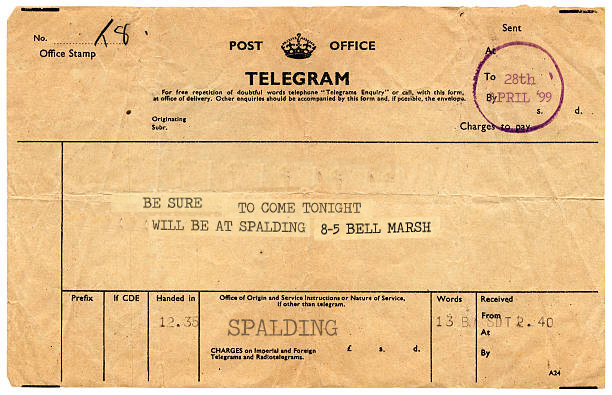
Mary Eliza Bell’s funeral was scheduled for Saturday 28th April, and Edward Bell left left Spalding on an early train to play the part of the grieving husband, but not before finding time to send this telegram (facsimile below) to “Miss Hodson, Rectory, Barton-le-Cley”

Telegram

Bell’s arrogance- or stupidity – is barely credible. And yet, and yet. He had already hoodwinked his wife, the local doctor, a Spalding pharmacist, so it is only to be supposed that he thought he was on a winning streak. What happened next was to show that Bell’s trust in the gullibility of both the law – and ordinary people – was misplaced.

NEXT – An anonymous letter,
the final indignity inflicted upon Mary Eliza Bell,
and, in the end, justice is served.

THE SPALDING POISONER . . . Edward Bell (1)

TSP HEADER

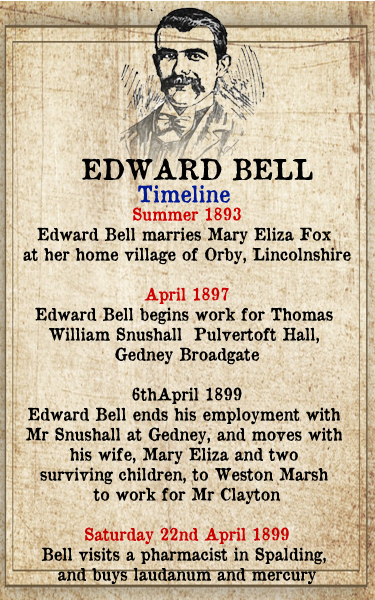
It is April 1899, and we are in a sparsely inhabited area of England known today as South Holland. This is the southernmost part of England’s second-largest county, Lincolnshire, and it is a flat landscape with endless sky interrupted only by the odd spire or tower of a church.  In Weston Marsh, a few miles from the bustling town of Spalding, live Edward Bell and his wife Mary. Bell is an agricultural labourer, employed by farmer Thomas Clayton. They live in a simple cottage, built and owned by the Clayton family, who have farmed the fertile soil for generations.

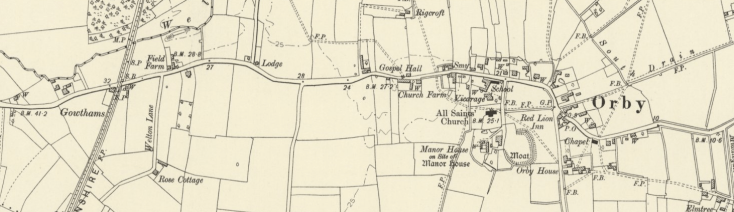
Bell and his wife, Mary Eliza, marry in 1893 in the church of All Saints, Orby – a village still in the Lincolnshire Marshland, but further north. Mary’s father works for the Great Northern Railway as a level-crossing keeper.

Screen Shot 2022-01-27 at 19.32.54

In the six years since their marriage – almost incredible to us in 2022 – Mary Bell has given birth to six children. Four perished, but the two surviving infants live with their parents. The family have only been at Weston for a matter of weeks, having moved from the employ of another Lincolnshire farmer, Thomas Snushall of Pulvertoft Hall, Gedney (below), a few miles to the north.

Puvertoft

We know that all is not well between Edward and Mary Bell. Living in an adjacent cottage at Gedney, with her father,  was a young woman called Mary Hodson. Attractive, and no doubt receptive to the attentions of 26 year-old Bell, Mary Hodson struck up a relationship with Bell, and evidence would later emerge that Bell had begun to mistreat Mary. I will return to this at the end of the story, but it is a sad reflection on the sexual politics of the time that we have a decent woman – Mary Eliza Bell – no doubt permanently worn out with childbirth and childcare, perhaps having put on weight, no longer the attractive person that she was, struggling to meet what her husband thought were his “rights”.

Screen Shot 2022-01-27 at 20.07.48Edward Bell clearly saw a golden future in the person of Mary Hodson, and all that stood in his way was the presence of his wife. On Saturday 22nd April, Bell walks into Spalding and visits a shop in Spalding. Its manager, Algernon Molson, represents the Talboy Herbal Remedies Company. Bell says he has two problems. Firstly, toothache, for which he buys a quantity of laudanum (a tincture of opium in wine), and a plague of rats, for which Mr Molson sells him some mercury. The following Monday, Bell returns to the shop, and buys more mercury. He says his rat problem hasn’t been solved, and so the obliging Mr Molson sells him some strychnine. Come Wednesday, Bell pays another visit to the Talboy Herbal Remedies Company and asks for some prussic acid, saying he needs to poison an ailing dog. Finally, Mr Molson says, “no”, but does sell Bell another dose of strychnine.
NEXT: The agonising death of Mary Eliza Bell,
a funeral -and an exhumation.

THE SWAFFHAM HORROR . . . Tragedy at Town Farm (3)

Header

SO FAR: 1925, and Swaffham farm labourer Herbert George Whiteman (now calling himself Bloye) has been sent for trial at Norwich Assizes for the murder of his mother-in-law Clara Squires. In the same attack, he badly wounded his wife Alice, and she has subsequently died of her injuries.

The Assizes opened on Monday 19th October and, as was customary, the dignitaries – in particular the Lord Chief Justice himself, Lord Hewart went to the cathedral, no doubt to pray for wisdom.

Assizes

There is very little on record about the trial of Herbert George Whiteman, probably because it took up little of the court’s time. Whiteman’s barristers on Tuesday 20th October went down the only route available to them, which was to plead that when he struck the fatal blows back in June, he was temporarily insane. Neither the jury, nor Lord Hewart, were having any of this. Whiteman, under his adopted surname Bloye, was found guilty and sent back to Norwich Gaol in Mousehold Heath to await the ministrations of the hangman. Photographs rarely appeared in local newspapers in those days, but the Daily Mirror provided the only surviving image of Herbert George Whiteman, (even if they didn’t get his name quite right) and I post it alongside the image of the man who sentenced him to death.

Bloye

What does deem unsatisfactory, at least in my eyes, is that Whiteman’s murder of his wife was not proceeded with. Perhaps this was so as not to ‘waste the court’s time’. The outcome of the case – as well as the sentence – was never in doubt, but it had the effect of reducing Alice Whiteman to a mere footnote, as shown on this document recording details of criminals.

Calendar of Prisoners

On Thursday 12th November, Herbert George Whiteman paid the ultimate penalty for his crimes.This is a detailed report from The Lynn News the following day.

“George Bloye, who was recently sentenced to death by the Lord Chief Justice at the Norfolk Assizese, for the murder of his mother-in-law, Clara Squires, was executed at Norwich prison yesterday (Thursday) morning. It will be remembered that the man was charged also with the murder of his wife, who died as the result of injuries inflicted by him on the same day – June 15th – but this indictment was not proceeded with in the Assizes Court. Punctually at o’clock yesterday morning Bloye walked from a cell near the coach-house with the support a warder on either hand, at the bead of the procession being the Rev. T. E. Hoyden, chaplain of the prison, who recited the usual sentences from the Burial Office. The Sheriff for the County (Mr. Walter K Hansen) was present, and there were also present a prison doctor, the prison governor, and two representatives of the Press. Baxter was the executioner and Taylor his assistant.

Bloye, who at the time of his conviction was stated to be 27 years of age, and was described as a labourer. was a sturdily built man of middle height. He walked firmly and with no sign of acute feeling to the chalk mark on the flap-doors of the scaffold. His death was instantaneous. Less than thirty seconds must have elapsed between the time when he first saw the instrument of death and the time of his decease. There was no tremor or other sign of life after the drop had fallen.”

There were more than two victims of Whiteman’s murderous acts on 15th June 1925. His own blood family would be shamed by his infamy for the rest of their lives, while the Squires would have their own grief to deal with. What became of the two youngest players in this grim drama, Herbert RW Whiteman and his sister Evelyn? They were, of course, orphans. It is always easier to trace males in genealogy research, and the 1939 wartime register has Herbert working at Moat Farm, Tutbury, Staffordshire. He died at Haverford West in September 1992. Evelyn is more tricky. We have two Evelyn E Whiteman possibilities; one marrying a Mr Tingley in Eastbourne in 1954, and another marrying a Mr Jeffrey at Tonbridge in 1947. Either is feasible, but let us end with hoping that Evelyn had no memory of that tragic day in a field just outside Swaffham as she lay in her pram.

THE SWAFFHAM HORROR . . . Tragedy at Town Farm (2)

Header

SO FAR: Swaffham, in the summer of 1925. Herbert George Whiteman and Alice Squires had married in 1921, and after the premature deaths of two babies, they now have a healthy son and daughter, Herbert and Evelyn. The marriage is on the rocks, however, and Alice has been granted a separation order, taken the children and gone to live with her parents.

On the morning of Monday 15th June, William Squires was working in a field known as Heathlands  near Town Farm. His wife Clara was similarly busy in an adjacent field. Just before mid-day, Alice Squires, with her two children brought her father his lunch, and walked off in the direction of her mother. Shortly afterwards, Squires heard a terrible scream. He threw down his tools and ran in the direction Alice had taken. He found her lying on the ground, blood pooling around her head. Baby Evelyn was still asleep in her pram, but two year-old Herbert looked on, uncomprehending. Alice was unable to speak, but Squires looked across to where his wife had been working, and saw her tussling with a man. Before he could reach her, she fell to the ground. Running away from the scene was a man, later identified as Herbert George Whiteman.

Others, working nearby, ran to the scene. The police were summoned, as was Dr William Thorpe, and an ambulance was called to take the stricken women to Swaffham Cottage Hospital. Clara Squires died two days later without ever recovering consciousness.

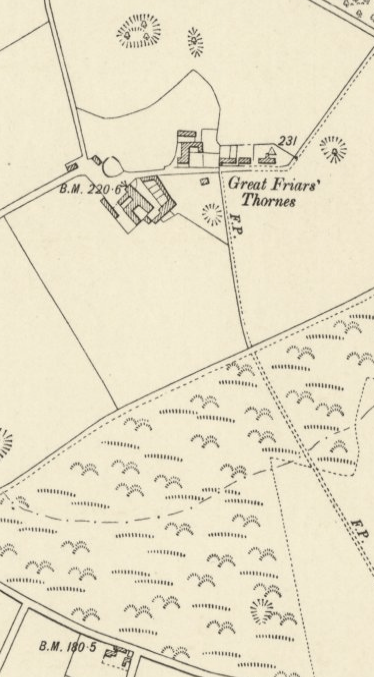
Screen Shot 2022-01-22 at 18.30.45Meanwhile, what of George Whiteman? After the attack on the two women he had headed north across the railway line in the direction of his mother’s cottage near what was known as Great Friars Thornes. Mrs Whiteman was standing in the yard of the farm with another woman, Frances Turner, who later testified:
‘Whiteman came round the corner of the yard. He had blood on his coat and hands, and said to his mother, “Don’t grieve for me, they can’t make you suffer for my sins. I’ve done the two in. I could not kill my two dear children. I want to say goodbye to my father, as the police will be after me in a few minutes.”‘

Whiteman was carrying a large agricultural spanner, and when he went with his mother to her house, he asked to hide it. She put it under a pile of firewood, but it was later discovered there by Police Constable Walmsley. Whiteman was arrested and taken to the cells at Swaffham Police Station. He was brought before the magistrates at the Shire Hall, Swaffham (below) on Tuesday 30th June.

Shire hall

Bizarrely, Whiteman insisted that he now be known as Bloye – his mother’s maiden name. The Yarmouth Independent reported the hearing thus:

Remarkable confessions wore made Herbert George Bloye (Whiteman) – labourer, when charged Swallham Tuesday with the murder of his mother-in-law, Mrs. Squire, and the attempted murder of his wife. He declared that after kissing his wife he hit her on the head with piece of iron, and later attacked his mother-in-law in a similar fashion. The older woman died two days later, and the wife is not yet out of danger. The prisoner sat with folded arms and impassive demeanour, head held high, while the evidence was given, even the distress of his white-haired mother apparently leaving him unmoved. When asked if he had any questions to ask of the witnesses, he stood smartly to attention and replied, “None at all. sir.”

Only once did he interrupt the evidence, and that was when the police read his statement that he said to the dead woman, when she began to cry before striking her, “Guilty conscience needs no accusing.” He then exclaimed. ” right!”

On the way from the police-station to the court-room, faced with several photographers, he smiled and tried to pose, but was hurried on by the police in charge of him.

It appeared that  in May the prisoner’s wife obtained separation order against him, and the prisoner was apparently under the impression that she was influenced in this by her mother. He seemed have made up his mind to murder his wife’s mother. The attack which formed the subject of the charge occurred on June 15th, and Mrs. Squires died two days later.

Dr. Kenneth Thorpe, Swaffham, said about 1.40 p.m. on the 15th June he was called to the Town Farm, about two miles out of the town, and saw Mrs. Whiteman lying on the side of Green Lane. She was unconscious and bleeding from wounds on the head, which he attended to temporarily. There were 24 wounds in all, and one had fractured the skull. They were not severe in themselves, but the number made them severe. Mr. Squires showed him where his wife was lying in the field. She was unconscious and bleeding from a large ragged wound on the left temple, about five inches long, from which the brain was protruding.

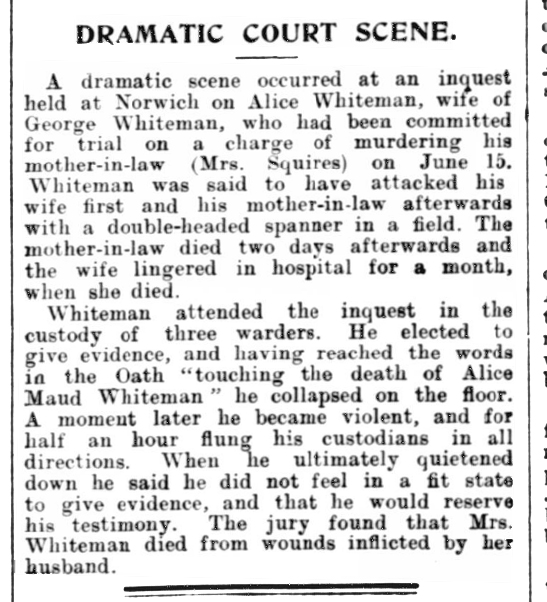
This particular newspaper report also expressed optimism about the condition of Alice Whiteman, even going as far as to say that she was expected to make a full recovery. They were wrong. Alice Whiteman hovered between life and death in the hospital for almost a month, but since her mental state had deteriorated owing to the terrible head wound she had sustained, she was transferred to Norwich Mental Hospital on 23rd July, but she was beyond medical help and died there on Monday 3rd August. A separate inquest on her death was held in Norwich, and was not without incident. By this time, the magistrates had found Whiteman guilty of the murder of Clara Squires, and he was sent to stand trial at the Autumn Assizes in Norwich.

Inquest

IN THE CONCLUDING PART
Trial and justice – of a kind

THE SWAFFHAM HORROR . . . Tragedy at Town Farm (1)

Header

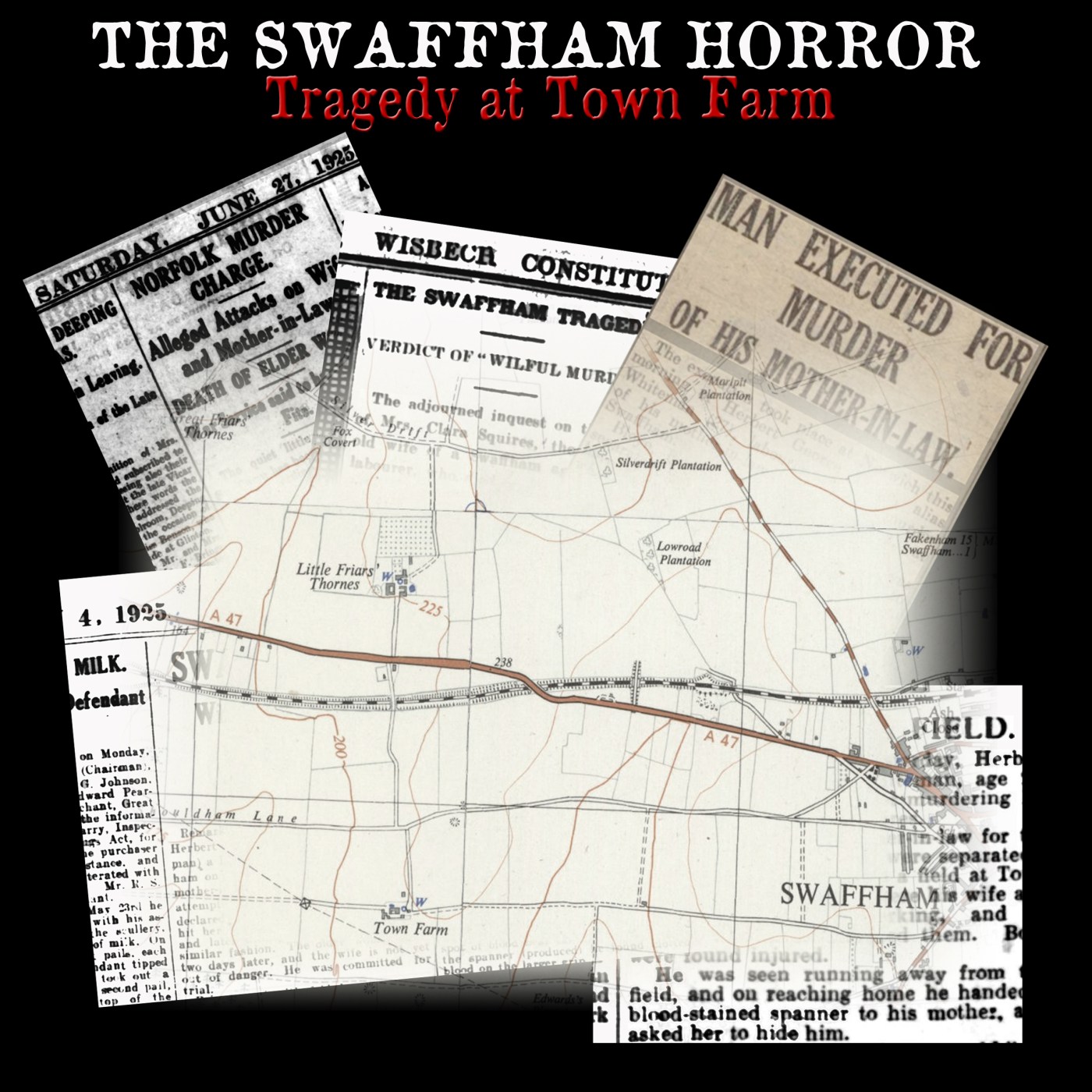
I have been researching and writing about these tragedies for many years, and one thought never fails to cross my mind when I look into the backgrounds of the people involved. What if their paths had never crossed? What was the fateful moment when the die was cast, and it was almost inevitable that there would be a tragic outcome? The three principle characters in this drama are Herbert George Whiteman, Alice Squires – who would go on to become Alice Whiteman – and her mother, Clara Squires. The two families had much in common. Both lived in Swaffham, or nearby, Both relied upon the hard grind of agricultural labour to keep a roof over their heads and food on the table.

The 1911 census has Whiteman, simply listed as George (aged 12) living in Newton by Castle Acre with his father Walter (49) his mother Hannah (neé Bloye) and two younger siblings Thomas and Julia. The same census gives us, at Tower Court in Lynn Street, Swaffham, Alice Squires (9), along with parents William and Clara, and siblings.

We know little about what happened to George and Alice until the years after The Great War. George Whiteman served as a Private in The Norfolk Regiment, but not for the duration of the war. He was still at home in November 1916, as we know from a bizarre brush with the criminal justice system,mas reported in The Lynn News.

NUTS

At some point, either through volunteering or by conscription he went ‘to do his bit’, and thanks to pension records, we know he was discharged in the spring of 1919, with a disability pension. What this disability was remains unclear. There were reports later that something he had seen or experienced while on service had caused him to have fits. The pension system was complex, but put simply, a man with a severe disability such as loss of limbs or severe mental damage was entitled to a maximum of forty shillings (£2) a week. The army had a scale of payments for lesser injuries, and Whiteman’s pension card reveals he was to receive five shillings and sixpence each week –  a pension of around 13% of the maximum.

We do not know if George and Alice ‘courted’ during the war years, but we do know that they married in January 1921, in Swaffham. It is almost certain that Alice was ‘in the family way’, because in March 1921 she was delivered of a daughter, Dorothy Mary, but the child was not long for the world. Parish records show she died on 14th May.

Dorothy May death

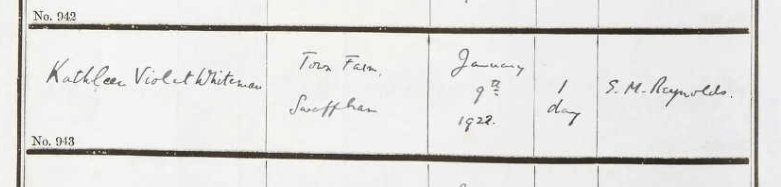
Interestingly, this is the first time the name of Town Farm crops up in the narrative. The Whitemans were to fare no better with their second child, Kathleen Violet, who survived only a matter of hours.

Kathleen V death

The Whitemans persisted, and with better luck. Herbert RW Whiteman was born on 16th February 1923, and then came Evelyn E Whiteman in October 1924. It seems that by the time of Evelyn’s birth the marriage was in trouble, mainly due to George Whiteman’s violence towards his wife, and by the early summer of 1925, Alice had left him, and moved back in with her parents, taking the two youngsters with her.

Station Street

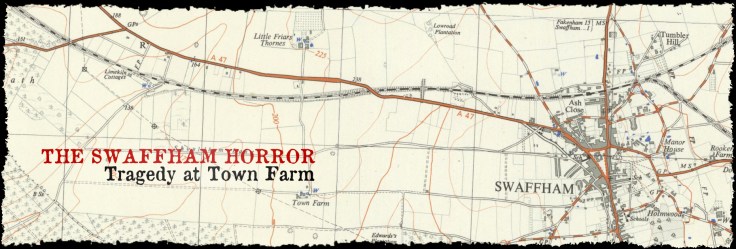
Screen Shot 2022-01-21 at 20.29.21There is more than one Town Farm near Swaffham, but I am certain that the one central to this story is the farm that sits on Shoemakers Lane. My reasons for this are that immediately after the terrible events of Monday 15th June, George Whiteman is described as making his escape across the railway line in the direction of his mother’s house at Great Thorne. Nothing else makes sense, so I am convinced that this is the correct location. In part two, I will describe the tragic events of that June day, and how justice was done in the case of George Whiteman’s mother in law, if not with regards to his young wife.

IN PART TWO – A county in deep shock, an arrest, a confession, and an appointment with both The Lord Chief Justice of the land and the hangman.

FOUR MORE ANGELS IN HEAVEN TONIGHT . . . The Wimblington Tragedy (2)

Header4A

SO FAR – It is February 1896, and Mary Jane Farnham has moved back to Wimblington following the death of her husband, Henry, a former Stationmaster in Essex. She has five children, but is  comfortably provided for, thanks to savings, insurance and a pension from the Railway Benevolent Fund. She and the children have rented a roomy cottage, not far from Wimblington railway station. The children are universally liked, and she is regarded as a quiet and respectable woman. She and the four younger children – Lucilla, aged 12, is in service with a family in nearby March – are regular church-goers. But something is very wrong. She has mentioned to her parents that the strain of being alone troubles her. Her words were later quoted in the press:

Quote

It can have been no comfort to Mary Jane Farnham to be living within sight and sound of Wimblington railway station, and it must have been a daily reminder of better days, when she and her husband lived in a similar building, were pillars of the community, and with their whole lives ahead of them.

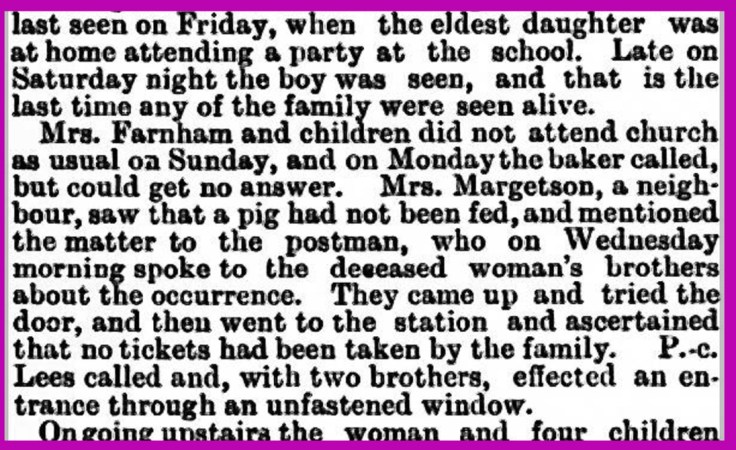
I have been researching and writing these true crime stories for many years, and I can truthfully say that none of the human tragedies I have investigated comes close to this one in terms of loss and despair. The Farnhams were last seen alive at some time on Saturday 15th February. It needs to be remembered that communities were much smaller and ‘in-each-other’s-pockets’ in those days, and the comings and goings of villagers in a place like Wimblington were very public. Bit by bit, villagers suspected that something was wrong.

Unease

What the Peacock brothers and the village policeman found in the upstairs bedrooms would probably haunt them for the rest of their lives. Marjorie May, 11, Sidney Harold, 8, Henrietta Mary, 6, and Dorothy Esther, 4, were dead in their beds, killed while they slept, and their throats cut so deeply that their heads were nearly severed. Beside them was the body of their mother, a white handled knife, savagely sharp, in her dead hand. The bedsheets around the bodies were saturated with blood. It was.literally, a bloodbath.

This was no spur of the moment act of desperation by Mary Jane Farnham. On a table in the house was an envelope containing the outstanding rent on the cottage. Even more chilling, It was later revealed that she had sent a letter to the Railway Benevolent Fund requesting that her widow’s pension be terminated. This mixture of propriety and savagery is hard to comprehend, even though a century and more has passed.

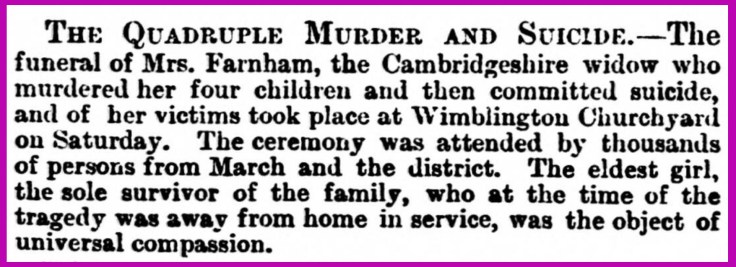
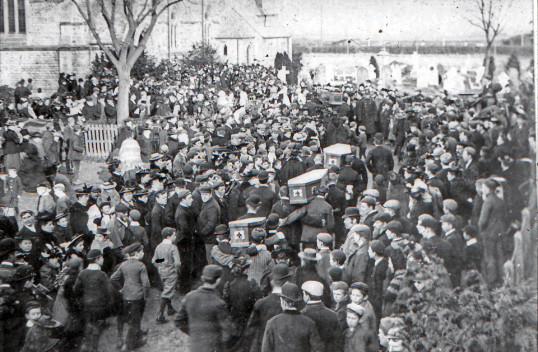
The inquest verdict on the five dead was a formality – murder and suicide while temporarily insane. To the eternal credit of the community, Mary Jane Farnham was not separated from her children even in death, and their joint funeral, just seven days after their deaths, attracted widespread attention. 

Funeral

This remarkable photograph of the funeral is used with permission of its owners, the Fisher Parkinson Trust, a local heritage archive.

Funeral

These accounts of man’s inhumanity to man are not intended as judgments, or condemnations, but it is difficult to balance out sympathy for Mary Jane Farnham’s grief and the sheer inhumanity she showed when she cut the throats of her four younger children. They all had lives to lead, as we can see by following the progress of Lucilla, the daughter who was lucky enough to be elsewhere on that fateful Saturday night in February 1896. By 1901, she was living in Leeds with her aunt, working as a draper’s assistant, by 1911 she had moved to Bournemouth, and  in 1917 the records tell us that she married Daniel Meaney in Exeter. She died in 1968 at the age 0f 86.

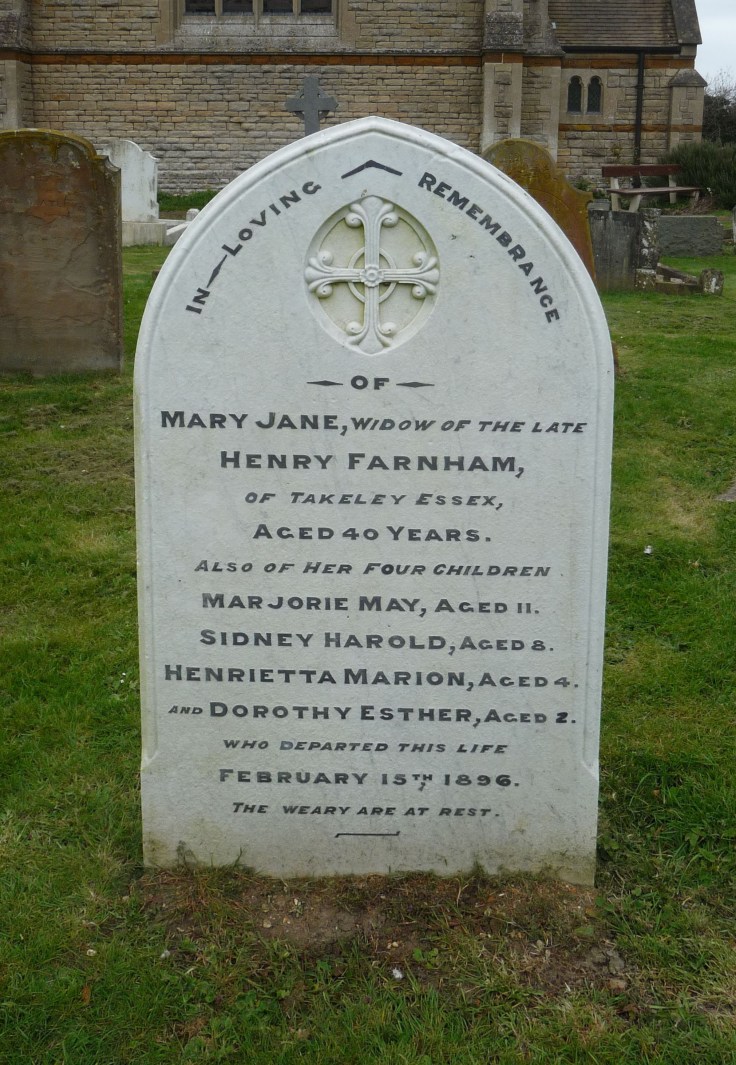
Judgement is for God alone, so I conclude this sad tale with a picture taken in the churchyard at Wimblington. (NB – the ages of the two younger children are incorrectly inscribed)

Gravestone

FOUR MORE ANGELS IN HEAVEN TONIGHT . . . The Wimblington Tragedy (1)

Header4A

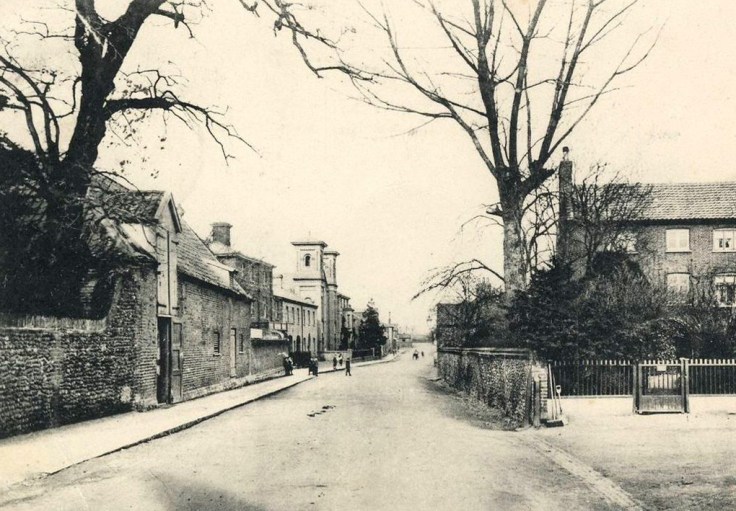
Mary Jane Peacock was born, some registers say, in Upwell in 1855, but the 1861 census says that she was born in Wimblington, and shows her living there with her parents.

The Cock

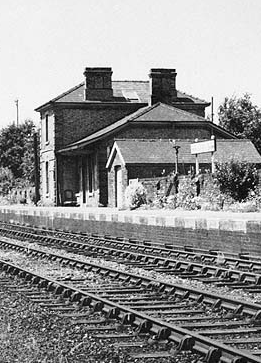
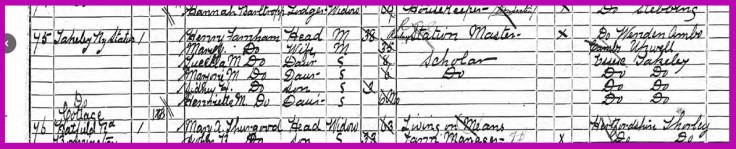
Screen Shot 2022-01-04 at 20.28.32Her father was John Peacock, who kept The Cock Inn on Eastwood End. In the autumn of 1877, she married Henry Farnham, who worked for The Great Eastern Railway. He became the Stationmaster at Takeley, (left) a station on the Bishops Stortford – Braintree line. The Stationmaster’s house was substantial, and survives to this day, (although the line it once served has long since disappeared. The 1891 census seems to show the Farnhams – still living at Takeley – as a happy and prosperous family which included Lucella (8), Marjorie (6), Sidney (3) and Henrietta (3 months).

Takeley

Then, in 1893, the family welcomed another child – Dorothy – but within months tragedy struck. Henry Farnham died of “congestion of the lungs’ which sounds like pneumonia. The family were immensely well thought-of in the area. A newspaper reported:

“The family, were always held the very highest respect, and had the sympathy of all classes in the neighbourhood ou the death of the father, which led to their removal from the village. The late Mr. Farnham came to Takeley station-master from his native fen country about years ago, bringing with him his newly wedded bride. He had formerly held similar position on the G.E.R. at Wilburton. Mr. and Mrs. Farnham made many friends and were regarded as exemplary couple. He was a man that nobody could help liking— the most amiable and obliging man ever met with the railway service. He was held much esteem the Earl and Countess Warwick, who used the station frequently while residing at Easton, and H.R.H. the Prince of Wales, when making visits to Easton Lodge, always had cheery word to say to Farnham, and when, after the station master’s death, subscription was set on foot for the widow and family, his Royal Highness gave handsomely towards it, as also did the Earl and Countess of Warwick, Sir Walter Gilbey, and other residents of the neighbourhood.

Mr. and Mrs. Farnham were thrifty people, and despite the expense of bringing up young family they had put away for future use a nice little sum, which with £100 that the widow received from an insurance company upon the death of her husband, and about £80 which was subscribed for them locally, and various benefit club payments, amounted something like £400. The Great Eastern Railway Company allowed her £10 a year for life.”

No-one who attended Henry Farnham’s funeral could have possibly predicted an even greater tragedy which was to follow

In the autumn of 1895, Mary Jane Farnham moved back to Wimblington with her children, and settled in what was described as a comfortable four roomed cottage situated near the station, rented from a Mr Fisher. February 1896 was to witness an event which sent shockwaves, not just across Fenland, but throughout Britain

IN PART TWO – A HEARTBREAKING DISCOVERY

THE OXFORD STREET ATROCITY . . . Murder most foul in Leamington, 1907 (part two)

HEADER

SO FAR: On the night of Saturday 3rd March 1907, In a drink-fueled fit of rage, 33 year-old Edwin James Moore has set his mother on fire at their home, 13 Oxford Street. She is pronounced dead at the scene.

While the doctor, police, neighbours and the other members of the Moore family crowded into 13 Oxford Street, what had become of the central character in this drama, Edwin James Moore? With skin hanging from his hands and arms after trying – and failing – to extinguish the flames that killed his mother, he was taken by one of the neighbours to a nearby chemist to have his burns dressed, but it was clear the damage was severe, and he was taken to the Warneford Hospital, was treated further treated for his wounds and kept in overnight.

In the drama of the moment, the cries of young Bertie Moore (“Help! Murder!”) had been temporarily disregarded, and it was assumed that there had been a terrible accident, but when the proverbial dust settled and Police Sergeant Rainbow spoke to the distressed child, it was clear that Fanny Moore’s death was something other than a misfortune. On the Sunday morning, Rainbow visited Edwin Moore in hospital, and put it to him that he had killed his mother. Moore replied, indignantly:

“No, never. I tried to put out the fire and burnt my coat in doing it.”

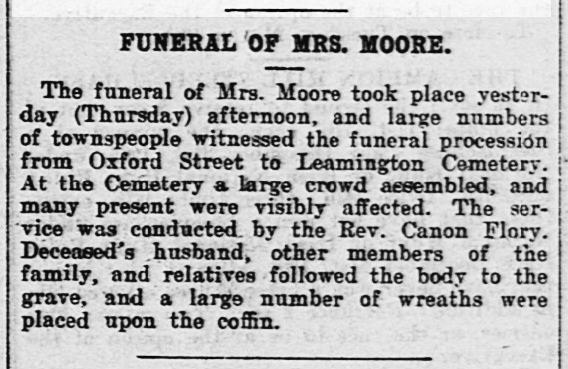
Despite his denial, Moore was arrested and appeared before Leamington magistrates, where he continued to deny that he had caused his mother’s death. The magistrates were unconvinced, and sent him to be tried at the next Warwick Assizes on a charge of wilful murder. Meanwhile, the Moore family had a final melancholy duty to perform.

Funeral

The County Assizes were a major civic event. The Great and the Good put on their best finery to celebrate this most emphatic and visible reminder to the common folk that British justice was a solemn affair, and those who fell foul of it were in a very dark place indeed. The local paper reported:

WARWICKSHIRE WINTER ASSIZES. The Warwickshire Winter Assizes were opened at the Shire Hall, Warwick, Friday morning, before Mr. Justice Phillimore. His Lordship arrived in the town on Thursday afternoon, and was met by the High Sheriff (Sir William Jaffray) and the Sheriff’s Chaplain (the Rev. J. Thompson;. GRAND JURY: the following were sworn upon the Grand Jury : Lord Algernon Percy foreman), Mr. H. Lakin, Mr F. E. Muntz, Major F. Hood Gregory, Capt. F. Gerard, Mr. D. S. Greig, Mr. F. Stanger Leathes, Major H. Chesshyre Molyneus, Major Gibsone, Major Armstrong, Mr A. Kay,   Mr R. W. Lindsay, .Mr A. Sabin Smith, Mr. J. Booth, Mr. W. E. Everitt,  G Anson-Yeld, Mr. E. C. Gray-Hatherell, Mr. A. Batchelor, Mr. Savory, Mr. P. S. Danby, Mr. S. Flavel and Captain K. Oliver-Bellasis.” 

Judge

Percy, Lakin, Flavel – just three names that still resonate locally today, and several others who, if you Google them, remain clearly at the heart of the British establishment more than a century after they convened to decide the fate of Edwin James Moore. It is pointless to speculate whether a rough former soldier was ever going to get the benefit of the doubt after being accused of murdering the woman who brought him into the world and watched over him during his childhood. The jury system in 1907 was what it was. The trial was very brief, and on Monday 11th March Mr Justice Phillimore had little hesitation when he instructed the jury, who found Moore guilty of murder. Phillimore (left) donned the symbolic black cap, and sent Edwin James Moore back to his gloomy cell in Warwick Prison on Cape Road (below) to await the visit of the hangman.
Screen Shot 2021-12-30 at 19.46.14

In an age when the wheels of justice turned extremely slowly, the downfall of Edwin James Moore was extremely swift. By my reckoning, the interval between that fateful Saturday night and his death  on the morning of 6th April, at the hands of (below, with newspaper report) John Ellis – whose day job was a newsagent and hairdresser in Rochdale – was just thirty-three days. To borrow the obligatory final words of the sentencing judge, “May God have mercy on his soul.”

The End

Blog at WordPress.com.

Up ↑