Search

fullybooked2017

Category

True Crime

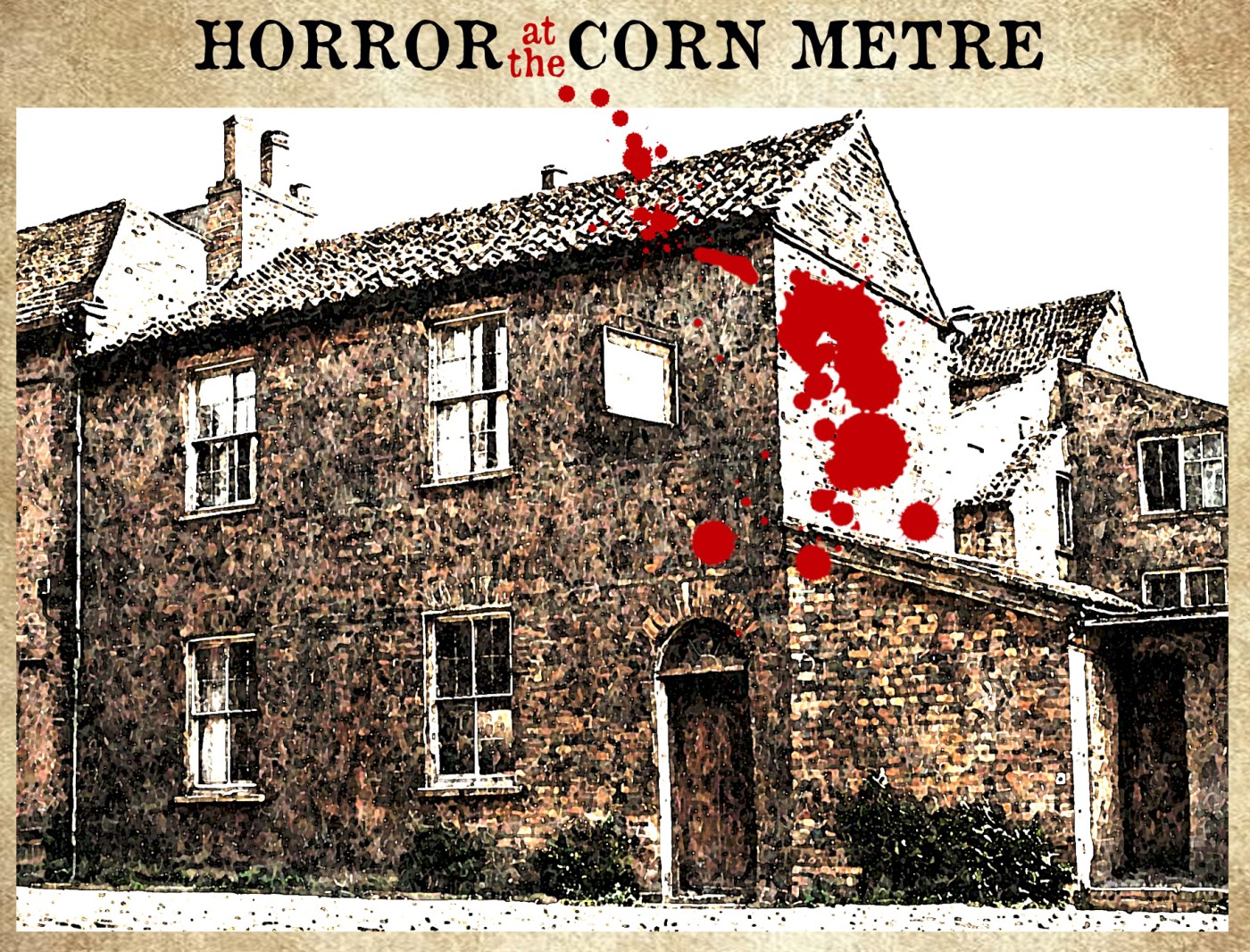
HORROR AT THE CORN METRE . . . A double tragedy

The year of 1926 was not a particularly momentous one for Wisbech.The canal was officially closed, the first cricket match was played on the Harecroft Road ground, and greyhound racing came to South Brink. For one Wisbech family, the year would bring a trauma that would haunt them for the rest of their lives

The Corn Metre Inn, like dozens of other pubs from Wisbech’s history, is long gone. It had two entrances, one more or less opposite Nixon’s woodyard on North End, and the other facing the river on West Parade. The name? A Corn Metre was a very important person, back in the day. He was basically a weights and measures inspector employed by markets and auctioneers to ensure that no-one was cheating the customers.

In 1926, the landlord of the Corn Metre was Francis William Noble. He was not a Wisbech man, having been born in Shoreditch, London in 1885. He had met and married his wife Edith Elizabeth (née Bradley) in nearby West Ham in 1907. Noble volunteered for service in The Great War, and survived. By 1910 the couple had moved to Wisbech.

The 1921 census tells us that the family was living at 73 Cannon Street, that Noble was a warehouseman for Balding and Mansell, printers, and that living in the house were Edith Violet Noble (12), Phyllis Eleanor Noble (9) and Francis William Noble (6). Another daughter, Margaret Doris was born in 1923, and by 1926 the family had moved in as tenants of The Corn Metre Inn. A local newspaper reported on the events of Tuesday 15th June:

What they saw was truly horrendous. Propped up on the bed was Mrs Noble, covered in blood with terrible wounds to the throat. But beside the bed was something far worse. In a cot was little Peggy Noble. And her head had been almost severed from her body. She was quite clearly dead. The police were fetched, and then a doctor. Mrs Noble was still alive, and was rushed to the North Cambs Hospital, where she died on the Wednesday Evening.

I suppose that the treatment and awareness of mental health issues has advanced since 1926. It must have, mustn’t it? I am reminded of the tragic murder/suicide In Wimblington in 1896 (details here) when a distraught mother killed herself and her four children. Sadly, there are cases today where mental health treatment is frequently misguided and inadequate. In 2023 Nottingham killer Valdo Calocane was a patient of the local mental health trust. He killed three people in a psychotic attack. There was talk, in 1926, that Edith was ‘unwell’ and that neighbours had been looking in on her. The last note written by Edith is chilling, and is clearly the work of a woman in distress. It was in some ways, however, crystal clear, and written by someone who was aware of the consequences of what she was about to do.

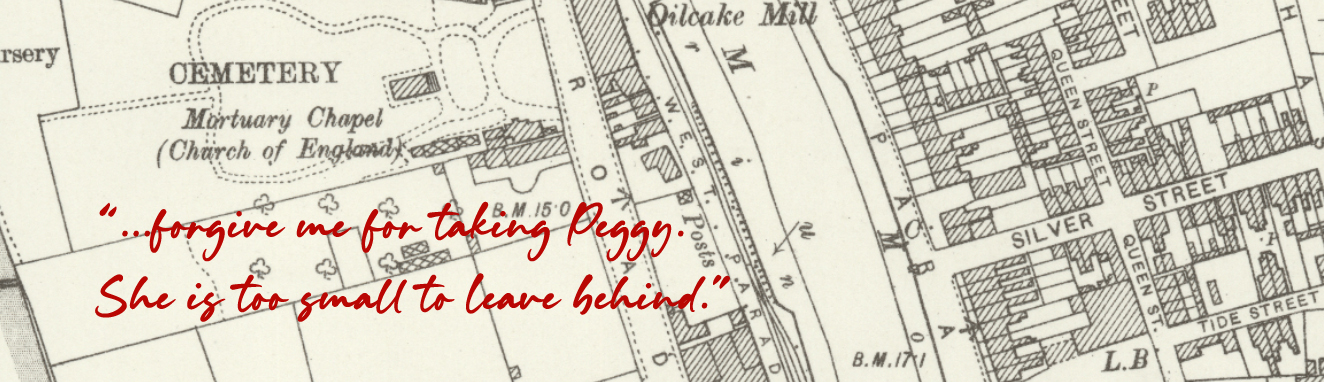
So many unanswered questions. So many things we will never know. Why did she think that Peggy was too young to survive with husband Francis and the other children? It is also revealing that she referred to the 8 year-old boy as ‘Son’, rather than his given name, Francis.

For reasons that can be imagined Francis Noble had had enough of Wisbech, because records show that in February 1928 he remarried, in Rochester His bride was a widow, Beatrice Emily Gadd. In July of that same year, Beatrice gave birth to a son, Peter Eddie. As the Americans say, ‘do the math”.

It is not for me, or any modern commentator to cast blame. Three things stand out, however. Firstly, the three surviving children left Wisbech as soon as they were able, and each appeared to have led perfectly ordinary lives in other parts of the country. Second, Francis Noble, within months of the terrible event at The Corn Metre had left the town, and impregnated another woman who, to be fair, he then married. Thirdly – and this part of the story will haunt me for a long time – poor little Margaret ‘Peggy’ Noble was so savagely cut with the razor that her spinal cord was severed. The coroner, in measured words, recorded that her body bore signs of a violent struggle. What kind of anger, despair and rage fuelled the assault on that little girl? And what was the cause?


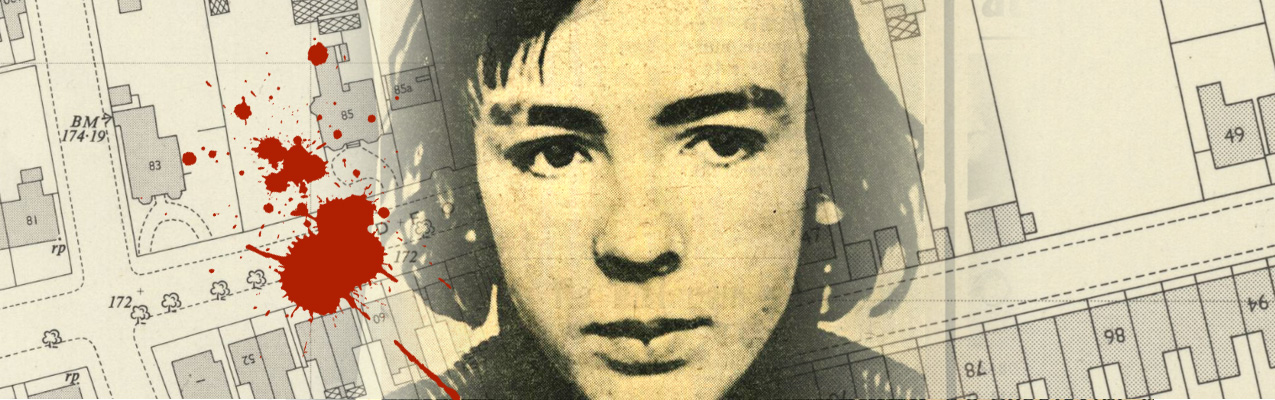
THE BABY-FACED BUTCHER . . . Death in Leamington (2)

BFB header

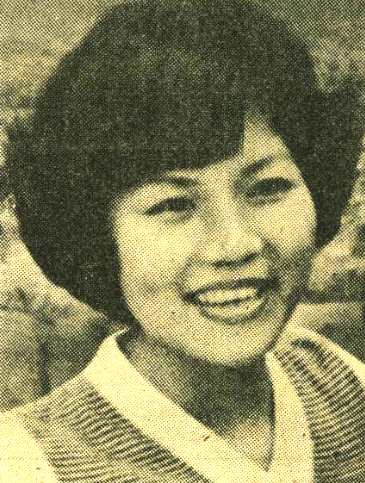
TzeYung TongSO FAR: In the early hours of Monday 2nd February 1976, the butchered body of Chinese nurse Tze Yung Tong (left) was found in her room in a nurses’ hostel at 83 Redford Road, Leamington Spa. Other young women had heard noises in the night, but had been too terrified to venture beyond their locked doors. We can talk about ships passing in the night, in the sense of two people meeting once, but never again. Tze Yung Tong was to meet her killer just the one fatal time.

Gerald Michael Reilly was born in Birmingham in 1957, but he and his family moved to Leamington. After primary school, he went to Dormer School, which then had its main building on Myton Road. He was described as quiet and pleasant, but not one of life’s high achievers. In 1974 he had a brief spell in the Merchant Navy before returning to Leamington to live with his parents at 49 Plymouth Place and work as a builders’ labourer. He was engaged to be married to Julie, a young woman from the north of England he had met during his Merchant Navy days.

On the evening of 1st February 1976, he was observing the moral code of the time by sleeping downstairs, while Julie was chastely abed upstairs. At some point, he decided he needed sex. It was never going to happen at home, so he let himself out of the house, and walked the 200 yards or so along snow-covered pavements to the nurses’ hostel on Redford Road. There, he shinned up a drain-pipe, and padded along the corridors hoping for an unlocked door. He found one. It was Tze Yung Tong’s room.

This is where the story goes into “you couldn’t make it up” territory. It was estimated that Reilly spent 90 minutes going about his dreadful work on the young nurse. Then, still clutching the sheath knife with which he had disembowelled Tze Yung Tong, he retraced his steps to Plymouth Place and went back to sleep.Just twelve days later, with hundreds of police banging their heads against a brick wall, Gerald and Julie were married with all the traditional trappings at St Peter’s church on Dormer Place. In those days honeymoons were rather prosaic by modern standards, so the star-crossed lovers set off for the West Country. Julie had her “going away” outfit, but Gerald brought with him something more significant – the knife with which he gutted Tze Yung Tong. In a bizarre attempt at concealment, he hid the blade in a toilet cistern at a Bath hotel.

Below, Gerald and Julie on their wedding day

wedding

By this time, whatever passed for logical thought in Reilly’s mind had gone AWOL. Upon returning to Leamington, and hearing about the intense fingerprinting initiative, he decided that the game was up and, with his uncle for company, turned himself in.  The irony is that the police, in desperation, had announced that there was one set of prints they had not been able to eliminate. Assuming they were his, Reilly offered his wrists for the handcuffs. The prints were not his.

Screen Shot 2024-09-01 at 12.54.01Despite his palpable guilt, Reilly was endlessly remanded, made numerous appearances before local magistrates, but eventually had brief moment in a higher court. At Birmingham Crown Court in December, Mr Justice Donaldson (right) found him guilty of murder, and sentenced him to life, with a minimum tariff of 20 years.In 1997, a regional newspaper did a retrospective feature on the case. By then, the police admitted that he had already been released. Do the sums. Reilly, the Baby-Faced Butcher may still be out there. He will only be in his late 60s. Ten years younger than me. One of the stranger aspects of this story is that, as far as I can tell, at no time did solicitors and barristers working to defend Reilly ever suggest that his actions were that of someone not in his right mind. By contrast, in an earlier shocking Leamington case in 1949, The Sten Gun Killer (click the link to read it) the ‘insanity card’ was played with great success. Perhaps must face the fact that sometimes, sheer evil can exist in human beings who are perfectly sane and rational.
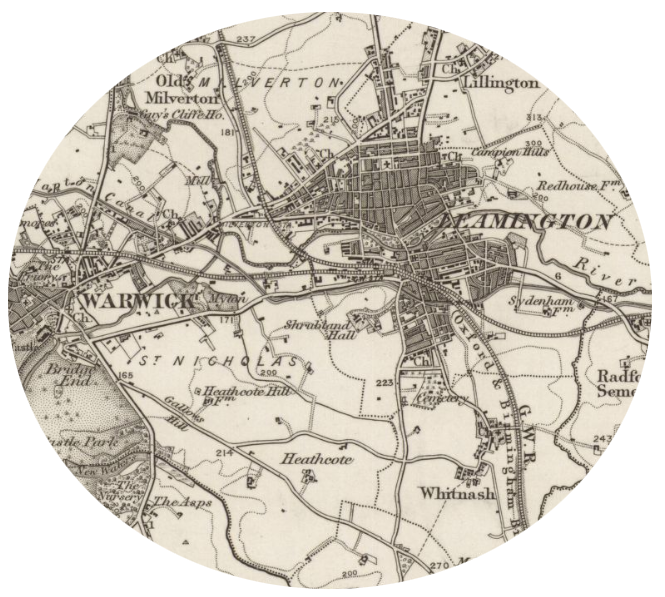
FOR OTHER LEAMINGTON & WARWICK MURDER CASES
CLICK THE IMAGE BELOW

LEAMWAR

THE BABY-FACED BUTCHER . . . Death in Leamington (1)

BFB header

In the early hours of 2nd February 1976, an act of almost inhuman barbarity occurred in a rather grand Regency house on Radford Road, Leamington Spa. The house, number 83, was used as an annexe providing accommodation for nurses who worked at the nearby Warneford hospital. One such was 23 year old Tze Yung Tong. What were the circumstances that led her to be in Leamington? Misjudgment, or an act of cruelty by Fate?

Thomas Hardy ends what is, for me, his most powerful tragedy by commenting on the death by hanging of his heroine, Tess Durbeyfield. He says, “’Justice’ was done, and the President of the Immortals (in Aeschylean phrase) had ended his sport with Tess.” He refers to the Greek dramatist who imagined humans as mere playthings of the Gods, moved around like chess pieces for their entertainment. If you accept this concept is valid, then the Gods certainly played a very cruel trick on Tze Yung Tong.

It could be said that misfortune had played a part in putting the young Chinese woman in that particular place at that particular time. Trained as a nurse, she had married a travel courier in Hong Kong in 1973, and the couple had moved to Taiwan. The marriage did not last, however, and Tze, pregnant, moved back to her parents’ house in Hong Kong. When her son, Yat Chung Lam, was born, she made the fateful decision to move to England where the pay was much better, reasoning that she could send sufficient money home to better provide for the boy’s upbringing. The picture below shows Tze with her son in happier times.

Tze copy

On the morning of 2nd February Tze’s body was found in her room. The subsequent autopsy found that she had been stabbed multiple times in what must have been a frenzied assault. She had also been raped. At the murderer’s trial, the prosecution barrister told the jury:

“Two police officers came and were greeted with a horrible sight. Blood was everywhere, even splattered on the walls. Among evidence found by detectives were footprints on the roof leading to the landing window, and fingerprints on the landing windowsill, and on the outside of nurse Tong’s door. The pathologist examined the ghastly scene. Firstly there was a superficial cut on the nurse’s neck and it is considered the deceased was held at knife-point prior to her throat being cut. Also her clothes had been taken off after her throat had been cut. The pathologist also found she had laying on the bed completely passively in part because of loss of blood and partly through fear.”

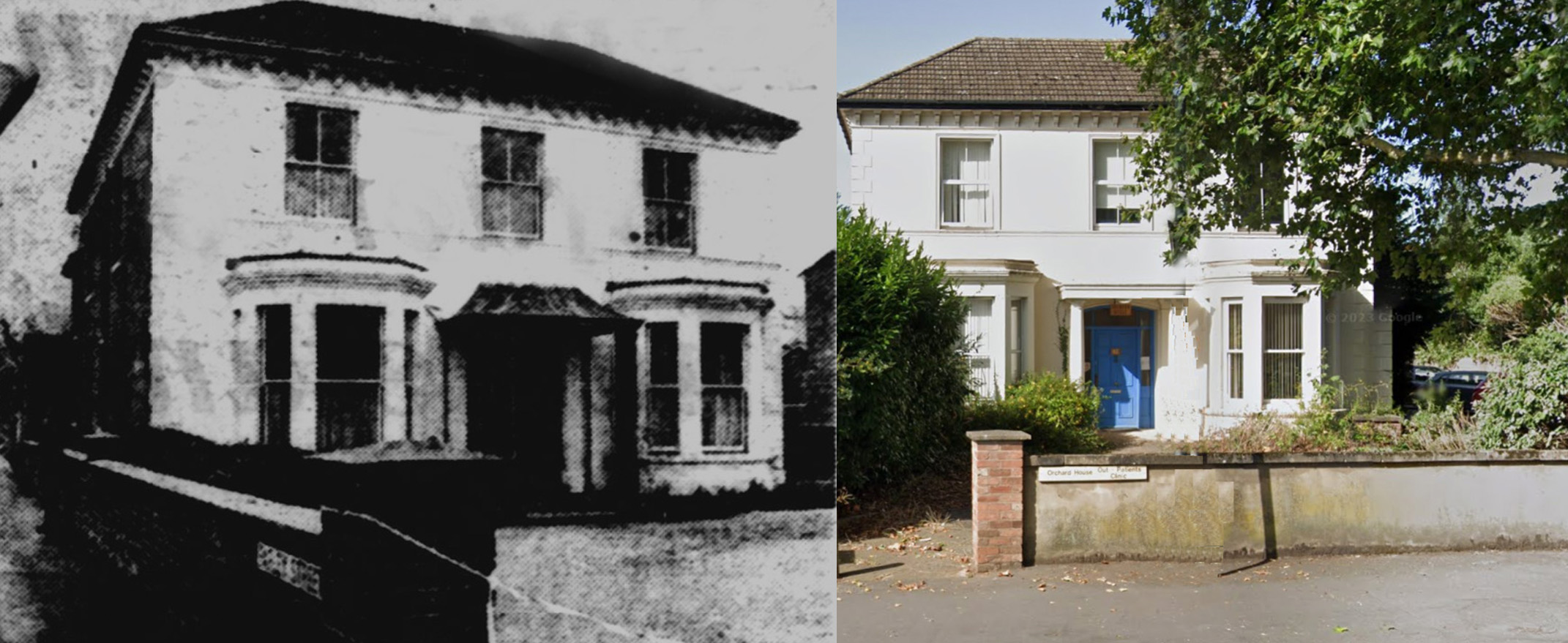
Below – the house where Tze was murdered, as pictured in a 1976 newspaper and how it is today.

83 combined

In researching these murder stories, I often wonder about the metaphor of a random rolling of the dice that puts two people on a collision course. More often than not, murders are committed by someone known to the victim, often a family member, but was this the case here? It also proved to be a case where the police, despite a huge allocation of manpower and resources, literally had no clue as to the identity of Tze’s killer, and it was only a loss of nerve on his part that resulted in his arrest and trial.Tze had finished her shift at the Warneford at around 9.00pm on 1st February and had walked back along the snow covered pavement to the nurses’ hostel. Again, fate intervened. The girls had been warned repeatedly to make sure their room doors were locked before they went to bed. Tze’s keys were found hanging on a hook on the side of her wardrobe.

Tze’s ravaged body was eventually released to her family, in this case her mother Kit Yu Chen who had flown in from Hong Kong, and one of her sisters –  Patricia Tze Min Fung – who had travelled from Canada. Whatever secrets the girl’s remains held were consumed by the flames at Oakley Wood crematorium on 26th February. Her relatives did not stay for the funeral.

The police threw everything they had into the investigation but in a way, it was doomed from the start. There was no jealous boyfriend. Tze, with what might be called her ‘real life’ 6000 miles away in Hong Kong, was pleasant and polite, but had shown no desire to establish a social life in England. The Warneford was just somewhere where she could advance her midwifery skills before going home and use her qualifications to provide a better life for herself and her son. The police clutched at straws. Who was the well-spoken mystery man she had shared a meal with at a recent course in Stratford on Avon? Could local tailors shed any light on a pair of trousers found near the murder scene? Would the mass fingerprinting of thousands of Leamington men shed any light on the mystery?

Ironically, it was the latter scheme which would produce a result, but not in the way police imagined.

IN PART 2
A wedding
A honeymoon
A confession


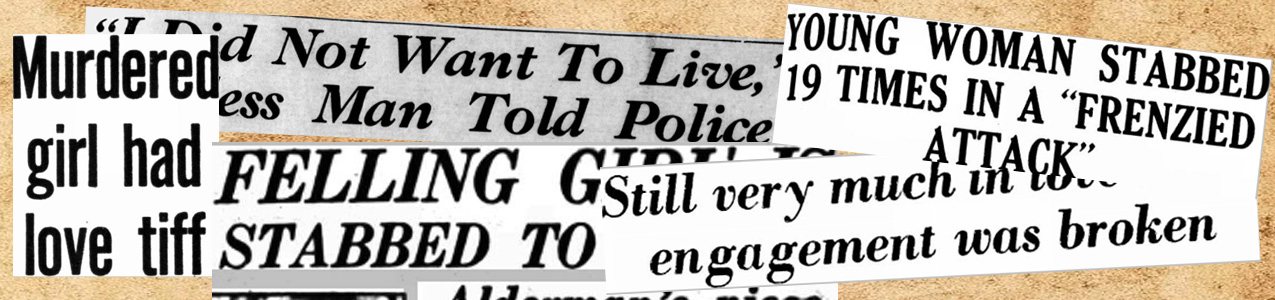
THE MAN THEY COULDN’T HANG . . . The murder of Sybil Hoy (part 1)

Sybil Header

Screen Shot 2024-08-18 at 16.23.50

Screen Shot 2024-08-18 at 16.53.39

Arnold House (above), in Great Gonerby, was built in 1820 for a local solicitor and JP, and changed hands many times over the decades. After World War II it was bought by Aveling Barford, which was a prominent Grantham firm making heavy vehicles such as road rollers and dumper trucks. The company used the grounds for social and sporting activities, while the house itself, by then known as Arnoldfield, was divided into flats for AB employees. Two such were Mr and Mrs Elliot, originally from the North East, and in 1954, they invited a young woman who they had known ‘back home’ to come and stay with them for a short holiday. Sybil Hoy, from Felling, near Gateshead, was certainly in need of a break, as she had recently broken off her relationship with a man called John Docherty, and he had not taken the separation well.

New sybilSybil (right) was born in the summer of 1930, and grew up with her family in their house in the relatively comfortable Gateshead suburb of Felling. The few contemporary pictures which were published in newspapers at the time of her death show an attractive and confident young woman. At some point after WW2, she was courted by John Docherty, a few years her senior, who worked as a despatch clerk with a local firm. He was not in the best of health, and had been diagnosed with what Victorians called consumption. We now know it as tuberculosis and, despite reported occurrences of the disease within immigrant communities, it has now been conquered by immunisation. Docherty and Sybil became engaged, but at some point in the spring of 1954, Sybil had second thoughts, broke off the engagement and returned to Docherty the ring, and various other gifts.

Sybil worked in the sports section of a Gateshead department store, but In early August 1954, she was invited to spend a few days with the Mrs Elliots, at the flat in Arnoldfield. The intention was for Sybil to spend a few days there, before her parents joined her, and then went on to extend their holiday on the Kent coast. On the morning of 10th August, Sybil offered to walk into Grantham, a couple of miles away, but in those days no great distance, with the Elliot’s son,  Kevin. Just after 11.00am, Mrs Elliot heard her son screaming at the communal front door to the flats. As she tried to comfort him, she ran a few yards down the drive, which had once clattered with the wheels of carriages belonging to Grantham’s gentry. What she saw would hang her for the rest of her days.

Lying partly at the edge of the drive and partly under a tree was the body of Sybil Hoy. She was lifeless and covered in blood. The subsequent post mortem  found that she had been stabbed nineteen times by something resembling an army bayonet, with four of the wounds penetrating her heart. Police and an ambulance were summoned, but there was nothing to be done for Sybil Hoy. Police immediately began a murder investigation, but a discovery on the nearby railway embankment a little later that day was to add an utterly bizarre note to what was already a gruesome killing.

IN PART TWO a grim discovery, a trial, and a problem for the Home Secretary

JACK THE RIPPER AND ABRAHAM LINCOLN . . . Between the covers

jtr SPINE055 copy

Screen Shot 2024-05-21 at 19.29.23Historian and broadcaster Tony McMahon (left) sets out his stall in this book, and he is selling a provocative premise. It is that a celebrity fraudster, predatory homosexual, quack doctor and narcissist – Francis Tumblety – was instrumental in two of the greatest murder cases of the 19th century.The first was the assassination of Abraham Lincoln in April 1865, and the second was the murder of five women in the East End of London in the autumn of 1888 – the Jack the Ripper killings.

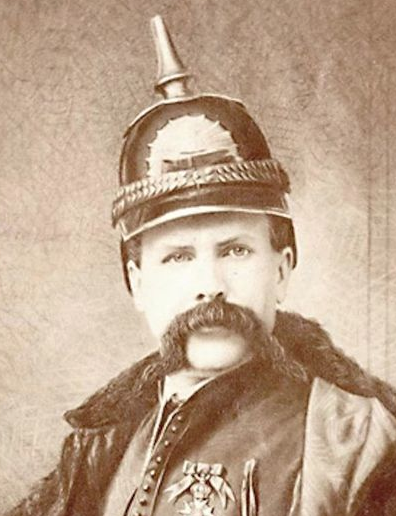
 Tumblety was certainly larger than life. Tall and imposingly built, he favoured dressing up as a kind of Ruritanian cavalry officer, with a pickelhaub helmet, and sporting an immense handlebar moustache. He made – and lost – fortunes with amazing regularity, mostly by selling herbal potions to gullible patrons. Despite his outrageous behaviour, he does not seem to have been a violent man. Yes, he could have been accused of manslaughter after people died from ingesting his elixirs, but apart from once literally booting a disgruntled customer out of his suite, there is no record of extreme physical violence.
Lincoln’s killer John Wilkes Booth and David Herold, a rather dimwitted youth who, along with Mary Suratt and George Azerodt, was hanged for his part in the conspiracy, were certainly known to Tumblety, although there is little evidence that he shared Booth’s Confederate zealotry. Tumblety does not come across as a particularly political animal, although McMahon makes the point that he had friends in high places, who provided him with a ‘get out of jail free’ card on the many occasions when he found himself in court.

Screen Shot 2024-05-21 at 19.30.48Tumblety (right( was a braggart, a charlatan, a narcissist and a predatory homosexual abuser of young men. Tony McMahon makes this abundantly clear with his exhaustive historical research. What the book doesn’t do, despite it being a thrilling read, is explain why the obnoxious Tumblety made the leap from being what we would call a bull***t artist to the person who killed five women in the autumn of 1888, culminating in the butchery that ended of the life Mary Jeanette Kelly in her Miller’s Court room on the 9th November. Her injuries were horrific, and the details are out there should you wish to look for them. As for Lincoln’s homosexuality – and his syphilis – the jury has been out for some time, with little sign that they will be returning any time soon. McMahon is absolutely correct to say that syphilis was a mass killer. My great grandfather’s death certificate states that he died, aged 48, of General Paralysis of the Insane. Also known as Paresis, this was a euphemistic term for tertiary syphilis. The disease would be contracted in relative youth, produce obvious physical symptoms, and then seem to disappear. Later in life, it would manifest itself in mental incapacity, delusions of grandeur, and physical disability. Lincoln was 56 when he was murdered and, as far as we know, in full command of his senses. I suggest that were Lincoln syphilitic, he would have been unable to maintain his public persona as it appears that he did.

Is Tumblety a credible Ripper suspect? No more and no less than a dozen others. Yes, he was in London when the five canonical murders were committed, but so were, in no particular order, the Duke of Clarence, Neill Cream, Aaron Kosinski, Robert Stephenson, Walter Sickert and Michael Ostrog. Much is made of the fact that Tumblety left the country in some haste, catching a boat across The Channel to Le Havre, and then back to America. He certainly had been in police custody, but for acts of public indecency, and was released on bail, which suggests that the London police did not think he was a danger to the public. The fact is that we will never know. The killings during ‘ The Autumn of Terror’ will forever remain unsolved. At some point, I suppose, the murders will fade into forgetfulness, and books advocating the latest theory will no longer have a market.

The theory that Tumblety also suffered from syphilis could account for the insane rage with which Marie Jeanette Kelly was butchered, but we must bear in mind that Tumblety lived until he was 70, dying in St Louis in May 1903, apparently from a heart attack. This said, Tony McMahon has written a wonderfully entertaining book with an excellent narrative drive, and a jaw-dropping insight into the demi-monde of mid-19th century America. McMahon’s research is beyond question, and he provides extensive footnotes and very useful index. The cover blurb says, “One man links the two greatest crimes of the 19th century.” Tony McMahon establishes beyond dispute that Francis Tumblety was that man. Whether he proves that he was responsible for either is another matter altogether.

MURDER MOST FOUL IN LOUTH . . . Three tragedies

Screen Shot 2024-03-08 at 14.35.44

I have posted these stories separately over the last few years, but now I have organised them so they can be accessed from one page of the website. Click on the images below to go to the episodes.

1875: THE MURDER OF LOUISE HODGSON
Screen Shot 2024-03-08 at 14.49.26

1927: THE MURDER OF MINNIE ELEANOR KIRBY
Screen Shot 2024-03-08 at 14.47.56

1950: THE MURDER OF ALICE WRIGHTScreen Shot 2024-03-08 at 14.46.29

THREE WEEKS-BLACK CAP-ROPE-HANGED BY THE NECK-FINISHED . . . The murder of Annie Coulbeck, Caistor 1919 (2)

Annie Header

SO FAR: Caistor, North Lincolnshire, October 1919. William Wright (39), a former soldier, is now working in a sawmill in nearby Moortown. He has a reputation as a ne’er-do-well and sometime vagrant, with a long criminal record. He has been in a relationship with Annie Coulbeck, (34). She is carrying his child.

Annie, who lives in a cottage at Pigeon Spring on Horsemarket. has been working as a nanny, looking after the children of Mrs Plummer.  On the morning of Wednesday 29th October, Annie has not turned up for work, so Mrs Plummer sends one of her children to Annie’s cottage to see if she was unwell.

Child's ordeal

Annie Coulbeck had been strangled, and had been dead for some hours, and it goes without saying that her unborn child – some seven months in her womb – had shared its mother’s fate. At the coroner’s inquest, the doctor gave his report:

Strangulated

It was no secret that Annie Coulbeck and William Wright were lovers, and when police visited him at his home in South Dale, Caistor, his admission was astonishingly matter-of-fact:

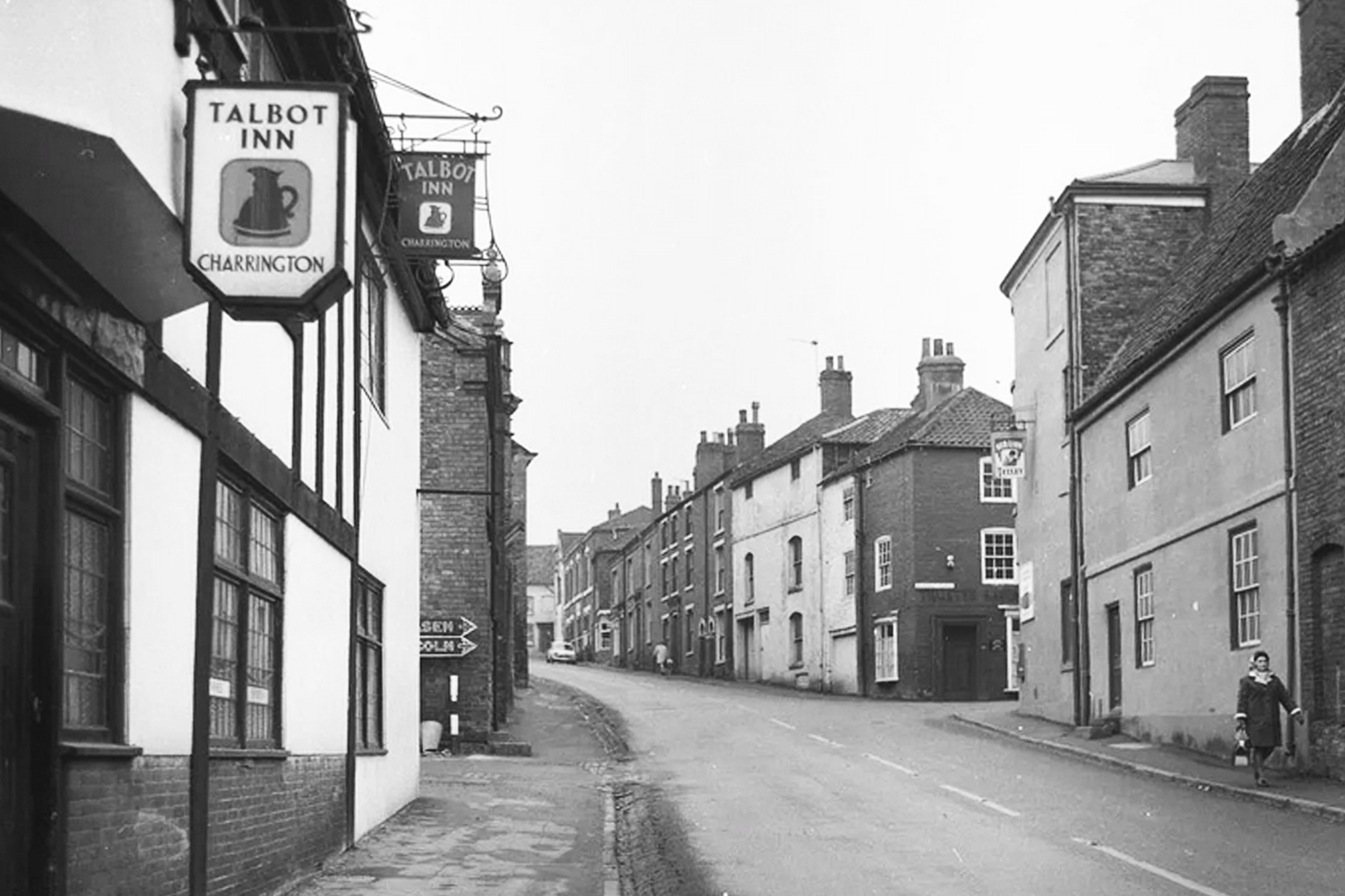
“Last night, a little after 10 o’clock, I left the Talbot public house. I had a lot of drink and went down to Annie Coulbecks house. I asked her where she had got the brooch from which she was wearing. She said it was her mothers. I told her I did not think it was. I told her I thought it was one of her fancy men’s. She said, “I’m sure it is not, Bill.” I told her I would finish her if she did not tell me whose it was. I strangled her with my hands and left her dead. I put the lamp out and went home.”

Talbot

The Talbot in Caistor (above) is no longer a pub, but if its walls could talk, they might bear witness to a chilling conversation William Wright had with a fellow drinker, a local chimney sweep.

Strange Statement

The umbilical cord is often used as a metaphor for two things being inextricably joined, but it also has a presence in the British legal system, particularly in the case of murdered babies. Criminal history, particularly back in the day, is full of young women being tried for murder after they have killed an unwanted new-born baby. For it to be murder, it has to be established that the  infant had an independent existence, and it is clear that the child Annie Coulbeck was carrying had no such thing. However, in my book, William Wright was as guilty of murdering that child – his child –  as he was of killing its mother.

Screen Shot 2023-11-22 at 19.02.01

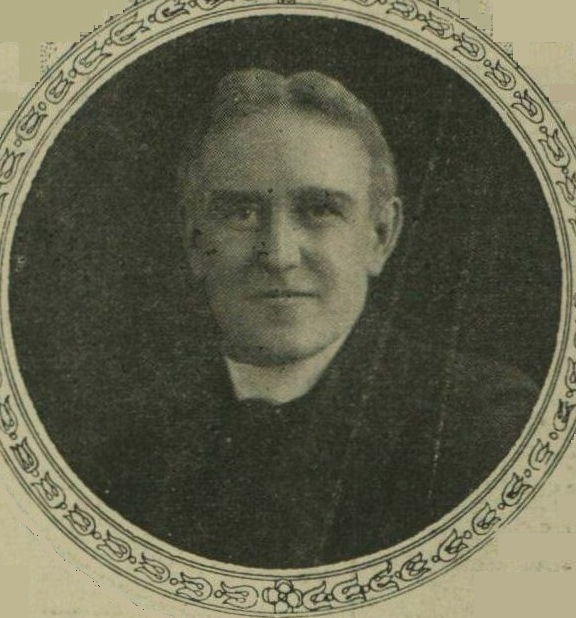
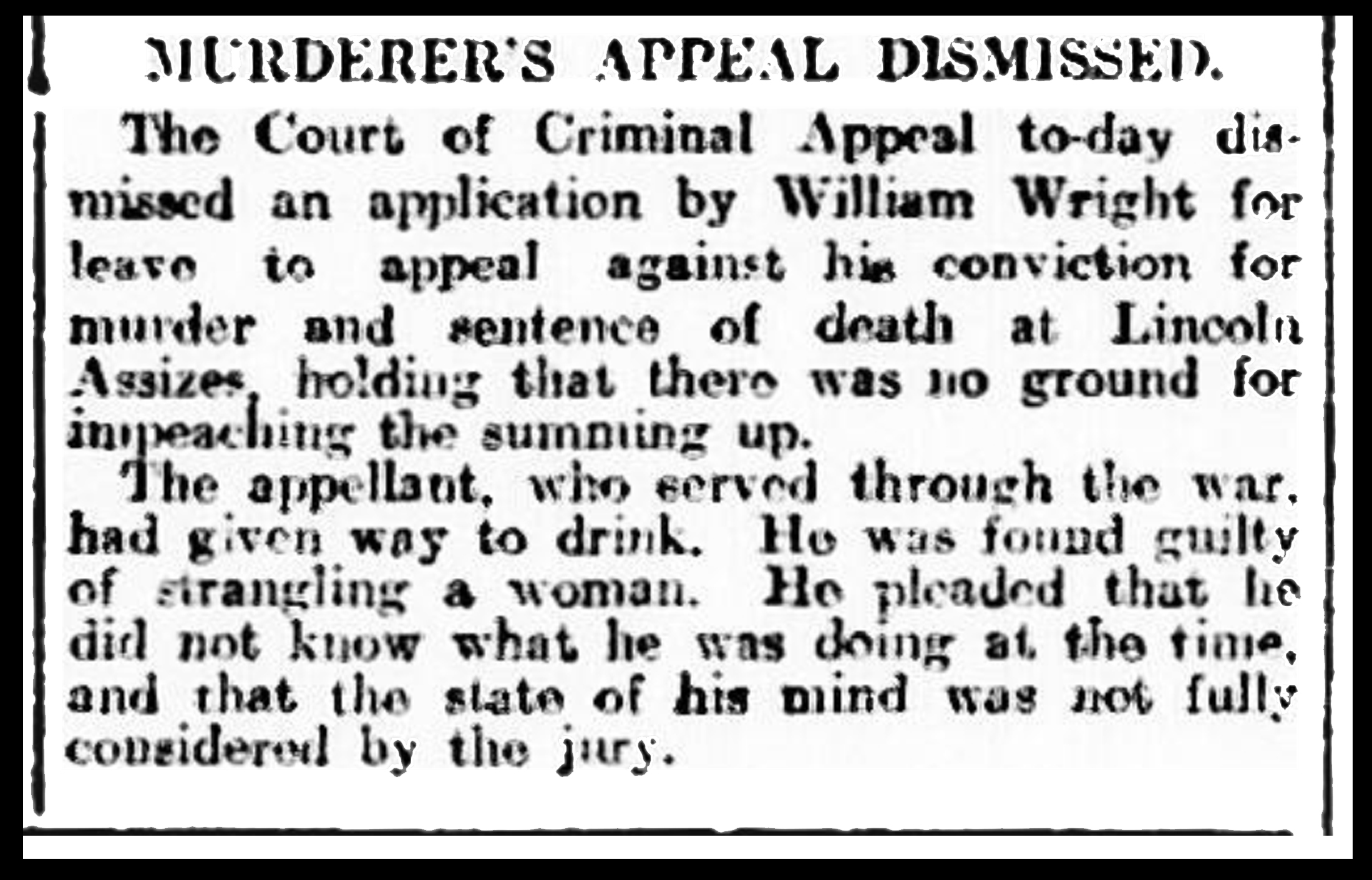
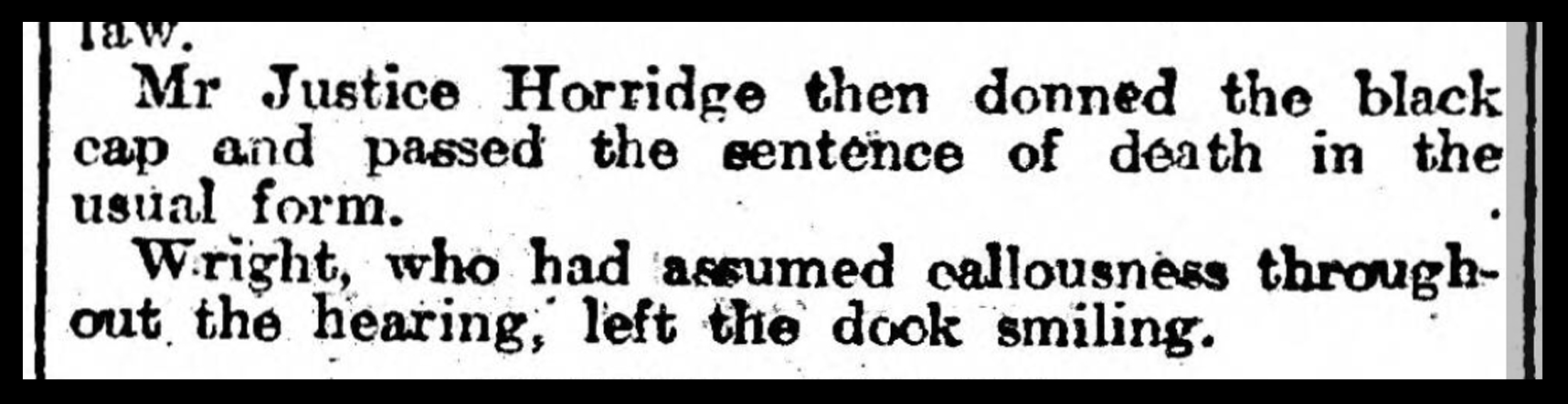
Wright, in his drunken estimation that it would take just three weeks from the death of Annie Coulbeck to his appointment on the gallows, was as ignorant of the legal system as he was of the way decent human beings should behave. The law took its rather ponderous course, and after the Coroner’s Inquest and then Magistrate Court, William Wright finally appeared at Lincoln Assizes, before Mr Justice Horridge (left) on Monday 2nd February 1920. It was a perfunctory affair. Wright’s defence lawyers, as they were bound to do, came up with the only possible plea – that Wright was insane. They cited his war experience, and the fact that members of his family had been committed to institutions. Neither judge nor jury were impressed and, as Wright had predicted, hunched over his beer in The Talbot, the judge donned the Black Cap. An appeal was lodged, but failed.

Appeal

Throughout the legal process, Wright had shown not one iota of remorse, nor did he betray any concern about what awaited him.

Black Cap
Screen Shot 2023-11-22 at 19.17.49

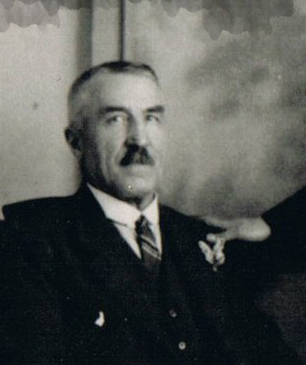
Wright was executed at Lincoln Castle on 10th March 1920. He had refused the ministrations of the prison chaplain, and the last face he would have focused on before the hood was placed over his head and he dropped to his death was the grim visage of executioner Thomas Pierrepoint (right), uncle of the more celebrated hangman Albert Pierrepoint, subject of the excellent film (2005) featuring Timothy Spall as the man who hanged, among others, Ruth Ellis and dozens of Nazi war criminals. The corpses of executed criminals at Lincoln Castle were interred in a little graveyard situated on the Lucy Tower. If ever a soul deserved to rot in hell, it is that of William Wright.

FOR MORE HISTORIC MURDERS IN LINCOLNSHIRE
CLICK THE IMAGE BELOW

Screen Shot 2023-11-25 at 20.25.19

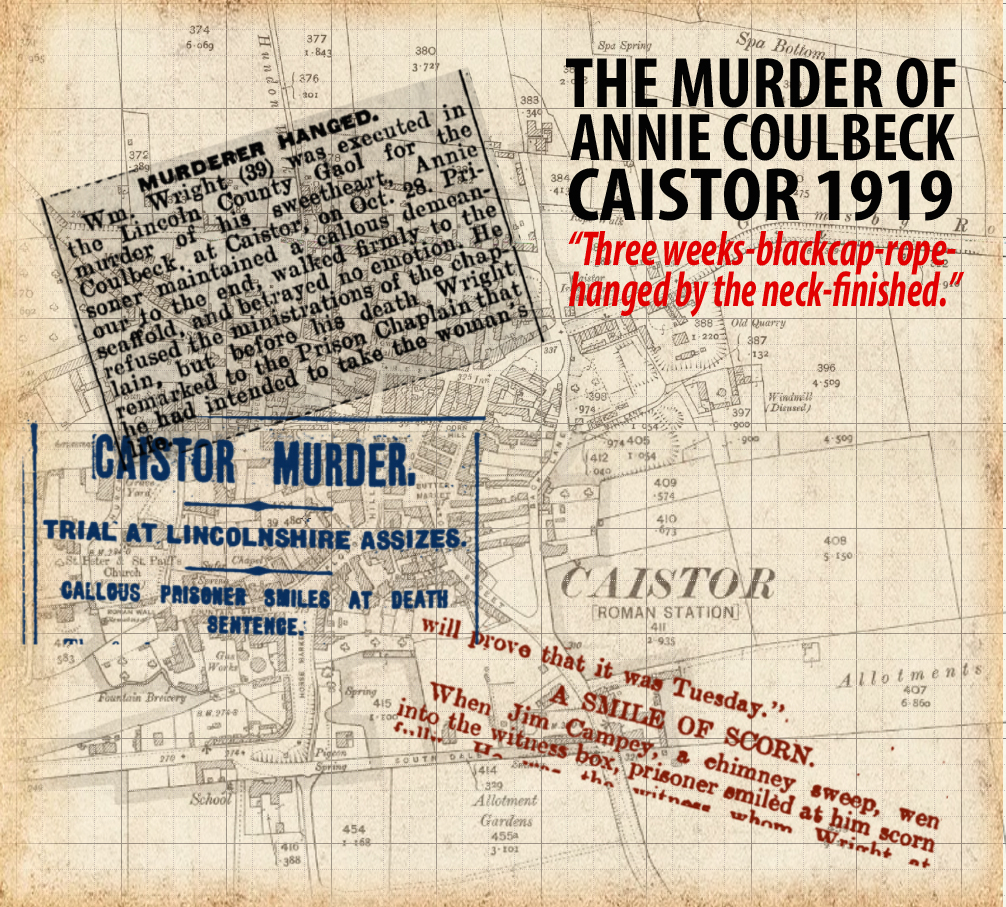
THREE WEEKS-BLACK CAP-ROPE-HANGED BY THE NECK-FINISHED . . . The murder of Annie Coulbeck, Caistor 1919 (1)

Annie Header

There is an aphorism attributed to George Orwell which goes:

“We sleep safe in our beds because rough men stand ready in the night to visit violence on those who would do us harm.

It echoes Rudyard Kipling’s famous poem, ‘Tommy”, where he says:

“For it’s Tommy this, an’ Tommy that, an` Chuck him out, the brute! ”
But it’s ” Saviour of ‘is country ” when the guns begin to shoot”

In a nutshell, we want our soldiers to be savages when they face the enemy, but except them to revert to civilised and urbane when they walk our peaceful streets, far away from conflict.

This prelude is in no way an excuse for the  murder of a woman in the Lincolnshire village of Caistor in the autumn of 1919, but it points to the problems that some former soldiers have when they leave the world of government-endorsed killing, and walk again down peacetime streets.

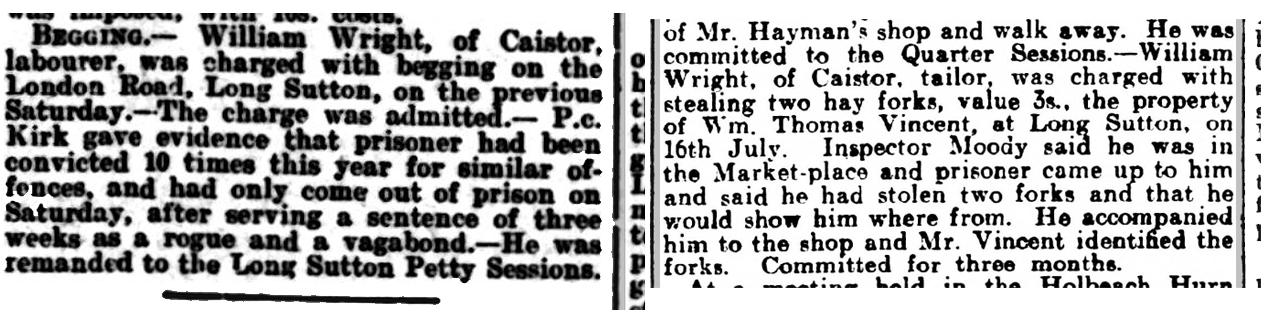
William Wright was certainly not from an impoverished or brutal background. He was born in 1880, and the 1881 census shows that he was the youngest of three children to Charles Wright, a tailor, and his wife Jamima. He worked for his father for a while in his teens but it is recorded that he joined the army in 1898, and fought in the Boer War. Peacetime clearly didn’t suit him, as between 1907 to 1914 he received 32 convictions, mostly for theft, vagrancy and drunkenness.

Convictions

1914 came, and with it the chance to turn whatever demons plagued him in the direction of the Boche. His military record was to be no better than his civilian one, however, as In 1916 he was sentenced to death for striking his superior officer. The sentence was commuted to one of five years penal servitude and then further reduced to two years hard labour.

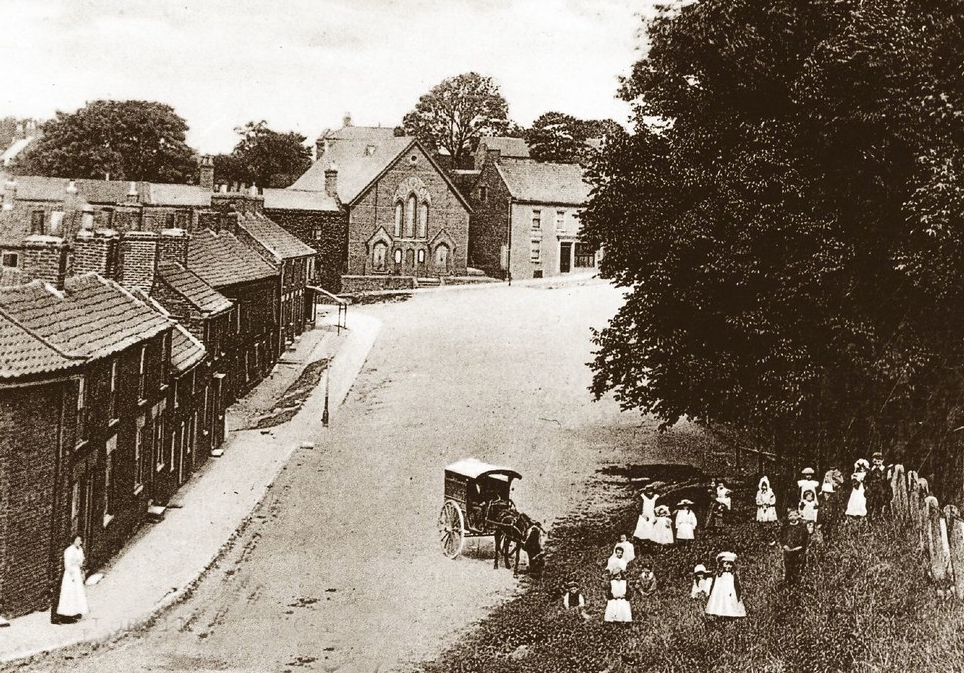
The army was clearly glad to be rid of Wright, and when he returned to Caistor in 1918, he struck up a relationship with Annie Coulbeck. We know relatively little of Annie. We know that she was 34 at the time of her death, was probably born in the nearby village of Stallingborough, and some sources suggest that she was simple minded. More pertinent to this story is that she had the misfortune to meet William Wright, and was pregnant with his child. In October 1919, her daily employment was to look after the children of a Mrs Plummer at her cottage near Pigeon Spring on Caistor’s Horsemarket. The picture below dates from 1908.

Horsemarket

This is an extract from a short video about the Horsemarket, and  is well worth watching, as it places Pigeon Spring on the photograph.

On the afternoon of 28th October 1919, William Wright came to visit Annie Coulbeck at Pigeon Spring. On the morning of the 29th, Annie Coulbeck had not arrived to look after the children, so Mrs Plumer sent one of her daughters to see if Annie had slept in. What the child found sent shock waves through the peaceful rural community.

TO FOLLOW
A DREADFUL DISCOVERY
AN INNOCENT BROOCH
A SMILING PRISONER
MORE WORK FOR MR PIERREPOINT

THE MURDER OF ROSA ARMSTRONG . . . Sutton in Ashfield 1924 (2)

ROSA HEADER

SO FAR: Sutton in Ashfield, Friday 27th June, 1924. Nine year-old Rosa Armstrong, after coming home from school for lunch never returned to her classroom. A shopkeeper sold her a bag of sweets during the afternoon, but now she is missing. Her frantic mother has been asking and searching, but with no luck. In the early hours of Saturday morning, a man approaches a policeman on duty in Mansfield Market Place, and confessed that he has killed Rosa. The man was Arthur Simms, who is married to Rosa’s older sister, Ethel.


Less than a mile from Rosa’s home on Alfreton Road, there used to stand a mission chapel, known as St Mark’s. It was nothing much to look at, been mostly constructed of corrugated tin. It disappeared in the 1970s when the road, the B6023 was altered. It stood at the top of Calladine Lane, also now totally changed. The short animation above shows its location. Arthur Simms gave chillingly accurate directions to the police:

“Go straight up Alfreton Road to St. Mark’s Church and then turn down the ash road leading to the side of St. Mark’s Church. Turn onto the first footpath to the left and she is under the hedge in the second field.”

What the police officers found was later recounted in court:

“The body was face downwards on the ground with the legs wide apart. A mohair bootlace had been tied round the girls neck; her left hand was grasping a paper bag containing sweets; in the right hand was a strand of grass, and marks were found on several parts of the body, including the nose, ear and thigh. The clothing was in a normal position, but a mohair bootlace was missing from one of the deceased’s shoes. The prosecution stated that it would be proved that the girl had no money or sweets when she left home. Around the place where the body was found, for a radius of about 5 yards, the grass had been trampled down, and eight yards away was a depression as if somebody had laying down.”

Rosa was buried on Tuesday Ist July, and the account of the occasion is still deeply poignant, nearly a century later.
Funeral

At this point, it is worth spending a moment to look at Arthur Simms. One of the problems with researching him and his history, is that while all the newspaper reports refer to him as “Simms” the only genealogical record I can find of him is under the name “Sims”. During his trial, the only possible defence was one of insanity, and it was stated that he had been badly treated as a prisoner of war, which led to mood swings and, perhaps, what we now know as PTSD. As I said earlier, I was sceptical of his father’s claim that had managed to serve in both India and France, and also managed to become a POW, when – in normal circumstances –  he could have seen only two years service, at best. However, diligent researchers on The Great War Forum helped me with the following information.

Simms went to France in late March, 1918. This coincided with the Kaiserslacht, the massive German offensive which threatened to turn the tide of the war. He was captured on 10th April, and was sent to a prison camp in Germany. When he was repatriated in late November, he was not discharged, but after two months at home, he transferred to The Border Regiment and was sent to India. There he stayed until September 1920 when, after some time at a barracks in Carlisle, he became fed up of waiting for his release, and simply discharged himself and came home. He married Ethel Mordan (née Armstrong) in December 1921.

Letter

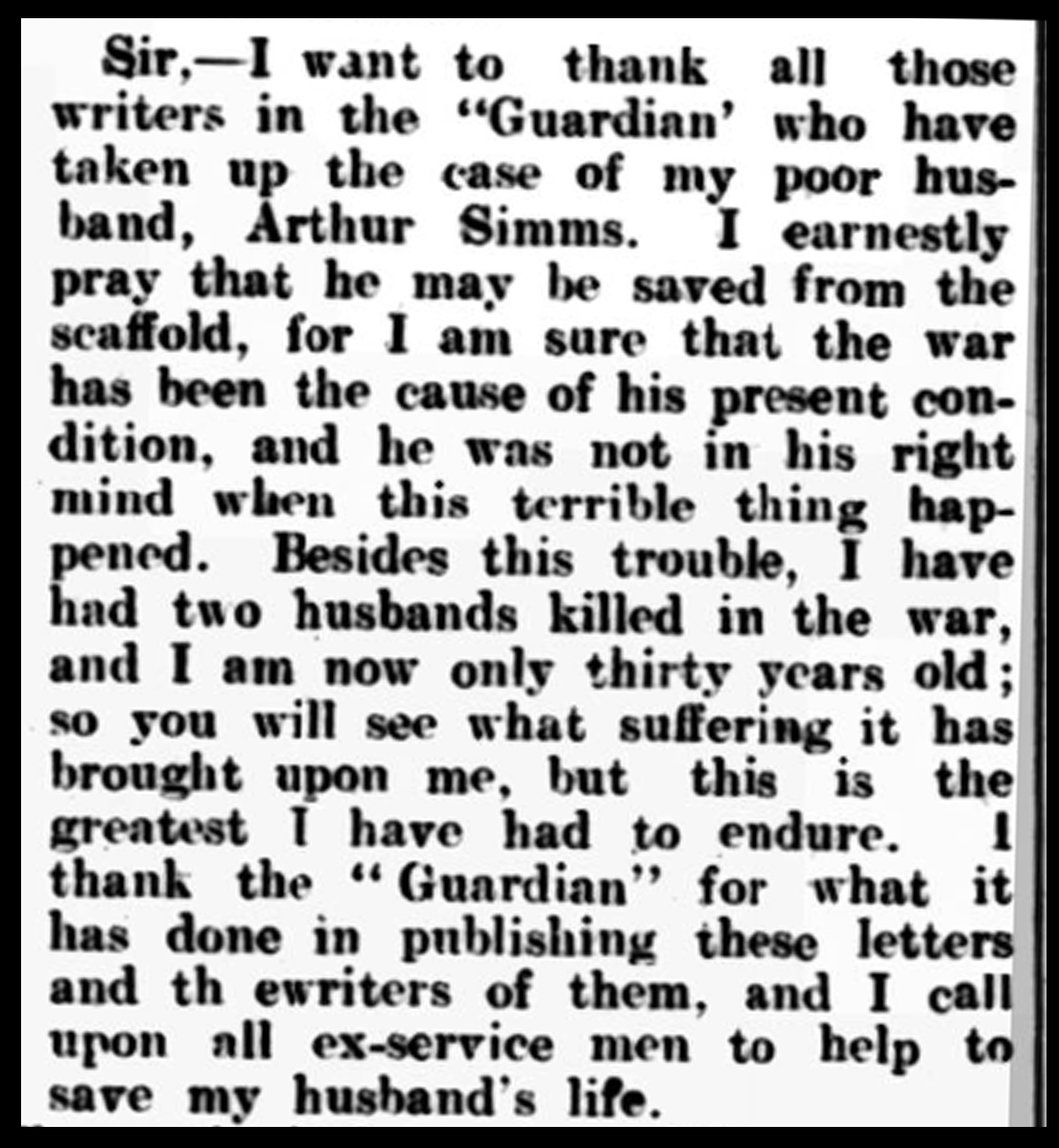
Inevitably, Arthur Simms was sent to Nottingham Assizes to be tried for murder, found guilty, and was sentenced to death. Despite appeals for clemency, such as the letter (left) written to the press by his wife, he was hanged in Bagthorpe Gaol, by Thomas Pierrepoint on 17th December 1924. The greatest mystery of this sorry affair is that there appeared to absolutely no motive for what Arthur Simms did. Rosa’s clothes were not disturbed in any way and her post mortem confirmed that there been no sexual activity evident. To use the euphemism of the press, she had not been “interfered with”. There was no evidence of animosity between the girl and her brother-in-law, family members later stating that they had been “on the best of terms.”

Looking back at this tragic affair we would do well to remember that apart from poor Rosa, there are other victims, perhaps none more so than her older sister Ethel. If it was the war that unhinged Arthur Simms, then by the end of 1924 the young woman had lost three husbands to that dreadful conflict.

The image of Rosa in the graphics is colourised and enhanced from a rather grainy contemporary newspaper photograph. It would be deeply ironic if it was the school photo that Rosa wanted sixpence for on the last afternoon of her life.

Click the image below to read other historical
true crime cases from around the country.

IPN

Blog at WordPress.com.

Up ↑