

Fenland is, today, an area of Cambridgeshire and Norfolk that was once a primeval swamp, where people survived on tiny islands just high enough above the brackish water to provide shelter and sustenance. Now, the name survives as a District Council, but the waters have long since been drained and tamed. Three novelists have found the flatlands suitable for detective stories. The greatest remains Dorothy L Sayers, albeit through one book only. The Nine Tailors (1934) is a fiendishly complex murder mystery set after The Great War, although the thunderous power of barely restrained rivers is never far away. Jim Kelly’s Philip Dryden books tap in to a more sinister side of the landscape, typified by endless skies, church towers and unbroken horizons. He tells us of isolated communities, ancient jealousies and the heavy hand of history. I nominate Diane Calton Smith to complete the triumvirate. Her novels, set in Wisbech from the time of King John up to the 15th century, portray a landscape that changes little, but a social structure that has evolved.
The Principal Day, her latest,finds us in the town in 1423, with a rather splendid late medieval church (little changed today) but in a world that has changed much since the earlier novels. Local farm workers are no longer serfs and villeins, but – in the case of more skilled men – free agents who can seek employment with whoever is prepared to offer the best pay.
There is a school. Situated in a tiny room above the porch of the parish church, it is presided over by Dominus Peter Wysman, a decent enough man, but not greatly respected by one or two of his older pupils. One of the pupils, Rupert of Tilneye is a reluctant scholar, and is just days away from leaving school to go and help run his family manor at nearby Marshmeade. After several humiliations by by the teacher, he resolves to pay the man back by slipping a tiny quantity of ground up yew leaves into his drink. Yew is, of course, a deadly poison when consumed in quantity, but Rupert administers just enough to produce a violent laxative effect, much to the amusement of the scholars.
Much of the story centres on Wisbech’s Guild of The Holy Trinity, of which Peter Wysman is a member The Guilds have no modern equivalent save perhaps Freemasonry. To belong to the Guild, you had to be rich and influential, and its chief, the Alderman, was someone of great influence. They regularly dined on rich roasted meats washed down with wines imported from Europe. When, on The Principal Day (a significant day of celebration and ceremony, often centered around the feast day of the guild’s patron saint or a major religious holiday, in this case the Feast of The Holy Trinity) the Guild members gather for a lavish feast. Wysman is taken unwell, rushes outside into the Market Place, where he collapses and dies.
Rupert’s cruel prank on Wysman was widely known to the scholars. When they are questioned, Rupert is arrested for murder and thrown into the dungeons of Wisbech Castle. His mother, Lady Evelyn, is convinced that he is innocent, and travels to Ely, where she enlsists the help of Sir Henry Pelerin, the Bishop’s Seneschal. He agrees to investigate the case.
In one way, Diane Calton Smith has crafted an excellent medieval police procedural. Sir Henry Pelerin is, I suppose, the long suffering Detective Inspector, while the Constable’s Sergeant-at-arms is a bent copper worthy of modern novels. We even have a version of the stalwart of many a thriller, the brusque and abrupt police pathologist. In the end, we even have that Golden Age prerequisite, the denouement in the library. In this case, however, the principal suspects are assembled at a feast to celebrate St Thomas’s Day. If you will pardon the obvious comment, it is here that all doubt is removed from Pelerin’s mind as to who poisoned Magister Wysman.
Diane Calton Smith weaves her magic once again, and entrances us with a tale shot through with dark deeds, heartache, love and perseverance but – above all – an astonishing ability to roll away the centuries and bring the past to life. The Principal Day is published by New Generation Publishing and is available now. For more on Diane’s Wisbech books follow this link.


 The gunslinger, Jack ‘ Kid’ Durrant, is not only good with guns, but has ambitions to writer cowboy novels, rather after the celebrated author of Riders of The Purple Sage, Zane Grey (1872 – 1939) Not only that, the relationship between Lorne, Brooks and himself is, as they say, interesting. When Lorne is found dead, with Brooks and Durrant both missing, it is assumed that Durrant is the killer. Although it is not strictly a matter for the Railway Police, Jim feels personally involved, and visits the place where the three were last seen – the grounds of Bolton Abbey in Wharfedale. This allows Andrew Martin (left) to introduce us to what is known as one of the most dangerous rivers in Europe, The Strid. This natural phenomenon sees the River Wharfe forced through a narrow ravine, just a few feet wide. It has been described as the river ‘running sideways’, rather like a twisted ribbon and is believed to be prodigiously deep. No-one goes into it and ever comes out alive.


 Alex Pearl (left) isn’t a reluctant name-dropper, and walk on parts for Julian Clary and Kenneth Clarke (in Ronnie Scott’s, naturally) set the period tone nicely. 1984 was certainly a memorable year. I remember driving through the August night to be at my dying dad’s bedside, and hearing on the radio that Richard Burton had died. Just a few weeks earlier we had been blown away by Farrokh Bulsara at Wembley, while Clive Lloyd and his men were doing something rather similar to the English cricket team.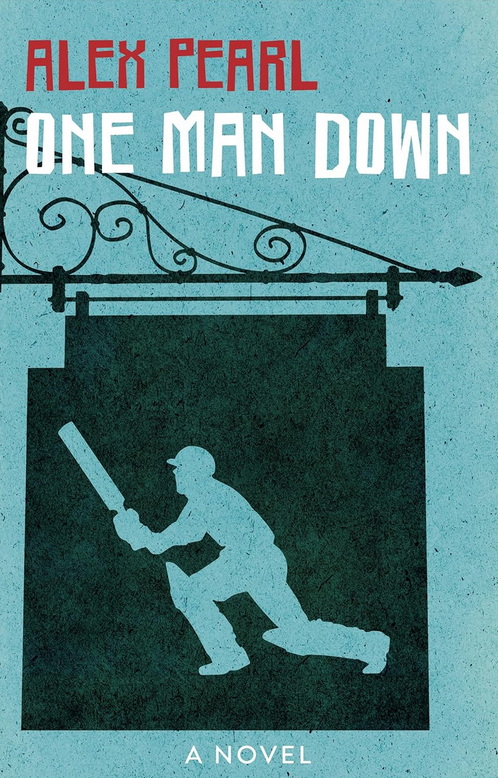


 consists of two first person accounts of events, that of Marsi and that of Stina. This, of course, raises the technical dilemma of Stina’s account. Because she is telling us what is happening in the winter 0f 1967, are we to assume that she is still alive? It is not quite such a conundrum as that of Schrödinger’s Cat but, outside the realm of supernatural fiction, the dead cannot speak.


 The plot spins this way and that, and draws in financial swindlers, the grim subculture of dog-fights, impersonations enabled through cosmetic surgery, and incompetent PIs. The core of the book, however, is the relationship between Bloodworth and Serendipty. It would have been as fraught with risks in 1985 to suggest any sense of sexual spark between the two as it would be now. However, on a couple of occasions, Lochte (left) flirts with danger. There were several subsequent novels featuring Leo and Serendipity, but I have not read them, so I am unable to report on how their relationship developed.





 The real threat to Graham comes not from the nightclub man but from an elderly archaeologist called Haller, whose long winded monologues about Sumerian funerary rites have made meal times such a bore for the other passengers. Haller is, in fact, a Nazi agent called Moeller, who has been trying – to use chess metaphor – to wipe Graham’s knight off the board for several weeks. This is one of those novels, all too easily parodied, where no-one is who they claim to be. It is from what was, in some ways, a simpler age, where storytellers just told the story, with no ‘special effects’ like multiple time frames and constant changes of narrator.





 fullybooked2017