

I reviewed a previous Frankie Elkins book, Before She Disappeared, (click the link to read) in 2021, and I made the point there that Frankie is one of the more implausible heroines in modern CriFi. Rather like Jack Reacher she travels with pretty much just the clothes she is standing up in, and a bag containing a few toiletries and ID documents. Her ‘job’? I use the quote marks advisedly, because she hunts for missing people. She doesn’t charge a fee, but usually finds temporary employment in the town of city where her investigations begin. She has taken all kinds of jobs from barkeep to cleaner. but here she appears to land on her feet. Or does she?.
Here, she gets a job as pet-sitter for Bart, a ridiculously rich gamer in Tucson Arizona. The house is huge and futuristic, and the pets? Here comes Frankie first little problem. The main pet is a huge Green Iguana called Petunia, and Frankie has a roomful of exotic snakes to feed with frozen rats and live crickets. And Frankie just hates snakes.
It’s safe to say that Frankie has a disturbing history. Here, she gazes into the eyes of a little Afghan girl.
‘My name is Frankie,” I murmur. She stares at me. Stares, stares, stares, until I can feel each of my sins. All of my secrets slowly being stripped bare. I let her take my full measure. The losses I have felt, the pain I’ve inflicted, the sad little girl who still lives deep inside me, longing for her father to sober up, wishing for her mother to come home. The damaged woman I’ve become, unable to stay too long or connect too deeply because the sheer anxiety of such intimacy makes me want to drink.’
Her latest crusade? To find Sabera Ahmadi, an Afghan woman who has disappeared from her temporary refugee accommodation in Tucson, leaving her husband and young daughter behind. In her own words, Sabera describes the horrific events of the previous few years. It is a particularly grisly episode in modern history, but just the latest chapter in a sorry tale of foreign powers believing they could impose some kind of external rule on Afghanistan. From the disastrous military adventures of the British in the 19th century, to the futile 1980s attempts by Russia to prevent the rise of Islamic extremism, and concluding with the equally ineffective attempts by the Americans and British to democratise the country, the inexorable resilience of the vile Taliban covers Sabera’s life like a funeral shroud.
Sabera’s husband Isaad also goes missing, but when he is found dead, with evidence that he has been tortured, Frankie feels she is no closer to the core or the case, despite help from a diverse collection of allies, including Daryl (Bart’s chauffeur and minder), Roberta (Daryl’s ballroom dance partner) and Marc, a police detective, and brother to Roberta . Oh, yes, we mustn’t forget Genni, Bart’s six-feet-four transvestite housekeeper.
However, Sabera is far from being a hapless victim of international war games, or an archetypal submissive Muslim woman. It transpires that before the Taliban retook Kabul, Sabera – like her mother before her – was already involved with international intelligence agencies, and she was valued for her mastery of several languages, and a skill with numbers and code that made her a valuable asset.
Frankie (as ever) has bitten off more than she can chew, and finds that the truth behind Sabera’s disappearance is more disturbing – and potentially deadly for all concerned – that she could have ever imagined. Lisa Gardner gives us a book that is impeccably researched and has full-on relentless pace. Kiss Her Goodbye is published by Century and will be available on 14th August.


 The gunslinger, Jack ‘ Kid’ Durrant, is not only good with guns, but has ambitions to writer cowboy novels, rather after the celebrated author of Riders of The Purple Sage, Zane Grey (1872 – 1939) Not only that, the relationship between Lorne, Brooks and himself is, as they say, interesting. When Lorne is found dead, with Brooks and Durrant both missing, it is assumed that Durrant is the killer. Although it is not strictly a matter for the Railway Police, Jim feels personally involved, and visits the place where the three were last seen – the grounds of Bolton Abbey in Wharfedale. This allows Andrew Martin (left) to introduce us to what is known as one of the most dangerous rivers in Europe, The Strid. This natural phenomenon sees the River Wharfe forced through a narrow ravine, just a few feet wide. It has been described as the river ‘running sideways’, rather like a twisted ribbon and is believed to be prodigiously deep. No-one goes into it and ever comes out alive.


 Alex Pearl (left) isn’t a reluctant name-dropper, and walk on parts for Julian Clary and Kenneth Clarke (in Ronnie Scott’s, naturally) set the period tone nicely. 1984 was certainly a memorable year. I remember driving through the August night to be at my dying dad’s bedside, and hearing on the radio that Richard Burton had died. Just a few weeks earlier we had been blown away by Farrokh Bulsara at Wembley, while Clive Lloyd and his men were doing something rather similar to the English cricket team.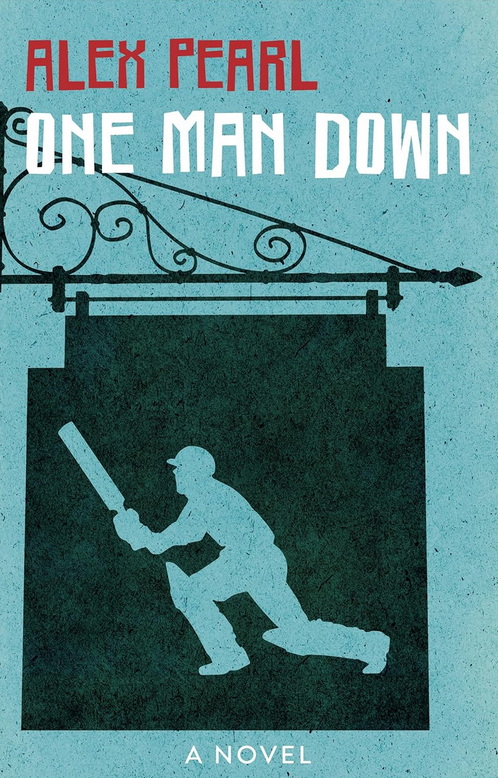


 consists of two first person accounts of events, that of Marsi and that of Stina. This, of course, raises the technical dilemma of Stina’s account. Because she is telling us what is happening in the winter 0f 1967, are we to assume that she is still alive? It is not quite such a conundrum as that of Schrödinger’s Cat but, outside the realm of supernatural fiction, the dead cannot speak.


 The plot spins this way and that, and draws in financial swindlers, the grim subculture of dog-fights, impersonations enabled through cosmetic surgery, and incompetent PIs. The core of the book, however, is the relationship between Bloodworth and Serendipty. It would have been as fraught with risks in 1985 to suggest any sense of sexual spark between the two as it would be now. However, on a couple of occasions, Lochte (left) flirts with danger. There were several subsequent novels featuring Leo and Serendipity, but I have not read them, so I am unable to report on how their relationship developed.





 The real threat to Graham comes not from the nightclub man but from an elderly archaeologist called Haller, whose long winded monologues about Sumerian funerary rites have made meal times such a bore for the other passengers. Haller is, in fact, a Nazi agent called Moeller, who has been trying – to use chess metaphor – to wipe Graham’s knight off the board for several weeks. This is one of those novels, all too easily parodied, where no-one is who they claim to be. It is from what was, in some ways, a simpler age, where storytellers just told the story, with no ‘special effects’ like multiple time frames and constant changes of narrator.








 fullybooked2017