

This is book number eleven in the series, so a quick heads-up for new readers.
Time: the present
Place: Humberside
Main characters: Detective Inspector (recently promoted from DS) Aector McAvoy. He is a Scot, huge and bear-like, a gentle soul but a formidable copper. His wife Roisin; she is of Irish Gypsy stock, romantic but fiercely protective of Aector and their children – Fin and Lilah. Detective Superintendent Patricia ‘Trish’ Pharoah, thirty years in the force, and as tough as nails. Trish and Aector worship each other, but it is a purely platonic relationship. McAvoy is on holiday with his family in the Lake District, living in a traditional Romany Vardo.
In this book: Reuben Hollow, a serial killer, serving several life sentences for murdering people he judged as having escaped justice. He was captured by McAvoy. Detective Chief Superintendent George Earl. Promoted because Trish Pharoah turned down the job. Earl is the very model of a modern media friendly senior police officer:
Trish is not immune to the pleasures of the flesh, and she is in bed with an Icelandic copper she met on a course. Their post coital bliss is disturbed by Trish’s car alarm going off, and Thor Ingolfsson runs downstairs to investigate. He is attacked with an adze and left for dead. Thor happens to be a dead ringer for Aector, and when the local police arrive to find the man face down in the road, they put two and two together, and make seventeen. Aector is very much alive and well, however and, despite being told to stay well away by Earl, he is determined to find out what is going on. David Mark’s description of Earl will ring horribly true to anyone who has experienced senior management in corporate services in recent years:
“George Earl is a tall, slim, straight-backed careerist who exudes the gentle earnestness and Anglican-priest sincerity of a Tony Blair. He has a habit of clasping his hands together when he talks, and makes a great show of telling his staff that his door is always open, and there’s no such thing as a stupid question.”
David Mark spent years as a crime reporter for a regional newspaper, and so he is well aware of the depths of villainy which are regularly plumbed by apparently ordinary and innocuous men and women. He also knows that – despite graduate entry – some of the people who are accepted as police officers are not “the brightest and best of the sons of the morning.” (Activists – please feel free to substitute the gender of your choice)
“The three uniformed constables milling around at the rear….he’s noticed that none of them seem to be able to breathe through their nose. All in their twenties and look as though they would be more comfortable working in a phone shop or flogging gloriously chavtastic trainers in a sports shop.”
What follows is pure mayhem. A former police colleague of Trish Pharoah meets an elaborate death by wood-carving chisels, McAvoy narrowly escapes death by hanging, in an execution house probably last used by Albert Pierrepoint, the chaos of Trish Pharoah’s previous life is laid bare to the world, and our man emerges – not unscathed – but able to fight another day.
Flesh and Blood veers violently between the darkest noir imaginable and a simple – but affecting – poetry. It is published by Severn House and will be available on 6th June. The final sentence sums up this brilliant series:
“And inside McAvoy’s head, another voice joins the chorus of the dead.”
https://fullybooked2017.com/tag/david-mark/


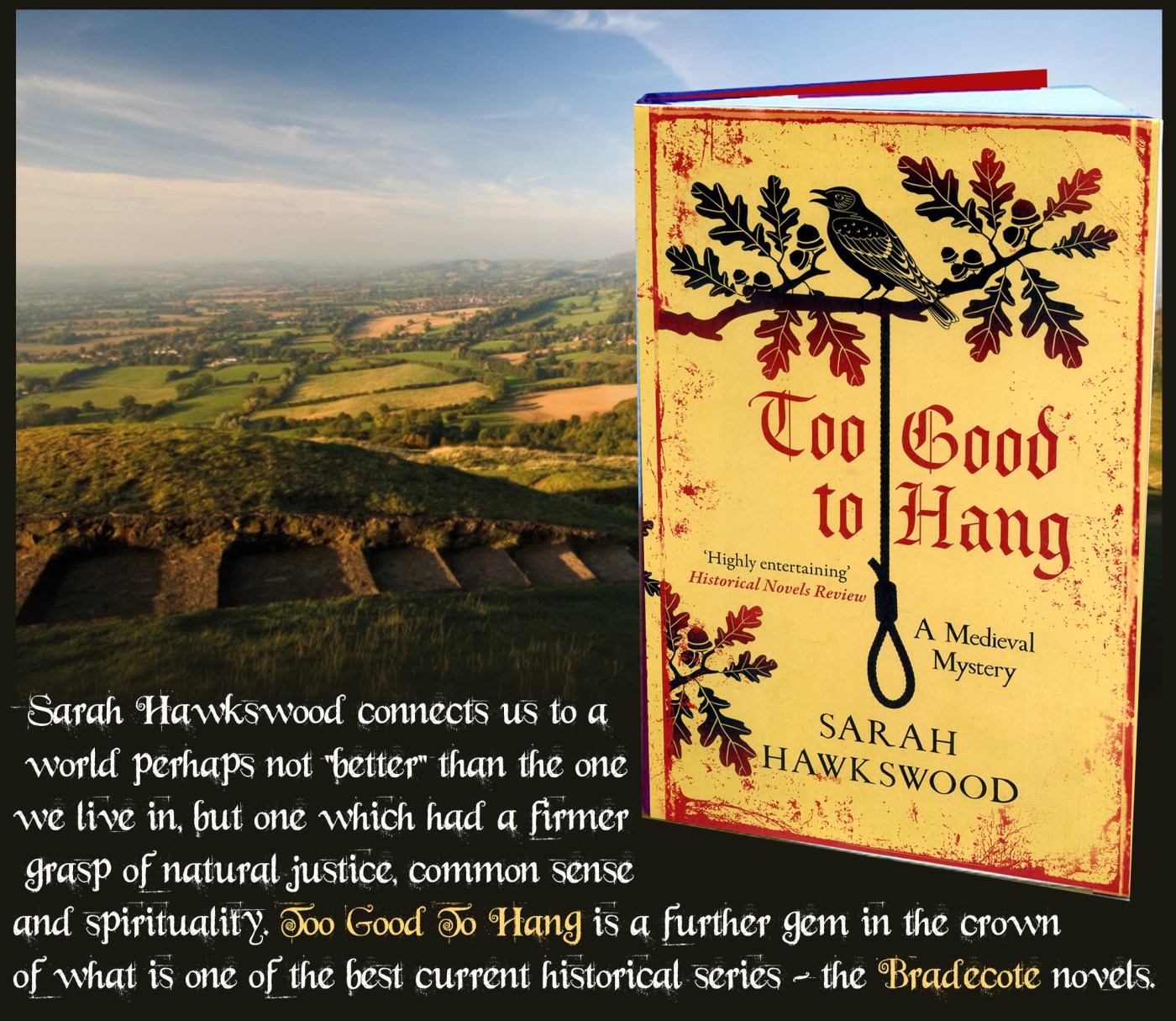


 Keith Dixon’s Porthaven is a fictional town on England’s south coast. It doesn’t seem woke or disfunctional enough to be Brighton, maybe neither big nor rough enough to be Portsmouth or Southampton, so it’s maybe a mix of all three, seasoned with a dash of Newhaven and Peacehaven. Inspector Walter Watts is a Porthaven copper. He is middle-aged, deeply cynical, overweight, and a man certainly not at ease with himself – or many others – but a very good policeman. When a young woman, later identified as Cheryl Harris, is found murdered on a piece of waste ground, the only thing Watts accomplishes on his visit to the scene is that his sarcastic exchanges with a female CSI officer result in in an official complaint, and him being moved off the case. From the sidelines, Watts knows that whoever killed the young woman was definitely trying to pass on a message. The woman’s face has been obliterated by a concrete slab, with her mobile ‘phone jammed into what was left of her mouth.
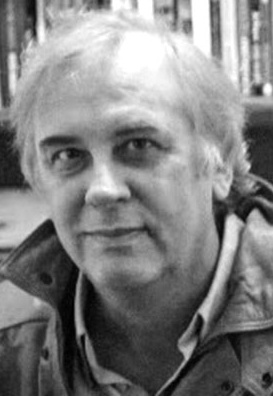 Watts was brought up by his father – and in boarding schools – after his mother left the home. There has been no contact with her from that day to this, until he receives a message from the desk sergeant at Porthaven ‘nick’ simply saying that his mother had ‘phoned, and would he call her back on the number provided. This thread provides an interesting and complex counterpoint to the police investigation into the killing of Cheryl Harris. It also allows Keith Dixon (right) to better define Watts as a person; on the one hand he is aloof, selfish, socially abrasive and enjoys showing his mental superiority; on the other, he is vulnerable, unsure, and shaped by a childhood lacking conventional affection.

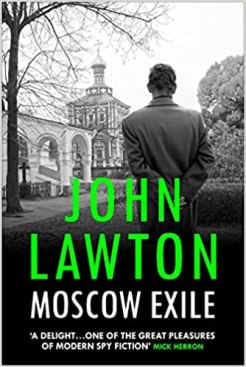 Some writers who have authored different series occasionally allow the main characters to meet each other, provided that they are contemporaries, of course. I’m pretty sure that Michael Connolly has allowed Micky Haller to bump into Harry Bosch, while Sunny Randall and Jesse Stone certainly knew each other in their respective series by Robert J Parker. Did Spenser ever join them in a (chaste) threesome? I don’t remember. John Lawton’s magnificent Fred Troy series ended with Friends and Traitors (2017), and since then he has been writing the Joe Wilderness books, of which this is the fourth. I can report, with some delight, that in the first few pages we not only meet Fred, but also Meret Voytek, the tragic heroine of A Lily of the Field, and her saviour – Fred’s sometime lover and former wife, Larissa Tosca. As an aside, for me A Lily of the Field is not only the best book John Lawton has ever written, but the most harrowing and heartbreaking account of Auschwitz ever penned. Click the link below to read more.

 Without giving the game away, it is in Brother Dominic’s previous life where the clues are to be found, but answers don’t come easy for Cross and Ottey. Although there was a very clever plot twist involving the identity of the killer, I was far more involved with George Cross as a person than wondering who murdered Brother Dominic.The relationship between Cross and his father, the discombobulating effect of the re-emergence of his mother – lost to him since she left the family home when he was five – and his attraction to the unambiguous world of order, silence and simplicity of Dominic’s fellow monks, all contribute to the power of this compelling read.




 fullybooked2017