Search

fullybooked2017

Category

Non Fiction

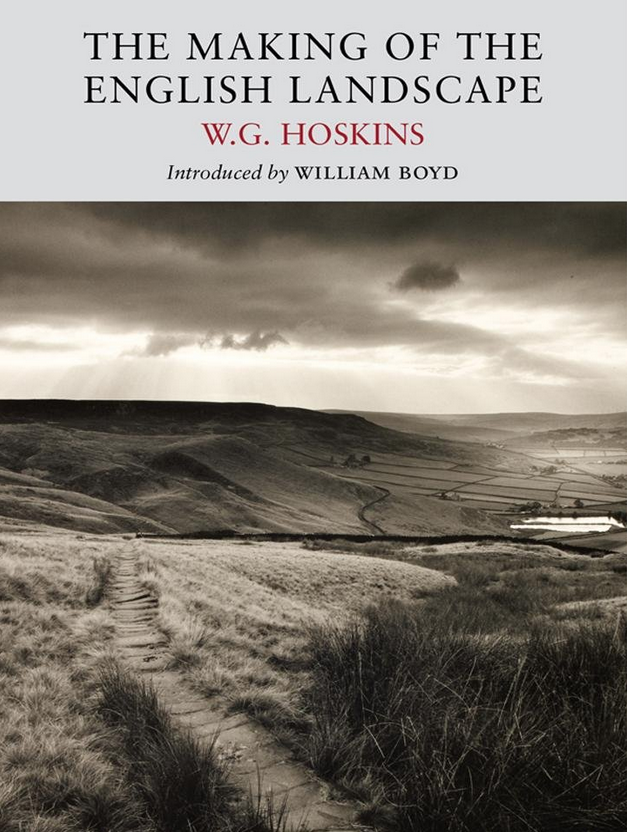
THE MAKING OF THE ENGLISH LANDSCAPE . . . A non fiction classic

An awareness of the power and influence of the English landscape is central to the writings of so many of my favourite crime writers, let alone books by literary giants such as Eliot, Dickens and Hardy. In no particular order Phil Rickman’s Merrily Watkins novels would be diminished without the brooding power of the Welsh Marches and the haunting legacy of forgotten settlements and abandoned Victorian chapels; the Philip Dryden novels of Jim Kelly are all the more intriguing due to their being set in the inward-looking hamlets and distrustful communities of the Cambridgeshire Fens. Cities have landscapes, too; Chris Nickson’s Leeds and the ancient palimpsest of London’s long history as revealed in the late Christopher Fowler’s Bryant & May novels are vital parts of the narrative process.

WG Hoskins walked and drove the length and breadth of post-war England, and came up with a magisterial account of how our country was shaped and created.The relentless speed of change meant that Hoskins’ book was out of date almost before print copies were on the shelves in 1955. Even his revision, two decades later, has been questioned by modern writers. His historical account from the earliest human habitation to the Industrial Revolution remains set in stone, however.

Modern observers will not be slow to spot the ironies made apparent by what he writes. He laments, aided by the powerful poetry of John Clare, the destruction – by the parliamentary enclosures in the early nineteenth century – of the ancient heathlands and vast common fields. These vast open spaces were replaced by tiny fields, each bordered by impenetrable thicket hedges of hawthorne. In recent times, ecologists have, of course, railed against the grubbing up of these hedges, and the creation of endless prairies of wheat fields to satisfy modern industrialised agriculture.

Hoskins notes that the enclosure movement provoked a huge rise in the diversity of small songbirds, and the related decline of raptors. Now, it seems, that the ornithological establishment is hell-bent on on the recreation of habitats for birds like Red Kites – even if their predation means death and destruction for smaller birds. What goes around, comes around, I suppose, and I am not qualified to take a position on this debate.The socio-political ironies abound, however. Of the effects of the frantic search for coal (to power the steam driven industrial revolution) Hoskins observes:

In the Lancashire township of Ince, there are today 23 pit shafts covering 199 acres; one large industrial slag heap covering six acres, nearly 250 acres of land underwater or marsh due to mining subsidence, another 150 acres liable to flooding and 36 disused pit shafts. This is the landscape of coal mining.” 

A modern reader of newspapers and magazines will not have to search far to find contemporary eulogies for the wonderful days when coal was king, or imprecations heaped on the heads of those who engineered the collapse of the British coal industry while knowing full well that coal could be bought cheaper elsewhere.

Looking back to historical crime fiction, one of my  favourite series is the Bradecote novels, set in twelfth century Worcestershire. Author Sarah Hawkswood was a distinguished historian before she began to write the novels, but it is impossible to believe that Hoskins’ wonderful account of how England was shaped was not at the back of her mind when she wrote her stories. Likewise, Chris Nickson’s novels of nineteenth century Leeds are full of the sulphurous stench of mill chimneys, the insanitary houses and the poisoned rivers that Hoskins describes in his account of the later stages of the industrial revolution.

Hoskins was lucky enough – or diligent enough – to be able to end his days in the relatively unspoilt Oxfordshire countryside, but he had a deep anger for what England had become. Below, on the left, is an angry passage from the final chapter of his book and, beside it, the last two verses of Philip Larkin’s ‘Going, going’ (1972)
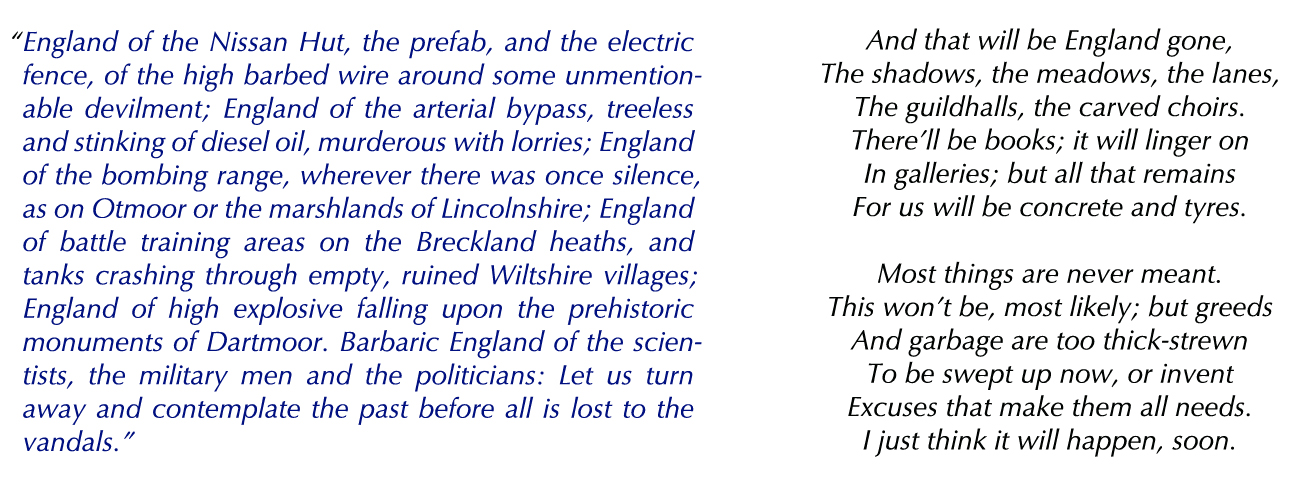
The Making of the English Landscape is a magnificent tour de force; it is essential reading for those who care about England and the spirit of our ancestors who sculpted the human landscape. This edition is published by Little Toller Books and is available now.
 

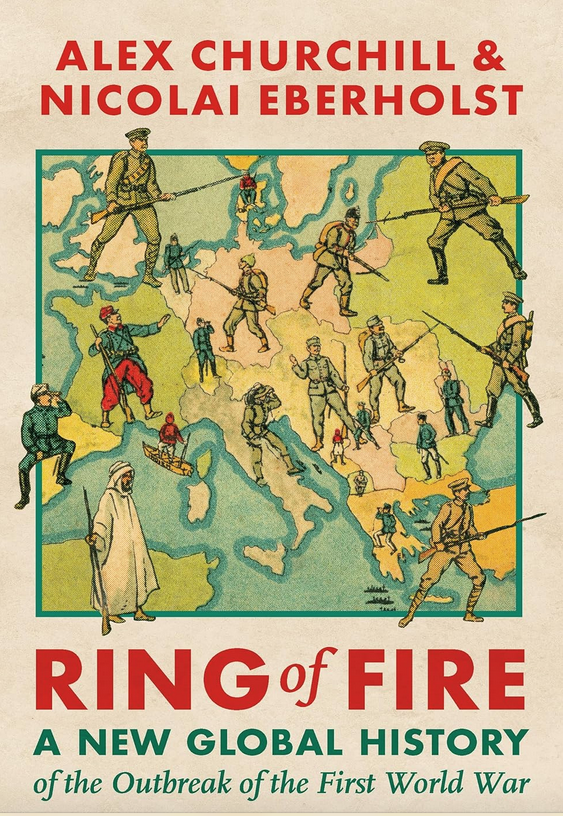
RING OF FIRE . . . Between the covers

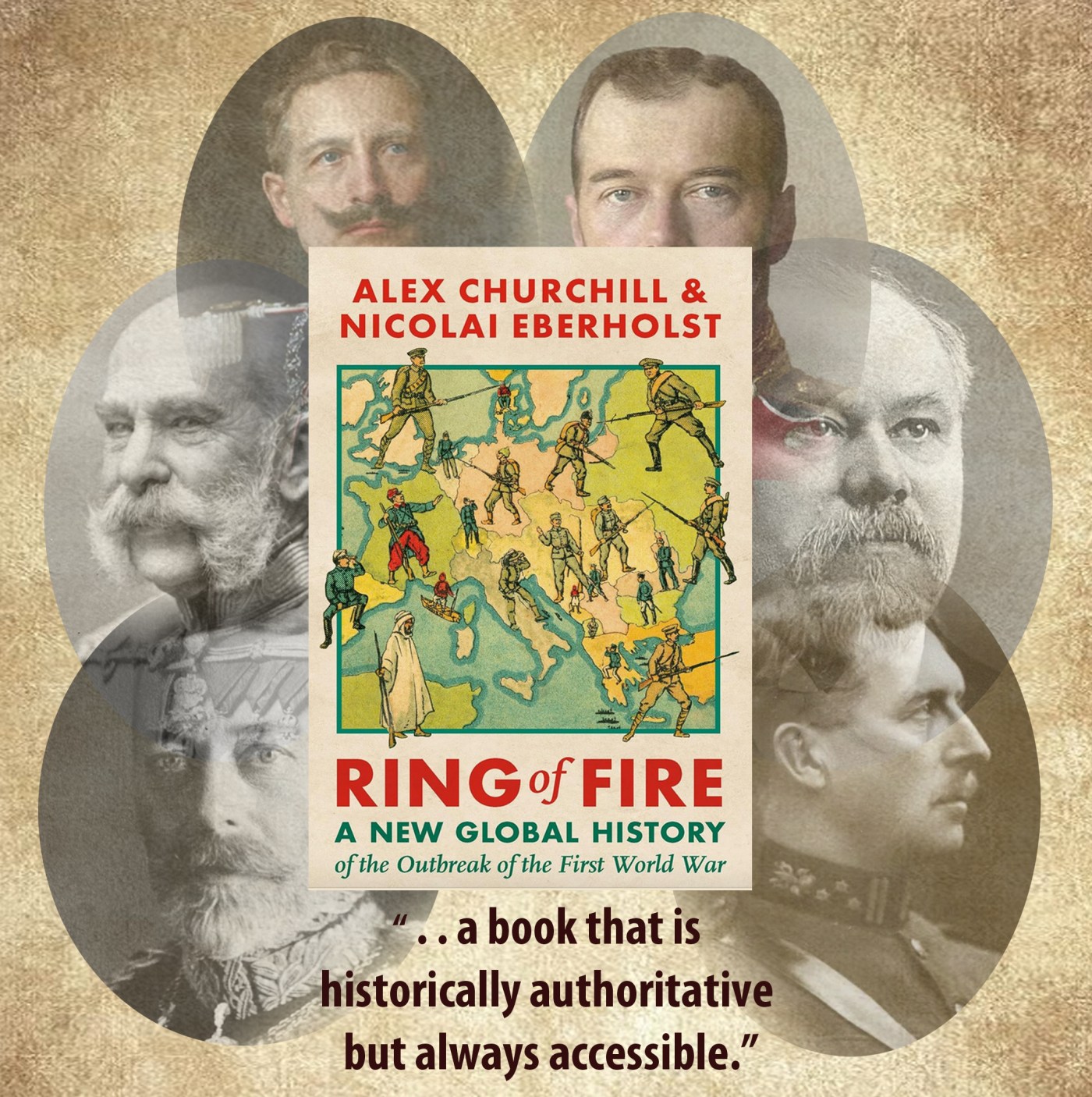
In my reading experience, the definitive account of the outbreak of The Great War remains Barbara Tuchman’s The Guns of August (1962). The author made us flies on the wall in cabinet meeting rooms across Europe, and hidden observers within General Staff offices of the armies of Germany, Britain, France and Russia. This book is very different. Its premise is that this was a truly global conflict, principally due to the vast colonial outreach of the major powers. Men and women, ordinary citizens of places in Africa that were ruled from London, Berlin, Paris and Brussels, remote settlements in the Caucuses who were subject to the rule of the Tsar, shoeless peasants in the outer reaches of the ailing Ottoman empire, and those living in the United States and South America who were part of the colossal diaspora from Europe – all felt the rough hand of destiny on their shoulder.

The celebrated (but not always admired) historian AJP Taylor famously argued that the outbreak of the war was inevitable, due to military planning relying on inflexible railway timetables. Once the trains, packed with tens of thousands of men, headed off to their destination, then conflict was inevitable. This theory is easily challenged but Churchill and Eberholst give this example:
Britain’s rail network comprised some 23,000 miles of track. On 4th August 1914, 130 companies were effectively taken over by the government. At Aldershot, from 5th August officers were being handed dossiers that revealed the plan for their departure. For instance: ‘Train No 463Y will arrive at siding B at 12.35 a.m., 10th August. You will complete loading by 3.40 a.m.’

Britain’s army in 1914 was tiny compared to those of France, Germany and Russia. It was even outnumbered by the army of Belgium, but it was superbly trained and had relatively recent battlefield experience in the Boer Wars. The key difference between Britain and the empires of France and Germany was in the existence of Britain’s white dominions. Australia, Canada, New Zealand and South Africa were, in theory at least, at one with the mother country’s foreign policy.

One of the many valid points made by the authors is the vexatious question of perceived neutrality. Long before the first shots were fired in the war, developed nations needed vast quantities of imports and, were they fortunate enough to possess natural resources, ships to export material and goods elsewhere. The ownership of cargo vessels was perhaps not as opaque then as it is now but, for example, if a Swedish ship sailed into Hamburg loaded with iron ore, did that compromise Sweden’s notional neutrality? What if an American ship loaded with wheat were headed for the Port of London? Did that make the vessel fair game for German submarines?

The authors remind us that by the time the trenches ran from Switzerland to the Belgian coast, maps were able to be made showing every dip or fold in the land and – literally – every large shell crater. In the dying days of August 1914, particularly in the rural areas of Galicia, East Prussia and Serbia, the landscape was a complete mystery to field commanders. Knowledge of the terrain was almost completely absent, resulting in disastrous tactical blunders by all sides.

Comparing different kinds of horror brought about by war is, perhaps, futile, but as an amateur historian brought up on grim tales of life in the Western Front trenches, I was struck by the descriptions of the relentless carnage of these early weeks of the war. Yes, it was a war of movement but, in particular, it was fought in intense August heat. Men on the march were driven mad by thirst; tinder-dry fields and woods caught fire quickly, cremating the dead and wounded alike. This was a new kind of war; medical services were woefully inadequate to meet carnage on this scale. I was quickly disabused of any notions I had that these early battles between the huge armies were somehow cleaner and less grisly than the trench warfare which followed them.

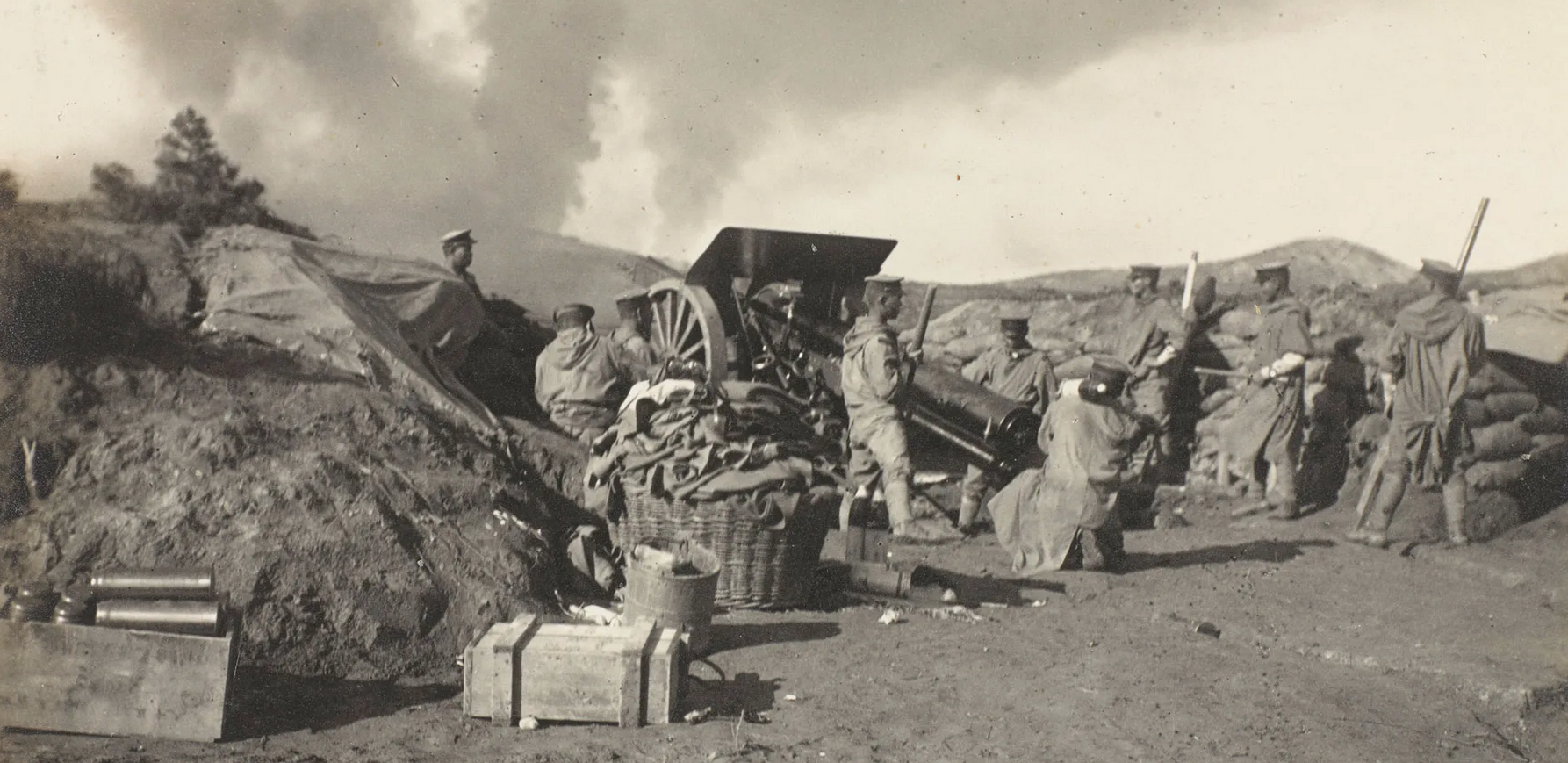
Another surprise (at least to this woefully ignorant reader) was to learn that Japan and Britain fought together to drive Germany out of Chinese city of Tsingtao (below) between August and November 1914. It is a sobering reflection on the fragile nature of national alliances to think that less than a decade earlier, Japan and Russia locked horns in a savage war. Now, they were, notionally, allies in a war against Germany.

As autumn turned into winter, the major powers were all unsteady on their feet. The French had suffered astonishing losses in the east, but had engineered a miracle on The Marne. Germany’s relentless advance through Belgium had been thwarted, and they had back-pedalled in disarray to dig in north of The Aisne. Despite the debacle at Tannenberg, Russia had inflicted a monstrous defeat on Austria Hungary in Galicia. This account, from a Hapsburg officer, is horrific :

‘Scenes from Dante’s Inferno were happening on the road. Driven by instinct, both men and horses pressed forward, regardless of the corpses and wounded lying on the ground. Horses hooves were treading over bellies and heads. Intestines, guts, brains mixed with mud covered the road with a bloody mess. The screams of the wounded, men and horses, together with the cracking rifles, grenade and shell explosions drove one to near insanity.’

I am always intrigued by writing partnerships, and ponder the (largely irrelevant) question, “Who did what?” Whatever the respective inputs were here, Churchill and Eberholst have written a book that is historically authoritative but always accessible. UK Great War literature tends, for quite laudable reasons, centred on the Western Front and the great calamities that took place there, but here we have a timely reminder of the days before the trenches were dug “from Switzerland to the sea” and the horrific slaughter that took place in places with names that have long since vanished from the map. Ring of Fire will be published by Apollo on 8th May.

CRIMEA . . . Between the covers

crimea003 copy

I am a keen amateur historian, with a particular fascination for military history. In 2024 I read and reviewed 70 novels, so finding time to read non-fiction was difficult. Come Christmas, I had already completed the reviews for January blog tour commitments, and so I had time to read a book which has been sitting, ignored and unloved, on my shelves for some time. Like many people of a certain age I knew where Crimea was, and had a working knowledge (or so I thought) of the Charge of The Light Brigade, and Florence Nightingale. But that was about it.

Screen Shot 2025-01-13 at 10.31.33Orland Figes (left) is an academic historian and Russia specialist, and here he brings to life one of the most peculiar and apparently pointless wars of the nineteenth century. Figes warns us at the beginning that covering the causes of the Crimean War is going to take time – and pages – so he asks us to bear with him. One of the  reasons that the Russian armies of Tsar Nicholas I went to war against three Empires and a little Island state was broadly known as The Eastern Question. There have been compete books written on this alone but, put simply, it is this. The Ottoman (Turkish) Empire had reached its zenith in terms of territory by the end of the seventeenth century. By the 1850s it was in serious decline, and Western countries feared that its demise would create a political vacuum which the Russians would all too gladly fill.

Casualties

There were three what might have been called ‘set piece battles’, at Alma, Balaclava and Inkerman. If that term suggests orderly squares of men, columns of disciplined cavalry and text book manoeuvres, then it is wildly inappropriate. I read with increasing disbelief as Figes describes an utter chaos of misunderstood commands, lack of proper maps and idiotic leadership. That Russia ‘lost’ these encounters was down to a very important piece of military technology. The British and French infantry used Minié rifles. Although they were still muzzle loaded, the barrels had internal rifling – a series of concentric ridges which made the bullet spin in flight, thus giving it increased rang and accuracy. The Russians, in contrast, still used old fashioned smooth bore muskets – inferior in every way.

What sucked the life blood out of the warring armies was the central event of the war – the siege of Sevastopol. This port was the home base of the Russian Black Sea fleet, and it was considered that while it was still in Russian hands, the war would drag on interminably. Month after month, the piles of dead mounted, and there were occasional truces so that each side could bury its dead, with senior officers from both sides meeting ‘on the half way line’ to chat civilly and exchange cigars. Military historians, both amateur and expert, will recognise the irony that less than a century later, the city would again receive a long and bloody battering, but this time at the hands of Hitler’s Wehrmacht.

History is a strange bird. It can endlessly change colour and identity, while both proving – and refuting – our theories. In Crimea the Russians were defeated by superior technology, despite their available supply of men at arms. In 1944, the Russians defeated superior technology because they had overwhelming military numbers.

As a fluent speaker, reader and writer of Russian, Figes has been able to access – and make sense of – countless first hand written reports of what people suffering during the Sevastopol siege experienced. Here, a Russian doctor is barely able to comprehend the state of some of the men who present themselves at his field hospital.

“Without a doubt, the most terrible impression was created by those whose faces had been blown up by a shell, denying them the image of a human being. Imagine a creature whose face and head have been replaced by a bloody mass of tangled flesh and bone-there are no eyes, nose, mouth, cheeks, tongue, chin or ears to be seen, and yet this creature continues to stand up on its own feet, and moves and waves its arms about, forcing one to assume that it still has a consciousness. In other cases in the place where we would see a face, all that remained were some bloody bits of dangling skin.”

Sevastopol eventually fell or, to be more precise, was abandoned by the Russians in the first days of September 1855. They knew that siege would only ever have one outcome. Everything that could be of any use to the enemy was destroyed, and a huge fire engulfed the city. They left behind thousands of wounded, hoping the the victors would show compassion. Sadly, the burning city was seen by the French and British as too dangerous to enter, and when they finally moved into the ruins, the war correspondent for The Times, William Russell, saw a vision of hell.

“Of all the pictures of the horrors of war which have ever been presented to the world, the hospital of Sevastopol offered the most heart rending and revolting. Entering one of these doors, i’ve been held such a site as few men, thank God, have ever witnessed… The rotten and festering corpses of the soldiers, who were left to die in their extreme agony, unattended, uncared-for, packed as close as they could be stowed, saturated with blood which used and trickled through upon the floor mingling with the droppings of corruption.”

The war puttered and stuttered on for a little longer and, without beating a drum, Figes reminds us that there was one essential difference between Britain and the other participants. Britain was the sole parliamentary democracy. Lord Palmerston, prior to 1855, had been very much for escalating the war, and when he became Prime Minister in that year, he maintained his hawkish mood. Whatever the limited enfranchisement was in 1850s Britain, it did resemble something like democracy, unlike the imperial system which kept Tsar Alexander, Emperor Napoleon III and Sultan Abdulmecid in power. The axiom is ‘to the victor, the spoils’ but the Treaty of Paris, which officially ended the war in 1856, was not unduly punitive to Russia. Yes, the Black Sea was declared a neutral zone but Alexander II continued to rule Russia until his assassination in 1881. Napoleon III’s apparently warlike credentials kept him in power until 1870 when he discovered that facing Bismarck’s army was rather different from fighting the brave – but disorganised – Russians.

It is hard to discover any positives about Britain’s involvement in the Crimean War. In terms of geo-politics, the country’s influence in Europe remained peripheral. For decades, the French harboured the belief that Britain had not ‘done its bit.’ Orlando Figes has provided us with a definitive and compassionate account of a strange – but very bloody- affair. Published by Penguin, the book is available now.

Screen Shot 2025-01-11 at 17.26.23


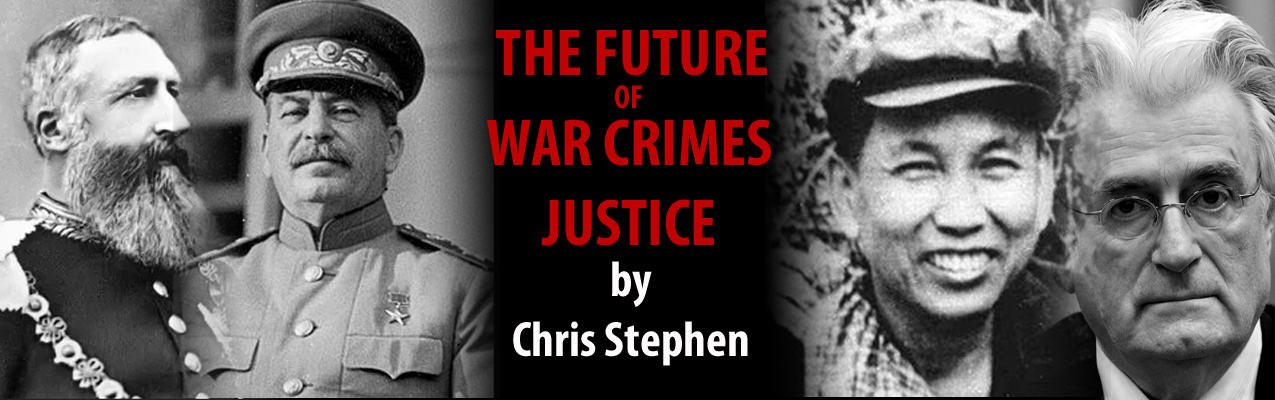
THE FUTURE OF WAR CRIMES JUSTICE

WCJ header

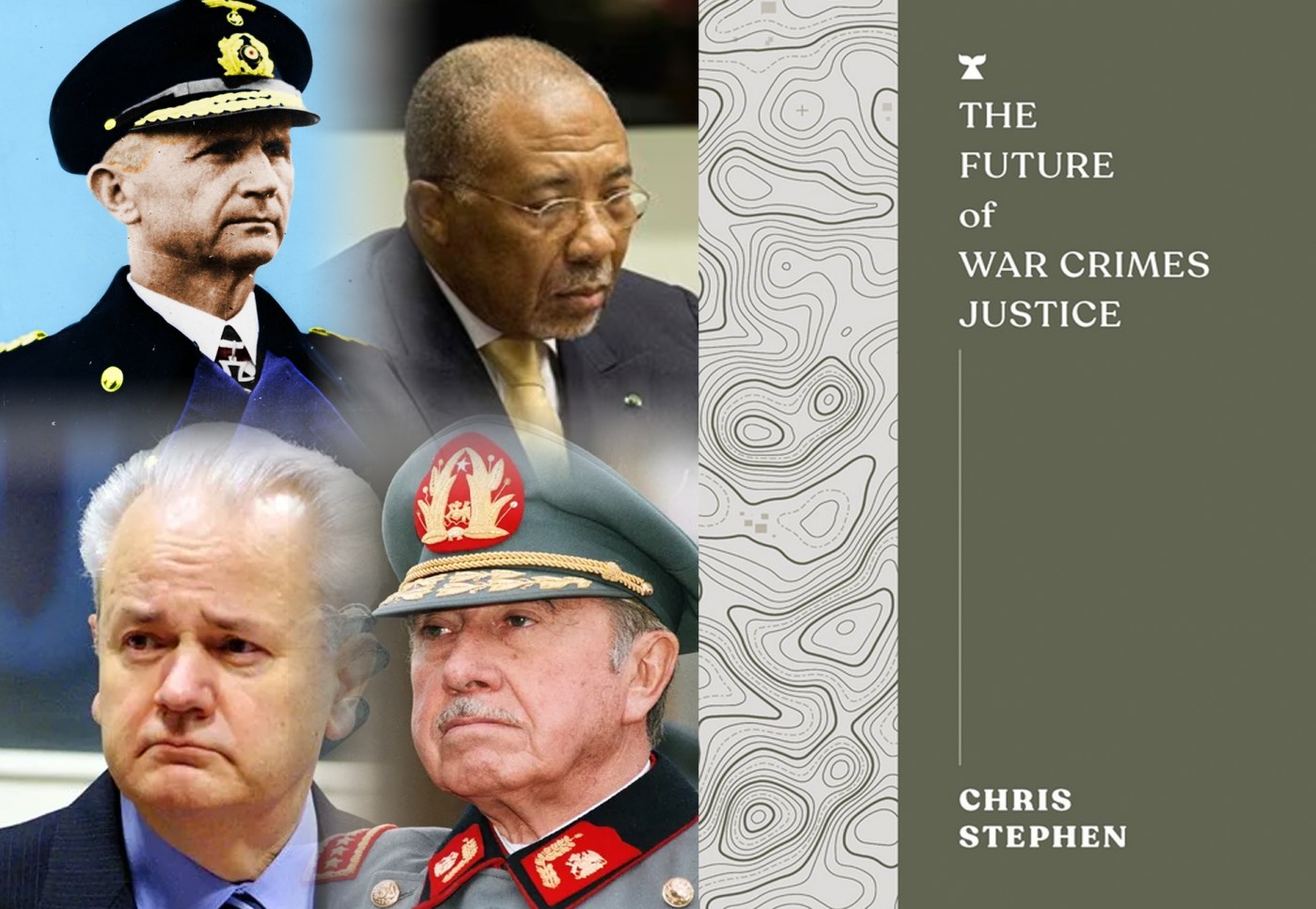
Chris Stephen author photoThis is what used to be called a monograph, a slim volume devoted to one particular subject. It is a million miles away from Detective Inspectors, international criminals, sleepy villages with an abundance of elderly female amateur sleuths and dark deeds on the gloomy back-streets of Victorian London. However, I do try to balance my reading between novels and non-fiction, and this book repaid my interest. The author, journalist Chris Stephen (left) has reported from nine wars for publications including the Guardian and the New York Times magazine. He is the author of Judgement Day: The Trial of Slobodan Milošević (published by Atlantic Books). Ironically, the Serbian leader avoided becoming only the third former Head of State to be found guilty of war crimes, mainly because he died of a heart attack during his trial. The first was Admiral Karl  Dönitz who, for a very brief spell. was leader of Nazi Germany. The second was Charles Taylor the former Liberian leader, at whose trial Naomi Campbell made a brief but bizarre appearance as a witness. This book is part of a new series from Melville House.
Screen Shot 2024-02-18 at 18.16.58

Stephen looks at war crimes in history, and examines how contemporary justice systems defined them and dealt with them. He mentions Sherman’s ‘March To The Sea’ in 1864, where Sherman’s Union troops devastated civilian Georgia, working on the assumption that denying the enemy infrastructure, provisions and general support was just as effective as blowing them apart with shot and shell.

The point is well made that there are two distinctive kinds of war crimes –  those committed by military leaders and those committed on behalf of multinational companies, usually in Africa, in search of precious raw materials. Perhaps unique is the abysmal Leopold II of Belgium who, while also being head of state, was determined to strip the Congo of all its precious resources.

“Arthur Conan Doyle paused his Sherlock Holmes novels to pen an angry call to arms, “The Crime of The Congo.” He wrote:
“The crime which has been wrought in the Congo Lands by King Leopold of Belgium and his followers is the greatest which has ever been known in human animals.
More evidence of the horrors emerged in the photographs taken by British missionary Alice Seely Harris. One picture, re-printed in Europe and America, showed a farmer kneeling in front of the tiny severed hands of his five year old daughter. She had been mutilated by soldiers of the Anglo Belgian Rubber Company.”

For what it’s worth, Leopold is regularly cited in the top ten of the world’s greatest mass murderers alongside fellow luminaries such as Hitler, Stalin, and Pol Pot.

The International Criminal Court, which is central to the book,  was established as recently as 2002, and has a chequered history. It is recognised by some countries, but only in so far as its work is not prejudicial to that country’s interest. It is not part of the United Nations and has a rather nebulous authority. Its physical base is in The Hague in the Netherlands.

Because of its unique international position in terms of power and influence, America is an enigma, as  Stephen recognises.

“No country agonises over war crimes justice like the the United States. Possibly this is linked to how the USA was formed. Most countries are simply gatherings of a national group. Not America. It was founded on an ideal. Against that, American exceptionalism is the strong current across its political spectrum. The USA’s political class manages to be both internationalist and isolationist at the same time. Leader of the free world, yet also apart from it.”

Stephen’s recounting of the Pinochet affair is particularly telling. Pinochet was the former ruthless and brutal dictator of Chile. He had been deposed, but in 1998 he felt able to travel to London for medical treatment. Because of his support for Britain during the Falklands conflict it was said that Margaret Thatcher thought, “he was one of us.” Instead the criminal justice system decided to detain Pinochet and for some months it seemed to be a message sent to the wider world that no former dictator was immune from justice. Pinochet’s temporary demise was not brought about by any international action but by Spain, who issued an international arrest warrant for him, because several Spanish citizens had been murdered as a result of his purges. In the end there was a change of government, this time the New Labour vision of Tony Blair and, unwilling to upset trading partners, Britain sent Pinochet home, with the excuse that he was too ill to stand trial. Incidentally, just a few days ago he was back in the news again, as claims have been made that he was responsible for having the poet Pablo Neruda poisoned in 1973.

I imagine this book went to press before the 7th of October 2023. Although Chris Stephen does mention the conflict between Palestinian groups and Israel, it raises an interesting prospect of how the ICC will review the ongoing conflict. Who are the war criminals? The IDF? Or Hamas? Interestingly, as I write this review, South Africa has brought a case to the International Court of Justice, alleging that Israel has committed genocide. The ICJ, of course is quite different from the ICC, in that it is part of the United Nations, and can only examine cases involving countries as opposed to individuals.

The author begins his book with an account of an early atrocity by Russia in the current war in Ukraine. If anything this incident highlights both the need for-and the futility of-the International Criminal Court. Of course, Putin has been declared a war criminal by the ICC but, on the other hand, the likelihood of his ever appearing in front of an ICC court is somewhat less than zero.

Stephen concludes on an optimistic note:
The great, singular achievement of war crimes trials these thirty years has been to show that the system can work. Not always, and not always well. But it has demonstrated that vague conventions can be turned into workable laws.”

The Future of War Crimes Justice is published by Melville House and is available now.

THE SAVAGE STORM . . . Between the covers

TSS spine033

Soldiers in WW1 sang songs about their war, set to popular melodies and hymn tunes. There is an excellent collection of these in The Long Trail, by John Brophy and Eric Partridge, and parodies like When This Lousy War Is Over are one of the staples of the musical Oh What A Lovely War. There is little evidence that such parodies existed in WW2, but there is one significant exception. In the song D Day Dodgers (sung to the tune of Lili Marlene), soldiers of the 8th Army sing about their time in Italy:

We landed at Salerno, a holiday with pay,
Jerry brought the band out to cheer us on our way
Showed us the sights and gave us tea,
We all sang songs, the beer was free.
To welcome the D-Day Dodgers, way out in Italy

Palermo and Cassino were taken in our stride,
We didn’t go to fight there, we just went for the ride.
Anzio and Sangro were just names,
we only went to look for dames,
For we are the D-Day Dodgers, in sunny Italy.

Screen Shot 2023-10-08 at 19.11.11The song, which has many more verses, was written as a sarcastic response to a statement made – allegedly by the MP Nancy Astor – criticising the 8th Army for not being part of the D Day landings in June 1944.  Historian and broadcaster James Holland (left) has written an account of the Italian Campaign from the invasion of the mainland in September 1943 until the year’s end and, having read it, I can only think that the bitterness of the 8th Army men was more than justified.

The 8th Army and their American allies had defeated the Germans and the Italians in North Africa, and had subsequently forced the Axis defenders out of Sicily in 1943. Mainland Italy is separated from Sicily by The Strait of Messina, just short of two miles wide at its narrowest point, but those two miles posed a severe challenge to the allies.

In his book, Holland stresses a key issue often overlooked in stories of the invasion – the position of the Italian armed forces. Mussolini had been deposed and arrested, the Italian government was in turmoil yet, ostensibly, with a million men under arms, they were still German allies. Would they stay in place to fight the Allies on their beaches, or would Hitler, perpetually feeling let down by the Italians, forcibly disarm them? In fact, the ‘government’ – a vague coalition of Italian royalty, noblemen and opponents of Mussolini emerging from their bunkers had already faced the unpalatable fact that unconditional surrender was the only option open to them., but the key issue was the exact timing of the announcement, and its effect on the Germans. In the event, the Italian navy fled to Malta, there were pockets of heroic resistance to German forces – notably in and around Rome but, sadly the Italian forces behaved in a manner which confirmed popular opinion about the martial qualities of Italians.

There were three major obstacles facing the Allies:
(1) The terrain of Italy was a military defender’s dream with its spine of mountains, and consequent rivers, gorges and hilltop villages – each one turned into a fortress.
(2) In charge of the German Army was Albert Kesselring, one of the most competent and resolute commanders of the Wehrmacht.
(3) The fact that both Churchill and Eisenhower both had, in the backs of their minds, the fact that an invasion of France, planned for the following year, would be the key to defeating Hitler, thus becoming cautious about throwing men and equipment at the Italian campaign.

The first four months of this campaign set a pattern which was to repeated endlessly over the following sixteen months. A German army in retreat, but with total command of the defensive landscape – blowing bridges, mining roads, pouring hell down on the Allied troops from mountain strongholds – and a determination to make British and American soldiers pay a heavy price for every yard of territory gained.

Questions remain. Italy was never going to be ‘the soft under-belly’ of Hitler’s Europe. For me, it has the whiff of The Dardanelles campaign in 1915 – an alternative front, an attempt to attack a perceived weakness, ostensibly a quick victory against a vulnerable opponent. The facts are stark. Hitler’s southern front (via Austria) was never seriously threatened any more than Constantinople and the Black Sea ports were in 1915. Although outside the scope of this book, it is worth noting that the Germans did not finally surrender in Italy until just hours before Hitler committed suicide in his Berlin bunker in April 1945. Holland’s story ends on 31st December 1943, but more – much more – slaughter was still to be endured.

In this book – which makes frequent use of the accounts of men who were there = James Holland exhibits  meticulous research and attention to historical detail, but what sets The Savage Storm well above similar accounts of the campaign is that he recounts his story with the narrative verve of a novelist. He tells a grim tale with sensitivity and compassion, and the story is undiminished by our knowledge that the worst was yet to come. The book is published by Bantam and is available now. The last word should be left in the hands of whoever wrote D Day Dodgers. The final verse sums up the campaign to perfection:

Look around the mountains, in the mud and rain;
You’ll see some scattered crosses, and some that have no name.
Heartbreak and toil and suffering gone,
The boys beneath them slumber on.
These are your D Day Dodgers, who’ll stay out in Italy.

BRYANT & MAY’S PECULIAR LONDON . . . Between the covers

London spine006

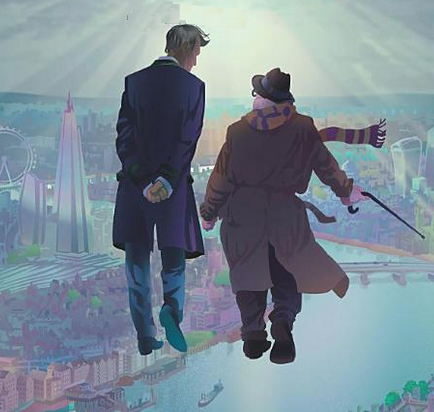
Yes, yes, Arthur Bryant died peacefully at the end of London Bridge Is Falling Down, but the old boy isn’t speaking from beyond the grave, or ectoplasmically appearing at his former landlady’s spritualist church. This delightful conceit – and I use the word in its literary sense – is Christopher Fowler (aka @Peculiar on Twitter) imagines a long conversation between Arthur and his long-time colleagues from the Peculiar Crime Unit, to put in print a kind of concordance of the wonderful quirks and hidden histories of London which underpinned the memorable series of novels featuring the two detectives.

This is not a geographical street-by-street tour, but more a recollection of bizarre events and strange legends that darts this way and that, rather like the working of Arthur’s mind. Most of the PCU team have an input with something that has taken their fancy, except (naturally) poor old Raymondo – Raymand Land, the exasperated, ineffectual and much mocked titular head of the PCU. He is given the wrong time for the meeting, and so when he arrives, everything is done and dusted. This little episode is a reminder that (imaginary) cruelty is an essential ingredient of English comedy.

The reader can dip in and out of this book pretty much taking the chapters in any order There is, quite rightly, no sense of one thing leading to another as, perhaps for the first and only time in this series, there is no need for a coherent plot. The events described have already happened – or not, as the case may be. Christopher Fowler, as an expert Londoner, is well aware that fable and legend do not need to cling too closely to probability.

For those wondering where this blissful blend of the arcane, the shocking, the macabre, the comical and the eccentric comes from, the author provides a ‘further reading’ list.

Reading list

It is right and fitting that the closing words in this book should be spoken by Artur Bryant himself:

“London.
According to the playwright Ben Jonson it was the city of bawds and roysters, claret-wine and oysters. To me it is just home, where I am on the inside looking out instead of somewhere outside looking in. It’s my city, not yours. Which is to say that I see it in a certain way that you do not, and vice-versa.
I have no fantasies involving a comatose retirement on the Isle of Wight, like poor old Raymondo. I have no intention of leaving this grubby, exhausting, maddening city.
London is like a greedy old landlady. She didn’t ask me to come, didn’t invite me to stay and won’t miss me when I’ve left.
And that suits me fine.”

Bryant and May’s Peculiar London is published by Doubleday, and is available now.

For more about Christopher Fowler and the Bryant & May novels, click the image below.

Link

A GEOGRAPHY OF HORROR . . . Between the covers

James header

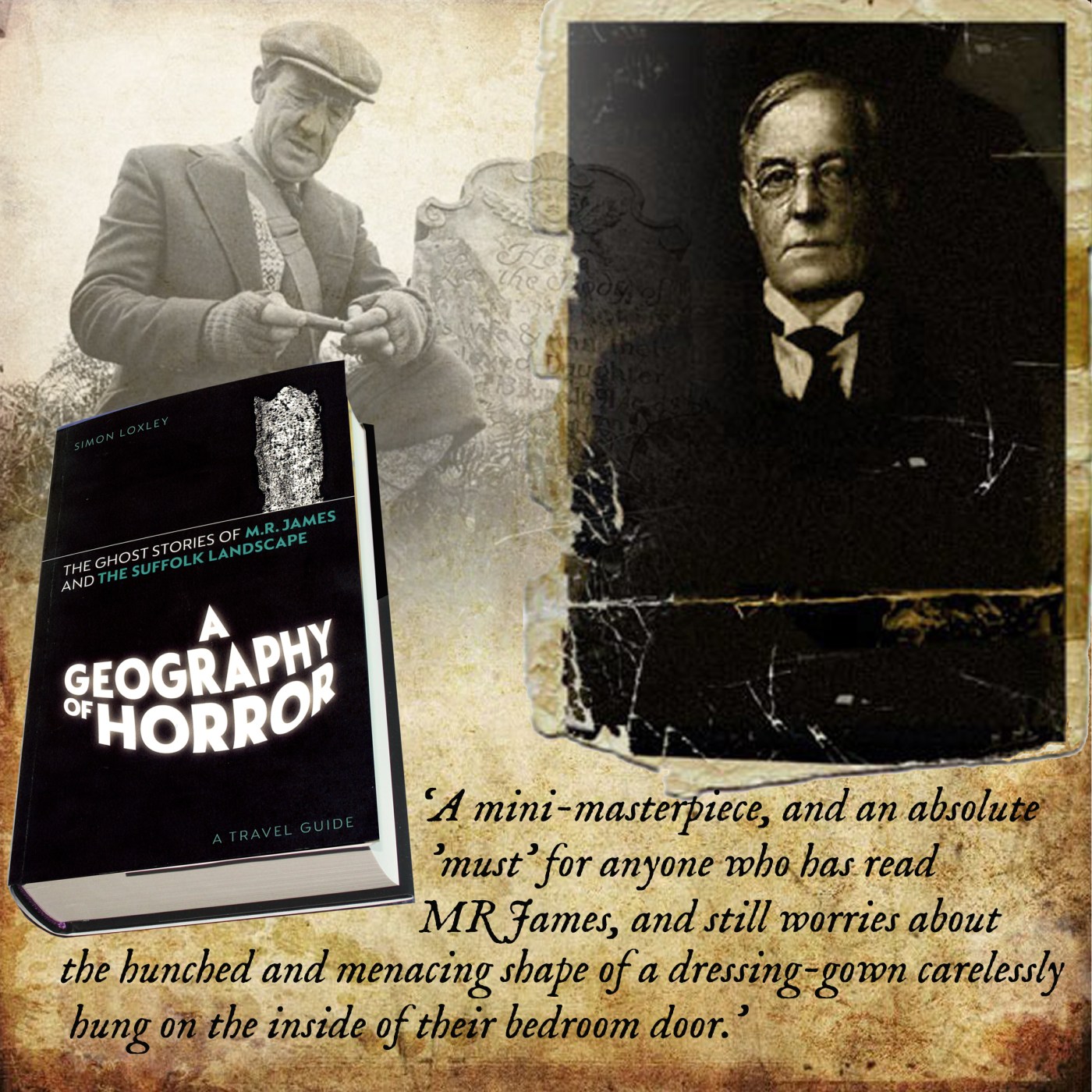
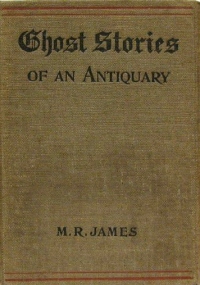
Ghost_stories_of_an_antiquaryWho was the most celebrated writer of ghost stories? The genre doesn’t lend itself particularly well to longer book form, and even classics like Henry James’s The Turn of The Screw and Susan Hill’s The Woman In Black are relatively slim volumes. The master of the shorter version and, in my view, a man who unrivalled in the art of chilling the spine, was MR James. Montague Rhodes James was born in Kent in 1862, and in his main professional life he became a renowned scholar, medievalist and academic, serving as Provost of King’s College Cambridge, and Provost of Eton. His first collection of ghost stories, Ghost Stories of an Antiquary, was published in 1904 and has, as far as I am aware, never been out of print.
Screen Shot 2022-03-24 at 18.57.29

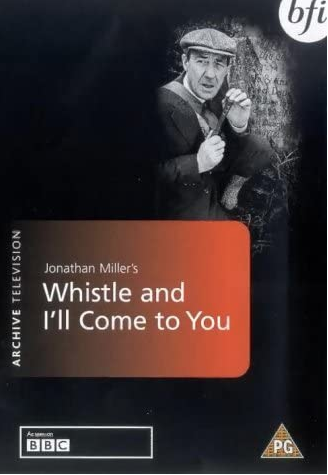
From the age of three, until he was in his forties, James’s  home was in Suffolk, and several of his most chilling tales were set in the county. Now, Simon Loxley, himself a Suffolk man who is a celebrated expert on typography, has written a book which examines James’s links with the county and the places which he is convinced that James had in his mind as the settings for such stories as Whistle and I’ll Come to You. Older readers of this review may remember a magnificent television adaptation of this story which was first shown in 1968, starring the great MIchael Hordern as the sceptical academic who, after rubbishing the very existence of a supernatural world, has a very nasty encounter with bed-sheets in his hotel room. A DVD is available (at a price), but as with so many other things, it’s on YouTube.

Simon Loxley’s book is, among other things, a superb piece of research. He has walked every inch of his territory, and has read every word that James wrote. He notes the distinctive Englishness of the characters and , in particular, their emotional restraint:

“They are people who would not normally foist their life story upon you at a moment’s notice. They have no-one close to confide in, so they carry the story with them, unspoken until, perhaps underv the encouragement of a social setting, they tell. That fits in with the perceived British national character of the period. The sanity and the solidarity of the characters is emphasised.”

Here, Loxley hits the button which reveals why the  MR James stories are so believable. The people who experience the unpleasant, dusty, scuttling – and long since dead – entities that still terrify us today, are not gullible fools, nor are they emotionally fragile. Instead they are solid, pragmatic ‘tweedy types’ who live their lives based on evidence and things empirical.

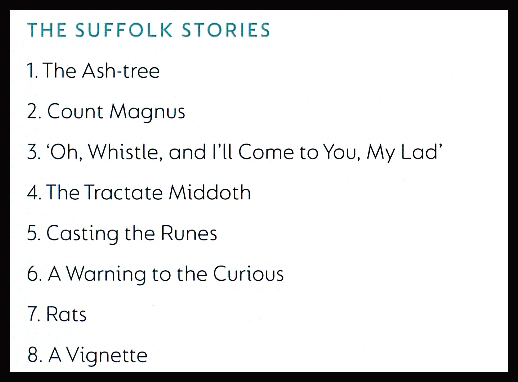
The book is lavishly illustrated with maps and photographs, and the author examines James as a man, as a writer, and also looks at his contemporaries, predecessors in the genre, and those he influenced. Loxley is also a perceptive critic and does not shy away from identifying the stories which he believes are weaker than James at his very best. Anyone who lives in Suffolk, or plans a visit. will find  particularly fascinating the  examination of the eight stories that are precisely linked with locations within the county.

Suffolk

The first of these, The Ash Tree, remains embedded in the darkest corner of my imagination, and has been there ever since I first read the story in my teens. I am an incurable arachnaphobe and, despite having lived for several years in Australia, where daily acquaintance with the eight-legged devils was commonplace, the very though of hand-sized versions of the worst thing that God ever created leaping onto your face as you lie asleep still makes me sweat with terror. MR James may not have shared my visceral fear of these creatures. but he certainly knew that his words would strike terror into the minds of people who see spiders as the ultimate evil.

A Geography of Horror is a mini-masterpiece, and an absolute ‘must’ for anyone who has read MR James, and, like the unfortunate Professor Parkins. still worries about the hunched and menacing shape of a dressing-gown carelessly hung on the inside of their bedroom door. To buy a copy, the best thing is to go to Simon Loxley’s website, or contact him on sloxley@btinternet.com.

SNOW AND STEEL . . . Between the covers

sas009

I thought it was high time I included some non-fiction reviews. I am a keen (amateur) military historian, so I am happy to start this little adventure into the unknown by reviewing a superb history, written by Peter Caddick-Adams, of one of the bloodiest battles of WW2. I was going to use the word ‘decisive’, but that would be inappropriate as it suggests that the outcome of the Battle of The Bulge, which began in December 1944. was a pivotal point in the war. It wasn’t. Hitler’s war was already lost, mainly thanks his disastrous attempt to invade Russia.

SAS coverBy the autumn of 1944, German forces had been pushed out of France and were being systematically overwhelmed by the Red Army in the east. The allies had control of the Channel coast, but the Germans had effectively wrecked the French ports. Antwerp, however, had been taken more or less intact, and when the Germans had been removed from their strong-points controlling the estuary of the River Scheldt, the Belgian port became a massive conduit for the arrival of men, machines and supplies for the Allies.

Hitler believed that if he could reach Antwerp and choke the Allies’ massive superiority in materiel, he could somehow wrench victory from the jaws of defeat. Caddick-Adams tells a tale as tense and addictive as any murder mystery. Let’s look at the three main ingredients of such tales:

Motive; in the east, the Russians were just too many, too implacable, and too powerful, so Hitler needed a win – somewhere, anywhere.

Opportunity; the largely American forces in the Ardennes area were a mixture of battle-hardened veterans who has stormed the Normandy beaches on 6th June, and more callow units. Some had been battered and bloodied by the savage fighting in the Hurtgen Forest earlier that year. For a first hand account of that battle seen through the eyes of JD Salinger, click this link. None of these American units were expecting anything other than a steady but remorseless slog eastwards until they crossed the Rhine, until they were able to beard the Fuhrer in his den.

Means? Aye, there’s the rub.  Caddick-Adams explains that the cream of the German army had already been wiped out on the undulating fields of Normandy and bleaker killing grounds of East Prussia. The Werhmacht – comprising its three branches of land, sea and air forces – was on its uppers. To boost the forces attempting to storm their way across Belgium and recapture Antwerp, navy men from the Kriegsmarine and ground-crew from the Luftwaffe were given a helmet and a gun, and pitched against American forces.

Screen Shot 2022-01-01 at 09.41.39It is one of the great paradoxes of WW2 that on the ground, at least, the Germans had the best guns, the best artillery and the best tanks. The problem was that although the formidable Panzers were easily able to overcome the relatively underpowered Sherman tanks used by the allies, the German vehicles were high maintenance and, some would say, over-engineered. The ubiquitous Shermans were rolling off the production lines in their thousands, while the formidable Tigers and Panthers – when they developed a fault – were fiendishly difficult to repair or cannibalise. Caddick-Adams (right) also reminds us how well-fed and supplied the American GIs were compared with their German foes. In one particularly eloquent passage, he tells us of the utter joy felt by a unit of Volksgrenadiers when they seized a supply of American rations. When their own kitchen unit eventually reached their position, the cooks and their containers of watery stew were given very short shrift.

Snow and Steel covers ground familiar to many amateur historians – the Malmedy Massacre, the heroic defence of Bastogne, and Hitler’s manic distrust of his generals, amplified by the Stauffenberg plot. The eventual outcome of this battle is a matter of history so, although his narrative is as good as any found in contemporary thrillers of mysteries, Caddick-Adams knows we expect no surprises. What he gives us, however, is what used to be called (in the age of vinyl) a double A-side. We have a brilliant, methodical and comprehensive account of a battle where we get to see both the strategic and tactical implications of a military campaign. Flip the metaphorical record over, and we have a vivid account of a battle as seen by men who were there, told in their own words, and thus made even more chilling through its immediacy. Snow and Steel is published by Arrow and is available here.

Blog at WordPress.com.

Up ↑