Search

fullybooked2017

Author

fullybooked2017

A retired Assistant Head Teacher, mad keen on guitars. Four grown-up sons, two delightful grandchildren. Enjoys shooting at targets, not living things. Determined not to go gently into that good night.

SLOW MOTION GHOSTS . . .Between the covers

Noon header

England. 11th April 1981. While the music charts bubble with the froth of Bucks Fizz, Shakin’ Stevens, Adam and the Ants and The Nolans, London – at least the place south of the river called Brixton – is aflame with violence, racial hatred and mayhem. As the police struggle to control the streets a middle aged Detective Inspector called Henry Hobbes is bused in to help. No matter that Hobbes – and many other senior detectives likewise – is a stranger to riot control, it is a case of all hands on deck.
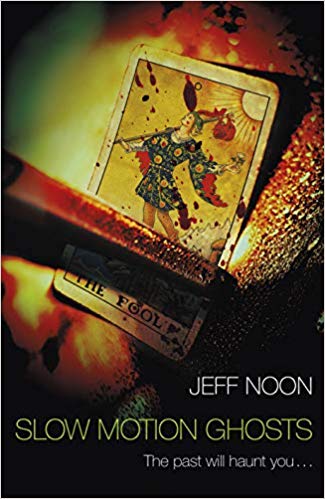
SMG coverLater that year, with Brixton quieter, despite other English towns and cities erupting in copycat anger, Hobbes has become embroiled in a bitter internal dispute. A fellow copper, Charlie Jenkes (who rescued Hobbs from the mob on that fateful April night) after being indicted for savagely beating a black suspect, has taken his own life. And the officer who testified to Jenkes’s violence? Henry Hobbes, who, with that single act of honesty, is branded as a Judas by his own colleagues.

But now Hobbes has something to distract him from his disintegrating family life and his pariah status among fellow officers. A young man is found dead, wth his body gruesomely mutilated. Brendon Clarke was a minor celebrity, the lead singer with an aspiring band called Monsoon Monsoon, whose chief claim to fame is that they play the music of another dead rockstar – Lucas Bell. Bell’s celebrity rests on hs apparent suicide, his angst-ridden persona, and, most of all, his adoption of the identity of King Lost, a charismatic figure with a gruesome mask.

As Hobbes tries to unpick the complex knot which ties together the identities of Brendan Clarke and Lucas Bell, he discovers that the King Lost legend has its roots in a bizarre fantasy world created by a group of teenagers in the Sussex town of Hastings. With more murders being linked to the world of King Lost, Hobbes is drawn into an investigation which exposes child abuse, blackmail, madness and revenge.

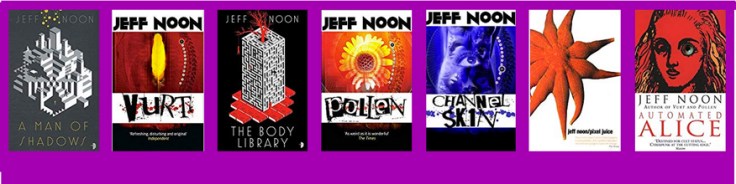
Genre compartmentalising books is not always helpful, but it is fair to say that Noon’s previous novels have used tropes from science fiction, psychedelia and dystopian fantasy. Slow Motion Ghosts adopts conventions of the police procedural, but is more adventurous, asks more questions and has a distinctly noir-ish feel. Noon uses his knowledge of the music scene to bore down into the strange phenomenon of the celebrity cult, and the lengths to which worshippers of dead heroes are prepared to go in order to keep their fantasies alive.

Jeff Noon was born in Droylsden in 1957. He was trained in the visual arts, and was musically active on the punk scene before starting to write plays for the theatre. His first novel, Vurt, was published in 1993 and went on to win the Arthur C. Clarke Award. He reviews crime fiction for The Spectator.

Slow Motion Ghosts is published by Doubleday, and is out now.
Noon footer

ONE MORE LIE . . . Between the covers

Guns008

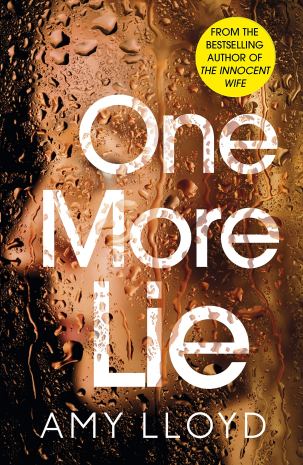
Fortunately, the instances of children who kill other children are rare. The misdeeds of Robert Thompson and Jon Venables, however, are the stuff of nightmares, as is the killing of Martin Brown and Brian Howe by Mary Bell. What happens to these killers when they have served their time and are released into the community, however, is just as controversial. Lesley Kara tackled the subject in her recent novel The Rumour, and now Welsh author Amy Lloyd brings us her take on the issue with One More Lie.

91nOv4RUgiLTwo children, Sean and Lilly, murder a third child, Luke – disabled physically and mentally. In a case that whips up a storm of public revulsion, both are sentenced to long prison terms. Eventually, both are released on licence subject to supervision. Lilly is now Charlotte, ankle-tagged and nervous about a new world full of strange things that never existed when she lost her liberty all those years ago.

The structure of One More Lie is crucial to its impact. The chapters are either Her:Then (the young Lilly), Her:Now (Lilly as Charlotte) or Him:Now (the present day Sean)There is no third party, no impartial observer, no narrator whose words we know we can trust. As Charlotte picks her way through the minefield of her new life, desperate to preserve her false identity, plagued by a potential new boyfriend and anxious about her relationship with her psychologist Dr Isherwood, one of the mines explodes beneath her. She is contacted by Sean. Sean, her partner in the terrible crime which broke her childhood into pieces. Sean, the little anarchist who broke all the rules and made her laugh.

The adult Sean is living a life straight from the pages of Trainspotting. Dealing drugs, hacking computers, existing in a grimy flat and generally living down to the kind of future predicted for him by the exasperated teachers who knew him before he became front page news. Will his reunion with Lilly/Charlotte end in disaster or redemption?

Amy Lloyd asks us to make two crucial judgments as the narrative unfolds. The first is to decide if Lilly’s childhood recollections – Her:Then – are reliable. Do we trust her when she tells us (and the police) that she has no recollection of the crucial last hour of Luke’s life? Is she shutting it out as a defence, or has the trauma genuinely taken hold of her memory?

amy-lloyd-by-laura-lewisSecondly, and inevitably, we are drawn into acting as judge and jury about the complex matter of culpability for Luke’s death. Remember, there is no Him:Then. We only see the young Sean through Lilly’s eyes and it seems, for a time at least, that he is the dangerous one, the wild card, the ten year-old Dark Angel, if you will. For sure, he is not neglected in the sense that his home life attracts the attention of Children’s Services, even though the family routine is haphazard. By contrast, Lilly’s life with her bruised and beaten mother ends in tragedy, although once she has moved in with her aunt she receives love, compassion and care. But is she already too badly damaged from the nightmare of her mother’s death for the new life to heal the wounds?

I finished the book in two sessions – it is that gripping. No-one reads psychological thrillers for an easy ride, and you certainly won’t find one here. There is cruelty a-plenty, both physical and mental. There is heartbreak and the Her:Then chapters speak volumes about Innocence Lost. William Blake believed that innocence could be regained, but to discover if Amy Lloyd (above right) shares the poet’s optimism you will have to read the book yourself. One More Lie is published by Century and is already available in Kindle. The hardback version will be out on 4th April.


My review of Amy Lloyd’s debut novel The Innocent Wife is here.

COVER REVEAL . . . The Comedy Club Mystery

CCM header

pbI have become a great fan of the Crampton of the Chronicle mysteries. Despite having multifarious murders and diverse dirty deeds, they are breezy, funny, beautifully written and they have a definite feel-good factor. Peter Bartram (left) is an old newspaper hand himself, and the background of a 1960s newsroom in a provincial newspaper is as authentic as it can get. Colin Crampton’s latest journey into the criminal underworld of Brighton is The Comedy Club Mystery. The cover blurb tells us:
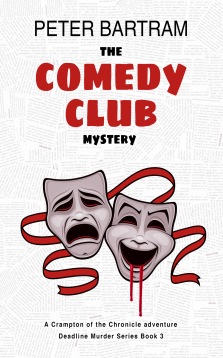
ComClub“When theatrical agent Daniel Bernstein sues the Evening Chronicle for libel, crime reporter Colin Crampton is called in to sort out the problem.
 But trouble escalates when Bernstein turns up murdered. Colin discovers that any of five comedians competing for the chance to appear on a top TV show could be behind the killing.

 As Colin and his feisty girlfriend Shirley Goldsmith investigate, they encounter a cast of colourful characters – identical twin gangsters, an Irishman who lives underground, and a failed magician’s assistant.

 And it’s not long before their own lives are in peril. Join Colin and Shirley for a rollercoaster of an adventure in Swinging Sixties England – where the laughs are never far from the action.”

The story will be published on 24th May and there will, of course, be a full review in due course, plus news of a Blog Tour and other goodies. In the meantime, you can check out why I am so fond of the series by clicking on the image below.

crampyon0511

PAST TIMES – OLD CRIMES . . . The CALLAN novels of James Mitchell (part 1)

old paper or parchment

James Mitchell (1926 -2002)
held a number of jobs, including actor, teacher and journalist, before his first novel was published in the mid ‘fifties. Between 1964 and 1969 (as James Munro)  he wrote four well-received thrillers featuring “John Craig of Department K, British Secret Service, whose activities involve jobs too dangerous – or too dirty – for anyone else to handle.”.  It’s unsurprising that Mitchell would wish to adapt a Craig-like character for a television audience.

A Magnum for Schneider (1969)

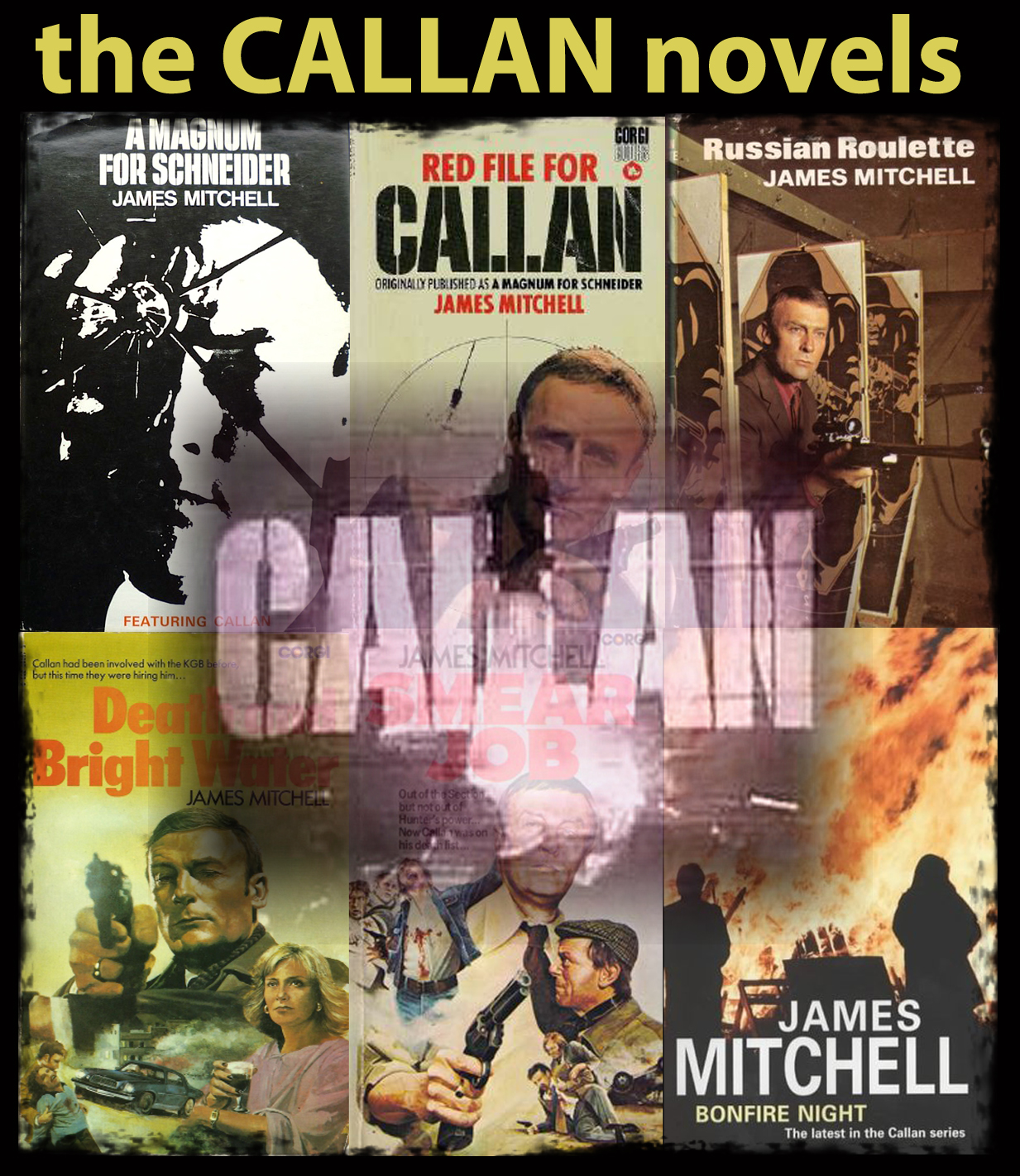
Mitchell_Callan_SchneiderThe first Callan novel, and perhaps the locus classicus of all Callan plots, on page and screen:  A disillusioned Callan has left the Section  and is living and working in reduced circumstances, until “persuaded” by Hunter to return and carry out one more job. The target is Herr Schneider who, once Callan knows more of him, doesn’t seem to be as black as he’s painted…
James Mitchell certainly put this plot to good use. It began life as a one-off episode of Armchair Theatre (1967), which in turn led to the making of the first Callan television series, later that year.
Now, in 1969, it formed the basis of the first Callan novel. This is no quick cash-in book on the back of a TV success.  Considerably expanded from the tv play, the novel has greater depth and characterisation, and it benefits for being less studio bound.
RFFC
A paperback edition followed in 1971
, re-titled Red File for Callan.  This was much reprinted, as by now the TV series, with the massive assistance of Edward Woodward in the title role, had hit its stride.
Then in 1974, after the TV series had ended, there was a feature film. Once more, the same plot and characters were used, but the film (perhaps for copyright reasons) relied more on the novel than on the Armchair Theatre script. This time the movie tie-in paperback was simply re-titled Callan. If there’s ever a Callan: Rebooted, this is the plot they’ll return to.
Callan movie

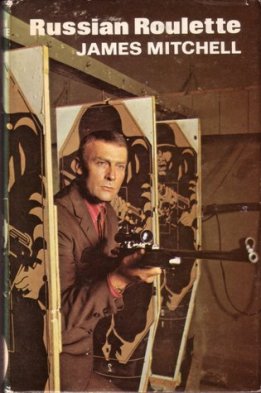
Russian Roulette (1973)

RRAlthough published in 1973 this book makes no reference to the events of high drama with which the final TV series concluded a year earlier. Here, Callan is still settled in the Section and all the supporting characters are in place.

The premise, it must be said, is preposterous.  The KGB have captured the Section’s top man in Russia.  They will return him unharmed if Hunter allows three of their operatives to come to London and attempt to kill Callan, who is to be denied any weapons. Hunter agrees. And the Russians have a big dog. Oh, and Callan’s eyes are playing up; he must attend a doctor’s for drops every few days while awaiting an operation to save his sight.
However, because of the quality of the writing, disbelief is soon suspended.    Relatively short, at 200 pages, all the action is splendidly economical and convincing.    This is a first class thriller and James Mitchell deservedly received his best reviews for this book.
The story ends with Callan and Lonely toasting each other’s survival, and with Callan vowing never to return to work for the Section….

© Stuart Radmore 2019. To be concluded

METROPOLIS . . . Between the covers

Metro header

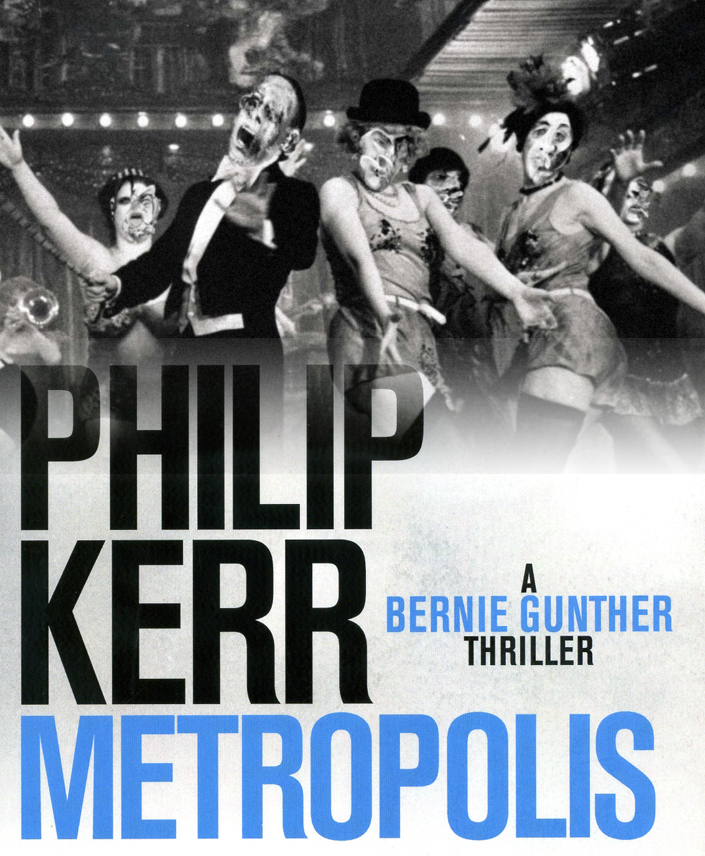
Metro1012First up, Metropolis is a bloody good detective story. Philip Kerr gives us a credible copper, he lets us see the same clues and evidence that the central character sees and, like all the best writers do, he throws a few false trails in our path and encourages us to follow them. We are in Berlin in the late 1920s. A decade after the German army was defeated on the battlefield and its political leaders presided over a disintegrating home front, some things are beginning to return to normal. Yes, there are crippled ex-soldiers on the streets selling bootlaces and matches, and there are clubs in the city where the determined thrill-seeker can indulge every sexual vice known to man – and a few practices that surely have their origin in hell. The bars, restaurants and cafes of Berlin are buzzing with talk of a new political party, but this is Berlin, and Berliners are much too sophisticated and cynical to do anything other than mock the ridiculous rhetoric coming from the National Socialists. Besides, most of them are Bavarians and since when did a Bavarian have either wit, word or worth?
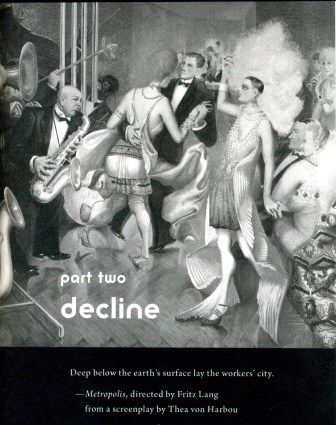
The copper is, of course, Bernie Gunther. Enthusiasts have followed his career from its infancy in the Berlin kripo of the Weimar Republic, through the dark days of World War II (accompanied by such luminaries as Reinhard Heydrich and Joseph Goebbels.) We have held our breath in the 1950s as Gunther tries to elude hunters who, mistakenly, have his name on a list of Nazi war criminals. We have been in the same rooms as Eva Peron and William Somerset-Maugham. Our man has led us a merry dance through mainland Europe, Cuba and Argentina but, sadly:

“Our revels now are ended. These our actors,
As I foretold you, were all spirits and
Are melted into air, into thin air:
And, like the baseless fabric of this vision,
The cloud-capp’d towers, the gorgeous palaces,
The solemn temples, the great globe itself,
Yea, all which it inherit, shall dissolve
And, like this insubstantial pageant faded,
Leave not a rack behind. We are such stuff
As dreams are made on, and our little life
Is rounded with a sleep.”

Metro2013Metropolis sees Gunther in pursuit of a Berlin Jack The Ripper who is certainly “down on whores.” Four prostitutes are killed and scalped, but when the fifth girl to die is the daughter of a well-connected city mobster, her death is a game-changer, and Gunther suddenly has a whole new world of information and inside knowledge at his fingertips. He is drawn into another series of killings, this time the shooting of disabled war veterans. Are the two sets of murders connected? When the police receive gloating letters, apparently from the perpetrator, does it mean that someone from the emergent extreme right wing of politics is, as they might put it, “cleaning up the streets”?

As ever in the Gunther novels, we meet real people from the period, exquisitely researched and re-imaged by the author. As well as the actual senior police officers of the Berlin Kriminalpolizei, Kerr introduces us to the artists Otto Dix and George Grosz. Gunther rubs shoulders with theatre folk too, but he is no fan of the singing of Lotte Lenya:

“..the mezzo-soprano could hold a note no better than I could hang on to a hot poker. She was plain, too – I caught sight of her onstage as I made my way up to one of the dressing rooms – one of those thin, pale-faced, red-haired Berlin girls who remind me of a safety match.”

berlin062

On the bright side, Gunther’s trip to The Neues Theater (above) is not entirely wasted, as he meets Brigitte Mölbling. He sees:

“..an Amazonian blonde whose perfectly proportioned windswept head lookd like the mascot on the hood of a fast car; she had a cool smile, a strong nose, and eye-brows that were so perectly drawn they might have been put here by Raphael or Titian.”

PKMölbling helps Gunther disguise himself as one of the disabled ex-soldiers, as he reluctantly accepts the role in order to attract the killer who, in his letters to the cops, signs himself Dr. Gnadenschuss. Gunther’s trap eventually draws forth the predator, but not in the way either he or his bosses might have anticipated.

Philip Kerr died on 23rd March 2018 and Metropolis is his final work. Of all the many portraits of Bernie Gunther, which one does he leave us with? Our man is young. He is handsome. His four years in the trenches were brutal, but he survived and he is resilient. The cynicism? If new-born babies feel anything other than hungry or full, cold or warm, wet or dry, then perhaps the infant Bernhard ruefully first opened his blue eyes and gazed on a world which he already knew was full of imperfections and disappointment. But let Bernie have the final word. The entrancing Brigitte ends their relationship, unable to become close to a man who has seen – and will continue to see – so much horror and blood:

“I burned her letter. It wasn’t as if I hadn’t had one before, and I suppose that before my time is up, I’ll have others. Never forget, always replace. That’s the first rule of human relationships. Moving on: this is the important part.”

Metropolis is published by Quercus, and is out on 4th April.

Click the link for more opinion and information about the Bernie Gunther series.

Metro3014

THE LONELY HOUR . . . Between the covers

Lonely header

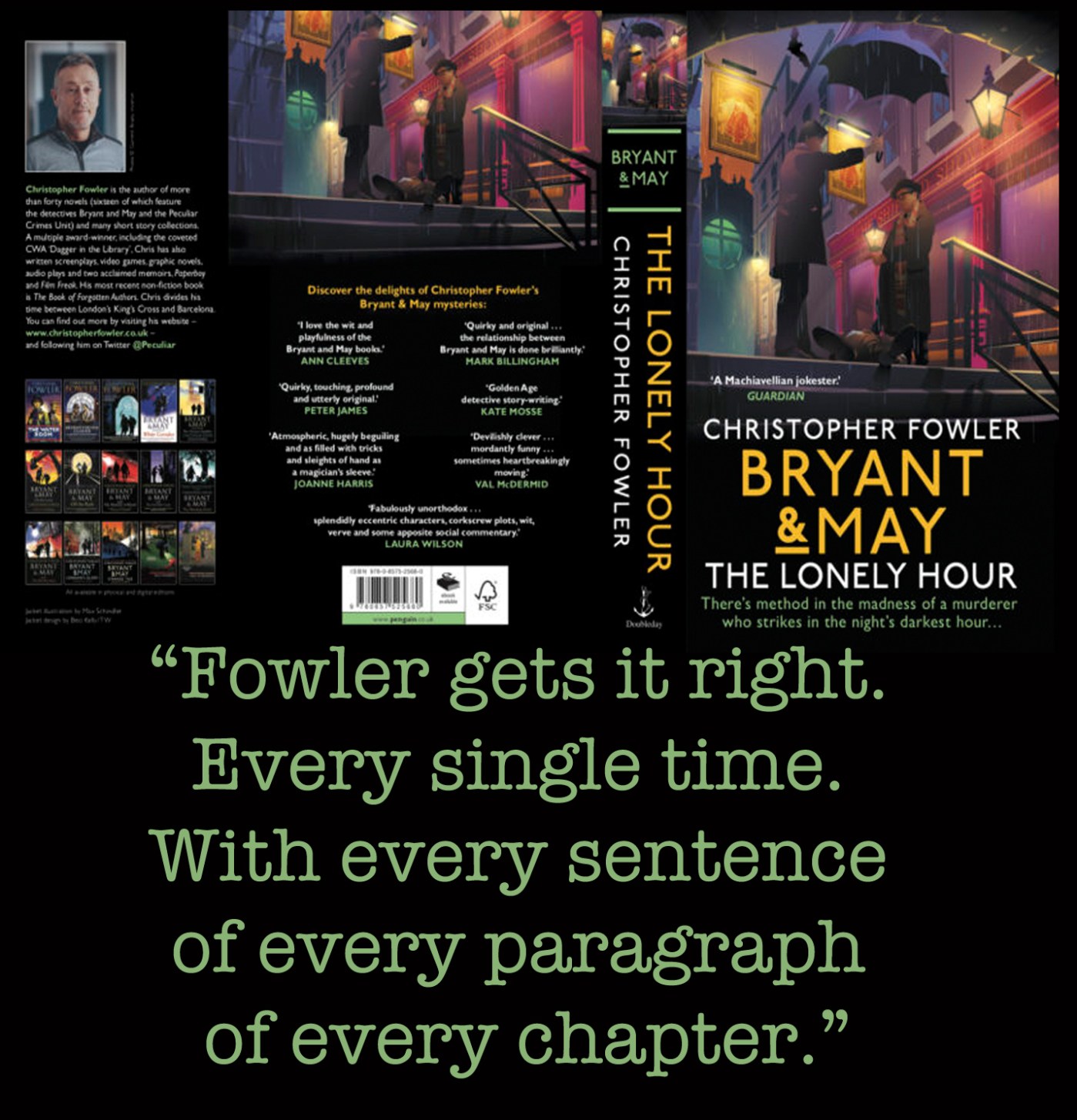
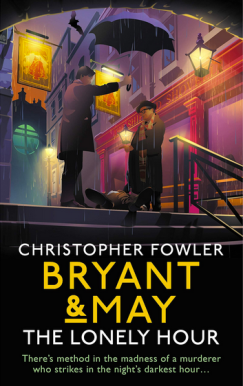
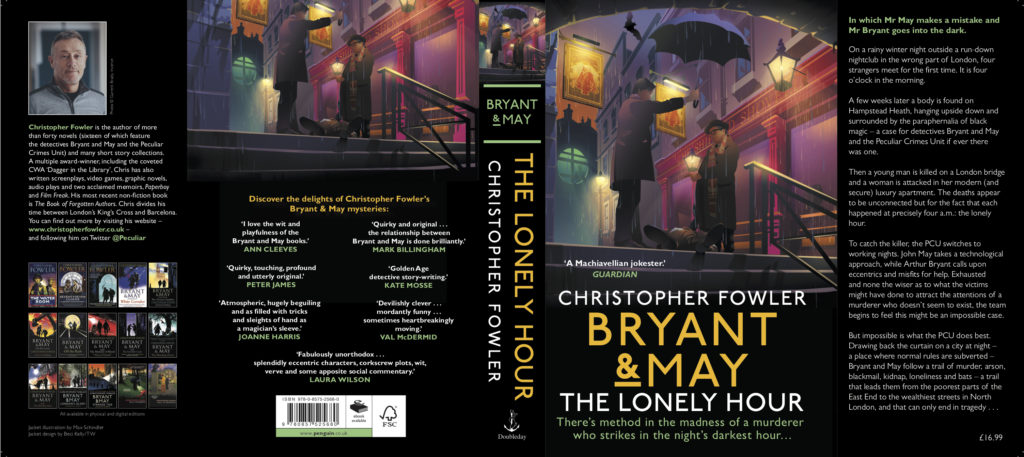
The impossibly geriatric constabulary codgers Arthur Bryant and John May return for another journey into London’s darkside in pursuit of those who kill. This time, the killer appears to be armed with a trocar – an obscure but deadly surgical instrument originally intended to penetrate the body allowing gases or fluid to escape. From the undergrowth of a copse on Hampstead Heath, and the unforgiving undertow of the Thames, via an exclusive multi-story apartment complex, to the pedestrian walkway of a Thames bridge, the victims seems to have nothing in common except the time of their demise – the deadly hour of 4.00 am.

Screen Shot 2019-03-22 at 19.10.55Bryant and May – and the rest of the Peculiar Crimes Unit – have been threatened with closure before, but this time their impatient and disapproving police bosses mean business. The PCU, both collectively and individually flounder around trying to work out what connects the corpses, and who is expertly wielding the trocar. Like Andrew Marvell’s ‘Time’s Winged Chariot’, the accountants and political schemers of the Metropolitan Police are ‘hurrying near’, and failure to catch this killer will certainly mean that the shambolic HQ of the Peculiar Crimes Unit on Caledonian Road will soon be in need of new tenants.

Don’t be misled by the jokes, delightful cultural references, and Arthur’s frequent put-downs of the PCU’s hapless boss, most of which go over Raymond Land’s head but, fortunately, not ours. Physicists will probably say that their world has different rules, but in literature light can only exist relative to darkness, and Fowler does not allow the chiffon gaiety within the Peculiar Crimes Unit to disguise a dystopian London woven from a much darker thread. He says:

“Approaching midnight, the black and grey striped concourse of King’s Cross Station remained almost as busy as it had been during the day. Some Italian students appeared to be having a picnic under the station canopy. A homeless girl ms on her knees next to a lengthy cardboard message explaining her circumstances. A Jamaican family dressed in home-made ecclesiastical vestments were warning everyone that hell awaited sinners. A phalanx of bachelorettes in tiny silver dresses, strappy shoes and bunny ears marched past, heading to their next destination like soldiers on a final tour of duty. Inside the station, tourists were still lurking round the Harry Potter trolley that had been originally set there as a joke by the station guards, then monetized when queues appeared. As flinty-eyed and mean as it had ever been, London was good at making everyone pay.”

If a better paragraph about London has been written in recent years, I have yet to read it

Fowler’s London is a place where the same streets, courtyards, alleys and highways have been walked for centuries; Roman legionaries, Norman functionaries, medieval merchants, Tudor politicians, Restoration poets, Georgian gamblers, Victorian philanthropists, Great War Tommies, and now City spivs with their dreams and nightmares spinning about in front of them on their smartphones – all have played their part in treading history down beneath their feet into a compressed and powerful seam of memory. This memory, whether they know it or not, affects the lives of those who live, work, lust, learn and – ultimately – die in London. Other writers, notably Peter Ackroyd, have been drawn to this lodestone and tapped into its power. Some authors have taken up the theme but befuddled readers with too much arcane psychogeography. Fowler gets it right. Every single time. With every sentence of every paragraph of every chapter.

Bryant is neither Mr Pastry, Charles Pooter nor Mr Bean. He is as sharp as a tack despite such running gags as his coat pockets being full of fluff covered boiled sweets long since disappeared from English shelves. If we knew no better, we might describe him as having a personality disorder somewhere on the autism spectrum, but there are precious moments in The Lonely Hour where the old man brings himself up short with the realisation that he is, most of the time, chronically selfish.

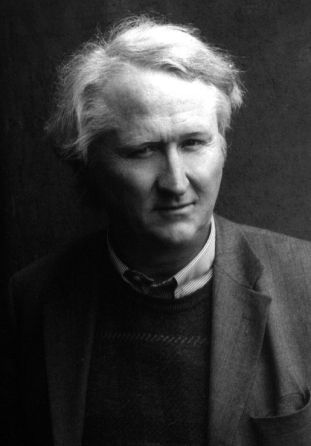
CF_Thanks to Bryant’s genius, the mystery is solved and the killer brought to justice, but these are certainly the grimmest days ever for the PCU, and as this brilliantly entertaining story reaches its conclusion, Fowler (right) slowly but irrevocably turns the tap marked Darkness to its fully open position. The Lonely Hour is published by Doubleday and is out now.
I have a beautiful hardback copy of this novel to give away. If you want to be in the prize draw, simply click this link.

COMPETITION . . . Win the new Bryant & May novel!

Comp body

Comp footer

square-twitter

ON MY SHELF . . . March 2019

OMS HEADER

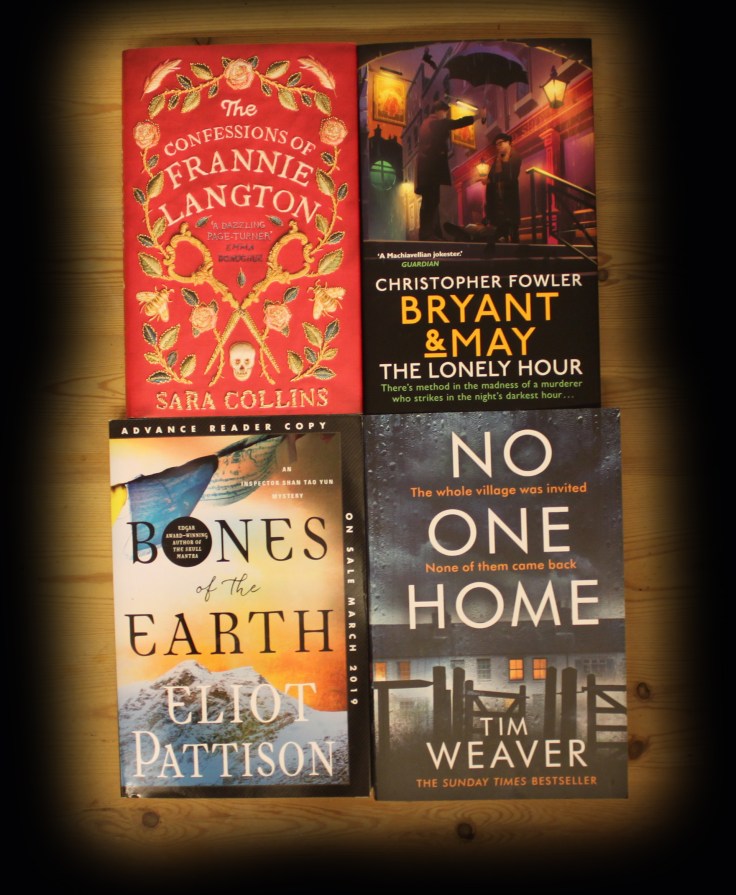
SPRING IN THE EAST OF ENGLAND has been played rather a nasty trick by the weather Gods. February fooled us with its sunshine, gentle breezes and benign temperatures. March is taking its revenge. Blossom, daffodils and narcissi are nodding gamely but only just about holding their own in the teeth of savage winds. Still, indoors is relatively calm, and with a stack of excellent new books to ponder, I think I will make it through to May. Our four authors are all on Twitter, so just click on the little birdy to see what they are all up to.

THE CONFESSIONS OF FRANNIE LANGTON by Sara Collins

Sara_Collins-7648-2-3_CREDIT_Wil_Bignal

square-twitterThis sounds as if it could be one of those bawdy recollections of a Victorian courtesan which passed for erotic literature in pre – 50 Shades days. It is, I am glad to say, nothing of the kind. It is, instead, a literary whodunnit set in early 19th century England. Then, as now, the media love an exotic criminal, no matter what crimes they may have committed. The chattering classes in the London of 1826 are, in turn, horrified and luridly curious about the defendant in a murder trial. The accused is a young woman, brought up on a slave plantation in her native Jamaica, and now she stands in the dock of the Old Bailey, charged with the murder of her employers, Mr and Mrs Benham. The indictment is sensational:

“FRANCES LANGTON, also known as Dusky Fran or Ebony Fran, is indicted for the wilful murder of GEORGE BENHAM and MARGUERITE BENHAM in that she on the 27th day of January in the year of Our Lord 1826 did feloniously and with malice aforethought assault GEORGE BENHAM and MARGUERITE BENHAM, subjects of our lord the King, in tat she did strike and stab them until they were dead, both about the upper and middle chest, their bodies having been discovered by EUSTACIA LINUX, housekeeper of Montfort Street, London.”

Frannie Langton tells her story courtesy of Sara Collins who, after a successful career as a lawyer, took a Masters degree in creative writing at Cambridge. This, her debut novel, is published by Viking/Penguin and will be available on 4th April.

THE LONELY HOUR by Christopher Fowler

square-twitterI have never written anything more eye-catching or erudite than these book reviews, so I don’t really know what real authors use (apart from sales figures) as ‘performance indicators’ for success. I use the speech marks to show that I would never normally use such examples of Management Speak, so it’s irony, OK? I imagine, though, that when you have created a central character, or in this case a duo, that is is so recognisable that it gets a bigger font than both the book title and the author’s name on the dust jacket, then maybe you have made it. Christopher Fowler’s ageless pair of investigators are, in the nicest possible way, an in-joke before the first page is turned. Fowler is second to none in his ability to use obscure British brand names as he puns and funs his way through what are the most irresistibly English novels of our time, and his two constabulary codgers are, for younger readers, named after a brand of British matches which were first sold in the mid nineteenth century. Their latest adventure begins, as ever, in London, with a mysterious death which may be connected to black magic. The book blurb promises “murder, arson, kidnap, blackmail ….. and bats.” Expect brilliant use of language, an eccentric and bewildering plot with a breathtaking resolution  – and many a good joke. The Lonely Hour is out on 21st March and is published by Doubleday. The more perceptive among you might infer that I am a fan of Christopher Fowler. To find out more about his books, click on the gentleman’s image below, and all will be revealed.

CF_

BONES OF THE EARTH by Eliot Pattison

square-twitterEliot Pattison is an American writer who has written a superb series of novels, of which this the tenth, featuring a Chinese detective, Inspector Shan Tao Yun, who has upset the Communist regime by his honesty and single minded integrity. Managing to escape a state firing squad he has, instead, been exiled to the wilds of Tibet where, or so his masters believe, he can do no harm. The Inspector is forced to witness the execution of a Tibetan for corruption, but he can’t shake the suspicion that he has instead witnessed a murder arranged by conspiring officials. As ever, Shan chooses the hard road, and his investigations bring him into contact with the vengeful father of a murdered American archaeologist who is determined to find justice for his dead son. Shan becomes slap dab in the middle of a deathly struggle between the mystical world of Tibetan gods and the implacable bureacrats back in Beijing. Bones Of The Earth is out on 26th March, and is published by Minotaur Books. I’ve reviewed and recommended earlier novels by Eliot Pattison, so click the image below to find out more.

pattison-2

NO ONE HOME by Tim Weaver

square-twitterIt seems like only the other day that Tim Weaver introduced us to his investigator David Raker, yet No One Home is the tenth novel in the series. Raker has, you might say, a niche talent. He finds missing people. People in whom the police have lost interest, with just their distraught wife, husband, son or daughter left to care. Raker pursues his missing folk to some of the most far-flung parts of the world, but here, the mystery begins close to home. In a baffling disappearance to rival the unsolved mystery of the Marie Celeste, Raker isn’t just chasing one elusive subject – he’s after an entire community. The nine members of a tiny hamlet sit down to eat, drink and have fun on All Hallows Eve. When the grey dawn comes, they are gone. Every single one of them. Is Raker about to unravel a breathtaking conspiracy, or will he just have to settle for corpses? You will have to be patient to read how David Raker tackles this latest challenge, as Michael Joseph will be publishing the book on 16th May. Meanwhile click on the picture below to find out a little more about how Mr R operates.

tim-weaver


OMS FOOTER

THE LEADEN HEART . . . Between the covers

TLF HEADER

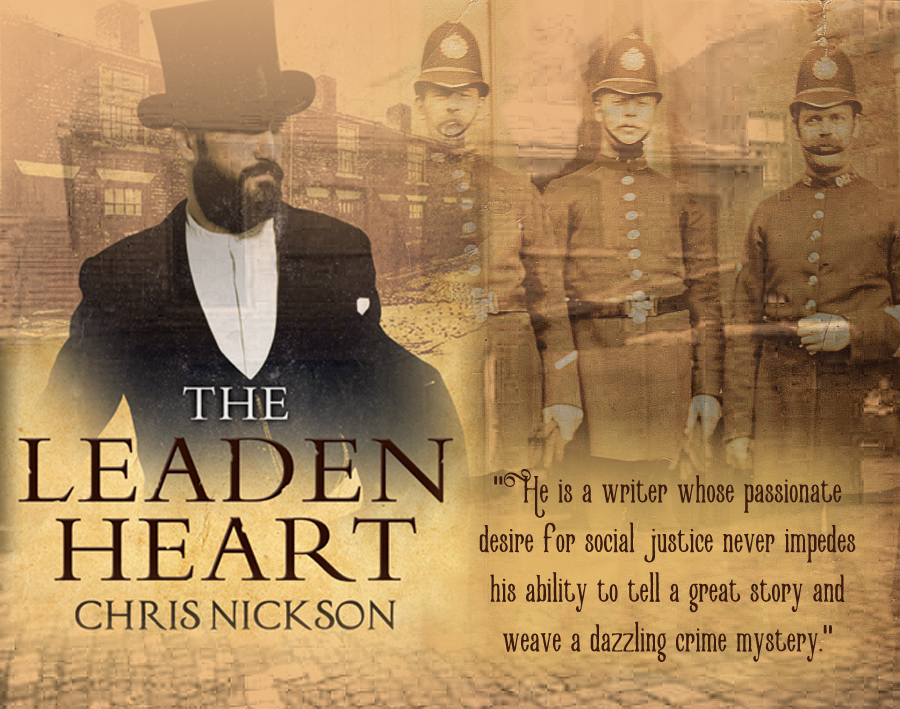
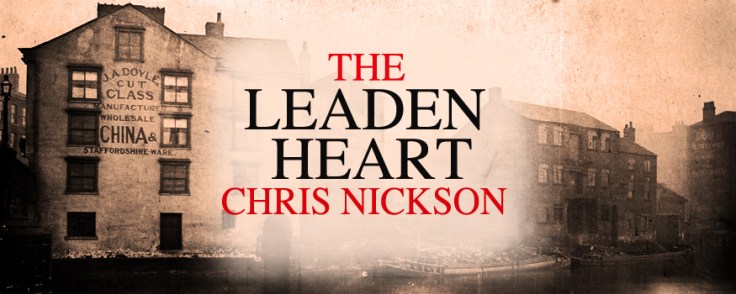
England, 1899. We are in the city of Leeds and the hottest summer in living memory is taxing the patience of even the most placid citizens. The heavy industry which has transformed the quietly prosperous Yorkshire town continues to clatter and roar, while the smoke from its thousand chimneys coats everything in grime, and the air is thick with soot. Superintendent Tom Harper of the city’s police force has mixed feelings about his recent promotion. The pile of paperwork on his desk adds to the tedium, and he wishes he could be out there on the busy streets doing what he believes to be a copper’s real job.

TLHHarper lives above a city pub, the Victoria. His wife, Annabelle, is the landlady, but she is also a fiercely determined advocate of women’s rights, and she has made waves by being elected to the local Board of Guardians, a largely male-dominated organisation which is tasked with administering what, in the dying years of Queen Victoria’s reign, passed for social care. When the brother of Harper’s one-time colleague, Billy Reed, commits suicide the death is dismissed, albeit sadly, as commonplace, but Reed believes that his brother’s death is due to something more sinister, and he asks Harper to investigate.

Charlie Reed was a small time shop-keeper, but his shop was in an area where large scale commercial developments are being planned, and his premises – along with many others – have been targeted by thugs who are possibly in the pay of two wealthy – but utterly corrupt and ruthless – city councillors. Like a dog with a bone, Harper chews and gnaws away at the shrouds of secrecy with which these men have surrounded themselves, but Charlie Reed’s tragic suicide is eclipsed by a string of savage killings committed by a deranged pair of brothers who are clearly acting at the behest of the two councillors and their lawyer.

Against a background of heartbreaking poverty, where needless deaths and bureaucracy trump common humanity at every turn, Harper eventually gets to come face to face with the killers and their suave masters, but not before his family is put in peril, and his own life comes to hang from a thread.

The most chilling aspect of The Leaden Heart is that it is brutally contemporary. Town and City councillors might, these days, be seen as bumbling and pompous local jobsworths, full of piss and wind, but relatively harmless. Nothing could be further from the truth. Now, as in 1899, such people have huge power over planning applications and budgets which are in the millions. Now, as then, the corrupt and venal live among us and will, no doubt, be putting themselves up for re-election in May 2019.

The author’s empathy with the downtrodden and exploited, and his disgust at crooked councillors and unfeeling public guardians burns like an angry flame. The most haunting image in the book is of two drowned children killed, yes, by their drunken father, but also failed by their helpless mother and the rigid workhouse system. Nickson is a writer, however, whose passionate desire for social justice never impedes his ability to tell a great story and weave a dazzling crime mystery. What is more, he does the job with minimal fuss; there’s never a wasted word, a redundant adjective or an overblown description. His prose is pared down to the bone, but always sharp and vivid. I often think Nickson would have found lasting kinship with the great campaigning journalist and author GR Simms, (incidentally an almost exact contemporary of Tom Harper) whose most celebrated work is echoed in some aspects of The Leaden Heart. The book is published by Severn House and will be out on 29th March.

Regular visitors to Fully Booked will know that I am an unashamed fan of everything Chris Nickson writes. If you click on the image of the man himself, you can read other reviews and features on his work.

chris-nickson

Blog at WordPress.com.

Up ↑