A retired Assistant Head Teacher, mad keen on guitars. Four grown-up sons, two delightful grandchildren. Enjoys shooting at targets, not living things. Determined not to go gently into that good night.
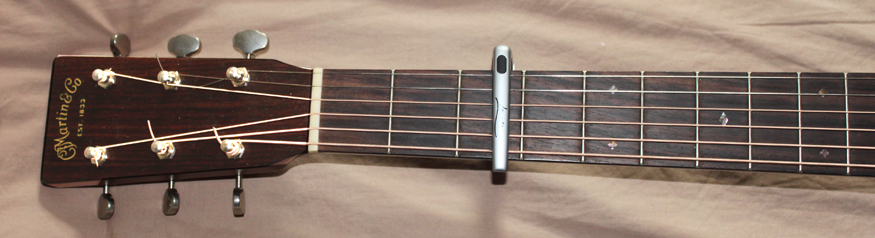
I have been tinkering with a new website for posting songs and guitar pieces for my pupils, but it is proving more trouble than it’s worth, so I might as well just shoe-horn the occasional post in here. The great Woody Guthrie once said (allegedly) that he never used more than two chords, but that he might use three sometimes if he was trying to impress a girl. I guess that was just Woody being cute, but he has a point. Sure, there are some epic songs with more chords than you can shake a stick at, but simple is often the best. Here’s a gem from Gillian Welch. OK, she slips in a little surprise with that Fm chord, but otherwise it’s just a slow and dreamy waltz tune, with some spine-tingling harmonies. Here’s the original, with my transcription below. She uses a capo on the third fret, making the song in Eb, but pitch it wherever suits your voice.
Green Handsis the tale of a young woman – Barbara Whitton – who signs up with a chum, Anne, to work with the Women’s Land Army, replacing male farm hands of fighting age who have been called up into the forces. The action sees them first on a bleak and windswept Scottish farm in the hardest of winters, where they do daily battle trying to make mangold wurzels part company with the frozen soil. The accommodation is Spartan, the rations are meagre, and the social life is non-existent. It is all too much for Anne, however, and she departs for the softer life in The Home Counties.
Anne is replaced by Pauline, who Barbara knew – and hated – at school, but Pauline’s eccentric ways and appealing naivity about the world bring a touch of humour to the narrative. Thankfully for their childblains and frozen limbs, Bee (Barbara) and Pauline are transferred to the slightly less brutal world of a farm in Northumberland. Readers looking for wartime tragedy, sudden death or other moments of high drama will find nothing here to their taste. Instead, there is the steady rhythm of rural life across the changing seasons, and in describing this visceral connection of the the farming people to the land they live and work on, Barbara Whitton echoes such writers as Thomas Hardy, Flora Thompson and Laurie Lee.
Green Hands was first published in 1943 and so, unlike most of the other reprints in this IWM series which were published after the war, there was still a war going on, and public morale to be taken into consideration. This accounts for the largely upbeat and positive tone of the story, but should not be taken as a negative criticism.had the book been filmed, it would have been in black and white, but it is to Barbara Whitton’s credit that her landscape is full of colour and nuance.
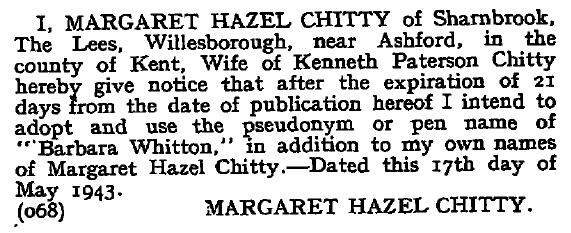
Barbara Whitton (real name Margaret Watson) was born in Newcastle-upon-Tyne in 1921. Due to study Art in Paris, her training was curtailed by the outbreak of the Second World War. Having volunteered for the Women’s Land Army (WLA) in 1939, she worked as a Land Girl for around a year before moving to the First Aid Nursing Yeomanry (FANY) and later joining the Auxiliary Territorial Service (ATS) as a driver, where she remained for the duration of the war. During her time with the ATS she met her husband Pat Chitty and they were married in 1941. After the war, she wrote a number of accounts of her wartime experience and retained an interest in art, literature and horticulture throughout her life. She died in 2016. I found this curiosity on the internet.
Most of the IWM Classics have been stories of men at arms. Plenty Under The Counterby Kathleen Hewitt (click for review) took a quizzical look at some of the less salubrious aspects of life on The Home Front, but Green Hands delivers a tale of hardship, humour and – above all – the humanity of those who kept the country going during the dark years of wartime. It is published by The Imperial War Museums and is out now.
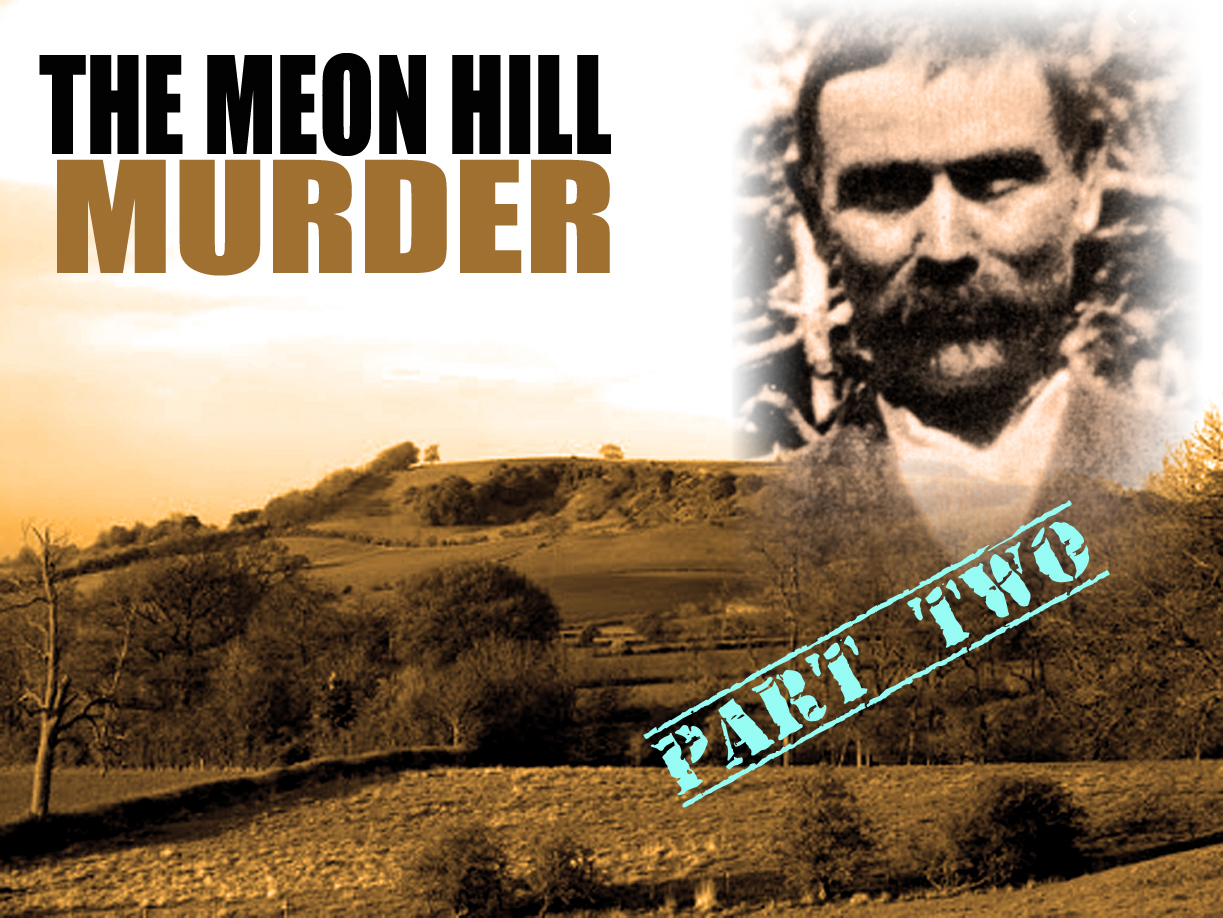
It wasn’t long after the discovery of Walton’s body, and the arrival of PC Lomasney from Long Marston, that the police involvement escalated upwards. Detective Superintendent Alec Spooner of Warwickshire Police soon realised that this was above his pay grade, and a request was made for outside help, which soon came in the celebrated form of none other than Chief Inspector Robert Fabian of Scotland Yard.
The investigations continued for several weeks. Every single household in Lower and Upper Quinton was visited. No-one had seen anything. No-one knew anything. No-one had any idea why Charles Walton had been killed. Clutching at straws, the police remembered that at Long Marston, a couple of miles to the north, there was a camp housing Italian prisoners of war. Perhaps it was a crazed foreigner who had hacked Charles Walton to death? The POWs were considered so peaceable and harmless that they were allowed to wander around the countryside, pretty much at will. That investigative spark petered out almost as quickly as it had burst into brief flame.
Potter remained the only viable suspect. His financial probity was examined. He didn’t own the farm, but just managed it for the family business. He had apparently claimed more staff wages than he had actually paid out, and there was a suspicion that he may have borrowed money from Walton, but the amounts were trifling, even if it were true.
The police investigations, despite every inch of the fatal fields being searched, came up with a big fat nothing. Fabian returned to London, defeated by a case that would feature in his memoirs in later years. DS Alec Spooner wore the case like an itch he couldn’t scratch, and it was the proverbial irritating pea underneath his mattress. For many years he returned to the village on the anniversary of the murder, hoping that someone, somehow would yield up a secret that would solve the mystery of Charles Walton’s death.
FINALLY, in THE MEON HILL MURDER Witchcraft and A Village of Secrets
PART THREE OF THIS FEATURE WILL BE PUBLISHED ON THURSDAY 24th SEPTEMBER
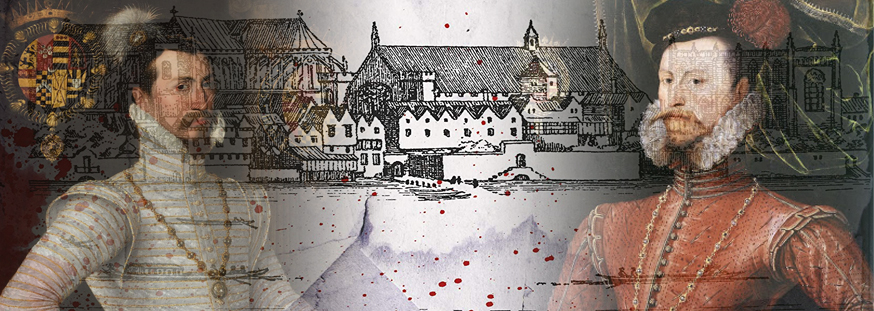
Christopher Radcliff is a Doctor of Law and he is also what sixteenth century England called an ‘intelligencer’. We might say ‘spy’, ‘secret agent’ or, at a pinch, ‘private eye.’ He is employed by two of the most powerful men in Queen Elizabeth’s service – the brothers Dudley. Robert is the Earl of Leicester and Ambrose the Earl of Warwick.
Radcliff, the creation of author AD Swanston, made his literary debut in The Incendium Plot (2018). The blurb for that book said that the country was “a powder keg of rumour, fanaticism, treachery and dissent.” Well, a few years on, and things haven’t changed a great deal. The big threat to Good Queen Bess still comes from those devious and malignant Papists, but the adherents of ‘the old religion’ have changed tack. Military conquest by Spain or France has proved ineffectual, so has a more subtle method has been chosen?
Pretty much every one of us is too young to remember a time when our currency was suspect. Yes, there have been periods of inflation (I can remember PM Harold Wilson and ‘The pound in your pocket.”) but we have never doubted that the coins in our pockets or the notes in our wallet were suspect. In February 1574, however, someone has been minting fake testons. They were, in old money, shillings, and the most common coin in circulation for everyday transactions.
The fake testons also bear the image of the bear and ragged staff (right), the emblem of the Earl of Warwick. Clearly, the forgers have a double headed plan. They intend to paralyze normal day to day trade by making shop-keepers wary of accepting coins, but they also seek to diminish the status and power of the Dudley brothers by linking them to worthless coins.
When Radcliff eventually tracks down the person behind the counterfeit coins he discovers not a Papist plot, but a personal search for revenge, fired by a dreadful betrayal and a bitterness so deep that only death can sweeten it. Without giving any more away, I can say that part of this vengeance involves, strange to relate, that most delicate and ethereal of Renaissance instruments, the lute.
Swanston has great fun immersing us in all the contrasting glory and squalor of Elizabethan England. We are led through the magnificent Holbein Gate into the Palace of Whitehall with its tapestries, panelled chambers and priceless paintings, but we also have to tread gingerly amid the horse muck (and worse) as we walk along Cheapside, and try to avoid the grasping hands of its whores and beggars.
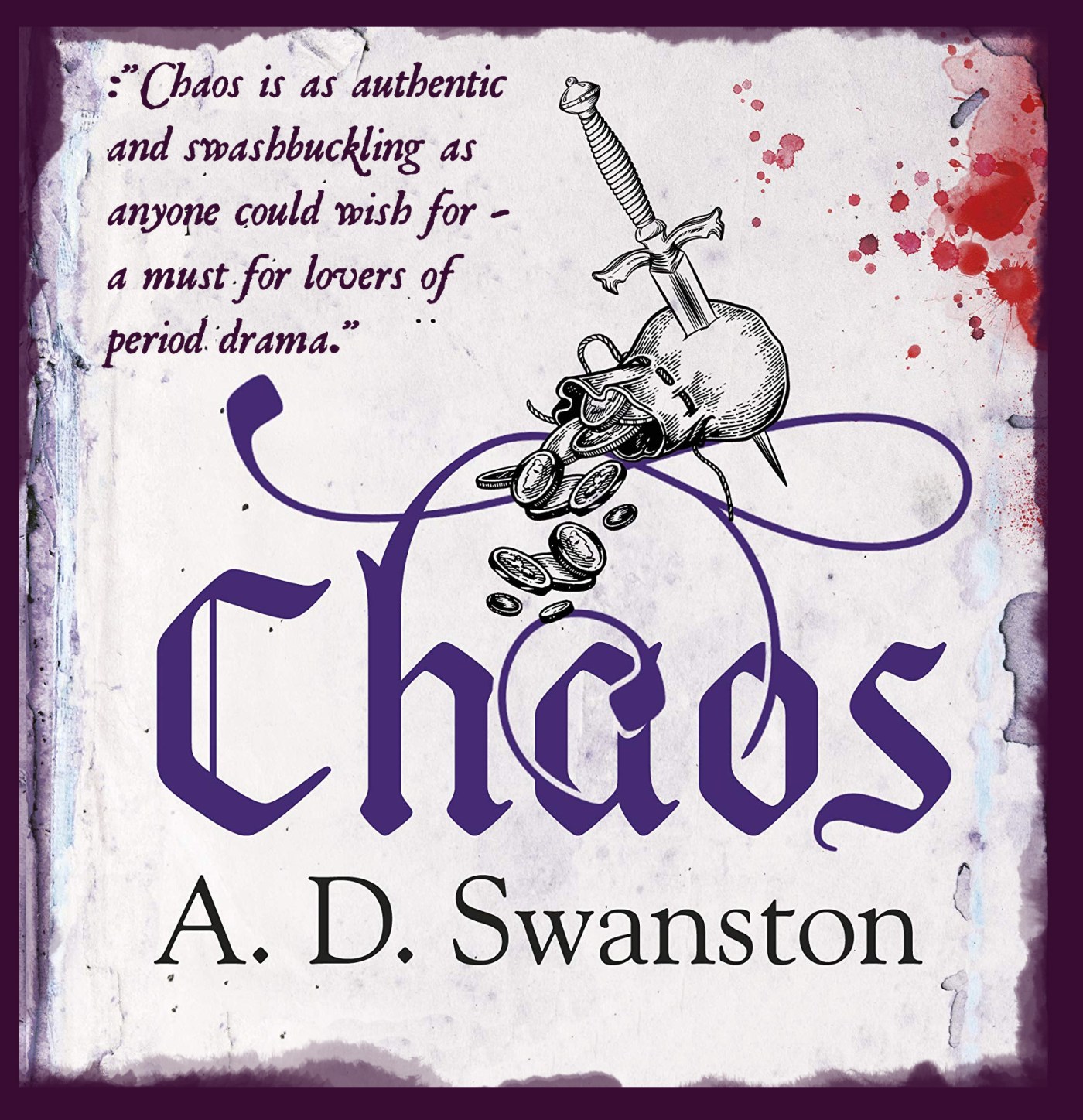
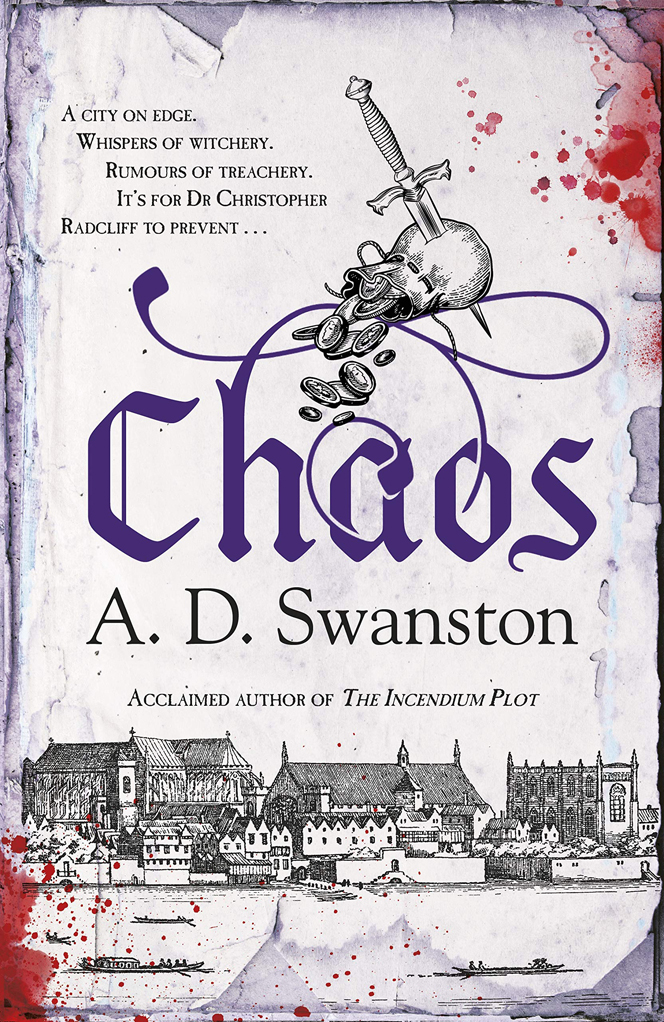
Chaos is as authentic and swashbuckling as anyone could wish for – a must for lovers of period drama. It is published by Bantam in hardback, and by Transworld Digital as a Kindle. Both formats are available now.
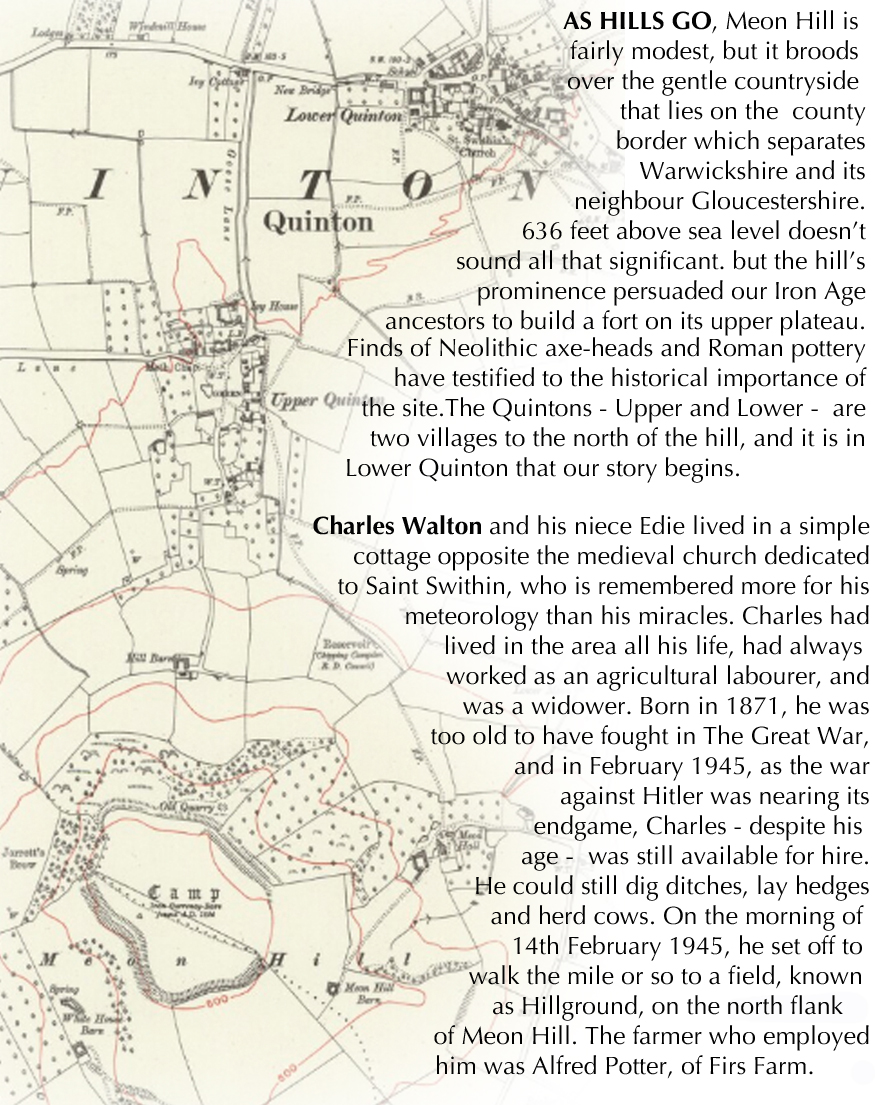
Walton was due to return home just after dark, but when there was still no sign of him at 6.00pm, Edie set out with a neighbour – Harry Beasley – to look for her uncle, calling in at Firs Farm to see if Potter knew where Charles was. Potter joined the search, and with the aid of a torch and a lantern, picked their way between the hedges and ditches of the dark fields. Before too long, they found the old man and, in the flickering light, saw a sight that would haunt them for the rest of their days.
The mutilated body of Charles Walton lay against the hedge he had been working on. Harry Beasley and Alfred Potter tried to shield Edie Walton from the terrible sight, but she had seen enough to tip her into hysteria. Beasley ran to a villager with a telephone, and the nearest police officer – PC Lomasney from Long Marston – was on the scene within fifteen minutes.
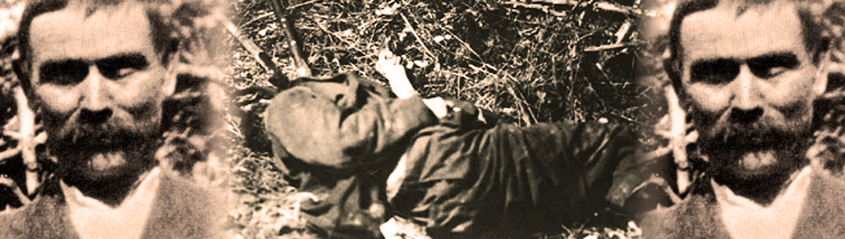
Charles Walton had met his death in the most horrific manner. He had been savagely beaten about the head with, it was proved later, his own walking stick. His throat had been slashed so savagely that his head was close to being parted from the body, and a pitchfork had been driven into the ground, its prongs either side of what was left of his neck. The old man had not gone down without a struggle, however, as the post-mortem revealed defensive wounds on his hands. These were the findings of the pathologist, as reported in the Tewksbury Register and Gazette:
“Walton had serious injuries received from a hedging hook and from both prongs of a hay fork. A blood-stained walking stick was nearby Some of Walton’s clothing was undone and part of it torn. The hay fork had been plunged into his body for three-quarters of its length. Several ribs on the left side were broken. There were bruises as well as cuts on the man’s head, and an injury to the back of the left hand such as might be received when defending himself against a cutting instrument.“
“The main wound was in the neck and was obviously made by more than one blow with the slashing hook; in fact, three separate and distinct blows had been delivered by a cutting instrument. All the main vessels of the neck were severed. Other wounds in the neck were caused by the prongs of the hayfork. One prong of the hayfork had punctured a lung.”
NEXT IN THE MEON HILL MURDER Suspects, the search for a motive, and Fabian of The Yard.
PART TWO OF THIS FEATURE WILL BE PUBLISHED ON TUESDAY 22nd SEPTEMBER
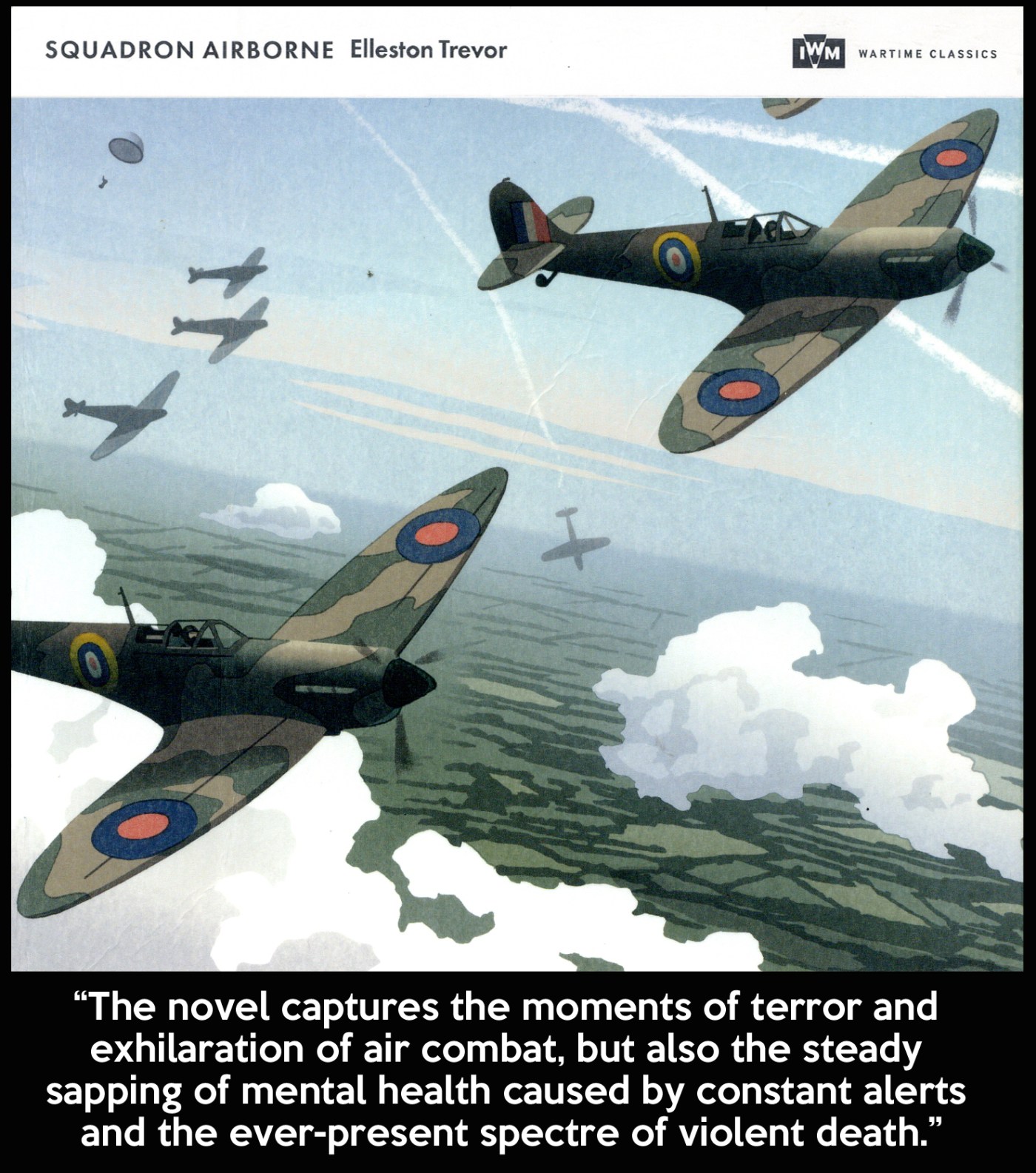
Elleston Trevorwas born Trevor Dudley Smith in 1920, and became a hugely prolific and successful novelist under many other different pen-names, most notably as Adam Hall, writing the Quiller series of spy novels.
He served throughout WW2 as a Flight Engineer, and it is this experience that he drew on to write Squadron Airborne, first published in 1955. It is an intense and sometimes harrowing account of just a few days in the life of a young RAF pilot, Peter Stuykes, in that unforgettable summer and autumn of 1940 that we now call the Battle of Britain.
We are in high summer, and the nineteen year-old Stuykes arrives at the fictional RAF base of Westhill in southern England. He has been taught how to fly, but has never been in combat. A brief training session in the air under the watchful eyes of Squadron Leader Mason passes without major disaster, but it is only a matter of hours before he is in the air again, and makes his first kill.
There are heart-stopping descriptions of aerial combat, vividly imagined because the author was not a pilot himself. He makes us well aware of the unglamorous but vital work of the ground crews who made sure that the aircraft were as fit and functional as they could be. He also hints at a dark reality – aircraft were much harder to replace than young men in their late teens and early twenties.
Perceptions of the past are ever-changing, and the current wisdom, eighty years after the event, has it that the “gallant few” version of the events of 1940 is misleading. Yes, the defeat of the Luftwaffe contributed to Hitler’s disastrous decision to invade Russia. Yes, the bravery and sacrifice of the young pilots was immense, but the reality was that RAF deployment of resources and its mastery of radar meant that the tactic of massed daylight raids by German aircraft was doomed to failure.
Trevor was writing for readers who would have been totally familiar with technical terms, abbreviations and wartime vernacular. I grew up hearing my father use many of these terms, picked up during his wartime service, but younger readers may be interested in clarification. Here are some unfamiliar terms used in the book:
ERKS: low ranking RAF personnel FLAP: an emergency of some kind FRUIT SALAD: Medal ribbons IRONS: as in ‘eating irons’, cutlery MAG-DROP: a decrease in engine power due to magneto failure OLEO: a hydraulic shock absorber used in aircraft landing gear SIDCOT: a standard RAF flying suit SP: Service Police. The RAF version of Military Police TANNOY: Public address system TROLLEY-ACC: a wheeled device containing batteries, used for jump starting aircraft U/S: Unservicable, broken WAD: A cake or a bun
The novel captures the moments of terror and exhilaration of air combat, but also the steady sapping of mental health caused by constant alerts and the ever-present spectre of violent death. Trevor doesn’t ignore the fleeting moments of happiness, whether they be the temporary solace of getting drunk in the local pub, or fleeting love affairs, squeezed in between the dreaded bark of the Tannoy, ordering the young men back into the air. Squadron Airborne has been republished by the Imperial War Museums as part of their Wartime Classics series, and is available now.
For reviews of previous novels in the Wartime Classics series, click the image below
Candice Fox (left) is an Australian novelist who is perhaps best known for her collaborations with James Patterson, but back in 2019 I reviewed her solo novel Gone By Midnight, and if you click the link you can read the review. That book was set in the Queensland city of Cairns, but in her latest, she goes Stateside to Los Angeles for Gathering Dark.
To borrow a cliché much loved by sports commentators, Candice Fox leaves nothing in the changing room here in the way of characters. The larger-than-life cast includes former top paediatrician jailed for murder and now working in a fast food joint, her kleptomaniac and drug-addicted chum from prison, a fixated female cop whose career seems to be spiralling out of control, and a six-foot black female gangster and strip-club owner.
What brings this formidable quartet together? The search for the missing daughter of Sneak, the aptly named kleptomaniac. After randomly robbing Blair Harbour at her greasy take-out counter, Dayly has disappeared into the nightmare neon slick that is the criminal underbelly of Los Angeles.
We all love a good coincidence, and cop Jessica Sanchez just happens to have been gifted a sumptuous LA property which sits next door to the house where Blair’s son Jamie has been fostered since his mother’s unfortunate spell in jail. And who was one of the cops involved in Blair being put away for ten years? Christian name begins with J and surname starts with S!
Fox has woven a wonderfully complex web of a plot. Blair isn’t sure why the gangster, Ada, is offering to help, but she thinks it might be because she is returning a favour notched up while the two were in jail together. We eventually learn, a little way before Blair does, that Ada doesn’t do gratitude, and has an ulterior motive.
The cop, Jessica, is pretty much loathed by LAPD colleagues, and she is warned that if she accepts the multi-million dollar mansion, she will be drummed out of the force for accepting bribes.
The unholy Trinity of Ada, Blair and Jessica plough a violent and relentless furrow in their search for Dayly, and it all comes to a head in a claustrophobic and bloody shoot-out in a sewer beneath an LA suburb. Fox is a gifted storyteller and this ‘guns and gals’ thriller will guarantee a few hours of excellent entertainment. Gathering Dark is published by Arrow and is out now in paperback.
There is no single real-life criminal event in history which has captured the imagination of readers, writers, historians and criminologists like the gory saga of the Whitechapel Murders. The word ‘enthusiast’ seems inappropriate to describe someone drawn to the butchering of five women in that dreadful autumn of 1888. How can someone be ‘enthusiastic’ about such carnage? Ripperologist doesn’t work, either, as it seems to conjure up images of a harmless hobby like stamp collecting or fossil hunting.
There have been countless non-fiction books written on the subject, some providing solutions, but none conclusive. Several fictional detectives have gone head-to-head with The Ripper, and if you click this link, you can read a piece I wrote about the genre. Most recently, Hallie Rubenhold’s book The Five sought to transform the murdered women from mere corpses to real people.
Now, first-time author Clare Whitfield enters the lists with People Of Abandoned Characters, which centres on a woman who begins to suspect that her new husband, a doctor, may be involved with the unfolding horror of the Whitechapel murders. Do his absences really coincide with the grisly discoveries of the murdered women, or is she putting two and two together and making five?
The advanced publicity says that People Of Abandoned Character:
“… explores the smoke and mirrors of perceived social mobility, the role of wealthy society and the responsibility to the poor (or not as it may be the case), toxic relationships and narcissistic abuse, gender equality and freedom to pursue personal ambition.”
The printed book looks and feels absolutely gorgeous, and I hope the story lives up to the advanced publicity. It is published by Head Of Zeus and will be out on 1st October. Watch this space for the detailed review.
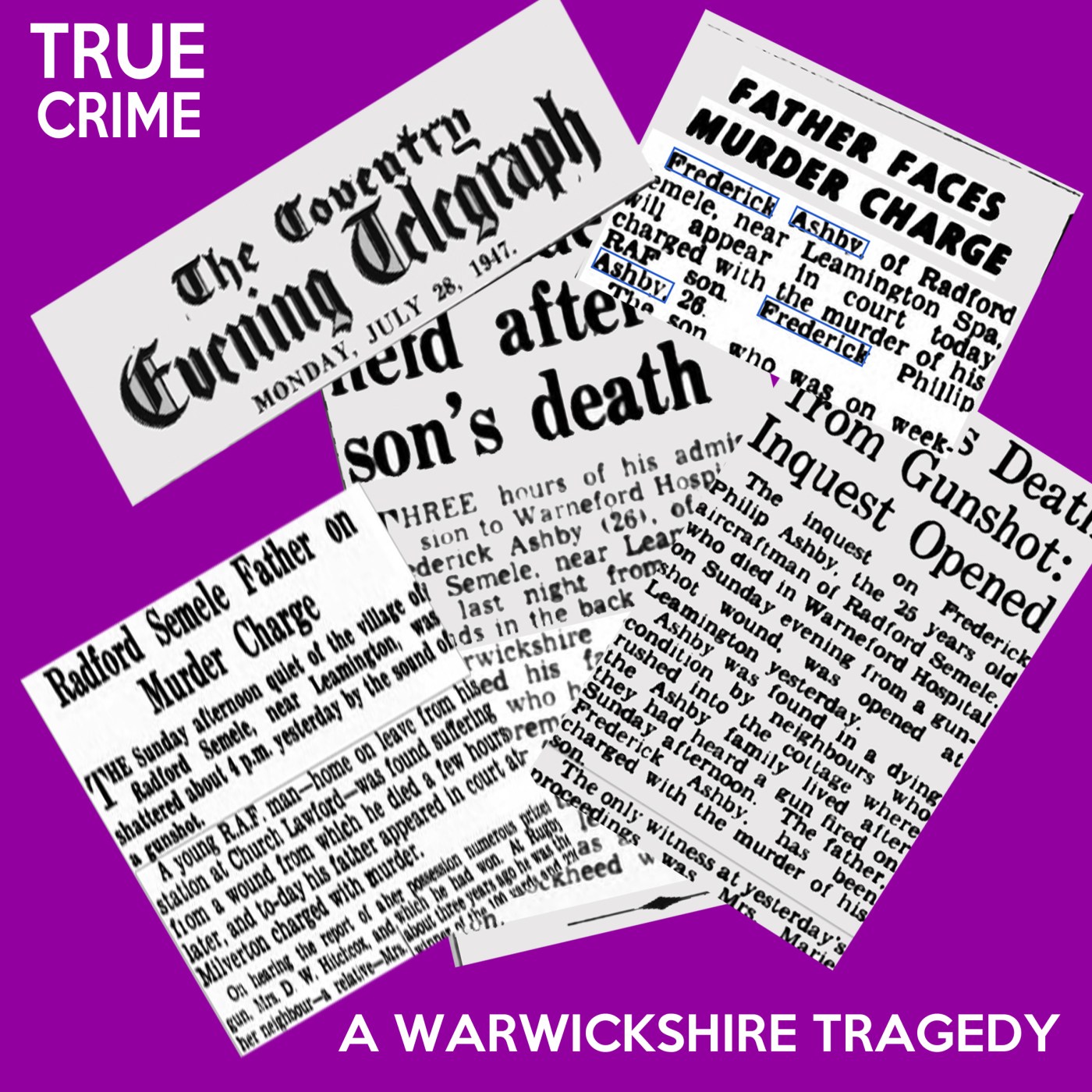
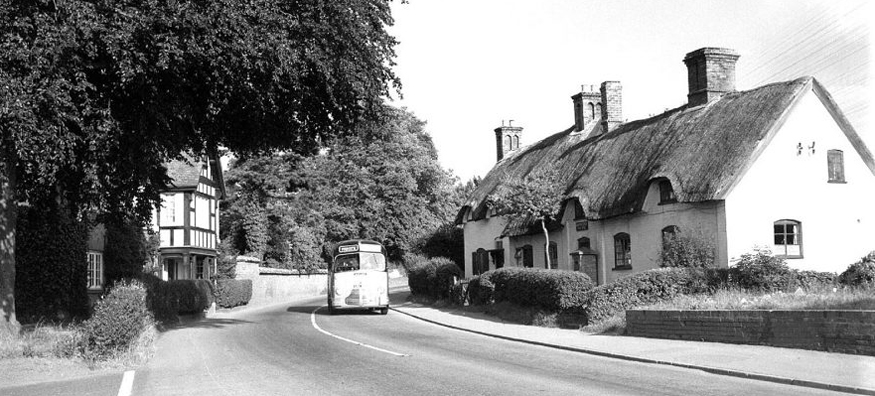
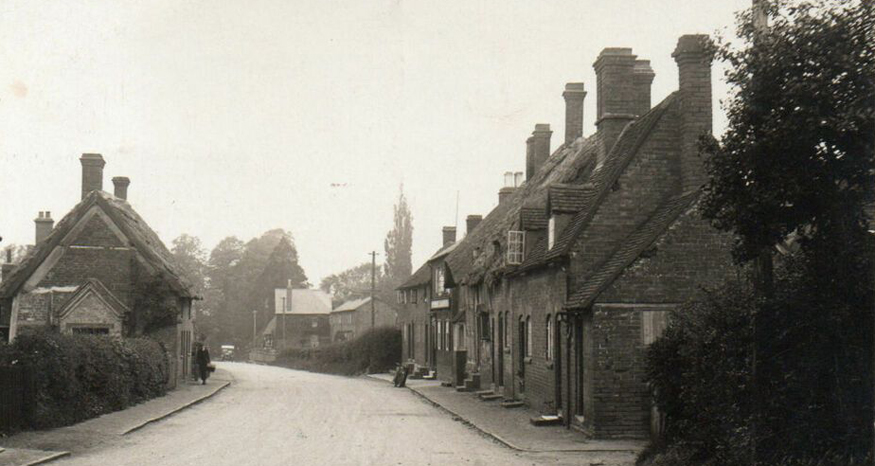
Drive east on the A425 out of Royal Leamington Spa and you will soon come to the village of Radford Semele. The Semele is nothing to do with the princess in Greek mythology or Handel’s opera of the same name, but apparently relates to a Norman family from Saint Pierre-de-Semilly who were lords of the manor in the twelfth century. These days it is a rather prosperous village, much expanded from 1947, when it housed a mixture of the well-off and the rural poor, with nothing much in between.
Number 23 Radford Semele housed the Ashby family. Frederick, aged 48, his wife Marie, 51, son Frederick Philip, 27 and a younger daughter. Frederick junior was in the RAF. In 1947 people didn’t tend to move about as much as they do these days, and the 1911 census tells us that Frederick lived with his grandparents in Radford, while wife Marie had been born in Napton, a few miles down the road. They had married in 1921.
The late winter had been particularly savage, and after a brief heatwave in June, the July weather was cloudy and humid. Those with a radio or a gramophone could have been listening to Frank Sinatra sing Among My Souvenirs, which topped the charts for three weeks. Fred Ashby junior had been a pupil at Clapham Terrace School in Leamington and, being something of an athlete, was a member of the celebrated Coventry Club, Godiva Harriers. After a spell as a draughtsman at the Lockheed works in nearby Leamington, he had joined the RAF. He had come home from nearby Church Lawford on weekend leave, and on the morning of Sunday 27th July, had set off across the fields with a friend, Cyril Bye, to try and shoot a few rabbits for the pot.
It seems that the relationship between Fred Ashby (left) and his father was anything but harmonious. Fred senior, who was a foreman at the Coventry Radiator factory in the village, was often involved in loud arguments when his son was home on leave. At around 4.00pm that Sunday afternoon, a Radford teenager called Rose Marie Summers was standing talking to a friend outside a nearby house, when she saw Fred senior staggering out of the Ashby’s house, clutching his side, in obvious pain. He cried out, “He has kicked me.”
The girl saw Ashby walk round to the rear of the house and return with a shotgun in his hands. He pointed it through the open window of the cottage and fired.
Witnesses who entered the house shortly afterwards never forgot the horrific scene, Young Fred Ashby was kneeling on the floor, his head face down on the sofa. In his back was a gaping wound, pumping blood. The police and ambulance were quickly summoned, and the young man was rushed to the Warneford Hospital, just little over a mile away in Leamington. There was nothing doctors could do to save his life, however, and he died later that evening with his mother at his bedside.
There was never a more cut and dried case for Warwickshire Police. Even as the local bobby, PC Haines, arrived at the scene, Fred Ashby was beside the body of his dying son, trying desperately to staunch the fatal wound, saying, “I did it. I shot him.”
As the case progressed up the ladder of the criminal justice system, from local magistrates’ court to Birmingham Assizes, it became clear that the evidently mild-mannered Fred Ashby was, for whatever reason, regularly bullied by his physically powerful son and, having been knocked about and abused during the afternoon of 27th July, had finally snapped and,in a red mist, fired the shot that ended his son’s life. His plea of manslaughter was accepted, and he was sentenced to ten years penal servitude.
Whatever grief he bore for the killing of his son, Frederick Ashby survived his prison sentence and died in 1984. His wife Marie pre-deceased him by nine years. The senior policeman in the case, Chief Superintendent Alec Spooner of Warwickshire CID, is celebrated by True Crime enthusiasts as the man who led the case investigating the as-yet-unsolved ‘witchcraft murder’ of Charles Walton, at Lower Quinton in 1945, but that is a story for another day.




 Radcliff, the creation of author AD Swanston, made his literary debut in The Incendium Plot (2018). The blurb for that book said that the country was “a powder keg of rumour, fanaticism, treachery and dissent.” Well, a few years on, and things haven’t changed a great deal. The big threat to Good Queen Bess still comes from those devious and malignant Papists, but the adherents of ‘the old religion’ have changed tack. Military conquest by Spain or France has proved ineffectual, so has a more subtle method has been chosen?








 fullybooked2017