
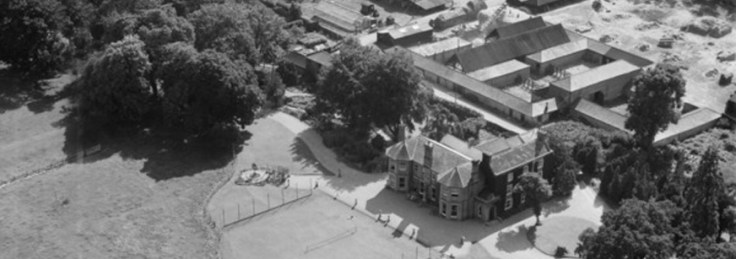
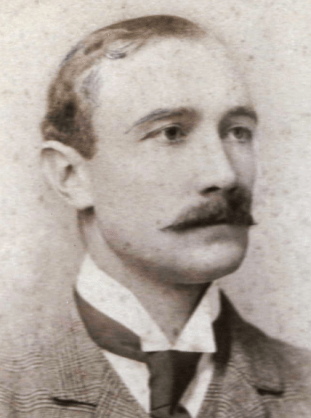
 In Wisbech, we are not particularly well blessed with what could be called stately homes. Peckover House is very grand, but the next in line might be Needham Hall in Friday Bridge. The present building is on the site of a much older house which was pulled down in 1804. The last owner of the old house was Dr. John Fountayne, Dean of York, and his daughter Catherine lived in the new house until her death in 1824, at which point it passed to her nephew, Richard Fountayne Wilson, M.P. for Yorkshire 1826–30. The 1861 census records that the house was occupied by Frederick Easton Fryer, his large family and a house full of servants. By 1901 the house – and farm – had been bought by Walter Wooll West (left), and it is with the West family we shall stay.

Walter Montagu West (above), elder son of Walter Wooll, was killed at Ypres in 1915, and eventually ownership of the farm passed to the younger son, Charles. Incidentally, Walter senior was knighted for public service, and seems to have retired to 75 Harecroft Road (just two doors on from my house) where he died in 1952. It is Charles West who is at the centre of a story which made headlines in many national papers in 1956.
The story, as you will soon see, is not one of the tragedies of which I have written before. Rather, it has elements of comedy about it, and it has at least two of the elements that would have instantly attracted newspaper editors – a blonde, and a gun.
Charles West (59) was divorced, and lived with a woman – Ella Grundman – who had been cited as “the other party” in the divorce case. His father, Walter Wooll West was a farmer, yes, but also someone of substance in the county, and kept a large household and employed dozens on the farm, as the photo below (copyright Wisbech & Fenland Museum) reveals. It was taken on the occasion of Sir Walter and Lady Grace’s Golden Wedding anniversary in December 1940.

It seems that by 1956 social niceties at the Hall were not so much Upstairs Downstairs as Kitchen Sink. One evening in late April, Charles West was having drinks in a downstairs room with his cowman and a gardener. They were apparently celebrating a very pleasing evaluation of the Hall, farm and estate. Things, however, went rather pear-shaped. The emerging story tickled the fancy of more than one newspaper editor, and The Birmingham Mail reported:
“A wealthy Fenland farmer was threatened with a shotgun and a carving knife by his 38 year-old lover a court was told yesterday (Friday 27th April). It happened in a tiff over cigarettes at his family seat said the prosecution at Wisbech.
The farmer, 59 year-old Charles West, of Needham Hall, Wisbech, said that he had accused her of stealing cigarettes. Afterwards, they were found in his desk. “I would like to apologise,” he said.
But Mrs Ella Grundman, smartly dressed in a pink grey-dotted suit, did not glance at him as he gave his evidence.
She is accused of shooting with intent to murder, and of causing Mr West grievous harm. Mr David Hopkin, prosecuting, said that the couple were celebrating with a gardener and a cowman at the Hall.
A quarrel began over the cigarettes.Mrs Grunman asked West to open a roll-top desk. He refused.
She fetched a carving knife, put it to his back and pushed him round the room until one of the men took the knife away. Ten minutes later, she was back with a shotgun. She pointed it at West and said: ”Now you’re going to give me the keys, or else.”
One of the men struggled with her, but the gun went off, peppering the wall and telephone with shot. Mr Alec Whitwell, the cowman, said that later he found her scratching his employer’s face, holding him by the hair, and banging his head on the sofa. Mr West, son of a former High Sheriff, said he could not remember much of what had happened – “I wasn’t drunk, but I had a lot more to drink than was good for me.”
Haltingly, he said, “ In the washroom I was being hit by Mrs Grundman with either the candlestick, or the ash tray stand, or both.”
Mr West told Kenneth Land, defending, that he had known Mrs Grundman for two years. She had lived at the Hall since last December and before that had lived in his houseboat at Hilgay, Norfolk.
Mr Land said, “She is a hefty woman and strongly built. If she had really wanted to do him harm, she could easily have done so. Neither knew the police had been called, and as far as they were concerned, the quarrel was over, and they were all tucked up for the night.”
As, inevitably, Wisbech magistrates decided that Ella Grundman must be tried at the next Cambridge Assizes, the Sunday Mirror couldn’t resist a bit of fun.

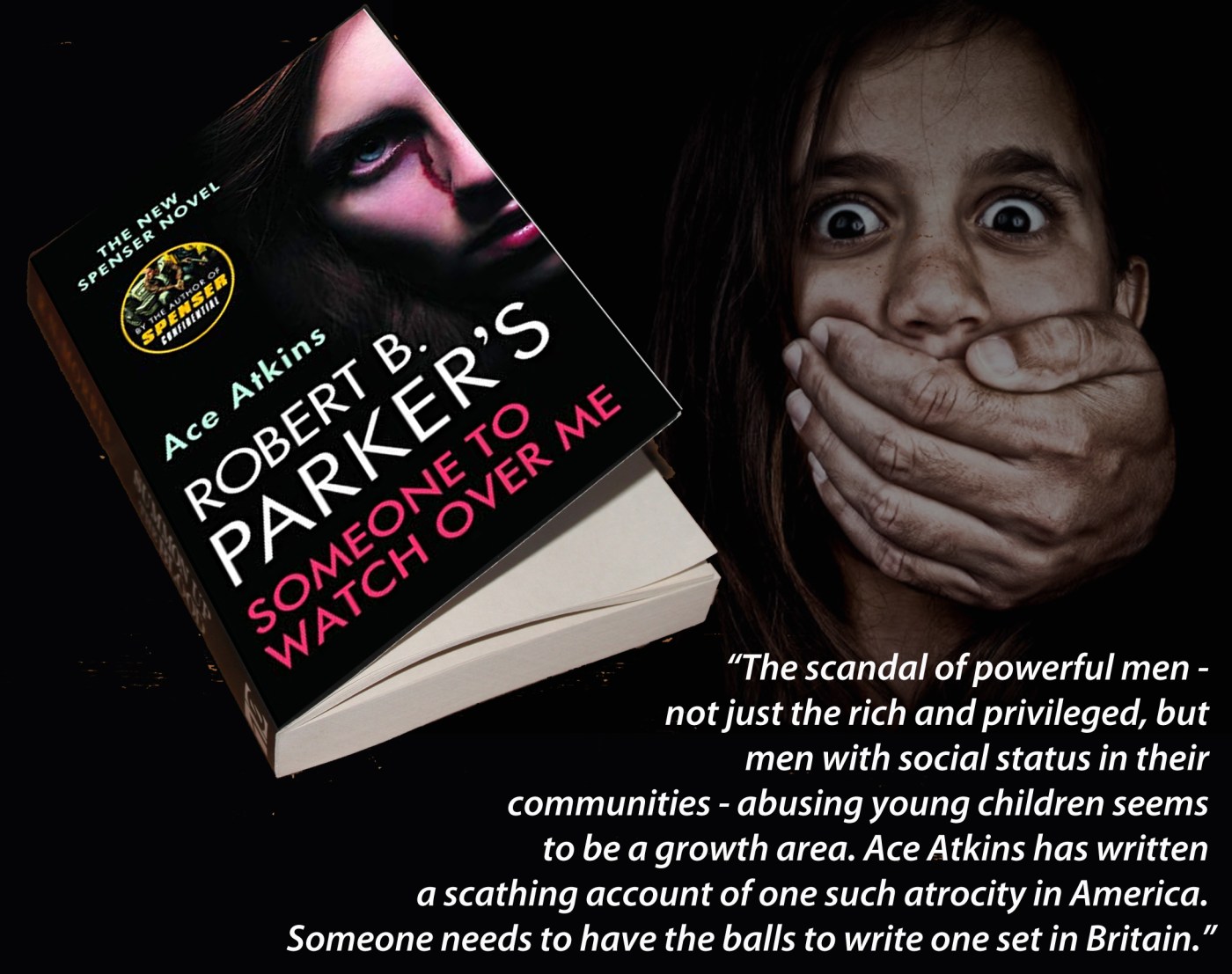

 The Steiners are also well-connected. Politicians great and small, financiers, socialites, fund-raisers – mostly anyone who is anyone in Boston and further afield – all tip their hats to the Steiners. Neither does it hurt that the Steiners’ clout enables them to hire serious muscle from the criminal underworld and, as most of the child rape is conducted on a private island somewhere in the vicinity of the Bahamas, neither the Boston Police Department nor the FBI can do anything to intervene.

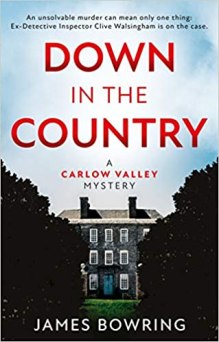 When a couple return to their home in rural England from their holiday in Italy (remember when we could do that?) their welcome home present is a dead body – a woman,strangled – in their garden. The local senior police officer has been badly injured in an accident, and Acting Inspector Beauregard is the man who has to step up and investigate the murder. Unfortunately, Beauregard is soon overwhelmed by the case. Help is at hand, however. A nearby luxury hotel is run by a former policeman, ex Detective Inspector Clive Walsingham. Walsingham is finding the relative sanity, safety and security of civilian life something of a bind, and he leaps at the chance to help Beauregard solve the crime. The dead woman, however, had “something of a past”, and was connected to a notoriously crooked local businessman. When the case is further complicated by the disappearance of the daughter of a local aristocrat, Walsingham has to use every ounce of his experience to bring the case to a close.
 Lewis was one of the band of brothers who served with distinction in both world wars. He joined the Royal Flying Corps in 1915, after lying about his age and learned to fly at Brooklands. In 1916, he flew with No. 3 Squadron and was awarded the MC for his actions during the Battle of the Somme. Flying over the battlefield on 1st July 1916 to report on British troop movements, he witnessed the blowing of the mines at La Boiselle. He later described the early morning scene in his book “Sagittarius Rising”. Pathfinders focuses on just one night in 1942, when each member of the crew of a Wellington bomber prepares for a raid in his own way, with his own hopes and fears.
 I have become a firm fan of RN Morris’s likeably eccentric London copper, Detective Silas Quinn. Click
 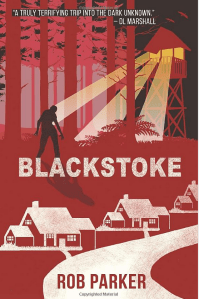 Parker is a gifted writer who injects energy and vitality into every paragraph he writes. He has an ongoing series of action thrillers (see below), but he obviously enjoys exploring the darker divisions between the world we inhabit and the nameless beings of the supernatural world. Blackstoke is a high-end housing development, but the land on which it has been built has a history all of its own, and is not a happy one. As the eager new owners move into their luxury homes, ancient and bloodstained memories, thought to be safely buried, begin to stir, and a nightmare becomes a reality for terrified families.
 Ben Bracken is an ex-special forces operative who has done jail time for a crime he didn’t commit, has escaped from prison, and has lived a precarious life of aliases, assumed identities – and forever looking over his shoulder. Like all the best action heroes who try to avoid trouble, it usually finds him. The previous Ben Bracken books (click
  The author served in the British Army during World War II and was involved with retreat of the British Army from Dunkirk. Sword of Bone is his account of the evacuation, in a style that reminded reviewers of Evelyn Waugh’s Sword of Honour trilogy in its account of the minutiae of military life. After being promoted to captain he lectured in Canada and the United States, where he met and married a niece of Gustav Mahler. The marriage was short-lived and led to a nervous breakdown. He was invalided out of the Army in 1945. Dunkirk is a potent word, and is often evoked to conjure up images of pluck, resolution and indomitable spirit, but it was also a significant military defeat, with the BEF out manoeuvred by the German army.
 CD Steele’s debut thriller introduces us to former MI6 agent – and now private investigator – Joe Wilde. As he investigated the disappearance of a young and promising football star, his path crosses that of DI Carl Whatmore of the Met Police. As is ever the case when PIs and regular coppers meet, sparks fly, at least initially. The young footballer – Liam Devlin – seemed to have led a blameless life, but with the help of old MI6 buddy Mark Thompson, Wilde turns over a few stones, and what they see scuttling about spells problems for the investigators, the police – and Devlin’s worried mother Sally.




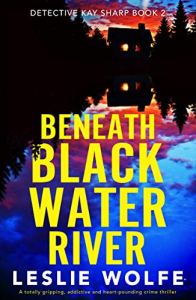 Leslie Wolfe has, then, set several hares running, to use the venerable English metaphor. The rogue cop – Herb Scott – is a truly nasty piece of work, and seems to have half the Sheriff’s Department under his thumb, as when his wife, Nicole, has reported her many beatings as a crime, nothing ever happens. The mis-identification of the murdered girl is a seemingly unsolvable mystery. Were there ever two girls, or are they one and the same? Does the conundrum stem from a complex inheritance issue involving the wealthy Caldwell family? The Caldwells are magnificently disfunctional, riven with bitterness and jealousy, and to spice matters up even more, there is the deadly whiff of incest in the air.

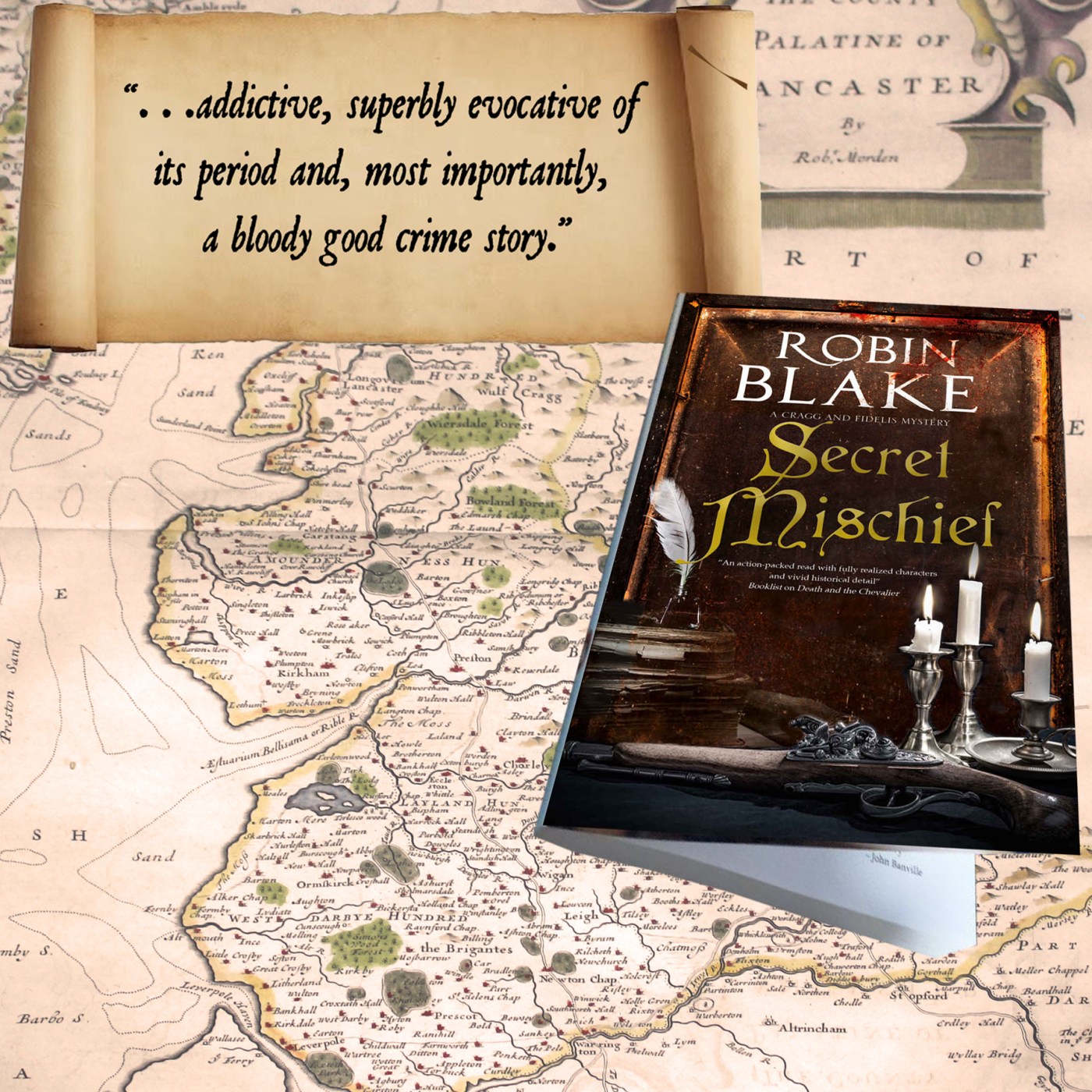

 As ever, murder is the word, and a series of deaths in and around the town of Omskirk are linked to an archaic form of business plan for raising money, known as a Tontine. The investment plan was named after Neapolitan banker Lorenzo de Tonti and, to put it simply, was a pot of money where a number of people contributed an equal sum. The money would either be invested, with interest paid to the members, or used to fund capital projects. As time went on, and investors died, the fund became the property of the remaining members, until the last man (or woman) standing hit the jackpot.
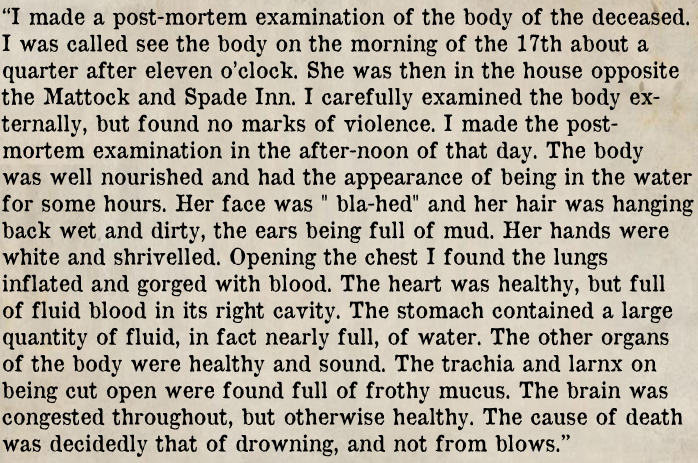
 One by one the Tontine signatories come to sticky ends: one is, apparently, hit by the sail of a windmill; another is found dead on Crosby beach, apparently drowned, but Luke Fidelis conducts a post mortem and finds that the dead man’s body has been dumped on the seashore. Things become even more complex when a reformed ‘lady of the night’, now a maid, is accused of pushing the poor woman into the path of the windmill sail. Cragg is convinced she is innocent, but faces an uphill struggle against a corrupt judge.



 fullybooked2017