If I don’t do it, no-one else will! A little video – with sound – promoting my site. Click on the logo to play the video.

If I don’t do it, no-one else will! A little video – with sound – promoting my site. Click on the logo to play the video.
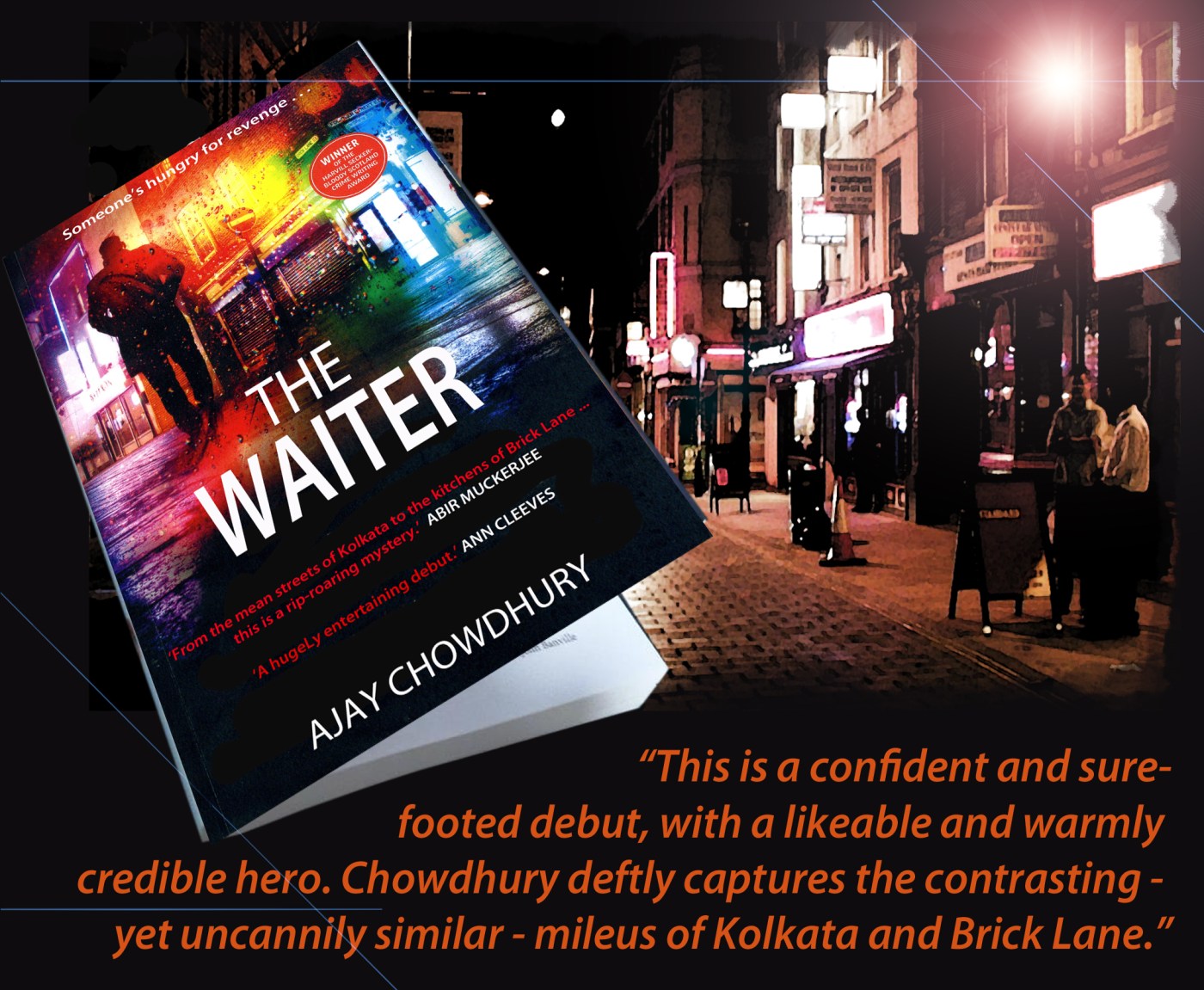

Kamil Rahman is a Bengali Muslim, but in name only. He enjoys a beer, and his job as a detective with the Kolkata Police Force gives him little time for religious observance. His father was a distinguished cop before him, and he tries hard to live up to that reputation. When a famous Bollywood film star is found dead in a plush hotel, Kamil is astonished to be given the job of finding the killer of Asif Khan.
We are getting ahead of ourselves. The killing of Asif Khan was in July, but the book opens in the October of the same year, and we find Kamil not heading up a crack team of investigators in the capital city of West Bengal, but waiting tables in a curry house in London’s Brick Lane.
 The restaurant is run by his relatives Saibal and Maya, with help from their daughter Anjali. At this point is worth reminding people that families are the big thing in the sub-continent, and most of the characters in the book are related in one way or another. The story starts on the evening that the restaurant has been booked to provide the food for the lavish 60th birthday party of rich entrepreneur Rakesh Sharma. He and his new wife Neha – half his age – are installed in a lavish mansion on Billionaire’s Row near Hampstead Heath. It’s also worth mentioning at this point that Sharma’s first wife (and son by that union) are still very much on the scene.
As the party gets into its stride, Sharma shocks his audience when he announces that he is going to sell all his holdings and divert the rest of his life to charitable works, dedicated to his young wife. As Kamil and the other functionaries are driving home in the small hours, they receive a chilling ‘phone call. Sharma has been found dead – apparently battered about the head with a heavy object. They return to the mansion, slightly ahead of the police.
The big question with which Ajay Chowdhury teases us is, of course, why has Kamil ended up in a walk-on part in one of London’s innumerable Indian restaurants, rather than being an important detective in Kolkata. Chowdhury uses a ‘then-and-now’ narrative. It’s not my favourite literary device, but at least we have only two time slots to keep track of. We are deep into the book before we discover why Kamil is bowing and scraping in London, rather than advancing his career – and his marriage prospects to his smart and beautiful lawyer fiancée Maliha – back in West Bengal. The answer comes in the form of a terrible betrayal.
This is just a crime novel, albeit a very good one, but it does raise questions about probity in public life. People of my age have had a lifetime of reading about the depth of corruption in India and Pakistan, and Chowdhury paints an unflattering picture of the wheels-within-wheels in the Kolkata Police Force. Are we any better here? Is the corruption just more subtle, and more in people’s peripheral vision rather than in full view? I write this review at a time when news bulletins remind us of the awful, unbridgeable gulf between the haves and have-nots in present day Covid-blighted India.
Eventually, Kamil’s Kalkota downfall is explained, and we also learn who killed Rakesh Sharma. There is much entertainment on the way to the finale. The Met Police copper’s last words suggest that we haven’t heard the last of Kamil Rahman.
“We are always looking for skilled detectives from diverse backgrounds.”
This is a confident and sure-footed debut, with a likeable and warmly credible hero. Chowdhury deftly captures the contrasting – yet uncannily similar – mileus of Kolkata and Brick Lane. The Waiter is published by Harvill Secker, and will be out on 27th May.

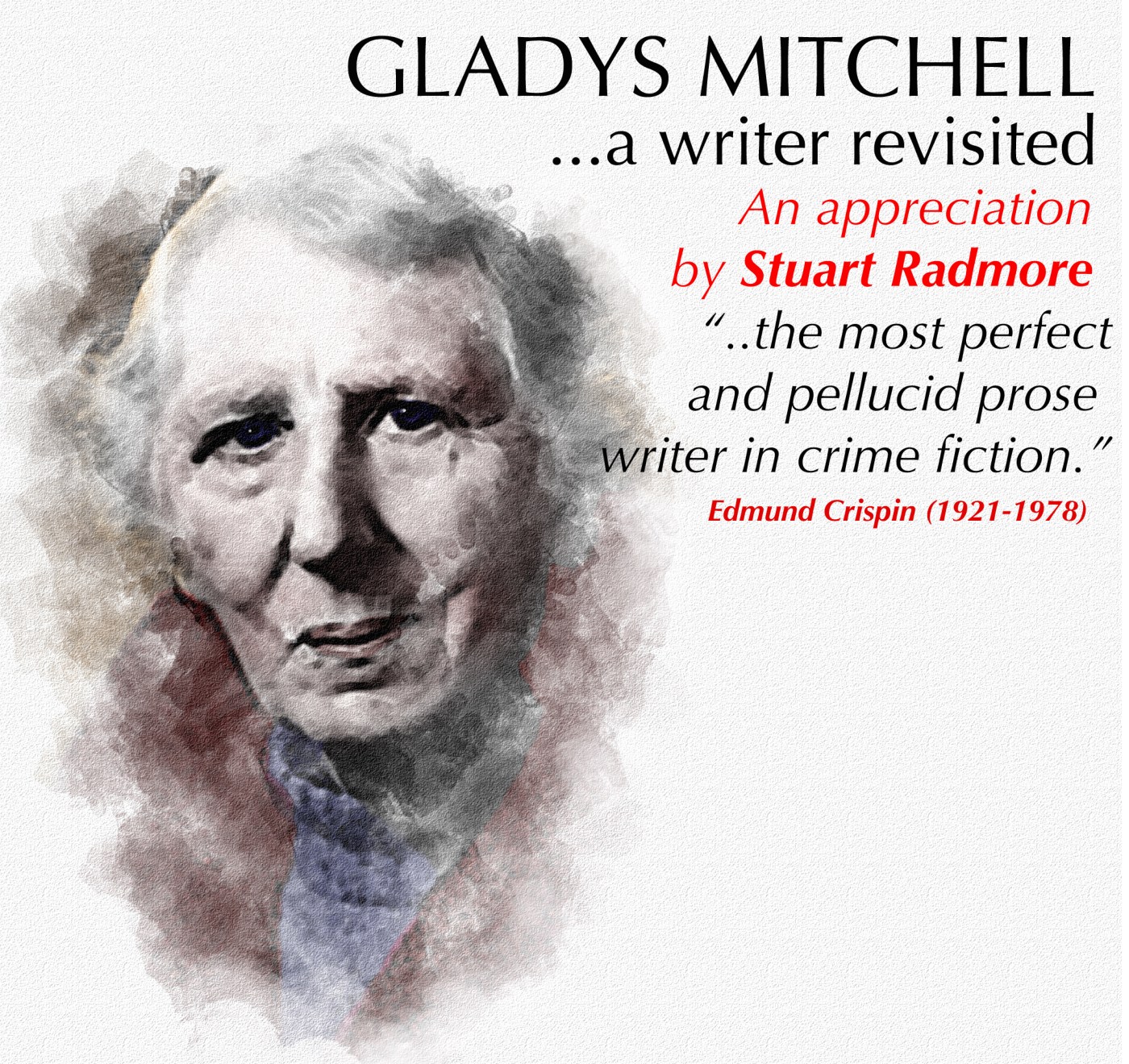

Guest writer Stuart Radmore explores one of the lesser-known female authors of the Golden Age, and he feels that the revival of interest in her books by modern readers is justified.
Gladys Mitchell (1901 – 1983), of Scottish descent, was born in Cowley, near Oxford. She spent much of her childhood in Brentford, Middlesex. After taking a degree at the University of London, she taught (English, History and Games) altogether for some thirty-seven years at a variety of schools in what is now West London.
Away from her teaching life Miss Mitchell created the first notable, and still the best known, example of a psychiatrist-detective in the formidable person of Mrs (late Dame) Beatrice Adela Lestrange Bradley, consultant psychiatrist to the Home Office.

She is sometimes extremely orthodox in her methods. While some of her deductions allude to Freudian theory (one of the author’s many enthusiasms) she appears to obtain her results by intuition – or something more. Elements of the occult – witchcraft, the supernatural, folk superstitions or practices – sometimes play too large a part in many of the books, to the detriment of their quality as detective stories; though this at least makes it clear that Mrs Bradley is as much a witch as a psychiatrist.
In fact, Gladys Mitchell well understood that her books had about them the basic unreality of an all-ends-well comedy. “I regard my books as fairy tales” she said, “I never take the crime itself seriously”.
It’s been noted by others that Miss Mitchell was obviously a woman of some inquisitiveness, and that what she finds out, she shares. Throughout her many books while it’s inevitable that there is a wide variation in subject, this sometimes also results in a variation in quality.

Everyone has his favourites, but it’s generally thought that her best books were those written up to the early 1950s – ‘St Peter’s Finger’ (1938) The Saltmarsh Murders’ (1941) and ‘The Devil’s Elbow’ (1951) are particularly praised – with only a handful thereafter reaching this earlier high standard. Of these later novels ‘Dance to your Daddy’ (1969) should be singled out. It’s light on the supernatural, while maintaining an air of unreality throughout. The author herself has said:
“… apart from ‘Laurels are Poison’ (1942) I like most ‘The Rising of the Moon’ (1945) which recalls much of my Brentford childhood. (I am Simon in the story and my beloved brother Reginald is Keith) and the same two children appear as Margaret and Kenneth in the 50th book, ‘Late, Late in the Evening’, which is about the two of us in Cowley, before the motor works got there “.
Let the final words come from the poet Philip Larkin, who was a great admirer of the novels. In 1982 he wrote:
“Miss Mitchell has always stood splendidly apart from her crime club confreres in total originality – even when, as today, there are almost none left to stand apart from. The originality consists in blending eccentricity of subject matter with authoritative common sense of style”.


Kōtarō Isaka (and his translator Sam Malissa) have created an story that is totally improbable, manic – but quite wonderful. Five killers board the Shikansen (Bullet Train to us) which goes from Tokyo to Morioka. I use the word ‘manic’ because the journey only takes just over two and a half hours, and this is a book of over four hundred pages, so you immediately know we are pretty much operating in real time. The five passengers are:
 By page fifty, it’s all happening, and it is all about the suitcase full of cash. Satoshi is expecting Kimura, stuns him with a home made taser, and has him trussed up with tape in the seat next to him. Nanao has stolen the suitcase, but is prevented from leaving at the first stop, Ueno, by the arrival of another gangster called Wolf who has a score to settle with Nanao. Wolf barges him back into the train before he can leave, but Nanao kills him in a struggle. Lemon and Tangerine have discovered that the cash is missing, but return to their seats to find Minegishi Junior has, inexplicably, expired.
Two simple graphics add to the fun. The first (left) is a schematic of the stations on the journey itself. Though simple, this is a very clever device, because it allows the author to have the characters – albeit briefly – engage with the world outside the confines of the ten coach train. The second is of the coaches in the train (below) and is used as chapter headings as events play out.

 Satoshi ‘The Prince’ Oji is the darkest character of the five. He is utterly without compassion. Other human beings – school teachers, teenage friends, other adults – only have value to him in the sense that they can be used for his entertainment. He is highly intelligent, but one of the more malevolent fictional villains I have encountered in recent times. Everything is thought through and planned in the minutest detail, such as his grip on Kamura. The grizzled gangster could, physically, chew up Satoshi and spit out the bones, but the teenager convinces Kamura that he has an insider in the hospital where the man’s son is lying in a coma, and should Satoshi fail to answer periodic calls to his mobile ‘phone, then this insider will find a way to disconnect the little boy’s life support system.
There is a thread of darker-than-dark comedy running through the chapters. Nanao’s attempts to rearrange Wolf’s corpse to make it look as if he was just taking a nap put me in mind of Basil Fawlty in The Kipper and the Corpse, while Lemon’s obsessive knowledge of Percy, Gordon, and James the Red Engine is like something that Flann O’Brien might have dreamt up given that, with Tangerine, Lemon has just left a crime scene where, between them, they have shot dead at least fifteen men. Add to the mix a couple of random cross-dressers, a stolen wig – and an escaped snake – and you have two and a half hours of mayhem. As passengers become corpses, one by one, the unlikely intervention of a pair of grandparents brings matters to a bloody conclusion.
I don’t doubt that other reviewers have used this analogy, but it is still worth saying that Bullet Train is something of a cross between a Tarantino movie and a Manga comic. There is the same implausible detachment from reality found in both, but also the same joyful sense of anarchy. The train itself, hurtling onwards at 200 mph, echoes the sense of high speed forward movement and drive in the narrative. The internet tells me that Hollywood have snapped up the book, and a film is being produced starring Brad Pitt. As whom? – I have genuinely no idea, but this brilliant and daring novel is published in Britain by Harvill Secker, and is available now.


Coming late to a well-established series can pose problems for a reviewer but, happily, this book is a prequel to the six published previously. The series is known as the Station Series, written by David Downing, and featuring the investigative crime reporter John Russell. The titles all take their names from railway stations around Berlin. They are Zoo Station (2007), Silesian Station (2008), Stettin Station (2009), Potsdam Station (2010), Lehrter Station (2012), and Masaryk Station (2013).
Fans of the books will have to excuse me while I paint a quick background picture. It is early 1933, and Hitler has been Chancellor for just a few weeks. We begin just hours after the Reichstag fire, and the SA – Sturmabteilung – are going about their grisly business with renewed vigour. Russell is English, a veteran of WW1 – and a former communist – but due to his marriage (now failed) to a German woman, he can happily say, “Ich bin ein Berliner.“
 While reporting on the death and mutilation of a young rent boy, Russell is asked by a friend to take on another case, this time on behalf of a senior army officer whose daughter is missing. It is a delicate business, because there is a strong suspicion that Lili Zollitsch has run off with a boyfriend who is an active member of the Kommunistische Partei Deutschlands.
Russell seems to collect mysterious deaths and disappearances like some men collect stamps. Hard on the heels of the Colonel’s missing daughter, he hears that a prominent genealogist has been killed in what seems to be a case of hit-and-run. One of Herr Mommsen’s most popular services had been producing evidence of racial purity – as in no trace of Jewish blood – for his clients. Had he made a rather unfortunate discovery and signed his own death warrant? If this weren’t enough, a well-known astrologer has gone missing – believed permanently – and when Russell investigates via one of Harri Haum’s customers he is astonished when she tells him that in a crystal ball-reading session a few days before the event, the seer had predicting the burning of the Reichstag.
But there is yet more for Russell to deal with. One of the friends of the murdered rent boy contacts the journalist and hands him the dead lad’s diary, in which he has faithfully recorded the names of his clients, as well as intimate physical descriptions. As Russell turns the pages, he finds the names of prominent members of the SA. Now while homosexuality is – along with communism, and being Jewish – a big no-no in the eyes of the Schutzstaffel (SS) it is a different matter in the rival organisation, the SA. The SA’s head, Ernst Röhm along with a good number fellow brownshirts are, as coy newspaper obituaries used to say, “confirmed bachelors.”
The final straw for Russell – and one that very nearly breaks the back of the proverbial desert beast of burden – is when a knock on the door of his apartment reveals a young woman called Evchen who, years earlier, was a communist comrade. Not only is she still a party member, she has just shot dead one SA trooper and seriously injured another. And now she seeks shelter. How Russell gets himself out of these various pickles is gripping stuff. Some of the tension is obviously diminished by the fact that we know that the journalist survives to feature in six further books, but it is still a very good read.
We are clearly in Bernie Gunther territory here, and comparisons are inevitable, but in no way negative. This is a compelling read and a chill reminder – if any were necessary – of the gathering storm facing Germany and the wider world in the 1930s. Wedding Station is published by Old Street Publishing. The hardback is available now, and the paperback version will be out on 4th May.


Before I became a reviewer, and earned (I hope) the privilege of being sent books and .mobi files by publishers, I had been a lifetime library user. Crime Fiction was my first and last love, and in my regular Saturday afternoon trawl through the shelves, there were certain authors whose names I always sought out. In no particular order, these would include Jim Kelly, Phil Rickman, John Connolly, John Sandford, Val McDermid, Mark Billingham, Jonathan Kellerman, James Lee Burke, Graham Hurley, Christopher Fowler – and Graham Ison.
The Graham Ison books were slimmish-volumes, usually the Brock and Poole series, but my favourites were always the Hardcastle books. Ernie Hardcastle was a London copper in and around the years of The Great War. He could come over brusque in his dealings, but other might use the word ‘avuncular’. He distrusted innovations such as the telephone, but had a true copper’s nose for villains. A couple of his books are reviewed here, but inevitably, ‘time, like an ever-rolling stream, bears all its sons away..‘ Thankfully, in Hardcastle’s Secret Agent, Ernie is still with us, but long since retired, and the Hardcastle concerned is his son Walter, now a rising star in the Metropolitan Police.
 We are, as ever, in London, but it is 1940. The Phony War is over, and the Luftwaffe are targetting industrial sites they believe to be involved in making parts for military aircraft. When several important employees of one such factory are burgled – clearly by an expert – but with nothing other than trinkets stolen, Hardcastle believes he may be on the track of a German spy on the look-out for plans, blueprints or important military information. Hardcastle has to deal with The Special Branch, but finds them about as co-operative as they were with his father a couple of decades earlier. This has a certain tinge of irony, as part of the author’s distinguished police career was spent as a Special Branch Operative.
The search for the German spy withers on the branch, but Hardcastle has other fish to fry. A prostitute – or at least, a young woman who was free with her favours – has been found beaten to death, and the hunt for her killer takes Hardcastle into military quarters.
Eventually, Walter Hardcastle gets both of his men, and on the way we have a vividly recreated world of an England struggling to come to grips with a new world war. Not one that is being fought far away on some foreign field, but one which is brought to people’s very hearths and homes every single night. Hardcastle’s Secret Agent is published by Severn House/Canongate Books and will be out on 1st May.
Sad to relate, Graham Ison died suddenly in late 2020 before he could complete this book. It was finished with the help of his son Roger. Graham Ison was prolific, certainly, and critics might argue that he stuck to a reliable formula in each of his series, and never ventured into unfamiliar territory. Neither was he a darling of the crime fiction festival circuit, but I suspect after decades working as a policeman that never bothered him. What he was, however, was a reliable name for readers who bought his books and – importantly – library borrowers, who knew that they could rely on him for a story well told, and if his words took them into familiar territory, then that was nothing for either reader or writer to be ashamed about.



The only remote downside to me for having received these two beauties in today’s post, is that they are both marked September 2021. I have always thought September to be the saddest month, for a variety of reasons: the dying of the summer light, the wretched return to the classroom ( I was a teacher for forty years) where I would cast artificial pearls before real swine, the looming end of the cricket season, and the girding up of loins to face yet another winter. By the time September comes I will have exceed my biblical span by four years, and I will be thinking of that beautifully sad poem by JRR Tolkein, where Bilbo says:
“I sit beside the fire and think
Of how the world will be
When winter comes without a spring
That I shall ever see.”
 Enough of such morbid musings. There are books to look at! Leona Deakin’s character Dr Augusta Bloom first appeared in Gone (December 2019) – click to read the review – and then in Lost (October 2020). Now, Dr Bloom returns with another case, this time involving politics and counter terrorism. No less a figure than the Foreign Secretary is being held by the police on suspicion of terror offences. He will only talk if he is allowed to speak to Augusta Bloom. This results in Augusta having to put herself in the line of fire as a decoy. Does she have the skills to operate undercover? The Kindle is available now, but you will have to hang on until the summer fades to get the paperback. It will be published by Black Swan, which is a Penguin imprint, and will be on sale from 16th September
 Vera Kurian’s book, according to the publicity, couldn’t be more different and, if I can be permitted to invent a triple-barreled genre, sounds as if it’s domestic-psycho-noir. Kurian, who is based in Washington DC, has penned a tale of a first year university student named Chloe. The blurb is very effective:
Meet Chloe. First-year student, ordinary, legging-wearing, girl next door and diagnosed psychopath with an !Q of 135. Her hobbies include yogalates, parties, and plotting to kill Will Bachman.
Quite what Will Bachman has done to incur Chloe’s wrath is not clear; neither is it down to me to say whether or not he survives her attentions. She says, however:
“I’ve never met someone like me, but when I do, eventually, I think it will be like two wolves meeting in the night, sniffing and recognising another hunter,”
Never Saw Me Coming will be published by Harvill Secker on 9th September.


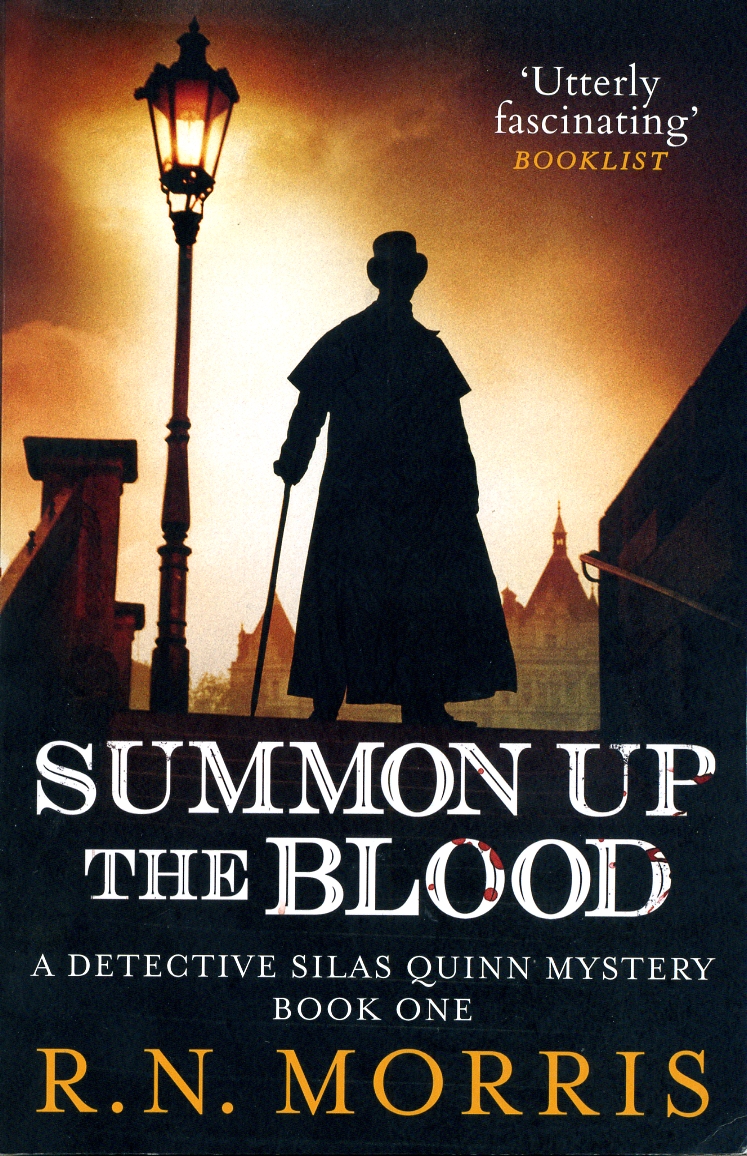
This is a recent edition of a book that was first published by Severn House in 2012, and was the first in a continuing series featuring an unusual Metropolitan Police detective, Inspector Silas Quinn. We are in 1914, a few months before the outbreak of The Great War. I have reviewed two others in the series, and the links are below.
The White Feather Killer (2019
The Music Box Enigma (2020)
Is Summon Up The Blood any good, even if it is a reissue? An absolute and unequivocal “Yes!” from me. Quinn is an intriguing fellow. never at ease socially, particularly with women. He seems driven by his own demons – if demons they are – as he seeks to investigate the crimes that other men on the payroll of The Metropolitan Police can’t fathom (or perhaps can’t be bothered with) His superior officers realise that Quinn has a certain talent, but one that does not fit well into the the day-to-day operations of the force. So, he has been shunted off into a siding where he can pursue his own lines of investigation, but not make himself an irritant to the establishment. Quinn is The Special Crimes Department of Scotland Yard and with the assistance of his sergeants Inchcape and Macadam he ploughs his own furrow.
 When a rent boy is found dead, his throat cut from ear to ear, there is initially little interest by the police, as the lad is just assumed to have paid the price for being in a risky line of business, but when the post mortem reveals that he has had every drop of blood drained from his body, Quinn is summoned and told to investigate. After a droll episode where Quinn decides to pose as a man smitten by “the love that dare not speak its name”, and blunders around in a dodgy bookshop, but he does find out that the dead youngster was called Jimmy, and had links to a ‘gentleman’s club’ where he would find men appreciative of his talents.
After the episode in the bookshop, Quinn decides to take things one step further and, armed with a distinctive brand of cigarettes favoured by the homosexual demi-monde, he sets out to impersonate a potential customer of Jimmy and his friends. Let’s just say that this does not go well, but he manages to emulate the News of The World reporters of later decades, who used to pass themselves off as punters in brothels, strip clubs, drug dens and the rest, and would then close the resultant exposé with the words, “I made an excuse and left.“
There are more deaths among what were known as renters, and Quinn’s frustration mounts. One of the enigmas is that the victims each possessed a silver cigarette case, inscribed with what appear to be literary quotes: it is not until Quinn learns that they all come from De Profundis, Oscar Wilde’s letter, written in Reading Gaol, to his lover Bosie, and subsequently published, that pieces of the proverbial jigsaw start to fit together.

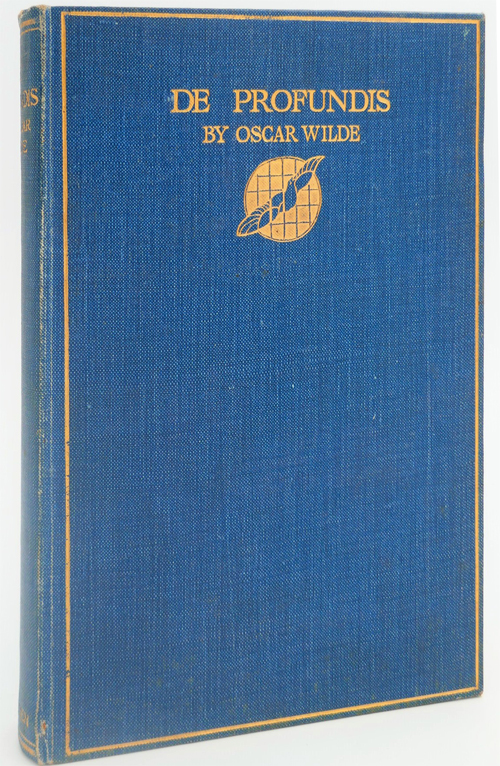 Thankfully, Morris makes no attempt to get in the politics of homosexuality and the law: his characters simply inhabit the world in which he puts them, and their thoughts, words and deeds resonate authentically. In 1914, remember, the trial of Oscar Wilde and the Cleveland Street Scandal were still part of folk memory. It’s an astonishing thought that had Morris been writing about similar murders, fifty years later in 1964, virtually nothing would have changed – think of the scandals involving such ‘big names’ as Tom Driberg, Robert Boothby and Ronnie Kray, and how their lives have been written up by such novelists as Jake Arnott, John Lawton and James Barlow.
As ever, Shakespeare said it first, but RN Morris has written a chilling and convincing murder mystery with an impeccably researched historical background. The book is an intriguing – and sometimes unnerving – mixture of grim violence, gallows humour, literary research, sexual degradation – and old fashioned detective work. Silas Quinn’s London of Spring 1914, blithely ignorant of the horrors that were to begin later in the year, is hypnotic and addictive. Summon Up The Blood is published by Canelo, and is out now.


 fullybooked2017