Search

fullybooked2017

Author

fullybooked2017

A retired Assistant Head Teacher, mad keen on guitars. Four grown-up sons, two delightful grandchildren. Enjoys shooting at targets, not living things. Determined not to go gently into that good night.

A CORRUPTION OF BLOOD . . . Between the covers


ACOB header

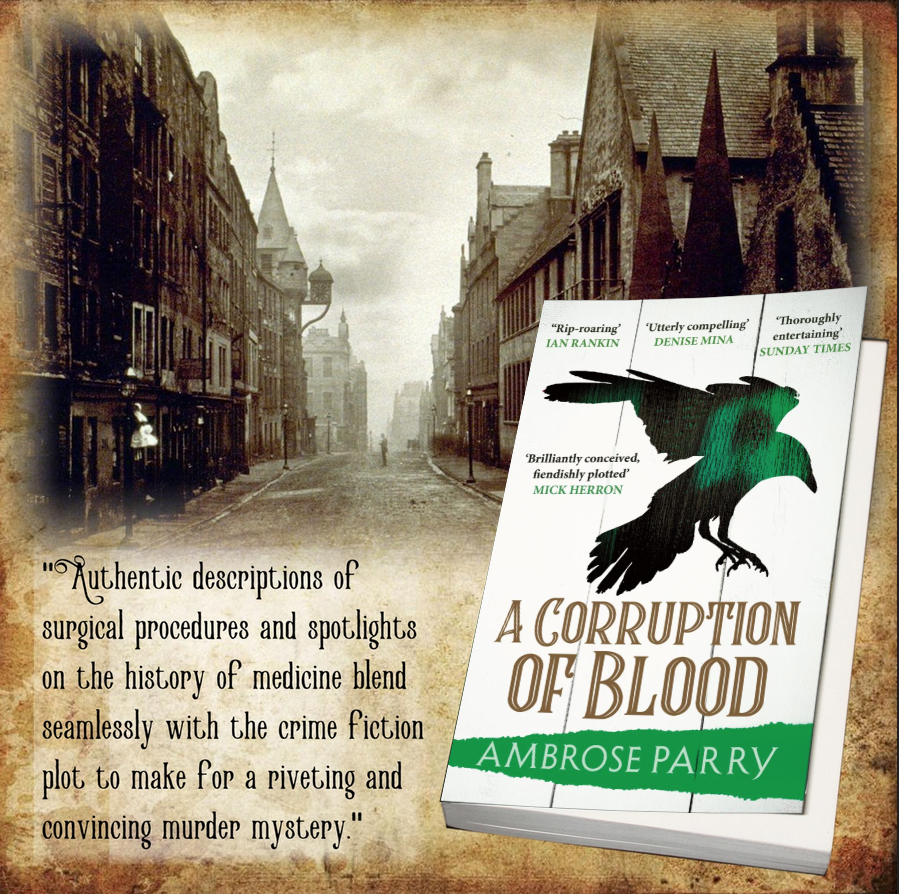
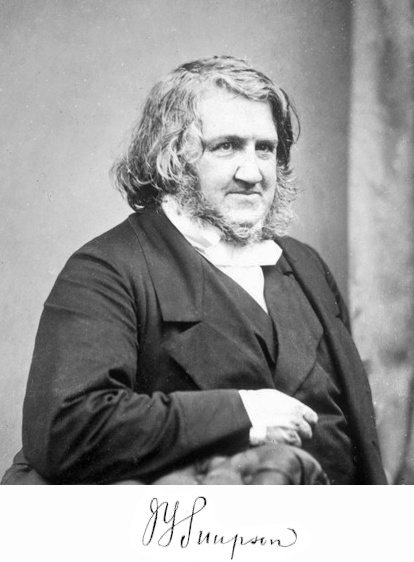
Simpson_James_Young_signature_pictureAmbrose Parry is the pseudonym used by husband and wife writing team Dr Marisa Haetzman and Chris Brookmyre. As a pseudonym goes, it is a pretty good one, especially for historical novels, as it has a rather convincing resonance to it. Writing partnerships are more common than you might think, and in some cases it remains a mystery as to who contributes what. Not so, possibly, in this case, as Dr Haetzman was a consultant anaesthetist at Wishaw General Hospital in Scotland, and the central characters in this novel are a young doctor in early Victorian Edinburgh – Will Raven – and his mentor, the real life James Young Simpson (left), a pioneer in the use of anaesthesia (chloroform in the early days) in surgical procedures.

This is the third novel in the series so, as ever, there is a back-story, part of which you can find in my review of the previous book The Art of Dying. Raven’s love interest in that book is a young woman called Sarah who was a domestic servant in the Simpson household. She had a brief flirtation with Raven, but then married another Edinburgh doctor. He died, but left Sarah a considerable fortune, which is helping her pursue her ambition to become a doctor. When this book begins, she has left Edinburgh on her version of The Grand Tour, during which she hopes to meet the first woman to be officially recognised as a professional physician, the American Dr Blackwell.

ACOB coverMeanwhile, Raven has met – and fallen in love with – Eugenie Todd, the beautiful and intelligent daughter of another Edinburgh doctor, and has also become involved in a murder mystery. Sir Ainsley Douglas, a powerful and influential man of means has been found dead, and the post mortem reveals traces of arsenic in his stomach. His wastrel son Gideon is arrested on suspicion of poisoning his father, with whom he has had a fairly unpleasant falling-out. Raven is an old acquaintance – but far from a friend – of Gideon. The two knew each other from university and Raven has a very low opinion of his former fellow student, and is very surprised when he is summoned to Gideon’s prison cell and asked if he will investigate Sir Ainsley’s death.

Sarah returns from her trip to the continent, but she is chastened by her meeting with Dr Blackwell, who suggested that she simply did not have the depth of education required to become a physician. Uneasy and uncertain at the news of Raven’s new romantic venture, she distracts herself from this unwelcome news by investigating an illegal trade which involves the selling of unwanted babies.

As Raven attempts to piece together the events of the last evening of Sir Ainsley’s life, the arsenic poisoning looks increasingly unlikely since – if it had been administered by Gideon – a former medical student would know that the poison is easily traced in the body. Raven has more personal matters on his mind, too, as he suspects that Eugenie and her father are keeping something from him about the young woman’s past.

There are some grisly scenes in the novel involving both the living and the dead, but the story is suitably – and fiendishly – complex. Readers will have to wait until the very last few pages for all to be revealed and, for what it’s worth, I didn’t foresee how the plot eventually worked itself out. There are no prizes on offer for guessing which parts of the narrative are written by Dr Haetzman, but these authentic descriptions of surgical procedures and spotlights on the history of medicine blend seamlessly with the crime fiction plot to make for a riveting and convincing murder mystery. A Corruption of Blood is published by Canongate Books and is available now.

Screen Shot 2021-09-02 at 18.44.30

A HUNDRED YEARS TO ARRAS . . . Between the covers

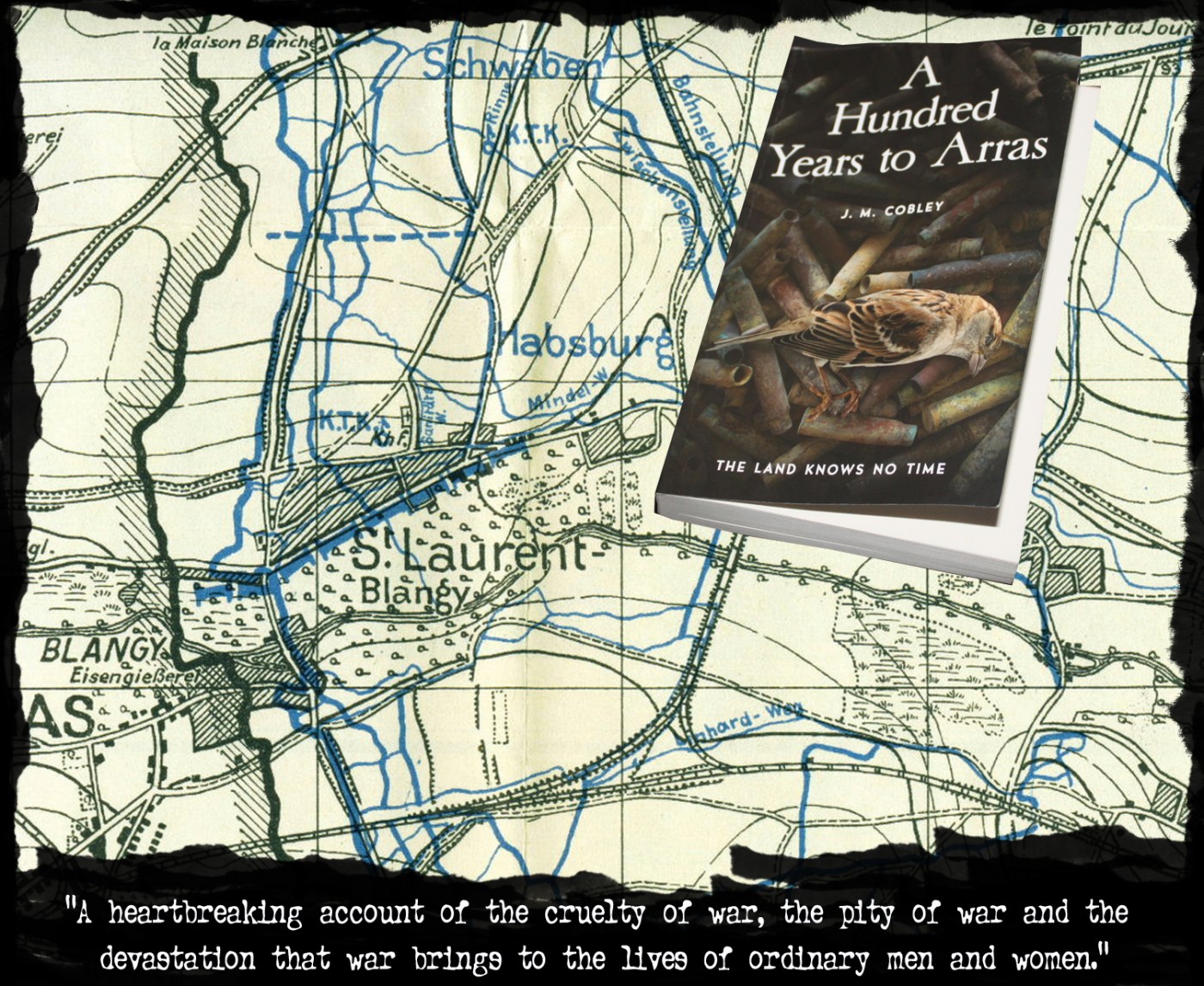
Arras1006Ask the average person to name a Great War battle, and they will probably come up with The Somme, or perhaps Paschendaele. Few would mention Arras. It was certainly shorter than the more infamous prolonged slogging matches, officially lasting from 9th April to 16th May 1917. A brief historical background: after the Battle of the Somme ground to a halt in November 1916, the German army began planning a strategic withdrawal between Arras and Reims. The effect of this would be to shorten their line, making defence easier. The Germans called the new line the Siegfriedstellung, while the British and their allies called it the Hindenburg Line. The withdrawal was conducted with great skill and secrecy, and the Germans conducted a scorched earth policy on the terrain they vacated. The Sam Mendes film 1917 was set against this backdrop.

Arras1005In the spring of 1917, the British planned a major offensive either side of the ancient city of Arras, and J.M. Cobley makes this the climax of his novel. The main protagonist, Robert Henson, is a farmer’s son from Somerset and he enlists with the county regiment, the Somerset Light Infantry. We follow him through training and early skirmishes with the enemy, along with other men who become his close friends, and Cobley makes clever use of the contrast between the Cider With Rosie idylls of life in rural England and the harsh realities of life in the British Army. The author does, however, make the telling point that for some young men the plentiful – if unimaginative – army diet was actually a huge improvement on what they had been used to at home.

Robert Henson soon learns the difference between life out of the line and the very different world in the trenches, where insanitary conditions, rats, lice, dead bodies and haphazard meals – not to mention the danger of sudden death – are ever present. Robert’s skill with a gun – honed since he was a young lad hunting rabbit, pheasant and hare on his father’s farm – comes back to haunt him when he is chosen to be part of a firing squad who must execute two lads who have cracked under the pressure and deserted.

Cobley is not much given to mysticism in this book but, like many who have visited the old battlefields and stood in the silence contemplating the fallen, he senses a crucial link between time, landscape and dramatic events:

“The land sweeps. The mind strays. The soil can be swept away, but the heart is deep-rooted. It always returns. The land, broad and deep, is home. The warmth of the farm and the embrace of the hills, the coldness of the battlefield and the pulse of blood are one in the earth.”

No novel set in the Great War will – for me –  ever come close to John Harris’s magisterial Covenant With Death, but Jason Cobley’s novel is up there with the challengers. The closing pages reveal that the author has a personal connection to Robert Henson. Cobley’s military research is pretty good, and he leaves us with a heartbreaking account of the cruelty of war, the pity of war and the devastation that war brings to the lives of ordinary men and women. We also have a sober – and sombre – reflection on the interweaving mysteries of time and memory. A Hundred Years to Arras is published by Unbound and is out now.

Please read the novel. Then, if you are minded, click here to read more about the real life Robert Gooding Henson.

ROBERT GOODING HENSON . . . A memory

RGH HEADER

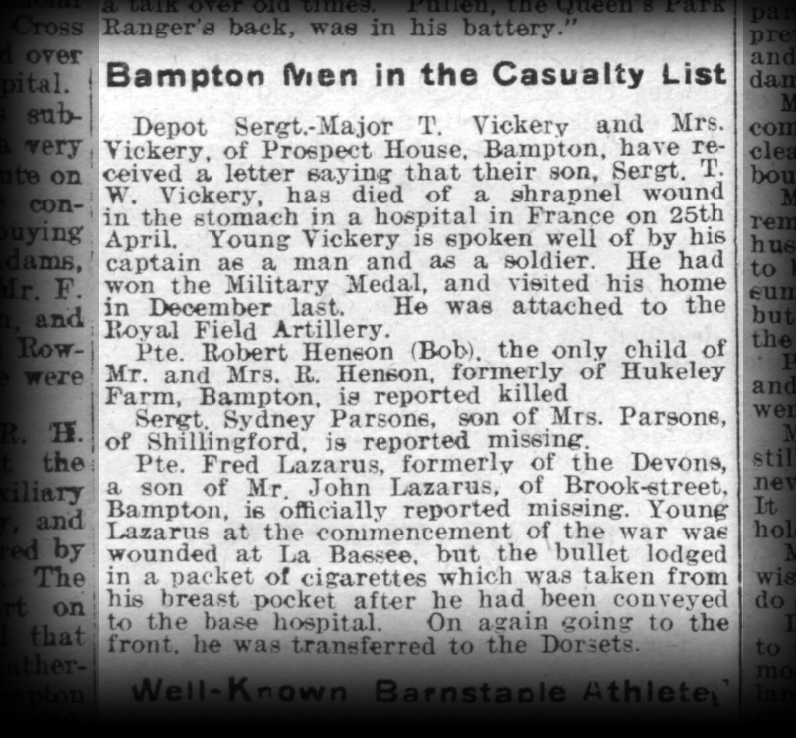
Robert Henson, the central character in J.M. Cobley’s A Hundred Years to Arras is not a fictional creation. He lived and breathed, but was just one of the estimated forty five thousand men to perish during the 1917 battle. He died of wounds, and is buried in Hervin Farm British Cemetery, St Laurent Blangy, on the outskirts of Arras. The Western Times reported his death on Wednesday 9th May 1917.

Newspaper

There is no joy in this sad tale, but at least Robert Henson did not leave a widow – or children – back in Somerset. As Cobley’s book relates, Robert’s death plunged his father deeper into a spiral of drink and depression, and all his mother was left with was the War Gratuity – a paltry one pound eight shillings and fourpence, some mass produced medals, and what was sarcastically termed the “Dead Man’s Penny”, below. (This is not Robert’s actual Memorial Plaque, but an artist’s impression)

Death Penny

s-l1600Robert’s regiment, The Somerset Light Infantry, has a distinguished history. It was founded in 1685 as part of King James II’s response to the Monmouth Rebellion. Under various titles it fought in every major conflict including the Napoleonic Wars, the Crimean War, the Afghan Wars and the Boer War until it was finally merged with other regiments to become The Light Infantry in 1968.

I am old enough to remember when living veterans of The Great War were numbered in their tens of thousands, and I grew up in a country still mourning its WW2 dead, but there was – and always will be – something different about the 1914-1919 war. Poet Vernon Scannell expressed this perfectly: (the full poem is here)

Whenever the November sky
Quivers with a bugle’s hoarse, sweet cry,
The reason darkens; in its evening gleam
Crosses and flares, tormented wire, grey earth
Splattered with crimson flowers,
And I remember,
Not the war I fought in
But the one called Great
Which ended in a sepia November
Four years before my birth.

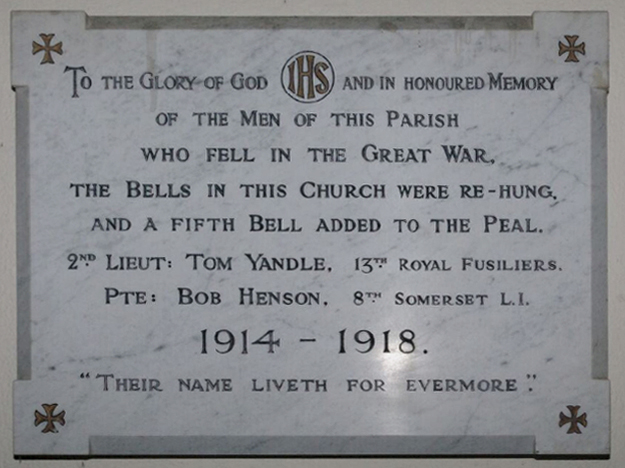
Robert Henson’s name lives on. Not just in the poignant words of a modern novel, or carved on a headstone in a lonely French cemetery, but much closer to the place he called home, whose trees, streams, fields and cloudscapes shaped his upbringing. This simple plaque is on the wall of St John the Baptist church Skilgate.

Plaque


THE MANNEQUIN HOUSE . . . Between the covers

Mannequin header

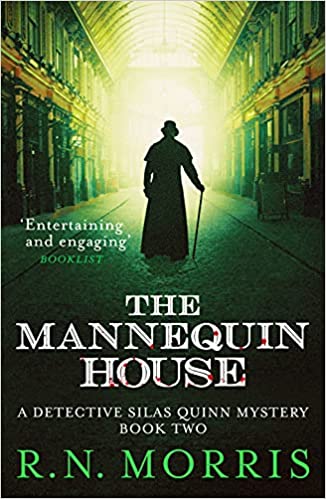
I do love the mysterious world of Detective Inspector Silas Quinn, RN Morris’s rather distinctive London copper from the 1900s. For reviews of earlier novels Summon Up The Blood, The White Feather Killer and The Music Box Enigma click the links. I say “earlier”, but it’s not that simple, as the Silas Quinn books are being reissued by a new publisher, having coming out a few years ago, but since the events they describe are all from a very narrow time frame, the actual chronology doesn’t matter too much.

MannequinQuinn and his sergeants – Inchball and Macadam – are The Special Crimes Department of the Metropolitan Police. This department has a passing resemblance to Christopher Fowler’s Peculiar Crimes Unit (Rest In Peace) insofar as the unit has been constructed around the unique talents of its lead investigator. Like Arthur Bryant, Silas Quinn has strange gifts, and is just as likely to exasperate his superior officers as win their praise, but he is a bloody good copper.

It is March 1914, and most of the citizens of London go about their bustling business oblivious to the gathering storm which would break over their heads in just a few months. Blackley’s Emporium is one of the most successful department stores in the city. You can buy anything and everything that is made, mined or grown on God’s earth, and you may even be greeted by the beaming proprietor himself as you walk through the doors. You can even – should you be minded to take a break from spending money – visit the in-house menagerie which is full of weird and exotic creatures.

One of Benjamin Blackley’s most profitable departments is his haute couture fashion house, where (plus ça change) slender young women wearing must-have gowns and fripperies parade in front of not-so-slender older women. Blackley ‘keeps’ – and I use the word advisedly – his slips of things in a suburban house, presided over by a formidable matron. When the most beautiful of these mannequins – Amélie – doesn’t turn up for work, and her room is found locked from the inside, the police are called. Two things happen when the door is eventually opened. First, an enraged Macaque monkey runs screaming from the room and, second, Amélie has a very good excuse for missing work, as she is dead on her bed, strangled with a silk scarf.The subsequent post-mortem examination reveals that the girl may have been raped, and also that she has maintained her desirability as a fashion model by disastrous self-abuse of her body. 

Morris takes the classic ‘locked room’ trope and has his wicked way with it. There is some knockabout comedy in this book, particularly with Quinn’s wildly contrasting underlings Inchball and Macadam, but there is a vein of darker material running through the narrative. Quinn may be a clever copper, but he is also psychologically damaged from a traumatic childhood. The uneasy personal dynamics between fellow lodgers at the house where Quinn sleeps are a signal that the detective is not at ease with other people. It has to be said, that later (already available) Silas Quinn novels shine a revealing light on this situation. There is great fun to be had within the pages of The Mannequin House, but we are never far away from the evil that men (and women) do, and you must be prepared for a rather shocking and violent end to the story.

As ever, Roger Morris gives us a delicious mystery, a totally authentic background and an absorbing book into which we can escape for a few precious hours. The Mannequin House was first published in 2013, but this new paperback edition from Canelo is out now.

Blackleys

THE POSTMAN DELIVERS . . . Lloyd & Towles

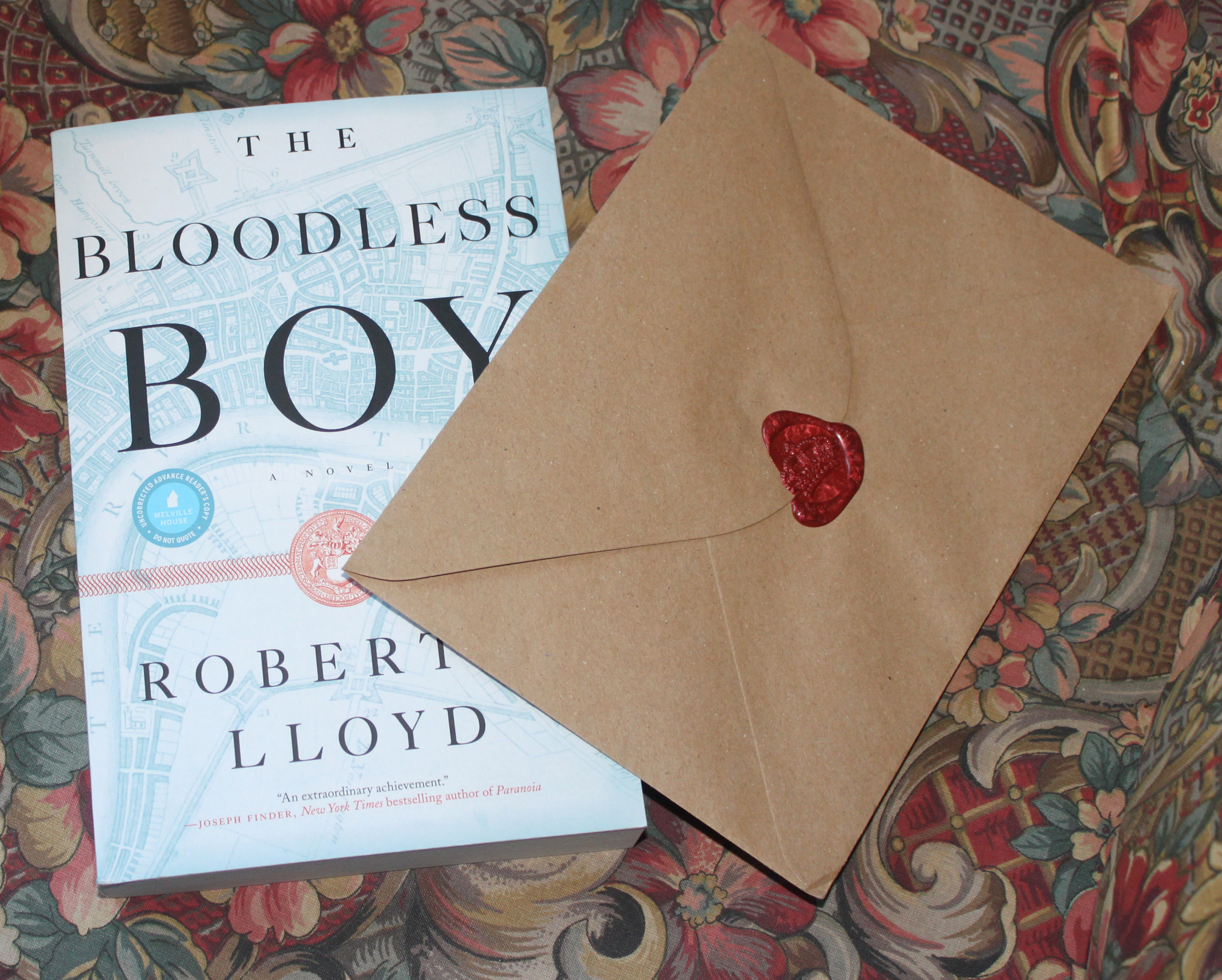
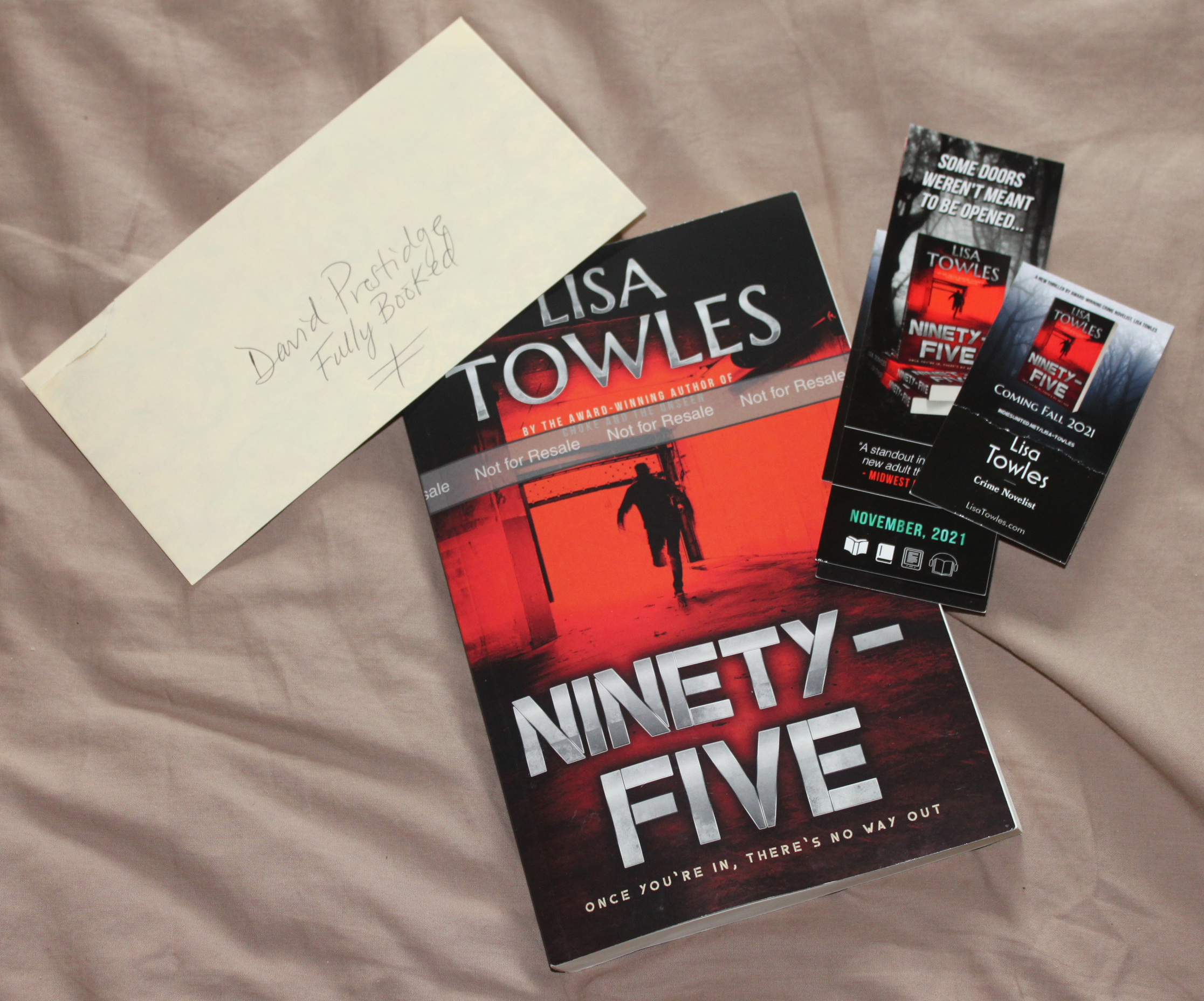
I’ve had two rather special posts in the last couple of days, which is good to see, especially when one comes from America. Also, each came with some tasty ‘bits and bobs’! Neither is due out for a while, but I want to get the word out now, as they both look intriguing.

bloodless010

THE BLOODLESS BOY by Robert J. Lloyd

This sounds like the literary equivalent of a Restoration banquet of many rich courses, each more piquant than the preceding one – and a dramatic contrast to the grim years of he Protectorate. From that broad hint you may already have guessed that the novel is set in the London of Charles II. it is 1678, and the main character is a man of whom I first became aware while struggling to comprehend ‘O’ Level Physics back in the 1960s. We had to study Hooke’s Law (and I failed, dismally) but Robert Hooke was a polymath who has been called “England’s Leonardo“, and he is the central character of this story. He is called upon to investigate the gruesome death of a boy, found on a London riverbank, completely drained of blood. To extend the banquet metaphor, the menu includes a suspected Catholic plot, sinister foreign assassins, wild political intrigue, and a London slowly being rebuilt after the disaster of 1666. The Bloodless Boy is published by Melville House, and will be available on 2nd November. Look out for a full review when the blog tour launches.

Bloodless

95011

NINETY-FIVE by Lisa Towles

Lisa Towles is a very smart lady who works in the California tech industry, and she also a fine writer. I reviewed two earlier books, The Unseen (2019) and Choke (2017) Her latest novel features a young man called Zak Skinner who is – to be blunt – something of a mess. Avoiding awkward decisions and ignoring reality are two of his predominant life-skills, and he has just solved problems he was having at New York University by running away – to the University of Chicago. Zak may not be someone on whom you would rely in a crisis, but he is not stupid, and when he discovers a campus crime scam that involves drugs, coercion and blackmail, his talent for being inquisitive unearths an even bigger criminal operation, which puts him in the gun sight cross-hairs of some very dangerous people. Ninety-Five will be available from Indies United Publishing House on 24th November, and I will write a review nearer the time.

LT2

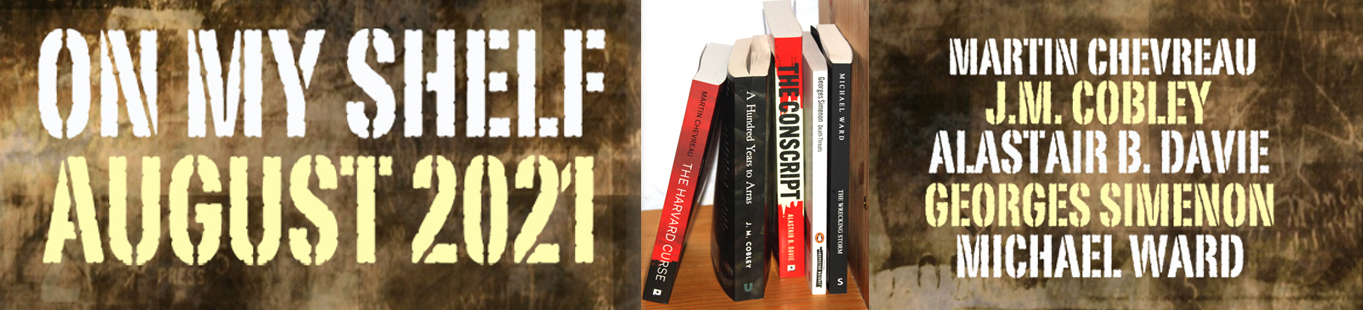
ON MY SHELF, AUGUST 2021 . . . Chevreau, Cobley, Davies, Simenon & Ward

OMS header

This month we have four relatively new names alongside an absolute giant of the genre. In surname order, take a look at:

THE HARVARD CURSE by MARTIN CHEVREAU

Three students disappear at the end of the 2019 autumn term at Harvard. The press dubs it ‘The Harvard Curse’ – but what has really happened? To solve this mystery, we must follow two of the young people, Clementine and Adrien in the months before they vanish – as the pair meet and run into a world of trouble together. Through the complicity of new and old friends alike, they disappear leaving a trail of evidence that readers must examine and decide who is to blame. A central character in this novel is the atmospheric  changing seasons of the New England university campus – a compelling backdrop to the tale as the secrets slowly reveal themselves. This is published by Book Guild and will be available on 28th August.

A HUNDRED YEARS TO ARRAS by J.M. COBLEY

This is not crime fiction, but as someone who is passionate about anything to do with The Great War, I couldn’t resist the chance to review it. It tells the tale of a young Somerset man who enlists to fight the Germans. On one level it is a chilling account of the mincing machine horror of WWI battles, but it also examines the profound links between landscape, history and memory. Check my tweets and main page for a full review. Available now, this book is published by Unbound Digital

THE CONSCRIPT by ALASTAIR B. DAVIE

This is the tale of an idealistic young man from 1940s northern England who is attracted to socialism after his own experience of poverty and hardship. He joins the Communist Party, is manipulated by unscrupulous Soviet agents, and feeds sensitive information to Stalin’s men. While Britain is, notionally, an ally of the Soviet Union, this is no problem, but when the war ends, and Europe is divided by political persuasion, Tom Pearson is faced with a totally different – and potentially deadly – conflict of interests. The Conscript is published by Book Guild and you can buy it here.

DEATH THREATS and other stories by GEORGES SIMENON

Georges Simenon is simply one of the giants of crime fiction. If ever a character could claim to be immortal, Jules Maigret (flanked, perhaps, by Sherlock Holmes and Hercule Poirot) will be on the podium. This new collection of short stories is endorsed by the author’s son, John, and will delight all fans of The Master. Published by Penguin, this paperback will be out in September.

THE WRECKING STORM by MICHAEL WARD

We are in a turbulent England just before the outbreak of the English Civil War. As the chances of a peaceful resolution of the dispute between King and Parliament recede, Puritan radicals demand more concessions from the King. Bishops and lords are attacked in the streets as the Apprentice Boys run amok. Criminal gangs use the disorder to mask their activities while the people of London lock their doors and pray for deliverance.

No one is immune from the contagion. Two Jesuit priests are discovered in hiding and brutally executed – and soon the family of spice merchant Thomas Tallant is drawn into the spiral of violence. Thomas struggles to discover who is responsible, aided by the enigmatic Elizabeth Seymour, a devotee of science, mathematics and tobacco in equal measure. Together they enter a murky world of court politics, street violence, secret codes and poisoned letters, and confront a vicious gang leader who will stop at nothing to satisfy his greed. Published by Sharpe Books, The Wrecking Storm is available now.

OMS2

WOLF AT THE DOOR . . . Between the covers

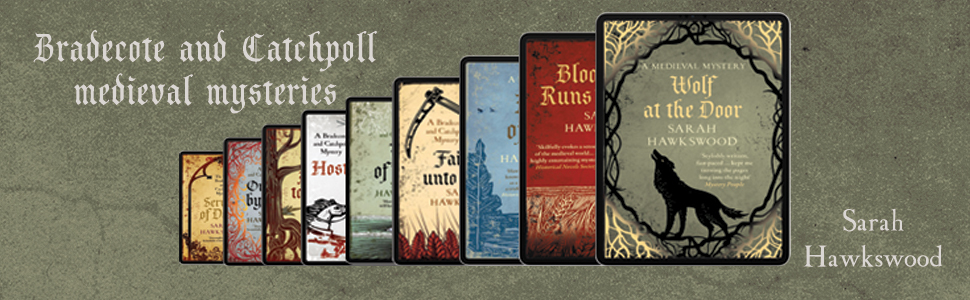
BRADECOTE

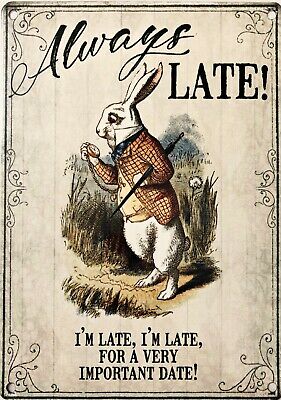
s-l400Rather like Charles Lutwidge Dodgson’s White Rabbit, I am always late. Late, that is, to many excellent crime fiction series that have been on the go for some years. I often come to them a few books in and, having enjoyed what I have read, try to solve the dilemma, which is this. Do I abandon everything else on the TBR pile to read the earlier books, or do I shrug my shoulders and convince myself that the books will always be there, and that I will get round to them “at some point”? Don’t get me wrong, I’m not complaining about being a book reviewer. Publishers send me free books on the understanding that I will read them and that my reviews will help to sell the novels. That’s all good, but one gets locked in to a reading timetable that can be very unforgiving, particularly when blog tours are involved. Reading for pure pleasure and relaxation has to take a back seat, I’m afraid.

That long digression is a background to this review of the latest Bradecote and Catchpoll novel by Sarah Hawkswood. I read – and loved – two of the series, River of Sins and Blood Runs Thicker, and you can read my reviews by clicking the links. Now, the ninth in the series, Wolf At The Door, is with us, and it is every bit as good as the other two have read..

51oDlX1mapS.SX316.SY480._SL500_

For people who are even later arrivals to the party than I, we are in 12th century Worcestershire. Hugh Bradecote is the Under Sheriff of the county, and is of noble birth with a degree of hauteur, while Sergeant Catchpoll is Worcester through-and-through, rough and ready, but very street-wise. Walkelin – the apprentice – is something of a ‘gofer’, but is bright, perceptive, and not afraid to speak his mind. This story begins with the discovery of a man who has met a violent death. His face has been removed and his throat has been ripped out. Extensive damage to his limbs suggests an assault by a violent animal. A wolf, perhaps? But even in the Royal hunting Forest of Feckenham1, wolves have not been seen for many a year.

Hugh Bradecote is on what we could call paternity leave. He is particularly anxious about his heavily pregnant second wife, as his first wife died in childbirth. With some villagers of Feckenham convinced that Durand Wuduweard 2 was savaged by a wolf, and the more credulous of them even believing that the killing was the work of a werewolf, Bradecote has to return to duty.

We are some half way into the book before the officers have any concept of who – and what – is responsible for the death of Durand. More corpses and a savage attack on a landowner prompt an even greater sense of urgency to the quest, but then Bradecote, Catchpoll, Walkelin and their boss De Beachamp finally realise that the motive for the crimes is one of the oldest and deadliest – revenge, bitterly fermented and long standing.

One of the qualities of a natural and gifted storyteller is the ability to provide atmosphere. Sarah Hawkswood recreates a cold and grey Worcestershire at the onset of November. Many of the poorer folk will struggle to survive the next four months and will succumb to cold, hunger, disease – or a mixture of all three. The wolves may have mostly disappeared, but the forest is a dark and unforgiving place for the people who have hacked out space within it for their precarious lives. The grimly authentic setting aside, this is a bloody good detective story from one of our finest writers. Wolf at the Door is published by Allison & Busby and is out on 19th August.

  1. Feckenham Forest was a royal forest, centred on the village of Feckenham, covering large parts of Worcestershire and west Warwickshire. It was not entirely wooded, nor entirely the property of the King. Rather, the King had legal rights over game, wood and grazing within the forest, and special courts imposed harsh penalties when these rights were violated.
  2. A Wuduweard (old English) was the warden of a forest. It is probably the origin of the surname Woodward.

bf9d1108-c997-4fe8-862c-3d05467cea81.__CR0,0,970,300_PT0_SX970_V1___

GUILT . . .Between the covers

Guilt Header

Michelle Kidd is a new name to me, and the central character in this novel – DI Nikki Hardcastle – will be a new name to everyone, as Guilt is the first in a series. The author practiced law for 10 years, specialising in criminal and civil litigation. A career change in 2008 took her to work for the NHS where she still works today. Michelle’s Interests are varied but are mostly reading, wine and cats – but not necessarily in that order. She is no novice author, however. In 2018 she published her first novel, which featured Detective Inspector Jack MacIntosh. There have been three subsequent Jack Macintosh novels and the fifth is expected in 2022.

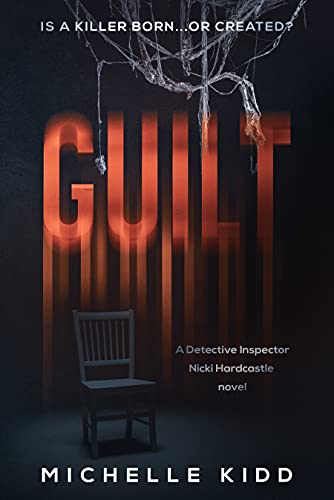
GuiltNikki Hardcastle is a detective in the pleasant Suffolk town of Bury St Edmunds, but being, as the tourist board suggests, “A Jewel in the Crown of Suffolk” is no deterrent to criminals of all kinds, and the particular one at the centre of this story is perhaps the worst sort of all – an abductor of children. My four sons are all grown up now, and they have children of their own, but no matter how many times I read accounts (fictional or otherwise) of that awful moment when a parent first realises that their child is missing, it still chills me to the bone.

One minute Sophia Jackson’s little boy Lucas – enjoying his birthday treat at the traveling fair – is there, and the next minute he is gone. The initial panic, the momentary hope that that the child will suddenly appear, and then the numbing, growing dread that someone has taken him – are described with uncomfortable realism. The police become involved, and Nikki Hardcastle heads up the search – against the better judgment of her boss. His reasons? Nothing to do with Nikki’s competence, but the knowledge that many years ago, she, too, was with her young brother at a funfair, and in the twinkling of an eye was taken while Nikki lingered a little too long at the candy-floss stall. And little Dean – Deano – has never been seen since. Michelle Kidd lets us know quite early where Lucas is and what is happening, and this makes for a tantalising kind of tension as we watch the police go round in circles, while the author explains the traumas – without excusing the deeds – that have shaped the monster who has taken Lucas.

We also learn of the terrible childhood of the abductor, and the awful twists of human cruelty that can make beasts of the psychologically vulnerable. The book also explores the complexity of guilt, and the corrosive effect it can have on families and individuals. Eventually Nikki Hardcastle and her team manage to complete the jigsaw, but the grueling case has one final shock in store for the mentally and physically exhausted detective.

Be warned. This is not a humdrum or cosy (in any shape or form) police procedural. There are descriptions of cruelty and malice which some readers may find difficult. This is however, a cleverly written – and sometimes painfully convincing –  crime novel which shines a light on the darker corners of the human psyche. Guilt is published by Question Mark Press and is available now as a Kindle or in paperback. If you want to find out more about Michelle Kidd, you can visit her website by clicking on her image below.

MK

THE NAMELESS ONES . . . Between the covers

nameless045

Fans of the series can skip this paragraph. Charlie Parker is private eye based in Portland, Maine. His life has been shaped by the savage murder of his wife and daughter some years earlier, and he is – literally – haunted by the spirit of the dead daughter Jennifer. His cases frequently involve contact with people who are not actually spirits but although they have human shape, they are not entirely of this world. Long standing members of the dramatis personnae of the novels include Louis – an African American assassin, very loyal to Parker, and his personal and professional partner Angel, a skillful thief and locksmith who is recovering slowly from cancer. For more on Charlie Parker, click this link.

nameless046Parker takes something of a back seat in this novel (which is the 20th in a magnificent series) as Louis & Angel take centre stage. The first backdrop to this stage is Amsterdam, where a criminal ‘fixer’ called De Jaager goes to an address he uses as a safe house to meet three of his colleagues. He finds one of them, a man called Paulus, shot dead, while the two women, Anouk and Liesl, have been tied up. In control of the house are two Serbian gangsters, Radovan and Spiridon Vuksan. They have come to avenge the death – in which De Jaager was complicit – of one of their acquaintances, who was nicknamed Timmerman (Timber Man) for his love of crucifying his victims on wooden beams. What follows is not for the faint of heart, but sets up a terrific revenge plot.

At this point it is essential to replay what author John Connolly tells us about modern Serbia. Those with a strong stomach can find plenty on the internet and in books about the atrocities committed by Serbians against Bosnian Muslims – and others – in the brutal wars which erupted after the death of President Tito, the communist strongman who had kept the historical enemies – Croatia, Bosnia, Kosovo, Montenegro, Serbia and Macedonia – from each others’ throats between 1945 and 1980. Connolly paints a picture of a state where, despite former leaders like Milošević, Karadžić and Mladić being brought to justice by war crimes courts, Serbia is still largely run by career criminals who, while they may wear suits rather than Kevlar vests, are at the centre of a huge web of international crime which ranges from human trafficking to the drug trade.

I am guessing that John Connolly might not be on the top table of any future festival of crime fiction in Belgrade, but no matter – we have a seriously good story on our hands. Louis, for a variety of reasons, owes De Jaager, and when news reaches him of the Dutchman’s death he prepares to fly to Europe with the physically fragile Angel, but he is also aware that key USA figures inside The White House and the CIA would not be too dismayed were the Vuksan brothers to come to a sticky end.

With Parker otherwise engaged back in Maine, the supernatural element is largely absent here, as Louis and Angel don’t operate on the same psychic wavelength as their buddy. Largely absent, but not totally. Spiridon Vuksan has a murderous little friend called Zorya. She looks, at first glance, like a little girl, but on closer inspection she is a woman, and not a young one. She reminded me of the malevolent red-hooded little figure in Don’t Look Now – and we all know how that ended. Zorya is, as far as her human form goes, one of the Vlachs people, an ethnic group from the southern Balkans. She is also a strigoi.  in Romanian mythology they are troubled spirits that are said to have risen from the grave. They are attributed with the abilities to transform into an animal, become invisible, and to gain vitality from the blood of their victims. Her fate is not in the hands of Louis and Angel, however, but governed by the spirit of Jennifer Parker who, once a victim, is now distinctly menacing.

John Connolly is an inspired storyteller, and if this novel doesn’t play merry hell with your heartbeat, then you may need medical attention. The Nameless Ones is published by Hodder & Stoughton and is out now.

Blog at WordPress.com.

Up ↑