Search

fullybooked2017

Author

fullybooked2017

A retired Assistant Head Teacher, mad keen on guitars. Four grown-up sons, two delightful grandchildren. Enjoys shooting at targets, not living things. Determined not to go gently into that good night.

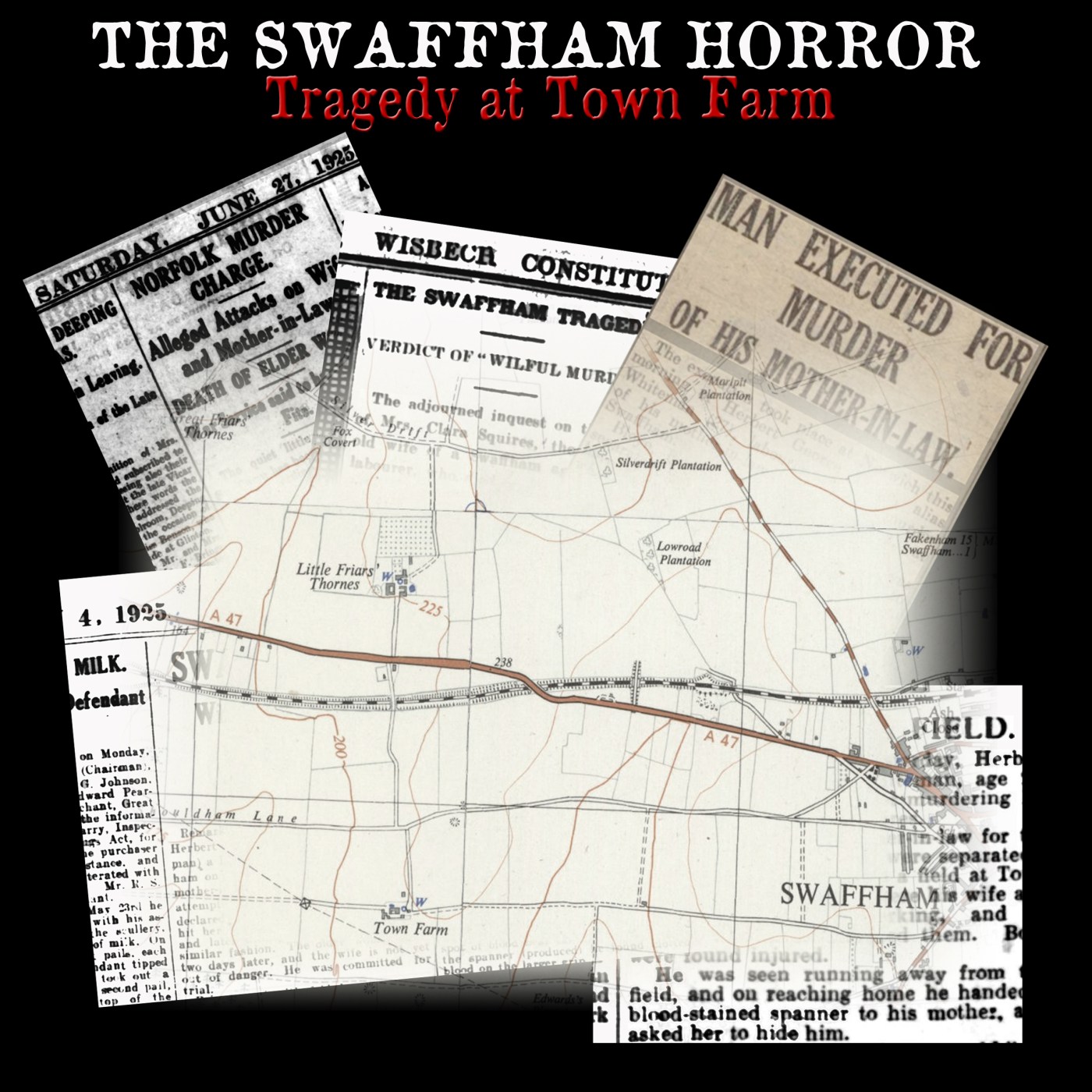
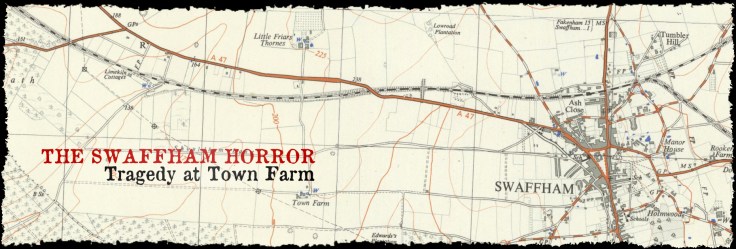
THE SWAFFHAM HORROR . . . Tragedy at Town Farm (1)

Header

I have been researching and writing about these tragedies for many years, and one thought never fails to cross my mind when I look into the backgrounds of the people involved. What if their paths had never crossed? What was the fateful moment when the die was cast, and it was almost inevitable that there would be a tragic outcome? The three principle characters in this drama are Herbert George Whiteman, Alice Squires – who would go on to become Alice Whiteman – and her mother, Clara Squires. The two families had much in common. Both lived in Swaffham, or nearby, Both relied upon the hard grind of agricultural labour to keep a roof over their heads and food on the table.

The 1911 census has Whiteman, simply listed as George (aged 12) living in Newton by Castle Acre with his father Walter (49) his mother Hannah (neé Bloye) and two younger siblings Thomas and Julia. The same census gives us, at Tower Court in Lynn Street, Swaffham, Alice Squires (9), along with parents William and Clara, and siblings.

We know little about what happened to George and Alice until the years after The Great War. George Whiteman served as a Private in The Norfolk Regiment, but not for the duration of the war. He was still at home in November 1916, as we know from a bizarre brush with the criminal justice system,mas reported in The Lynn News.

NUTS

At some point, either through volunteering or by conscription he went ‘to do his bit’, and thanks to pension records, we know he was discharged in the spring of 1919, with a disability pension. What this disability was remains unclear. There were reports later that something he had seen or experienced while on service had caused him to have fits. The pension system was complex, but put simply, a man with a severe disability such as loss of limbs or severe mental damage was entitled to a maximum of forty shillings (£2) a week. The army had a scale of payments for lesser injuries, and Whiteman’s pension card reveals he was to receive five shillings and sixpence each week –  a pension of around 13% of the maximum.

We do not know if George and Alice ‘courted’ during the war years, but we do know that they married in January 1921, in Swaffham. It is almost certain that Alice was ‘in the family way’, because in March 1921 she was delivered of a daughter, Dorothy Mary, but the child was not long for the world. Parish records show she died on 14th May.

Dorothy May death

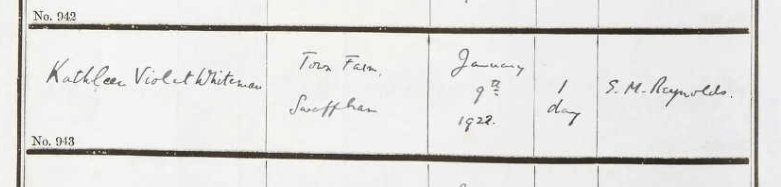
Interestingly, this is the first time the name of Town Farm crops up in the narrative. The Whitemans were to fare no better with their second child, Kathleen Violet, who survived only a matter of hours.
Kathleen V death

The Whitemans persisted, and with better luck. Herbert RW Whiteman was born on 16th February 1923, and then came Evelyn E Whiteman in October 1924. It seems that by the time of Evelyn’s birth the marriage was in trouble, mainly due to George Whiteman’s violence towards his wife, and by the early summer of 1925, Alice had left him, and moved back in with her parents, taking the two youngsters with her.
Station Street

Screen Shot 2022-01-21 at 20.29.21There is more than one Town Farm near Swaffham, but I am certain that the one central to this story is the farm that sits on Shoemakers Lane. My reasons for this are that immediately after the terrible events of Monday 15th June, George Whiteman is described as making his escape across the railway line in the direction of his mother’s house at Great Thorne. Nothing else makes sense, so I am convinced that this is the correct location. In part two, I will describe the tragic events of that June day, and how justice was done in the case of George Whiteman’s mother in law, if not with regards to his young wife.

IN PART TWO – A county in deep shock, an arrest, a confession, and an appointment with both The Lord Chief Justice of the land and the hangman.


CITY OF THE DEAD . . . Between the covers

cotd012 copy

This is another case for psychologist  Professor Alex Delware and his buddy, LAPD cop Lieutenant Milo Sturgis. As ever, the book is brimming with all the joys of Californication – fake lifestyle gurus, washed-up former pop stars, bent lawyers, damaged families and dead bodies – always plenty of dead bodies. The first of these is of a young man, stark naked, who – in an apparent psychotic episode – runs out from a house in a smart district in the LA suburbs, at 4.00am – and straight into the side of a moving truck. Instant fatality.

cotd013When the cops investigate the house from which the young man ran, they find the second corpse of the morning, with her throat slit. She is – or rather was – Cordi Gannet. She made a decent living producing lifestyle videos for YouTube, full of cod psychology and trite advice about life improvement strategies. Her psychology degree was apparently bought mail-order from an on-line university, and when Alex Delaware gets to the scene with Milo, he remembers that he was once involved in a child custody case where Cordi Gannet was introduced as an expert witness – with disastrous consequences.

They soon find that Cordi Gannet’s family background was suitably California Chaotic – no known father, a mother who scraped by waiting tables until she got lucky and married an affluent surgeon. As for the young man, after much tail-chasing they learn that he was a harmless and affable young hairdresser who had something of a ‘gay-crush’ on Ms Gannet with all her pan flutes and whale songs, but had no obvious enemies.

The investigation meanders, slows – and then grinds to a halt. Delaware and Sturgis are sidetracked by another murder – the killing of a violent testosterone-fueled bodybuilder whose onetime business partner was a former adversary of Delaware’s in the family courts. This one they manage to crack, but it is not until Delaware goes back to the day job and begins consultation sessions with another pair of warring parents – one of whom was a  near neighbour of Cordi Gannet, that the breakthrough comes.

Screen Shot 2022-01-19 at 19.13.17Watching the Delaware-Sturgis partnership work on a case is fascinating. Yes, by my reckoning this is the 37th in the series. No, that’s not a typo. Thirty seven since their debut in When The Bough Breaks (1985). 1985. Blimey. Amongst other ground-breaking events in that year, I read that Playboy stopped stapling its centrefolds, the first episode of Eastenders was broadcast, and Freddie Mercury stole the show at Live Aid. But I digress.
There are no surprises in City of The Dead, at least in terms of the personal dynamics between the investigators. Delaware is super-cool, Sturgis has zero dress sense and is inveterate fridge raider, and the pair never really get ‘down and dirty’ with the criminals they hunt. In spite of the familiar formula, this is still a cracking read and cleverly plotted, with Kellerman (right)  setting several snares for the unwary reader. City of The Dead is published by Century, and will be available from 17th February.

THE BLOOD COVENANT . . . Between the covers

Screen Shot 2022-01-03 at 18.33.51

One of my sons was at Leeds University, and my impression of the city during visits either to move house or to bring food and supplies, was of a place very much sure of itself, embracing the past while relishing a vibrant future. But this was largely Headingly, the university quarter, full of bookshops, trendy cafes and largely peopled by the offspring of comfortable middle class people like me and my wife.

TBCChris Nickson’s Leeds is a very different place. In the Tom Harper novels (click link) and in this,  the latest account of the career of Simon Westow, thief-taker, things are very, very different. This is Georgian England (1823, in this case) and Westow – in an age before a regular police force – earns his living recovering stolen property, for a percentage of its value. He has no judicial authority, save that of his quick wits, his fists and- occasionally – his knife. Recovering from a debilitating illness, Westow is back on the streets, and is juggling with several different investigations. A man has been hauled out of the river. His throat has been fatally slashed, and one of his hands has been hacked off. His brother hires Westow to answer ‘who?’ and ‘why?’.

A rich and powerful Leeds entrepreneur called Arden sets Westow the task of recovering a pair of valuable candlesticks, stolen from his son. But when the investigation is concluded, all too easily, Westow is forced to wonder if he is not being used as a dupe in some larger scheme. To add to his workload, Westow sets out to avenge the deaths of two lads, apparently starved then beaten to death by brutal overseers at a Leeds factory owned by a mysterious man named Seaton.

Westow’s assistant is a deceptively fragile young woman called Jane. Raped by her father and then thrown out on the street by her mother, she has learned to survive by cunning – and a fatal ability to use a knife, without a second thought, or her dreams being haunted by her victims. She has, to some extent, ‘come in from the cold’ as she no longer lives on the street, but with an elderly lady of infinite kindness.

As Leeds is cut off from the rest of the world by deep snow, there are more deaths, but few answers. The only thing that is clear in Westow’s mind is that there is that – for whatever reason – a blood covenant exists between Arden and Seaton. Two rich and powerful men who have the rudimentary criminal justice system within Leeds at their beck and call. Two men who want ruin – and death – to come to Westow and those he loves.

TBC footer

Before we reach a terrifying finale at a remote farm in the hills beyond Leeds, Nickson demonstrates why he is such a good – and impassioned – novelist. He burns with an anger at the decades of of injustice, hardship and misery inflicted on working people by the men who built industrial Leeds, and made their fortunes on the broken bodies of the poor strugglers who lived such dark lives in the insanitary terraces that clustered around the mills and foundries. In terms of modern politics, Chris Nickson and I are worlds apart and there is, of course, a separate debate to be had about the long term effects of the industrial  revolution, but it would be a callous person who could remain unmoved by the accounts of the human wreckage caused by the huge technological upheavals of the 18th and 19th centuries.

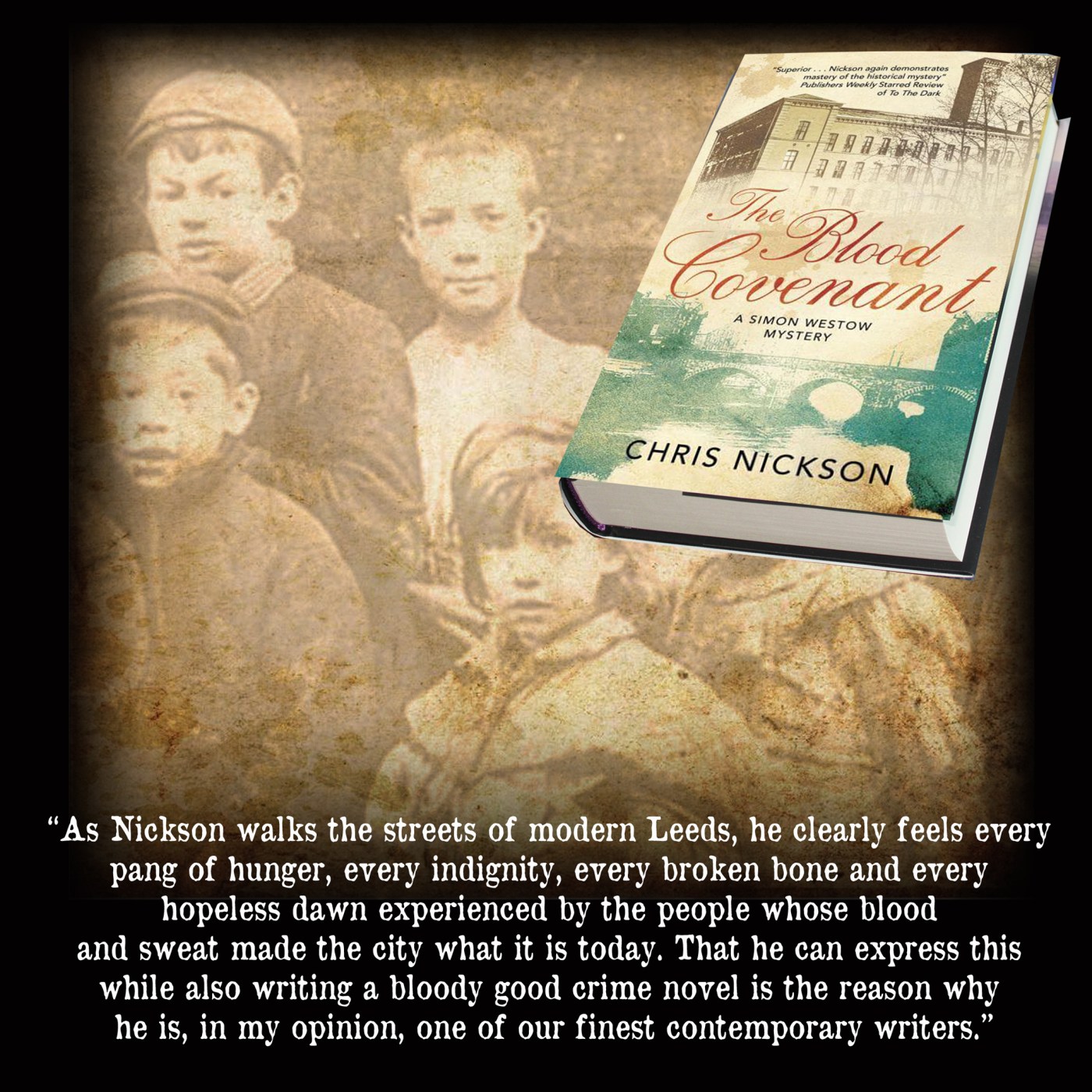
There is. of course, a noble tradition of writers who exposed social injustice nearer to their own times – Charles Dickens, Charles Kingsley, Robert Tressell and John Steinbeck, to name but a few, but we shouldn’t dismiss Nickson’s anger because of the distance between his books and the events he describes. As he walks the streets of modern Leeds, he clearly feels every pang of hunger, every indignity, every broken bone and every hopeless dawn experienced by the people whose blood and sweat made the city what it is today. That he can express this while also writing a bloody good crime novel is the reason why he is, in my opinion, one of our finest contemporary writers. The Blood Covenant is published by Severn House and is out now.

ON MY SHELF . . . January 2022

OMS Header

TS Eliot thought that April was the cruelest month, but I reckon he was wrong. I’ll go for January, every time. The joys of Christmas are reduced to a few deflated plastic Santas, only the last dregs of that litre bottle of Baileys remain and – for some – a reckoning with a credit card provider awaits. Yes, the days are getting longer, by tiny increments, but the metaphorical rebirth that Spring brings seems an age away. Thank God, then, for books. I am grateful to publishers and publicists for these arrivals:

THE LENSKY CONNECTION by Conrad Delacroix

This political thriller is set in the uncertain days of post communist Russia, when the old certainties – grim as they were – were being replaced by a power struggle between oligarchs, gangsters, and those who hedged their bets as to which new power group was most likely to succeed. Major Valery Grosky is a Federal Security Bureau officer fighting organised crime, but when he is pulled off normal duties to build a case against one of the oligarchs, he finds links that run between the most powerful politicians in both Russia and America. This dangerous knowledge plunges Grosky into a fight to save not only his career – but his life. The Lensky Connection is published by Matador, and is available now.

HIVE by April Doyle

There can’t be too many books where bees are the main characters. I seem to remember that in A Slight Trick of The Mind, a Sherlock Holmes homage from Mitch Culln, bees played a pivotal part, but this novel is centred on a criminal conspiracy involving the death of bee colonies and the attempts of a research entomologist Dr Annie Abrams to prevent an ecological disaster. To enter a prize draw to win a copy of the book, go to April Doyle’s Twitter page which is @aprilcdoyle. This will be out on 28th January and is published by The Book Guild.

THE DIGNITY OF SILENCE by June Felton

This book begins in the turmoil of Prague in 1942, where the every breath taken and every move made by the Czech people are controlled by their Nazi masters.  Ernst – and his daughter – have managed to escape to London, but the ensuing years only enhance the sense of guilt he feels, and when he finally returns to the city of his youth, old grievances and bitter memories threaten his sense of himself, and what he once was. Also published by The Book Guild, The Dignity of Silence is out now.

ONE STEP TOO FAR by Lisa Gardner

Sometimes, being a book reviewer feels like wading through a fierce, tugging torrent of flood water. Make a wrong step, and you are done for. Fortunately, there are some authors who provide rock-solid and reliable stepping stones, and Lisa Gardner is one such. Her latest novel is the second in the Frankie Elkin series, following on from Before She Disappeared. You can read my review of that here, but now Frankie returns to discover the truth about a young man who disappeared years ago during a stag weekend. As Frankie and the missing man’s friends try to retrace his steps, they are unaware that they are heading into deep trouble.  This is a Penguin book, and will be published on 20th January. (The cover image is the proof copy)

A FATAL CROSSING by Tom Hindle

This debut novel is set on a transatlantic liner travelling to New York in 1924.  The Endeavour has 2,000 passengers – and a killer – on board, as well as James Temple, a dtermined Scotland Yard inspector. When an elderly gentleman is found dead at the foot of a staircase, ship’s officer Timothy Birch is ready to declare it a tragic accident. But Temple is certain there is more to this misfortune than meets the eye. This is a must for those who like period CriFi and locked room – albeit of a nautical kind – mysteries. Published by Penguin, A Fatal Crossing will be on the shelves from 20th January. Originally from Leeds, Tom Hindle now lives in Oxfordshire, where he lives with his fiancée. He is Inspired by masters of the crime genre, from Agatha Christie to Anthony Horowitz.

CITY OF THE DEAD by Jonathan Kellerman

I don’t know why I should term this “a confession”, but I absolutely love the Alex Delaware/Milo Sturgis novels. More erudite reviewers than I might scoff and summon up metaphors of comfortable slippers and cardigans, but they can go forth and multiply. Yes, there is a formula. Yes there are a several well-worn-grooves, like Milo’s gayness, his gluttony, Alex Delaware’s girfriend’s luthier skills, and the ever-present bloody dog, but the books are superbly written, and Kellerman deserves all the success that comes his way. Here, a corpse discovered almost by accident in a wealthy LA suburb proves to be a professional colleague of Alex, and the case takes on a disturbing – and deeply dangerous aspect. This is also from Penguin, but you will have to wait until 17th February to get your hands on a copy.

AND ON MY KINDLE

TBC KIndleA new book from Chris Nickson is always a joy, even if the times and circumstances he writes about are seldom a cause for celebration. His cerebral connection with the downtrodden and exploited people who once walked the streets of his native Leeds is almost tangible, and here his words burn white hot as his Georgian thief taker – Simon Westow – becomes involved in several cases at once. He is determined to avenge two boys brutalised in a local mill, while also trying to solve the mystery of a corpse dragged from the local river, throat cut and minus a hand. All this while unwillingly coming to the attention of one of the richest – and most dangerous men in the city. Expect another star turn from the enigmatic – but deadly – assassin known only as Jane, as a ghost from her past threatens to disturb her fragile equilibrium. The Blood Covenant is from Severn House and is available now. Regular visitors to Fully Booked will know I am a great admirer of Chris Nickson. My thoughts on his books are here.

FOUR MORE ANGELS IN HEAVEN TONIGHT . . . The Wimblington Tragedy (2)

Header4A

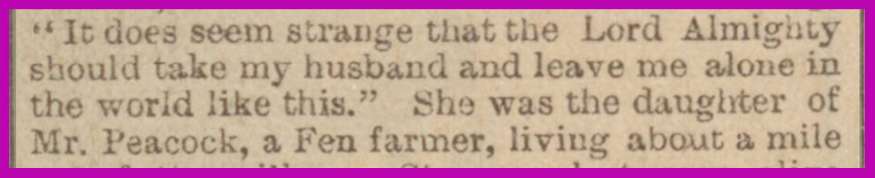
SO FAR – It is February 1896, and Mary Jane Farnham has moved back to Wimblington following the death of her husband, Henry, a former Stationmaster in Essex. She has five children, but is  comfortably provided for, thanks to savings, insurance and a pension from the Railway Benevolent Fund. She and the children have rented a roomy cottage, not far from Wimblington railway station. The children are universally liked, and she is regarded as a quiet and respectable woman. She and the four younger children – Lucilla, aged 12, is in service with a family in nearby March – are regular church-goers. But something is very wrong. She has mentioned to her parents that the strain of being alone troubles her. Her words were later quoted in the press:

Quote

It can have been no comfort to Mary Jane Farnham to be living within sight and sound of Wimblington railway station, and it must have been a daily reminder of better days, when she and her husband lived in a similar building, were pillars of the community, and with their whole lives ahead of them.

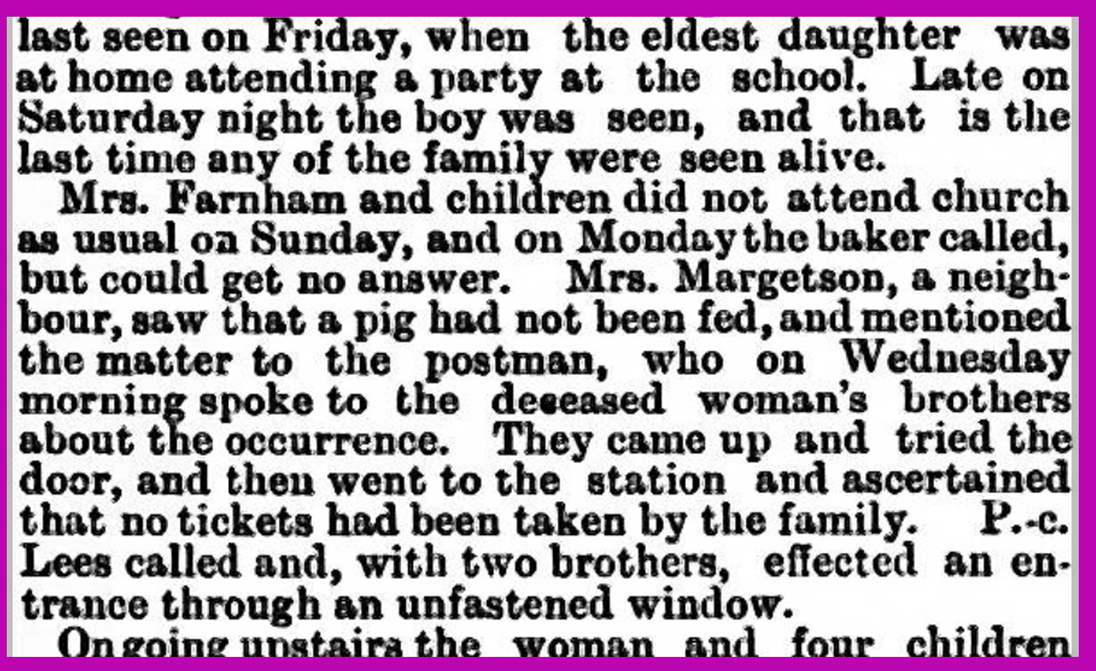
I have been researching and writing these true crime stories for many years, and I can truthfully say that none of the human tragedies I have investigated comes close to this one in terms of loss and despair. The Farnhams were last seen alive at some time on Saturday 15th February. It needs to be remembered that communities were much smaller and ‘in-each-other’s-pockets’ in those days, and the comings and goings of villagers in a place like Wimblington were very public. Bit by bit, villagers suspected that something was wrong.

Unease

What the Peacock brothers and the village policeman found in the upstairs bedrooms would probably haunt them for the rest of their lives. Marjorie May, 11, Sidney Harold, 8, Henrietta Mary, 6, and Dorothy Esther, 4, were dead in their beds, killed while they slept, and their throats cut so deeply that their heads were nearly severed. Beside them was the body of their mother, a white handled knife, savagely sharp, in her dead hand. The bedsheets around the bodies were saturated with blood. It was.literally, a bloodbath.

This was no spur of the moment act of desperation by Mary Jane Farnham. On a table in the house was an envelope containing the outstanding rent on the cottage. Even more chilling, It was later revealed that she had sent a letter to the Railway Benevolent Fund requesting that her widow’s pension be terminated. This mixture of propriety and savagery is hard to comprehend, even though a century and more has passed.

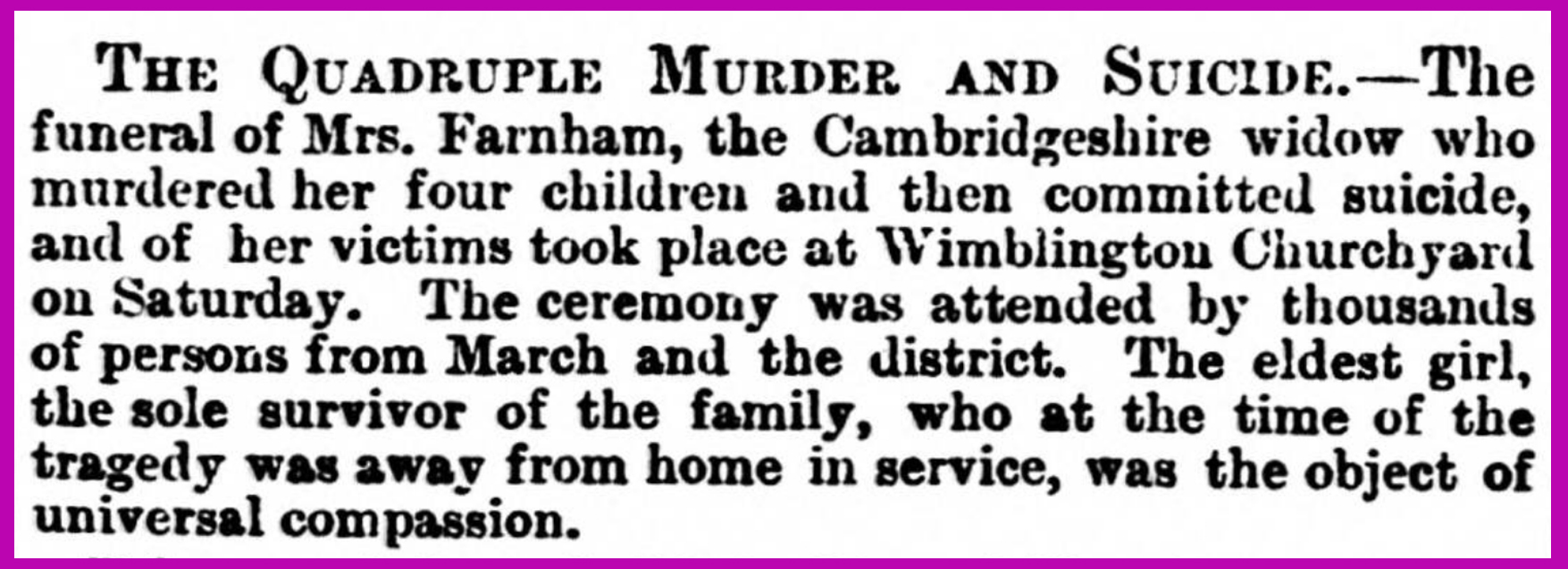
The inquest verdict on the five dead was a formality – murder and suicide while temporarily insane. To the eternal credit of the community, Mary Jane Farnham was not separated from her children even in death, and their joint funeral, just seven days after their deaths, attracted widespread attention. 

Funeral

This remarkable photograph of the funeral is used with permission of its owners, the Fisher Parkinson Trust, a local heritage archive.

Funeral

These accounts of man’s inhumanity to man are not intended as judgments, or condemnations, but it is difficult to balance out sympathy for Mary Jane Farnham’s grief and the sheer inhumanity she showed when she cut the throats of her four younger children. They all had lives to lead, as we can see by following the progress of Lucilla, the daughter who was lucky enough to be elsewhere on that fateful Saturday night in February 1896. By 1901, she was living in Leeds with her aunt, working as a draper’s assistant, by 1911 she had moved to Bournemouth, and  in 1917 the records tell us that she married Daniel Meaney in Exeter. She died in 1968 at the age 0f 86.

Judgement is for God alone, so I conclude this sad tale with a picture taken in the churchyard at Wimblington. (NB – the ages of the two younger children are incorrectly inscribed)

Gravestone

FOUR MORE ANGELS IN HEAVEN TONIGHT . . . The Wimblington Tragedy (1)

Header4A

Mary Jane Peacock was born, some registers say, in Upwell in 1855, but the 1861 census says that she was born in Wimblington, and shows her living there with her parents.

The Cock

Screen Shot 2022-01-04 at 20.28.32Her father was John Peacock, who kept The Cock Inn on Eastwood End. In the autumn of 1877, she married Henry Farnham, who worked for The Great Eastern Railway. He became the Stationmaster at Takeley, (left) a station on the Bishops Stortford – Braintree line. The Stationmaster’s house was substantial, and survives to this day, (although the line it once served has long since disappeared. The 1891 census seems to show the Farnhams – still living at Takeley – as a happy and prosperous family which included Lucella (8), Marjorie (6), Sidney (3) and Henrietta (3 months).

Takeley

Then, in 1893, the family welcomed another child – Dorothy – but within months tragedy struck. Henry Farnham died of “congestion of the lungs’ which sounds like pneumonia. The family were immensely well thought-of in the area. A newspaper reported:

“The family, were always held the very highest respect, and had the sympathy of all classes in the neighbourhood ou the death of the father, which led to their removal from the village. The late Mr. Farnham came to Takeley station-master from his native fen country about years ago, bringing with him his newly wedded bride. He had formerly held similar position on the G.E.R. at Wilburton. Mr. and Mrs. Farnham made many friends and were regarded as exemplary couple. He was a man that nobody could help liking— the most amiable and obliging man ever met with the railway service. He was held much esteem the Earl and Countess Warwick, who used the station frequently while residing at Easton, and H.R.H. the Prince of Wales, when making visits to Easton Lodge, always had cheery word to say to Farnham, and when, after the station master’s death, subscription was set on foot for the widow and family, his Royal Highness gave handsomely towards it, as also did the Earl and Countess of Warwick, Sir Walter Gilbey, and other residents of the neighbourhood.

Mr. and Mrs. Farnham were thrifty people, and despite the expense of bringing up young family they had put away for future use a nice little sum, which with £100 that the widow received from an insurance company upon the death of her husband, and about £80 which was subscribed for them locally, and various benefit club payments, amounted something like £400. The Great Eastern Railway Company allowed her £10 a year for life.”

No-one who attended Henry Farnham’s funeral could have possibly predicted an even greater tragedy which was to follow

In the autumn of 1895, Mary Jane Farnham moved back to Wimblington with her children, and settled in what was described as a comfortable four roomed cottage situated near the station, rented from a Mr Fisher. February 1896 was to witness an event which sent shockwaves, not just across Fenland, but throughout Britain

IN PART TWO – A HEARTBREAKING DISCOVERY

SNOW AND STEEL . . . Between the covers

sas009

I thought it was high time I included some non-fiction reviews. I am a keen (amateur) military historian, so I am happy to start this little adventure into the unknown by reviewing a superb history, written by Peter Caddick-Adams, of one of the bloodiest battles of WW2. I was going to use the word ‘decisive’, but that would be inappropriate as it suggests that the outcome of the Battle of The Bulge, which began in December 1944. was a pivotal point in the war. It wasn’t. Hitler’s war was already lost, mainly thanks his disastrous attempt to invade Russia.

SAS coverBy the autumn of 1944, German forces had been pushed out of France and were being systematically overwhelmed by the Red Army in the east. The allies had control of the Channel coast, but the Germans had effectively wrecked the French ports. Antwerp, however, had been taken more or less intact, and when the Germans had been removed from their strong-points controlling the estuary of the River Scheldt, the Belgian port became a massive conduit for the arrival of men, machines and supplies for the Allies.

Hitler believed that if he could reach Antwerp and choke the Allies’ massive superiority in materiel, he could somehow wrench victory from the jaws of defeat. Caddick-Adams tells a tale as tense and addictive as any murder mystery. Let’s look at the three main ingredients of such tales:

Motive; in the east, the Russians were just too many, too implacable, and too powerful, so Hitler needed a win – somewhere, anywhere.

Opportunity; the largely American forces in the Ardennes area were a mixture of battle-hardened veterans who has stormed the Normandy beaches on 6th June, and more callow units. Some had been battered and bloodied by the savage fighting in the Hurtgen Forest earlier that year. For a first hand account of that battle seen through the eyes of JD Salinger, click this link. None of these American units were expecting anything other than a steady but remorseless slog eastwards until they crossed the Rhine, until they were able to beard the Fuhrer in his den.

Means? Aye, there’s the rub.  Caddick-Adams explains that the cream of the German army had already been wiped out on the undulating fields of Normandy and bleaker killing grounds of East Prussia. The Werhmacht – comprising its three branches of land, sea and air forces – was on its uppers. To boost the forces attempting to storm their way across Belgium and recapture Antwerp, navy men from the Kriegsmarine and ground-crew from the Luftwaffe were given a helmet and a gun, and pitched against American forces.

Screen Shot 2022-01-01 at 09.41.39It is one of the great paradoxes of WW2 that on the ground, at least, the Germans had the best guns, the best artillery and the best tanks. The problem was that although the formidable Panzers were easily able to overcome the relatively underpowered Sherman tanks used by the allies, the German vehicles were high maintenance and, some would say, over-engineered. The ubiquitous Shermans were rolling off the production lines in their thousands, while the formidable Tigers and Panthers – when they developed a fault – were fiendishly difficult to repair or cannibalise. Caddick-Adams (right) also reminds us how well-fed and supplied the American GIs were compared with their German foes. In one particularly eloquent passage, he tells us of the utter joy felt by a unit of Volksgrenadiers when they seized a supply of American rations. When their own kitchen unit eventually reached their position, the cooks and their containers of watery stew were given very short shrift.
Snow and Steel covers ground familiar to many amateur historians – the Malmedy Massacre, the heroic defence of Bastogne, and Hitler’s manic distrust of his generals, amplified by the Stauffenberg plot. The eventual outcome of this battle is a matter of history so, although his narrative is as good as any found in contemporary thrillers of mysteries, Caddick-Adams knows we expect no surprises. What he gives us, however, is what used to be called (in the age of vinyl) a double A-side. We have a brilliant, methodical and comprehensive account of a battle where we get to see both the strategic and tactical implications of a military campaign. Flip the metaphorical record over, and we have a vivid account of a battle as seen by men who were there, told in their own words, and thus made even more chilling through its immediacy. Snow and Steel is published by Arrow and is available here.

THE OXFORD STREET ATROCITY . . . Murder most foul in Leamington, 1907 (part two)

HEADER

SO FAR: On the night of Saturday 3rd March 1907, In a drink-fueled fit of rage, 33 year-old Edwin James Moore has set his mother on fire at their home, 13 Oxford Street. She is pronounced dead at the scene.

While the doctor, police, neighbours and the other members of the Moore family crowded into 13 Oxford Street, what had become of the central character in this drama, Edwin James Moore? With skin hanging from his hands and arms after trying – and failing – to extinguish the flames that killed his mother, he was taken by one of the neighbours to a nearby chemist to have his burns dressed, but it was clear the damage was severe, and he was taken to the Warneford Hospital, was treated further treated for his wounds and kept in overnight.

In the drama of the moment, the cries of young Bertie Moore (“Help! Murder!”) had been temporarily disregarded, and it was assumed that there had been a terrible accident, but when the proverbial dust settled and Police Sergeant Rainbow spoke to the distressed child, it was clear that Fanny Moore’s death was something other than a misfortune. On the Sunday morning, Rainbow visited Edwin Moore in hospital, and put it to him that he had killed his mother. Moore replied, indignantly:

“No, never. I tried to put out the fire and burnt my coat in doing it.”

Despite his denial, Moore was arrested and appeared before Leamington magistrates, where he continued to deny that he had caused his mother’s death. The magistrates were unconvinced, and sent him to be tried at the next Warwick Assizes on a charge of wilful murder. Meanwhile, the Moore family had a final melancholy duty to perform.

Funeral

The County Assizes were a major civic event. The Great and the Good put on their best finery to celebrate this most emphatic and visible reminder to the common folk that British justice was a solemn affair, and those who fell foul of it were in a very dark place indeed. The local paper reported:

WARWICKSHIRE WINTER ASSIZES. The Warwickshire Winter Assizes were opened at the Shire Hall, Warwick, Friday morning, before Mr. Justice Phillimore. His Lordship arrived in the town on Thursday afternoon, and was met by the High Sheriff (Sir William Jaffray) and the Sheriff’s Chaplain (the Rev. J. Thompson;. GRAND JURY: the following were sworn upon the Grand Jury : Lord Algernon Percy foreman), Mr. H. Lakin, Mr F. E. Muntz, Major F. Hood Gregory, Capt. F. Gerard, Mr. D. S. Greig, Mr. F. Stanger Leathes, Major H. Chesshyre Molyneus, Major Gibsone, Major Armstrong, Mr A. Kay,   Mr R. W. Lindsay, .Mr A. Sabin Smith, Mr. J. Booth, Mr. W. E. Everitt,  G Anson-Yeld, Mr. E. C. Gray-Hatherell, Mr. A. Batchelor, Mr. Savory, Mr. P. S. Danby, Mr. S. Flavel and Captain K. Oliver-Bellasis.” 

Judge

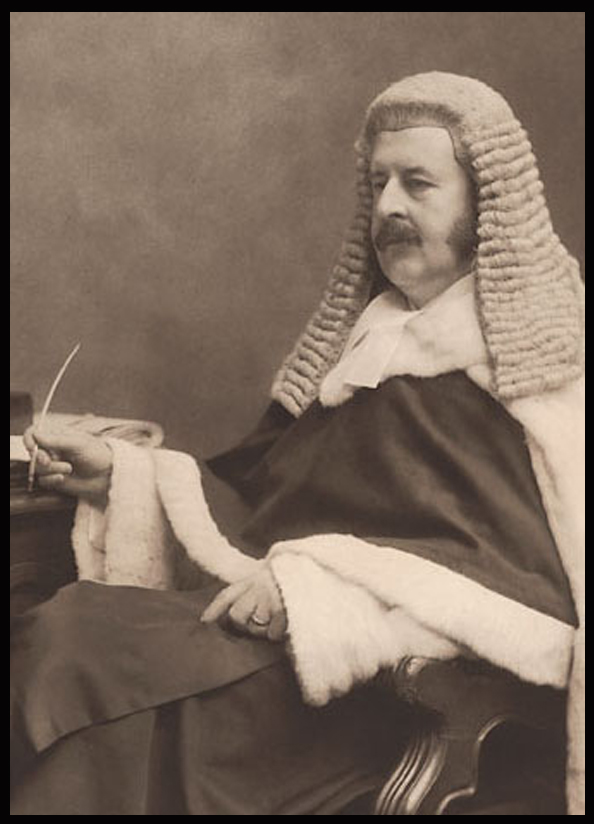
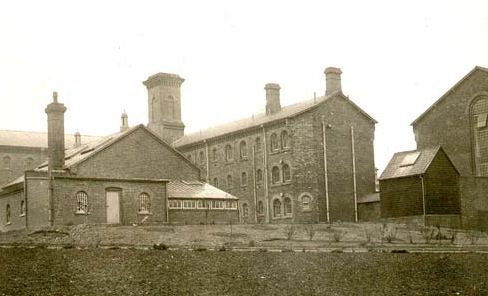
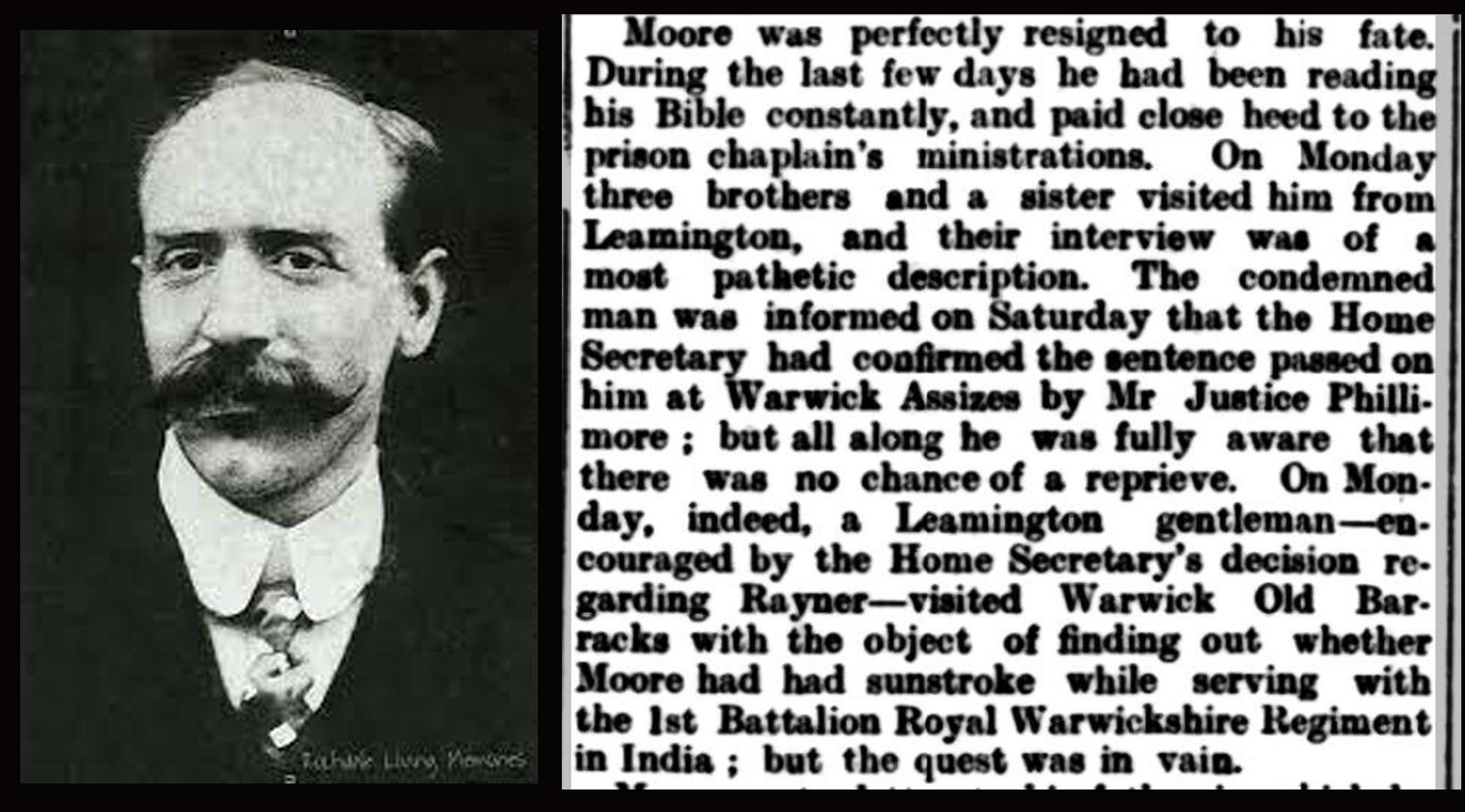
Percy, Lakin, Flavel – just three names that still resonate locally today, and several others who, if you Google them, remain clearly at the heart of the British establishment more than a century after they convened to decide the fate of Edwin James Moore. It is pointless to speculate whether a rough former soldier was ever going to get the benefit of the doubt after being accused of murdering the woman who brought him into the world and watched over him during his childhood. The jury system in 1907 was what it was. The trial was very brief, and on Monday 11th March Mr Justice Phillimore had little hesitation when he instructed the jury, who found Moore guilty of murder. Phillimore (left) donned the symbolic black cap, and sent Edwin James Moore back to his gloomy cell in Warwick Prison on Cape Road (below) to await the visit of the hangman.
Screen Shot 2021-12-30 at 19.46.14

In an age when the wheels of justice turned extremely slowly, the downfall of Edwin James Moore was extremely swift. By my reckoning, the interval between that fateful Saturday night and his death  on the morning of 6th April, at the hands of (below, with newspaper report) John Ellis – whose day job was a newsagent and hairdresser in Rochdale – was just thirty-three days. To borrow the obligatory final words of the sentencing judge, “May God have mercy on his soul.”

The End

THE OXFORD STREET ATROCITY . . . Murder most foul in Leamington, 1907 (part one)

HEADER

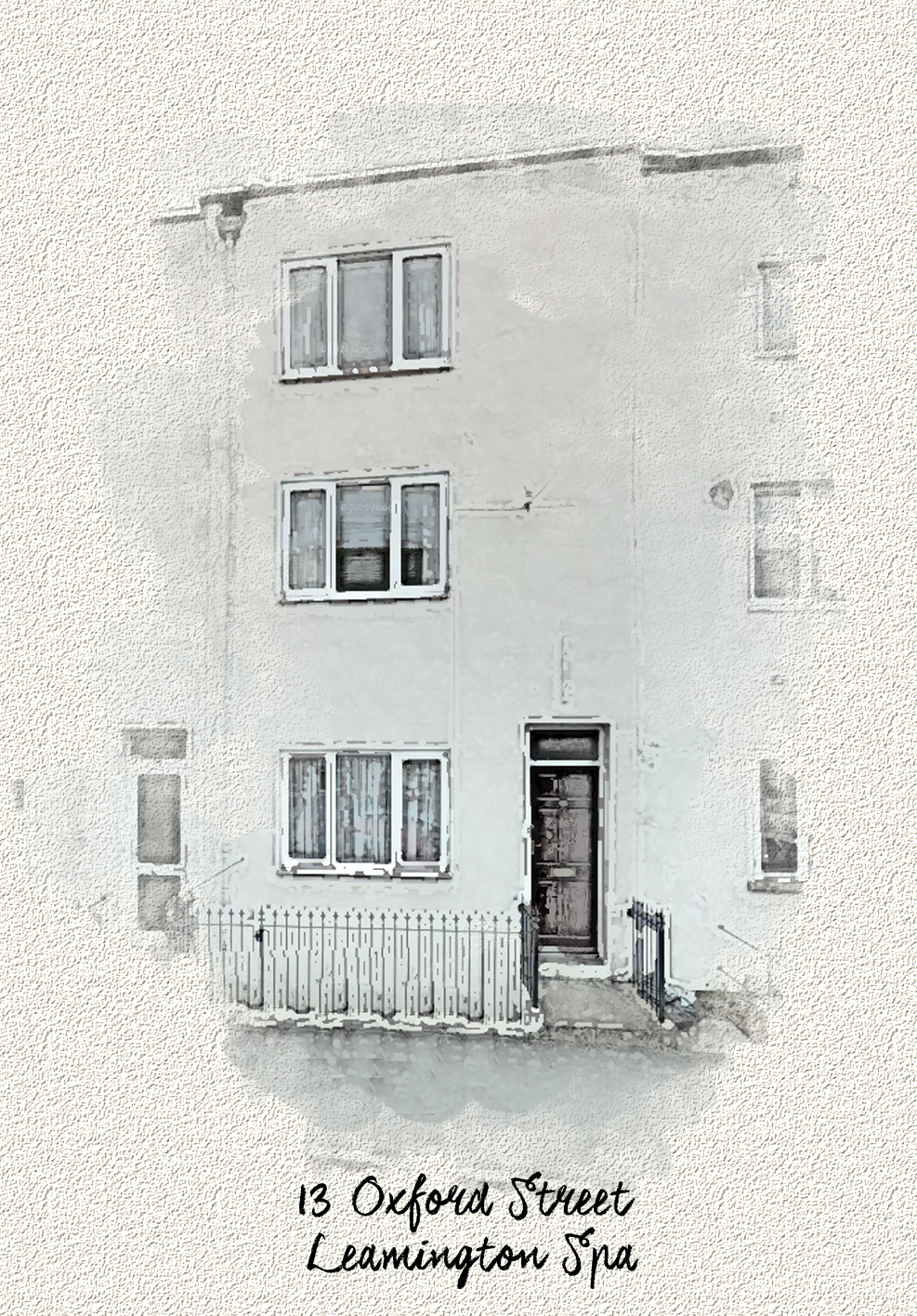
13 Oxford StreetNumber 13 Oxford Street is a narrow three-story terraced house used these days, I believe, for student accommodation. It was advertised recently as a six bedroom let, a snip (!) at £3,360 pcm. The Bank of England inflation calculator tells me that in 1891, Edward Moore and his family would have been paying just under £26 a month. He had a large family comprising his wife Fanny Adelaide (36) and children Edwin James Moore (16), Fanny A Moore (14), William A Moore (13), Joseph C Moore (11), Rose Hannah Moore (10), Percy E Moore (8), Leonard J Moore (7) and Ernest F Moore (4).
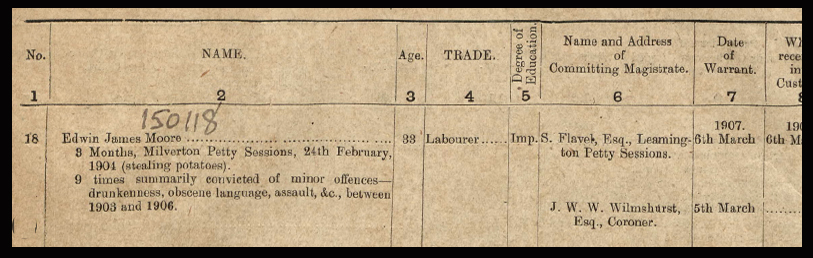
Edward Moore was a cab-driver – horse drawn in those days, of course – and what became of seven of his eight children is a fascinating investigation for another day, but our story focuses on Edwin James Moore and, to a lesser extent, his youngest brother Ernest Moore, known as Bertie. Born in 1875, Edwin Moore appears to have become the black sheep of the family. Court records tell us that he had served time in prison for stealing potatoes, and between 1903 and 1906 had been convicted of minor offences such as drunkenness, using foul language and assault.

Record

It also seems he had found time to join the army, and had served in India, but in the spring of 1907, this prodigal son was back in Leamington. On the evening of Saturday 3nd March, at about 8.00p, Moore returned to the family home, the worse for drink. The only people in the house were his mother and brother Bertie, by then aged eleven. Mrs Moore has been cooking Edwin’s supper – herrings – in the oven, and she put the plate in front of him on the table. He was far from impressed. Complaining that the fish was “stinking the place out”, he first pushed the plate aside and then flung it to the floor, where it shattered. He kicked the broken pieces of pottery and the remains of his dinner across the kitchen, and in his rage, picked up a nearby oil lamp and hurled it at his mother. She fended off the lamp, and it broke against the wall, bursting into flames. Mrs Moore made to escape, but her son snatched a piece of newspaper from the table, twisted it into a spill, lit it from the burning oil lamp and having seized his mother by the arm thrust it like a sword at her body. Her flanelette blouse immediately caught fire, and she rushed into the scullery to try to put out the flames with tap water.

Young Bertie, understandably terrified by what he had seen, ran to the door and screamed “Help! Murder! He’s setting my mother on fire!” Neighbours Henry Beeby and a Mr Phillips rushed into the house, and saw Edwin Moore flapping at the flames that were devouring his mother’s upper body with his bare hands. Beeby managed to put out the flames and, having been cursed at and struck by Edwin Moore, later testified that the younger man ran from the house. Fanny Adelaide Moore was beyond help, however, and was pronounced dead when medical help arrived in the person of Dr Bernard Rice, who later carried out a post-mortem on the poor woman. His findings were reported in The Leamington Spa Courier.

Medical

IN PART TWO – ARREST, TRIAL AND SWIFT RETRIBUTION

Blog at WordPress.com.

Up ↑