
Search

fullybooked2017

Month

March 2026

DEAD HEAT . . . Between the covers

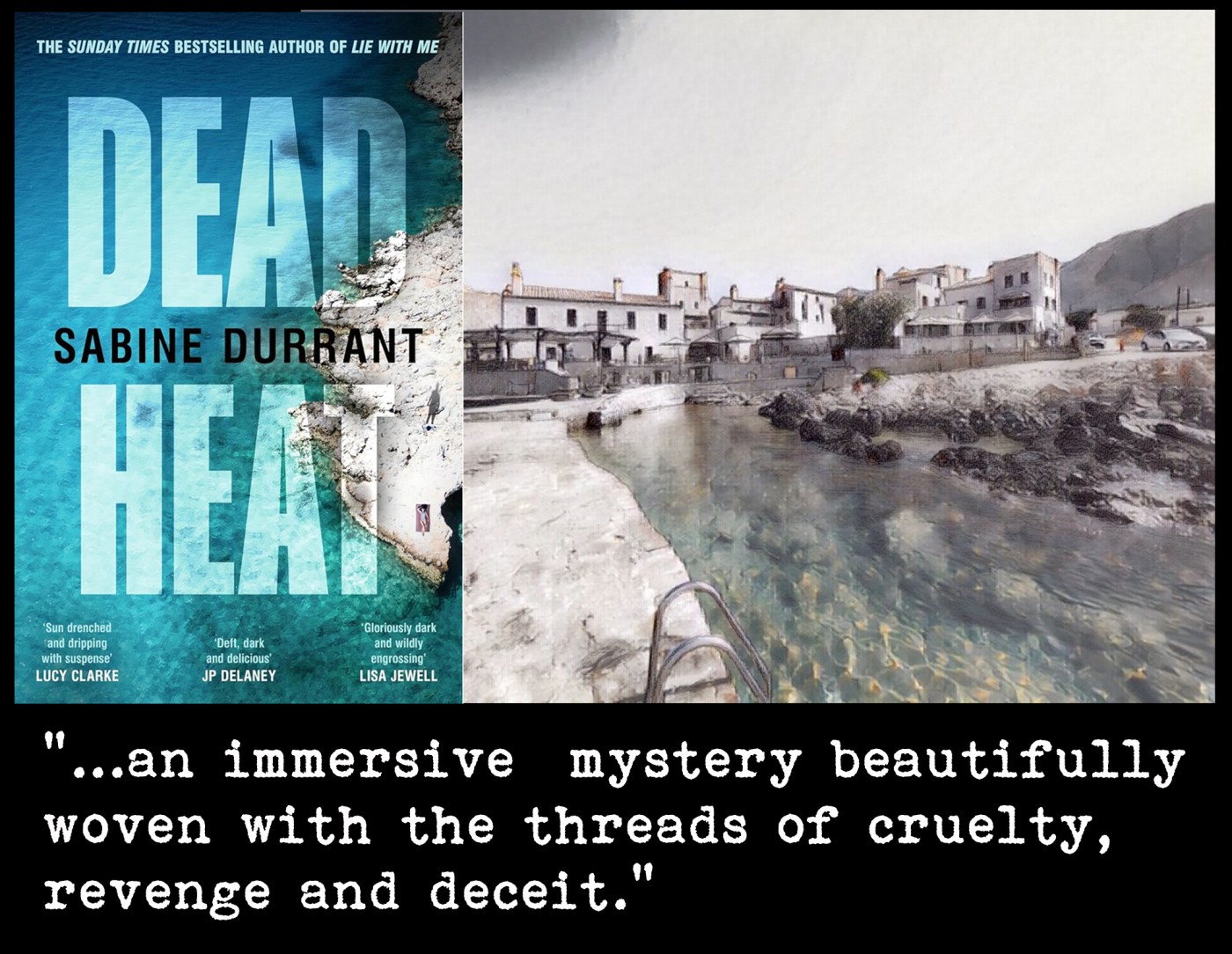
For Matt Grimshaw, everything has suddenly become rather ‘former’. Thanks to being sacked by his long-term employer, he is now a former journalist, and Takara is now his former lover, he having discovered her cavorting with a colleague in his London flat. Adam and Celia, a well-off media couple, are still his friends, however, and they have given him the key to the cottage next to their villa on the Mani Peninsula, part of the ancient kingdom of Sparta.

Matt spends a few days on his own there before Adam, Celia, their teenage daughter Lydia and her friend Jasmine arrive. Adam is disconcerted that across the bay a former abandoned folly, Arcadia, has been converted into a luxury compound by a tech billionaire called Reynash de Souza. The problem is that Adam and de Souza have, as they say, history. When de Souza throws a party for all the neighbourhood, what Dylan called ‘a simple twist of fate’ intervenes and turns the azure Aegean into something far, far darker.

In the background is a missing person, a man called Marc Ashley, a guest at de Souza’s Arcadia. One morning, he set out for a run and never came back. His sister Sarah is desperately trying to find him by a leafleting campaign and organising volunteer search parties.At the heart of the story is the relationship between Matt and Adam. Matt is a talented writer, but insecure and, perhaps, too sensitive to the needs of others. His emotional antennae are fine-wired, but to his own detrimental. Adam is, to use the old word, a cad. Charming, persuasive, charismatic even, he uses people. One such is a young woman called Amira, a former intern at Adam’s production company. He seduced her and is subsequently horrified when she turns up at de Souza’s mansion. She blackmails him, and Matt, ever loyal, agrees to be part of the deception involving a pay-off that will deceive Celia.

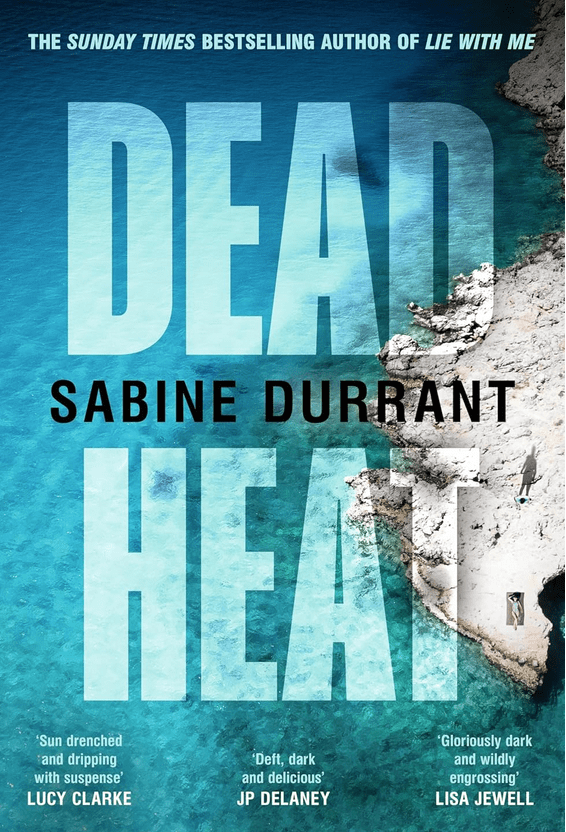
The book begins with one of those enigmatic prologues, date stamped well after the events of the main story. A man sits in a Greek court, watching a prisoner being sentenced. Sabine Durrant drops a fairly hefty hint that the observer is Matt Grimshaw, but who is the convicted man? Sabine Durrant not only deftly recreates the enervating physical climate, but makes us sweat in the oppressive emotional climate created by infidelity, old sins returning to haunt the perpetrator, and dangerous atmosphere caused by money mixed with power. Dead Heat is an immersive mystery beautifully woven with the threads of cruelty, revenge and deceit. It will be published by Century on 12th March.
IF A FACE COULD KILL . . . Between the covers

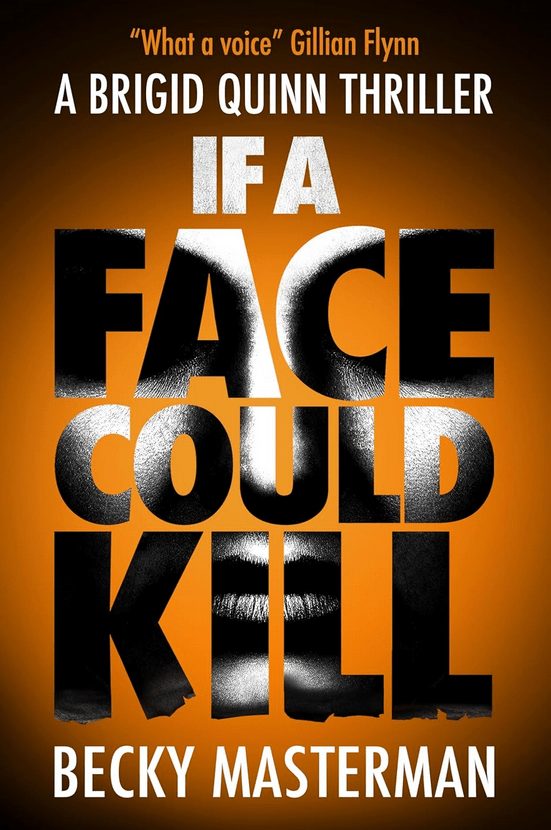
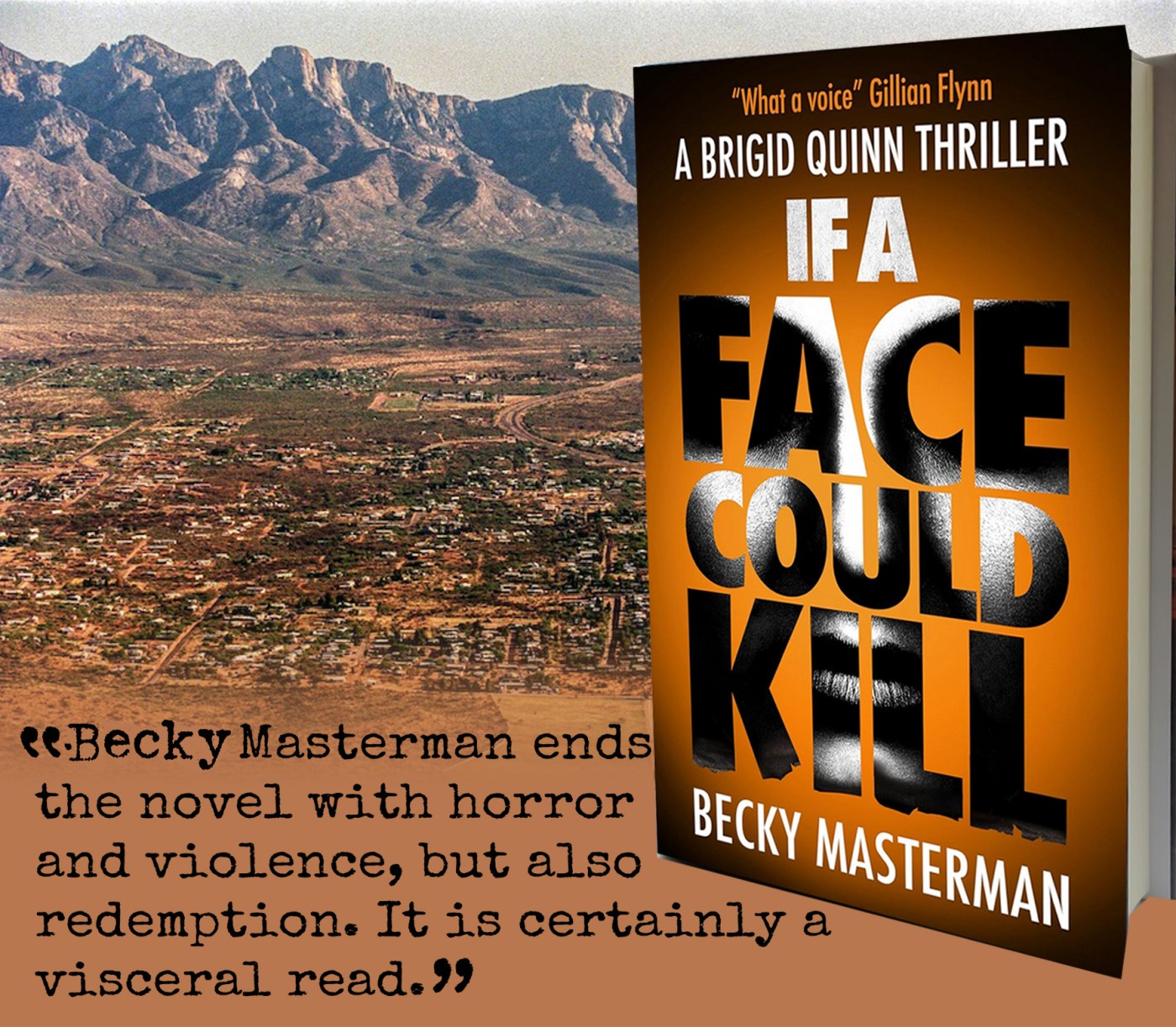
Brigid Quinn is a former FBI agent. She and her husband Carlo have retired to the rural community of Catalina in Arizona. At the end of their street is a property used by the authorities to house paroled offenders, one whom is a woman called Nicki, who went down for manslaughter after killing her abusive husband. The book begins with a botched burglary at this group house, which ends when the hapless was shot dead by a SWAT team after they were alerted by a 911 call from Nicki.After she retired from the FBI Brigid volunteered at Desert Doves, a refuge for victims of domestic violence, which is where she met the traumatised Nicki Gleason. There, she taught Nicki the basics of self defence, and it was that knowledge which resulted in jury foreman stating:

We find Nicole Gleason guilty of one count of involuntary manslaughter, your Honor.”

One of Brigid’s neighbours, an unpleasant busybody called Dorita, is organising a petition to have the occupants housed elsewhere. Dorita is as unpleasant looking as her behaviour is ugly:

“It struck me that her large face wasn’t so much like the Red Queen’s as like a painting of Martin Luther..”

Dorita and Brigid are destined not to get on well together, but the neighbourhood spat ends violently when Dorita is found dead in her garden. It seems as though she has been held down in a barbecue fire pit. Face down. The result is graphically not pretty, but then there are few beautiful people in this novel.
This is Nikki’s probation officer/mentor:

“She was the ugliest butterfly you’d ever seen, startlingly ugly. She didn’t have a moustache, but it wouldn’t have surprised me.A long, gaunt face with uncooked dumplings under her eyes to make up for the lack of flesh elsewhere. Her lipstick appeared to be a gallant attempt at redeeming her face, but even that failed as the shade contrasted severely with the colors in her top. An overbite. That was my three-second observation, but I don’t think I’m missing anything.”

For those who enjoy such things, we witness the exquisitely grisly autopsy on poor Dorita Gordano. She was killed by blunt force trauma to the face, and a gasoline soaked plug of rag was forced into her throat. The facial burning was clearly post mortem, and some kind of statement. But of what, and by whom? Neither does Becky Masterman spare us the details of what a vile specimen Nicki’s husband was. Vincent was obsessed with video games to the extent that one afternoon, anxious to get to his games console, he left daughter Ramona strapped into her car seat one blazing Arizona afternoon. He was also casually brutal about where he stubbed out his cigarettes. There is, obviously, a broader moral argument about whether such men deserve to be killed with a two litre vodka bottle, but this book is crime fiction, not a philosophical treatise, so we can roll with it.

After some humming and hahing, the local police, led by Sheriff Max Coyote, a former friend of Brigid’s (they have fallen out, big time) decide that Nicki is a person of interest in the murder of Dorita Gordano. The pathologist believes that the initial injuries to Dorita’s face were caused by a large concrete block, and in the garden of the group house is a recently built wall. And one of the concrete blocks bears blood traces.

Masterman’s prose is as sharp as tacks. Sometimes, American CriFi can be too slick, too polished, and too predictable. Quinn’s observations are frequently acerbic, and scatter broken glass for us to tread on. Here, she catches the over-effusive Eleanore Turner in an unguarded moment.

“She looked like hell. She tried to sit up straighter and force the corners of her mouth into her standard smile, but the corners twitched with the effort, like those of a politician being asked the one question they could not answer. None of it worked. She was smaller than I’d seen her in our last several encounters, some giant thumb pressing down on her for too long, and she could no longer resist.”

The action accelerates. First, someone firebombs the group home, and one of the residents, a young man called Jackson is killed in the resultant explosion. Then, a local Home Owners Association meeting is called and, despite Max Coyote trying to reassure residents, the mood turns ugly. Brigid’s rather strange niece Gemma Kate is attacked as she sits watching a horror movie in a theatre where she and her attacker are the only customers.

There is a narrative shift late in the book. Hitherto, everything we have read is through the eyes of Brigid. Then, quite abruptly, we have a chapter describing the thoughts of Nicki Gleason, followed by those of Eleanore, abducted and imprisoned in a locked casita. Becky Masterman ends the novel with horror and violence, but also redemption. It is certainly a visceral read. If a Face Could Kill will be published by Severn House on 3rd March.

Blog at WordPress.com.

Up ↑