
Search

fullybooked2017

Month

January 2026

MAN ONE . . . Between the covers

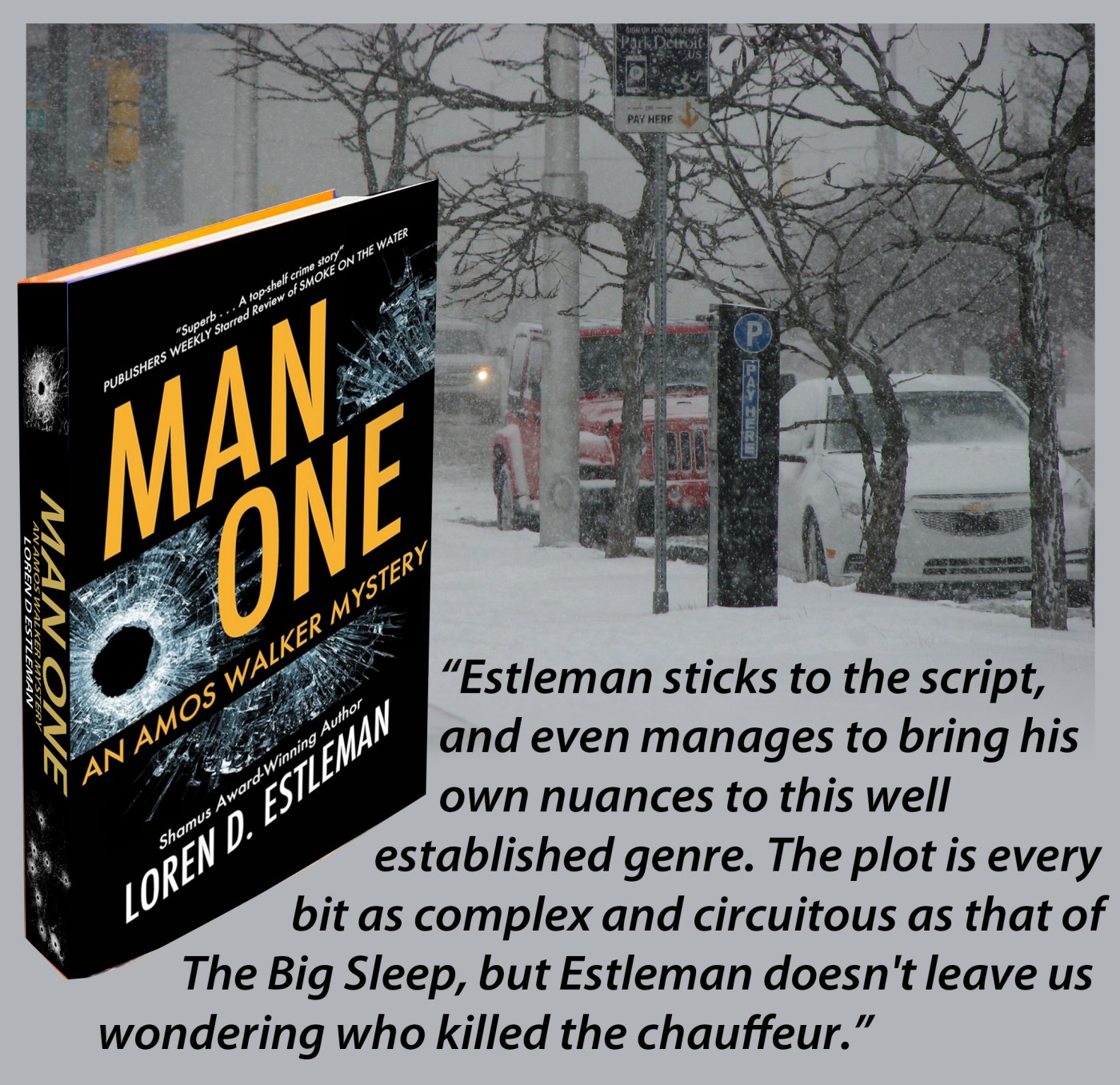
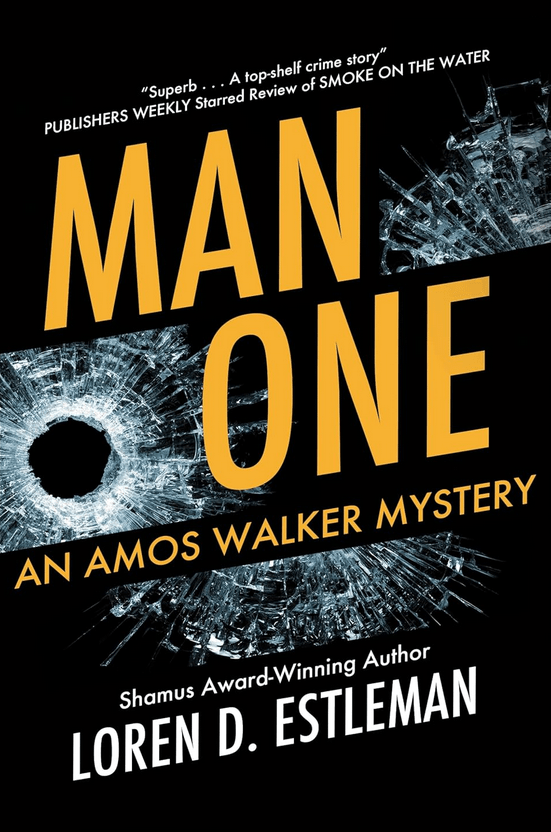
Loren D Estleman’s Detroit PI Amos Walker is reassuringly traditional. It is close to a century since Dashiell Hammett introduced us to Sam Spade, and his legacy includes such gentlemen as Messrs Marlowe, Archer, Hammer, McGee and Spencer. I must add Janet Roger’s little known Newman (Shamus Dust 2019) into the mix, as that was the best non-Chandler PI novel I have ever read (and re-read).

Walker’s latest prospective client is Sage Holland, a woman dubbed by the tabloid press as The Black Widow. She has been tried and convicted of poisoning her husband, but on appeal, the conviction, for ‘Man One” ( first degree manslaughter) has been overturned on the grounds of prosecutorial misconduct. Now, she is being pursued and harassed by her late husband’s brother Greg, and she wants Walker’s help. He is partly convinced, despite this gem of an exchange:

“Why did Dave’s brother suspect you poisoned him?”
“He hates me. He always did
.”
“He needed more than that to go on to arrive at poison. Ricin is only detectable during autopsy. Until then, it looks like a stroke or a heart attack.”
“Well, there were my first two husbands. They were about the same age as Dave when they died.”

Estleman never wastes an opportunity to remind us that Walker is a low budget operator:

“I tipped a hand toward the customer’s chair. She went to it, slinging a glance around the luxury accoutrements, the obsolete file cases, the Sunday school desk, a piece of reclaimed carpet from a five-year-old auto show. The much older and even more obsolete party, making himself uncomfortable behind the desk.”

Walker’s eye for detail is downbeat buy brutally accurate. He describes a neighbourhood loan shark:

“You had to look beyond the green plaid jacket and pre-tied bow tie, the baggy grin and the barber school haircut to see the dead eyes of an eel. And behind them, the brain that worked on a system of gears and pulleys like the machine on his desk.”

Walker enlists the help of his occasional assistant, Rafael Mesquino, an illegal immigrant who made it to America ‘with the bananas and tarantulas’. Mesquino fails to make a meeting. Worried, Walker finds the little man shot dead in his meagre lodgings, and  begins to to comprehend just how much trouble Sage Holland is bringing into his life.We briefly meet Greg Holland when, fed up with being stalked, Walker invites him inside for a chat. The next time we see him, he is still in his car, but slumped over the steering wheel, dead from a small calibre gunshot to the head.

Following the furrow ploughed by writers such as Chandler and Robert B Parker should, in theory, be easy, but it has its pitfalls. Readers are well versed in the tropes, the seasoned dialogue and the cynical observations. Write something slightly out of tune, and you will be found out. Estleman sticks to the script, and even manages to bring his own nuances to this well established genre. The plot is every bit as complex and circuitous as that of The Big Sleep, but Estleman doesn’t leave us wondering who killed the chauffeur. Man One will be published by Severn House on 3rd February.
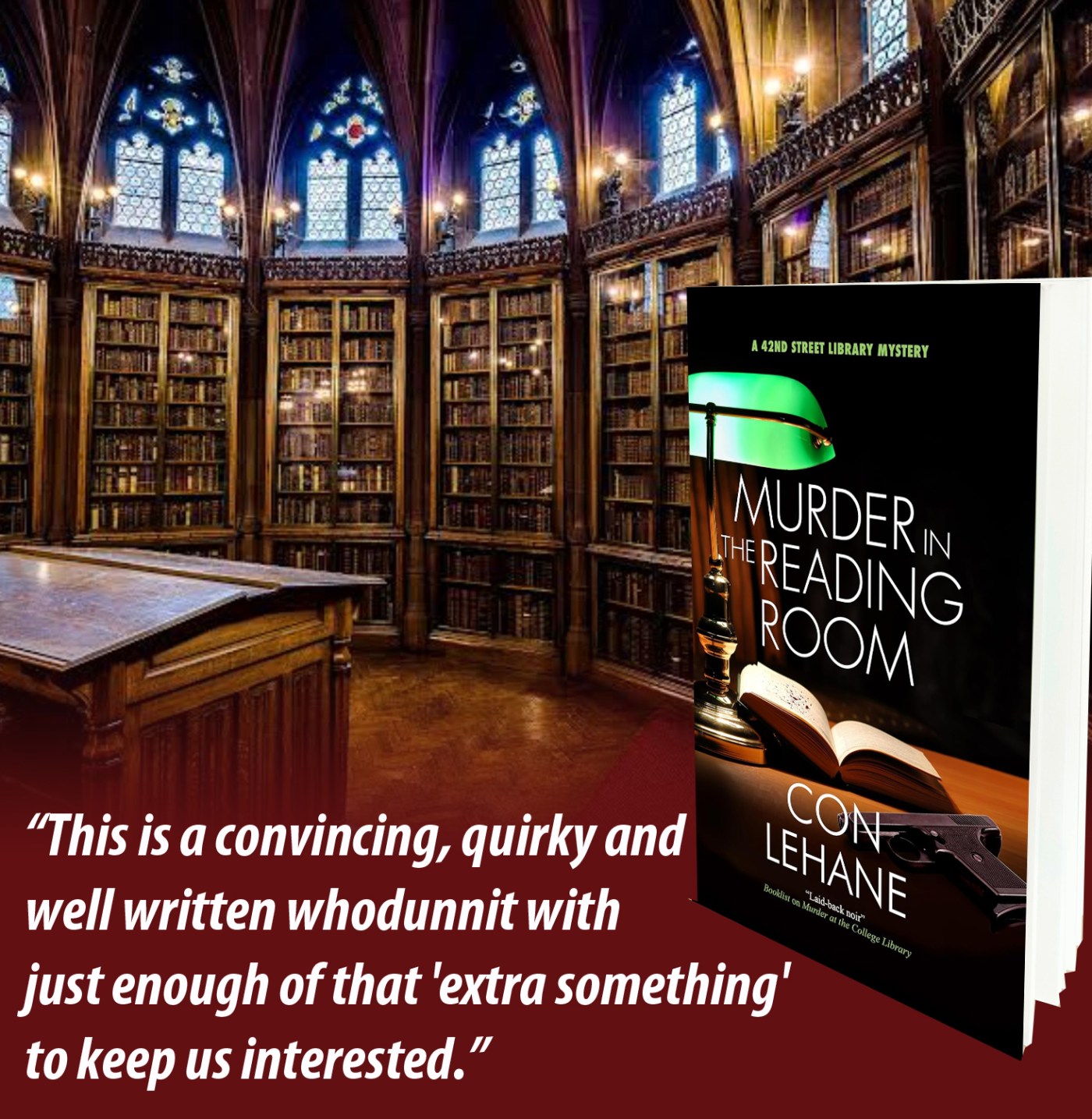
 

MURDER IN THE READING ROOM . . . Between the covers

In his preface, author Con Lehane says that this is the last book in what seems to have been a well-received series featuring Raymond Ambler, the curator of a New York library devoted to crime fiction. Ambler’s personal life seems messy. He has an adult son, a grandson, and a new baby daughter with on/off partner Adele.

A researcher, Dr Robin Cartwright, had been using the library, and when she is found dead in a pay-by-the-hour hotel room, the police find Ambler’s details on her cell phone.The police are reluctant to treat the death as homicide. Yes, she died of suffocation, but there is no evidence of extreme violence. They even speculate that it might be a case of over-adventurous love making gone wrong.

It seems that Dr Cartwright, in researching past cases for her thesis, had come up with the name of someone from her past. Was her killer trying to prevent his (or her) name from being made public? The first thing that will strike even the doziest reader early in the book is its title and, by contrast, the less-than-salubrious hotel bedroom where the body was found.

Lehane throws in an early suspect, the over unctuous and pettifogging librarian Blake Beasley (rhymes with Weasly) but surely it is too soon in the narrative for the villain to be identified? Ambler works his way through Dr Cartwright’s case files of killers who escaped justice. There’s Ricardo Diaz, a charismatic lawyer who may have murdered his girlfriend with drugs; Cartwright had highlighted a decorated serviceman who was suspected of causing the death of one of her best friends; then there’s ‘Pastor’ Kilgore, a bogus small town preacher, at the wheel of the car that ended the life of teenager Anna Paxton, rumoured to have been seduced by him Also in the frame is Robin’s former husband George Nagy, terminally attracted to younger women, but with a renewed fascination for his former wife.

As with all amateur sleuths since the dawn of crime fiction writing, the abiding implausabiity is that of just how much time folk who are neither retired nor independently wealthy manage to devote to their investigations. Ray Ambler manages to hold down his job at the 42nd Street library despite frequent highway trips or flights to various parts of America. That said, this is a convincing, quirky and well written whodunnit with just enough of that ‘extra something’ to keep us interested. It will be published by Severn House on 3rd February.

 

A STUDY IN SECRETS . . . Between the covers

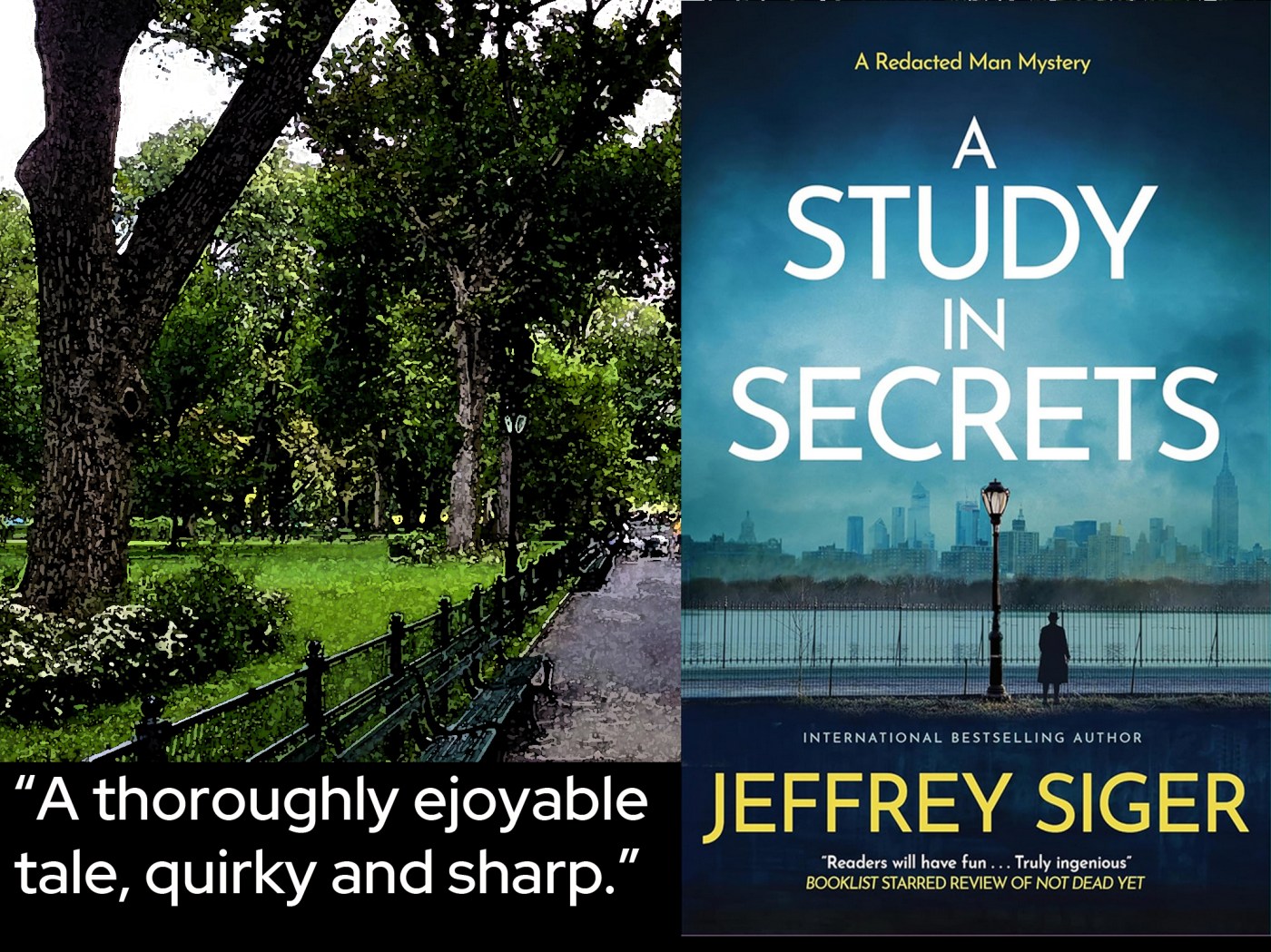
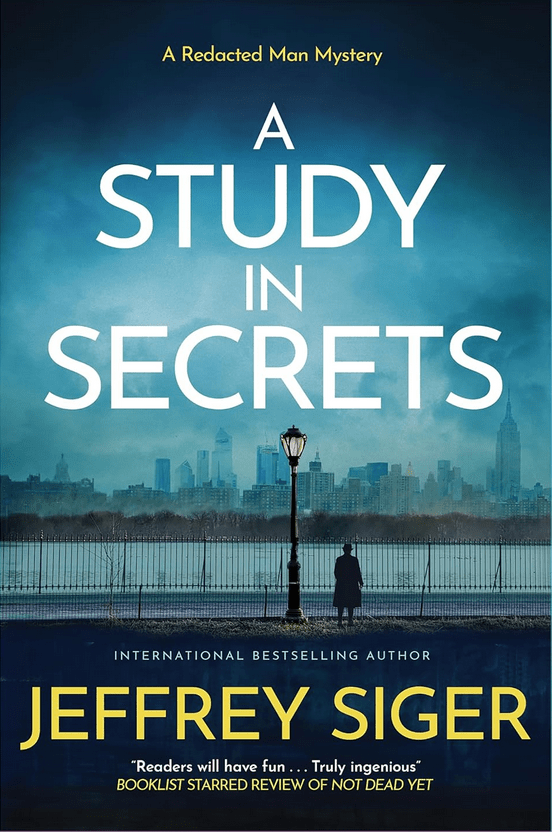
Jeffrey Siger temporarily abandons his Greek crime thrillers to bring us to New York, where an elderly former intelligence agent lives a solitary life, cared for by his housekeeper, a Mrs Baker. The man, known to us only as Michael, lives in a grand townhouse numbered 221. So, we can see the drift. While this isn’t remotely a Sherlockian pastiche, the shadow of the great man hovers in the background. Michael is formidably rich, but rarely ventures beyond his front door step, preferring to observe the passers by in the park beneath his window. One of the park’s regular visitors is a young woman. When it transpires that she was forced by circumstances to part of a complex ring involving precious antiques, their sellers – and their clandestine buyers – Michael decides to come out of retirement. He ponders his decision:

“For so long, I’d taken such great care to maintain a detached existence for myself, a life safely confined to conjecture, reflection, and surmise, far removed from taking part in those human dramas that inexorably draw so many to misfortune, pain, and loss. I’d found my Walden Pond in the park, or so I’d thought.”

Michael rescues the young woman – Angel – and resolves to put an end to the racket which has put her life in danger. Angel was basically homeless, because she discovered the body of her former boss, a man called Carlucci, at the sleazy apartment where she and other girls employed in his racket, lived.

At the centre of the plot are a brother and sister, Dr Marilena Sinclair and Dr Brackett Fielding (one a psychiatrist and the other a psychologist) who have ‘acquired’ a priceless artifact from a deceased woman patient. The woman was the estranged wife of a notorious called Victor Persky mobster and she took the antique to spite him. Now, Persky wants his treasure back, and cares not one jot if Sinclair and Fielding have to die in the process.

The plot has another complication. A young woman called Maria, another courier in Carlucci’s crooked auction business, was allowed to die of a drug overdose in the squalid tenement where the girls lived. Her body was later found in a dumpster. Her brother, Daniel Rudolph, is ex military, and Michael eventually discovers that he was Carlucci’s killer. There is an engaging cast of supporting actors. Housekeeper Mrs Baker is certainly more forthright than the good lady who ran 221B Baker Street, and Michael’s old friend who runs a popular local diner, is a shrewd and resourceful ally, as Michael constructs an elaborate plane to defeat Persky.

This is a thoroughly enjoyable tale, quirky and sharp, although Michael’s ability to disarm and disable gang-bangers and mobster heavies with – literally – a twirl of his cane stretches one’s credulity somewhat. This novel, which looks to be the first of a series called Redacted Man Mysteries, will be published by Severn House on 3rd February.
CRUCIBLE . . . Between the covers

John Sayles sets out with a huge canvas to fill, and it is the fortunes of the Ford motor company from the end of the Great War to the uncertain times of a post-war world where both Hitler and Hirohito have been humbled, but Stalin remains the one world leader with unassailable power.

The key points of the early pages are the stock market crash of 1929 and Henry Ford’s bizarre attempt to buy up swathes of Amazonian rain forest to produce his own rubber. The Americans sent out there are overwhelmed by a number of factors, including the human problems that hundreds of indigenous peasants are unable to adapt to Henry Ford’s production line work ethic, and the purely botanical fact that rubber trees are not a quickly growing commodity yielding instant rewards. Ford has despatched his minions to the Brazilian jungle to produce cheap rubber. He has no concept of the place. This is not a treasure trove of natural wonder described in a whispered David Attenborough voice-over. It is – for the Americans – a hell slithering with giant ants, poisonous spiders, caimans that will rip the arm off an unwary dabbler, ferocious heat, endless rain, decay, and the sense that humans are, at best, merely clinging on to life by their fingernails.

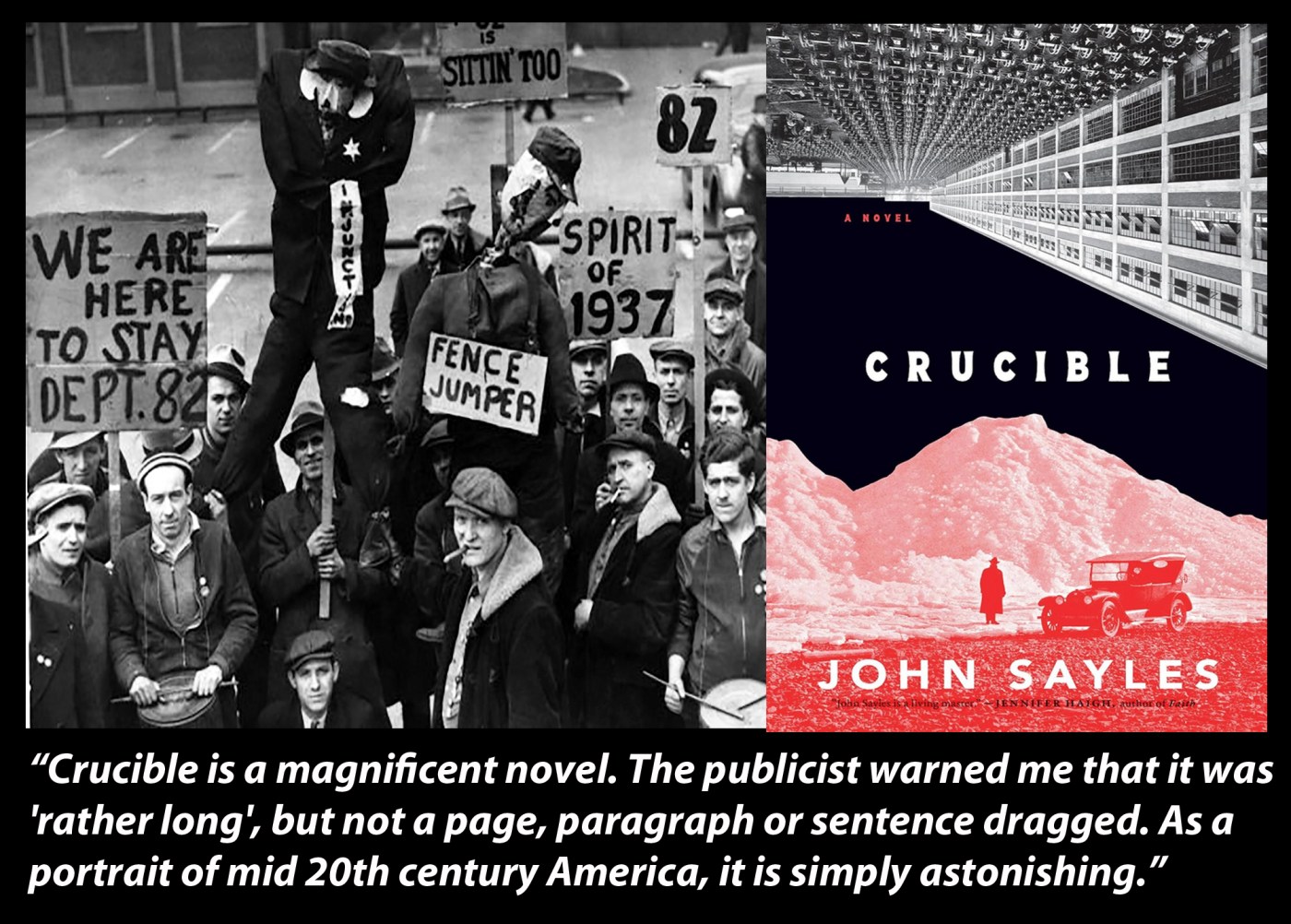
John Sayles has painted a picture of Henry Ford, warts and all, which both appalls and captivates.Does Sayles take sides? Yes, of course he does, given his CV, but his partiality does not diminish the power of his prose. There is a deep irony, however, when we read of the funeral procession for the left wing activists killed in an anti Ford protest march. Simultaneously, thousands of miles away, Stalin was systematically starving millions of Ukrainians with one hand, while butchering political opponents with the other, all in the name of the Great Socialist Ideal which the idealistic American marches seem to be calling for. Sayles’ narrative points up this and many other many ironies and moral dilemmas for historians. The chief example, for me, was that of the human brutality of the industrial process which, for us Brits, began in the remorseless cotton mills and iron foundries centuries ago.

Here, in 1930s Detroit, the assembly line is unrelenting and unforgiving: a momentary lapse of concentration can destroy a man’s leg, his hands, or his sight. There was no such thing as Health and Safety in the middle years of the 20th century. And yet, and yet. Were things any better in Stalin’s Soviet Union? Were his political commissars and better than Harry Bennett’s thugs? The novel will be on the shelves labeled ‘fiction’, but is peopled by real life characters almost too outrageous to have been invented by a mere author. We have Ford himself, a strange mix of psychopath and philanthropist; Harry Bennett, his unscrupulous enforcer who would have been at home working for Reynhardt Heydrich; Jerry Buckley, the charismatic radio host assassinated in 1930.

Crucible is a reminder that, amidst all the formulaic production line American fiction that sells by the million on supermarket shelves, there are still good writers out there.’sprawling’and ‘epic’ were  adjectives once used to describe novels or films with huge breadth and compass. In this sense, Crucible certainly ‘sprawls, but along the way Sayles pens a kind of love letter to the racial and cultural blend of ordinary people who were striving to become Americans by taking Henry Ford’s dollar, the Sicilians, the dirt-poor Blacks forced to emigrate north, the ex-European Jews, the resilient Poles, the flint-hard Scots and their Irish cousins. In his afterword, however Sayles eschews sentimentality, particularly in view of the savage Detroit race riots of 1943:

“..enormous social and economic forces rushed together in that city, making it more a high-pressure crucible than a genteel American melting pot.”

For all that Henry Ford is not one of history’s most lovable characters, we should not forget his pragmatism. Criticised by many then and now for his apparent Nazi sympathies, we must not forget that it was his factories which produced the B24 Liberator bombers, the thousands of jeeps and Sherman tanks which helped bring about the fall of the Third Reich.

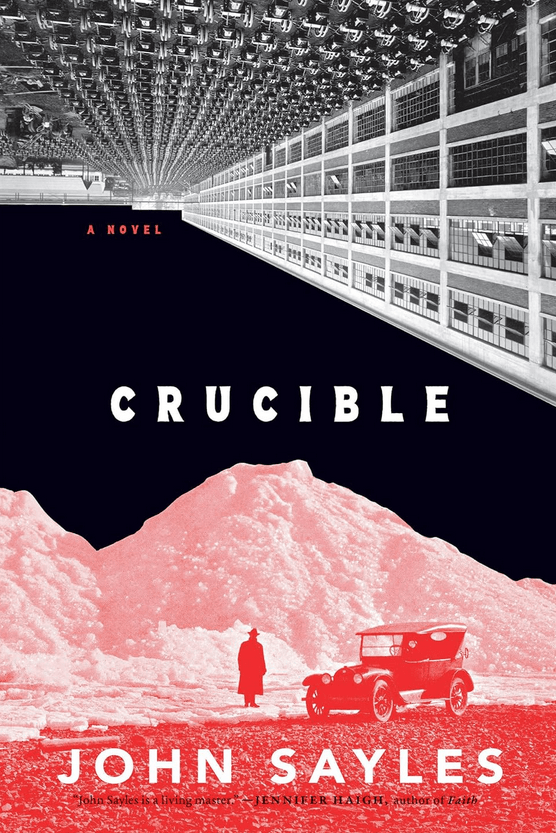
Crucible is a magnificent novel. The publicist warned me that it was ‘rather long’, but not a page, paragraph or sentence dragged. As a portrait of mid 20th century America, it is simply astonishing. Published by Melville House, it is available now.

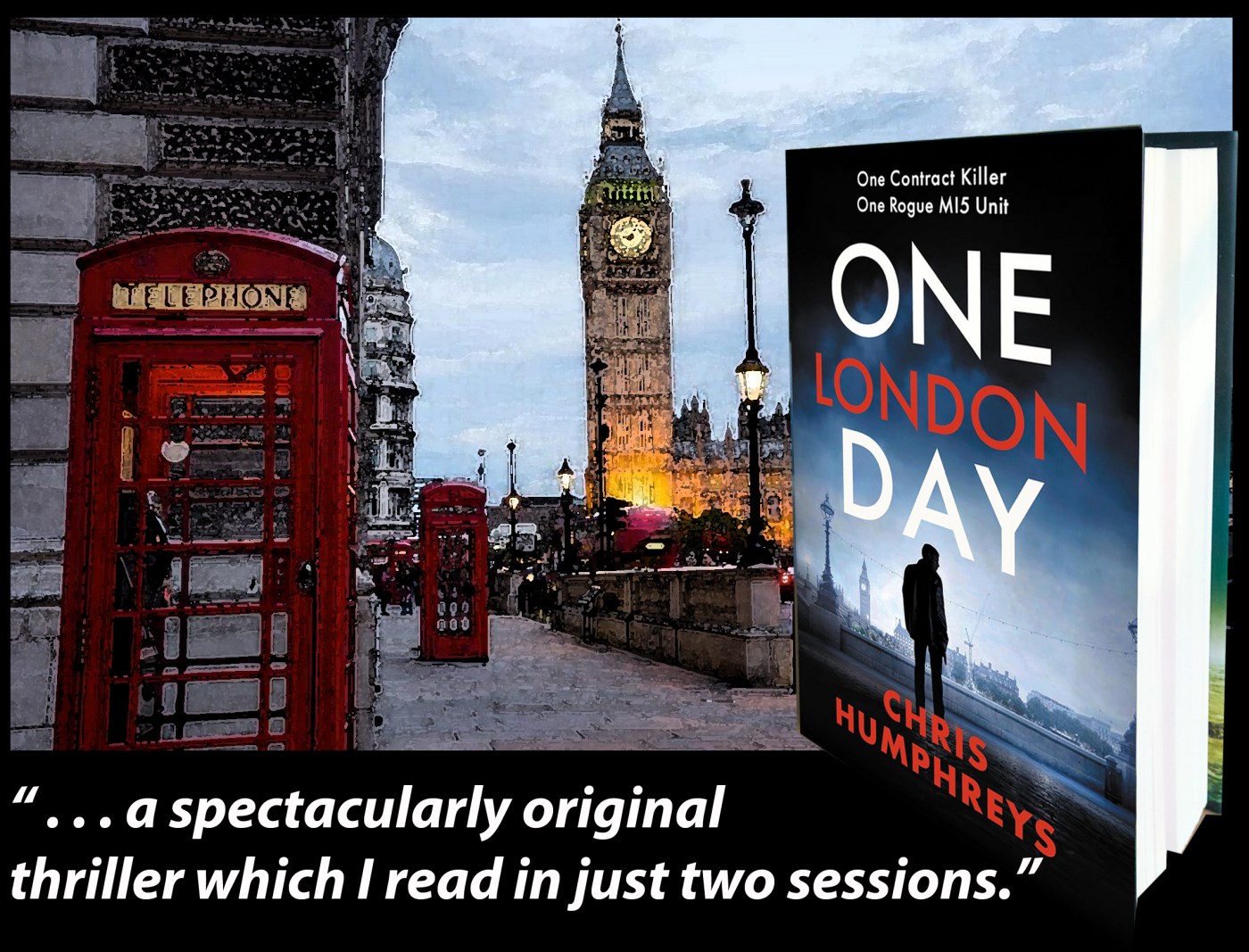
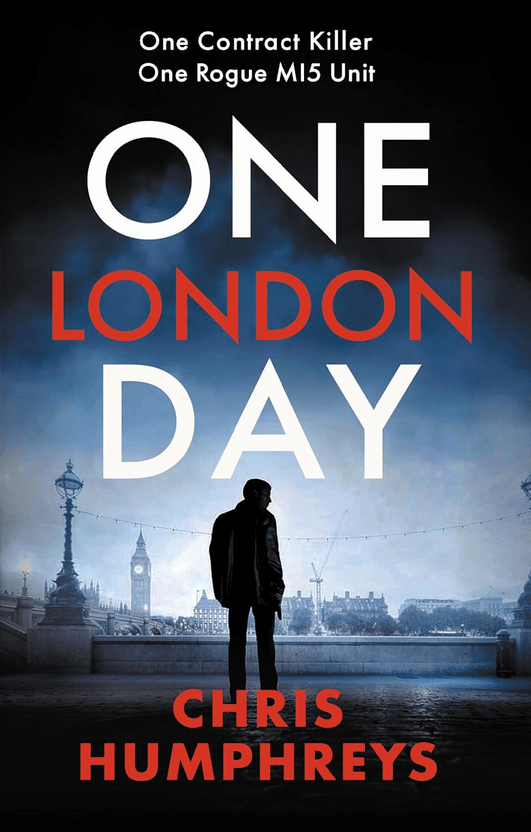
ONE LONDON DAY . . . Between the covers

This is a very clever thriller that blends espionage, murder, personal tragedy and human greed into a potent mix. At the heart, there is a group of rogue British intelligence agents who call themselves The Shadows. While ostensibly going about HM government business, they are running all manner of scams using their diplomatic access, and are earning millions, mostly through drugs. Knowing they need to run a professional business, they have avoided electronic accounting and, instead, employed a North London businessman, Joseph Severin to ‘do the books’. And they are, quite literally, books. Old fashioned accounting ledgers, hand-written and, therefore, utterly untraceable online.

The book begins with Severin being shot dead by a former soldier – ‘Mr Phipps’ –  hired by The Shadows, so how does the book develop? Phipps,as well as getting rid of Severin is supposed to retrieve the ledgers, but plans go awry, and this brings in a group of other characters, including Lottie, a professional pianist, and Sonya, a Russian prostitute. As the leader of The Shadows, Sebastien Grant, struggles to tidy up the mess, a resourceful MI5 officer called Ellerby is closing in on the group.

At the heart of the story is a desperately sad tale. Sonya, one of whose regulars is one of The Shadows, has painful personal problems. Both she and her husband Georgiy were Russian military. She has moved to London to exploit her beauty, while he is back in Russia, looking after their daughter Marusya. But the little girl has a tumour on her spine, that needs specialist surgery in USA for it’s removal. Sonya knows that Georgiy has a drug habit. Her dilemma is not knowing how much of the money she wires home is being spent on Marusya’s care, and how much is being swallowed up by street drug dealers.

The book has a split time frame. It starts on 30th July, when the key event of the novel happens, but then we jump to five days earlier, and follow the build-up to the event. The last part of the book then takes us to the days after 30th July, and the dramatic fallout that ensues. I am not a fan of these constructions, for several reasons, one being that words are said, phone calls are made and things occur in the first section of the book which don’t appear particularly significant as one reads them in real time, but then in the middle section these little occurrences come back to bite us, and pages have to be flicked back to make sense of things. A standout case of this is revealed in the bonus trailer for One Berlin Day, the follow up to this novel. It links crucially to something that happens to Mr Phipps on 30th July, but seemed relatively unimportant given what happened next.

Those reservations aside, this is a spectacularly original thriller which I read in just two sessions. I was genuinely entranced by Lottie, Sonya, Ellerby and even felt some empathy with four of The Shadows. Not Sebastien, of course, as he was beneath contempt. Not sure about Mr Phipps, though. Yes, he has served his country well and, like many rough men who do violent things to keep us safe in our beds, has been shabbily treated by the authorities. That said, what he did on July 30th was truly awful and I couldn’t suppress the wish that I hope he rots in hell for it. One London Day will be published on 22nd January by Allison & Busby.


A LION’S RANSOM . . . Between the covers

I recently reviewed The Meadows of Murder by Paul Doherty, set in 14th century London, during the eventful reign of Richard II. Here, we are in York, but slightly earlier. Richard, still not a teenager, is just months into his kingship, and the Goldsmiths of York have, at their own expense, fashioned a miniature golden lion, which is to be presented to the young monarch as a token of allegiance. When the immensely valuable artifact is stolen on the eve of its being carried to London, former Captain of Archers and spymaster for the Archbishop of York, Owen Archer, is called to investigate.

Archer’s wife Lucie is an apothecary and herbalist, and while she and the children are out gathering herbs, they find a corpse in the river. He is naked, and the local fauna have taken his eyes. But who is he, and is he connected with the theft? Following enquiries it seems that the dead man has been noticed in the city over the previous few weeks, but only gave his name as Walter. Central to the search for the stolen lion is another man at arms, Martin Wirthir. The Flemish former soldier and mercenary lives with the Archer family, and is a veteran of many campaigns. He is, however weakened by ill health and injury and, like Tennyson’s Ulysses:

“We are not now that strength which in old days
Moved earth and heaven; that which we are, we are;
One equal temper of heroic hearts,
Made weak by time and fate, but strong in will
To strive, to seek, to find, and not to yield.”

Walter’s clothes are eventually discovered. Cunningly sewn into their seams are documents that reveal he was Walter Bolton, a spy working for Sir John Neville, Baron of Raby, a powerful soldier and politician, but a man currently out of favour with John of Gaunt. The next corpse to be found is that of Costen van Peelt, another Fleming, and a man suspecting of using his talent – he was a gifted artist – to spy on merchants and politicians across the city. He did not die easily. Archer suspects the brutal torture that preceded his death was an attempt to force him to reveal his many secrets, and the men who were employing to gather them.

Embedded in the heart of this novel is York’s Guild of Goldsmiths. We have nothing today which exactly replicates the Guild system. Guilds were groups of craftsmen and merchants who grouped together for – in theory – mutual protection and benefit. They often wielded more local power than the church and royal functionaries such as Sheriffs and Castellans. Here, discontent rumbles within the ranks of the city’s Goldsmiths. Petty jealousies and professional rivalries can be destructive, but can they lead to murder?

Archer learns that Walter Bolton was not only working for Sir John Neville, but was his illegitimate son. Bastard though he was, Bolton was of Neville’s blood, and the Baron wants answers.

On a geographical note, we would do well to remember the vital part the River Ouse played in York’s history. Now mostly a tourist feature (but still a potent flood risk) the Ouse linked York, via the Humber, to international trade and in this case, the risk of piracy.

Historical crime fiction that is set in eras prior to the mid 19thC is a strange beast, in some ways. The authors – and they are many, and often distinguished – clothe their investigators with a mantle that we know can only have existed in modern times, such as the obvious trappings of interviewing suspects, crime scene investigation, identity parades, the search for motives and the presence or absence of alibis. Did investigators in the 14thC operate like this? We have no evidence to suggest that they did, but it matters not. A Lion’s Ransom is a cracking read and totally engaging. It was published by Severn House on 6th January.

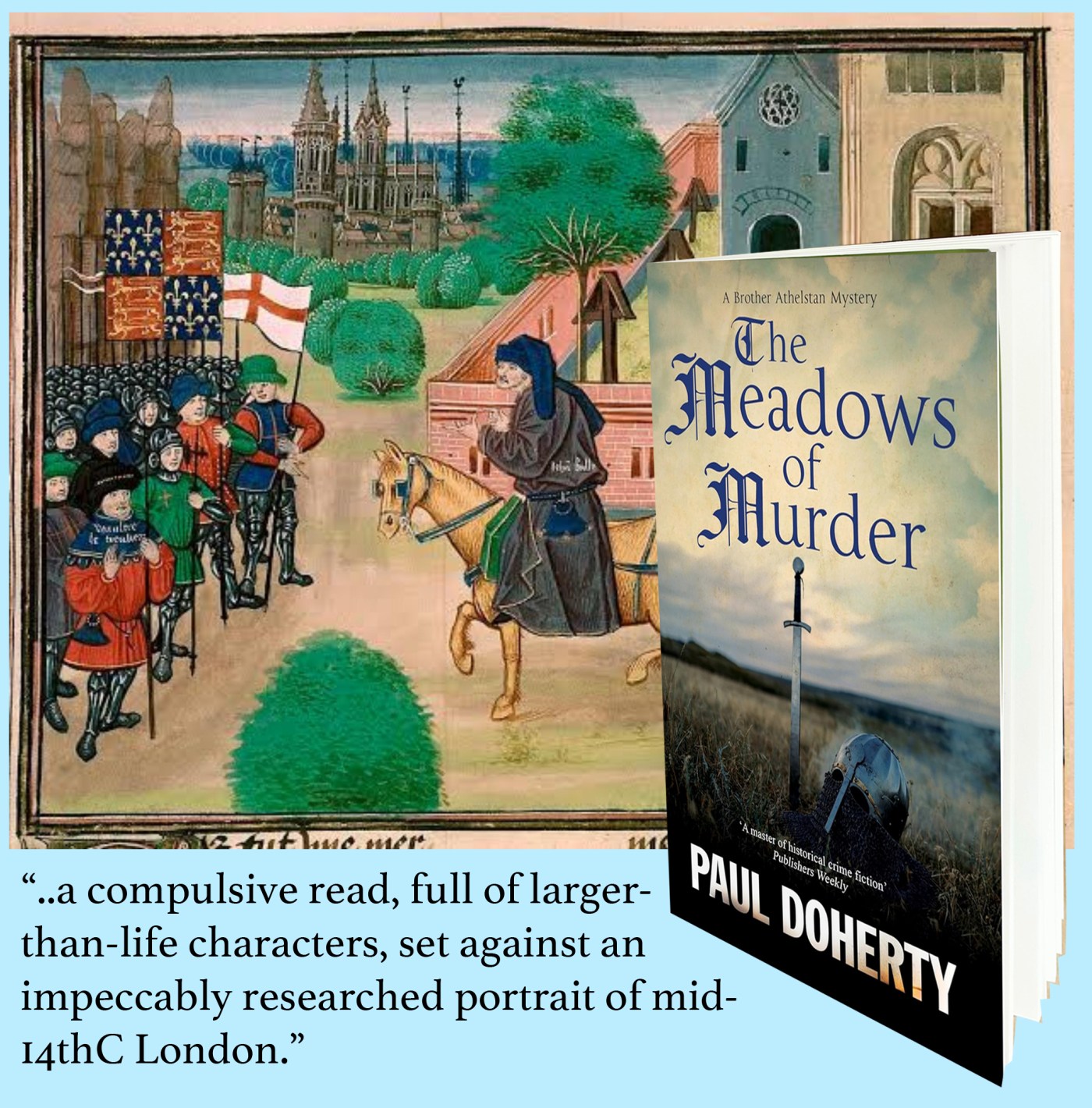
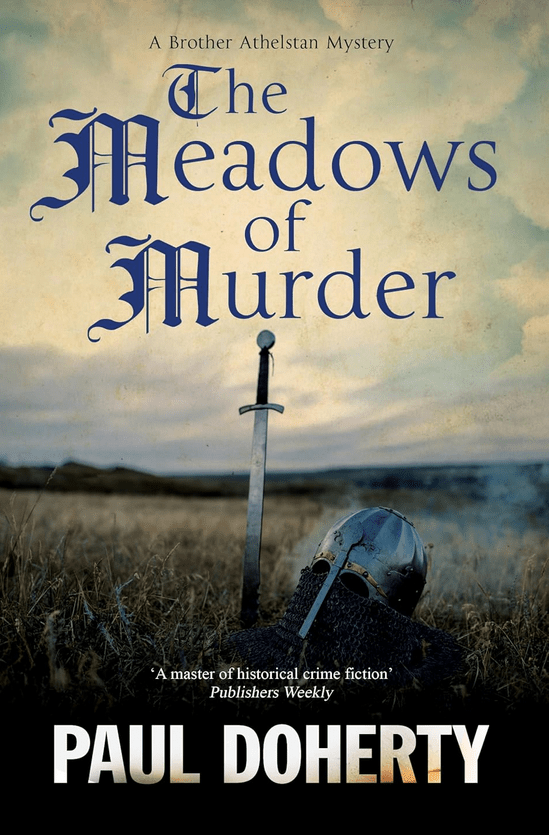
THE MEADOWS OF MURDER . . . Between the covers

I confess to being a devoted fan of medieval mysteries. I think it started with The White Company. Though clearly not a crime novel, that book triggered my interest in the period and it’s people. Since then, we have had Ellis Peters, Umberto Eco and Sarah Hawksworth, to name but three. I am new to Paul Doherty’s Brother Athelstan books, but was not disappointed by The Meadows of Murder. We are in late 14th century London, Athelstan is priest of St Erconwald’s church, and on the north bank of the Thames, the bodies of those executed for their role in the recently crushed Peasant’s Revolt are hanging rotting from their gibbets. The prologue explains the complex political situation of the day: the King, Richard II, is little more than a boy; John of Gaunt is locked in conflict with the powerful guildsmen of London, while powerful figures like Richard’s mother Joan, conspire behind the scenes. The country is still struggling from devastating effects of The Black Death.

This is no softly tinted golden account of a fondly imagined medieval England. It is full of dark corners and harsh realities. Members of a London Guild who were guilty of what is best described as a group rape of a Spanish entertainer are being murdered, one by one. A terminally Ill craftsman has sought sanctuary in Athelstan’s church for murdering a Jewish moneylender. London’s streets are dangerous places, violent and foul with sewage. Somehow, Athelstan rides the storm, helped by a mixture of his own resolute faith and the strength of his personality.

Athelstan and his friend Sir John Cranston, the Lord Hugh Coroner of London, are drawn to St Osyth’s Priory on the north bank of the Thames. It was there, that Massimo Servini, the abused Spaniard, was taken to die. The Priory has its own mysteries. Why the previous Abbess and Prioress disappear, one with a quantity of stolen treasure? Why is Thibault, the Queen Mother’s confidante ever present? And is Adam the Anchorite actually the brain damaged fool he appears to be, or is his imbecility a cloak masking something far more sinister?

There are touches of wry humour. Athelstan’s parishioners are certainly a peculiar bunch. He has summoned them to the church.

“He glared and he stared, managing his anger, but also counting heads and remembering faces. Watkin, the Dung collector, his nephew, Michael the Minstrel, Pike the Ditcher, Ranulph, the Rat Ctcher, with his two caged ferrets, Ferox and Audax, the Hangman of Rochester, Crispin, the Carpenter, Jocelyn, the Tavern Master, and all the rest of the motley crew.”

Looming over the narrative is the immense figure of John of Gaunt. The third son of Edward III, denied the crown by primogeniture, he was still an immense political figure. Best remembered today for the memorable speech Shakespeare put into his mouth in Richard II, he nevertheless was – briefly, and by marriage – king of the ancient Spanish kingdom of Castile. His son was crowned Henry IV in 1399. The animosity between him and the London Guilds is a key part of this tale. His name? He was born in the Flemish city of Ghent, now Gand. Paul Doherty (via the perception and acuity of Athelstan) raises the concept of what were called ‘by-blow’ progeny, – children not legitimised by marriage. Men like John of Gaunt could have numerous bastard offspring, and it was seen as nothing more than a testament to their virility, but for women of noble birth it was another matter altogether.

The key to the mystery lies at St Osyth’s, both above and beneath the ground. Athelstan uncovers a fatal network of allegiances and grievances that has caused many deaths. The humble priest’s ability to move effortlessly between Court, Cloister and Commons is rather implausible, but Paul Doherty has given us a compulsive read, full of larger-than-life characters, set against an impeccably researched portrait of mid-14thC London. The Meadows of Murder will be published by Severn House on 6th January.

DEATH ON SKYE . . . Between the covers

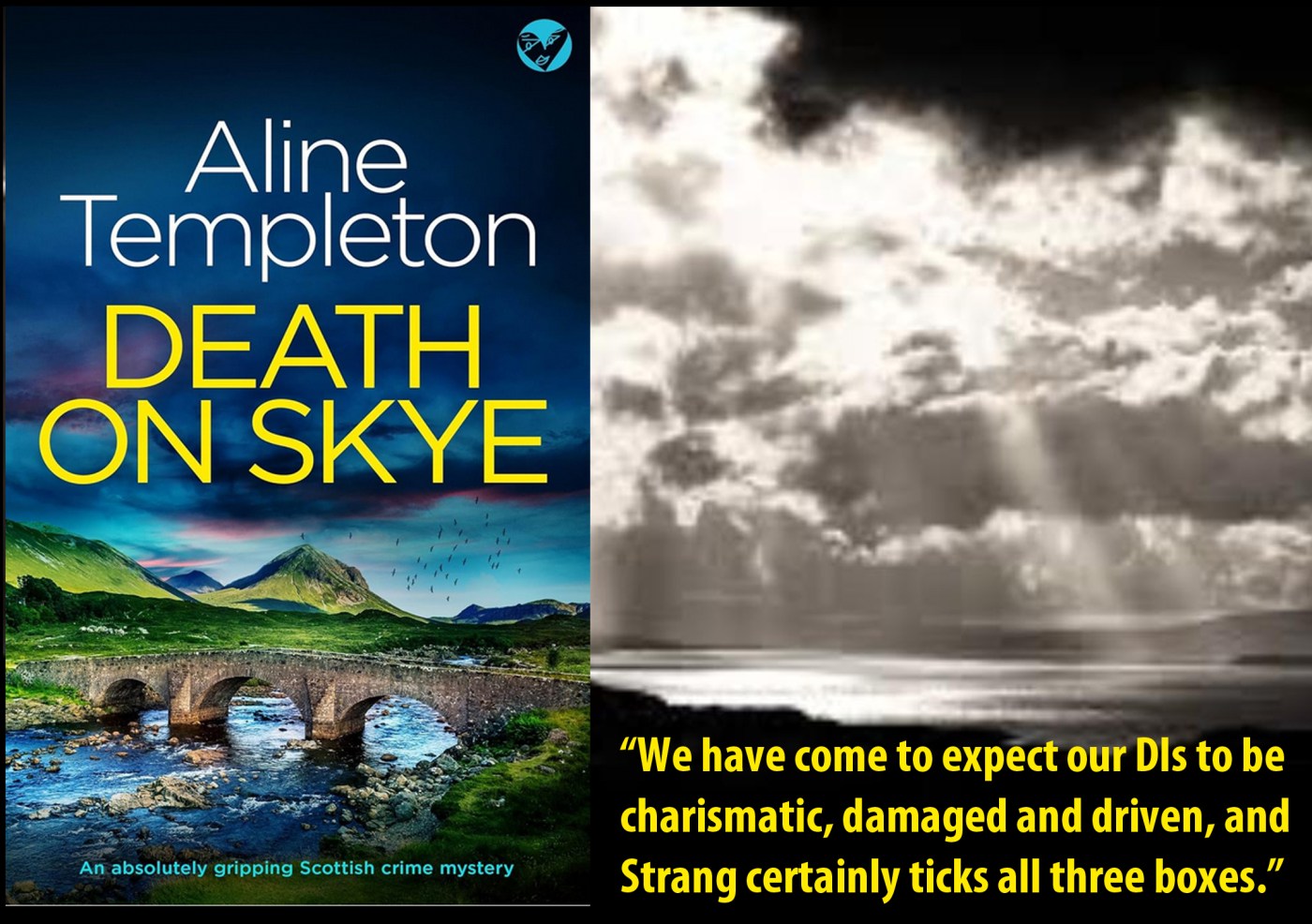
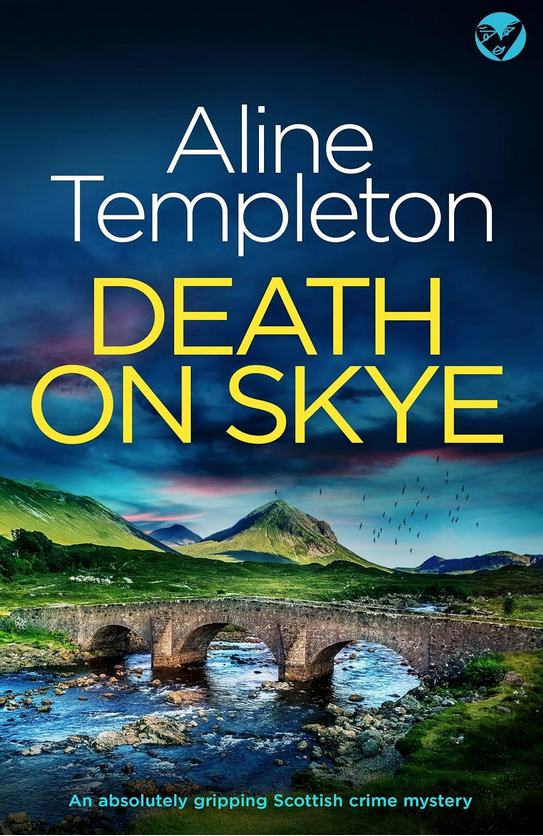
Aline Templeton sets up her stage with admirable directness, and wastes no time introducing us to the characters in her drama. Human Face is (or purports to be) a refugee charity. It has relocated from the south of England to a gloomy Victorian property on Skye and its director, Adam Carnegie is, we soon learn, a wrong ‘un. Beatrice Lacey, a wealthy but emotionally needy supporter of Human Face, had allowed her Surrey home to be used by the charity and is uneasy in its new location, but is in thrall to the messianic Carnegie.

A young woman called Eve is the latest in a series of ‘housekeepers’ at Balnashiel Lodge, and had been promised a British National Insurance number if she behaves herself. Vicky Macdonald, despite marrying a local man, is still regarded as a Sassenach. She does the actual housekeeping at the Lodge.

PC Livvy Murray has been exiled to Skye after being duped by a childhood friend who had been leading a double life in in serious crime. Now, she is stuck in a damp and draughty police house, with her career more or less over before it has started. Kelso Strang is a recently bereaved Edinburgh police officer. He is ex-military, and the son of a Major General. His decision to become a copper has resulted in a huge rift between him and his father.

When Eve is reported missing, Livvy Murray can find nothing suspicious, but refers the matter to her bosses on the mainland. Strang’s boss, seeking to divert him from the trauma of the recent death of his wife in a road accident, sends him up to Skye to investigate.

Aline Templeton has a certain amount of wicked fun at the expense of the unfortunate Beatrice, with her plastic pretend baby, the industrial quantities of chocolate bars she has stashed at strategic points throughout the lodge, and her desperate gullibility. Almost exactly half way through the book, the narrative (which has been ambling along pleasantly enough) explodes into violence, and takes an unexpected turn.

This is the first of a six book series, with an unusual publishing history. All six have appeared between the date of this, 25th August 2025, and the sixth – Death on The Black Isle – on 25th November 2025. Joffe Publishing clearly has a strategy, and I hope it works for them, but is this book any good? Short answer is yes, it’s very readable. The Skye setting is suitably bleak and tempestuous, and the description of the charity scammers rings all too true in a world where ostensibly reputable charities pay obscene amounts of donors’ money to their executives and their TV advertisers.

Were one to summon all the fictional British Detective Inspectors to a convention, the meeting pace would need to be very spacious, and the catering arrangements complex, so does Kelso Strang have sharp enough elbows to make a space for himself? Again, yes. We have come to expect our DIs to be charismatic, damaged and driven, and Strang certainly ticks all three boxes. Death On Skye is available now.


Blog at WordPress.com.

Up ↑