Search

fullybooked2017

Month

September 2025

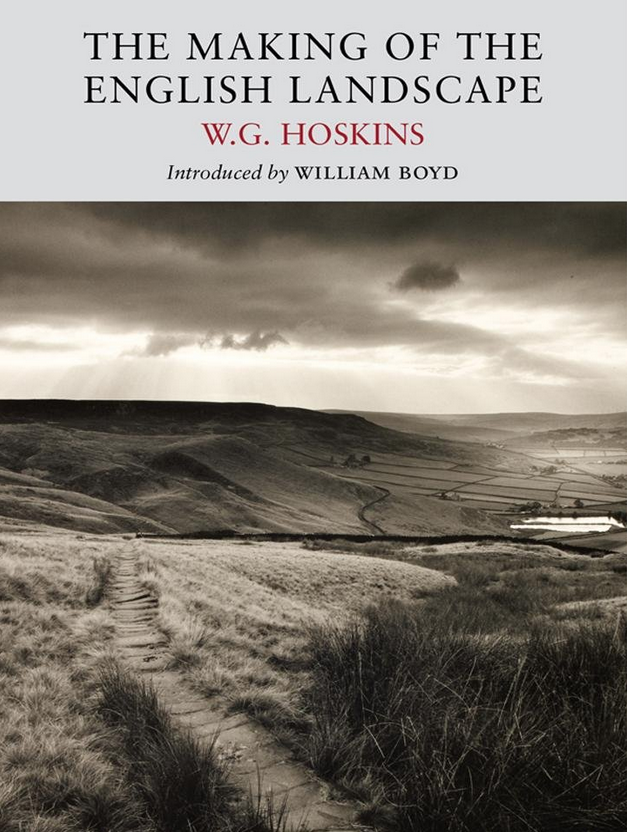
THE MAKING OF THE ENGLISH LANDSCAPE . . . A non fiction classic

An awareness of the power and influence of the English landscape is central to the writings of so many of my favourite crime writers, let alone books by literary giants such as Eliot, Dickens and Hardy. In no particular order Phil Rickman’s Merrily Watkins novels would be diminished without the brooding power of the Welsh Marches and the haunting legacy of forgotten settlements and abandoned Victorian chapels; the Philip Dryden novels of Jim Kelly are all the more intriguing due to their being set in the inward-looking hamlets and distrustful communities of the Cambridgeshire Fens. Cities have landscapes, too; Chris Nickson’s Leeds and the ancient palimpsest of London’s long history as revealed in the late Christopher Fowler’s Bryant & May novels are vital parts of the narrative process.

WG Hoskins walked and drove the length and breadth of post-war England, and came up with a magisterial account of how our country was shaped and created.The relentless speed of change meant that Hoskins’ book was out of date almost before print copies were on the shelves in 1955. Even his revision, two decades later, has been questioned by modern writers. His historical account from the earliest human habitation to the Industrial Revolution remains set in stone, however.

Modern observers will not be slow to spot the ironies made apparent by what he writes. He laments, aided by the powerful poetry of John Clare, the destruction – by the parliamentary enclosures in the early nineteenth century – of the ancient heathlands and vast common fields. These vast open spaces were replaced by tiny fields, each bordered by impenetrable thicket hedges of hawthorne. In recent times, ecologists have, of course, railed against the grubbing up of these hedges, and the creation of endless prairies of wheat fields to satisfy modern industrialised agriculture.

Hoskins notes that the enclosure movement provoked a huge rise in the diversity of small songbirds, and the related decline of raptors. Now, it seems, that the ornithological establishment is hell-bent on on the recreation of habitats for birds like Red Kites – even if their predation means death and destruction for smaller birds. What goes around, comes around, I suppose, and I am not qualified to take a position on this debate.The socio-political ironies abound, however. Of the effects of the frantic search for coal (to power the steam driven industrial revolution) Hoskins observes:

In the Lancashire township of Ince, there are today 23 pit shafts covering 199 acres; one large industrial slag heap covering six acres, nearly 250 acres of land underwater or marsh due to mining subsidence, another 150 acres liable to flooding and 36 disused pit shafts. This is the landscape of coal mining.” 

A modern reader of newspapers and magazines will not have to search far to find contemporary eulogies for the wonderful days when coal was king, or imprecations heaped on the heads of those who engineered the collapse of the British coal industry while knowing full well that coal could be bought cheaper elsewhere.

Looking back to historical crime fiction, one of my  favourite series is the Bradecote novels, set in twelfth century Worcestershire. Author Sarah Hawkswood was a distinguished historian before she began to write the novels, but it is impossible to believe that Hoskins’ wonderful account of how England was shaped was not at the back of her mind when she wrote her stories. Likewise, Chris Nickson’s novels of nineteenth century Leeds are full of the sulphurous stench of mill chimneys, the insanitary houses and the poisoned rivers that Hoskins describes in his account of the later stages of the industrial revolution.

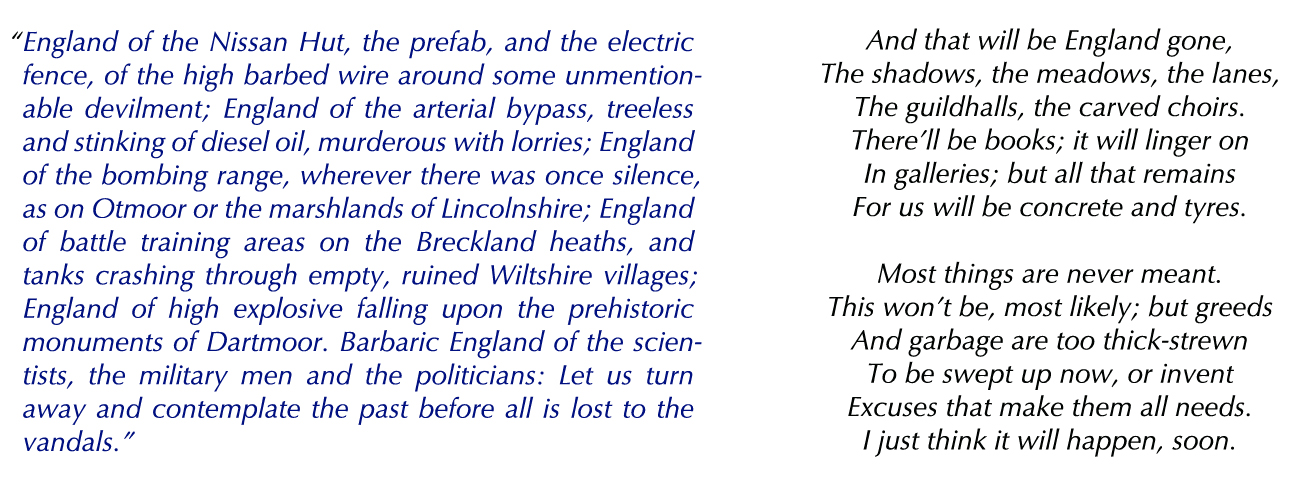
Hoskins was lucky enough – or diligent enough – to be able to end his days in the relatively unspoilt Oxfordshire countryside, but he had a deep anger for what England had become. Below, on the left, is an angry passage from the final chapter of his book and, beside it, the last two verses of Philip Larkin’s ‘Going, going’ (1972)
The Making of the English Landscape is a magnificent tour de force; it is essential reading for those who care about England and the spirit of our ancestors who sculpted the human landscape. This edition is published by Little Toller Books and is available now.
 

DEADMAN’S POOL . . . Between the covers

Murder sites in British crime fiction come in all shapes and sizes: West Country bookshops, greasy subterranean passages under Leeds Station and a twelfth century water mill have featured in my recent reads but, because of our climate we cannot do exotic. We can, however do windswept and bracing. Fitting that bill perfectly is a beach on the storm-lashed island of St Helen’s, one of the Scilly Isles. Home now only to gulls and kittiwakes, it remains the last resting place of the monks who once lived on the island. Scilly Isles copper DI Ben Kitto discovers a much more recent burial and, in doing so, he uncovers evidence of that vilest of vile modern ‘professions’, human trafficking.Kitto’s problems mount.

A new-born baby boy, just about alive, is left on the police station steps and DCI Madron, Kitto’s abrasive boss, is injured in an accident, and then disappears. The Scilly Isles must be a challenging place to be a copper. The islands that make up the archipeligo have, in total, the population of an medim-size English village, so crime ought to be easily solvable. But. And it is a very large ‘but’. Small boats are everything, and most people have access to one. The distances between the main inhabited islands – St Mary’s, Tresco, St Martin’s, St Agnes and Bryher – are relatively short, but the Atlantic Ocean is wild, unpredictable and unforgiving. Crime scenes are difficult to protect, forensic experts have to be flown in from Cornwall, and the frequently vile weather is a challenge to logistics and normal police procedure.

Kitto – who has returned to his birthplace after cutting his teeth in London with the Met – painstakingly gathers evidence about the dead girl and the abandoned baby, reluctantly reaching the conclusion that although international crime gangs may be at the root of the problem, the branches and leaves of this particularly poisonous tree are flourishing in the climate of his own bailiwick, and several prominent and well-respected individuals may be involved. Kitto is an islander to his core, but he is painfully aware of the challenges residence poses.

The outside world is comfortless though. When I pull back the curtain, breakers are lashing the shore. Seabirds are returning to Bryher in flocks, scattered by the breeze.

It feels like we’re at the mercy of some savage force that’s trying to tear these islands apart.”

The old expression “barking up the wrong tree” has its origins in America, where hunting dogs would be fooled by their prey jumping between adjacent trees to fool their pursuers. It doesn’t sound as if there are many trees on the Scilly Isles, but Ben Kitto barks up at most of them in vain. This isn’t to say he is inept, or a fool. Quite simply, the villain is hiding in plain sight, too close to home. The final pages of Deadman’s Pool are exhilarating and graphic. When Kitto finally exposes the killer, I had to check back to see if Kate Rhodes had given us any clues, but I don’t think she did, so the surprise is even more startling.

I am a suburban man, root and branch, so it baffles me how anyone can remain sane living in such remote places as Barra, the Orkney Islands or the Scilly Isles. Kate Rhodes, however, has been bewitched by the charm of Island life, and she has written a gripping and addictive police procedural set in a frequently intimidating landscape. Deadman’s Pool will be published by Orenda Books on 25th September.

THE HOWLING . . . Between the covers

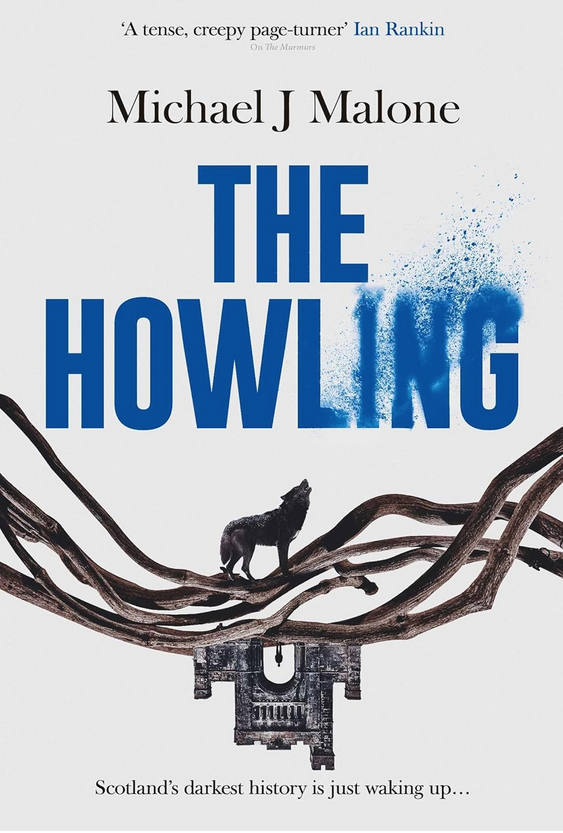
I reviewed an earlier novel in this series twelve months ago, and you can read what I thought of The Torments by clicking the link. Now, Annie Jackson (with her brother Lewis) returns in another mystery set in the evocative landscape of the Scottish Highlands. Annie’s USP, to be flippant for a moment, is that she has inherited a curse, passed down through female ancestors. She is subject to terrifying revelations that show how certain people she knows are going to meet their death. In the last book her vision was that of a young man from the local lifeboat crew being killed in a car accident. He duly was, and Annie suffered opprobrium for her perceived inability to issue a credible warning.

In that previous novel, she survived a life-and-death struggle with a satanic madwoman called Sylvia Lowry-Law. Lowry-Law is now a permanent resident of a secure mental hospital but, exercising her rights under the bizarrely liberal UK legal system, she requests a meeting with Annie. The prisoner offers to remove Annie’s familial curse, but asks, in return, that Annie searches for – and finds – Lowry-Law’s long lost son.

Annie is sent in the direction of Lowry-Law’s former solicitor in Edinburgh, but the office is now empty except for the former receptionist, an elderly woman called Joan Torrans. She reveals that her former boss took his own life some weeks earlier. Returning to the now deserted office a few days later, after Torrans suddenly dies, Annie and Lewis discover a mysterious room, its door concealed behind a bookcase. In the room is a sinister altar surmounted with a horned skull and spent candles. It seems that the solicitors were connected to a satanic cult known as The Order.

As Annie and Lewis discover that The Order dates back centuries, and is deeply embedded in Scottish history, they learn that its modern operations are financed by a poisonous web of blackmail aimed at some of the richest families in the land. Then, a shocking act of violence turns the narrative on its head.

The author reminds us that in some parts of Britain, the past lays a heavy hand on the shoulder of the present. Annie and Lewis face a struggle, not only against the present day black arts of Sylvia Lowry-Law, but against centuries of superstition, folk memory, and bloody deeds soaked into the very landscape. The finale is worthy (and this is for older readers) of something the cult director Roger Corman might have concocted for one of his Edgar Allan Poe adaptations.

The Howling is a gripping read, and mines into a deep seam of violence embedded in Scottish history and legend. The misty lochs, forbidding hillsides and bleak settlements are perfect settings for memories of witchcraft and lycanthropy. I am normally no fan of split time narratives, but that is just a personal gripe, and the device is skillfully used here to tell the story of a terrible wrong that was done centuries earlier. The Howling is published by Orenda Books and is available now.

 

PRIZE DRAW . . . Win a copy of Marble Hall Murders

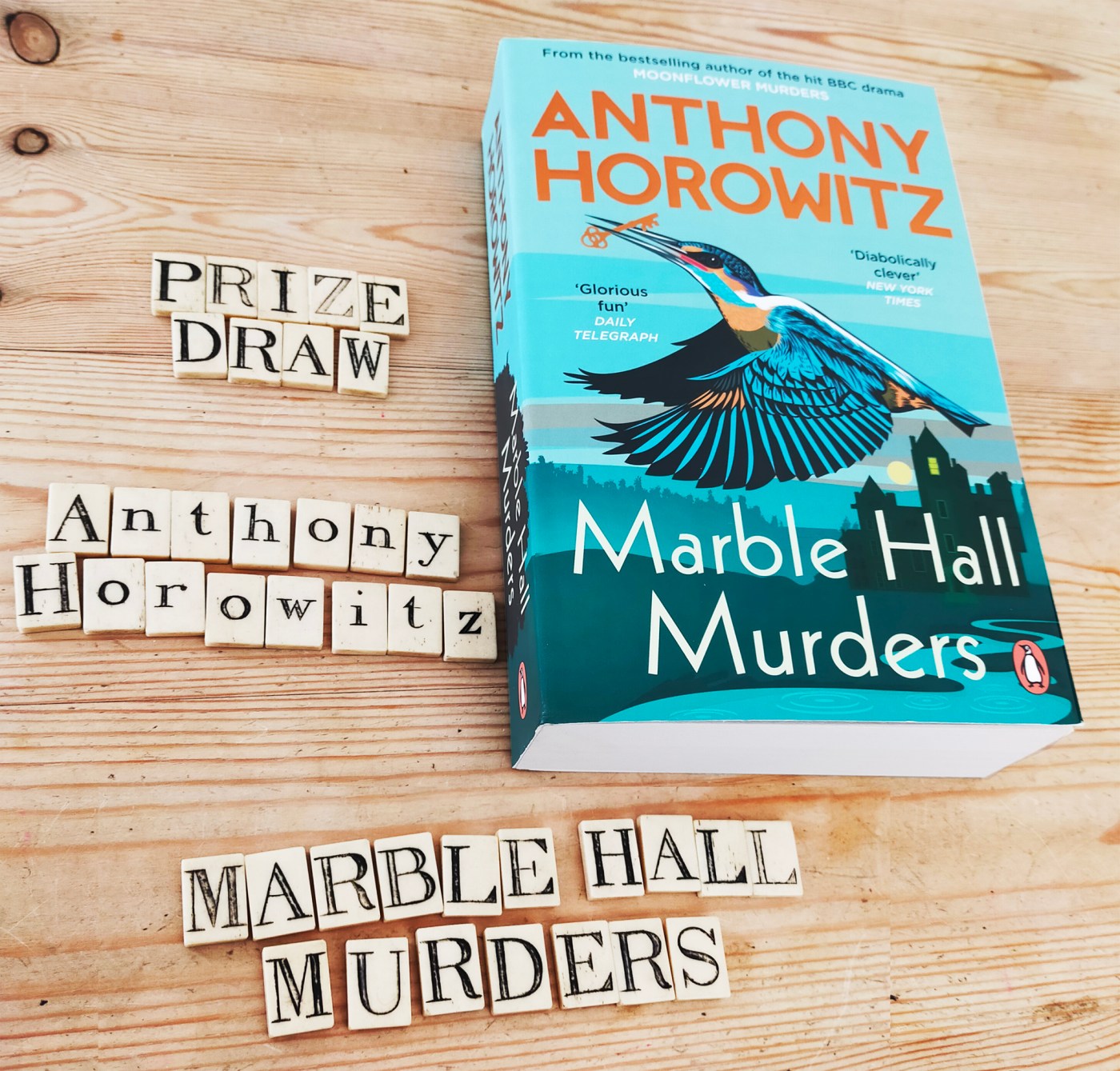
Back in April I reviewed the hardback edition of this excellent mystery from one of our most gifted and well loved writers. You can read that review by clicking on the graphic below. Now, Penguin are publishing a paperback edition, and I have a copy to give away. To get your name in the digital hat, go to my feed on X https://x.com/MaliceAfore You will need to follow me. I will then follow you back. Next, simply message me the code printed at the bottom of this post. Make sure your reply is in the form of a message, and not an open comment. Best of luck! I will do the draw on September 26th and notify the winner directly. UK entries only, please.

AH2509

FEAST FOR THE RAVENS . . . Between the covers

I must declare an interest. There are few books that have given me as.much pleasure as those in the Bradecote and Catchpole series by Sarah Hawkwood. I began the latest, Feast for the Ravens, with a great sense of anticipation. For newcomers, we are in 12th century Worcestershire, at the turbulent time of the civil war between King Stephen and the Empress Matilda. Bradecote is the Undersheriff of the county, the gnarled and cynical Catchpole is his Serjeant, while young Walkelin is the Underserjeant..

Near the manor of Ribbesford, up in the woods searching for hazelnuts, two youngsters find a corpse. It is that of a knight, still clutching his sword. There is a local legend that in the woods lives a shapeshfting spirit who can switch between her human persona and that of a raven. Certainly, the real life corvids have dined royally on the dead man’s eyes. Eventually, Bradecote and his men arrive on the scene, and before too long they identify the body as that of Ivo de Mitton, a local man long since estranged from his family due to his alleged fatal arson attack on the decades earlier. It is important to bear in mind that the Norman invasion is less than a century old; the inhabitants of hamlets like Ribbesford are almost entirely of Saxon stock, while those in power-like Bradecote- are Normans. The main anxiety among the villagers is that the powers that be will invoke murdrum fine.

The murdrum fine was  a financial penalty imposed by Norman rulers in England after the Norman Conquest, specifically targeting Anglo-Saxon communities . If a Norman was murdered and the killer wasn’t quickly identified and brought to justice, the local area (often a hundred, encompassing several villages) would be required to pay a substantial fine to the crown. This fine was intended to deter Anglo-Saxons from killing Normans and to generate revenue for the Norman rulers.

The plot revolves around family rivalry, a murderous assault on a manor and its inhabitants, and a brutal attack on a young woman. The violence occurred decades ago and both its perpetrators and victims are all thought to be dead. But one person survived, horrifically mutilated, and now she lives a secret existence in a limestone cave, her only friends being the ravens who inhabit the forests and rugged cliffs that tower above the Severn. The architect of this ancient misery has passed from pubic memory. Perhaps he was killed in knightly battle, or perished in the unforgiving desert on a crusade? Bradecote and his Serjeants slowly pull together the threads of the mystery and, in a terrifying climax, the ravens intervene to ensure that justice, of a kind, is served.

Common sense says that there cannot be much left of the 12th century landscape around Pibbesford. The hills haven’t changed shape, and the majestic Severn still flows where it always did, but nearly nine centuries of enclosures, housing development and transport links have changed the topography for ever. Sarah Hawkswood, however, seems to have walked every track, forded every stream, and supped her pottage in every long since lost manorial hall. It is this astonishing evocation of landscape which makes her books so distinctive. Feast for the Ravens will be published by Allison & Busby on 18th September. If you click on the author image below, it will take you to my reviews of earlier Bradecote and Catchpoll novels.


THE BOOKSELLER . . . Between the covers

Detective Sergeant George Cross is unique among fictional British coppers in that he is autistic. This apparent disability gives him singular powers when investigating crimes. While totally unaware of social nuances, his analytical mind stores and organises information in a manner denied to more ‘normal’ colleagues within the Bristol police force. When questioning suspects or witness his completely literal mindset can be disconcerting to both guilty and innocent alike. Regular visitors to the site may remember that I reviewed two earlier novels in the series The Monk (2023) and The Teacher (2024) but, for new readers, this is the background. Cross is in his forties, balding, of medium height and, in appearance no-one’s idea of a policeman, fictional or otherwise. He lives alone in his flat, cycles to work, and likes to play the organ in a nearby Roman Catholic Church, where he is friends with the priest. George’s elderly father lives nearby, but his mother left the family home when George was five. At the time he was unaware that she left because Raymond Cross was homosexual. Now, Christine, has slowly reintroduced herself into the family group and George, reluctantly, has come to accept her presence.

This case begins when an elderly bookseller, Torquil Squire returns to his flat above the shop after a day out at an antiquarian book sale at Sothebys. He is horrified to find his son Ed, who is the day-to-day manager of the shop, dead on the floor, stabbed in the chest. George and his fellow DS Josie Ottey head up the investigation which is nominally led by their ineffectual boss DCI Ben Carson.P.The world of rare and ancient books does not immediately suggest itself to George as one where violent death is a common occurrence, but he soon learns that despite the artefacts being valued in mere millions rather than the billions involved in, say, corporate fraud, there are still jealousies, bitter rivalries and long running feuds. One such is the long running dispute between Ed Squire and a prestigious London firm Carnegies, who Ed believed were instrumental in creating a dealership ring, whereby prominent sellers formed a cartel to buy up all available first editions of important novels, thus being able to control – and inflate – prices to their mutual advantage.

Then there is the mysterious Russian oligarch, an avid collector of books and manuscripts, who paid Ed a sizeable commission to buy a set of fifteenth century letters written by Christopher Columbus, only for the oligarch to discover that the letters had, in fact, been stolen from an American museum. Could Oleg Dimitriev have resorted to Putinesque methods following the debacle?

Running parallel to the murder investigation is a crisis in George’s own life.  Raymond discovers that he has lung cancer, but it operable. During the operation, however, he suffers a stroke. When he is well enough to return home he faces a long and difficult period of recuperation and therapy for which George is ready  and able to organise. More of a problem for him, however, is the challenge to his limited emotional capacity to deal with the conventionally expected responses. Even before his father’s illness, George has been disconcerted to learn that Josie Ottey has been promoted to Detective Inspector, and he finds it difficult to adjust to what he perceives as a dramatic change in their relationship.

The killer of Ed Squire is, of course, identified and brought to justice, but not before we have been led down many a garden path by Tim Sullivan. The Bookseller is thoughtful and entertaining, with enough darker moments to lift it above the run-of-the-mill procedural. Published by Head of Zeus, it is available now.

THE WINTER WARRIORS . . . Between the covers

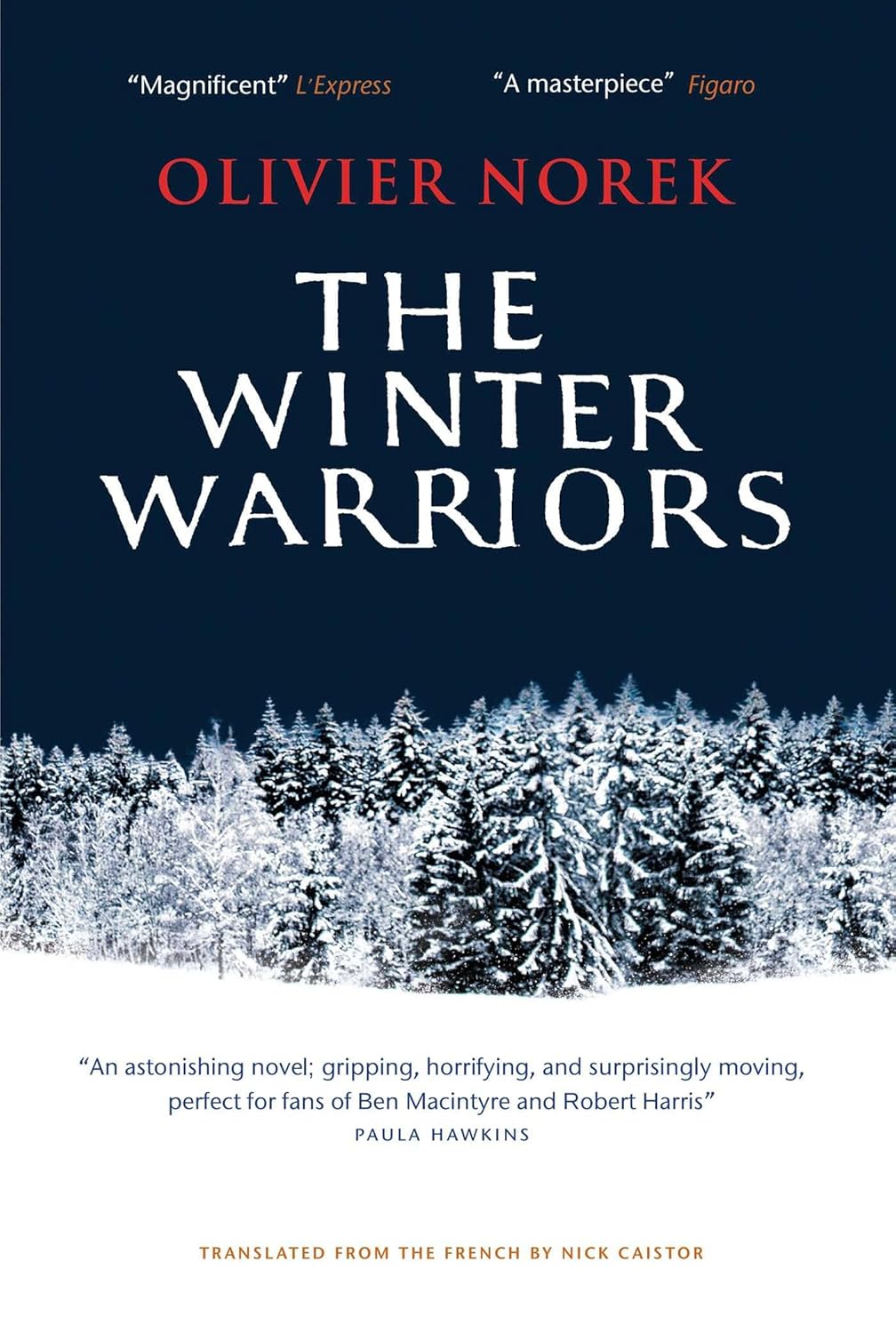
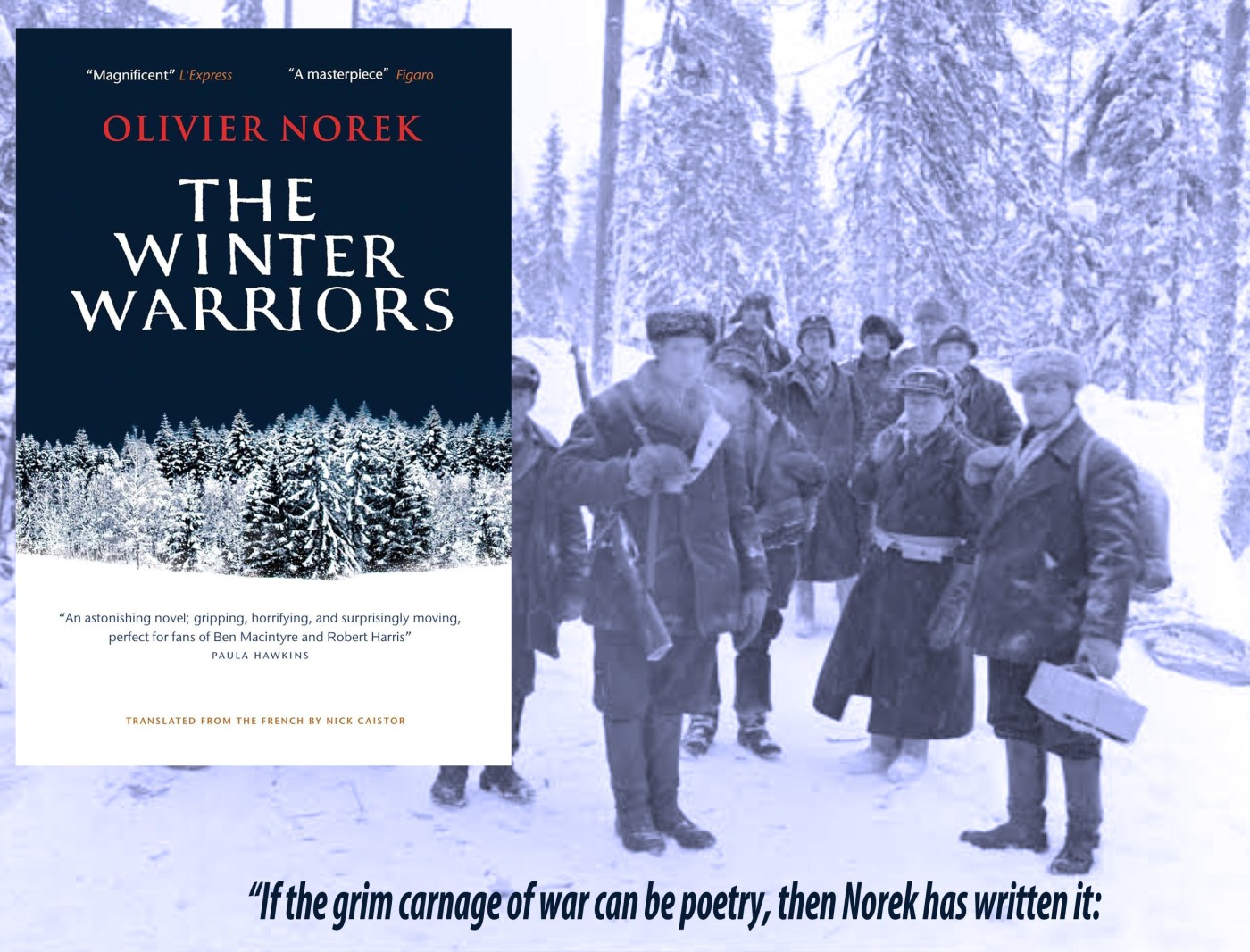
If the short but bloody war between Finland and Russia which took place in the winter of 1939/40 is largely forgotten today, it is simply because of the enormity of events which followed it. This is the story of that war, and of one man in particular – Simo Häyhä, who came to be known by the Russians as the White Death. A farmer and forester by trade, he was already renowned as a gifted marksman when the Russian invasion began, and was a reservist member of the Finnish Civic Guard. The narrative follows Simo and a small group of his childhood friends from the beginning of the war to Simo’s near-fatal wounding, just seven days before the end of hostilities on 13th March 1940.

This is, ostensibly, a novel, but the events depicted are as close to the facts as anything found in a dry history. Author Olivier Norek is a successful crime writer, but here, his descriptions of battle are as real and uncomfortably vivid as anything I have ever read. Most of the characters are from real life, and they include Russian foreign minister Vyacheslav Molotov and Finnish Commander in Chief Carl Gustav Mannerheim. One individual who stands out is Arne Juutilainen, one of the Finnish combat commanders. Known to his men as ‘The Terror’, he was a seldom-sober veteran of the French Foreign Legion, suicidally courageous with an almost insane lust for killing.

With skill and compassion, Norek describes Simo’s descent into a kind of moral numbness that enables him to do his job:

“For Simo, the first kill of the day was always painful. The second anaesthetised whatever feelings f pity he still had, and by the third he he was nothing more than a machine, mechanically adjusting each movement to increase his speed and precision. So as not to go mad, he forget they were men, forgot how many fathers and brothers he was sending six feet under the snow, even if they were Russian invaders.”

We are reminded of the paucity of Finnish resources: the uniforms of the dead, provided they are not too badly damaged, are laundered, patched and sent to clothe new recruits; lines of solemn faced women, many of them already widows, queue to hand in their gold wedding rings to be sold for currency on the international market.

While the book centres on the bravery and almost supernatural skills of Simo Hayha, one other character looms over the narrative like a spectre. In my opinion, Joseph Vissarionovich Dzhugashvili – Stalin – was unequalled in the twentieth century for his grotesque cruelty, inhuman lack of compassion, overwhelming ambition and demonic ability to embrace evil. His paranoia in the 1930s had led to thousands of senior military commanders to be shot, thus leaving the Russian army bereft of experienced generals, with those that survived policed at every turn by political commissars who reported back to Stalin only what they thought he wanted to hear. Thus the Russian tactics for most of the war were chaotic and myopic, and it was only better organisation and more intelligent – if brutal – use of firepower in the closing weeks of the war that forced the Finns to surrender.

If the grim carnage of war can be poetry, then Norek has written it:

“The dead from previous weeks were half-hidden in the earth. Only vestiges remained: their still visible helmets, occasionally part of their backs. Their arms were like aerial roots, as if growing out of the ground itself, ready to rise, get to their feet and haunt all those who had decided on this war, entirely forgotten by the world almost a century later.

Their blood would saturate the ground, their flesh would nourish the trees, mingle with the sap. They would be in every new leaf, every new bud.

There were more than a million of them, and when, tomorrow and beyond tomorrow, the wind blew through the forests of Finland, it would also carry their voices.”

A cover blurb for this book says, simply, “a masterpiece”. For once, this is not hyperbole. The book takes its place in the pantheon of novels of war, alongside such as Alexander Baron’s From the City, From the Plough, John Harris’s Covenant With Death, Erich Maria Remarque’s All Quiet on the Western Front and Norman Mailer’s The Naked and The Dead. Translated from the French by Nick Caistor, it is published by Open Borders Press and is available now.
APPOINTMENT IN PARIS . . . Between the covers

London, spring 1940. The ailing Neville Chamberlain is still Prime Minister, Hitler has rampaged through Poland and Czechoslovakia, and Winston Churchill is First Lord of The Admiralty, licking his wounds after his attempt to thwart the Nazi occupation of Norway.

Former intelligence agent Stella Fry is working in a quiet backwater of the war effort, a documentary film unit. She is headhunted by MI5 after a German  prisoner of war named Fassbinder is murdered in a high security interrogation unit. Why Stella? The main suspect in the killing is Robert Handel,  Stella’s erstwhile colleague at Oxford. Also working “off the books” for MI5 is a rumpled but effective former colleague of Stella’s, Harry Fox, now scratching a living as a private investigator. He and Stella’s earlier encounter can be found in Midnight in Vienna (2024).

The powers that be believe that Handel has fled to Paris, where his sister runs a bookshop. Stella is despatched to find him, and this allows Jane Thynne to pen a few evocative pages describing the French capital on the brink of a national disaster, but still behaving with its customary panache and insouciance. After a brief meeting with a certain Noel Coward, secretly working for British Intelligence, Stella, rather than finding Handel, is found by him, as he is now deeply embedded with the fledgling French resistance movement, already organising itself for the inevitable arrival of the Nazis. He denies any responsibility for Fassbinder’s murder and, after a passionate evening in Handel’s room, the couple awake to the news that Hitler has invaded Belgium, Luxemburg and Holland. Handel bundles Stella onto a crowded train bound for the Channel, and amid crowds of terrified refugees, she eventually arrives in Dover.

Meanwhile, Harry Fox has become entangled with a classic femme fatale who calls herself Lisselotte Edelman. It could be said that Harry is not a perfect gentleman for, while Lisselotte is gently snoring in his bed after a passionate encounter, he investigates her handbag, where, beneath the usual feminine fripperies, he finds a handgun, an Enfield No.3 MK1 .38 calibre, the same gun that shot Harry is also a veteran of The Great War, and sometimes his dreams are shot through with the horrors that his eighteen-year-old self endured at Mametz Wood.

I must declare an interest here. I am a sucker for novels set during WW2 and, all the more so if they are grounded in London. I ‘missed’ the war by a considerable distance, being born in 1947, but my childhood was shot through with reminders. I recall playing with old ration books and remember my father being laid low with occasional bouts of the malaria he had contracted in North Africa. In my teens I admired the old soldiers who had survived the Great War. They are all long since gone, as are all but a few of the men of my father’s generation. Jane Thynne captures the uncertain times of the early 1940s with uncanny accuracy, and she can stand shoulder to shoulder with fellow contemporary writers like John Lawton who have brought those troubled times so vividly to life.

Jane Thynne weaves a complex web of assumed identities, the dark arts of espionage and complex international politics, in particular the ambiguous relationship between Britain and the United States. She still finds space for some Brief Encounter-style romance, and some delightful cultural references, my favourite being the reference to a quiet Cotswold railway station (think a poet who died at Arras in 1917) Appointment in Paris is a delightful and complex journey into a fascinating period of our history. It was published by Quercus on 4th September.

Blog at WordPress.com.

Up ↑