
John Connolly, just like his great predecessor MR James knows what scares us. Although James had a cupboard full of spectres at his disposal, he knew the visceral fear many of us have of dry, clicking, leathery things that may be actually alive – or long dead. Arachnids, and things like them, can be fearsome. Remember the creatures that dwelt in the eponymous The Ash Tree? Across the Charlie Parker canon, Connolly has often introduced the spider – usually something truly nasty like the Brown Recluse – as evidence that evil is abroad. Here, just nine pages in, a relatively honest Mexican antique dealer, Antonio Elizalde, has resorted to finding and selling something (we have let to yearn what) truly astonishing to pay for expensive private medical care. The night before he is due to fly north to begin treatment, he buys everyone in the bar a tequila, and walks home. What he finds when he unlocks his front door will have every registered arachnophobe trembling. I had to read the next few pages, but I didn’t want to.
Incidentally, Connolly doesn’t expect his readers to be deeply immersed in Meso-American history, but he knows we have Google, and so he introduces the Great Goddess of Teotihuacan. Newcomers to Charlie Parker need to believe, or at least believe that Charlie Parker believes. In what? The world of the ever-present dead or, put simply, ghosts. These are not cartoon spooks in white sheets, but people who have, usually, died violently. I suppose the basic presumption is that the violence of their passing somehow denies them the sleep of ages. I don’t know, but there are plenty of pages out with with more time and space to speculate than I have.
Parker’s ghost is his daughter Jennifer. Brutally murdered years ago, she is a largely benign presence, but uneasy and restless. Connolly doesn’t just skirt round the ghost issue. He takes risks, perhaps “In for a penny, in for a pound.” The ghostly Jennifer still thinks like a living person and has the same kinda of trials and tribulations experienced by her corporeal father and his friends.
As in all good crime novels, Connolly presents us with several apparently disparate plot strands, and no doubt enjoys the fact that his readers will be speculating on how they can possibly converge. As an antiques smuggler, Roland Bibas (an associate of Antonio Elizalde) is nabbed by Federal customs agents, Parker is employed by an avante-gard sculptor, Zetta Nadeau, to trace her companion, Wyatt Riggins, who has suddenly disappeared. As Parker (and his not so angelic guardians Louis and Angel) investigate the disappearance of Wyatt Riggins, they realise that they ate intruding on private grief, that being a fatal contretemps between Riggins’s boss Devin Vaughn, and a Mexican cartel jefe called Blas Urrea. Urrea has sent Seeley, one of his fixers, over the border to deal with the problem. Seeley is sinister enough, but he has a female companion who is far more terrifying than any of the cartel enforcers. Seeley’s female companion, known only as Señora, commits several more killings.
‘Murders’ isn’t quite the word, as anyone vaguely familiar with Inca methods of execution may well know. Let’s just say that a kind of open heart surgery is involved. Chillingly, Connolly describes Señora using a word I had to Google. The quote is, “There was a dryness to her tegument.” The online dictionary tells us, “the outer body covering of flatworms, including tapeworms and flukes.” The next few paragraphs are not for the faint of heart. Connolly often strays into what I call David Cronenberg territory. Here, he not so much strays as buys a plot and builds his own house.
Obviously under pressure from powerful people, Zetta unhires Parker, but her action is a red rag to a bull. Our man is nothing if not a terrier and, to mix a metaphor and quote The Bard (Conan Doyle borrowed the phrase) “The game is afoot.” Along the way, Connolly’s dialogue is tack-sharp. A long term acquaintance of Parker says,
“From what I’ve heard, you’ve been at Death’s door so often, he’s probably left a key under the mat for you.”
Quite late in the piece for a Charlie Parker novel, the exact nature of what is being smuggled north from Mexico is revealed, and it doesn’t make for comfortable reading. Old Charlie Parker hands may have become inured to some of the evils he has faced over the years, but this is something else altogether.
“I have good news and bad.”
“I’ll take the bad news first.”
“Those children Riggins stole from Mexico are already dead,” said Louis.
I felt like crawling under the sheets and never coming out again.
“And the good news?”
“They’ve been dead for a long, long time.”
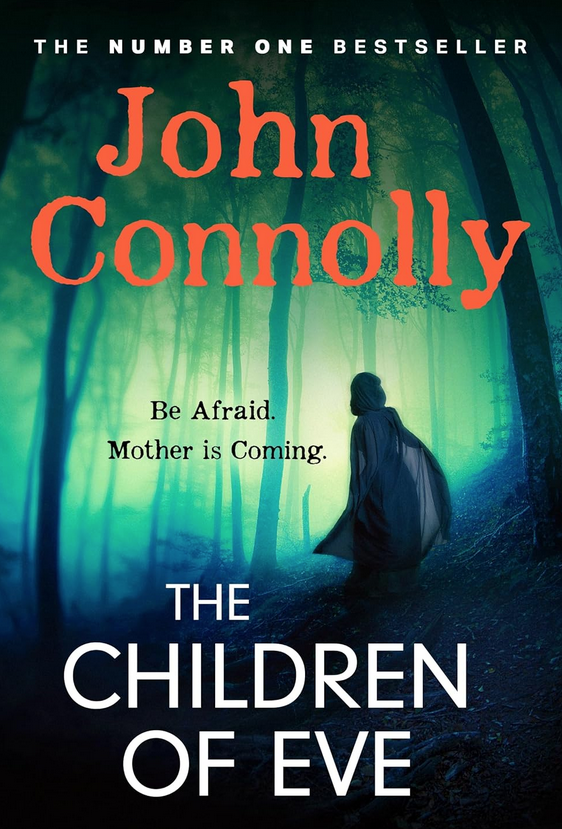
This is vintage Charlie Parker, with snappy dialogue, glimpses of a darker world than the one we inhabit, and a brilliant plot. Published by Hodder & Stoughton it is out now. Anyone new to the series can click this link, and it will take to you to reviews of some of the previous novels.


 fullybooked2017