
Search

fullybooked2017

Month

May 2025

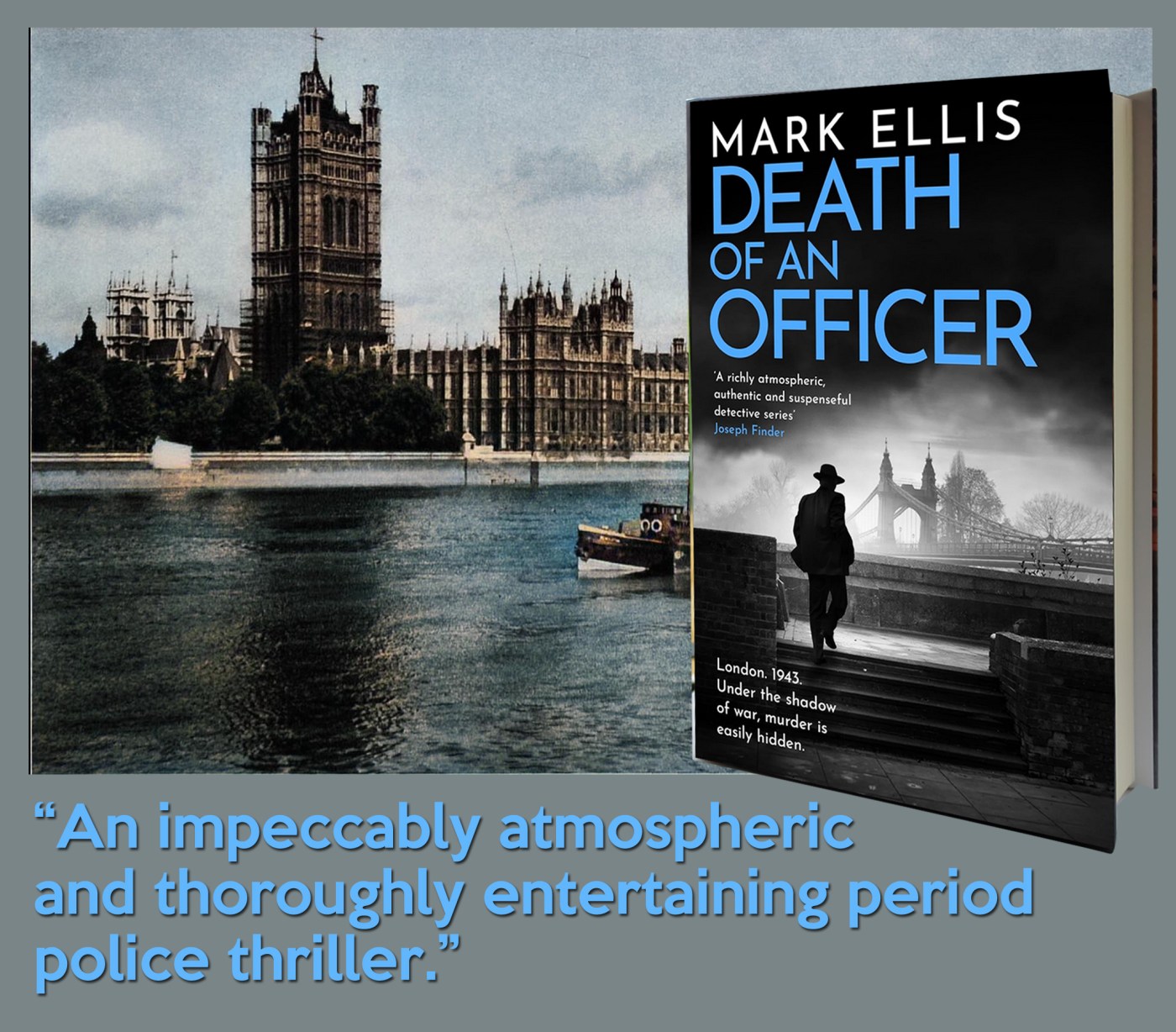
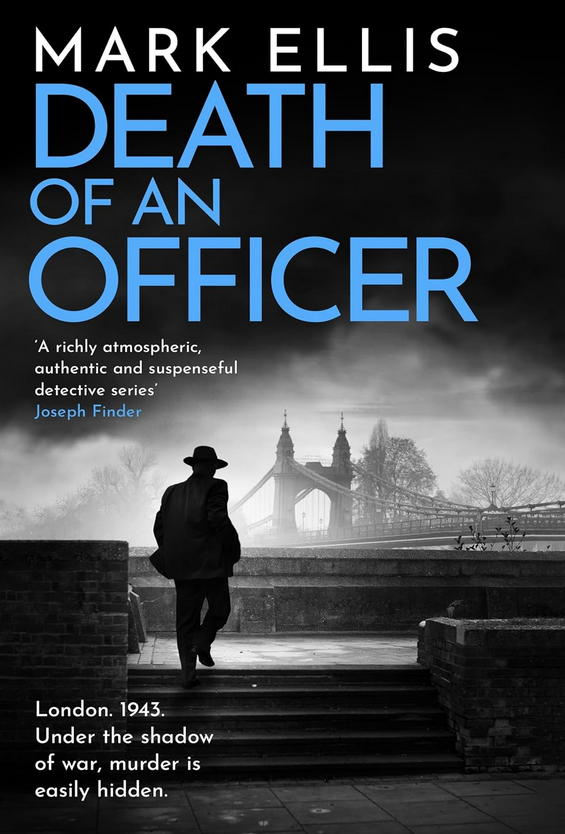
DEATH OF AN OFFICER . . . Between the covers

Detective Chief Inspector Frank (christened Francisco) Merlin is a thoroughly likeable and convincing central character in this murder mystery, set in 1943 London. As in all good police novels, there is more than one murder. The first we are privy to is that of a seemingly inoffensive consultant surgeon, Mr Dev Sinha, found dead in his bedroom, apparently bludgeoned with a hefty statue of Ganesha, the Hindu elephant god. Sinha’s wife has been diagnosed with a serious mental illness, and has been packed off to an institution near Coventry ( no jokes please) but when she is interviewed she is more lucid than those around her have been led to believe.

Added to Merlin’s list of corpses is that of south London scrap dealer called  Reg Mayhew, apparently victim of the delayed detonation of a German bomb. Unfortunately for the investigators, the word ‘corpse’, suggesting an intact body, is misleading. Mayhew’s proximity to the blast has given the lie to the old adage about someone’s inability to be in two places at once.

Clumsily concealed beneath bomb site rubble in the East End is the well-dressed (evening attire and dress shirt) remains of Andrew Corrigan, a Major in the US army. It seems he was a ‘friend’ of a rich and influential MP, Malcolm Trenton. 

Merlin’s investigations take him towards the contentious issue of Indian independence, and it seems that the murdered consultant was a member of a committee comprising prominent British Indians who support Subhas Chandra Bose, a firebrand nationalist who is seeking support from Nazi Germany and Japan, in the belief that they would win the war, and then look favourably on an independent India.

Like all good historical novelists, Mark Ellis has done his homework to make sure we feel we are in the London of spring 1943. We are aware of the recent Bethnal Green Tube disaster, that Mr Attlee is a key member of Churchill’s coalition government, and that a Dulwich College alumni has just had his latest novel, The Lady in the Lake, published. We also know that the Americans are in town. As Caruso sang in 1917, the boys are definitely ‘Over There!‘Among the 1943 intake is Bernie Goldberg, a grizzled American cop, now attached to Eisenhower’s London staff.

I am old, but not so ancient that I can remember WW2 London. Many fine writers, including Evelyn Waugh in his Sword of Honour trilogy, and John Lawton with his Fred Troy novels, have set the scene and established the atmosphere of those times, and Mark Ellis treads in very worthy footsteps. There is the dismal food, the ever present danger of air raids, the sheer density of the evening darkness and the constant reminder of sons, brothers and husbands risking their lives hundreds of miles away. Ellis also reminds us that for most decent people, the war was a time to pull together, tighten the belt, shrug the shoulders and get on with things. Others, the petty and not so petty criminals, saw the chance to exploit the situation, and get rich quickly.

Central to the plot is ‘the love that dare not speak its name‘ in the shape of an exclusive club organised by Maltese gangsters. Mark Ellis reminds us that there were no rainbow pedestrian crossings or Pride flags flying over public buildings in 1943, and that there was an ever-present danger that men in public life were susceptible to blackmail on account of their sexual preferences. With a mixture of good detective work and a bit of Lady Luck, Merlin and his team solve the murders. The book’s title is ambiguous, in that Major Andrew Corrigan certainly fits the bill, but there is one other officer casualty – I will leave you to find out for yourself his identity by reading this impeccably atmospheric and thoroughly entertaining period police thriller. It will be published by Headline Accent on 29th May.
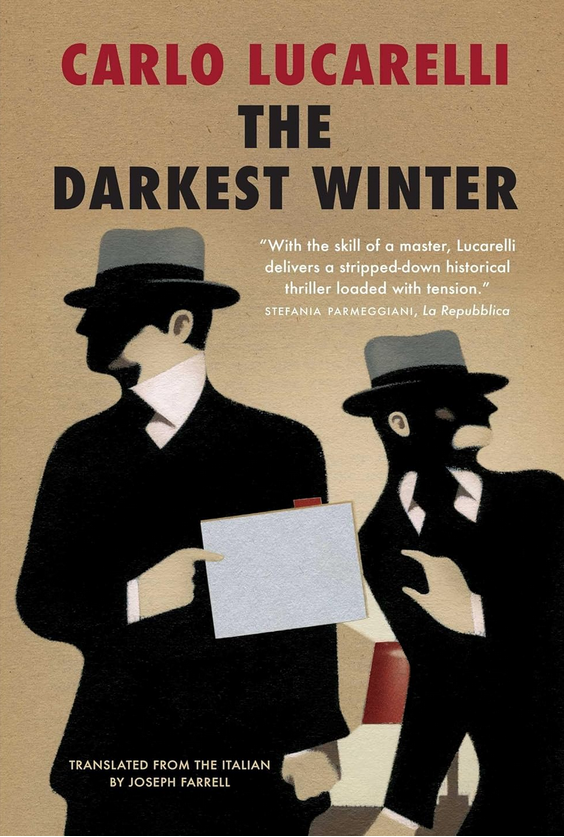
THE DARKEST WINTER . . . Between the covers

Bologna, northern Italy, November 1944. The introduction to this excellent novel explains the political situation in more detail but, in a nutshell, Italy is divided. The provisional ‘free’ government has surrendered to the Allies who are, painfully, fighting their way north up the spine of the country. Most of Italy – including Bologna – is still under German control. The city, with its ancient churches, porticos and squares, now resembles a giant farmyard. Rural villages around the city have now moved in, bringing livestock and farm carts full of straw and root vegetables.

Bolognese copper Comandante De Luca has three murders to investigate. The three dead men giving De Luca a headache are: Francesco Tagliaferri, in life an engineer, in death just a corpse with a shattered head, slumped against the column of a portico in Via Senzanome; Professor Franco Maria Brullo, of the city’s Faculty of Medicine, shot dead through the eye; most problematic, given the Germans’ penchant for violent retribution, is the corrupted body of a minor SS functionary, Rottenführer Weber, found floating in a flooded cellar. The latter is key, as if De Luca doesn’t solve the killing of the SS corporal the Nazi authorities will execute ten random Italian prisoners pour encourager les autres {or its equivalent in Italian.

As Caliban said, “The isle is full of noises,” and among the ‘noises’ to disrupt the lives of Bologna’s citizens are The Black Brigades (ultra violent fascist volunteers), the Bodogliani (left wing partisans loyal to the the King) and activists with all manners of allegiances in between. Rather like Philip Kerr’s immortal Bernie Gunther, De Luca tries to be a decent copper with his left hand tied behind his back and the fingers of his right holding his nose against the stench of corruption.

Parts of Bologna resemble a nightmare visualised in a Bosch painting. A young man in a derelict theatre – where shattered families are trying to rebuild their lives in the boxes once patronised by wealthy theatre-goers,  faces Deluca. When challenged for his identity, he says,

“What do you want to see? My military rank? My exemption from labor?” He beat his hand on his shoulder and grimaced because he must have hurt himself. “Here are my documents. This,” he shook the empty sleeve, “I left in Russia. And what I am wearing,” he held the flap of his coat, “is all I have left.”

The Bologna winter is certainly dark, but Lucarelli’s prose renders the shattered city with the inky blackness of a genuine Noir novel.

“There was in the air the scent of old smoke, ashes and wet filth which Bologna always had during that year and a half of war. Damp and sticky in summer, dry and biting in winter. The stench of boiled cabbage and burnt oil, of urine and excrement, sweat and dust, cold and coarse like rusted iron.”

While reading this, my mind strayed to Joseph Heller’s Catch 22. Not only was Bologna the target for Yossarian’s squadron but, towards the end of the book, a cold wind blows away the buffoonery, and we are left with the blacked out streets, and the grim murder of the maid Michaela, by the psychopathic navigator, ‘Aarfy’ Aardvark.

Lucarelli gives us a labyrinthine plot and a reassuringly fallible central character, who makes many mistakes and wrong calls as he searches for the truth. Reassuringly, there is also a full glossary explaining the multitude of different factions and splinter groups which made up the Italian political landscape in 1944. Bizarre though it sounds given their brutality, the Wehrmacht and the SS give a sense of relative unity to what was, otherwise, chaos.

This novel follows on from three earlier books, known as the De Luca trilogy, consistg of  Carte Blanche (it: Carta bianca, 1990), The Damned Season (it: L’estate torbida, 1991), and Goose Street (it: Via Delle Oche, 1996). The Darkest Winter, translated by Joseph Farrell, is published by Open Borders Press/Orenda Books, and will be available on 22nd May. For an Englishman’s view of a very different Italy, a few months earlier than Lucarelli’s story, you should read There’s No Home by Alexander Baron, where we join a British unit in the south of the peninsula, not long after the Germans had retreated to their defence lines further north.

INNOCENT GUILT . . . Between the covers

The book begins with one of those ‘impossible’ events beloved of crime writers since the 19th century. It is a mystery involving not a locked room but a locked mind. A woman, later identified as Fiona Garvey, presents herself at a London police station covered in blood. Carrying a baseball bat. She is catatonic. Silent. Somewhere else altogether. Then, a body is found, battered to death in a London Park. It appears to be the mortal remains of Alistair Cowan, Fiona Garvey’s employer.

Investigating detective Leah Hutch has problems of her own. The woman who brought her up, Margaretta, has just died. Margaretta solicitor reveals to Leah that her actual father, who she neither knew nor ever met, was Eli Carson, Margaretta’s son and a former police officer. And Eli is serving two life terms for murdering his wife and the man he suspected was cuckolding him. The author then  deepens the mystery with two further revelations. First, the blood on the baseball bat isn’t that of Alistair Cowan, but that on Garvey’s hands and body is. Just to set our minds spinning yet more feverishly, DNA tests on the body in the park do not match that of Alistair Cowan. But hang on … Chapter Four is a description of Alistair Cowan, lying somewhere, grievously injured, fighting for life so, as some people say, “what the actual ….?”

As if things were not complicated enough for DI Hutch, we have Odie Reid muddying the waters. She is – or was – an top investigative journalist for a tabloid newspaper. As print newspaper sales plummet, Odie’s career takes a parallel course. She knows Leah Hutch, as they were once both aspiring news hounds. Now, Leah bats for the opposition, and Odie needs to create the story that will save her career. The man police assumed was Alistair Cowan is identified, Cowan is found – just about –  alive and after the forensic evidence leads the police to accuse Fiona Garvey of his murder she is remanded in custody.

Then, a third man, Jake Munro is attacked, this time fatally. He was a successful businessman who had bought up several firms, with consequent redundancies, so was he killed by a vengeful former employee? One such man, Eddie Adeola, had committed suicide after failing to get another job, and his wife – a strange and violent woman called Temi, after attacking police sent to interview her, has gone into hiding. Leah Hutch discovers a strange link between Temi and Fiona Garvey, and it is their attendance at events put on by a man called Brendan Klee. When Hutch and her sergeant Ben Randle interview him they are unsure if he is a fraud, a mentalist, a lifestyle guru, a shaman – or a blend of all four.

The denouement reflects a phenomenon which runs through the book like a spine, albeit one warped by scoliosis; this phenomenon is the endless – and almost unsolvable –  mystery of what causes apparently decent people to commit acts of terrible evil, and whether or not those acts can be excused (or at least explained) by horrors inflicted on the perpetrators when they were much younger. Leah Hutch is a flawed – but credible heroine – with a past as steeped in horror as the worst of the crimes she has to investigate. Remi Kone is a British Nigerian Emmy-nominated producer; she has worked on a number of well-known television dramas, such as Killing Eve, Spooks and Lewis. She lives in London, and this is her first novel. Innocent Guilt is published by Quercus and will be on the shelves on 15th May.

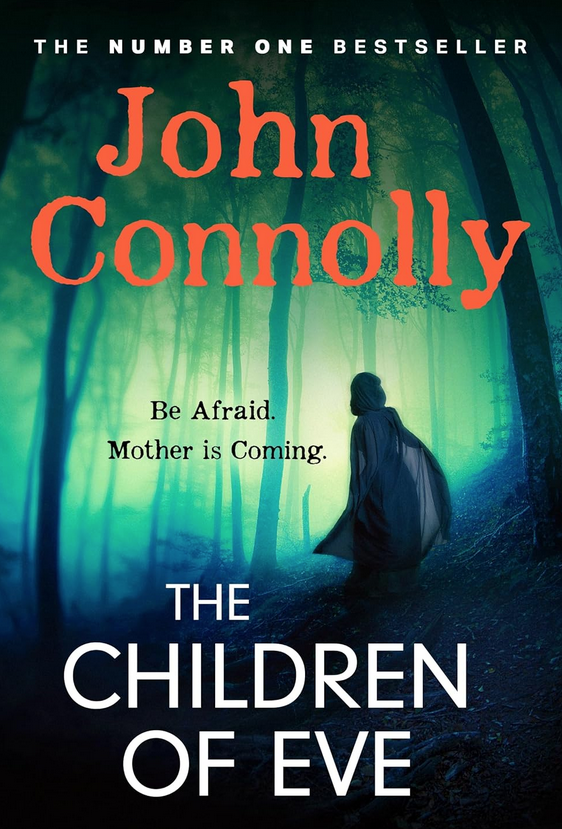
THE CHILDREN OF EVE . . . Between the covers

John Connolly, just like his great predecessor MR James knows what scares us. Although James had a cupboard full of spectres at his disposal, he knew the visceral fear many of us have of dry, clicking, leathery things that may be actually alive – or long dead. Arachnids, and things like them, can be fearsome. Remember the creatures that dwelt in the eponymous The Ash Tree? Across the Charlie Parker canon, Connolly has often introduced the spider – usually something truly nasty like the Brown Recluse – as evidence that evil is abroad. Here, just nine pages in, a relatively honest Mexican antique dealer, Antonio Elizalde, has resorted to finding and selling something (we have let to yearn what) truly astonishing to pay for expensive private medical care. The night before he is due to fly north to begin treatment, he buys everyone in the bar a tequila, and walks home. What he finds when he unlocks his front door will have every registered arachnophobe trembling. I had to read the next few pages, but I didn’t want to.

Incidentally, Connolly doesn’t expect his readers to be deeply immersed in Meso-American history, but he knows we have Google, and so he introduces the Great Goddess of Teotihuacan. Newcomers to Charlie Parker need to believe, or at least believe that Charlie Parker believes. In what? The world of the ever-present dead or, put simply, ghosts. These are not cartoon spooks in white sheets, but people who have, usually, died violently. I suppose the basic presumption is that the violence of their passing somehow denies them the sleep of ages. I don’t know, but there are plenty of pages out with with more time and space to speculate than I have.

Parker’s ghost is his daughter Jennifer. Brutally murdered years ago, she is a largely benign presence, but uneasy and restless. Connolly doesn’t just skirt round the ghost issue. He takes risks, perhaps “In for a penny, in for a pound.” The ghostly Jennifer still thinks like a living person and has the same kinda of trials and tribulations experienced by her corporeal father and his friends.

As in all good crime novels, Connolly presents us with several apparently disparate plot strands, and no doubt enjoys the fact that his readers will be speculating on how they can possibly converge. As an antiques smuggler, Roland Bibas (an associate of Antonio Elizalde) is nabbed by Federal customs agents, Parker is employed by an avante-gard sculptor, Zetta Nadeau, to trace her companion, Wyatt Riggins, who has suddenly disappeared. As Parker (and his not so angelic guardians Louis and Angel) investigate the disappearance of Wyatt Riggins, they realise that they ate intruding on private grief, that being a fatal contretemps between Riggins’s boss Devin Vaughn, and a Mexican cartel jefe called Blas Urrea. Urrea has sent Seeley, one of his fixers, over the border to deal with the problem. Seeley is sinister enough, but he has a female companion who is far more terrifying than any of the cartel enforcers. Seeley’s female companion, known only as Señora, commits several more killings.

‘Murders’ isn’t quite the word, as anyone vaguely familiar with Inca methods of execution may well know. Let’s just say that a kind of open heart surgery is involved. Chillingly, Connolly describes Señora using a word I had to Google. The quote is, “There was a dryness to her tegument.” The online dictionary tells us, “the outer body covering of flatworms, including tapeworms and flukes.” The next few paragraphs are not for the faint of heart. Connolly often strays into what I call David Cronenberg territory. Here, he not so much strays as buys a plot and builds his own house.


Obviously under pressure from powerful people, Zetta unhires Parker, but her action is a red rag to a bull. Our man is nothing if not a terrier and, to mix a metaphor and quote The Bard (Conan Doyle borrowed the phrase) “The game is afoot.” Along the way, Connolly’s dialogue is tack-sharp. A long term acquaintance of Parker says,

“From what I’ve heard, you’ve been at Death’s door so often, he’s probably left a key under the mat for you.”

Quite late in the piece for a Charlie Parker novel, the exact nature of what is being smuggled north from Mexico is revealed, and it doesn’t make for comfortable reading. Old Charlie Parker hands may have become inured to some of the evils he has faced over the years, but this is something else altogether.

“I have good news and bad.”
“I’ll take the bad news first.”
“Those children Riggins stole from Mexico are already dead,” said Louis.
I felt like crawling under the sheets and never coming out again.
“And the good news?”
“They’ve been dead for a long, long time.”

This is vintage Charlie Parker, with snappy dialogue, glimpses of a darker world than the one we inhabit, and a brilliant plot. Published by Hodder & Stoughton it is out now. Anyone new to the series can click this link, and it will take to you to reviews of some of the previous novels.

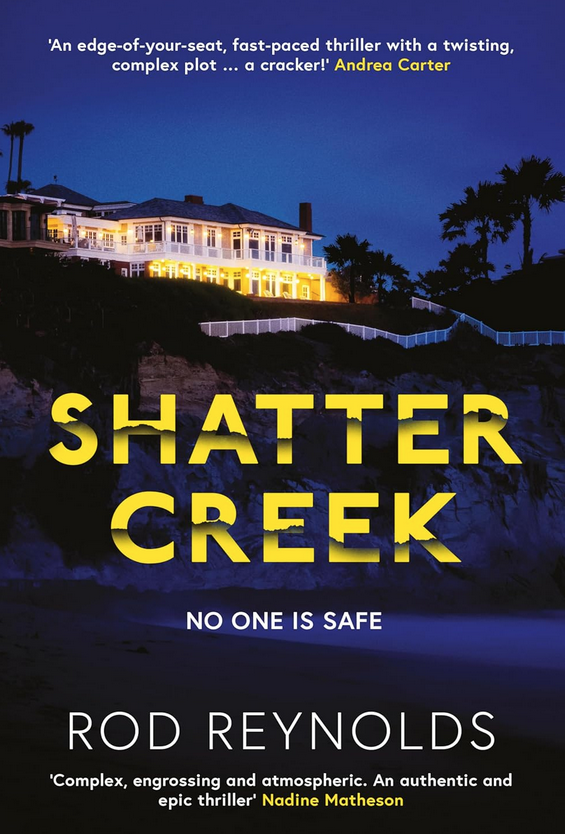
SHATTER CREEK . . . Between the covers

Cards on the table. About five minutes in, I decided I didn’t want to like this thriller. Why? Because it began with my absolute pet hate, jumbled time frames. When I see chapter headings ‘..one week earlier…..twenty four hours later …… twenty four hours earlier..’ I get irritated beyond measure. Just tell the story, please! I am pleased to say, though, that after a few pages of darting back and forth, the narrative settled down, and I was drawn into a gripping story.

We are in Long Island, and Hampstead County PD cop Casey Wray’s badge is still – just – in place after a corruption scandal that rocked the department. Her hopes of being appointed Lieutenant (to replace a casualty of the purge) have come to nothing, and her new boss Lieutenant Dunmore doesn’t exactly exude affection. Wray has no time for grudge-nursing, however, as she is knee deep in a double homicide. One of the victims – Landon Whitlock –  was a generous donor to local Democrat Party funds, and the movers and fixers at City Hall are on her back for a quick result. Next day, though, there is another murder. This being America it is, naturally, another gun crime.

I did have an irreverent thought at this point. Don’t they have knives or machetes in the States? Here in Britain we are plagued by murders committed with blades. The answer is pretty obvious, I suppose, and it is that literally anyone here – including teenagers –  can get hold of a potentially fatal blade. Likewise, anyone in America can get their hands on a gun, whether it is their own or belonging to their parents. I have a firearms permits, and controls are pretty strict, especially for rifles (as opposed to shotguns). As for handguns, they are not available – except to criminals. One of my sons lives in USA, and shoots. I asked him how he buys his ammunition and, after giving me a quizzical look, he said, “Online, of course – the postie just puts the package in the mailbox’

I digress, so back to the story, and the new murder. The victim is a woman called Lori Goff. and the immediate suspect is Adam Ryker, her boyfriend, and what we Brits would call ‘a nasty piece of work’. He is a deeply unpleasant and narcissistic womaniser. When the murder weapon is found buried in his back yard, the search for him intensifies. He is found. Beside a hiking trail near Pine Barrens. As dead as can be. A single gunshot wound to the temple, a revolver clasped in his hand. This is just over half way through the book, so any crime reader worth his or her salt will immediately suspect that this is not the remorseful suicide it appears to be.

In many ways, Casey Wray is a classic ‘outsider cop’ beloved of many a CriFi writer. She ticks most of the boxes.
Unlucky in love √
Lives alone √
Ruthlessly honest √
Has a challenging relationship with her superiors √
Privately vulnerable √
As she digs deeper into the complex lives of Landon Whitlock and his abrasive wife Darcy, Wray is innocently oblivious of the storm that is about to engulf her. The killings are the fruits of a poisonous plant that has its roots deep in Long Island politics and, although Wray – at least on paper – solves the mystery, the book ends with her clinging to a metaphorical alpine ledge, with an avalanche about to engulf her. This isn’t a typical slick American thriller, as I believe the author is British, but it has pace, complexity and a beguiling number of red herrings. Shatter Creek is published by Orenda Books and will be available on 22nd May.

Blog at WordPress.com.

Up ↑