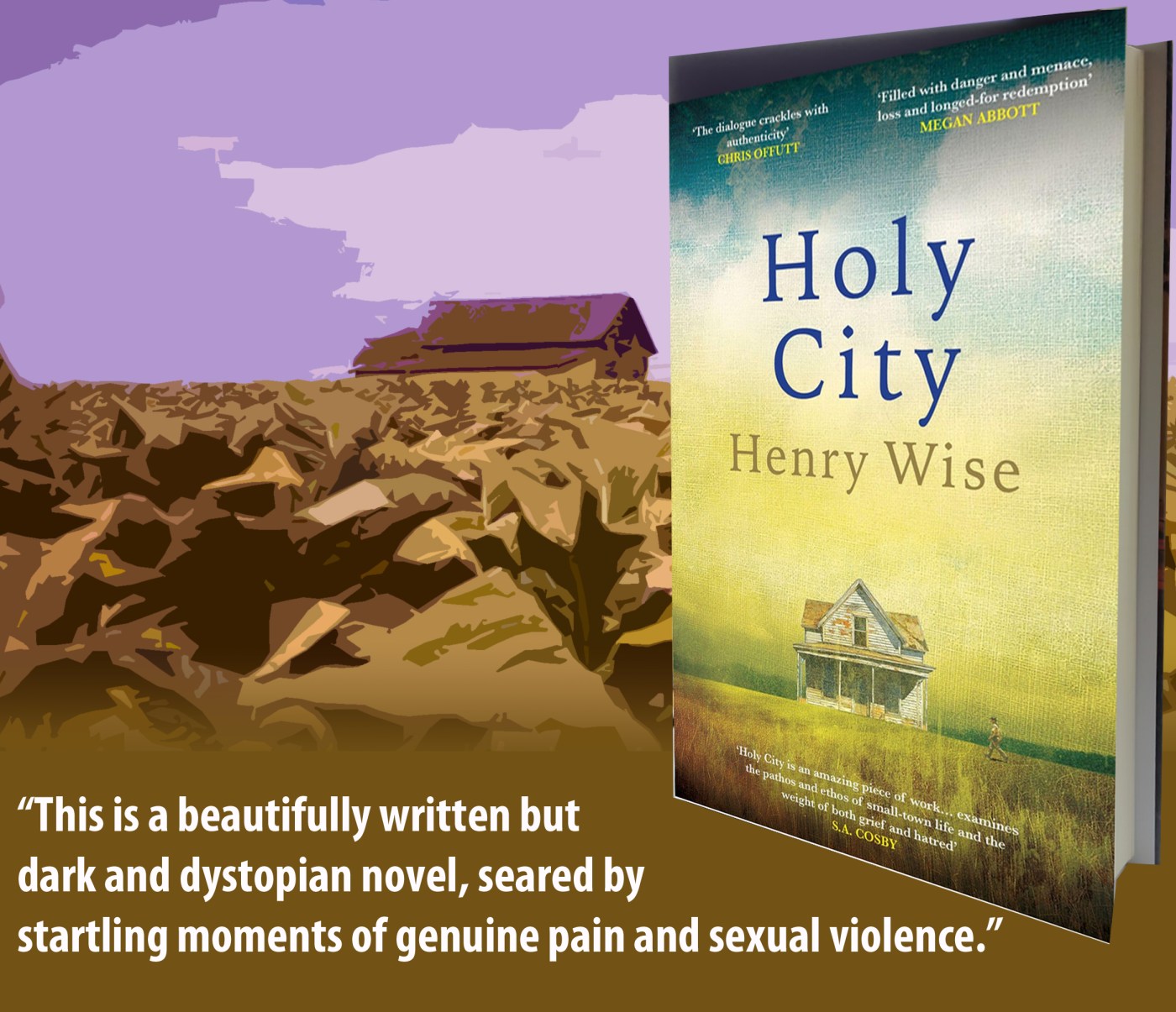

Deputy Will Seems has returned to his home in rural South Virginia after working for ten years in the state capital, Richmond. He finds a place turned in on itself, a place of despair and senseless minor criminality. It’s name? Euphoria County. Will muses on what he sees:
“People around here seemed to live in a cloud of defeat, self-wrought and inherited. Whites had the lost cause, Blacks had slavery. It would seem they should be pitted against each other, but they were really dug in behind the same trench. And the rest of the state, the rest of the country was out there.”Will attends a house fire he has seen while on patrol and, before the fire crew can get there, he pulls a man from the blaze. The man – Tom Janders – is already dead, but on closer investigation the cause of death is knife wounds. After recovering from smoke inhalation, and leaving the emergency services to do their job, Will finds a man apparently trying to leave the scene and, although he has a deep personal connection to the fugitive – Zeke Hathom – has no alternative but to arrest him. Will’s boss, Sheriff Mills is firmly convinced that Zeke Hathom is the killer, but Will is not certain. What he is certain of is that he must tread carefully. Unknown to anyone else, he is sheltering Sam Hathom, Zeke’s errant son. Sam is wanted for minor criminality, but he also has a drug addiction, and Will is trying to wean him off it. There is a blood bond between Sam and Will. Years ago, when they were in their teens, they were inseparable, but one night they were set upon by a gang of other youths. Sam was beaten within an inch of his life, sustaining permanent facial injuries, but Will was too terrified to help his friend.
Meanwhile, Zeke’s wife has hired a private investigator from Richmond to prove her husband is not the killer. Bennica Watts has been forced into the profession because she was sacked from Richmond police for illegal acquisition of evidence. When she arrives in Euphoria County she is introduced to Will, and he agrees to her posing as his new girlfriend from out out of town while she goes about her work.
Like many other novels set in the American South, in Holy City the past is never far away. It might be the relatively recent past like Will’s youthful friendship with Sam, but ever present, though, is the folk memory, the almost palpable sense of eternal division between Black and White. No matter how many Confederate statues are pulled down the perceived injustice of what happened after Appomattox in April 1865 lingers in the blood of ancestors of the people that erected them, and this is nowhere better described than in William Faulkner’s Intruder In The Dust (click link to read the passage) For Black people, the sense of gross injustice – historical and current – is like a bloodstain that no amount of scrubbing can remove. A quote from this novel, referring to the relationship between Will and Sam, could also refer to the broader cultures into which they were born:
“They were trapped in a shared past.”
A common feature of what has come to be known as Southern Noir is the way the landscape broods and mirrors the sense of loss and resentment felt by the humans who live and work in it. You can find it in novels by William Faulkner, James Lee Burke, Greg Iles and Wiley Cash, to name just four. Henry Wise clearly knows his southern Virginia, and he portrays a land that has history, but whose time has gone. Many former tobacco fields have been abandoned for more saleable crops; the once-abundant flocks of quail have either been shot out of existence or have moved elsewhere; out of town and dotting the dusty highways are houses that look abandoned but may well not be, at least by living humans.
“The trees they saw now seemed grown to die, honed for some miserable end.The occasional building, house, church, trailer, lay unbelievably ravaged by vine and dark growth against the wan green moonlight glinting off the uneven road.They passed a shroud of bubble wrap tangled against a tree.”
Thanks to an audacious gamble by Bennica Watts the murderer of Tom Janders is identified, but although this means Zeke Hathom is eventually exonerated, the case has left numerous casualties, both in the physical sense of blood being spilled but, even more dramatically, the skeletons of the past are, metaphorically, unearthed and their bones bear witness to deeds of utter evil and depravity. This is a beautifully written but dark and dystopian novel, seared by startling moments of genuine pain and sexual violence. There is a flicker of redemption for one group of characters in the novel, but for others, it is as if the past has thrust its withered hand from the grave and swept them down into the depths where it resides. Holy City is published by No Exit Press and is available now.


 fullybooked2017
Leave a comment