

It is 1994, and we are in West Yorkshire, in the district known as the Calder Valley. An old friend of mine called it Cleckhudderfax, a neat blend of three of its major towns. The main character is a young man known as Adrian Brown. I say ‘known as’ because he was christened Matthew Spivey. When he was 10, he was abducted by a serial killer later dubbed The Lollipop Man, who had already claimed three victims – little girls. Nothing was ever found of them except bloodstained clothes. But here’s the strange thing. Adrian/Matthew was found and returned, unharmed, to his parents. It was then decided that he should change his name to allow him to grow up without constant attention from the media.
Now, Adrian is employed as a trainee reporter-cum gofer with the local newspaper. An unusual lad, is Adrian. He is intelligent, but socially insecure. He is also gay, which was is not an easy road to travel in the landscape of the sometimes toxic masculinity of West Yorkshire in the 1990s. When, after a gap of ten years, another little girl disappears, Adrian is drawn into the messy periphery of the police investigation, along with Sheila Hargreaves, a TV journalist and presenter.
There are several characters on the periphery of this drama but their significance is not immediately obvious to the reader. We have Edna Worley, a middle aged busybody who is obsessed with appearing on local news or getting her name in the papers. When she is found dead on a canal towpath it seems clear that she has been murdered for something she knew. We also have the habitues of the district’s only gay pub, a collection of losers including a barman who doubles as a drag Queen. When one of the regulars, a petty crime sponger known as ‘Little Phil’ also turns up as a corpse in the canal, Adrian is forced to examine the integrity of the people he views as his friends.
It’s fair to say that Adrian isn’t the most inspiring of central characters. Midway through the novel, he is forced to examine how he has screwed up:
“He did a gloomy stock take. He lied to his parents about his sexuality and about his social life. He’d found a dead body and lied about that, this time to the authorities.He’d tampered with evidence. He’d drawn his best friend into a conspiracy to conceal his earlier misdemeanor. Then, with that same friend, he’d broken into a pensioner’s house and stolen his murdered sister’s private papers. Since then, he’d also managed to fall out with his friend and with his parents and had shouted at and run away from a well-loved television presenter.”
There is a tragi-comic episode where Adrian is discovered ‘making hay’ with his boyfriend. Bursting unannounced into the bedroom is a relation who promptly tells her husband, who storms round to Adrian’s parents house. His timing couldn’t be worse, as Adrian’s mum had been childminding a neighbours’ little girl, who appears to have snatched by The Lollipop Man while she was playing in the back garden. Therefore, the crowded front room of the terraced house is full of coppers and social workers. Not exactly the ideal place, one might think, for Adrian’s sexual preferences to be made public. Adrian survives relatively unscathed, and goes on, with the help of a mate, to put two and two together and find the correct answer, lurking in a rather gothick and isolated former tannery on the edge of the moors.
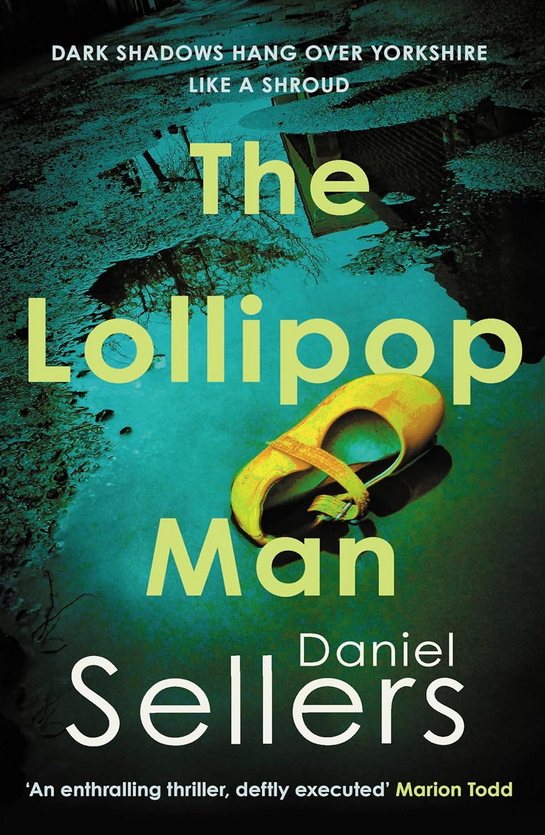
This is certainly not a police procedural, as the coppers seem to make one blunder after another, but it is an entertaining thriller taking us back to the days of mobile phones the size of bricks, and a northern England still under the shadow of the misdeeds of Myra Hindley and Peter Sutcliffe. The book’s title refers to the vague recognition of several witnesses that the abductor was dressed in a white coat and a military style peaked cap, similar to the garb worn by people escorting children across busy roads at going home time. The Lollipop Man will be published by Allison and Busby on 20th February.


 fullybooked2017