Search

fullybooked2017

Month

December 2024

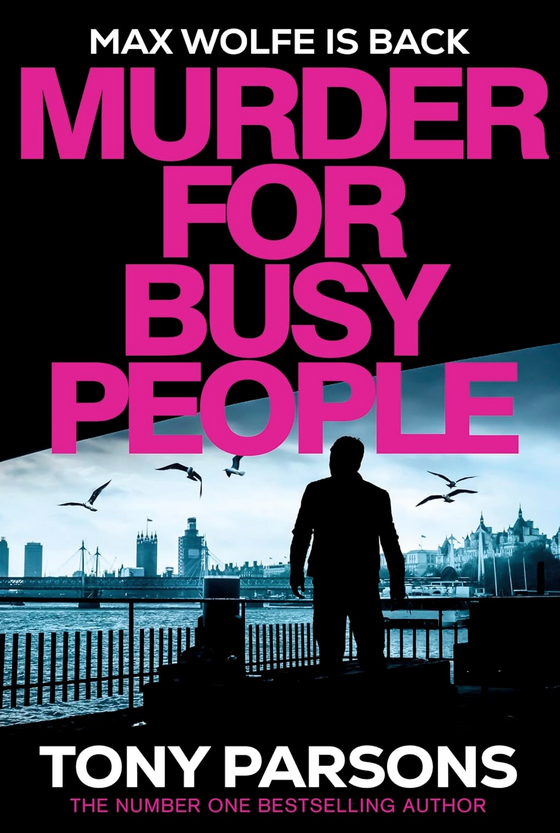
MURDER FOR BUSY PEOPLE . . . Between the covers

MFBPspine010 copy

The good news is that DS Max Wolfe is back, and the even better news is that, after a long absence, our man is in very good form. As a young uniformed copper, only days out of Hendon Police College, Wolfe was first on the scene at a safe heist in a palatial London villa. All he found was a gaping hole in the wall, two corpses – and a young woman called Emma Moon, a girlfriend of the mobsters who committed the heist. Wolfe put the cuffs on her, she was tried, convicted, and served a long jail term, during which her troubled son committed suicide. Never once, during the whole process, did she utter a word about those who profited from the robbery. Now, she is out, suffering with terminal cancer, but on a ice cold revenge mission to kill as many of her former associates as she can in the brief time she has left.

Old Max Wolfe hands will know that there is an autobiographical strand running through the novels. Parsons’ breakthrough book was Man and Boy, an account of a male single parent. Here, Wolfe brings up his daughter Scout, rather than a son. Both Wolfe and Parsons are lovers of a dog called Stan, and it was sad to see an RIP notice to the real Stan in the frontispiece of this novel.  Max Wolfe lives within sight, sound and smell of the historic meat market known as Smithfield, for centuries the beating heart of a country that loves beef, pork and lamb. Parsons may not have known, when this book was signed off to the printers, that the death knell would be sounded on this historic site. It will, no doubt, be demolished and something trite and anodyne built in its place. This is a purely personal paragraph, as Parsons doesn’t preach, but I think London is gone for us now: pubs are closing at an alarming rate, institutions like the iconic chop house Simpsons of Cornhill lie empty, derelict and vandalised. Philip Larkin was right when he wrote, “And that will be England gone.”

Wolfe juggles several criminal – and personal – issues. He knows that a group of Jack-The-Lad firearms officers have a flat where they abuse young women, wrongly arrested when they flash their warrant cards. The murder of a young woman of the streets, Suzanne, seems unsolvable. On a personal level, he struggles to keep tabs on Scout, his twelve-year-old daughter. She is wilful, disobedient, but highly intelligent. Every single second while he is working, he is worried about where she is, and what she is doing. One by one, the foot soldiers of the  heist succumb, each apparently, to natural causes. Wolfe does, in the end, unmask the killer, but more by accident that intention.

Apart from being a gripping read from the first page to the last, this novel is remarkably prescient. I believe that there are many months between the final edition of a book being sent to the printers, and its appearance on bookshop shelves. Parsons weaves two very recent issues into the warp and wedt of his novel. One is a subtle and reflective elegy on Smithfield and its sanguinary history. Just weeks ago, an enquiry released its findings into the killing of a London criminal at the hands of firearms officers. Parsons lets us know, in excruciating detail, the hell that descends on any officer who fires a fatal shot.

Max Wolfe is both convincing and endearing. He doesn’t always get things right. Here, his judgment of Sarah Moon veers from spot-on to plain-wrong (and back again) several times. For all that certain critics and reviewers turn up their noses at Tony Parsons because of his political views, and the newspapers he has written for, the last pages of this book reveal what I have known ever since I met the man at a publishers’ party. He is observant, fiercely honest, and a deeply sensitive writer. Max Wolfe may be only marginally autobiographical but, like his creator, he only dances to the tunes he hears in his own head, and not those streamed in from elsewhere. Murder For Busy People will be published by Century on 2nd January.
Screen Shot 2024-12-19 at 17.29.08

THE MYSTERY OF A HANSOM CAB . . . Between the covers

Screen Shot 2024-12-22 at 17.21.18

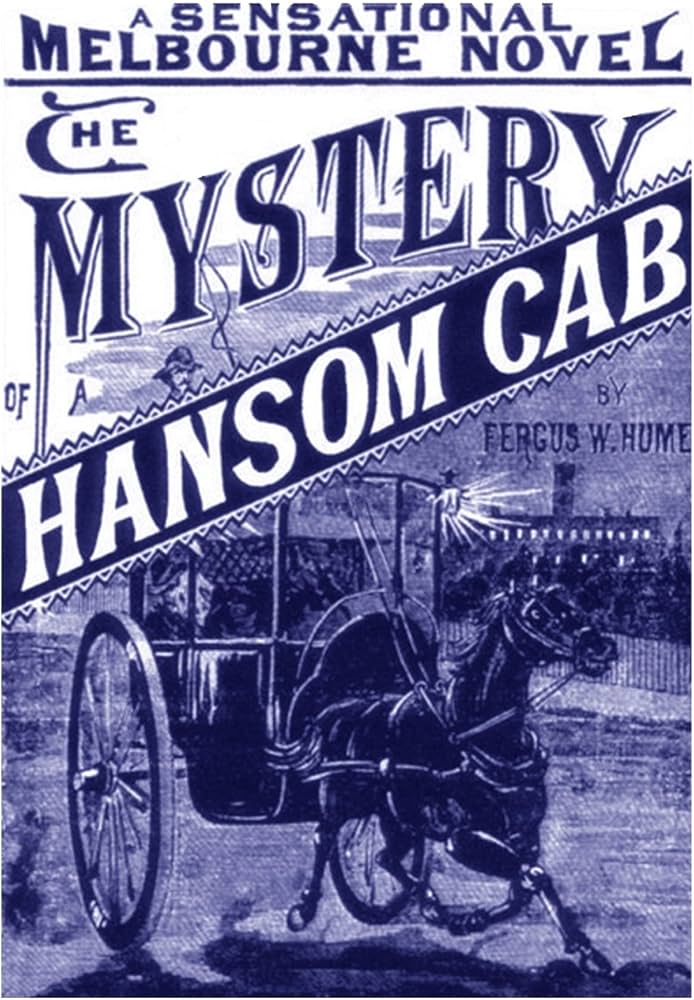
Fergus Hume’s 1886 novel is rightly regarded as one of the building blocks of crime fiction.To put it into some kind of chronological context. Emile Gaboriau published Monsieur Lecoq in 1867, The Moonstone appeared in 1868, while A Study In Scarlet came out in 1887.

The story begins simply enough. It is the small hours of the morning in 1880s Melbourne. A cab driver sees two men, dressed in evening clothes. One appears to be very drunk. The sober man puts his drunken companion into the cab and walks away. The drunk is trying to explain to the cabbie that he needs to go to St Kilda, a suburb near the sea. Just then the sober man returns, and tells the driver to take them to St Kilda. About half way there, the sober man tells the cabbie to stop. He says that he will walk back into the city, but that his drunken friend will let the driver know where to drop him off. The cabbie continues for a while but, hearing nothing from the passenger, stops to check. The man is dead, a handkerchief soaked in chloroform across his face. The cabbie turns around and heads for the city police station.

Mr Gorby, the police detective investigating the crime, soon has the case cracked. The dead man is Oliver Whyte. His companion in the cab was, apparently, Brian Fitzgerald. The men were rivals in love, the lady in question being Madge Frettlby, the daughter of a rich businessman. Fitzgerald appears to be the only possible suspect, and he is arrested.

Awaiting trial, Fitzgerald frustrates his expensive lawyer by stating yes, he did meet Whyte and put him in the cab, then walked away but, crucially, did not return. We then have perhaps the earliest use of what has become a tried and trusted crime fiction trope – that of the suspect who has a genuine alibi, but dare not reveal it because of the dishonour it would bring down on someone else. Perhaps we could call this The Gentleman’s Dilemma.

Fitzgerald claims that a woman delivered a written message to him at his club, after he had left Whyte with the cabbie. The message implored him to visit a dying woman in a gin den in an alley off Little Bourke Street. The messenger was one Sal Rawlins who has since disappeared, being last heard of traveling to Sydney with a Chinaman. After a hefty reward is offered Sal is found and testifies, thus establishing Fitzgerald’s alibi. But who was the dying woman, and why did she need to use her final moments to talk to Fitzgerald? Hume’s solution is both neat and daring.

The book is certainly ‘of its time’ in some ways. One of the conventions of the day was that words spoken by ‘the menials’ – working class or peasant characters – were heavily phoneticised, so that no missing final ‘g’ in words ending in ‘ing’ or any missing ‘h’ at the beginning of ‘he’, ‘has’ or ‘home’ goes unpunished.

Imagined as a screenplay, TMOAHC is magnificently melodramatic, with enough betrayal, dark secrets, swooning, hands clasped to fevered brows and tarnished virtue to set Victorian (in both senses of the word) pulses racing. It is cleverly done, however, and the true identity of the killer is only revealed in the last few pages. Hume, towards the end, devotes several pages to the theme that we mortals are little more than chess pieces being moved about the board for their own amusement by the ‘Immortals’ of Greek myth. Just five years later, in 1891, Thomas Hardy was to end Tess of the d’Urbervilles with the same bitter thoughts.

Hume was forced to self – publish the first edition of this novel, but sales gathered pace thereafter, and it has been endlessly reprinted. In his preface to this edition Hume reveals that prior to publication he made several changes, including the identity of the killer. He also tells us that he sold the rights to the novel to a group of speculators, no doubt for a tidy sum, but in doing so cut himself off from later profits. He regarded himself as, first and foremost, a New Zealander. His parents moved from England to New Zealand when he was very young, and it was there that he was educated and graduated as a barrister. He then moved to Australia for a few years, but eventually returned to England, where he died in 1932 at the age of 73. If you click the image below, it will take you to Project Gutenberg where you can download a free digital copy.

TMOAHC

THE DISAPPEARANCE . . . Between the covers

TD004 copy

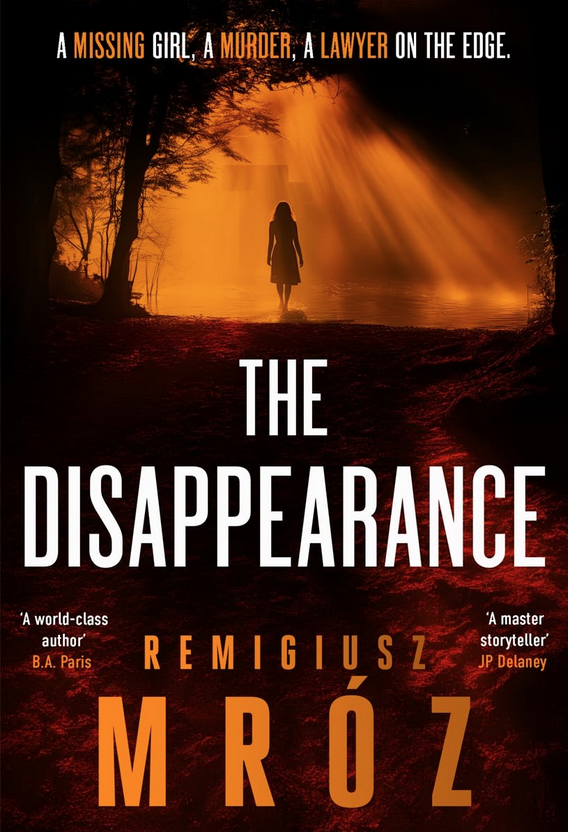
At the heart of this excellent legal thriller is the conundrum of how it is that the legal team defending seriously evil people can do their job. The novel is set in Poland, but we  can look at notorious cases in the UK. Brady and Hindley, Shipman, Dennis Nilsen, Dale Cregan – each had lawyers and barristers fighting their corner in the courts, and trying their best to convince the jury that their clients were innocent. The fact is that the legal teams are taught not to believe or disbelieve what their clients are saying. They have one job, and one job only, and that is to use every skill at their disposal to present the available evidence to the court as persuasively as possible. It is not in their remit to search for ‘the truth’. That is real life, of course, but in crime novels, lawyers regularly break away from witness statements and points of law to go ‘into the field.

Joanna Chylka, senior member of a top Warsaw law firm, is called by an old acquaintance from younger days, Angelika Slezyngier. Joanna is solitary, abrasive, and abrupt. She has few friends, and Angelika is certainly not numbered among them. Angelina’s three year-old daughter has been abducted from the lakeside house, near the border with Latvia and Belorus, and the police have decided that Angelika and her businessman husband, Awit, are responsible.

To the police, the case has all the elements of a locked room mystery. Awit says he set the alarm, covering most of the windows and doors, but not the skylights, at 7.00 pm, when (they say) Nikola was safely in bed. No alarms were triggered, and there is no sign of a break-in, but the little girl is gone. An elderly man, Antoni Ekiel, who lives near the Slezingier house. tells Joanna that he saw Awit walking away with Nikola on the night of her disappearance.

When Joanna and her trainee, a young man called Kordian Orynsk, arrive at the scene, they are confronted with a complete lack of evidence. The house has an extensive alarm system covering all the doors and windows, and it seems a physical impossibility for the toddler to have been taken away through one of the skylights.

Kordian is younger and has fewer battle honours than his senior partner. He is inclined to believe what Angelika and Awit are saying, but Joanna keeps insisting that what he believes is irrelevant. Their job is to convince the court that the Slezyngiers are not involved in their daughter’s disappearance.

Mróz gives us few clues about Joanna’s age or appearance. We are left to assume that she is perhaps in her late 30s, and still very attractive, as she turns heads whenever she and Kordian go into a bar or a restaurant. Her treatment of Kordian is little short of cruel. She is sarcastic, constantly critical of his opinions and judgments, and scathing about his lifestyle choices. She is firmly in the red meat camp, while Kordian is edging towards vegetables or – if he wants to indulge – ethically sourced fish.

The case comes to court, and Angelika makes a statement which turns the case on its head, compels her to employ a different legal team, and puts Awit in the line of fire. When Joanna is involved in a serious road accident, and barely escapes with her life, Kordian has to follow his instincts while Joanna is in intensive care fighting for her life.

In the end, the initial instincts of Joanna and Kordian prove to be wide of the mark, as the fate of Nikola Slezyngier is revealed. The court scenes are intense, and the Polish landscape is a memorable background to this tense and nervy thriller. Disappearance was translated by Joanna Saunders, published by Zaffre Books,  and is available now.

Screen Shot 2024-11-27 at 16.57.49

DEAD SWEET . . . Between the covers

ds spine006 copy

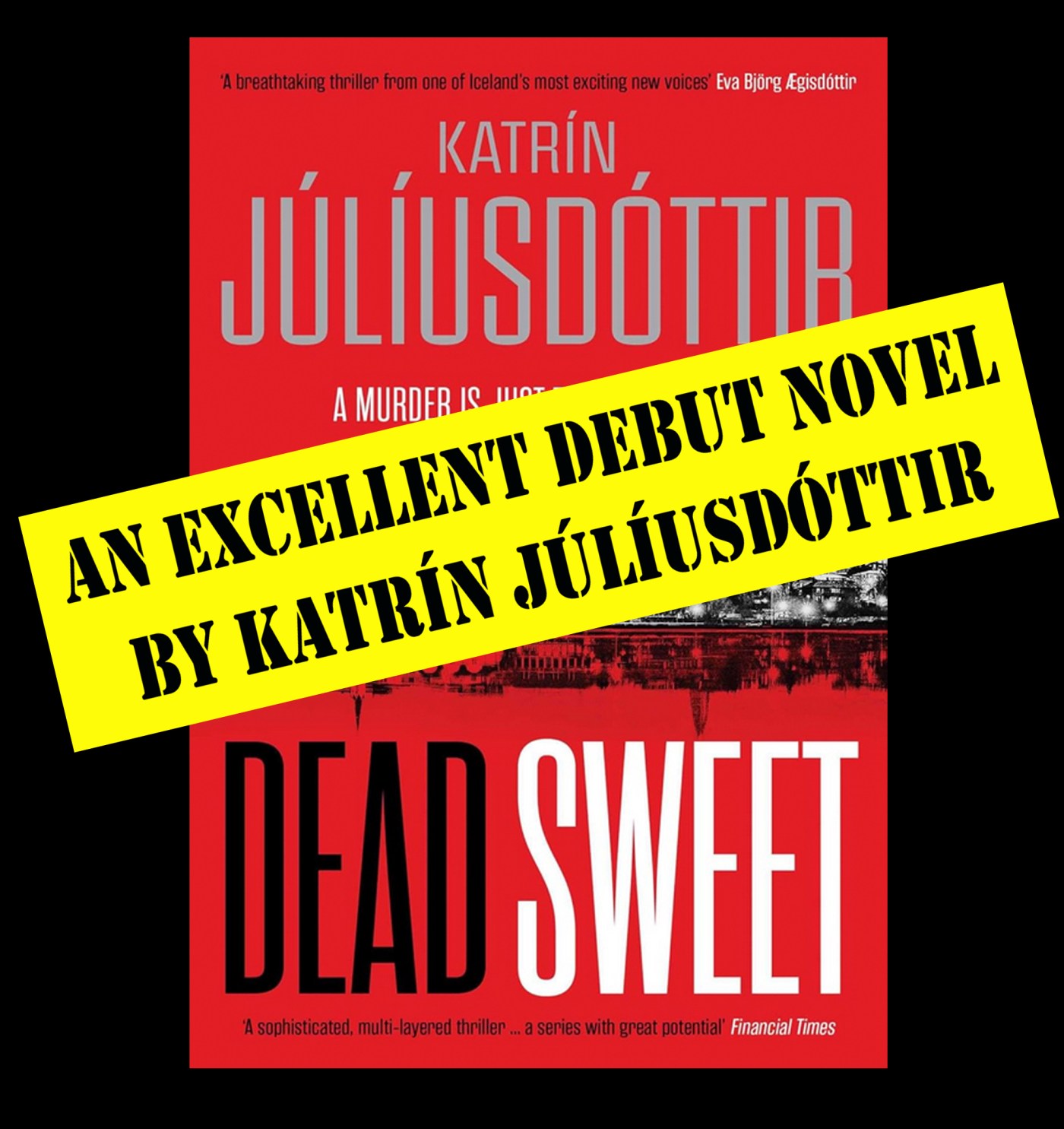
A well-connected Reykjavik civil servant and former politician fails to turn up to his 50th birthday party. The body of Óttar Karlsson is later found on an isolated beach. He had been beaten, and has died of his wounds. Police detective Sigurdís Höllódottir is part of the investigative team. She has just returned to duty after being reprimanded for over-enthusiastically restraining a young man who was beating up his girlfriend. Sigurdís’s intolerance of such behaviour is rooted in her own traumatic childhood, where her father was a serial abuser. After he served a prison term for a serious assault on her younger brother, Einar he disappeared. The family hope he is gone for good but Einar receives a message on Facebook. It seems that his father is working on a farm in Denmark, and is using the name Daniel Christensen but, much worse, he is determined to return to Iceland.

There is another strand concerning the reappearance of Sigurdís’s father. The violent evening where he nearly killed Einar was the culmination of years of abuse melted out to his wife. He was a serving police officer and his colleagues, including Sigurgeirsson, knew perfectly well what was going on – and they did nothing. Now, however, Sigurgeirsson is determined to redeem himself by monitoring the man very closely, if and when he returns to Reykjavik.

The search for Karlsson’s killer opens up the proverbial can of worms, as it becomes obvious that the dead man had many secrets, not the least of which is his time in America as a young man, and his involvement with a mysterious cult and its charismatic leader.

To say the denouemont is unexpected would be an understatement. The author cleverly leads us away from the truth page by page and red herring by red herring. Neither Sigurdís  or her boss Garđar Sigurgeirsson really come near the truth until Sigurdís makes a trip to Minnesota, on the pretext of taking a week’s leave, and hears the real history of Óttar’s time in America.

Sigurdís’s primal fear of her father’s reappearance starts off as side issue, but the consequences of his return to Iceland are explained in the final two pages, and strongly hint that there may be a sequel. Dead Sweet is an excellent debut novel by Katrín Júlíusdóttir who is a former politician herself, having held the position of Minister of Finance and Economic Affairs of Iceland. This experience undoubtedly adds authenticity to the pacy narrative. Dead Sweet is translated by Quentin Bates, published by Orenda books and is available now.

Screen Shot 2024-11-27 at 17.38.15

CUT AND RUN . . . Between the covers

CAR HEADER

We are in the Essex marshes in the chilly spring of 1916. In the early autumn of the previous year, a British army assault on German lines near the coal mining village of Loos had gone disastrously wrong. Over 20,000 men dead and twice as many again wounded. One such is Frank Champion. Badly wounded in the leg, and with a savagely scarred face, he is no longer considered an asset to the army, and now he ekes out a living on the banks of the River Colne where, based on his boat Nancy, he scavenges duck, oysters and  fish to sell to local pubs.

Before the war, Champion had been in the colonial service in Africa and he is astonished when a former colleague, Irishman Nathanial Kennedy, now with three Captain’s pips on his shoulders, seeks him out in Wivenhoe. It seems that back in Nairobi Champion had successfully investigated a serious criminal matter, and earned the reputation of being a shrewd investigator.

Kennedy is stationed in Béthune, a historic town that is a key railway junction and, just as crucially, sufficiently far away from German artillery positions to have escaped, thus far, with minimal damage. A young prostitute called Marie-Louise Toulon has been found in a town park, her throat cut. There are two brothels in the town, nicknamed The Blue Light and The Red Light. The former is the sole preserve of officers, while the latter is frequented by privates and NCOs (Non Commissioned Officers such as corporals and sergeants).

Kennedy’s problem is that that Marie-Louise was one of the star turns at The Blue Light, and he urgently needs Champion to do two things; first, identify the killer but second – and even more importantly – act with total discretion. Should a senior officer be unmasked as the culprit, the effect on army morale could be disastrous. The High Command is in a very fragile state, as 1915 had proved to be an annus horribilis for British military planning and leadership. In short order, a promising attack at Neuve Chapelle in March had ended in failure. The second Battle of Ypres in April saw British, Commonwealth and French troops routed by the first use of poison gas, the Battle of Aubers Ridge in May had been a costly defeat,  Loos had been an unmitigated disaster, while the final indignity in December was that British, French and Commonwealth forces had been  driven off the Gallipoli peninsula by its Turkish defenders. The last thing Field Marshall Douglas Haig (appointed Commander in Chief in December 1915} needs is a scandal involving one his senior officers.

I have a passionate interest in all things to do with The Great War. We WWI buffs are a pedantic and nerdy bunch, full of arcane knowledge about those five dreadful years and the events that preceded them, and the Europe that lay shattered for many years after. Back in the day, I walked miles in the tracks of the soldiers who fought on the Western Front, and also those who fought in the French areas on the Aisne, Champagne region, and the infernal carnage of Verdun. I have to say that as well as writing a gripping crime thriller, Alec Marsh has done his military homework superbly. Does this matter? Yes, I rather think it does. Here’s an example from the silver screen. Much of the setting of Sam Mendes’ film 1917 was reasonably authentic, except the part where the William Schofield character was battling for his life in the raging torrent of a river, running between towering cliffs. The story was set in the Arras area, and anyone who has ever been there knows that the closest you will come to such turbulent rivers are slow and turbid canals, and the very placid River Scarpe. And rugged cliffs are conspicuous by their absence.

Captain Kennedy lives to regret his decision to take Champion’s discretion as a given. In no time at all, another girl from The Blue Light is killed, a girl from the rival establishment goes missing, the wife of a local butcher is also found hacked to death and, in a nearby room, a certain Captain Bradbury is found, having, apparently, blown his brains out with his own Mark VI Webley service revolver. His hastily penned suicide note seems to suggest, to Kennedy at least, that Champion has flushed out the killer.

One of many clever things Alec Marsh does is to make Champion a free agent. He can, therefore, go anywhere and question anyone, including Béthune’s distinctly shifty Mayor, the boss of the Town’s police, and a very senior French General who seems to have a sinister link to the killings. In this last thread, Alec Marsh takes us (courtesy of Champion, his aide Private Greenlaw and a magnificent Crossley staff car) on a long journey to Verdun where, since February, the ‘mincing machine’ has been working overtime with both France and Germany fighting what many believe to be the most brutal encounter of WWI.

Of course, Champion gets his men and, yes, there is more than one villain in this particular piece. Alec Marsh’s novel fascinated me, for reasons I have already stated. But will Cut and Run work for people who don’t know a Lee Enfield from a Gewehr 98? In my honest opinion it will. It ticks all the CriFi boxes, including sense of time and place, a tight plot, credible dialogue and authentic main characters. Cut and Run is published by Sharpe Books and is available now.

Screen Shot 2024-12-01 at 19.58.18

PAST REDEMPTION . . . Between the covers

PR feature

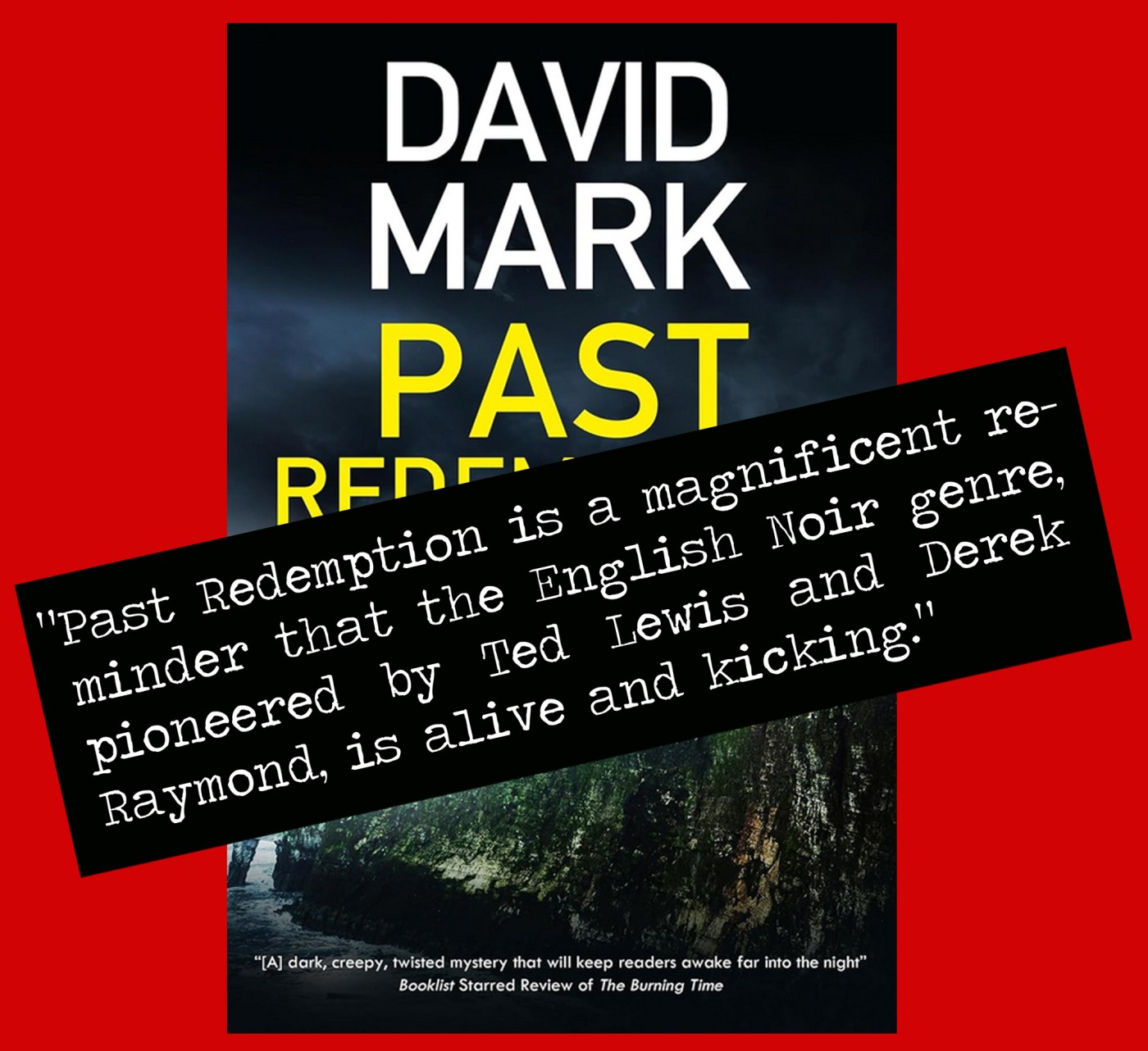
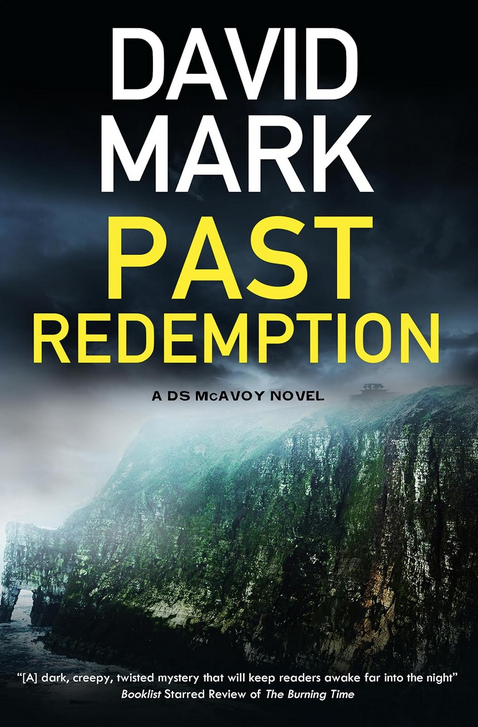
The new Aector McAvoy novel by David Mark begins with a bloodbath. A man is being literally ripped to pieces with the savagery torturers used to flay saints in medieval times. Just as it seems the victim is done for, someone comes to his rescue, in the shape of a small but fierce woman. We soon learn that the tortured man is Decland Parfitt who would, after he made an almost miraculous recovery, be jailed for child sexual abuse. His rescuer? Aector McAvoy’s long time boss, the formidable Chief Detective Superintendent Trish Pharaoh.

The story actually begins with a man driving in the pouring rain along a remote minor road in East Yorkshire. The driver, a man named Joe, is getting an ear-bashing from his ex-wife – who is on speaker phone – over the way he has let their daughter down. Distracted by her tirade and with the windscreen misting up, he feels a large bang, and knows he has hit something. When he gets out of the car he sees what appears to be a large black bag lying in the road. Rapidly calculating that there will be no cameras nearby, he gets back in the car and drives off. The bag is later found to contain a body – that of John Dennic, jailed for a savage assault on a police officer, and an acquaintance of Parfitt in prison. Dennic had been on day release when he went missing.

Parfitt was an arch-deceiver. He brought fun and laughter to countless youngsters across the region as a children’s entertainer. Dressed rather like Lofty in It Ain’t Half Hot Mum, he was everyone’s favourite uncle, with his jokes, his performing animals and his sunny disposition. He was a single man, but that rang no alarm bells with the local authorities when he applied to be a foster parent to two damaged sisters. Incredibly, his request was granted. One of the girls, Gaynor, suffered such abuse at his hands, that she later committed suicide. Younger sister Ruby, however, adored her foster dad and swore on oath that Gaynor was in a state of drug induced delusion.

Trish Pharaoh has two major problems to deal with and, by definition, they become McAvoy’s too. It seems that the prison authorities are determined to release Parfitt from prison, and Pharaoh needs to stop this. Second, she needs to disturb Ruby’s deep conviction that her foster father is a decent man who was wrongly convicted. Pharaoh is also convinced that Parfitt was also responsible for the abduction and murder of at least two girls, whose bodies have never been found.

The cast of villains in many of David Mark’s novels resemble the creations of the great Dutch painter Hieronymus Bosch. Bosch was obsessed with the darker side of humanity, and if you take a magnifying glass to his paintings, you can see tormented individuals, scurrying this way and that in the hellish landscape in which the painter has placed them. Bosch painted a figurative mouth of Hell, a gaping maw into which humans are sucked. Mark’s villains, such as Parfitt and Dennic are consumed by a metaphorical hell created from their own misdeeds. This is dark stuff, and not for the cosy crime community. Past Redemption is, however a fierce and gripping tale of evil deeds committed against the grey and dreary background of a city once vibrant with the noise and smells of its fishing industry, but now reduced to a backwater trying to celebrate what it once was.

The novel plays out with dramatic revelations of people who have pretended to be one thing, but were something else entirely. It is no coincidence that the man who nearly killed Parfitt, and may have killed Dennic has the nickname Virgil. David Mark himself plays Dante’s Virgil, as he leads us through Purgatory and Hell, contrasting his monstrous villains with McAvoy who, although, a physical giant, is gentle, endearingly clumsy, but fiercely brave. Past Redemption is a magnificent reminder that the English Noir genre, pioneered by Ted Lewis and Derek Raymond, is alive and kicking. The novel is published by Severn House and will be available on 3rd December.

Screen Shot 2024-11-10 at 20.06.33

Blog at WordPress.com.

Up ↑