Search

fullybooked2017

Date

September 2, 2024

I DIED AT FALLOW HALL . . . Between the covers

IDAFH spine074

Although set in a beautiful village near Cirencester, with glowing limestone cottages, a jolly white-haired vicar, and the squire’s mansion up on its hill, this is as far away from a ‘Midsomer’ type Cosy Crime as you can get. Instead it is a beautifully written tale, full of poetry, some very dark corners and people who, if not severely damaged, are fighting their own demons. Anna Deerin, a former ballerina who had to quit through ligament damage has moved to the village of Upper Magna. She lives in a grace and favour cottage in the grounds of Fallow Hall. She lives rent free because she has undertaken to work and restore what was once the Hall’s extensive kitchen garden. She keeps chickens and earns a slender living by baking cakes and selling them – and her fruit and vegetables – at the weekly farmers’ market on the village green.

She lives in a kind of self-imposed exile, with no mobile phone and no current close friends. This all changes when, while attacking a long neglected part of the garden with a pick-axe, she finds human remains. Into her life comes Detective Inspector Hitesh Mistry, another London exile. He heads up the search for the identity of the skeleton – subsequently proved to be that of a woman. Like Anna, he is a complex individual. He is deeply immersed, emotionally, in a well of sadness caused by the recent death of his mother. While he respects his elderly father, the way that his mother was treated rankles with him. Although it seems nothing unusual in Indian families, he resents the fact that his mother was just seen as a cook, child-bearer and housemaid, while her obvious intellectual and emotional talents (she was a part-time hospital administrator) seemed to count for nothing in the family home. He has little left of her now, except the fragrance of her skin and cooking – and a treasured red cardigan which he describes, chillingly, as ‘empty’.

Screen Shot 2024-08-20 at 12.36.36

Bonnie Burke-Patel (left) intersperses contemporary events with brief but telling episodes from 1967. We meet a young woman, living locally (almost certainly in Fallow Hall) She has a younger brother, away at university. Her mother is rather inadequate, particularly at household skills, and her father is a domineering and demanding WW2 veteran, hideously disfigured by a facial injury. One morning, she escapes into Cirencester (to buy the ingredients for her own birthday cake) and meets a young Canadian man. There is an instant attraction and, after very little courtship she, belatedly – in the time-honoured phrase – loses her virginity.

This sets up the puzzle to perfection, but the author plays her cards very close to her chest. Mid way through the book there are so many questions. Is the authoritarian father related to Lord Blackwaite, the current Lord of the Manor? Is the body in the garden his daughter? Who tried to batter their way in to Anna’s cottage a couple of nights after she uncovered the remains?

Reviewing crime novels is not particularly difficult when the books are thrillers, police procedurals or basic whodunnits. The reviewer has a few simple tasks: outline the plot, describe the characters and setting, and then describe how well the book works. I am neither a professional writer nor a journalist, and so I tend to read books that I know I will be happy with. Just occasionally, there comes a book which challenges my ability to do it justice. I Died at Fallow Hall is one such.

As I said earlier, despite the familiar rural tropes, this is something rather special. The startling violence near the end, and the emotional intensity with which Anna empathises with – and is determined to identify – the girl whose skull she cradled in her hands on that fateful autumn afternoon, sets this novel aside as something very special. Putting on my reviewer’s hat I can answer the potential readers’ question, “What do I get.” In no particular order you get a murder mystery, a grim account of the cruelties that family members can inflict on each other, a poignant study of loneliness and isolation, a gimlet-eyed look at English class structure and, above all, a testimony to the power of love. From Bedford Square Publishers, this is available now.

Screen Shot 2024-08-20 at 12.34.37

THE BABY-FACED BUTCHER . . . Death in Leamington (1)

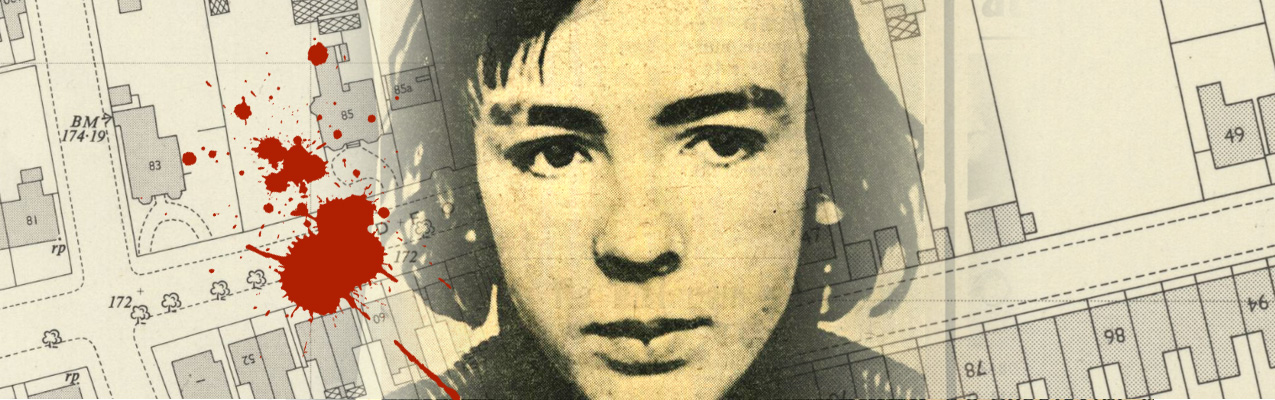
BFB header

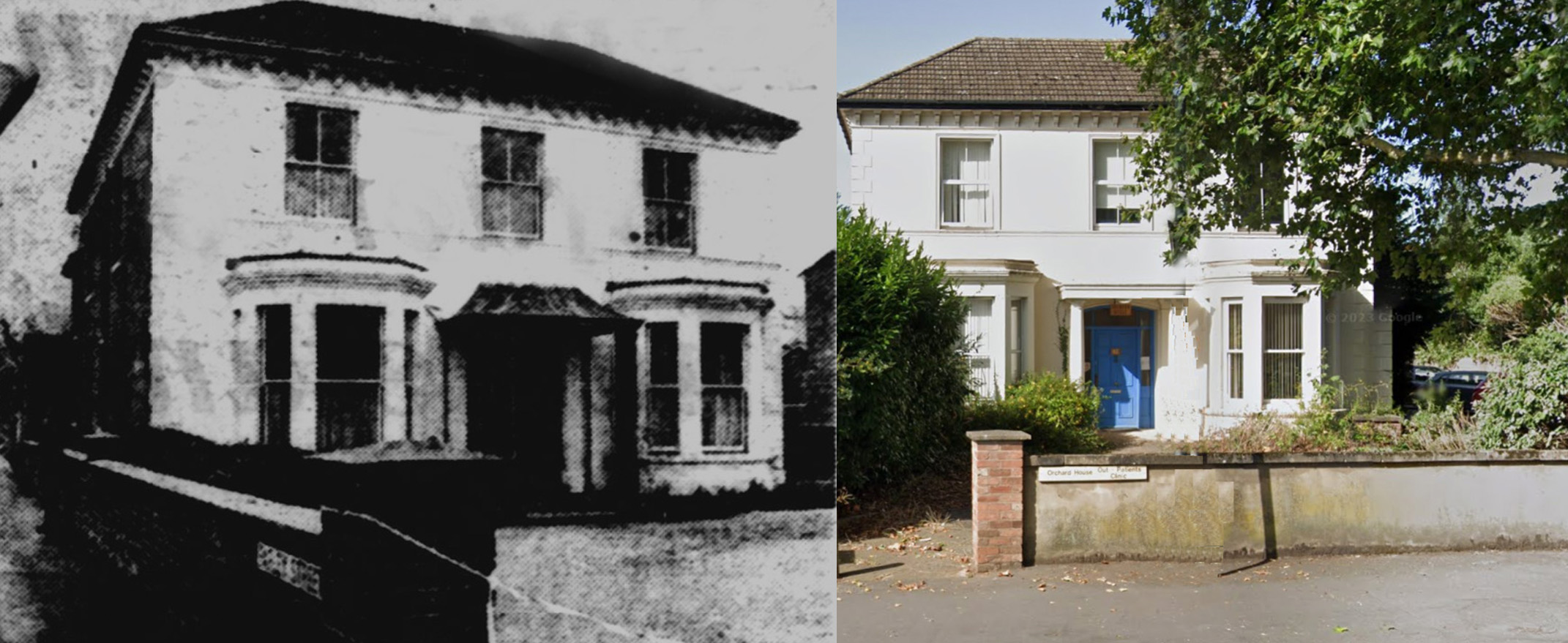
In the early hours of 2nd February 1976, an act of almost inhuman barbarity occurred in a rather grand Regency house on Radford Road, Leamington Spa. The house, number 83, was used as an annexe providing accommodation for nurses who worked at the nearby Warneford hospital. One such was 23 year old Tze Yung Tong. What were the circumstances that led her to be in Leamington? Misjudgment, or an act of cruelty by Fate?

Thomas Hardy ends what is, for me, his most powerful tragedy by commenting on the death by hanging of his heroine, Tess Durbeyfield. He says, “’Justice’ was done, and the President of the Immortals (in Aeschylean phrase) had ended his sport with Tess.” He refers to the Greek dramatist who imagined humans as mere playthings of the Gods, moved around like chess pieces for their entertainment. If you accept this concept is valid, then the Gods certainly played a very cruel trick on Tze Yung Tong.

It could be said that misfortune had played a part in putting the young Chinese woman in that particular place at that particular time. Trained as a nurse, she had married a travel courier in Hong Kong in 1973, and the couple had moved to Taiwan. The marriage did not last, however, and Tze, pregnant, moved back to her parents’ house in Hong Kong. When her son, Yat Chung Lam, was born, she made the fateful decision to move to England where the pay was much better, reasoning that she could send sufficient money home to better provide for the boy’s upbringing. The picture below shows Tze with her son in happier times.

Tze copy

On the morning of 2nd February Tze’s body was found in her room. The subsequent autopsy found that she had been stabbed multiple times in what must have been a frenzied assault. She had also been raped. At the murderer’s trial, the prosecution barrister told the jury:

“Two police officers came and were greeted with a horrible sight. Blood was everywhere, even splattered on the walls. Among evidence found by detectives were footprints on the roof leading to the landing window, and fingerprints on the landing windowsill, and on the outside of nurse Tong’s door. The pathologist examined the ghastly scene. Firstly there was a superficial cut on the nurse’s neck and it is considered the deceased was held at knife-point prior to her throat being cut. Also her clothes had been taken off after her throat had been cut. The pathologist also found she had laying on the bed completely passively in part because of loss of blood and partly through fear.”

Below – the house where Tze was murdered, as pictured in a 1976 newspaper and how it is today.

83 combined

In researching these murder stories, I often wonder about the metaphor of a random rolling of the dice that puts two people on a collision course. More often than not, murders are committed by someone known to the victim, often a family member, but was this the case here? It also proved to be a case where the police, despite a huge allocation of manpower and resources, literally had no clue as to the identity of Tze’s killer, and it was only a loss of nerve on his part that resulted in his arrest and trial.Tze had finished her shift at the Warneford at around 9.00pm on 1st February and had walked back along the snow covered pavement to the nurses’ hostel. Again, fate intervened. The girls had been warned repeatedly to make sure their room doors were locked before they went to bed. Tze’s keys were found hanging on a hook on the side of her wardrobe.

Tze’s ravaged body was eventually released to her family, in this case her mother Kit Yu Chen who had flown in from Hong Kong, and one of her sisters –  Patricia Tze Min Fung – who had travelled from Canada. Whatever secrets the girl’s remains held were consumed by the flames at Oakley Wood crematorium on 26th February. Her relatives did not stay for the funeral.

The police threw everything they had into the investigation but in a way, it was doomed from the start. There was no jealous boyfriend. Tze, with what might be called her ‘real life’ 6000 miles away in Hong Kong, was pleasant and polite, but had shown no desire to establish a social life in England. The Warneford was just somewhere where she could advance her midwifery skills before going home and use her qualifications to provide a better life for herself and her son. The police clutched at straws. Who was the well-spoken mystery man she had shared a meal with at a recent course in Stratford on Avon? Could local tailors shed any light on a pair of trousers found near the murder scene? Would the mass fingerprinting of thousands of Leamington men shed any light on the mystery?

Ironically, it was the latter scheme which would produce a result, but not in the way police imagined.

IN PART 2
A wedding
A honeymoon
A confession


Blog at WordPress.com.

Up ↑