Search

fullybooked2017

Month

September 2024

THE STALKER . . . Between the covers

ts spine082 copy

For fans of domestic psychological thrillers, this will be right up your street. Someone once coined the phrase ‘anxiety porn’ and, without giving too much away, The Stalker fits the bill perfectly. Eloise is an academic at Cambridge. Her subject? Psychology. Her speciality? The phenomenon of stalking. She has published several serious research papers, is regularly called on by the criminal justice system and – naturally – has a social media presence with numerous followers.

She is now in the unfortunate position of having to apply her own professional wisdom to her own life. She has a stalker who, via messages, phone calls and letters, only ever says three words. “Me or you.” Her stalker attacks her from behind on a Cambridge street, causing Elly to crack her head on the pavement. When she discharges herself from hospital, Elly makes her way home, only to find evidence that her husband of 18 years, successful architect Rafe, has been unfaithful. And all this within the first 40 pages.

To add to Elly’s mental turmoil, her 17 year-old son Jamie is a troubled teenager par excellence. He frequently disappears without trace and is close to being thrown off his ‘A’ level course for failing to attend classes and complete coursework. Author Kate Rhodes is parsimonious with her clues, but she does suggest that the clue to Elly’s distress lies in a childhood where she was ostracised by her widowed mother, and brought up by a kindly aunt and uncle. By this stage in the book, most readers, like me, will have made one ‘fatal’ assumption, which will add spice to startling denouement of the novel.

If there were such a thing as an Angst Counter, rather like the device for measuring radioactivity, it would be crackling alarmingly as every page of this book turns. What can go wrong in Elly’s life, does. Yes, she wins a coveted prize for a textbook she has written, but then the university reception in her honour is disrupted by the enraged father of a young woman, now in intensive care, whose stalker was released from prison on Elly’s advice, but then returned to attack her. Elly’s annual report to her boss on her teaching and research, vital for retaining tenure, is wiped from her computer. Someone has also cancelled her college key-card. Obviously the stalker is someone close to Elly, and Kate Rhodes cleverly sets a few hares running, each in a quite different direction. The answer lies in Elly’s troubled past when she was just a girl and, despite a few clues, I didn’t see it coming.

Screen Shot 2024-09-28 at 19.54.21Kate Rhodes (left) makes clever use of the contrast between the enclosed streets and buildings of Cambridge, and their inescapable sense of learning and history, and the timeless sense of space and vastness of The Fens, just beyond the city to the north east. Most of the water that once made The Fen impenetrable to outsiders has gone, but the communities that grew up amid the sedge and reeds are still isolated, insular and inward looking. Elly is ever conscious, even as she sets up a second home in the old cottage once occupied by her aunt and uncle, that despite her investment in security cameras and state-of-the-art alarms, she is just as vulnerable here in the rural darkness as she is in her modernist glass and steel  Cambridge home, designed by her husband.

The Stalker is a classy and absorbing thriller which sets the reader a beguiling challenge – to discover just who is the person who is relentlessly trying to destroy Elly’s life. The novel is published by Simon & Schuster, and is available now.

Screen Shot 2024-09-25 at 19.36.14

DEATH AT DEAD MAN’S STAKE . . . Between the covers

DADMS HEADER

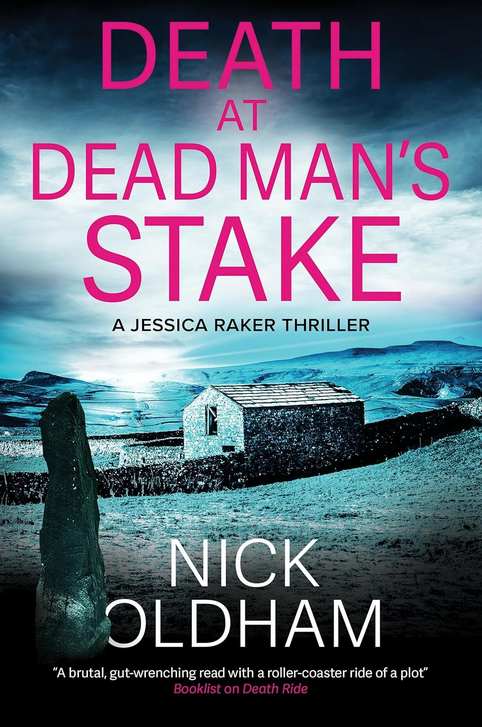
Death at Dead Man’s Stake sounds like something from the Wild West, but it is, in this new novel by former copper Nick Oldham, an incident at an isolated farm in Lancashire. With his veteran Henry Christie perhaps taking a well-deserved break at his (hopefully) rebuilt moorland pub, Oldham introduces Detective Sergeant Jessica Raker. After fatally shooting a London gangster following a botched raid on a jewellers’ in Greenwich, Raker has been moved to the North West – where she grew up – in an attempt to distance her from the dead man’s vengeful relatives.

Her first day is nothing if not eventful. She has barely unloaded her kit into the Sergeant’s office from her car, when she is called out to a crisis at Dead Man’s Stake. When the local fire brigade attends an unexplained fire in the derelict farmyard, one of the firefighters is grabbed and held hostage by the farmer, a drunken, mildly crazed man called Bill Ramsden. Jessica rescues the fireman after tazering Ramsden. Her day is not over, however. A cantankerous old man, resident of a local cafe home, is found dead, his corpse floating in a nearby reservoir. Raker, viewing the scene, suspects that a physical struggle lead to the old man ending up in the water.

Jessica Raker is a good copper, but she has been dealt a poor hand. At the Greenwich heist, who was one of the customers eying up an expensive item at the moment the robbers burst in? None other than her husband Josh, a high flying player in a City firm. And the piece of jewellery was intended not for Jessica, but for his secretary. Improbably, the marriage has survived, and Josh is now working in Manchester, but resentful at the move.

Meanwhile, we learn a little more about the man Jessica shot dead in Greenwich. He was the most ungovernable  of the sons of Billy Moss, a millionaire crook grown rich on the proceeds of all manner of criminaity, ranging from the inevitable drug trade to trafficking people. Goss wants revenge. He wants the hapless amateurs who lured Terry Moss into the doomed jewellery raid, but most of all, he wants Jessica. The problem is that the Met Police have done a very good job in smuggling her away to the Ribble Valley, and she has gone completely off the Moss radar. Nonetheless, a professional killer is hired to hunt her down and end her life. While on the school run, Jessica bumps into an old adversary. Years ago, when she was growing up in Clitheroe Jessica and Maggie Goss fell out over a mutually desired boyfriend, and Maggie, now boss of huge scrapyard empire, hasn’t forgotten the teenage slights. What is more important is that the scrapyard business is a million miles away from being strictly legit, and one of Maggie’s LinkedIn buddies is none other than Billy Moss.

It is not just Nick Oldham’s years of experience as a working copper that makes his books so good. Nor is it the loving and detailed sense of place, where he describes a beautiful and windswept rural Lancashire, blissful yet only an hour’s drive from pockets of deprivation and criminality like Blackpool. For me, what puts his novels up there on a pinnacle is his sense of dialogue – nothing flashy or pretentiously poetic – but an unerring version of how real people actually speak to each other.

As the Moss organisation moves against Jessica Raker, there is a satisfying symmetry to the main plot, as it ends where it began, out at Dead Man’s Stake. This is a firecracker of a police thriller, and Nick Oldham has established a cast of coppers, with Jess Raker at its heart, who will keep us entertained for many years to come. The novel is published by Severn House, and is available now.
Screen Shot 2024-09-25 at 19.40.39

THE TORMENTS . . . Between the covers

tt spine081 copy

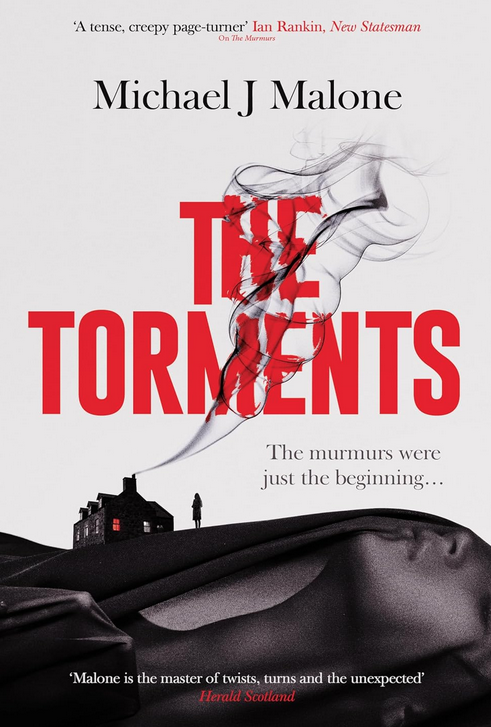
Annie Jackson, to whom we were introduced in The Murmurs (2023), has a frightening gift – she can foretell how people are going to die. She can also visualise the locations of dead bodies. One of the manifestations of her powers is also a curse. When she is inside her tiny cottage beside a Scottish locj, she hears constant murmuring voices. When she steps outside, however, these voices can be screams, or unintelligible chants. Annie has learned that this strange condition has affected women in her family going back generations.

Annie already has a certain amount of public exposure thanks to a recent case, but she is reluctantly accepted in the village near her cottage. She makes ends meet by waitressing in a cafe, and it is here, one afternoon, when the local lifeboat crew are in for their strong tea and bacon rolls that she has one of her moments of premonition. A junior member of the crew, a lad called  Lachlan, drives a car that is something of an ‘old banger’. Annie sees it wrapped round a tree, with the boy dead at the wheel. She says nothing direct by way of a warning, and when her vision turns into horrific reality, she becomes a pariah.

A member of Annie’s wider family turns to her for help. Her son Damien, a former footballer whose career was curtailed by injury, has gone missing, and she asks Annie to try to find him. Reluctantly, Annie agrees, and with the help of her twin brother Lewis, she takes on the case.

There is a parallel plot which begins in the mid 1960s, but we know it will converge with Annie’s present day travails. Two youngsters, Sylvia and Ben, are pupils at a prestigious boarding school, and they fall under the malign influence of Phineas Dance, a sadistic teacher who is also an acoylite of Satanism. Also lurking in the present day background is a sinister spectre known as the Baobhan Sith*.

*The Baobhan Sith is a female fairy in the folklore of the Scottish Highlands, though they also share certain characteristics in common with the succubus. They appear as beautiful women who seduce their victims before attacking them and killing them

As Annie and Lewis chip away at the mystery surrounding Damien’s disappearance their path crosses that of Craig Oldfield, the son of a wealthy and well-connected solicitor. Craig was a one-time friend of Damien, but is his claim that he has no idea of his former friend’s whereabouts to be trusted? We meet a a local police officer, Clare Corrigan who is initially sceptical of Annie’s special powers, and a retired academic called Dr Thomasina Hetherington, who most certainly is not. When Annie goes missing, the story heads for a dramatic conclusion in a cliff-side cave, rumoured to have once been the haunt of the legendary cannibal Sawney Bean. By now, the present day identities of Sylvia and Ben have become clear. The finale put me in mind of the glory days of my youth, reading the the sadly long forgotten novels of Dennis Wheatley  such as The Devil Rides Out (1934) in which the Duke de Richleau and his friends Simon Aron, Richard Eaton and Rex Van Ryn battled Satanic forces.

Novels that mix the paranormal with the more familiar tropes of crime fiction are more common than you might think. In the Aector McAvoy novels by David Mark it is McAvoy’s wife who has the sixth sense, and James Oswald’s DI Tony McLean often has worrying premonitions and glimpses into the ‘other world’. I once asked Phil Rickman if his wonderful diocesan exorcist Rev. Merrily Watkins always believes the people with troubled souls who reach out to her for help. His reply was along the lines of. “Not necessarily, but she believes that they believe.”

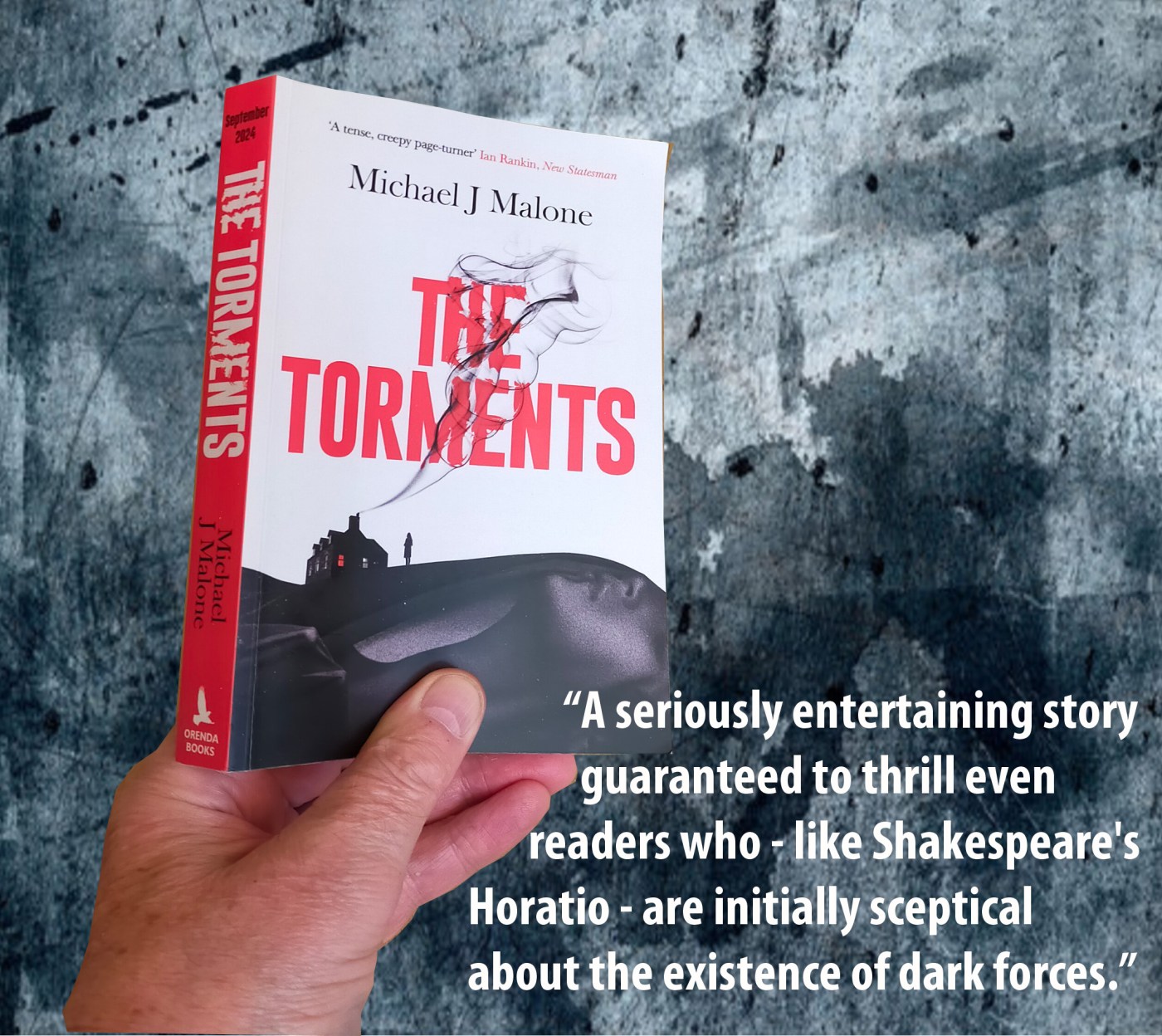
The Torments is a seriously entertaining story guaranteed to thrill even readers who – like Shakespeare’s Horatio – are initially sceptical about the existence of dark forces. It is published by Orenda Books and is available now.

Screen Shot 2024-09-11 at 20.32.54

THEM WITHOUT PAIN . . . Between the covers

TWP HEADER

Leeds. The early early summer of 1825. Simon Westow is a Thief-taker, a man who recovers stolen goods for a percentage of their value. He has no legal powers except his own knowledge of the city and a keen intelligence. When he encounters criminals, it is up to the city Constable and the magistrates to apply the law. Followers of this series will be familiar with the dramatis personnae, but for new readers, we have:

Simon Westow, Thief-taker
Rosie, his wife
Richard and Amos, their twin sons
Jane Truscott, former assistant to Westow. Very streetwise and deadly with a knife
Catherine Shields, an elderly widow who has provided Jane with a home
Sally – another child of the streets, and Jane’s replacement

Westow is summoned to the house of Sir Robert Foley, a wealthy man whose man-servant has absconded with two valuable silver cups. Foley wants them returned. When the manservant, Thomas Kendall, is found murdered in a secret room of an old city property just about to be demolished, Westow is told, by a Mr Armistead, that the room was once the workshop of Arthur Mangey, a silversmith, who was executed over a century earlier for the crime of Coin Clipping – snipping the edges off silver coins and then re-using the silver.

When Armistead himself is found murdered, Westow finds himself chasing shadows, and unable to make the connection between the ancient misdeeds of Arthur Mangey and persons unknown who are deeply involved in all-too-recent criminality. There is a seemingly unconnected story line in the book, but old Nickson hands know that it will, eventually, merge with the main plot. A disabled Waterloo veteran, Dobson, has gained a mysterious companion known only as John, but when brutalised corpses begin to appear, John becomes the prime suspect. The corpses have been flayed and brutalised almost beyond recognition. Westow, still doggedly determined to find the missing silver cups is increasingly reliant on the quicksilver street-smarts of Sally, and the old head on young shoulders of Jane, who had hoped for a life away from the streets, but has been drawn back into the dangerous game by her determination to avenge the death of Armistead.

A recurrent theme of Nickson’s Leeds novels, both in these Simon Westow tales, and the Tom Harper stories, set eight decades later, is that of the search. Both Westow and Harper frequently become involved in a search for a key suspect, often someone from ‘out of town’. It is a very simple literary device, but a very effective one, as it provides a platform for Nickson to use his unrivalled knowledge of the city as it once was, its highways, byways, grand houses and insanitary tenements. As we follow Weston’s search for a ruthless killer, the modern streets of Leeds that many readers know are stripped away to reveal the palimpsest of the buildings that once stood there and the people who inhabited them.

Another essential feature of the books is that his heroes don’t inhabit a timeless world, where they are perpetually in their early thirties, strong and vigorous.  Tom Harper aged  as the series went on, but he was allowed a comfortable old age and peaceful death. Here, Simon Westow is shaken by the recognition that, like Tennyson Ulysses, the years have taken their toll:

“ Tho’ much is taken, much abides; and tho’
We are not now that strength which in old days
Moved earth and heaven, that which we are, we are;
One equal temper of heroic hearts,
Made weak by time and fate, but strong in will
To strive, to seek, to find, and not to yield.”

He is aware that his reflexes are slower, the antennae that once sensed danger and threat are less sensitive, and he is ever more conscious of his own mortality, and his need of people like Sally and Jane to watch his back.

The novel boils down to three pursuits. Simon Westow hunts the man who stole Sir Robert’s cups, Sally wants her knife deep inside the man, known only as John, who murdered her fellow urchin Harold, while Jane vows to kill the man who killed the amiable and blameless Armistead.

Screen Shot 2024-09-16 at 10.56.08Chris Nickson never sugar-coats history, and makes us well aware that modern Leeds, with its universities, its international sporting venues and museums, was built on the blood sweat and tears of millions of ordinary people who grew up, toiled, loved lived and died under the smoky pall of its foundry furnaces, and had the deafening percussion of industrial hammers forever ringing in their ears. Jane, Sally and Simon-at a cost-each get their man in this excellent historical thriller, which is published by Severn House and is available now. For reviews of previous Simon Westow stories, click the author image on the left.

HOLMES AND MORIARTY . . . Between the covers

handm spine079 copy

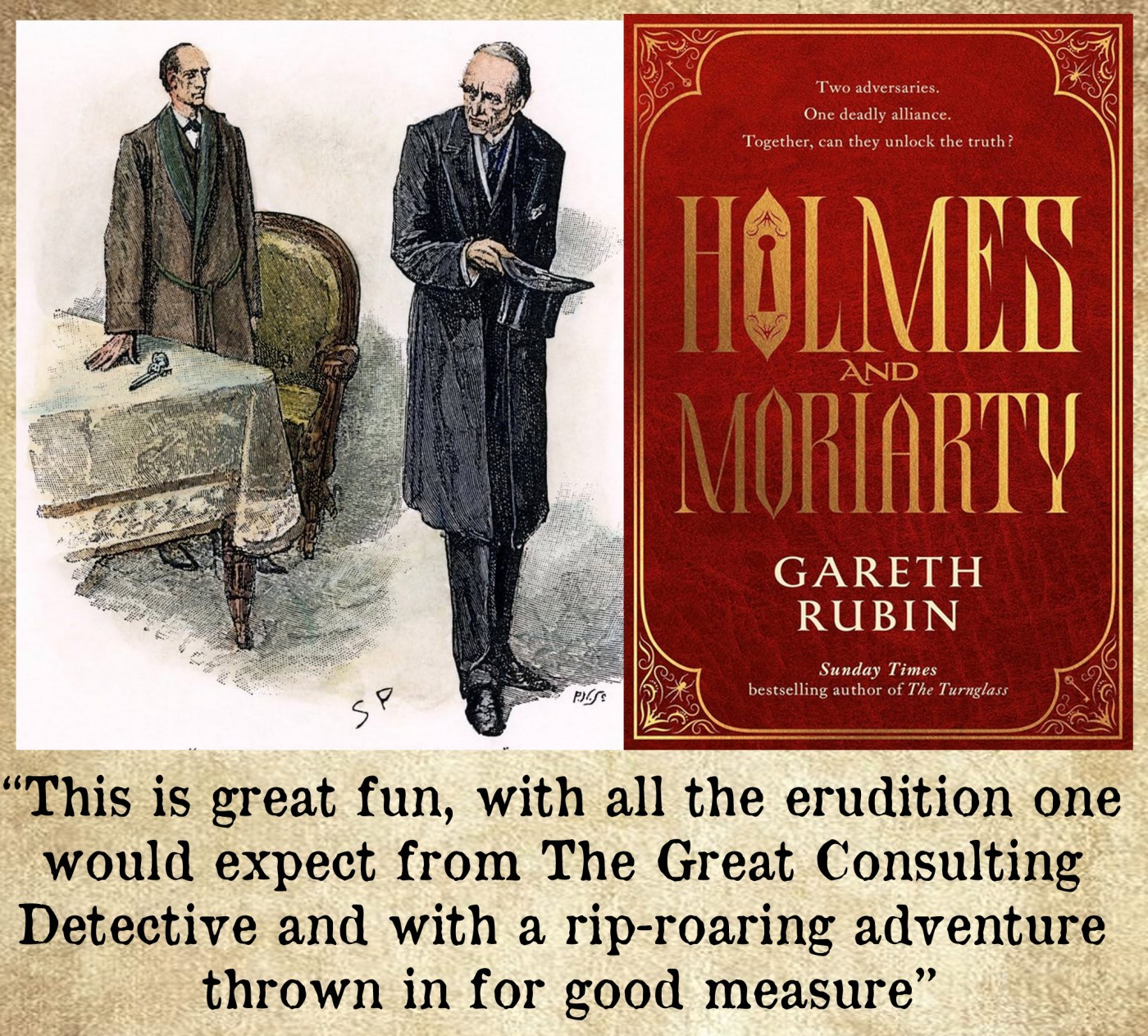
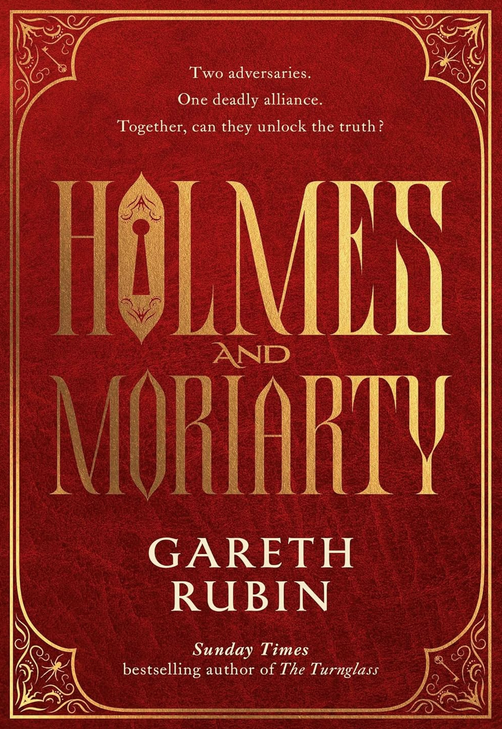
No fictional character has been so imitated, transposed to another century, Steampunked, turned into an American, or subject to pastiche than Sherlock Holmes. In my late teens I became aware of a series of stories by Adrian Conan Doyle (the author’s youngest son) and I thought they were rather good. Back then, I was completely unaware that the Sherlock Holmes ‘industry’ was running even while new canonical stories were still being published in the 1890s. Few of them survive inspection, and I have to say I am a Holmes purist. I watched one episode of Benedict Cumberbatch’s ‘Sherlock’, and then it was dead to me. As for Robert Downey Jr, don’t (as they say)”get me started.” For me, the film/TV apotheosis was Jeremy Brett, but I have a warm place in my heart for the 1950s radio versions starring Carleton Hobbs and Norman Shelley.

How, then, how does this latest manifestation of The Great Man hold up? The narrative has a pleasing symmetry. The good Doctor is, as ever, the storyteller, but as the book title suggests there is another element. Alternate chapters are seen through the eyes of a man called Moran who is, if you like, Moriarty’s Watson. Gareth Rubin’s Watson is pretty much the standard loyal friend, stalwart and brave, if slightly slow on the uptake. Moran’s voice is suitably different, peppered with criminal slang and much more racy.

The case that draws Holmes into action is rather like The Red Headed League, in that a seemingly odd but ostensibly harmless occurrence (a red haired man being employed to copy out pages of an encyclopaedia) is actually cover for something far more sinister. In this case, a young actor has been hired to play Richard III in a touring production. He comes to Holmes because he is convinced that the small audiences attending each production are actually the same people each night, but disguised differently each time.

Meanwhile, Moriarty has become involved in a turf war involving rival gangsters, and there is an impressive body count, mostly due to the use of a terrifying new invention, the Maxim Gun. There is so much going on, in terms of plot strands, that I would be here all week trying to explain but, cutting to the chase, our two mortal enemies are drawn together after a formal opening of an exhibition at The British Museum goes spectacularly wrong when two principal guests are killed by a biblical plague of peucetia viridans. Google it or, if you are an arachnophobe, best give it a miss.

Long story short, three of the men who led the archaeological dig that produced the exhibits for the aborted exhibition at the BM are now dead, killed in some sort of international conspiracy. It is worth reminding readers that as the 19thC rolled into the 20thC, the pot that eventually boiled over in 1914 was already simmering. Serbian nationalism, German territorial ambitions, the ailing empires of the Ottomans and Austria Hungary, and the gathering crisis in Russia all made for a toxic mix. This novel is not what I would call serious historical fiction. It is more of a melodramatic – and very entertaining – romp, and none the worse for that, but Gareth Rubin makes us aware of the real-life dangerous times inhabited by his imaginary characters.

Eventually Holmes, Watson, Moriarty and Moran head for Switzerland as uneasy allies, for it is in these mountains that the peril lurks, the conspiracy of powerful men that threatens to change the face of Europe. They fetch up in Grenden, a strange village in the shadow of the Jungfrau and it is here, in a remarkably palatial hotel given the location, they are sure they have come to the place from which the plot will be launched. By this stage the novel has taken a distinctly Indiana Jones turn, with secret passages,  and deadly traps (again involving spiders).

This is great fun, with all the erudition one would expect from The Great Consulting Detective and with a rip-roaring adventure thrown in for good measure. It is published by Simon & Schuster, and will be available at the end of September.

Screen Shot 2024-09-05 at 17.54.58

A VIOLENT HEART . . . Between the covers

AVH spine078 copy

David Fennell introduced us to London copper DI Grace Archer in The Art of Death (2021) Now, she returns  in a complex new case which involves cold case crime and the murders of sex workers, decades apart. The investigation becomes very here-and-now when the body of a young Croatian woman called Elena Zoric is found. She died from a puncture wound to her chest, but whatever killed her, it wasn’t a bullet.

The best police procedurals always give us a fly-on-the-wall account of the personalities and tensions that exist inside a police station. Because her previous superior has been sideline and has to care for her husband, struck down with Long Covid, Grace Archer has a new boss, Chief Inspector Les Fletcher, He is described as a “gammon-faced Yorkshireman” with more than a trace of the toxic masculinity common to that breed. Archer’s wing man is Belfast born DS Harry Quinn – reliable and intuitive. Less helpful is DI Lee Parry, nephew of the Metropolitan Police Commissioner, but about as much use as a chocolate fireguard. He is lazy, venal and prepared to cut corners for an easy life.

I have often observed that Detective Inspectors in British crime novels are, perhaps, overused. There are very sound reasons for this, however. DIs are perfectly placed to be both at the centre of investigations bureaucratically, while able to be out on the street, at the crime scene, and in the faces of the bad guys. Much more rare is the novel where a humble DC is the locus of activity. I can think of only one series, and that was written by Alison Bruce, and featured Cambridge Detective Constable Gary Goodhew. My review of The Silence is here. That being said DI Grace Archer is a welcome guest at a party held in a very crowded room.

We have here something of a whirling dervish of a plot, which spins this way and that and incorporates apparently disconnected events. We have a bizarre (but sadly all-too-credible) social ‘influencer’ called Calvin ‘Dixy’ Dixon whose latest Tik-Tok sensation shows him talking to the dessicated corpse of a woman sitting in a wheelchair in an abandoned house. There is also something that might become a ‘love interest’ angle, when Liam, a builder friend of Harry Quinn, is booked to renovate Archer’s house. He also happens to be extremely handsome, and brings with him freshly baked croissants to share before he starts work each day.

Then there is Mallory Jones, the guiding light in a successful podcast called Mallory Jones Investigates. She alternately helps and hinders Archer’s search for a man whose weapon of choice appears to be some kind of bolt gun. Finally, in far-off Berwick on Tweed, we have the Mercer family. Barry and Isla, and Isla’s brother Simon. Barry and Isla are both ex-coppers, but their teenage daughter Lily has fallen in with a bad crowd, and makes fistfuls of cash by appearing in amateur porn videos with her bestie, Gemma.

Archer is concerned to discover that, back in the day, her new boss Les Fletcher was, as a young PC, involved in the older murder investigations, and her informants tell her that he was rude and unsympathetic, strongly showing his prejudice that as ‘working girls’, getting assaulted by clients just went with the job.

As you might expect, David Fennell seizes the frayed ends of these plot strands and weaves them together to make for a highly satisfying conclusion. There is a savage and sanguinary denouement in, most appropriately, a disused abattoir. Not everyone survives the carnage, but as the emergency vehicles trundle off into the night, we have catharsis. Grace Archer certainly has her own demons to torment her, but she is a courageous and resourceful copper with a fierce determination to pursue the truth. A Violent Heart is published by Zaffre and is available now.

THE BABY-FACED BUTCHER . . . Death in Leamington (2)

BFB header

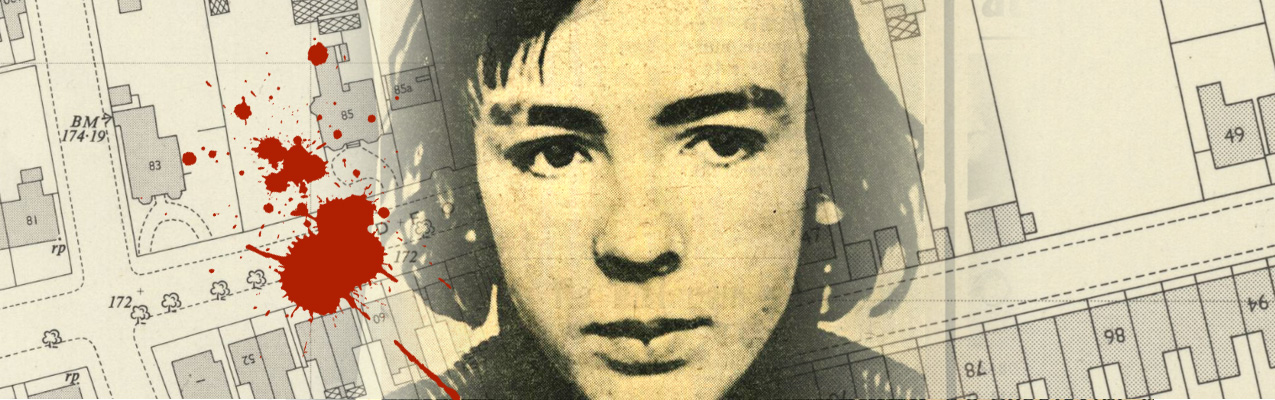
TzeYung TongSO FAR: In the early hours of Monday 2nd February 1976, the butchered body of Chinese nurse Tze Yung Tong (left) was found in her room in a nurses’ hostel at 83 Redford Road, Leamington Spa. Other young women had heard noises in the night, but had been too terrified to venture beyond their locked doors. We can talk about ships passing in the night, in the sense of two people meeting once, but never again. Tze Yung Tong was to meet her killer just the one fatal time.

Gerald Michael Reilly was born in Birmingham in 1957, but he and his family moved to Leamington. After primary school, he went to Dormer School, which then had its main building on Myton Road. He was described as quiet and pleasant, but not one of life’s high achievers. In 1974 he had a brief spell in the Merchant Navy before returning to Leamington to live with his parents at 49 Plymouth Place and work as a builders’ labourer. He was engaged to be married to Julie, a young woman from the north of England he had met during his Merchant Navy days.

On the evening of 1st February 1976, he was observing the moral code of the time by sleeping downstairs, while Julie was chastely abed upstairs. At some point, he decided he needed sex. It was never going to happen at home, so he let himself out of the house, and walked the 200 yards or so along snow-covered pavements to the nurses’ hostel on Redford Road. There, he shinned up a drain-pipe, and padded along the corridors hoping for an unlocked door. He found one. It was Tze Yung Tong’s room.

This is where the story goes into “you couldn’t make it up” territory. It was estimated that Reilly spent 90 minutes going about his dreadful work on the young nurse. Then, still clutching the sheath knife with which he had disembowelled Tze Yung Tong, he retraced his steps to Plymouth Place and went back to sleep.Just twelve days later, with hundreds of police banging their heads against a brick wall, Gerald and Julie were married with all the traditional trappings at St Peter’s church on Dormer Place. In those days honeymoons were rather prosaic by modern standards, so the star-crossed lovers set off for the West Country. Julie had her “going away” outfit, but Gerald brought with him something more significant – the knife with which he gutted Tze Yung Tong. In a bizarre attempt at concealment, he hid the blade in a toilet cistern at a Bath hotel.

Below, Gerald and Julie on their wedding day

wedding

By this time, whatever passed for logical thought in Reilly’s mind had gone AWOL. Upon returning to Leamington, and hearing about the intense fingerprinting initiative, he decided that the game was up and, with his uncle for company, turned himself in.  The irony is that the police, in desperation, had announced that there was one set of prints they had not been able to eliminate. Assuming they were his, Reilly offered his wrists for the handcuffs. The prints were not his.

Screen Shot 2024-09-01 at 12.54.01Despite his palpable guilt, Reilly was endlessly remanded, made numerous appearances before local magistrates, but eventually had brief moment in a higher court. At Birmingham Crown Court in December, Mr Justice Donaldson (right) found him guilty of murder, and sentenced him to life, with a minimum tariff of 20 years.In 1997, a regional newspaper did a retrospective feature on the case. By then, the police admitted that he had already been released. Do the sums. Reilly, the Baby-Faced Butcher may still be out there. He will only be in his late 60s. Ten years younger than me. One of the stranger aspects of this story is that, as far as I can tell, at no time did solicitors and barristers working to defend Reilly ever suggest that his actions were that of someone not in his right mind. By contrast, in an earlier shocking Leamington case in 1949, The Sten Gun Killer (click the link to read it) the ‘insanity card’ was played with great success. Perhaps must face the fact that sometimes, sheer evil can exist in human beings who are perfectly sane and rational.
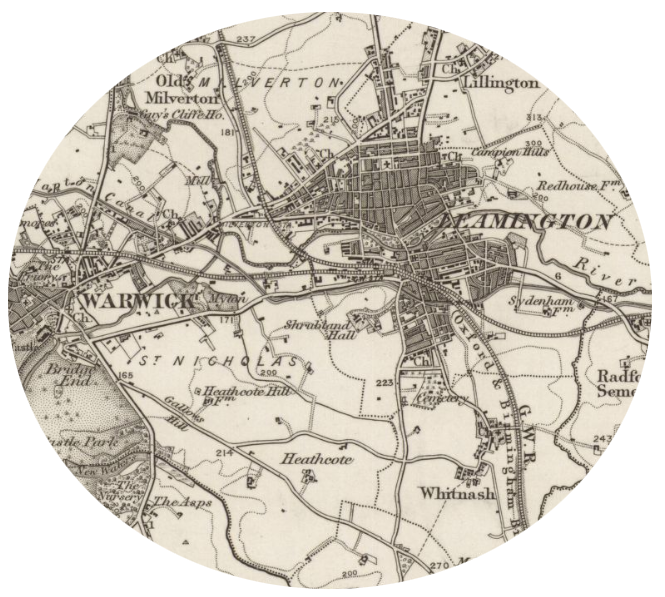
FOR OTHER LEAMINGTON & WARWICK MURDER CASES
CLICK THE IMAGE BELOW

LEAMWAR

I DIED AT FALLOW HALL . . . Between the covers

IDAFH spine074

Although set in a beautiful village near Cirencester, with glowing limestone cottages, a jolly white-haired vicar, and the squire’s mansion up on its hill, this is as far away from a ‘Midsomer’ type Cosy Crime as you can get. Instead it is a beautifully written tale, full of poetry, some very dark corners and people who, if not severely damaged, are fighting their own demons. Anna Deerin, a former ballerina who had to quit through ligament damage has moved to the village of Upper Magna. She lives in a grace and favour cottage in the grounds of Fallow Hall. She lives rent free because she has undertaken to work and restore what was once the Hall’s extensive kitchen garden. She keeps chickens and earns a slender living by baking cakes and selling them – and her fruit and vegetables – at the weekly farmers’ market on the village green.

She lives in a kind of self-imposed exile, with no mobile phone and no current close friends. This all changes when, while attacking a long neglected part of the garden with a pick-axe, she finds human remains. Into her life comes Detective Inspector Hitesh Mistry, another London exile. He heads up the search for the identity of the skeleton – subsequently proved to be that of a woman. Like Anna, he is a complex individual. He is deeply immersed, emotionally, in a well of sadness caused by the recent death of his mother. While he respects his elderly father, the way that his mother was treated rankles with him. Although it seems nothing unusual in Indian families, he resents the fact that his mother was just seen as a cook, child-bearer and housemaid, while her obvious intellectual and emotional talents (she was a part-time hospital administrator) seemed to count for nothing in the family home. He has little left of her now, except the fragrance of her skin and cooking – and a treasured red cardigan which he describes, chillingly, as ‘empty’.

Screen Shot 2024-08-20 at 12.36.36

Bonnie Burke-Patel (left) intersperses contemporary events with brief but telling episodes from 1967. We meet a young woman, living locally (almost certainly in Fallow Hall) She has a younger brother, away at university. Her mother is rather inadequate, particularly at household skills, and her father is a domineering and demanding WW2 veteran, hideously disfigured by a facial injury. One morning, she escapes into Cirencester (to buy the ingredients for her own birthday cake) and meets a young Canadian man. There is an instant attraction and, after very little courtship she, belatedly – in the time-honoured phrase – loses her virginity.

This sets up the puzzle to perfection, but the author plays her cards very close to her chest. Mid way through the book there are so many questions. Is the authoritarian father related to Lord Blackwaite, the current Lord of the Manor? Is the body in the garden his daughter? Who tried to batter their way in to Anna’s cottage a couple of nights after she uncovered the remains?

Reviewing crime novels is not particularly difficult when the books are thrillers, police procedurals or basic whodunnits. The reviewer has a few simple tasks: outline the plot, describe the characters and setting, and then describe how well the book works. I am neither a professional writer nor a journalist, and so I tend to read books that I know I will be happy with. Just occasionally, there comes a book which challenges my ability to do it justice. I Died at Fallow Hall is one such.

As I said earlier, despite the familiar rural tropes, this is something rather special. The startling violence near the end, and the emotional intensity with which Anna empathises with – and is determined to identify – the girl whose skull she cradled in her hands on that fateful autumn afternoon, sets this novel aside as something very special. Putting on my reviewer’s hat I can answer the potential readers’ question, “What do I get.” In no particular order you get a murder mystery, a grim account of the cruelties that family members can inflict on each other, a poignant study of loneliness and isolation, a gimlet-eyed look at English class structure and, above all, a testimony to the power of love. From Bedford Square Publishers, this is available now.

Screen Shot 2024-08-20 at 12.34.37

THE BABY-FACED BUTCHER . . . Death in Leamington (1)

BFB header

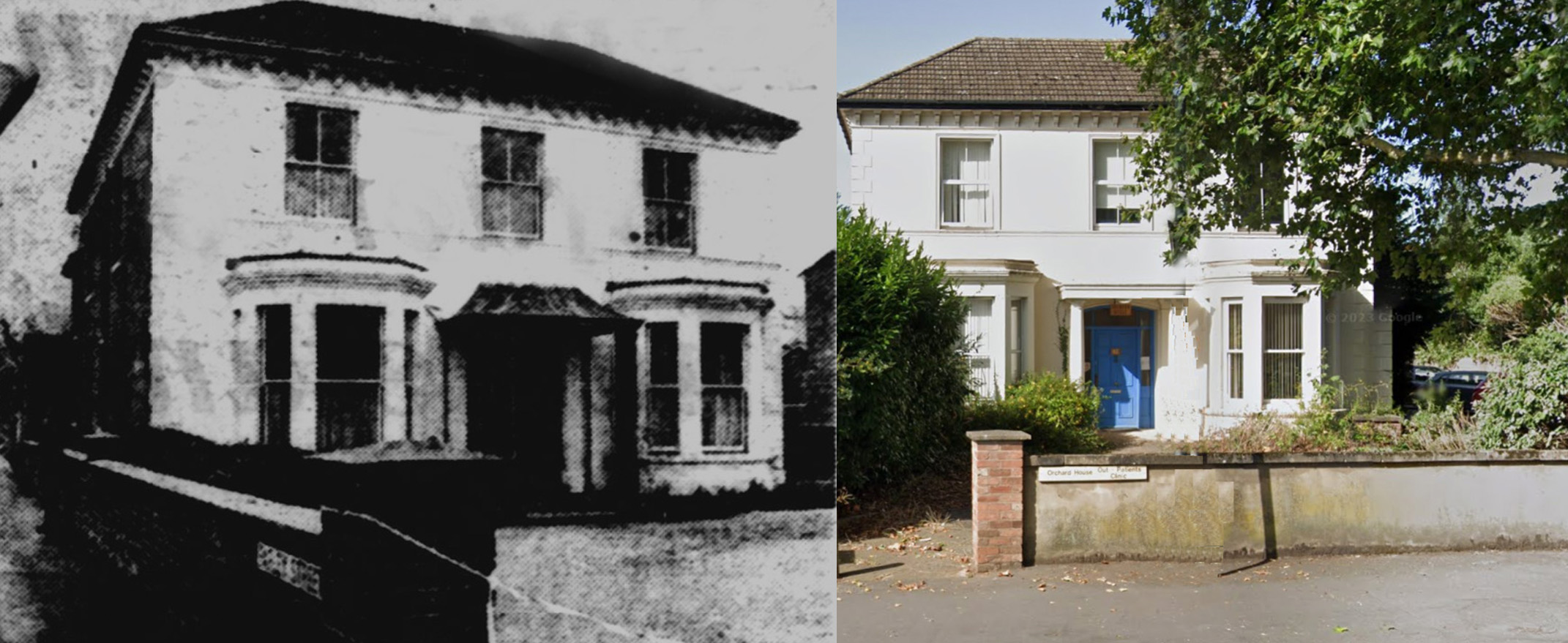
In the early hours of 2nd February 1976, an act of almost inhuman barbarity occurred in a rather grand Regency house on Radford Road, Leamington Spa. The house, number 83, was used as an annexe providing accommodation for nurses who worked at the nearby Warneford hospital. One such was 23 year old Tze Yung Tong. What were the circumstances that led her to be in Leamington? Misjudgment, or an act of cruelty by Fate?

Thomas Hardy ends what is, for me, his most powerful tragedy by commenting on the death by hanging of his heroine, Tess Durbeyfield. He says, “’Justice’ was done, and the President of the Immortals (in Aeschylean phrase) had ended his sport with Tess.” He refers to the Greek dramatist who imagined humans as mere playthings of the Gods, moved around like chess pieces for their entertainment. If you accept this concept is valid, then the Gods certainly played a very cruel trick on Tze Yung Tong.

It could be said that misfortune had played a part in putting the young Chinese woman in that particular place at that particular time. Trained as a nurse, she had married a travel courier in Hong Kong in 1973, and the couple had moved to Taiwan. The marriage did not last, however, and Tze, pregnant, moved back to her parents’ house in Hong Kong. When her son, Yat Chung Lam, was born, she made the fateful decision to move to England where the pay was much better, reasoning that she could send sufficient money home to better provide for the boy’s upbringing. The picture below shows Tze with her son in happier times.

Tze copy

On the morning of 2nd February Tze’s body was found in her room. The subsequent autopsy found that she had been stabbed multiple times in what must have been a frenzied assault. She had also been raped. At the murderer’s trial, the prosecution barrister told the jury:

“Two police officers came and were greeted with a horrible sight. Blood was everywhere, even splattered on the walls. Among evidence found by detectives were footprints on the roof leading to the landing window, and fingerprints on the landing windowsill, and on the outside of nurse Tong’s door. The pathologist examined the ghastly scene. Firstly there was a superficial cut on the nurse’s neck and it is considered the deceased was held at knife-point prior to her throat being cut. Also her clothes had been taken off after her throat had been cut. The pathologist also found she had laying on the bed completely passively in part because of loss of blood and partly through fear.”

Below – the house where Tze was murdered, as pictured in a 1976 newspaper and how it is today.

83 combined

In researching these murder stories, I often wonder about the metaphor of a random rolling of the dice that puts two people on a collision course. More often than not, murders are committed by someone known to the victim, often a family member, but was this the case here? It also proved to be a case where the police, despite a huge allocation of manpower and resources, literally had no clue as to the identity of Tze’s killer, and it was only a loss of nerve on his part that resulted in his arrest and trial.Tze had finished her shift at the Warneford at around 9.00pm on 1st February and had walked back along the snow covered pavement to the nurses’ hostel. Again, fate intervened. The girls had been warned repeatedly to make sure their room doors were locked before they went to bed. Tze’s keys were found hanging on a hook on the side of her wardrobe.

Tze’s ravaged body was eventually released to her family, in this case her mother Kit Yu Chen who had flown in from Hong Kong, and one of her sisters –  Patricia Tze Min Fung – who had travelled from Canada. Whatever secrets the girl’s remains held were consumed by the flames at Oakley Wood crematorium on 26th February. Her relatives did not stay for the funeral.

The police threw everything they had into the investigation but in a way, it was doomed from the start. There was no jealous boyfriend. Tze, with what might be called her ‘real life’ 6000 miles away in Hong Kong, was pleasant and polite, but had shown no desire to establish a social life in England. The Warneford was just somewhere where she could advance her midwifery skills before going home and use her qualifications to provide a better life for herself and her son. The police clutched at straws. Who was the well-spoken mystery man she had shared a meal with at a recent course in Stratford on Avon? Could local tailors shed any light on a pair of trousers found near the murder scene? Would the mass fingerprinting of thousands of Leamington men shed any light on the mystery?

Ironically, it was the latter scheme which would produce a result, but not in the way police imagined.

IN PART 2
A wedding
A honeymoon
A confession


Blog at WordPress.com.

Up ↑