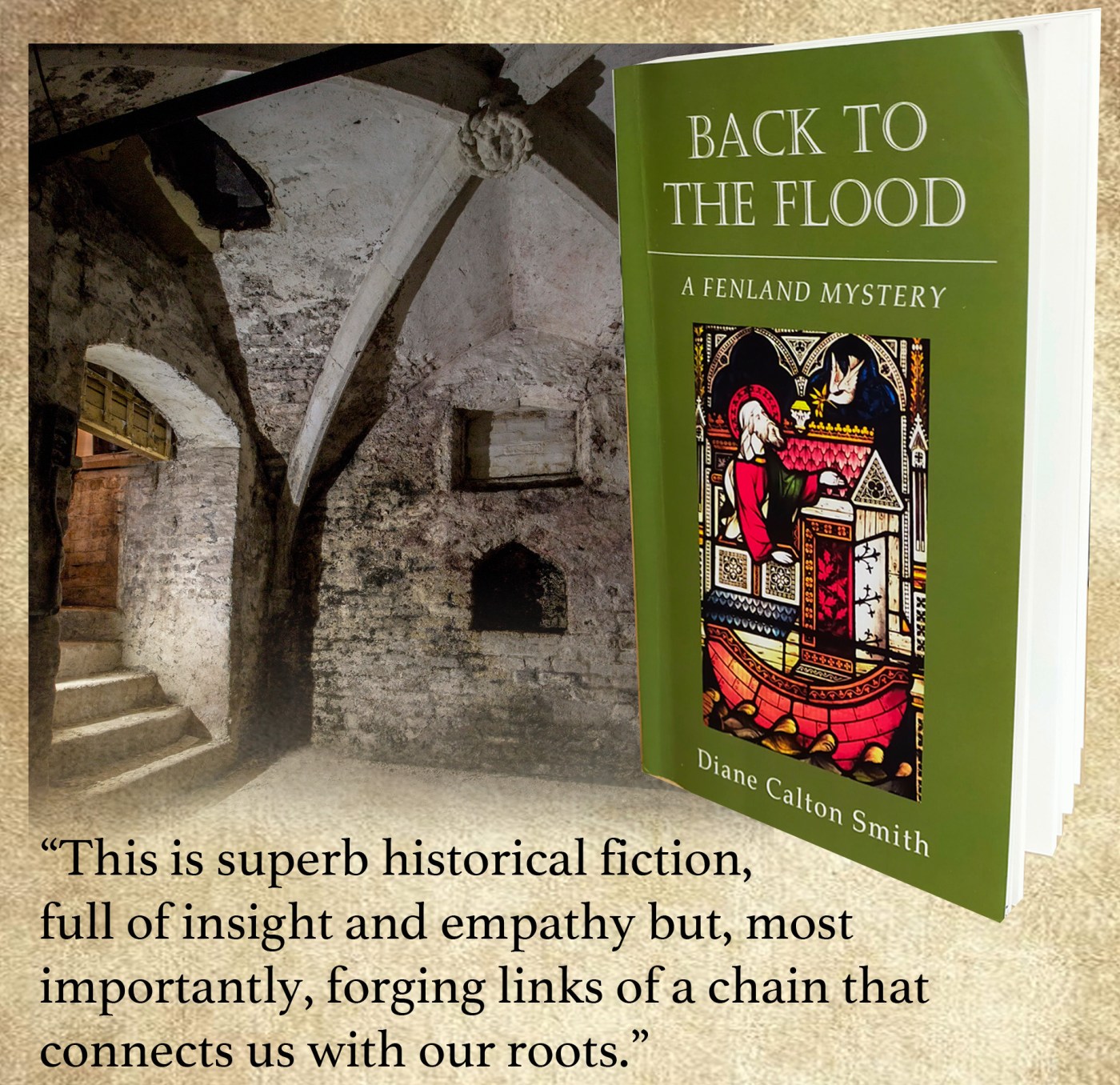

It is March 1249, and England is ruled by Henry Plantagenet (Henry III) son of the unfortunate KIng John, who featured in an early tale of medieval Wisbech by this author, In The Wash (click to read the review). For Wisbech people, the King and his court are far away and unknown. Their immediate overlord is Hugh of Northwold, Bishop of Ely, for who much of Wisbech is his manorial property, meaning that residents must pay him annual rent. In November 1236, however, a disastrous tide (what we would now call a North Sea Surge), devastated the flimsier properties of the town, and when, thirteen years later, the Bishop’s Seneschal*. Roger of Abynton arrives to make an audit of rents and repairs, he finds that many of the Bishop’s buildings have not been rebuilt and remain unoccupied, thus providing no income stream.
*Seneschal – an agent or steward in charge of a lord’s estate in feudal times.
When Alured, a local baker, is found dead in the reeds at the edge of The Wysbeck (then a sluggish stream, but now the tidal River Nene) most people assume that he drunkenly fell into the water after one two many ales in one of the inns he frequented. Sir Roger, after examining the body, is not so sure. Scratches on the torso suggest that the man was dragged to the river bank. Finding people with a motive to kill Alured is the easy part. He was a cheat, drunk, foul of mouth and temper and seemed to live his life with one aim only – to antagonise and goad everyone he meets.
Sir Roger is, by modern standards, a decent detective. He comes to realise that Alured was not murdered because he baked contaminated bread, or because he was an argumentative drunk who enjoyed starting fights in pubs. The book’s title is completely apposite. Everything that happens is a result of what happened – or didn’t happen – on that fateful night when the North Sea surge crashed through the banks and defences of Wisbech and changed lives for ever.
So deeply does Diane Calton Smith immerse us in 13th century England that we are not in the least surprised to learn that the New Year began on 25th March, or that there was an extensive calendar of Saints’ Days, very few of which would be celebrated by feasts, at least in the modern sense of the word. There is also a sense of how big the world was in those days. A journey from Wisbech to Leverington, two minutes in the car these days, took hours on treacherous and often impassable tracks. We are also reminded of the sanctity of Lent. Meat was seldom a regular item on the tables of most poor townspeople, but during the Holy observance, the daily ‘pottage’ would contain only root vegetables, perhaps made more palatable with ‘ransom’ – not a criminal demand for payment, but something akin to what we call Wild Garlic. Ale was ubiquitous, because there was little or no safe drinking water. It would have tasted very different to modern beer, as the use of hops in the brew would not come for another three hundred years.
Hand in hand with the astonishing historical detail we have a very clever whodunnit. Wisbech these days is not much of a place, but at least we have our history. I am acutely aware, thanks to this superb novel (and its predecessors) that every time I walk into town, there is a palimpsest beneath my feet, a resonant reminder that these very streets were walked on by our ancestors, and that we tread in their footsteps. This is superb historical fiction, full of insight and empathy but, most importantly, forging links of a chain that connects us with our roots. Back To The Flood is published by New Generation Publishing and is available now.


 fullybooked2017
Leave a comment