

Essie Fox takes us back to Victorian times with her novel The Fascination. It is the late summer of 1887. Keziah and Tilly Lovell are twins, but they are far from identical. At some point, Tilly simply stopped growing and, as she gets older, she is a woman in a child’s body. They escape from the brutish attentions of their drunken father, and are taken on by a showman called The Captain who senses a financial opportunity in the diminutive Tilly. She has the looks and voice of an angel, made all the more alluring by her tiny body.
Their paths cross that of Theo Seabrook. Cursed by being a (literal) bastard he is brought up by his aristocratic but malevolent grandfather, who eventually disinherits him. He finds work as assistant to Dr Eugene Summerwell – a former physician, but now another showman – who runs a ‘Museum of Anatomy’ in London. Despite its lofty title it is just another opportunity to make money out of punters who pay to marvel at preserved freaks of nature and medicine, mostly contained in glass bottles and cases.
The Fascination is described by the publicists as a ‘Gothic novel’. Church buffs will be aware of the architectural term, insofar as it applies to the three great periods of English medieval architecture – Early English, Decorated and Perpendicular – but what does it mean when applied to a novel? Although Wikipedia is frequently wrong, its definition of Gothic Fiction isn’t far off the mark:
“Gothic fiction is characterized by an environment of fear, the threat of supernatural events, and the intrusion of the past upon the present. Gothic fiction is distinguished from other forms of scary or supernatural stories, such as fairy tales, by the specific theme of the present being haunted by the past.”
The anonymous author might have added:
“A fascination with human deformity, ever-present reminders of death, physical beauty ruined by excess, the darkness of human imagination – and a general absence of normality.”
Away from the intriguing story – of which more in a moment – Essie Fox raises interesting questions about our age-old fascination with physical and mental differences in our fellow humans. I am old enough to remember traveling fairs in 1950s Britain, where people would still part with their hard-earned bobs and tanners to view The Bearded Lady, The Irish Midget or The Rat Woman. Most of these owed more to make-up than genuine deformity, but let’s not forget the 1932 American film (banned for many years) called Freaks. Directed and produced by Tod Browning. It was a melodrama set in a traveling circus. The basic plot was that a scheming female trapeze artist sets out to defraud a dwarf called Hans of a sizeable sum of money. In doing so, she invokes the wrath of Hans’s fellow ‘freaks’ – some of whom actually had severe physical deformities.
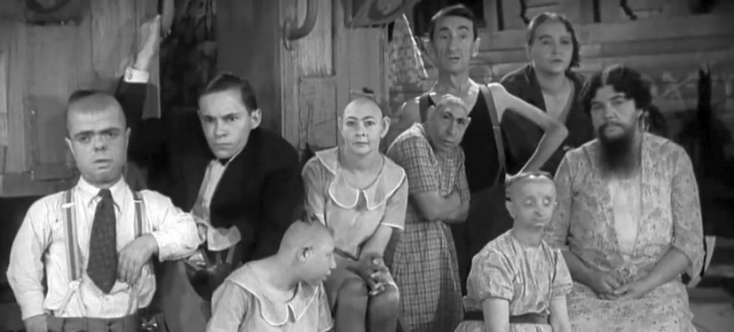
In these ‘enlightened’ days many enjoy a slightly more refined fascination with grotesques when they tune in to watch shows like Britain’s Got Talent and Love Island. Back in Victorian times, however, these pleasures were much more raw and face-to-face, and this is where Essie Fox places her characters. Few deviations from ‘the norm’ are excluded; in no particular order she offers us kidnap, prostitution, paedophilia, drug addiction, child abuse, grave robbing, pornography and debauchery.

Under the skilful management of El Capitano, Tilly becomes a star of the London variety stage. It doesn’t hurt that she has a lovely singing voice, but the bottom line is that there is a sexual attraction, too. Essie Fox doesn’t lay this on with a trowel, but the fact is that Tilly is a nubile teenager, but one encased in the body of a nine year-old. It is this that brings her to the attention of Lord Seabrook, Theo’s syphilitic grandfather, and his scheming new wife. Tilly is kidnapped, and the intention is to use her as the central attraction at a Hellfire Club-style orgy in the crumbling mausoleum of Dornay Hall. After a daring rescue by El Capitano and his retinue of rather odd characters, Tilly’s virtue is saved, but not before several family skeletons are dangled in public view.
The Fascination is supercharged melodrama from start to finish and, on one level, gloriously over the top, but discerning readers will admire the many subtle counterpoints in the story, such as the intriguing relationship between Tilly and Keziah. The most telling twist only emerges in the final paragraph when the author reminds us that the proverbial ‘eye of the beholder’ is capable of powerful insight. This novel was published by Orenda Books on 22nd June.


 fullybooked2017