

I found this novel intriguing in two ways. Firstly, the action takes place on my home turf. I live in Wisbech (well, someone has to) and Spalding, Sutterton, Sutton Bridge (just over the border in Lincolnshire), and Sandringham in West Norfolk are all very familiar. Christina James (real name Linda Bennett) writes:
“I was born in Lincolnshire, in England, and grew up in Spalding. I’ve had a lifelong fascination with the South Lincolnshire Fens, with their huge skies, limitless landscapes and isolated communities; I have always been interested in the psychology of the people who have lived there over the centuries. I have now put some of this interest and fascination into the fictional world of Detective Inspector Tim Yates.”
I believe she now lives in Leeds, but the Lincolnshire (South Holland is the administrative district) landscape is as vivid as if she were just still standing there.
Secondly, she employs two narrative viewpoints. The first is centred on DI Tim Yates – obviously one of the good guys – but the second is narrated by a rich industrialist called Kevan de Vries, and we are not sure if he is on the side of the angels or the devils.
Kevan de Vries lives in a palatial country home called Lauriston, in the village of Sutterton. Almost by accident (police are investigating a suspected burglary) a package of forged UK passports is discovered in the cellar, but de Vries claims he has no knowledge of how they got there. Then, a more shocking discovery is made, in the shape of skeletons which, when examined, appeared to be those of black people. They have been there since the 19th century.
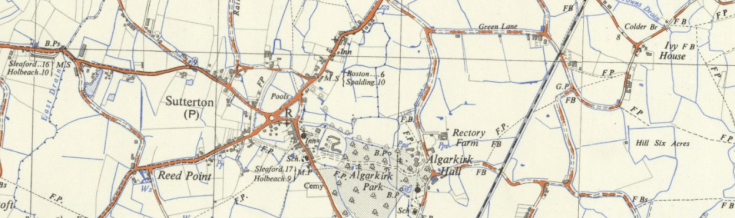
For all his riches, de Vries had not been able to buy happiness. His wife Joanna has terminal cancer, and their autistic son attends a boarding school in nearby Sleaford. The couple spend much of their time on the Caribbean island of St Lucia, while the business of running the huge processing plant in South Lincolnshire is largely left to a manager called Tony Sentance who, surprisingly, de Vries loathes and abhors. So, does Sentance have some kind of hold on de Vries?
 Tim Yates’s life is made even more complicated when the remains of a young woman are found on the Queen’s estate at Sandringham, across the border in Norfolk. It should be none of Yates’s business, except that the dead woman was wearing branded work clothing from Kevan de Vries’ factory. Meanwhile, a mysterious diary dating back to Victorian times, and found in the cellar at Lauristan, reveals that the controversial colonial politician Cecil Rhodes had connections with the family who owned the house at the time.
When Yates investigates the connection between the girl whose remains were concealed on the royal estate and the de Vries factory, he comes up against a wall of silence which convinces him that the dead girl was caught up in a trafficking and prostitution racket linked to the huge numbers of Eastern Europeans who came to work in the area during the years of *freedom of movement.
*The tens of thousands of people from Poland and the Baltic states who arrived in Eastern England in the 2000s transformed towns like Boston, Spalding and Wisbech. The owners of food processing factories and farmers grew rich, and the immigrants found they could earn far more for their labours than they could back home. There was a downside to this, in that along with the hard working immigrants came unscrupulous people who made fortunes exploiting cheap labour, renting out multiple-occupancy homes and – worst of all – establishing a thriving slavery and prostitution network.
This is an enjoyably complex novel which works on one level as an excellent police procedural while, on another, takes a long hard look at how powerful people – both now and in times past – exploit the most vulnerable in society. The Sandringham Mystery is published by Bloodhound Books and is available now.
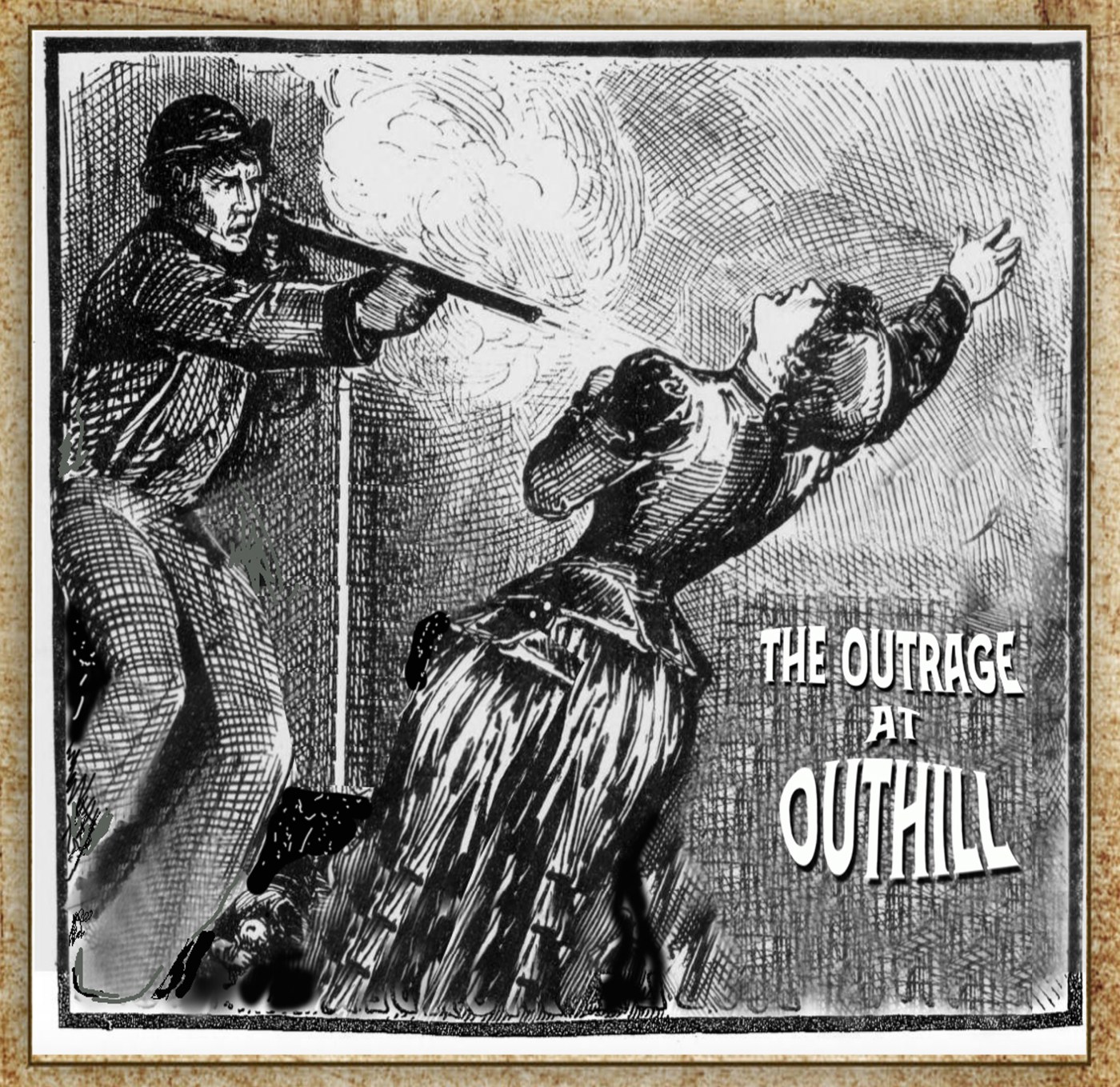

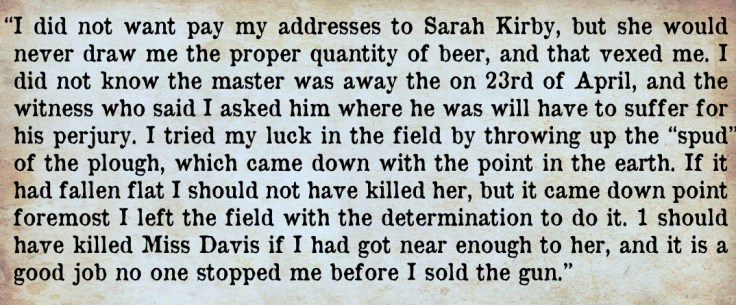
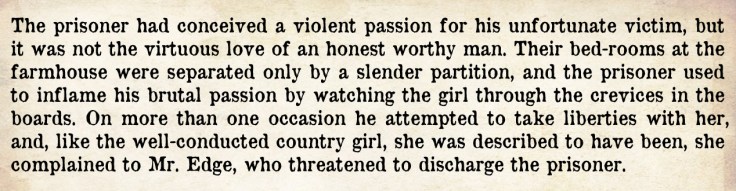
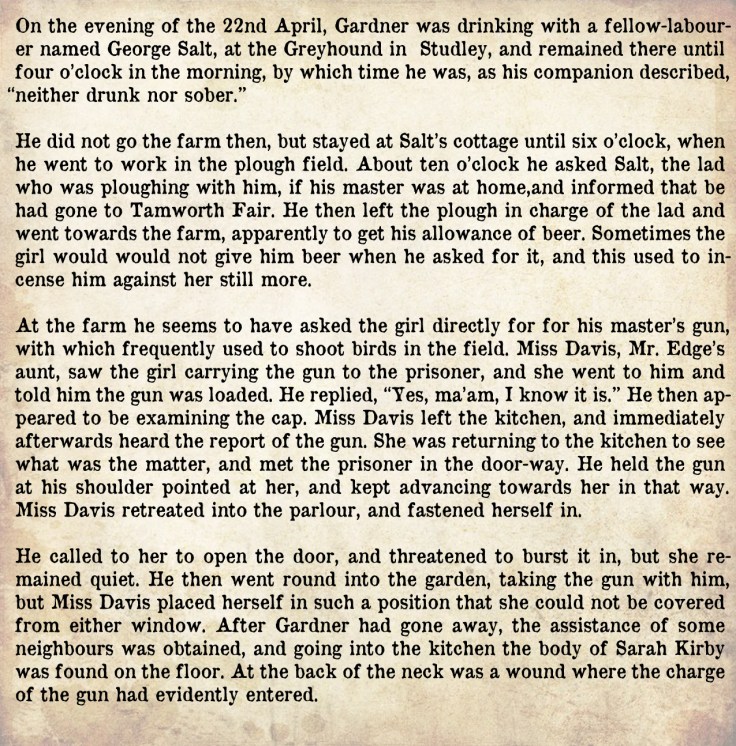
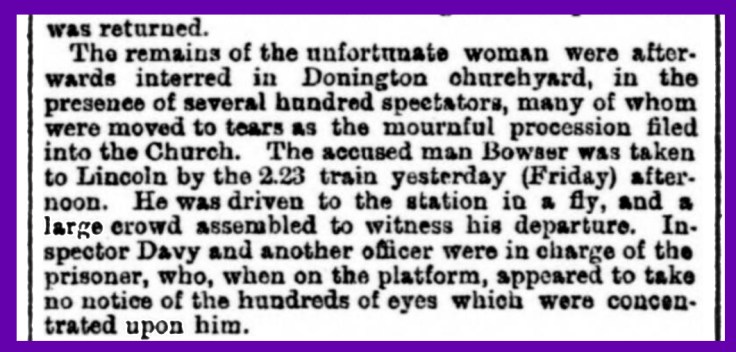
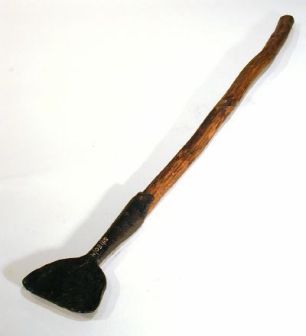 SO FAR: 23rd April, 1862, rural Warwickshire, and a 21 year old ploughman, George Gardner, employed by farmer Davis Edge at Outhill Farm, near Studley, has shot 24 year-old Sarah Kirby, employed by Edge as a domestic servant. Gardner’s peculiar state of mind before killing Sarah Kirby could almost be described as existential, in that it seemed to recognise neither logic nor the law – just his own obsession. He did, however, seem to have acknowledged the presence of chance. He had been uncertain that morning about killing Sarah Kirby, so he adopted a rural version of tossing a coin. Ploughmen used a hand-tool known as a “spud”. It was basically a flat blade, usually mounted on a wooden handle, (left} and used for clearing earth from the blades of the plough. Gardner decided to toss the tool in the air, and if it landed blade first, then Sarah Kirby would die. It did, and so did the young woman.
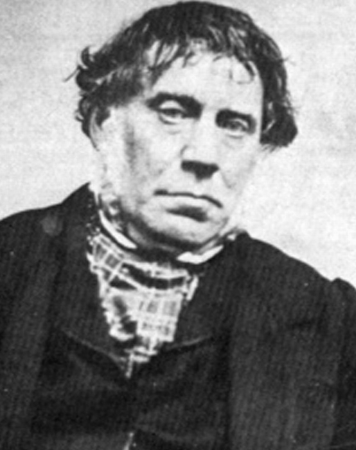 Gardner had one further misfortune. His executioner was none other than George Smith (right), a former criminal and noted drunk, known – with rough humour – as The Dudley Throttler. This was to be a public execution, and a perfectly respectable form of cheap entertainment at the time. A reporter described the scene:







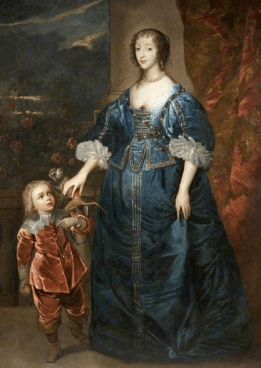 In far-off Norfolk, men repairing flood defences near Denver Sluice have discovered what appears to be the remains of a child inside the rotted skeleton of a boat. Hunt, accompanied by Colonel Michael Field, a grizzled veteran of Cromwell’s army, and Hooke’s niece, Grace. When the trio arrive in Norfolk, Hunt soon determines that the remains are not those of a child, but the mortal remains of Jeffrey Hudson, who was known as the Queen’s Dwarf – the Queen in question being the late Henrietta Maria (left), wife of Charles I. The situation becomes more bizarre when Hunt learns that Hudson is not dead, but living in the town of Oakham, 60 miles west across the Fens. Hunt and his companions’ journey only delivers up more mystery when they find that ‘Jeffrey Hudson’ has left the town. Hunt knows that the jolly boat* which contained the skeleton belonged to a French trader, Incasble, which worked out of King’s Lynn.
 Hunt’s odyssey continues. In King’s Lynn, Hunt and his companions are summoned to the presence of the Duchesse de Mazarin. Hortense Mancini is one of the most beautiful women in Europe. She is highly connected, but also notorious as one of Charles II’s (several) mistresses. She reveals that the mysterious dwarf – or his impersonator – may be in possession of a a legendary gemstone – the Sancy – a diamond of legendary worth, and the cause of centuries of intrigue and villainy. The Duchesse bids Harry to travel to Paris, but once there, his fortunes take a turn for the worse.


 fullybooked2017