Search

fullybooked2017

Month

April 2021

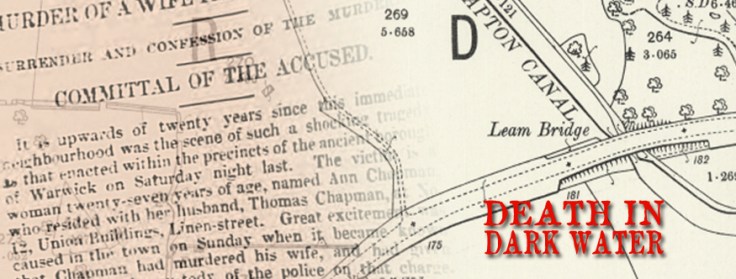
DEATH IN DARK WATER . . . The murder of Ann Chapman (2)

SO FAR – Saturday 16th April, 1870. Thomas Chapman and his wife Ann have gone out for a walk together, leaving heir children at home in Linen Street Warwick, with Ann’s parents. Neither would ever return to that back-to-back terraced house.

Thomas Chapman’s father lived in Friar’s Court, Warwick. At 1.00 am on the morning of 17th April, he was awakened by a loud banging on his front door. Opening it, he was astonished to see his son, bedraggled, and apparently soaked to the skin. He said to his father:
“I have killed Ann, and now I have come home to die with you.”
Thinking his son to be either drunk or muddled, the elder Chapman made his son take off his clothes and sent him upstairs to lie down. After a few hours, however, Thomas Chapman convinced his father that he had,indeed, killed Ann,and the air set off together to the police station. PC Satchwell later gave this statement to the magistrates.
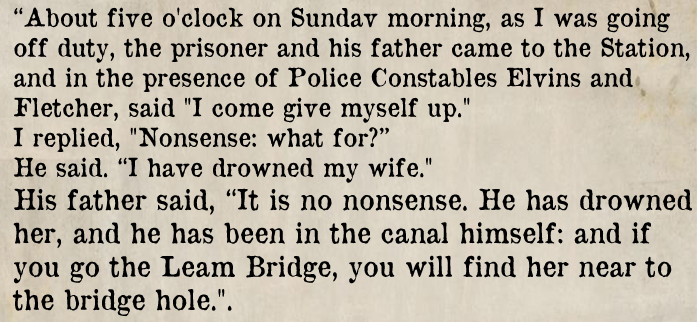
Confession

Taking Chapman seriously now, a party of constables took drags – large iron rakes on the end of ropes – and set off for Leam Bridge. They noted that there were signs of a struggle on the canal towpath, and they set about the melancholy business of searching for Ann Chapman. After about twenty minutes they found her, and brought her up out of the water. She was taken back to Warwick on a cart, covered in blankets, and Thomas Chapman was charged with her murder.

As was usual with these matters, a Magistrate’s hearing and a Coroner’s inquest were quickly convened. At the inquest, Mr Bullock, a surgeon reported what he had found.
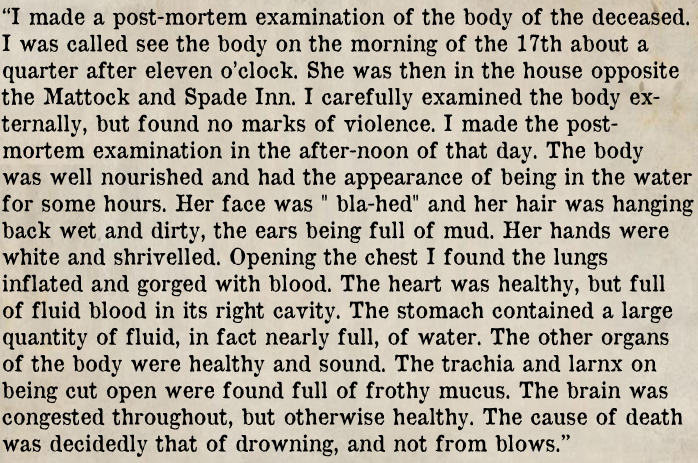
Inquest

Chapman’s confession was graphic, and told of how his grievances against Ann’s behaviour with other men had been festering for some time:

“Last night I went home about six o’clock, and gave my money to her mother. We lived with her. I stayed at home till went out with my wife. I told her we would go to Leamington and look round there. We started a little after nine o’clock. We called at Page’s near the chapel and had a pint of ale. That is all I had all the night. We looked in the shop windows, and went on to Emscote cut bridge. I said, “Come on this way”. She said she did not like to the water side. She was all of a tremble. I said, “What makes you tremble? What have you to tremble for – I said if she would come along there we could get out the Leam Bridge on the Old Road.

We were talking as we were going along the cut side. I said I was sure the last child was not mine. She said none of the children were mine. She said. “No, you scamp, none of them are yours.” She said, “I have deceived you a good while.” When got under the Leam Bridge I pushed her into the water, and as she was going in she laid hold of me and pulled me into the water, I could not get away from her for a long while. She kept fast hold of me. She had liked to have drowned me. I got away from her and got out of the water, and lay down on the grass. I could not walk I was wet. The water was up my chin. I could not touch the bottom.

I threw my old jacket into the water. I got on the Old Road. man passed me against lawyer Heath’s. I made up my mind to drown her before went out of the house. I went my father’s house about one o’clock, changed clothes and lay down on the bed. I have been away from home three months together. When I last came home she held the last child up and said, “Here’s pattern for you; do you think you could get such a one as this ?”

By the time Chapman’s case eventually came to Warwick Assizes, it had clearly dawned on him that it was likely he was going to be hanged, and it was reported that he had been busy trying to convince the authorities that he was insane. What appears to be play-acting cut no ice with the doctors, and they testified that he was perfectly sane, both then and at the time of Ann’s death. Remarkably, the jury – all male, remember – were sufficiently sympathetic with Chapman’s bruised ego that they found him guilty of the lesser charge of manslaughter, and he was sentenced to life. What became of him, I don’t know. In those days life meant life, and so it may well be that he died in prison.

What became of the Chapman children is another mystery. The 1871 census has Francis and Mary Dodson – Anna’s parents – living at 12 Union Building, both on ‘Parish Relief’. This had nothing to do with church parishes, but was a form of benefit based on what we now call local government wards. In practice, it was patchy, and depended on the ability of a particular parish to levy rates, and then distribute a portion to the needy.

To me, it is absolutely clear that Thomas Chapman murdered his wife. He pushed her into the murky depths of the Warwick and Napton Canal with one purpose, and one purpose only – to pay her out for her infidelity and taunts about the parentage of her children. His bizarre attempts to convince the authorities that he was insane suggest that he knew he was facing the hangman’s noose. Why judge and jury deemed his crime manslaughter baffles me. What became of him, and whether he survived the Victorian prison system, I cannot say. What I do know is that the dark and gloomy spot where the canal passes under Myton Road is forever tainted by the struggles of a young woman pushed down into the unforgiving depths by an angry and violent man.

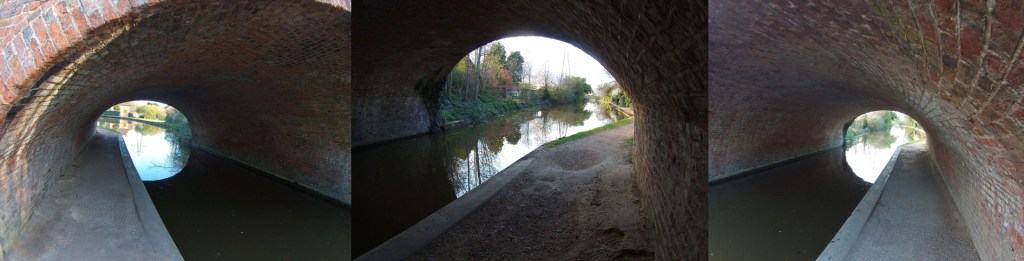
Thanks again to Simon Dunne and Steve Bap for the photographs
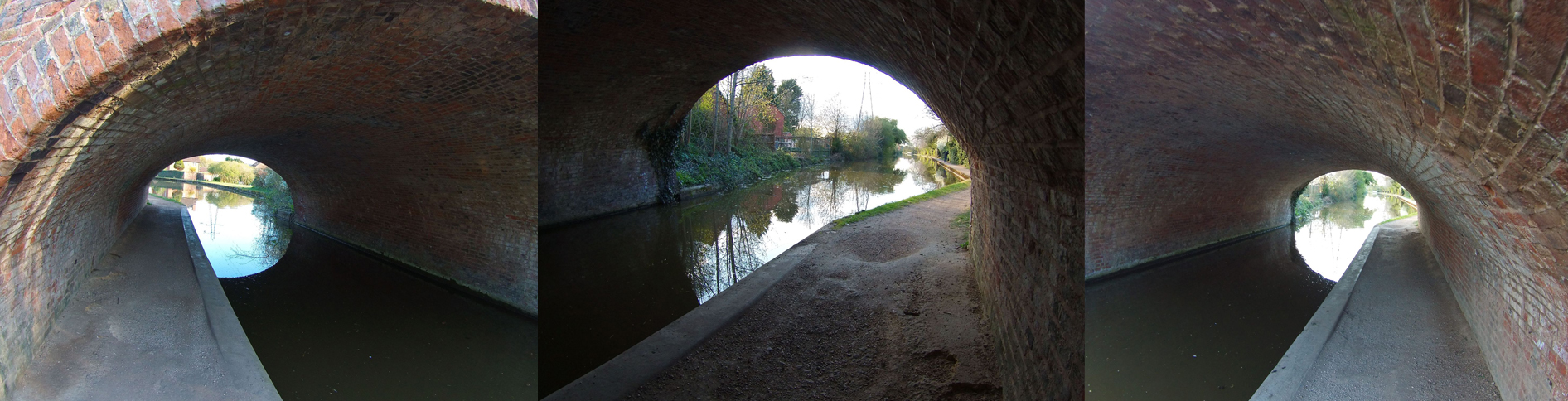
bridge-combined

DEATH IN DARK WATER . . . The murder of Ann Chapman (1)

I have always had an irrational – but very real – fear of canals. Rivers are something else altogether. They flow, sometimes with great energy and beauty, and they are older than mankind itself. Towns and cities throughout history have based themselves around rivers, and celebrated them. Canals, on the other hand, seem to skulk out of sight and out of mind, hidden from view, especially in built up areas. As an angler, I never took to canal fishing, unlike countless other Midlanders.

I am an old Leamington lad and can still remember working barges chugging along the Warwick and Napton Canal where it runs parallel to Myton Road. The bargees seemed to come from the same stock as the old-time Romany gypsies who would occasionally knock on our door in Victoria Street, selling this and that. Their faces were weathered by exposure to the elements, and they certainly lived a harder life than we did. My discomfort about canals probably is due to the fact that they are often dark and dispiriting places where generations of unfortunates have seen fit to end their lives.

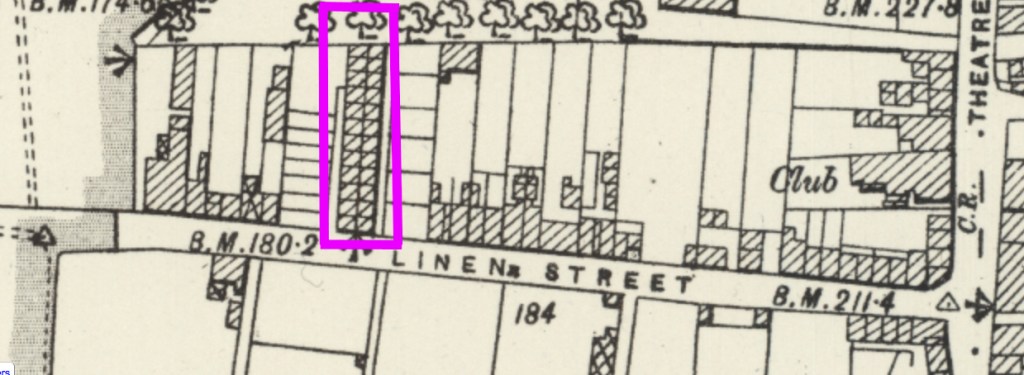
This story begins in Warwick in 1870. Thomas Chapman, his wife Ann and their young children lived with Ann’s parents – the Dodsons – in Union Buildings. Linen Street, Warwick. The website British History Online says:

“South of Marble House, dwellings in Linen Street were built between 1820 and 1825, now replaced. By 1851 these included 24 back-to-back houses known as Union Buildings which are still (1966) standing.”

I suspect that the houses outlined on this early 20th century map (below) may well be Union Buildings. Warwick experts will no doubt set me right on this.

Thomas Chapman was not a skilled man, and he had a seasonal job, during winter months, working for a gas company in Primrose Hill, Birmingham. In the warmer months he took work where he could get it nearer to home, and newspaper reports say that at the time of this affair, he was working for a Mr Cundall in Leamington. The only Cundall in the 1871 Leamington census was a man with a grocers’ shop in Regent Street, but this is of no matter. At this point, it is relevant to mention that Chapman had a nagging fear that his wife had been unfaithful to him during the winter months when he was working in Birmingham. Jokes at his expense and behind-the-hand comments made in various pubs had done little to reassure him.

Ann Chapman was 27 years old, and already had given birth six times. Three children still lived and the elder of these was born before she married Chapman. It is Saturday 16th April and Thomas Chapman, after finishing his work in Leamington for the week, has walked home to Warwick, after having a couple of pints in the pub where his employer paid out his men. Chapman gives the remainder of his wage to his mother in law, Mary Dodson, and sits down to what seems to have been a peaceable dinner. Afterwards, he plays with the children for a while, and then suggests to Ann that they step out for the evening. After a drink in a pub in Smith Street, They walk on to  Emscote, where Chapman suggests they follow the canal towpath in direction of Leamington.

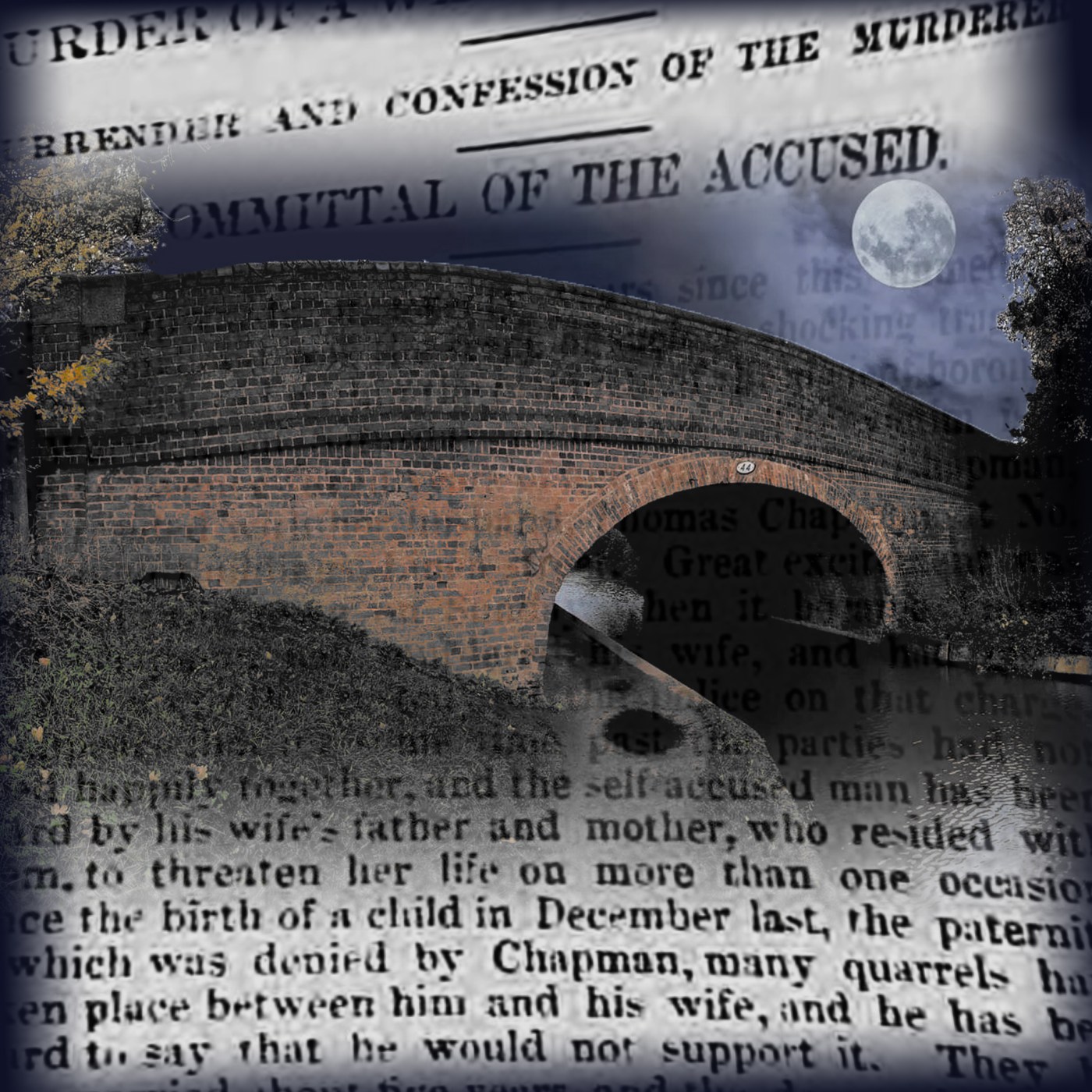
In later testimony Chapman revealed that Ann did not like walking by the canal bank, as it made her “all of a tremble.” He evidently calmed her fears, and they carried on their walk. The route they took is, as best as I can reconstruct it, from modern GPS systems, a two mile walk – maybe a tidy hike to us in  our car-dominated era – but nothing at all to most people in 1870. What happened when they reached what was known to locals as Leam Bridge, but Bridge 44 to the Warwick & Napton Canal Company, was to horrify the neighbourhood for weeks to come.

Many thanks to both Simon Dunne and Steve Bap
who saved me a 200 mile round trip by taking photographs of Bridge 44.

SECRET MISCHIEF . . . Between the covers

A new Cragg and Fidelis mystery from Robin Blake is always an event, so thank you, Severn House, for the review copy. For those  who have yet to meet this pair of 18th century investigators, here’s a quick heads-up. We are in the mid 1700s, in Lancashire, and King George II has not long since led his army in the field to defeat the dastardly French at The Battle of Dettingen. Titus Cragg is the County Coronor, and lives with his wife and son in Preston. His friend Luke Fidelis is a local doctor who is much admired by his patients, but viewed as highly suspect by some of the older medical fraternity in the area. This is the seventh in the series, and you can read my reviews of of a couple of the earlier novels here.

As ever, murder is the word, and a series of deaths in and around the town of Omskirk are linked to an archaic form of business plan for raising money, known as a Tontine. The investment plan was named after Neapolitan banker Lorenzo de Tonti and, to put it simply, was a pot of money where a number of people contributed an equal sum. The money would either be invested, with interest paid to the members, or used to fund capital projects. As time went on, and investors died, the fund became the property of the remaining members, until the last man (or woman) standing hit the jackpot.

Sounds like a good excuse to bump off a few people? Doesn’t it just! The first victim is, comically enough, a prize porker called Geoffrey. When Cragg is called to examine the corpse he thinks his time is being wasted, but when the late pig’s owner – one of the Tontine members – is shot dead a few days later, Cragg realises that the pig took a bullet aimed at his owner, and the shooter came back to finish the job.

One by one the Tontine signatories come to sticky ends: one is, apparently, hit by the sail of a windmill; another is found dead on Crosby beach, apparently drowned, but Luke Fidelis conducts a post mortem and finds that the dead man’s body has been dumped on the seashore. Things become even more complex when a reformed ‘lady of the night’, now a maid, is accused of pushing the poor woman into the path of the windmill sail. Cragg is convinced she is innocent, but faces an uphill struggle against a corrupt judge.
Not the least of the charms of these books is the description of Luke Fidelis as a medical man who questions existing – and faulty – medical procedures. There is a melancholy moment when he examines the young daughter of one of Cragg’s relatives, and finds that she is suffering from Consumption and is terminally ill. ‘Consumption’ is, obviously, archaic, but so descriptive of a disease that did, until relatively recent times, almost literally consume its victims.

Titus Cragg gets to the bottom of the mystery eventually, of course, even the investigation has his ship sailing dangerously close to members of his own extended family. Off at a slight tangent, I do love books with a map as part of the frontispiece. What was good enough for the Macmillan editions of Thomas Hardy’s novels is plenty good enough for Robin Blake, too. Another left-field thought: the Cragg and Fidelis tales occupy the same geography as the excellent Henry Christie novels by Nick Oldham (click to read reviews) – just a few centuries earlier.

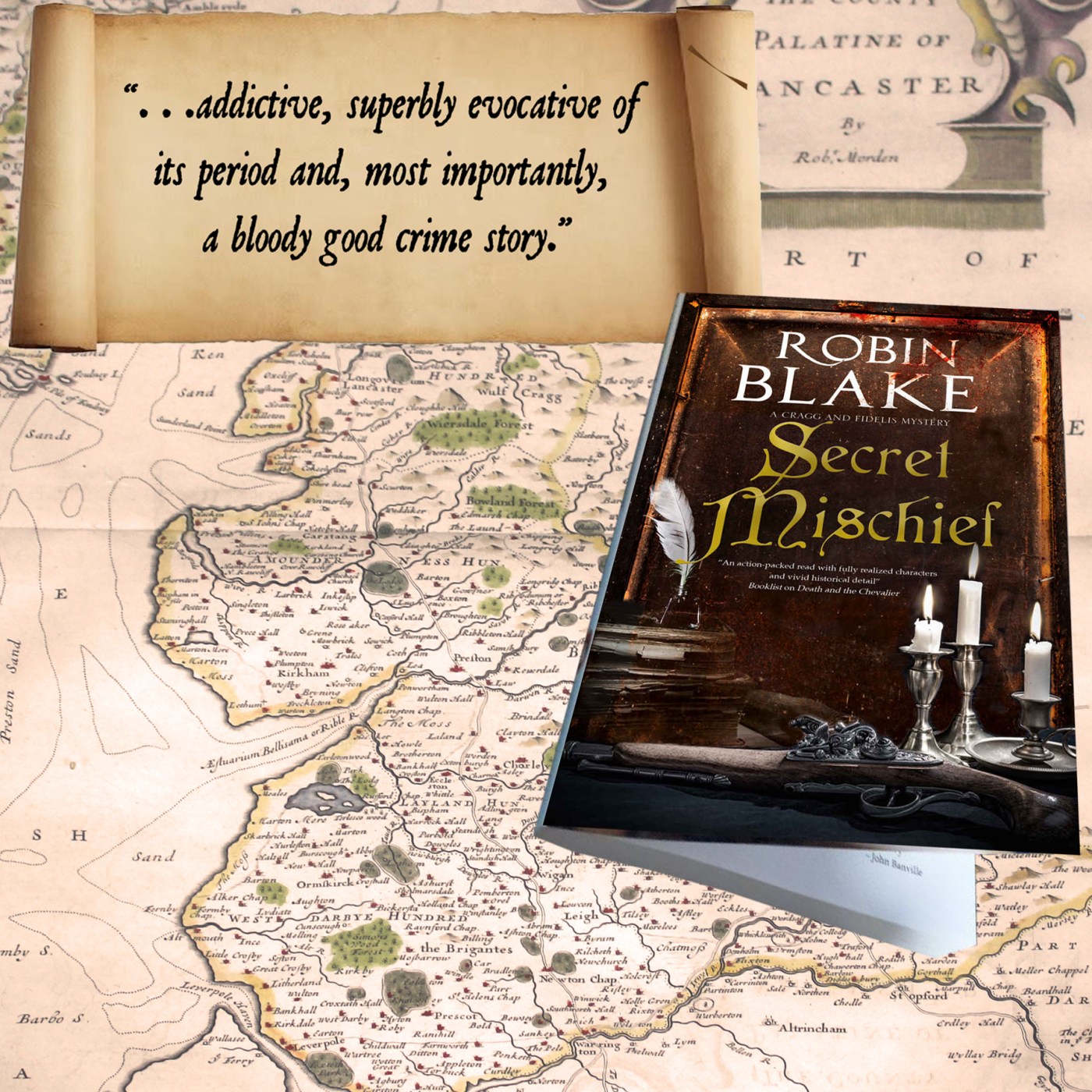
Secret Mischief is addictive, superbly evocative of its period and, most importantly, a bloody good crime story. Also – and I can’t remember a novel doing so in a long time – it features a cricket match as part of the plot! It is published by Severn House and is available now.


A CHAPTER OF HORRORS . . . A tragedy from 1890 (3)

ACOH header3

SO FAR – George Hay, a gentleman farmer from South Reston, has taken a shotgun and killed his brother-in-law, and left his young wife Louisa horrifically injured, and clinging to life by a thread. He is in police custody in nearby Alford. It is 25th May, 1890.

There were no backlogs of court cases in rural Lincolnshire back in the 1890s. Later on the Saturday after his appalling crimes had been discovered, George Hay was before the magistrate in Alford, charged with murder and attempted murder. He had tried to injure himself while in custody, and had been strapped to a chair to prevent such an occurrence. He was, of course, remanded in custody to await trial at Lincoln Assizes in July.

The other integral part of the justice system in the case of violent death is the Coroner’s Inquest. This was convened in South Reston on Monday 26th May and was presided over by Mr Frederick Sharpley. What was going to be a melancholy affair anyway was made more dramatic by the announcement that Louisa Hay had died. Not only that, but she had died while giving birth.

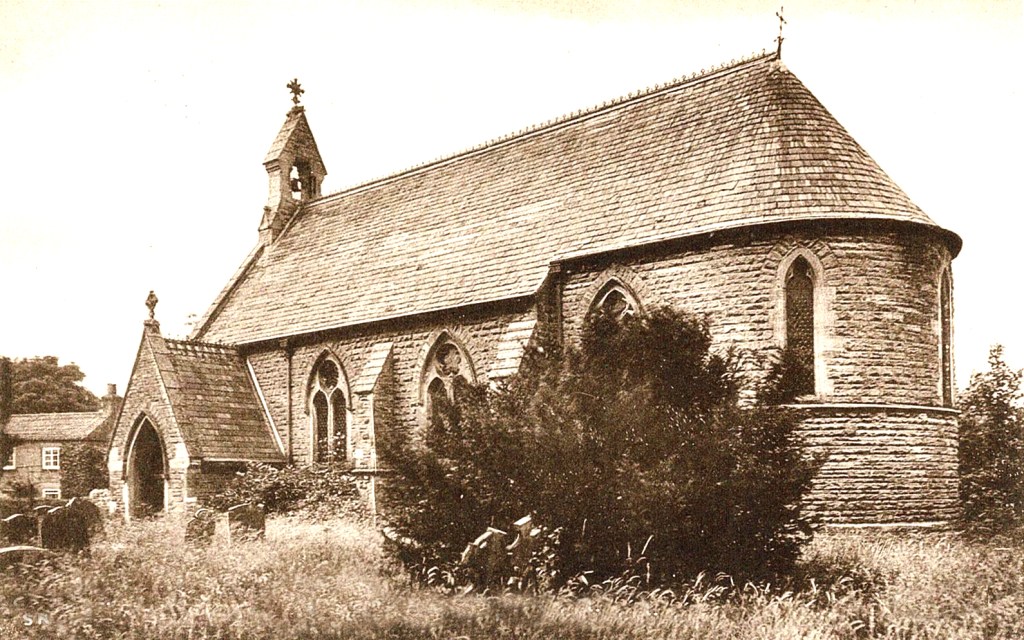
I have called this story A Chapter of Horrors, with good reason. The very thought of that poor woman – just 22 years old – having suffered horrific injuries but  then having to go through the trauma of childbirth just hours afterwards is truly appalling. She was buried in South Reston Graveyard on 28th May. The church of St Edith has long since been demolished.It is pictured below. (photo courtesy of Louth Museum)

The Hay family has a corner of the graveyard (below), and members of the family were interred as recently as the 1960s, but the gravestones are terribly weathered. I could not locate Louisa’s grave, but we can assume that she lies among her family. One can only hope that she found more peace in heaven than she did on that terrible night in May 1890.

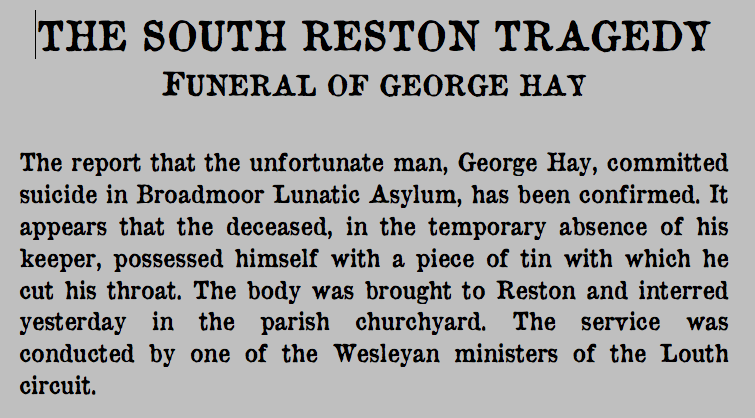
It seems that George Hay had suspected Louisa of having an affair with a young man from a nearby village. This seems to be another of his delusions, because the young man, named Banks – and members of his family – appeared at Lincoln Assizes in July 1980 to testify that there was nothing between the pair. At the Assizes trial he was, obviously, found guilty of a double murder, but there was no doubt in the minds of the judge and the jury that George Hay was insane. He was sentenced to be detained “at Her Majesty’s pleasure.” There was to be one final, brutal twist to this terrible saga. On Thursday 14th August 1890, the Hull Daily Mail reported:

A CHAPTER OF HORRORS . . . A tragedy from 1890 (2)

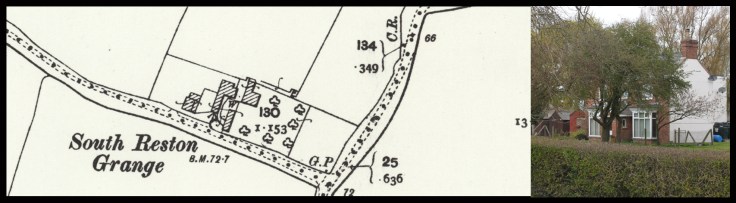
SO FAR – South Reston, May 1890. George Hay lives at The Grange with his wife, two young chidren, and his brother-in-law. Half a mile or so to the north-east is South Reston Hall (below), where George’s parents and siblings live. In the early hours of Saturday 24th May, George has turned up at the Hall, soaked to the skin and covered in mud. He confesses that he has tried to commit suicide in a little river in nearby Withern. He is put to bed, but then requests that someone should go to his home to see how his family are. The Grange sat near the junction of Willoughby Lane and Scrub Lane. The house presently on the site is called Prosperity Farm. Locals may be able to confirm if it is the same house. I suspect it is, but much altered. (see the image at the foot of the page)

Hall today

George Hay’s mother and his sister Lizzie had a servant put a pony between the shafts of their trap, and set off to drive the mile and a half to The Grange. They stopped in the Grange yard, and Lizzie went to the door of the house. She tried to open the door, but found resistance. When she peered through the gap she was horrified to see a woman on her knees, with bloody hands placed against the door. Lizzie’s first reaction was to tell her mother to come no closer. Seeing some men – farm labourers – standing nearby, she summoned them and asked them to force the door open. Two of the men, John Crow and John Cross did as they were told, but recoiled in horror at what lay in front of them. The woman on her knees, still alive, was Louisa Hay, George’s wife. Lizzie Hay, in an understandable state of shock, ordered the men to go into the house but they wouldn’t. Still unaware of the full horror that lay beyond the back door of The Grange, Lizzie and her mother got back on the trap, determined to go and fetch medical help from the nearest doctor.

Just a few hundred yards down the road, however, Lizzie Hay had a change of heart. She said:
“Mother, I have made a mistake.I ought to have gone into the house with those men.”
She turned the trap round and made back for the yard of The Grange, where she stepped down from the trap once more. Along with the two men, and a Mrs Scupham who had arrived on the scene, she pushed her way into the house. Louisa Hay had moved away from the door, and was sitting against the wall with one hand clasped around her knee. The state Louisa was in almost defied words, but at a subsequent court hearing, Dr William Prawford Palmer, of Withern, described what he saw:

wounds

It was later discovered that the poor woman had been crawling about on the floor of her kitchen, horribly wounded and in excruciating pain – but unable to cry out, due to her wounds – since nine-thirty the previous evening. Not only that, but she had been keeping company with a corpse – that of her brother Thomas. The farm men and Lizzie Hay lifted Louisa onto the sofa, but then they saw, slumped at the feet of a chair, the body of Thomas Hay. His injuries were equally horrific as those of his sister, but at least death had claimed him quickly. Part of his skull had been blown away, shotgun pellets were found in other parts of his body, and it seemed as though he had been sitting in the chair taking off his boots when the shots were fired.

This is a tale from the depths of hell, but it was to get worse. Unbelievably, upstairs and above the carnage, the two children of Louisa and George Hay were discovered – thankfully unharmed and seemingly oblivious of the nightmare that had just occurred. They were packed off to stay with relations near Brigg.

The police were called from Alford, and George Hay was arrested and taken into custody. The doctors desperately tried to save Louisa Hay, and when George Hay was brought before magistrates the next day, she was still clinging to life.


IN PART THREE – TRIAL, RETRIBUTION – AND THREE MORE DEATHS

A CHAPTER OF HORRORS . . . A tragedy from 1890 (1)


ACOH header1I have been researching and writing
about true crimes for many years now and, by their very nature, the events I have described rarely make easy reading. On display is a journey through the very worst of human character, from weakness, via jealousy and insanity, through to pure and simple evil. I can say, however, that the story I am about to tell has been hard to write. It contains descriptions of madness and physical violence which may not be to everyone’s taste, so, if you are squeamish, then maybe this is not for you. Every word of this story is taken from contemporary newspaper reports and transcriptions from a criminal trial that horrified readers in the early summer of 1890.
We are not quite in Louth, but just a few miles south east, in the gentle landscape on the edge of The Wolds, and bordering the former marshland which stretches out to the coastal settlements of Mablethorpe, Trusthorpe and Sutton. South Reston is a modest village now, as it was then. In 1870-72, John Marius Wilson’s Imperial Gazetteer of England and Wales described South Reston like this:

RESTON (South), a parish, with a village, in Louth district, Lincoln; 2 miles N N E of Authorpe railway station, and 6 S E of Louth. Post-town, Louth. Acres, 710. Real property, £1, 312. Pop., 235. Houses, 51. The property is divided among a few. S. R. Hall is the seat of W. Hay, Esq. There is a brick and tile manufactory. The living is a rectory in the diocese of Lincoln. Value, £180. Patron, the Duchy of Lancaster. The church was rebuilt in 1865; and is in the early English style. There are chapels for Wesleyans and Free Methodists, a parochial school, and charities £7.

It is the family of William Hay of South Reston Hall (pictured below) that concerns us in this story. The Hays were a landed family spread across the county as far north as Scunthorpe and Brigg. The Hall itself is on an ancient site that dates back to pre-Domesday times. Strangely, in the 1881 census, the inhabitants of the Hall are listed as Lizzie Hay, aged 20, as Head of House, with her younger siblings Walter and Mary. You will notice the name of John Crow living close by. He was to be a witness to the dreadful events about to be described. In 1891, a few months after the dreadful crime about to be described, the Hay family seem to have been all together again.

Although it is not illegal, we are, nowadays, justifiably squeamish about first cousin marriages. Where it does occur – mostly in immigrant families – it is a proven cause of child deformities and mental health problems. The Hay family, however in the second half of the 19th century, had no qualms. George Dawson Hay, elder son of William and Elizabeth had married his first cousin, Louisa Hay. The 1881 census has her, aged 14, living with her farming family in Humberston, just south of Cleethorpes. Also named is Thomas W Hay, aged 13.

George Hay had been gifted a house and land on which to farm. South Reston Grange sits near the junction of Willoughby Lane and Scrub Lane, a little way south west of the village. The household comprised George Dawson Hay junior, just a year old, his two year-old sister Ethel, and – strangely – Louisa’s brother, Thomas.

It seems that mental illness was not uncommon in the Hay family. A Thomas Hay, of Yarborough, had died eighteen months earlier in Bracebridge Asylum, Lincoln; George Hay’s older brother, William, had died at the Hall in 1886, while his younger brother, Sidney, was undergoing treatment for what was termed ‘melancholia’. George Hay himself had spent some time in New Zealand, and had confessed to trying to do away with himself there.

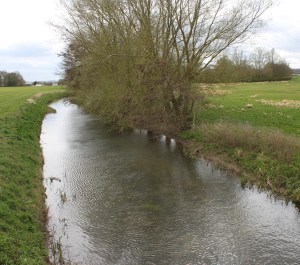
On the early morning of 24th May, the staff of South Reston Hall were astonished to see George Hay enter the building. He had apparently been sleeping in a stable. but his clothes were soaking wet, and he was covered in mud from head to foot. His mother came to his aid, and he told her that he had been to the nearby village of Withern, where he had tried to drown himself in the Great Eau (pictured left), a narrow but swift flowing stream which eventually dissipates into the marshes near Saltfleet. Mrs Hay packed him off to bed with a glass of whisky, realising that this was the latest manifestation of mental troubles of which George had been complaining for some weeks. When she went up to see him, a little later that morning, he was still awake, but barely coherent. He asked her just one thing:

“I think you had better go down to The Grange, and see how they are getting on there.”

A simple request from a concerned husband? What the visitors to The Grange found would scar them for the rest of their lives.

IN PART TWO – A TRUE CHAPTER OF HORRORS

THE CUSTARD CORPSES . . . Between the covers

TCC header
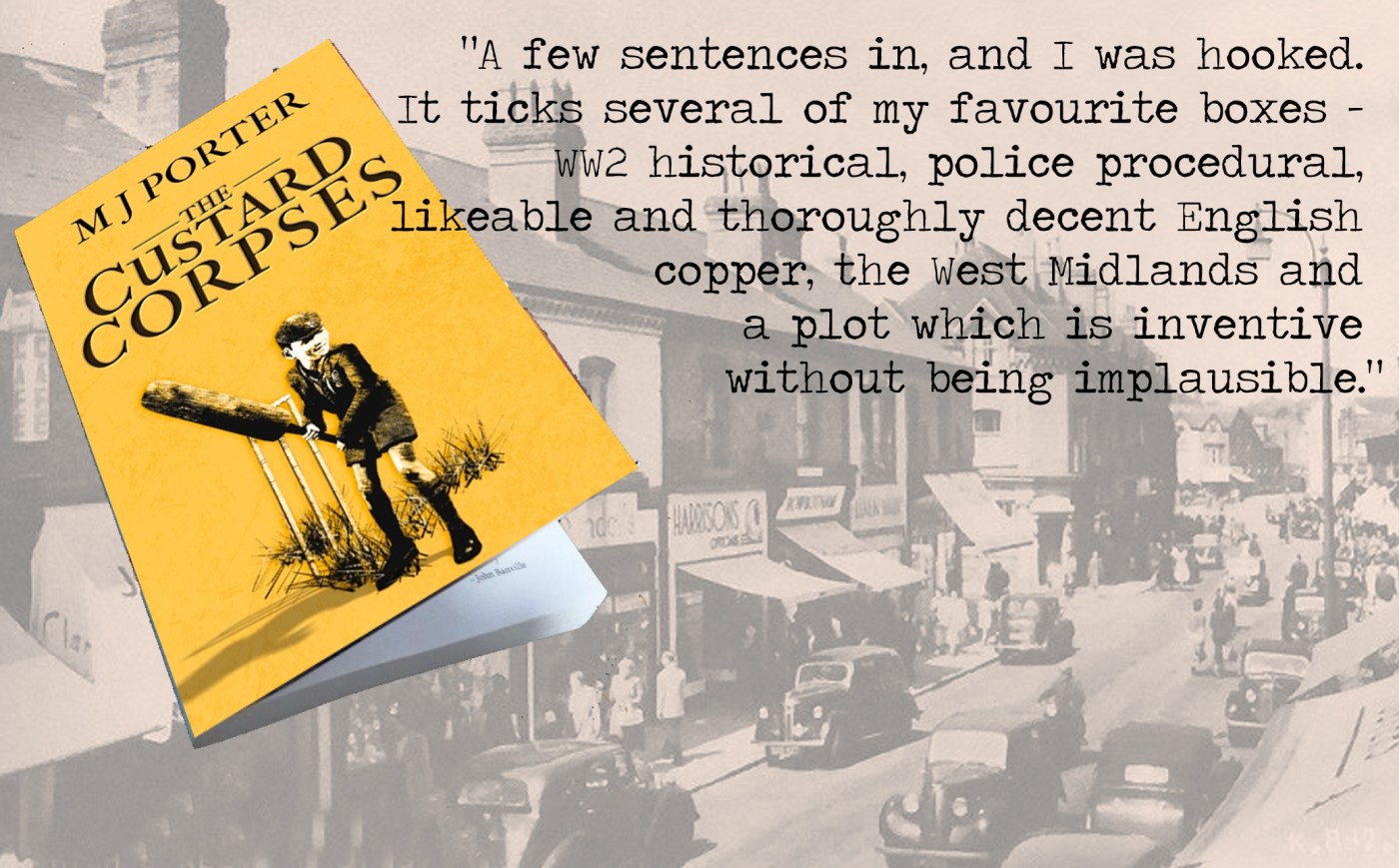
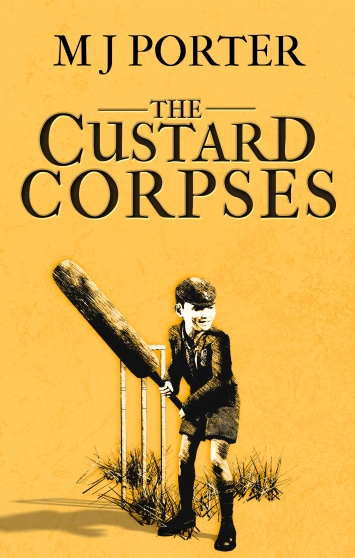
Sometimes a book comes along with very little by way of advanced publicity or hype, and it hits the sweet spot right away. One such is The Custard Corpses by MJ Porter. Strangely-named it might be but the reason for the title becomes more obvious - and appropriate - the more one reads. A few sentences in, and I was hooked. It ticks several of my favourite boxes - WW2 historical, police procedural, likeable and thoroughly decent English copper, the West Midlands and a plot which is inventive without being implausible.

We are in the Birmingham district of Erdington. It is 1943 and Great War veteran Sam Mason is a uniformed Chief Inspector at the local nick. He is not yet on the downward slope heading for retirement, but he is like Tennyson's Ulysses:

“Tho’ much is taken, much abides; and tho’
We are not now that strength which in old days
Moved earth and heaven, that which we are, we are;
One equal temper of heroic hearts,
Made weak by time and fate, but strong in will
To strive, to seek, to find, and not to yield.”

Screen Shot 2021-04-05 at 19.39.14Mason is a man given to reflection, and a case from his early career still troubles him. On 30th September 1923, a boy’s body was found near the local church hall. Robert McFarlane had been missing for three days, his widowed mother frantic with anxiety. Mason remembers the corpse vividly. It was almost as if the lad was just sleeping. The cause of death? Totally improbably the boy drowned. But where? And why was his body so artfully posed, waiting to be found?


Mason and his then boss, Chief Inspector Fullerton, had never solved the crime, and Mrs McFarlane died without knowing the whys and wherefores of her son’s death. When  Mason learns that there had been a similar case, a couple of years later, he is close to despair that it hadn’t come to light earlier. He realises that the fault was theirs. They hadn’t circulated the strange details of Robert’s death as widely as they should.

Attempting to make amends, albeit two decades too late, he has a circular drawn up, and sent to the police forces across England, Scotland and Wales. To his dismay, a succession of unsolved killings come to light; the dead youngsters are of different ages, but there is one bizarre common factor – the bodies have been posed as if in some kind of sporting action. Mason is given permission to devote his energies to this macabre series of killings, and with the resourceful Constable O’Rourke, he sets up an incident room, and begins to receive case notes and crime scene photographs from places as far apart as Inverness, Weston, Conway and Berwick.

Picture_Post_21-Sep-40One evening, after he has taken images and documents home with him, his wife Annie makes a startling discovery. Like nearly two million other readers across the country, she is a great fan of the magazine Picture Post, and while thumbing through a recent copy she notices that the sporting youngster drawn in an advertisement for a well-known brand of custard is posed in a way that has a chilling resemblance to the way one of the victims that Sam is investigating.

At this point, the investigation sprouts wings and takes flight and, in a journey that takes them across England, Mason and O’Rourke eventually uncover a tale of horror and obsession that chills their blood. MJ Porter has written a  series of historical and fantasy novels, mostly set in what we call The Dark Ages – Vikings, Goths and those sorts of chaps. That doesn’t tend to be ‘my thing’ but, my goodness, Porter is a good writer. The Custard Corpses goes straight onto my early shortlist for Book of The Year, and I do hope that he can tear himself away from his tales of ravens, rape, swords and general pillage to bring us another novel featuring Sam Mason. The Custard Corpses is out now.

THE WHISPERS . . . Between the covers

the whispers017

We are in a small town called Clearwater on the coast of England. Time – the present day, just before Christmas. Grace Goodwin, a young woman in her early thirties lives alone with her young daughter Matilda, as her husband is currently working abroad. Grace is a native of the town, but in her teens she was taken to Australia by her parents. Now, she has returned to England, and has sought out the company of her best school friend, Anna Robinson, who lives in the town with husband Ben and their child, Ethan. One evening, Anna invites Grace to join her – and her more recent friends, fellow school-gate-mums Nancy, Rachel and Caitlyn – for a girls’ night out in a local pub. It doesn’t go well for Grace. She feels cold-shouldered, and leaves. The next day she is told that Anna didn’t return home the previous evening.

Screen Shot 2021-03-23 at 20.24.37After a few days, Anna does return, and her reason for leaving provides one of the many clever twists in the plot . What follows is a complex – but intriguing – narrative, concerning an event which happened years earlier, when Grace and Anna were teenagers. Another girl from their class – the very cool and rebellious Heather – was found dead at the foot of one of Clearwater’s imposing cliff faces. Who was with her that night? Who knows the truth now, and who is prepared to reveal it?

The main stresses that begin to cause fractures in the the relationships between the characters are friendship, jealousy and control. I am sure it happens between male friends, but perhaps not with the intensity of the bond between teenage girls. If those bonds are retained – and tested –  when the girls become adults, then sparks can fly, as they seriously do in this book. This is tense and nervy stuff which explores the dark world of childhood friendships, lies – and death, as did Heidi Perks’s previous novel Come Back For Me (click to read the review).

The escalating tension between Anna and Grace, and – for us – the uncertainty of what actually did happen on that fateful evening back in 1997, makes for an unnerving read. There is a kind of catharsis at the conclusion of this story, and it brings to mind a phrase we were encouraged to sneak into our ‘A’ level essays on Milton’s Samson Agonistes – “all passion spent.” Suffice to say, for Grace and Anna the story pretty much ends where it began. Without over-egging the pudding, I can say that Heidi Perks (below) has written something which bears all the hallmarks of a classical tragedy, in that people who are not inherently evil, but have serious character flaws, pay an extreme price for their faults.


Heidi Perks

The author gives us mainly the viewpoints of Anna and Grace, but also uses the mothers outside the primary school as a kind of Greek Chorus filling in parts of the action with their own observations.  Perks also has great fun with the ‘unreliable narrator’ trope and keeps the reader guessing right until the end of the novel. The Whispers is published by Century and is out now as a Kindle. It will be available in paperback from 15th April.

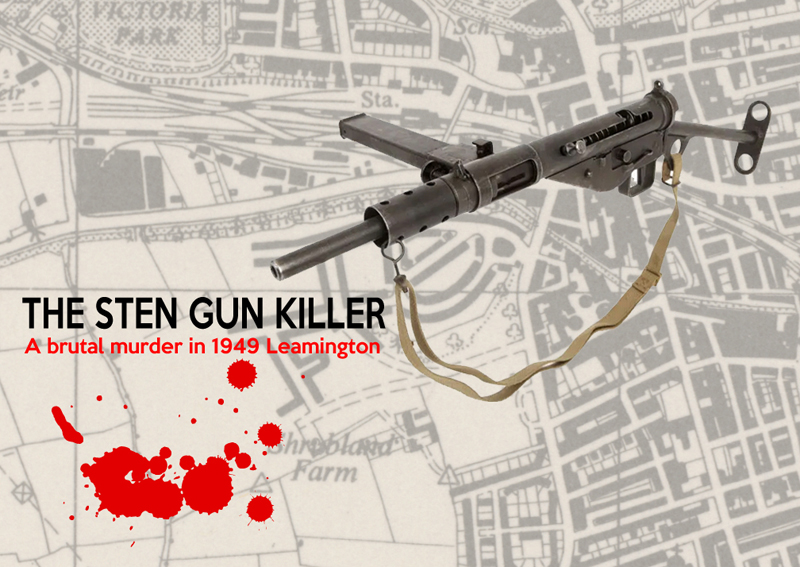
THE STEN GUN KILLER . . . A brutal murder in 1949 Leamington (2)

Towle header

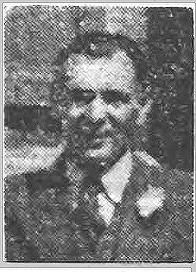
SO FAR – It is January 1949. Two men, Edward Sullivan (49) and Gordon Towle (19) have been working on a Leamington building site near what is now Westlea Road. There has been friction between them, with Great War veteran Sullivan (left) apparently sneering at Towle because the latter had not done his bit in the armed forces.

The events of Tuesday 25th January 1949 were to shock and mesmerise local people. At Leamington Police Station on the High Street it was 10.20am, and senior officers Inspector Green and Superintendent Gardner were leaving to carry out a routine inspection, when a burly, broad-shouldered young man entered the station. He was carrying what appeared to be a Sten gun. He said, quite calmly and without drama:
“I have shot a man. I am ill”
Green said, with some incredulity:
“Do you know what you are saying?”
The young man, who identified himself as Gordon Towle, handed the Inspector the Sten gun, along with an empty magazine and a magazine loaded with live 9mm bullets, and said:
“He has been pulling my leg and something came Into my head. I do silly things when I am funny like that. I think I have killed him. He is on the Bury Road estate; go to him. My head went funny and I shot him. I was not in the Army and they got on to me”

Towle was placed in a cell, and the officers took a police car and soon arrived at the building site. There lying in a pool of blood was the body of a man, later identified as Edward Sullivan. Around his body were found no fewer than 24 empty 9 mm. Sten gun cartridge cases – a full magazine holds 28 – and digging operations brought to light more bullets. Some were also found embedded in a nearby timber stack. When the police surgeon Dr. D. F. Lisle Croft arrived and examined the body, he was only able pronounce life extinct.

Events now moved on at pace. Chief Superintendent Alec Spooner, Head of Warwickshire CID was called, but that was a formality; there was little or no detective work required here. The first member of the Sullivan family to be told of the tragedy was son John, home on leave from the army. He had the melancholy task of telling his mother, Katherine Margaret Sullivan, that she was a widow. Above right, Towle is pictured being taken to the preliminary magistrate’s hearing.

In a newspaper report of one of Towle’s appearance before the magistrates, the journalist certainly exercised his imagination. Under a lurid headline headline, he described the scene thus:

“An unusually strong winter sun shone through the stained-glass windows of the Town Hall Council Chamber Wednesday, etching on the floor pattern in deep scarlet and blue. As the minutes went by, the shadow moved slowly and silently across the linoleum, and equally inexorably, quietly and persuasively, Mr. J. F. Claxton (for the Director of Public Prosecutions) outlined the history of the Kingsway Estate shooting on January 25th. Beside policeman, sat 19-year-old Gordon Towle, husband of less than six months, charged with murder. According a statement alleged have been made by him, Towle could no longer stand the taunts of a workmate, and so produced a Sten gun and fired two – or three, for the number is In doubt  – bursts into the body of Edward Sullivan (49), Irishman, 6, Swadling Street, Leamington.

A full public gallery heard that Sullivan was killed outright by the ten bullets which entered his body in every vital part. The proceedings were intently listened by his widow and daughter – both in deep mourning – and his son, whose Army battle dress bore, the left arm. a narrow black band. In the afternoon, when only three of the fourteen called to give evidence remained to be heard, the Court had to move into an ante-room to make way for the tea organised by the Church England Zenana Missionary Society.

Only three members of the public, the widow, the daughter and one other lady, remained. Towle, dressed a sports coat and grey flannels, with an open necked cricket shirt, appeared to take a keen interest in all that was being said, but it was noticeable that at the end of the hearing, he blinked and then screwed face as if trying desperately hard to understand what was being said to him. He was asked if he had anything to say or any witnesses to call, and replied, quite firmly “No. sir.” — the only time he spoke throughout the hearing. But as he went to regain his seat, he stumbled little though about to fall. He sat down and heard the formality of his committal for trial at Warwick Assizes”

LynskeyGordon Towle’s time in front of Mr Justice Lynskey (left) at the March Assizes in Warwick was short – if far from sweet. Doctors gave evidence that he was quite mad, and he was sentenced to spend the rest of his days in a secure mental unit. The most puzzling matter for me was how Towle came to in possession of a Sten gun. He told the court that he had simply “pinched it” from the local drill hall, (probably the one in Clarendon Terrace) and stole the ammunition – police later found hundreds of live rounds in his house – from “an aerodrome”.

A postscript, which may bring a touch of humour to an otherwise dark tale. I can vouch for the inventive ways Army quartermasters had of “balancing the books.” regarding missing firearms. Back in the day, I taught at a public school in Cambridgeshire. The school Cadet Corps was being wound up, and an old sweat arrived from Waterbeach barracks to take an inventory of the firearms. To his dismay, he discovered that the armoury held one too many Lee Enfield rifles. This sent him into a lather, as it was apparently simple to account for missing guns on an inventory. They could just be written off as damaged or stripped for parts. But one too many? This was serious, and could only be remedied by a couple of squaddies rowing out in a boat one dark night on a local gravel pit, and dropping the offending item over the side, never to be seen again.

FOR MORE LEAMINGTON, WARWICK & DISTRICT
TRUE CRIME STORIES, CLICK HERE.

Blog at WordPress.com.

Up ↑