

Before I became a reviewer, and earned (I hope) the privilege of being sent books and .mobi files by publishers, I had been a lifetime library user. Crime Fiction was my first and last love, and in my regular Saturday afternoon trawl through the shelves, there were certain authors whose names I always sought out. In no particular order, these would include Jim Kelly, Phil Rickman, John Connolly, John Sandford, Val McDermid, Mark Billingham, Jonathan Kellerman, James Lee Burke, Graham Hurley, Christopher Fowler – and Graham Ison.
The Graham Ison books were slimmish-volumes, usually the Brock and Poole series, but my favourites were always the Hardcastle books. Ernie Hardcastle was a London copper in and around the years of The Great War. He could come over brusque in his dealings, but other might use the word ‘avuncular’. He distrusted innovations such as the telephone, but had a true copper’s nose for villains. A couple of his books are reviewed here, but inevitably, ‘time, like an ever-rolling stream, bears all its sons away..‘ Thankfully, in Hardcastle’s Secret Agent, Ernie is still with us, but long since retired, and the Hardcastle concerned is his son Walter, now a rising star in the Metropolitan Police.
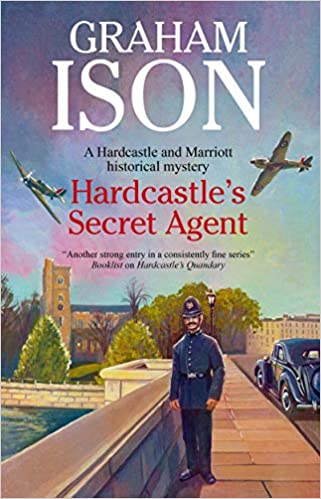 We are, as ever, in London, but it is 1940. The Phony War is over, and the Luftwaffe are targetting industrial sites they believe to be involved in making parts for military aircraft. When several important employees of one such factory are burgled – clearly by an expert – but with nothing other than trinkets stolen, Hardcastle believes he may be on the track of a German spy on the look-out for plans, blueprints or important military information. Hardcastle has to deal with The Special Branch, but finds them about as co-operative as they were with his father a couple of decades earlier. This has a certain tinge of irony, as part of the author’s distinguished police career was spent as a Special Branch Operative.
The search for the German spy withers on the branch, but Hardcastle has other fish to fry. A prostitute – or at least, a young woman who was free with her favours – has been found beaten to death, and the hunt for her killer takes Hardcastle into military quarters.
Eventually, Walter Hardcastle gets both of his men, and on the way we have a vividly recreated world of an England struggling to come to grips with a new world war. Not one that is being fought far away on some foreign field, but one which is brought to people’s very hearths and homes every single night. Hardcastle’s Secret Agent is published by Severn House/Canongate Books and will be out on 1st May.
Sad to relate, Graham Ison died suddenly in late 2020 before he could complete this book. It was finished with the help of his son Roger. Graham Ison was prolific, certainly, and critics might argue that he stuck to a reliable formula in each of his series, and never ventured into unfamiliar territory. Neither was he a darling of the crime fiction festival circuit, but I suspect after decades working as a policeman that never bothered him. What he was, however, was a reliable name for readers who bought his books and – importantly – library borrowers, who knew that they could rely on him for a story well told, and if his words took them into familiar territory, then that was nothing for either reader or writer to be ashamed about.



 Enough of such morbid musings. There are books to look at! Leona Deakin’s character Dr Augusta Bloom first appeared in
  Vera Kurian’s book, according to the publicity, couldn’t be more different and, if I can be permitted to invent a triple-barreled genre, sounds as if it’s domestic-psycho-noir. Kurian, who is based in Washington DC, has penned a tale of a first year university student named Chloe. The blurb is very effective:

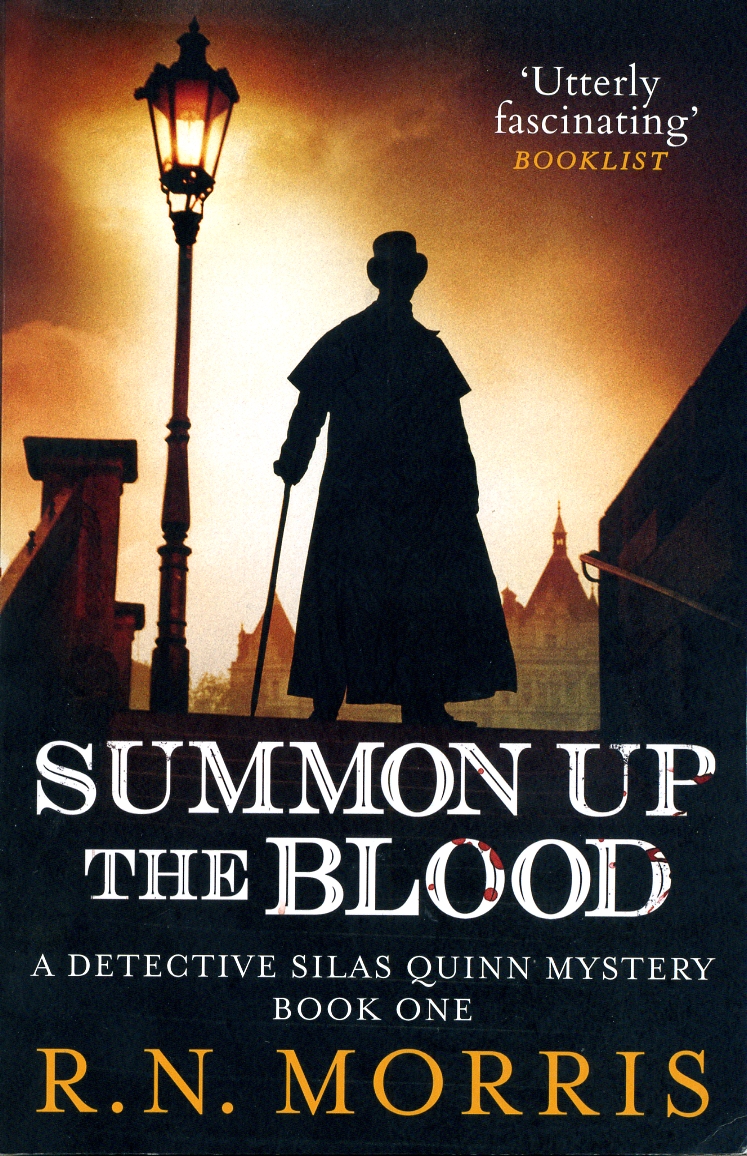 When a rent boy is found dead, his throat cut from ear to ear, there is initially little interest by the police, as the lad is just assumed to have paid the price for being in a risky line of business, but when the post mortem reveals that he has had every drop of blood drained from his body, Quinn is summoned and told to investigate. After a droll episode where Quinn decides to pose as a man smitten by “the love that dare not speak its name”, and blunders around in a dodgy bookshop, but he does find out that the dead youngster was called Jimmy, and had links to a ‘gentleman’s club’ where he would find men appreciative of his talents.
 Thankfully, Morris makes no attempt to get in the politics of homosexuality and the law: his characters simply inhabit the world in which he puts them, and their thoughts, words and deeds resonate authentically. In 1914, remember, the trial of Oscar Wilde and the Cleveland Street Scandal were still part of folk memory. It’s an astonishing thought that had Morris been writing about similar murders, fifty years later in 1964, virtually nothing would have changed – think of the scandals involving such ‘big names’ as Tom Driberg, Robert Boothby and Ronnie Kray, and how their lives have been written up by such novelists as Jake Arnott, John Lawton and James Barlow.

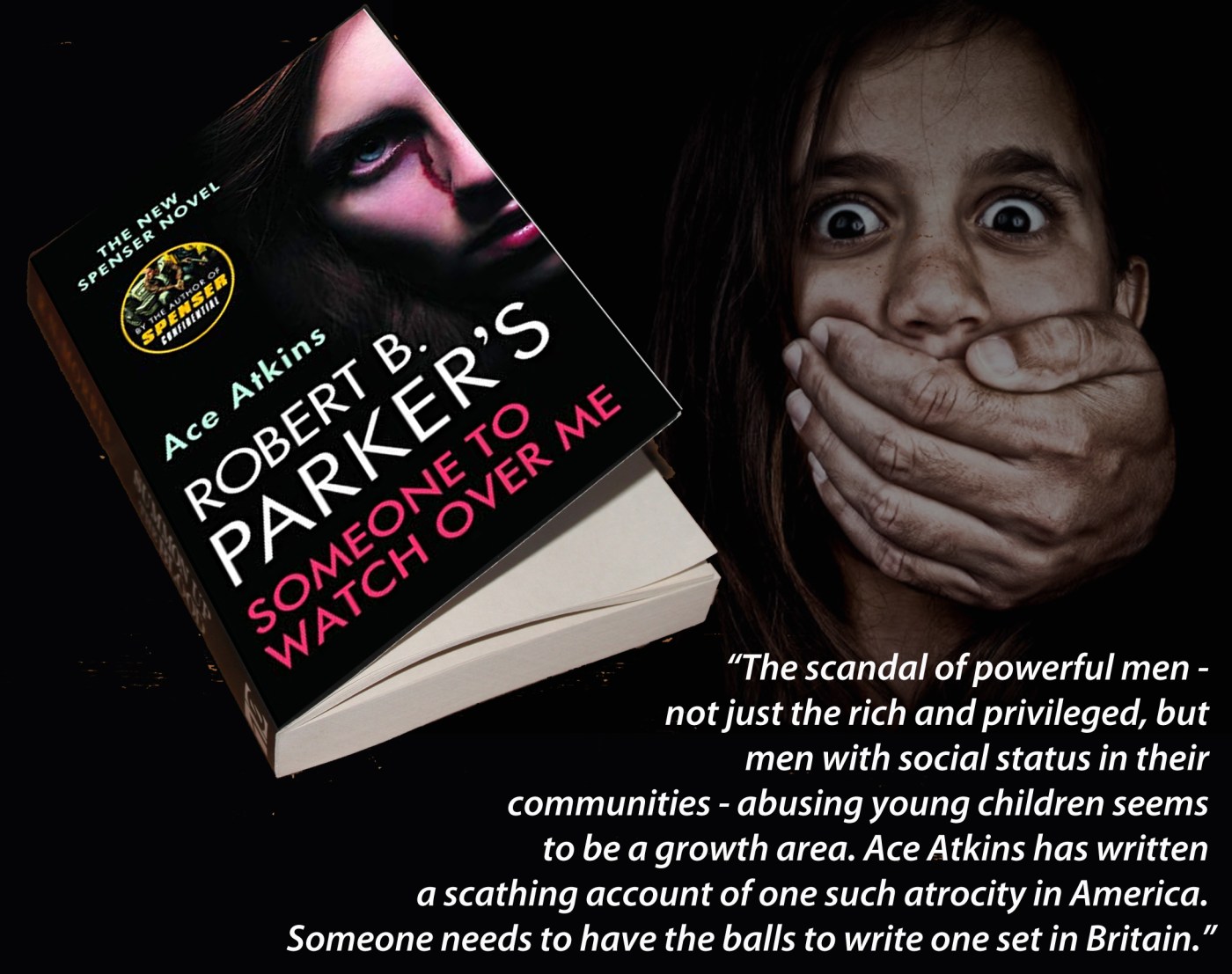

 The Steiners are also well-connected. Politicians great and small, financiers, socialites, fund-raisers – mostly anyone who is anyone in Boston and further afield – all tip their hats to the Steiners. Neither does it hurt that the Steiners’ clout enables them to hire serious muscle from the criminal underworld and, as most of the child rape is conducted on a private island somewhere in the vicinity of the Bahamas, neither the Boston Police Department nor the FBI can do anything to intervene.

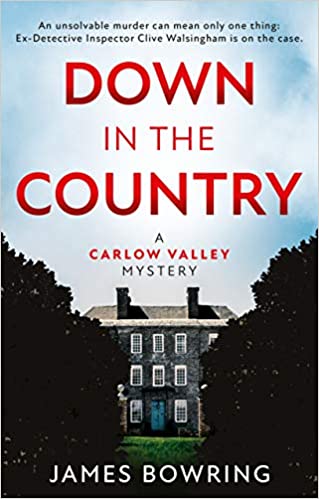 When a couple return to their home in rural England from their holiday in Italy (remember when we could do that?) their welcome home present is a dead body – a woman,strangled – in their garden. The local senior police officer has been badly injured in an accident, and Acting Inspector Beauregard is the man who has to step up and investigate the murder. Unfortunately, Beauregard is soon overwhelmed by the case. Help is at hand, however. A nearby luxury hotel is run by a former policeman, ex Detective Inspector Clive Walsingham. Walsingham is finding the relative sanity, safety and security of civilian life something of a bind, and he leaps at the chance to help Beauregard solve the crime. The dead woman, however, had “something of a past”, and was connected to a notoriously crooked local businessman. When the case is further complicated by the disappearance of the daughter of a local aristocrat, Walsingham has to use every ounce of his experience to bring the case to a close.
 Lewis was one of the band of brothers who served with distinction in both world wars. He joined the Royal Flying Corps in 1915, after lying about his age and learned to fly at Brooklands. In 1916, he flew with No. 3 Squadron and was awarded the MC for his actions during the Battle of the Somme. Flying over the battlefield on 1st July 1916 to report on British troop movements, he witnessed the blowing of the mines at La Boiselle. He later described the early morning scene in his book “Sagittarius Rising”. Pathfinders focuses on just one night in 1942, when each member of the crew of a Wellington bomber prepares for a raid in his own way, with his own hopes and fears.
 I have become a firm fan of RN Morris’s likeably eccentric London copper, Detective Silas Quinn. Click
 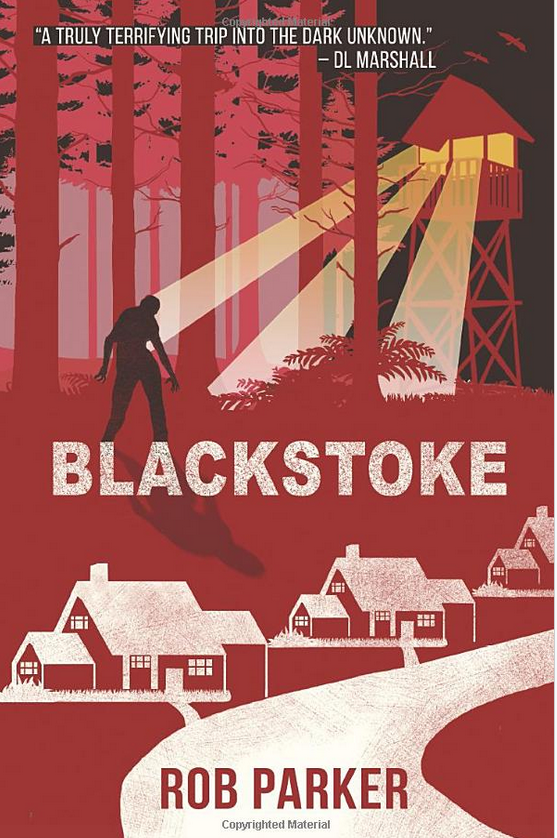 Parker is a gifted writer who injects energy and vitality into every paragraph he writes. He has an ongoing series of action thrillers (see below), but he obviously enjoys exploring the darker divisions between the world we inhabit and the nameless beings of the supernatural world. Blackstoke is a high-end housing development, but the land on which it has been built has a history all of its own, and is not a happy one. As the eager new owners move into their luxury homes, ancient and bloodstained memories, thought to be safely buried, begin to stir, and a nightmare becomes a reality for terrified families.
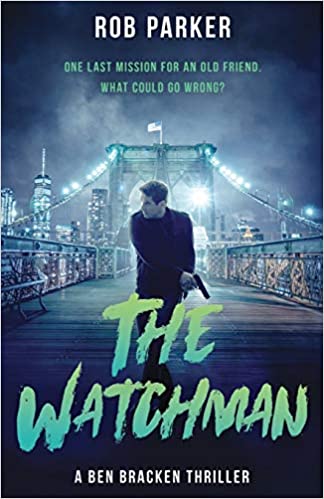 Ben Bracken is an ex-special forces operative who has done jail time for a crime he didn’t commit, has escaped from prison, and has lived a precarious life of aliases, assumed identities – and forever looking over his shoulder. Like all the best action heroes who try to avoid trouble, it usually finds him. The previous Ben Bracken books (click
 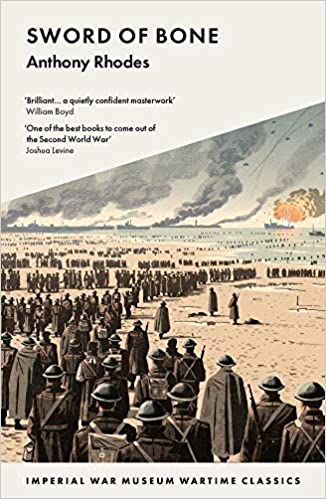 The author served in the British Army during World War II and was involved with retreat of the British Army from Dunkirk. Sword of Bone is his account of the evacuation, in a style that reminded reviewers of Evelyn Waugh’s Sword of Honour trilogy in its account of the minutiae of military life. After being promoted to captain he lectured in Canada and the United States, where he met and married a niece of Gustav Mahler. The marriage was short-lived and led to a nervous breakdown. He was invalided out of the Army in 1945. Dunkirk is a potent word, and is often evoked to conjure up images of pluck, resolution and indomitable spirit, but it was also a significant military defeat, with the BEF out manoeuvred by the German army.
 CD Steele’s debut thriller introduces us to former MI6 agent – and now private investigator – Joe Wilde. As he investigated the disappearance of a young and promising football star, his path crosses that of DI Carl Whatmore of the Met Police. As is ever the case when PIs and regular coppers meet, sparks fly, at least initially. The young footballer – Liam Devlin – seemed to have led a blameless life, but with the help of old MI6 buddy Mark Thompson, Wilde turns over a few stones, and what they see scuttling about spells problems for the investigators, the police – and Devlin’s worried mother Sally.

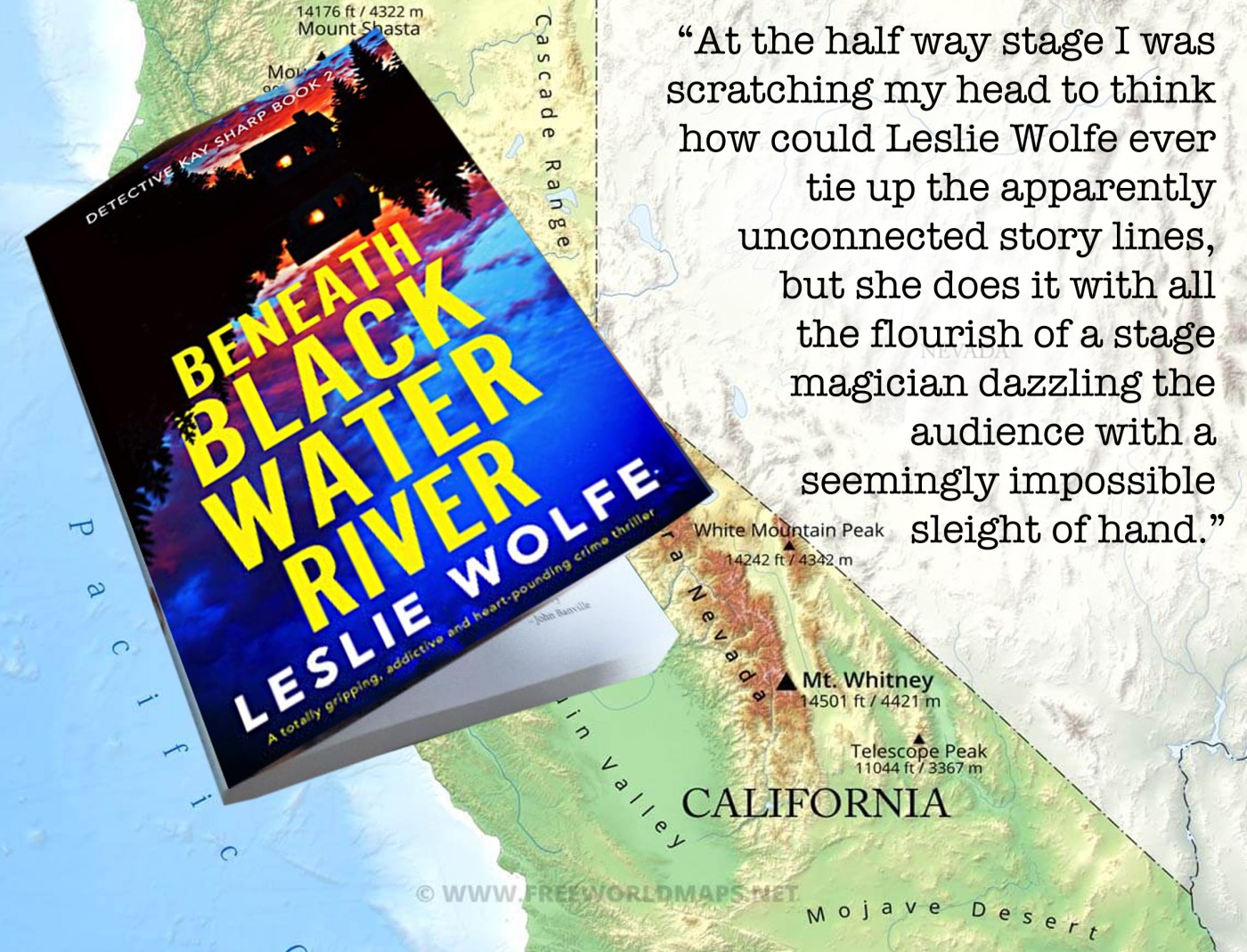

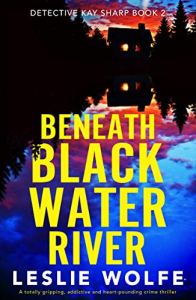 Leslie Wolfe has, then, set several hares running, to use the venerable English metaphor. The rogue cop – Herb Scott – is a truly nasty piece of work, and seems to have half the Sheriff’s Department under his thumb, as when his wife, Nicole, has reported her many beatings as a crime, nothing ever happens. The mis-identification of the murdered girl is a seemingly unsolvable mystery. Were there ever two girls, or are they one and the same? Does the conundrum stem from a complex inheritance issue involving the wealthy Caldwell family? The Caldwells are magnificently disfunctional, riven with bitterness and jealousy, and to spice matters up even more, there is the deadly whiff of incest in the air.


 fullybooked2017