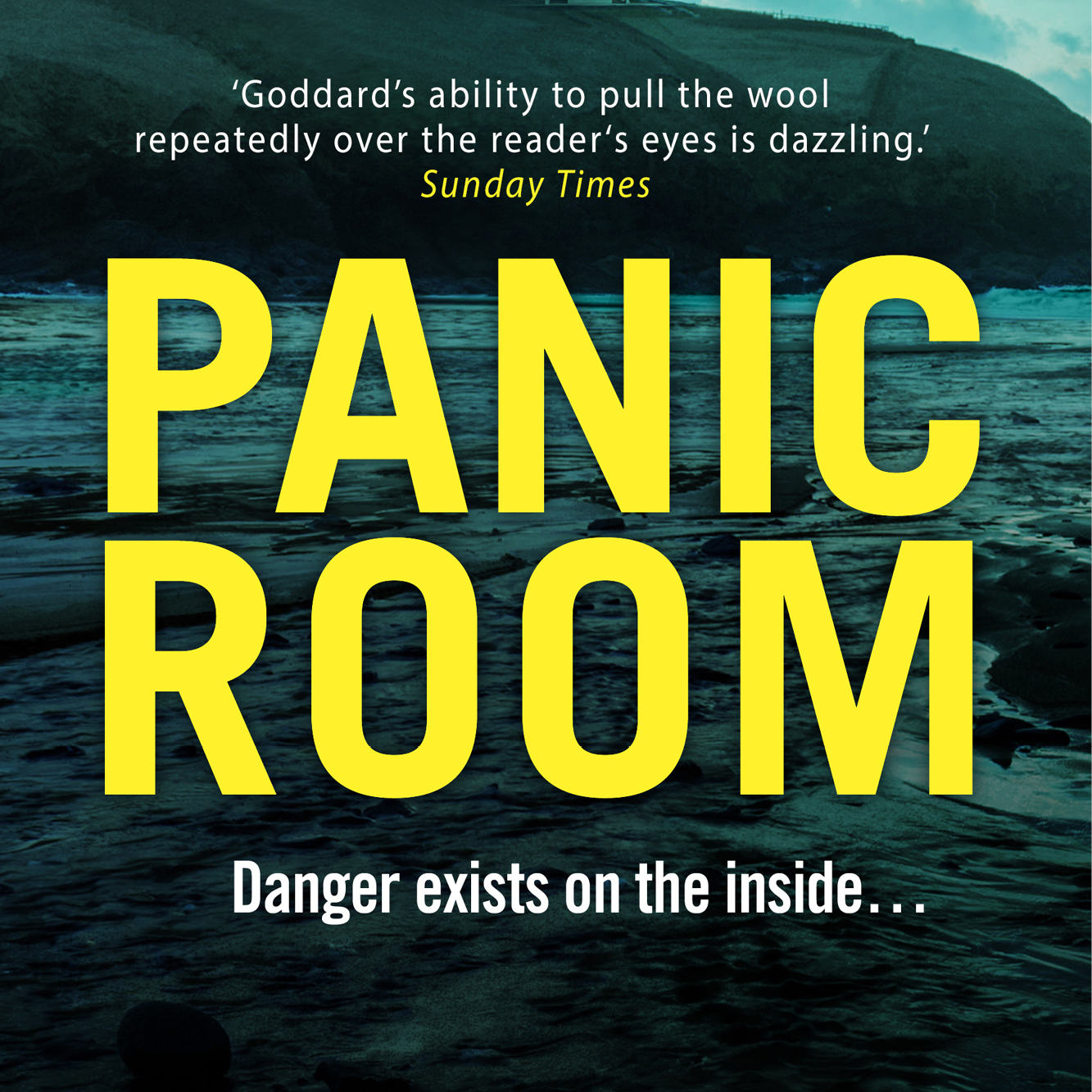
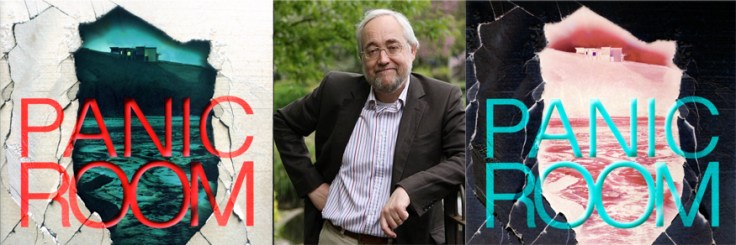
There are some professions that give the noble art of lying a bad name. Politicians, for starters, and then their brothers and sisters in arms, lawyers. Have you ever noticed that both jobs share the same skillset? But I digress. It could be argued that novelists are born liars, but at least we know that what they are telling us never actually happened. But the true monarchs of misinformation, the sovereigns of sophistry and the bards of bullshit are, surely, estate agents (for any American readers, that’s what we call realtors here in Britain.)
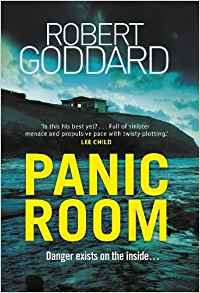 Don Challenor is what Monty Python might have called at ex-estate agent. He is no more. He has over-egged his last pudding and hyped up his last hovel. The prestigious London property sellers Mendez Chinnery have, as the saying goes, let him go. He has been, to quote the late lamented Alan Clark, economical with the actualité once too often. He is at that stage of life when it is becoming harder and harder to slip into a new job. Not only is he sans employment, but he is also sans wife. Fran has married again and is still lawyering away, but with a new husband and his children. Challenor is surprised, then, when she makes contact to offer him a cash in hand one-off job. It sounds simple. He is to travel down to Cornwall, assess an executive-style property, and present her with a glowing file which will attract well-heeled buyers like moths to a flame. The house, Wortalleth West, was formerly owned by millionaire businessman Jack Harkness, but it has now been signed over to his former wife as part of a divorce settlement.
Wortalleth West is a futuristic building perched on a promontory overlooking the ocean, but as Challenor goes about his business he notices that within the house, the measurements don’t add up, and he comes to the conclusion that there is a hidden room within the building. Not only that, he has encountered a mysterious young housekeeper who calls herself Blake. Most troubling, however, is the fact that his visit to Cornwall has attracted the attention of a follower, complete with sinister dark glasses and blacked-out four-by-four vehicle.
Challenor had hoped for a breezy few days doing what he does best – romancing about the many virtues of a property and preparing an irresistible package of enhanced photographs and wildly colourful descriptions of its charms. Instead, he realises that Jack Harkness is on the run from the authorities for financial fraud, and deep within Wortalleth West lies a secret which desperate men are prepared to kill for.
Fran has insisted that Challenor send Blake packing, but things are not so simple. Blake has discovered a secret which links the fugitive Harkness to both a young woman who simply disappeared off the face of the earth many years earlier, and a local woman who appears to have supernatural powers.
The tone of the novel gets progressively darker with every page turned. The bland and eternally optimistic Challenor finds himself totally out of his depth in a swirling intrigue of financial fraud, a biochemical time-bomb and international gangsters who are determined to solve the mystery of Wortalleth West’s panic room.
I have read – and very much enjoyed – Robert Goddard’s trilogy (pictured below) set in the turbulent aftermath of The Great War, and featuring former pilot James Maxted, but Panic Room is the first of Goddard’s standalone novels I have come across. It is published by Bantam Books and will be available on 22nd March.


 Six Strings is a quick thriller, an hour’s intrigue and entertainment. It features characters from the JJ Stoner / Killing Sisters series. You don’t need to have read any of the other stories in the series: you can start right here if you like.





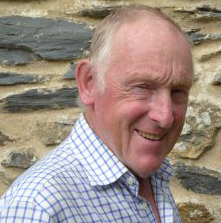 In this imaginative retelling of the now infamous events in the Bavarian capital in 1938, David Laws gives us a young present-day researcher trying to find out the truth about her grandfather’s part in a series of meetings which shaped history. What evidence did he have that Neville Chamberlain was being duped by Hitler? Why did he almost certainly give his life to prevent the deal going through? Emma Drake finds the answer not in dusty telegrams or carbon copied communiques, but in a present day forest just fifty miles from the site of the lasting testament to Nazi infamy –
 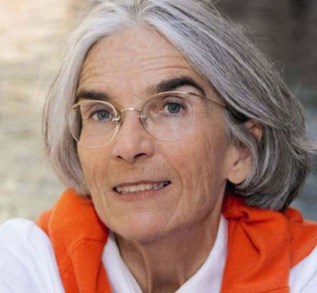 From the grim and silent testimony of a Polish forest to the bustling and utterly cosmopolitan world of Venice, courtesy of Donna Leon and her immensely popular Italian copper, Commissario Guido Brunetti. It seems barely credible that this is number twenty seven – no, that’s no misprint, 27 – in the series. While trying to discover the source of an information leak from within his own department, and investigating the savage attack on a family friend, Brunetti seeks solace – and a possible solution – from the pages of Sophocles’ Antigone. The Temptation of Forgiveness will be out on 5 April from William Heinemann/Cornerstone in
  Miller created quite a stir with his debut novel, Norwegian By Night, and now he aims to repeat the achievement with the story of Chief Inspector Sigrid Ødegård who has to leave her native Norway and travel to America to find the truth behind her brother’s disappearance. In addition to apparently disappearing off the face of the earth, he is implicated in the death of a prominent African-American academic. And this is 2008, election year, nerves are in shreds, and across the political world innocent mistakes are treated as mortal insults. In addition to plying her police officer skills, Sigrid Ødegård needs to learn a whole new set of behavioural responses if she is to get the the bottom of her brother’s disappearance. American By Day is published by Transworld/Doubleday and will be


 Thor scrapes by as a barman in a local pub, and has a rudimentary bedsit over the local post office, but his world is turned on its head when he discovers that someone is trying to kill him. Not without taking a knock or two, Thor survives, and concludes that the attempts on his life are connected to the efforts of developers to buy up his patch of the Loxley land to add to a much bigger chunk of Crook territory. The result will be thousands of newcomers to the area, complete with pressing demands for new schools, new infrastructure and new services.
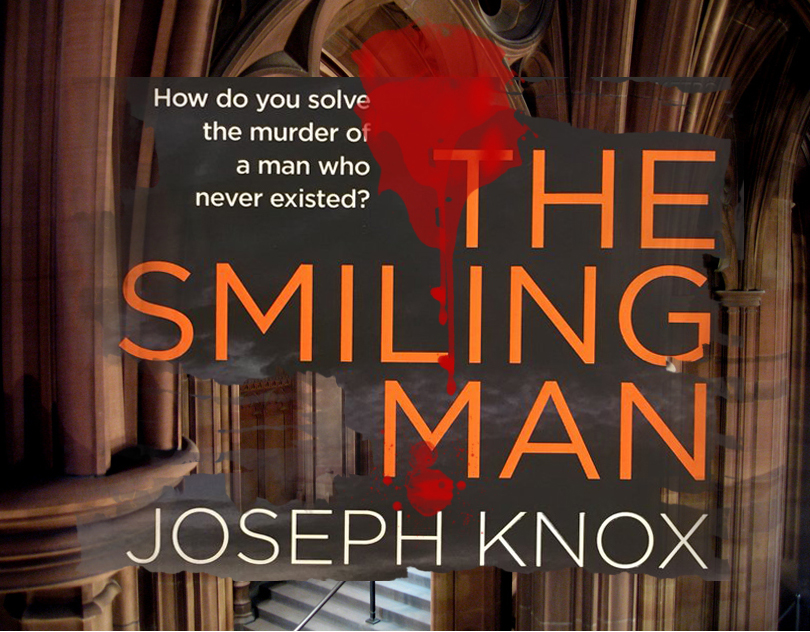

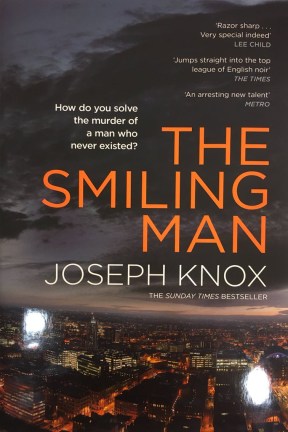 This is all too much like hard work for Sutcliffe, but despite warnings from his saturnine superior, Superintendent Parr, Waits digs deeper. He uncovers a labyrinthine series of connections between an absent solicitor doing his rich-white-man things among the bar girls of Thailand, an apparently gay businessman and his estranged wife, the corpse (now renamed The Smiling Man), and another hotel room, its floor saturated with pint after pint of human blood.
 This is little short of a modern masterpiece. You might imagine Joseph Knox (right) to be a weathered, life-weary cynical misanthrope, hunched in a corner of the pub, savouring a roll-up, rather like a latter day Derek Raymond, but anyone who has had the privilege of meeting Joseph will know that this is far from the case. He is well versed in the art of Noir, though, as he revealed when he spoke to us around the time that his first novel, Sirens, was published.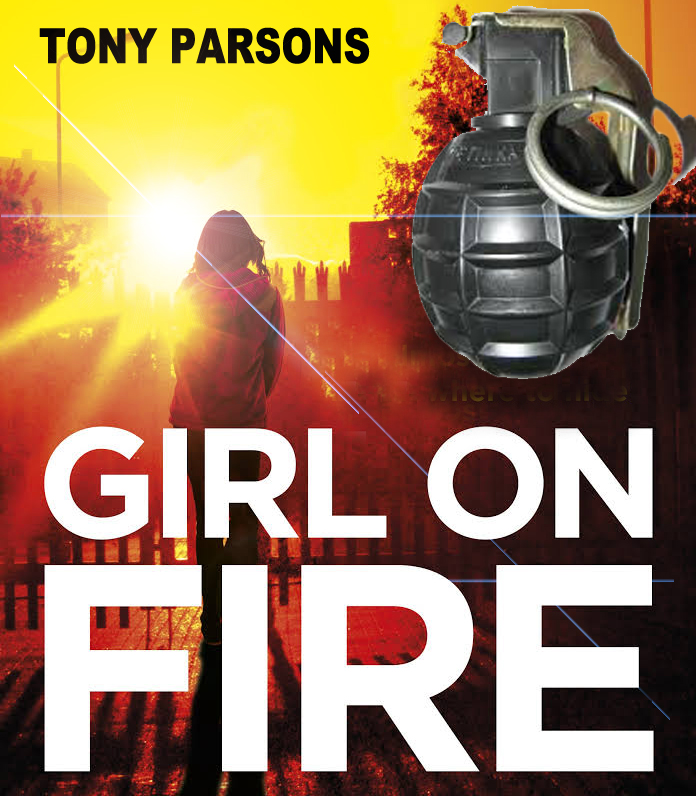
 Wolfe survives, and shoulders his way into the hit team which raids a nondescript terraced house in Borodino Street in East London. Their target? To capture two Pakistani brothers who have adapted simple commercially available drones into weapons of terror. Needless to say, the raid does not go according to plan. The lead police officer is shot dead at the outset, by one of the brothers disguised in a niqab. He is eventually shot dead, as is the remaining brother. But there are questions raised about the death of the latter. Was he shot as he was trying to surrender, or was he simply assassinated by a vengeful police marksman? And where are the two ex-Croatian hand grenades which informers say had been sold to the Khan brothers?
 The novel frequently holds you by the hand – no, make that puts you in an arm lock – and takes you to places you would rather not go. Parsons (right) is not someone with a well stocked cupboard full of tea lights, bunches of flowers and anodyne pleas for togetherness. He is not going to link arms with anyone and place these tributes at scenes of murder and carnage. Least of all will he, via Max Wolfe, be tweeting Je Suis Borodino Street any time soon. Some might say that for a humble DC, Max Wolfe certainly seems to get about a bit, but this is an irrelevant criticism, because what he thinks and sees are essential to the story. Wolfe is a a man of deep compassion and perception. Not only is his narrative reliable – it is painfully accurate and candid. Readers have, of course, the option of averting their gaze or thinking about gentle deaths in Cotswold villages, solved by avuncular local bobbies. Those who choose not to turn away from this brutal autopsy of Britain – and specifically London – in 2018 will not, I suggest, feel rejuvenated, life-enhanced or particularly optimistic by the end of this novel. Rather, they will follow the emotional journey of the celebrated wedding guest:
 The rider wears a helmet – great head protection, that’s why the law compels them. He wears a face mask, great precaution against suicidal 100mph wasps, and a perfect disguise. He wears leather, and body armour tough enough to slow a small calibre handgun round to the point where it hurts, but is unlikely to be fatal. All of that in full view of anyone who might be looking.


 fullybooked2017