
 July 1953. Queen Elizabeth was scarcely a month crowned, children were drinking National Health Service orange juice from their Coronation mugs, and Lindsay Hassett’s Australian cricketers, including the legends Richie Benaud, Ray Lindwall and Keith Miller, were preparing for the Third Test at Old Trafford. John Reginald Halliday Christie was sitting in the condemned cell at Pentonville, awaiting the hangman’s noose for multiple murders.
The new Elizabethan age was certainly experienced differently, depending on which part of society you lived in. Most large towns – and all cities – still had pockets of Victorian terraces, tenements and courtyards which would have been familiar to Charles Dickens. Diphtheria, tuberculosis and polio were only in retreat because of the energetic vaccination programme of the relatively new NHS.
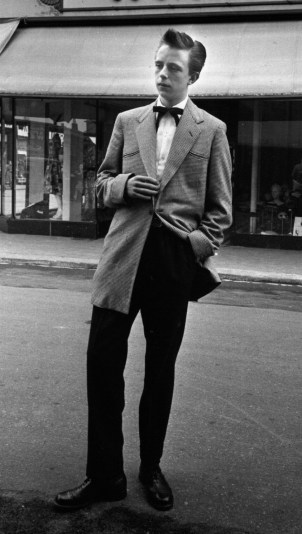 A social trend which had the middle-aged and elderly tut-tutting was the rise of the Teddy Boy. So called because their outfits – long coats with velvet collars, tight ‘drainpipe’ trousers and crepe-soled shoes – vaguely harked back to the Edwardian era. In truth, they were more influenced by the fledgling Rock ‘n’ Roll culture which was scandalising America. Every generation has a sub-culture which, at its most harmless is just clothes and hairstyles, but at its worst is just a cover for male violence. Teddy Boys, Mods, Rockers, Chavs, Gangstas – each generation reinvents itself, but each is depressingly the same – a cloak for male testosterone-fuelled rivalry and aggression.
On the evening of Thursday June 2nd, 1953, the green sward of South London’s Clapham Common was teeming with people – young and old – out to catch the last rays of midsummer sun. There were Teddy Boys from different gangs showing and strutting about in front of their female admirers, but the lads who were sitting on a park bench away from the ‘parade ground’ were not ‘Teds’, nor were they affiliated to any particular gang. The young men sitting on the benches included seventeen year old John Beckley, an apprentice electrical engineer, Frederick Chandler, an eighteen year old bank clerk and Brian Carter.
One of the Teddy Boy gangs was known as The Plough Boys, from their patronage of a local pub, The Plough. Spotting the young men on the benches, and interpreting their different clothing and behaviour as an explicit challenge, members of The Plough Boys decided to provoke Beckley and his friends. A fist fight broke out but Beckley and his mates, realising that they were outnumbered, ran off..
Beckley and Chandler managed to get aboard a number 137 bus, but such was the determination of the Plough Boys to right imagined wrongs that they ran after the bus, and when it stopped for a traffic light, they boarded the bus and dragged Beckley and Chandler out onto the road.
Chandler, despite bleeding from stab wounds to the groin and stomach managed to scramble back on to the open platform of the bus as it was pulling away. John Beckley was not so lucky and became surrounded by the attacking Plough Boys and he was struck repeatedly. He eventually broke away and managed only to run about a hundred yards up the road towards Clapham Old Town.
All of a sudden he stopped and fell against a wall outside an apartment block called Oakeover Manor. He eventually sagged down the wall ending up sitting in a half-sitting position on the pavement, his life literally ebbing away from him.
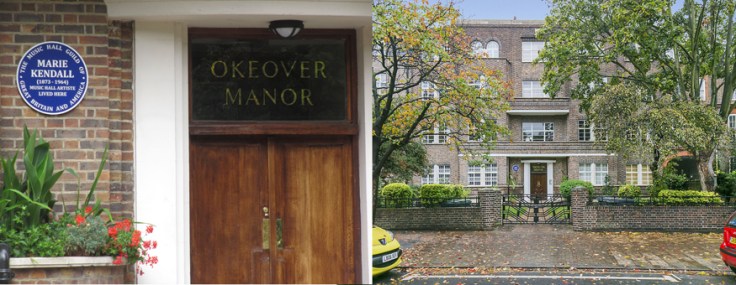
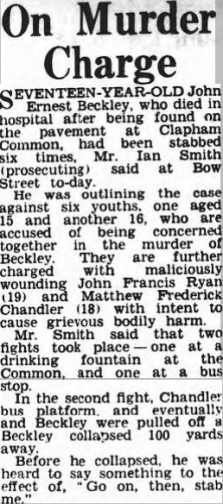 The remaining Plough Boys, realising that the situation had become more serious than a simple punch-up, ran off. One of the bus passengers, made a call from the Oakeover Manor flatsand another passenger improvised a pillow for the victim with a folded coat. Eventually, at 9.42 pm a policeman arrived and just one hour later, John Beckley was found to have six stab wounds about his body and one to his face. He was pronounced dead at the scene.
There was no shortage of suspects among the South London gangs. Police swiftly narrowed the field down to six suspects. All were arrested and charged with John Beckley’s murder. Two of the gang denied having been on Clapham Common; two admitted being there, but denied involvement. but all under persistent questioning, later confessed to having taken some part in the attack, though all denied using a knife.
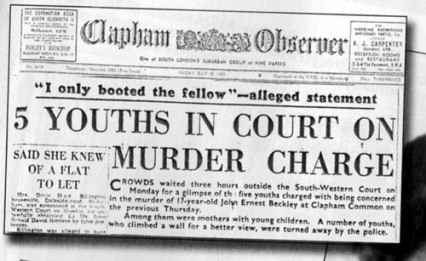
Five youths were initially charged by the Police, with one more charged a few days later, and they were remanded to Bow Street. After a three-day hearing, the case was sent to the Old Bailey for trial. The charged were a 15 year-old shop assistant Ronald Coleman, Terrance Power aged 17 and unemployed, Allan Albert Lawson aged 18 and a carpenter, a labourer Michael John Davies aged 20, Terrence David Woodman, 16, a street-trader and John Fredrick Allan, aged 21, also a labourer.
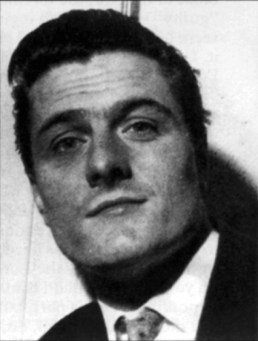 Michael John Davies, (right) the 20 year old labourer from Clapham, never denied being in the fight. “We all set about two of them on the pavement” he said “I didn’t have a knife, I only used my fists.”
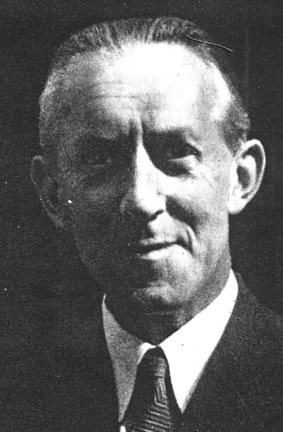 On Monday 14th September 1953, at the Old Bailey, Ronald Coleman and Michael John Davies pleaded not guilty to murdering John Beckley. The four others were formally found not guilty after Christmas Humphreys, (left) the prosecutor for the Crown, said he was not satisfied there was any evidence against them on this indictment. However they were charged with common assault and kept in custody.
A Daily Mirror headline during the trial simply said Flick Knives, Dance Music and Edwardian Suits.
The trial of Coleman and Davies lasted until the following week when the jury, after considering for three hours forty minutes, said they were unable to agree a verdict.
Mr Humphreys, for the prosecution, said that they did not propose to put Coleman on trial again for murder and a new jury, on the direction of the judge, returned a formal verdict of not guilty. Coleman was charged with common assault along with the four others for which they all received six or nine months in jail.
Michael John Davies’ trial for the murder of John Beckley began on 19th October 1953. Counsel for both the defence, Mr David Weitzman, QC and Mr Christmas Humphreys for the prosecution were the same as for the former trial and the same witnesses appeared.

Having seen the attack from the top deck of the 137 bus, Mary Frayling told the Police that she had seen a particular youth whom she described as the principal attacker put what appeared to be a green handled knife into his right breast pocket. He was wearing a gaudy tie which he removed, putting it in another pocket. She later identified him as John Davies.
How reliable a witness was Mary Frayling? It was late in the evening and her view of the fight on the moving bus with its internal lights on must have been obscured by both the relatively small windows of the bus and the large trees along side the road. In fact Mary Frayling had initially picked out John Davies as the main perpetrator while he was standing in the dock of a local south London court and not in an organised identity parade.
Despite the absence of the knidfe that killed John Beckley, the jury took just two hours to return with a guilty verdict, and Davies was sentenced to death.
Although the actual murder weapon was never found there was a knife that was almost treated as such by Christmas Humphreys and the prosecution during the trial. It was a knife bought by Detective Constable Kenneth Drury in a jewellers near the Plough Inn for three shillings ostensibly as an example of what could have been used by Davies. Incidentally, Drury, (right) 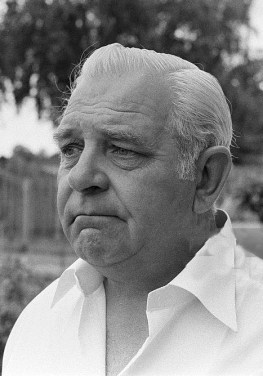 one of the investigating officers in the Beckley murder case, would later become Commander of the Flying Squad in the 1970s and in 1977 was convicted on five counts of corruption and jailed for eight years.
Almost immediately after the guilty verdict there were suspicions to many that there had been a gross miscarriage of justice. Michael John Davies’ case went to appeal and eventually to the House of Lords both to no avail. However after many petitions to the Home Secretary he granted a reprieve for Davies after 92 days in the Condemned Cell. In October 1960 Michael John Davies was released from Wandsworth Prison after seven years, although not officially pardoned, he was now a free man.
The killing of John Beckley had a chilling resonance many years later with another notorious stabbing, the murder of Stephen Lawrence. Once again, there would be attack by a gang of young men. Once again, a knife would be the weapon, but would never be found. Once again it would be very much open to doubt as to who struck the fatal blow. Although Stephen’s death was due to a racist attack, the killing of John Beckley was equally tribal – a young life taken because he was different.
 This is the second outing for Clive Allan’s Detective Inspector Neil Strachan and, as in the first book in the series, The Drumbeater, past and present collide. Glenruthven, a tiny community in the Scottish Highlands, is dominated by its distillery. When the owner, Hugh Fraser is murdered alongside his wife, the village is shattered at the thought of there being a killer in their midst.
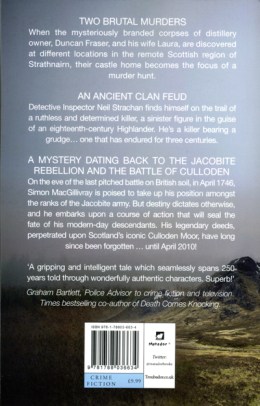 As Strachan and his police partner DS Holly Anderson set about finding the killer, they discover that the man they suspect of the double murder is obsessed with his own ancestry, and believes that he is related to a Jacobite soldier who, like so many of his fellow rebels, was slain on the bloody battlefield of Culloden on 16th April 1746.
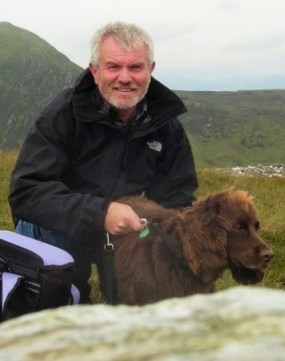 Clive Allan (right) is a former police officer of thirty years’ service, and is also a keen aficionado of his country’s military history. This mixture of experience and passion combines to create a novel which will blend the lure of momentous events of the past with the gritty reality of modern policing.


 He has killed at the bidding of his masters, who are shadowy government types, but now things have changed. Stoner has been stitched up, people close to him have been badly hurt, and he has retreated from the his former world. He is shattered, mentally and physically.
 Like its two predecessors, The Redemption of Charm is immensely entertaining and another bravura performance from Frank Westworth (right), who shares his creation’s love of Harleys and fine guitars. We are led to believe that a love of killing and a knowledge of inventive ways to use an SAS dagger are skills that, to date, divide the two men.


 fullybooked2017